|
Contents
- Watering Reminder
- Community Gardens
- Cambridge Tree Canopy Goals
- Dog Waste Reminder - Paws Off Trees
- Species Highlight: Pin Oak (Quercus palustris)
- Forest Foe: Emerald Ash Borer
- Stumped! Urban Forestry Treevia
- Become a Cambridge Urban Forest Friend
- Sign Up for a Tree with Green Cambridge
| | |
Watering Reminder
Happy summer! With the heat moving in, it’s not only humans who need a quenching drink of water. Trees need more than the occasional storm to stay hydrated and healthy, so this is the perfect time to make sure trees are getting watered regularly.
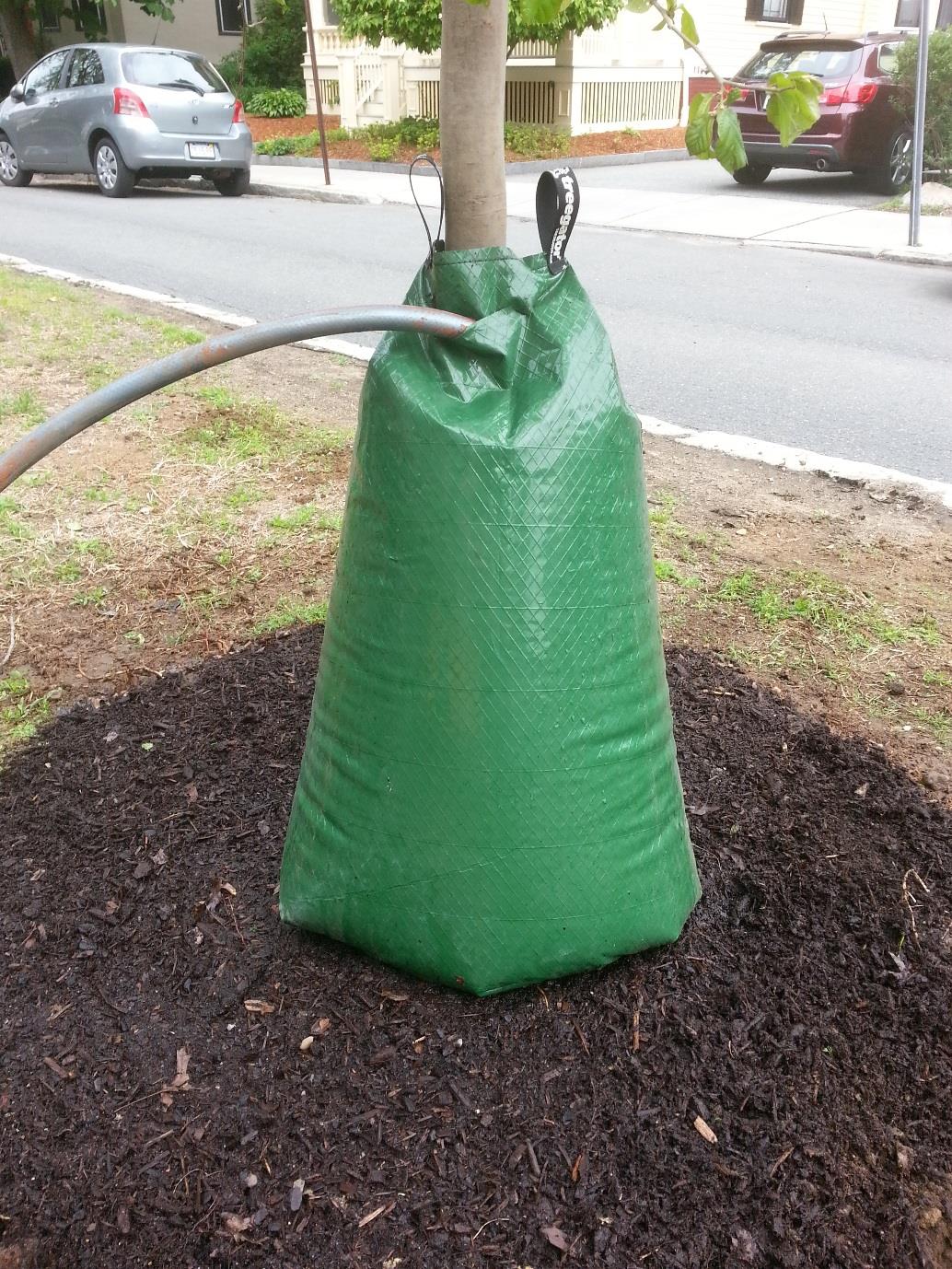
Public Works staff, Water-By-Bike interns, and the tree planting contractor water newly planted trees, but you can help out by filling the gator bags on street trees once a week. You can sign up to care for a tree as a Forest Friend here, and you can pick up gator bags for street trees from Public Works at 147 Hampshire St.
You can see the Water-By-Bike interns demonstrate how to properly use a gator bag here. Check it out!
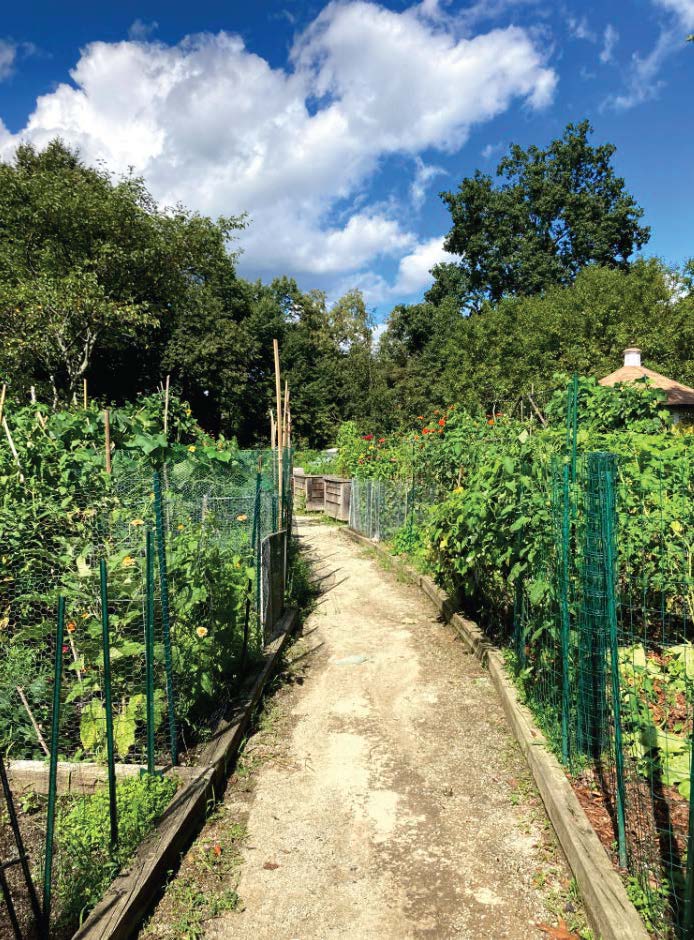
| | William G. Maher Park Community Garden in the Cambridge Highlands | | |
Community Gardens
Have you visited a local community garden lately? As you walk through your community, you may notice many throughout Cambridge are in full bloom this month. Have you ever wondered where they come from, and how you can get involved?
Community gardens can be managed in a variety of ways, by a collective or individual, and their availability to the public can vary. Often, they consist of several plots each managed by one individual.
Benefits
There is no shortage of benefits provided by a community garden. In addition to community beautification, these spaces allow citizens access to local, organic food, familiarizing community members with the process of growing food from seed to harvest. These growers are often urban residents who lack other opportunities to participate in this process. Gardens also offer educational opportunities to younger populations through collaborations with schools and local nonprofits. Families that grow their own produce can ease their economic burden from rising grocery bills.
These spaces aren’t only used for growing but can also be used as an informal third space for organizing, education, or simply to connect community members. Researchers have observed notable mental health benefits from the additions of these spaces in communities. These gardens can even benefit community members that don’t directly participate through ecological services such as a reduction in urban heat island effects, pollution mitigation, and pollinator support.
Cambridge’s Community Gardens
Cambridge has 14 community gardens throughout the city. If you’d like to get involved, you can apply for an individual plot in up to three community gardens. You can find the application form, as well as plenty of additional information about the gardens, on the program website. Please note, the current wait for an individual plot can be in excess of 2-3 years.
Luckily, there are a number of ways you can get involved in urban gardening sooner than that:
-
Come by Riverside Press Park Community Garden on Sundays from 4:00-7:00 pm to tend the garden and prepare and serve food with Cambridge Public Kitchen.
-
Volunteer with local organizations CitySprouts, Green Cambridge, The Somerville Community Growing Center, or Groundwork Somerville.
- Grab seed packets from the Free Seed Library in the Public Works building at 147 Hampshire Street. Do not be discouraged if you don’t have outdoor space, don’t get direct sunlight, or are new to growing food. Almost all packets have thorough growing instructions on the back. Many of the plants can be grown indoors, in pots, and without direct sunlight.
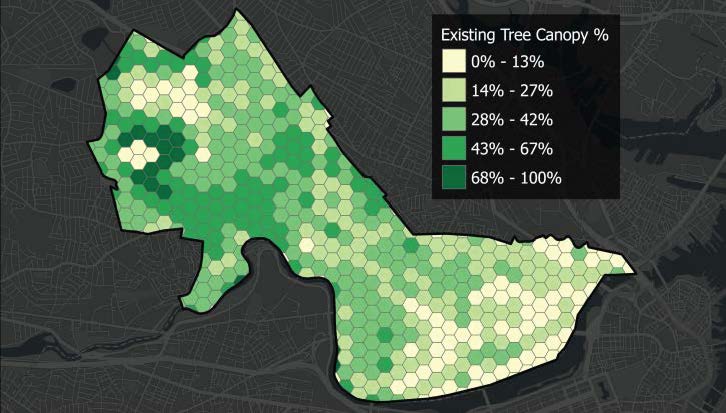
| Existing canopy coverage in 2024 by 10-acre hexagons | | |
Cambridge Tree Canopy Goals
Tree canopy is a crucial factor in creating a healthy and equitable city. With more trees, there is more shade and less of an urban heat island effect. Released in 2020, Cambridge’s Urban Forest Master Plan (UFMP) set a goal for citywide and neighborhood canopy coverage. The UFMP is currently being updated, and the City’s canopy is showing encouraging growth. As of 2024, there is a 5% increase in canopy cover citywide since 2018. While most neighborhoods have seen canopy growth individually, there is still a disparity in the level of canopy coverage across Cambridge. West Cambridge has the most canopy coverage with over 40% of the area covered by trees, while East Cambridge has the lowest canopy coverage at about 15%. When planting, the City prioritizes adding trees to areas with less canopy coverage — to make shaded and green communities across Cambridge. For more information on the Urban Forest Master Plan and the 5-year update, please see the City’s website here.
| | |
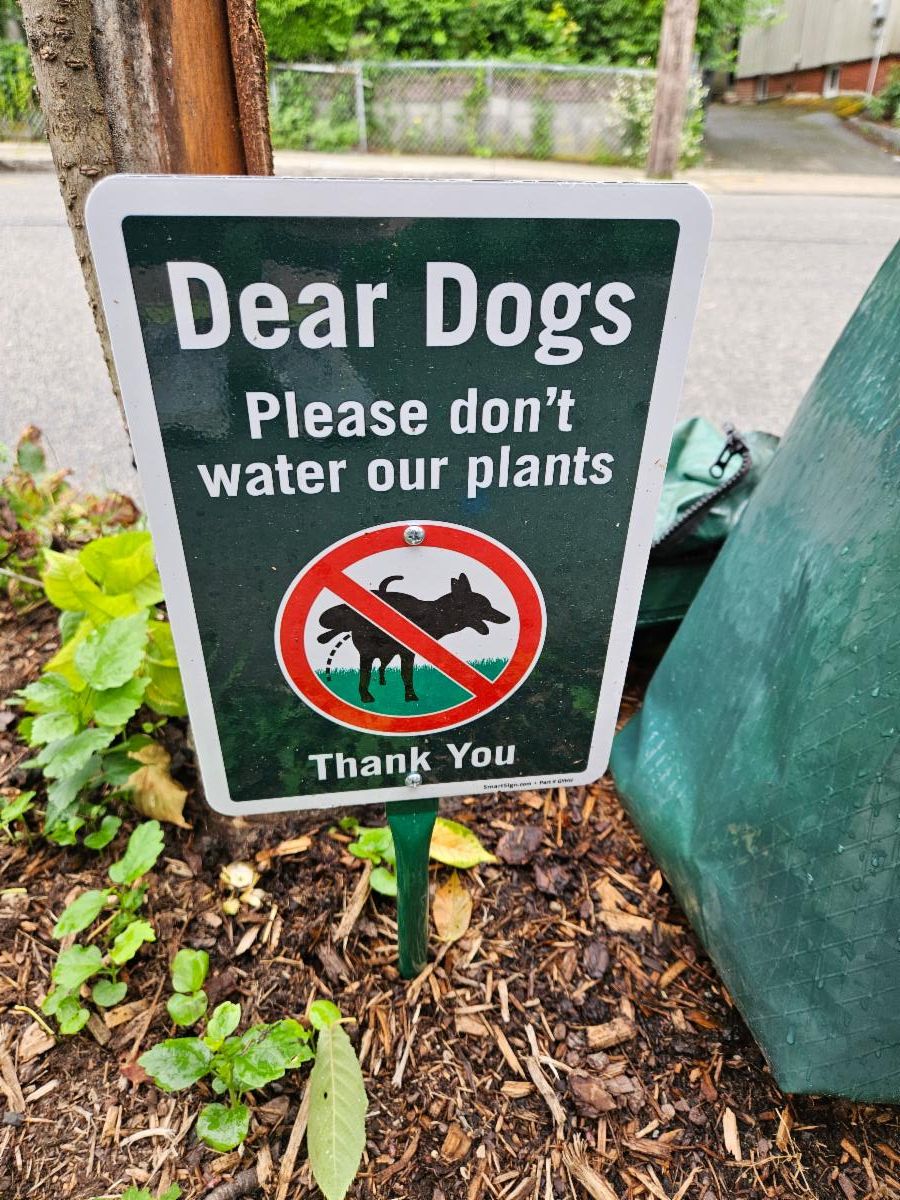
Paws Off Trees!
While we love our furry friends, dog urine and waste can be harmful to trees and the environment. Help support the health of our City's trees by not allowing your pet to relieve themselves directly on trees or in tree wells. Be sure to collect all your pet's poop and place it in trash bins - never down a storm drain. Rainfall in Cambridge flows to the Charles River or Alewife Brook and can pick up contaminants like dog urine and waste along its way. Let's keep our streets clean and our trees thriving, ensuring a greener, healthier environment for all!
| |
Tree Species Highlight - Pin Oak (Quercus Palustris)
With over 1700 pin oaks (Quercus palustris) managed by the City of Cambridge’s Urban Forestry division, they are one of the staple species of the city, popular for its ability to thrive in urban environments. Pin oaks are native to wet woods and floodplains of North America, so they don’t mind getting their feet wet in the poorly draining soil of urban environments. They also have a natural resistance to pollution and disease, and their quick growing habits and ability to withstand transplanting make them perfect city dwellers.
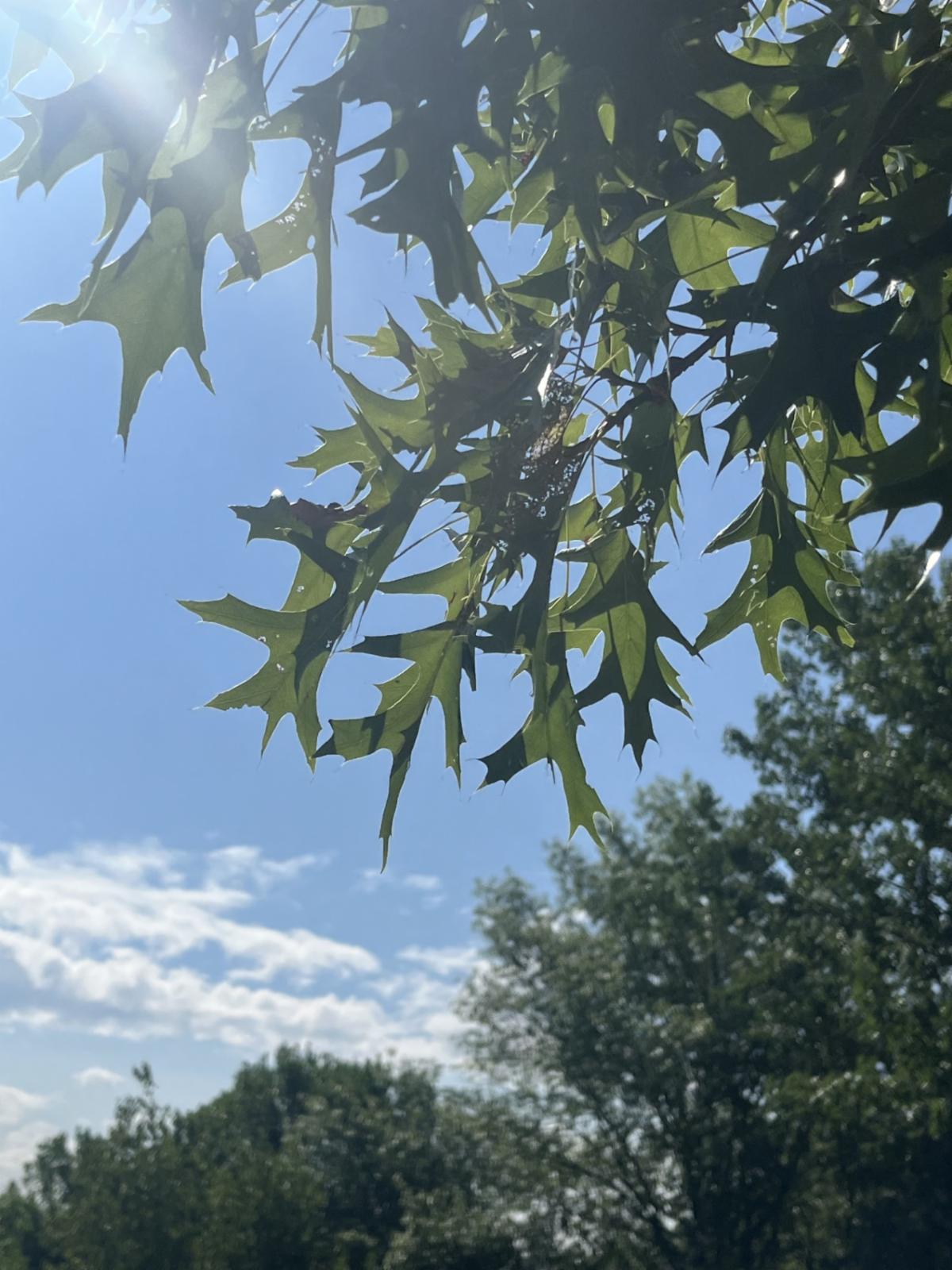
Pin oaks are characterized by their bristly pins on their leaf tips, a trait shared by oaks in the broader Red oak Family. Their leaf shape follows an oval, with 5 to 9 major lobes separated by deep U-shapes. In the fall, their leaves will turn a brilliant red-orange, providing a fabulous backdrop to Cambridge streets. Acorns are about a ½ inch long, take two years to mature, and supply food for blue jays, woodpeckers, squirrels, wild turkeys, and are a staple in duck diets.
| | Pin oak leaves in Danehy Park | | |
Pin oak growth habits are also especially striking, with lower branches sloping towards the ground, middle branches growing straight out, and top branches inclining towards the sky. This gives the tree a unique habit that reminds some residents of a flared skirt.
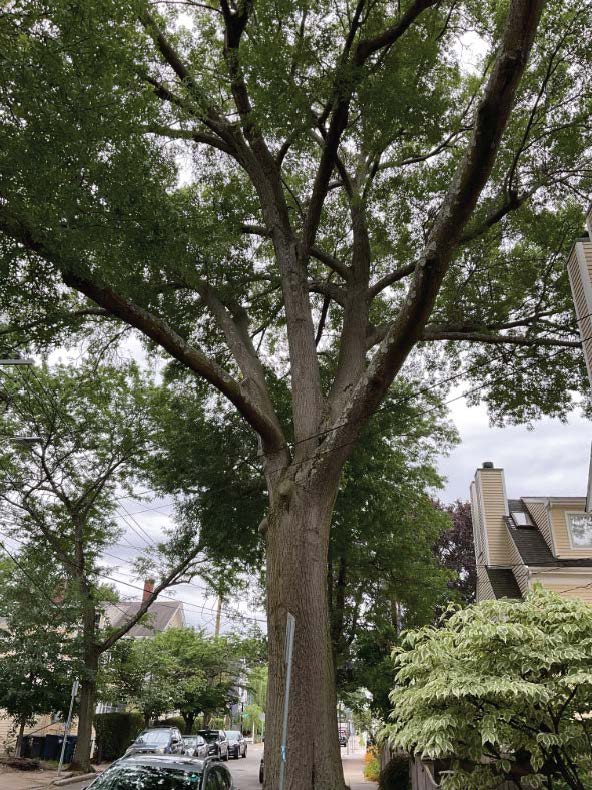
These bright trees can be found throughout streets, parks, and schools in Cambridge. In fact, two of the largest trees in the city are pin oaks! You can visit them on Kinnaird St. between Jay St. and Western Ave in the Riverside neighborhood and on Broadway between Clark St. and Moore St. in the Port neighborhood.
| | City of Cambridge Storymaps – Riverside pin oak, with a DBH of 46” | | |
Forest Foe- Emerald Ash Borer
The Emerald Ash Borer (EAB) is an invasive beetle that kills ash trees when its larvae burrow under the bark and feed on phloem and cambium, disrupting trees’ nutrient and water flow. An EAB infestation often means a death sentence for the tree as an estimated 99% of untreated ash trees will die. EAB was first detected in the United States in 2002, and the Boston area has been managing infestations since they were first detected at the Arnold Arboretum in 2014.
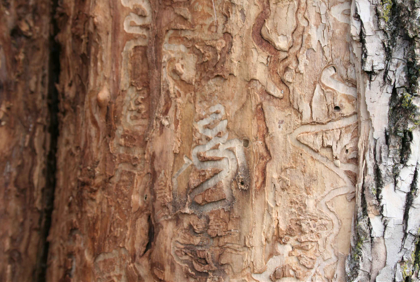
EAB can be somewhat difficult to detect as beetles are small and the larvae live on the inner layer of tree bark for most of the year. However, there are a few ways to identify their presence. Adults emerge in summer months, and present with a bright green bodice, about half the size of a penny. More commonly, however, you may see D-shaped exit holes in tree bark where adult beetles emerge in the spring. The inner layer of bark will also present S-shaped bores from larvae, however it is not recommended to strip bark to reveal these without expertise. EAB infestations may also cause an increase in woodpecker activity, leaving “blonding” in tree bark. Additional damage to the tree may also be evident, such as dieback at the top of the tree canopy, excessive lower branching, and vertical cracks in bark.
Emerald Ash Borers can be trapped to identify their spread, and biocontrol measures are being taken throughout the United States, with promising results. Cambridge’s Urban Forestry division closely monitors the City's ash tree health and has been treating healthy ash trees for many years to reduce the potential for EAB infestations in City trees. If you see signs of EAB activity, you can report it using the City of Cambridge’s SeeClickFix program. You can also report it to the USDA here.
These beetles largely spread through the movement of ash products, such as firewood, nursery stock, and cuttings. You can help stop the spread by only buying local firewood (less than 10 miles away is best) and only certified heat-treated firewood. If sellers are unsure where their stock comes from, that’s a good sign to buy your firewood elsewhere. Never move tree material from one site to another.
Links
| | |
Stumped! Urban Forestry Treevia
Learn a fun fact about urban forestry in Cambridge!
| |
| Why is the morning the best time to water outdoor plants and trees? | | | | |
The trivia answer will be revealed in next month’s newsletter!
Last month's question was "The trivia answer will be revealed in next month’s newsletter!
Last month's question was "Why are gator bags designed to release water slowly?” and the answer was "D. To prevent runoff and encourage deeper root growth". Did you get it right?
| | Become a Cambridge Urban Forest Friend | |
We need your help to maintain a healthy, vibrant urban forest! Any Cambridge resident willing to regularly water the tree and provide some general care for the tree is welcome to become a Cambridge Urban Forest Friend.
How to Start
| | |
Questions?
For questions about the Cambridge Urban Forest Friends, please contact Kristen Kelleher, Community Relations Manager at 617-349-4825 / kkelleher@cambridgema.gov.
**Please let us know if you are no longer caring for your street tree and we will remove you from the database and future emails**
| | Sign Up for a Tree with Green Cambridge | |
If you have space for a tree on your property, Green Cambridge can plant a tree to help expand Cambridge’s urban tree canopy! If you own your home in Cambridge, MA and would like Green Cambridge to plant a tree in your yard, visit https://www.greencambridge.org/canopycrew
| | | | |