|
|
Watering Trees to Cool Off |
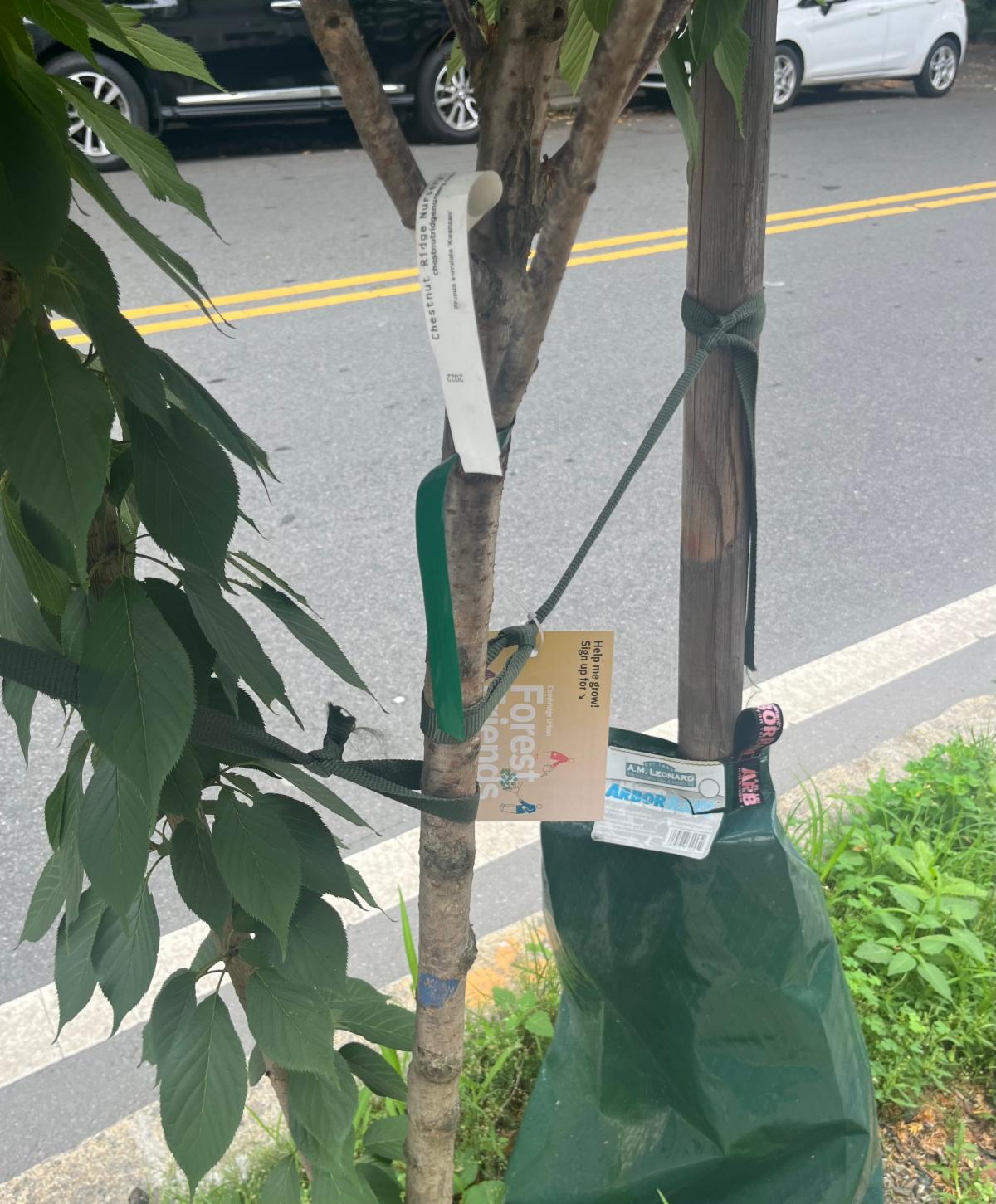
Our young street trees need your help to survive the chaotic city environment—Forest Friends like you can help by giving them lots of water! Newly planted trees are watered by Public Works staff, Water-By-Bike interns, and the tree planting contractor, but, in this brutal heat, you can help out by filling the gator bags on street trees once a week.
What are some benefits of healthy trees in Cambridge in the summer? As was mentioned in June’s trivia question, urban areas can often be described as “heat islands.” Heat islands absorb lots of the sun’s heat because of a combination of the dark surface of built infrastructure, the small number of plants, and human activities like driving cars and using air conditioning. But we can fight the heat island effect by protecting our trees! Trees can reduce summer air temperatures by two to four degrees Fahrenheit, which improves public health by preventing heat-induced illness and mortality. Helping to keep our trees healthy can keep our communities healthy!
|
Photo 1: A young cherry tree on Columbia Street waits for a Forest Friend to adopt it. |
|
Learn to Use a Gator Bag with the Water-by-Bike Crew! |
Watch the video below to learn how to fill a gator bag and get some more information on the Water-By-Bike interns, a group of interns that water and tend to the City's young trees. Forest Friends can pick up gator bags for street trees from the Public Works main office at 147 Hampshire St. |
|
Ever wondered why we prune city trees? And how we do it?
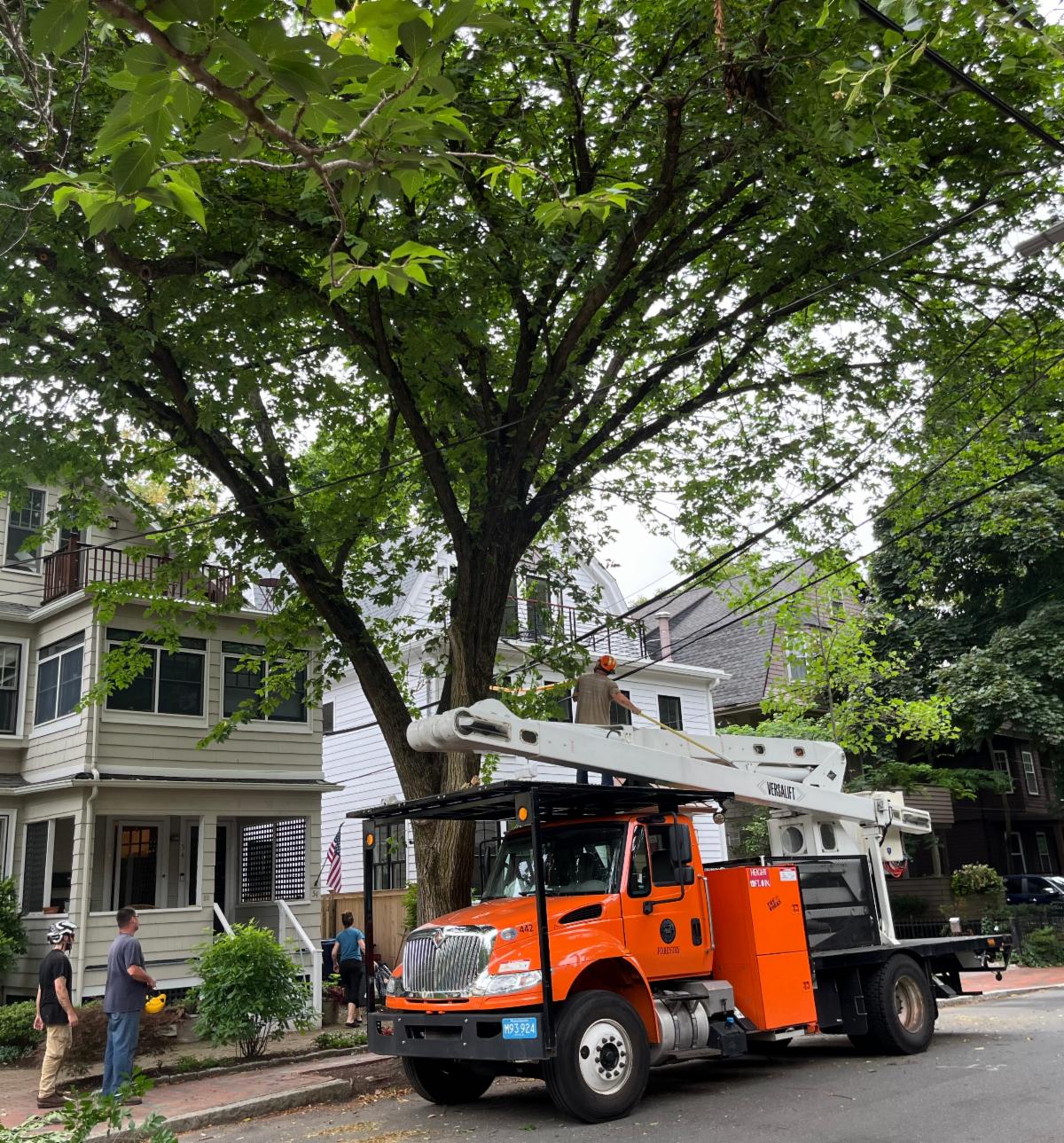
Pruning a tree involves selectively removing branches to improve the trees' structure or health. The City’s Forestry Division regularly prunes street trees on a six-year cycle and in emergency situations. Cyclical pruning helps to reduce both storm damage and conflicts with private property and other City infrastructure. With our Young Tree Training pruning contract, we also prune trees a few years after planting to establish good structure. Structural pruning ensures trees are sturdy enough to withstand wind, snow, and ice storms in the long-term as they mature.
Residents cannot do tree work on any City-owned trees. If you believe a City tree needs pruning or maintenance, submit a request here. We will immediately address requests to prune street trees posing hazards, while other pruning requests may take around three months to resolve. |
|
Photo 2: The City's forestry crew prunes a street tree to ensure both the tree's and the neighborhood's health. |
|
American Linden
Tilia Americana
|
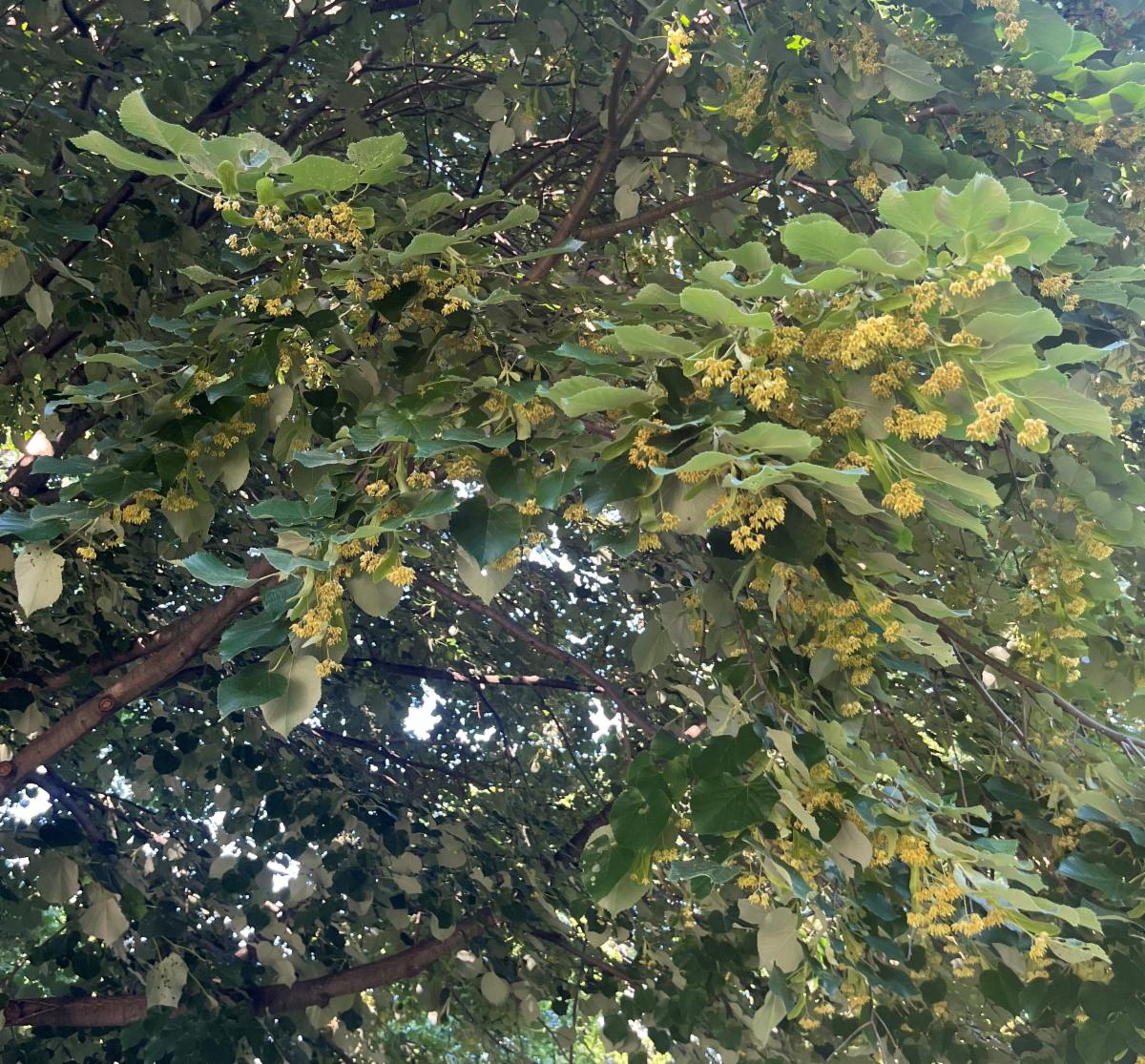
The American linden is finishing its flowering season this time of year. To identify it, you can look for subtle light yellow-green blooms. Or you might be able to smell them—while they are small flowers, they’re very fragrant. You may know the American linden by another name “basswood,” or even the “bee tree.” This is because these trees attract pollinators with their large amounts of nectar and their midsummer bloom when few other species have flowers.
The basswood is a fast-growing tree that can mature to be quite tall: its height at maturity generally ranges from 50 to 80 feet, though the tallest recorded have been over 135 feet.
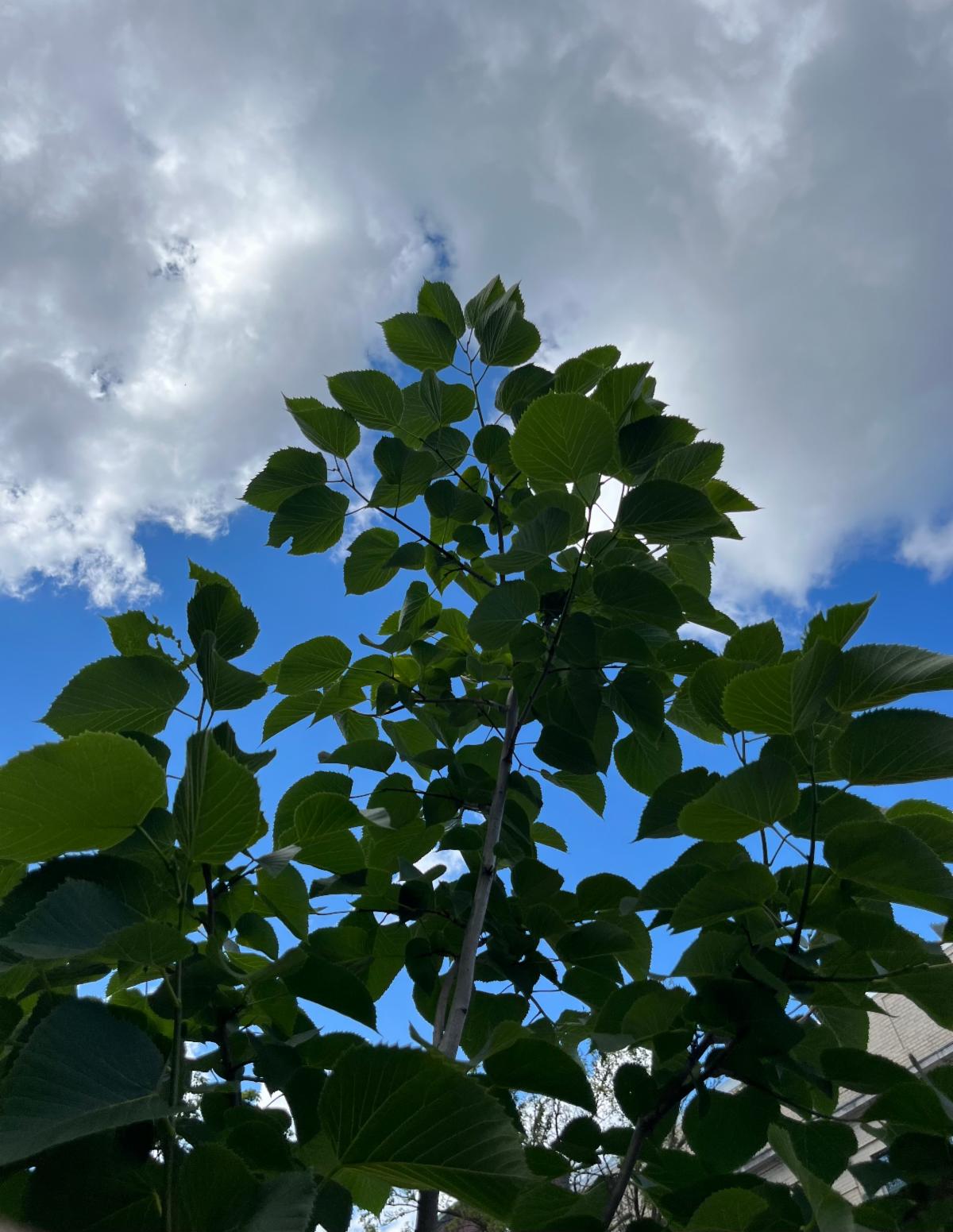
When not flowering, the tree can be identified by its large asymmetrical and heart-shaped leaves. On mature trees, its bark is fairly dark and develops deep, long, and narrow ridges.
Are there any flowering near you? Stop and smell the lindens!
|
|
Photo 3: A young American linden on Hampshire Street. |
Photo 4: A blooming linden tree shows off its yellow flowers. |
|
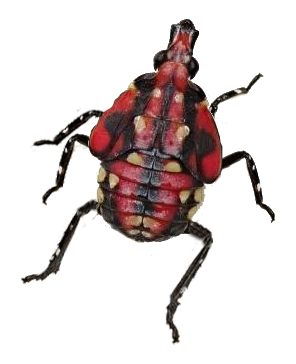
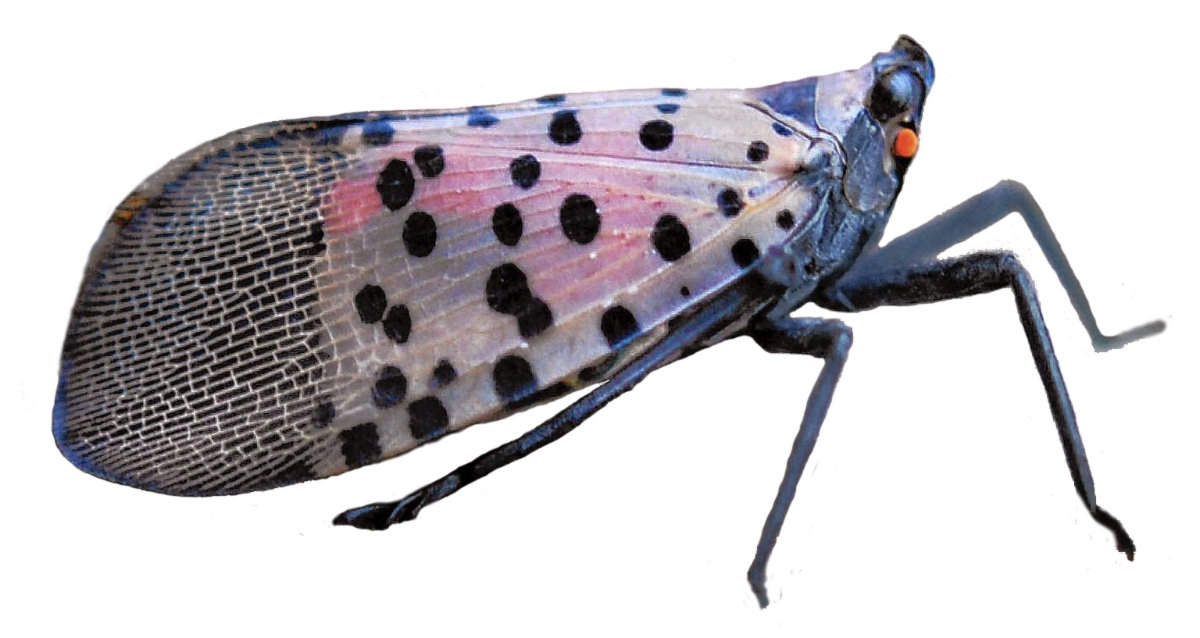
The spotted lanternfly is an invasive insect that damages trees by feeding on their sap. The SLF can often be found on the invasive tree-of-heaven, but it also attacks other trees and plants. Nymphs are black with white spots, developing red areas as they mature. Adult lanternflies begin to appear in July, and they can be identified by their brownish-gray and black-spotted front wings when at rest. When they fly or hop, you will notice bright red and white hindwings.
If you think you’ve spotted a lanternfly, you can report it to the state of Massachusetts here. |
|
Photo 5: The most mature stage of the spotted lanternfly nymph. Photo from the Massachusetts Department of Agricultural Resources. |
|
Photo 6: An adult spotted lanternfly at rest. Photo from the Massachusetts Department of Agricultural Resources. |
|
Urban Forestry Trivia
Test your knowledge of urban forestry in Cambridge.
|
|
|
Which three species make up the majority of Cambridge’s urban forest?
|
|
Norway Maple, Pin Oak, Honey Locust
|
|
|
|
|
Basswood, Tulip Tree, Sweetgum
|
|
|
|
|
Douglas Fir, London Planetree, Norway Maple
|
|
|
|
|
|
|
The trivia answer will be revealed in next month’s newsletter!
Last month's question was "Which is a summer-specific health benefit that trees provide to Cambridge & other urban areas?" and the answer was "Urban trees can reduce air temperatures and heat-induced illness/mortality."
|
|
Become a Cambridge Urban Forest Friend |
We need your help to maintain a healthy, vibrant urban forest! Any Cambridge resident willing to regularly water the tree and provide some general care for the tree is welcome to become a Cambridge Urban Forest Friend.
How to Start
|
|
Questions?
For questions about the Cambridge Urban Forest Friends, please contact Kristen Kelleher, Community Relations Manager at 617-349-4825 / kkelleher@cambridgema.gov.
**Please let us know if you are no longer caring for your street tree and we will remove you from the database and future emails.**
|
|
Sign up for a free tree from Green Cambridge |
If you have space for a tree on your property, Green Cambridge can plant a free native tree to help expand Cambridge’s urban tree canopy! If you own your home in Cambridge, MA and would like Green Cambridge to plant a tree in your yard for FREE, visit https://www.greencambridge.org/canopycrew
|
|
|
|
|
|
|