|
Contents
- Watering Reminder
- SeeClickFix your tree issues
- Explore our Urban Forest on Your Walks
- Species Highlight: American Elm
- Leave the leaves
- Forest Foe
- Urban Forestry Trivia
- Sign Up for a Free Tree with Green Cambridge
| | |
|
|
Watering Reminder
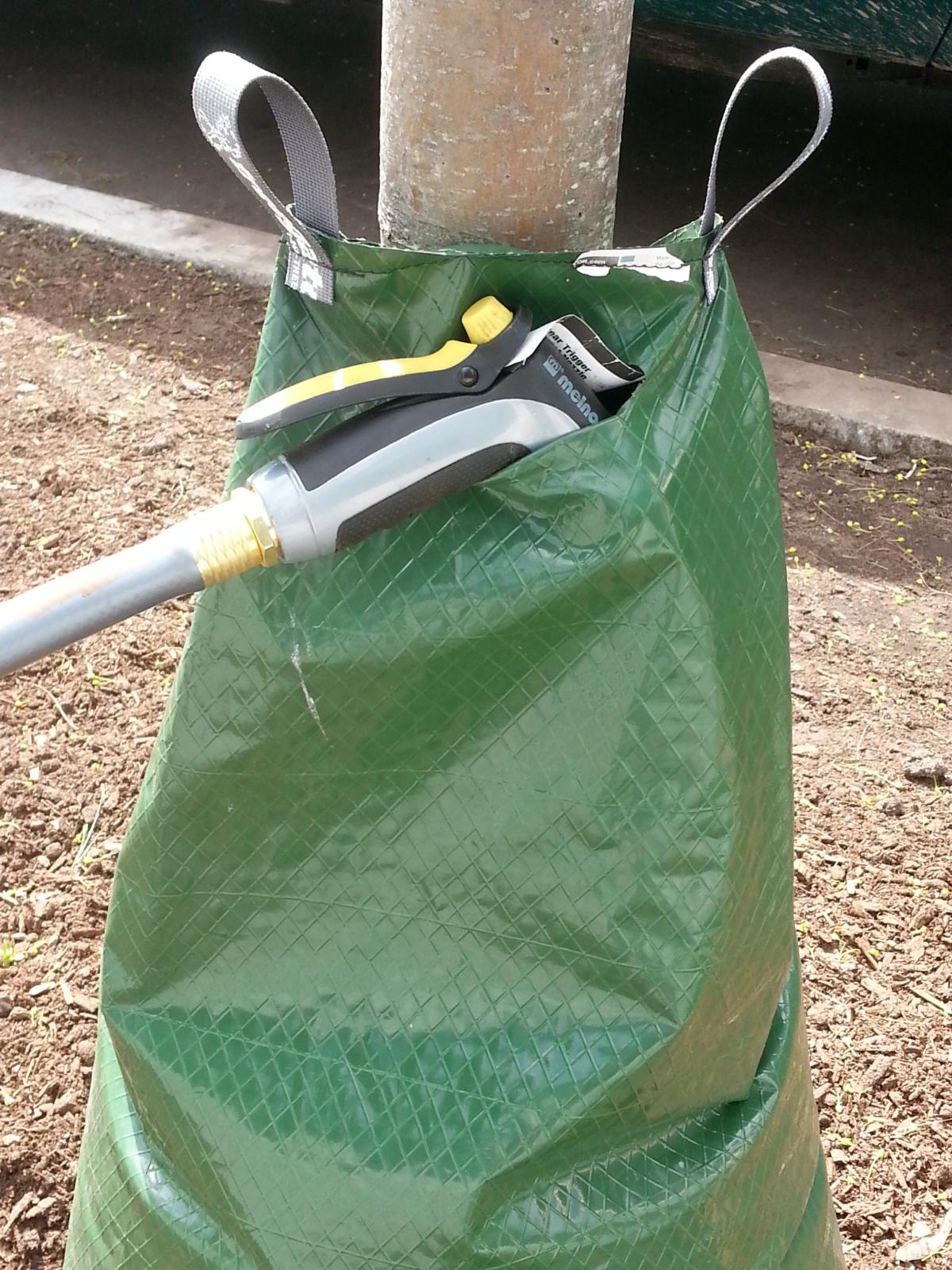
Our young street trees need your help to survive the chaotic city environment—they need lots of water from Forest Friends like you! Newly planted trees are watered by Public Works staff, Water-By-Bike interns, and the tree planting contractor, but you can help out by filling the gator bags on street trees once a week. You can pick up gator bags for street trees from Public Works at 147 Hampshire St.
| | |
SeeClickFix your tree's issues, pests, & diseases!
SeeClickFix allows residents to report concerns directly to the City and department staff will follow up to resolve the issues. If you notice something weird about your tree, you can download the SeeClickFix app or use your browser to report what might be wrong. Check out this newsletter’s Forest Foes section to learn more about potential issues for your trees.
| |
Explore our Urban Forest on Your Walks!
The Cambridge Tree Walk map is a guide to Cambridge’s trees so that you can explore your area. You can be in-person learning more about the area in front of you, or you can explore online what Cambridge has grown. The City has a variety of tree species you can check out on the map. What is growing near you?
Additionally, you can see a list of the many species that call Cambridge home here.
| |
|
|
Bare Root Delivery
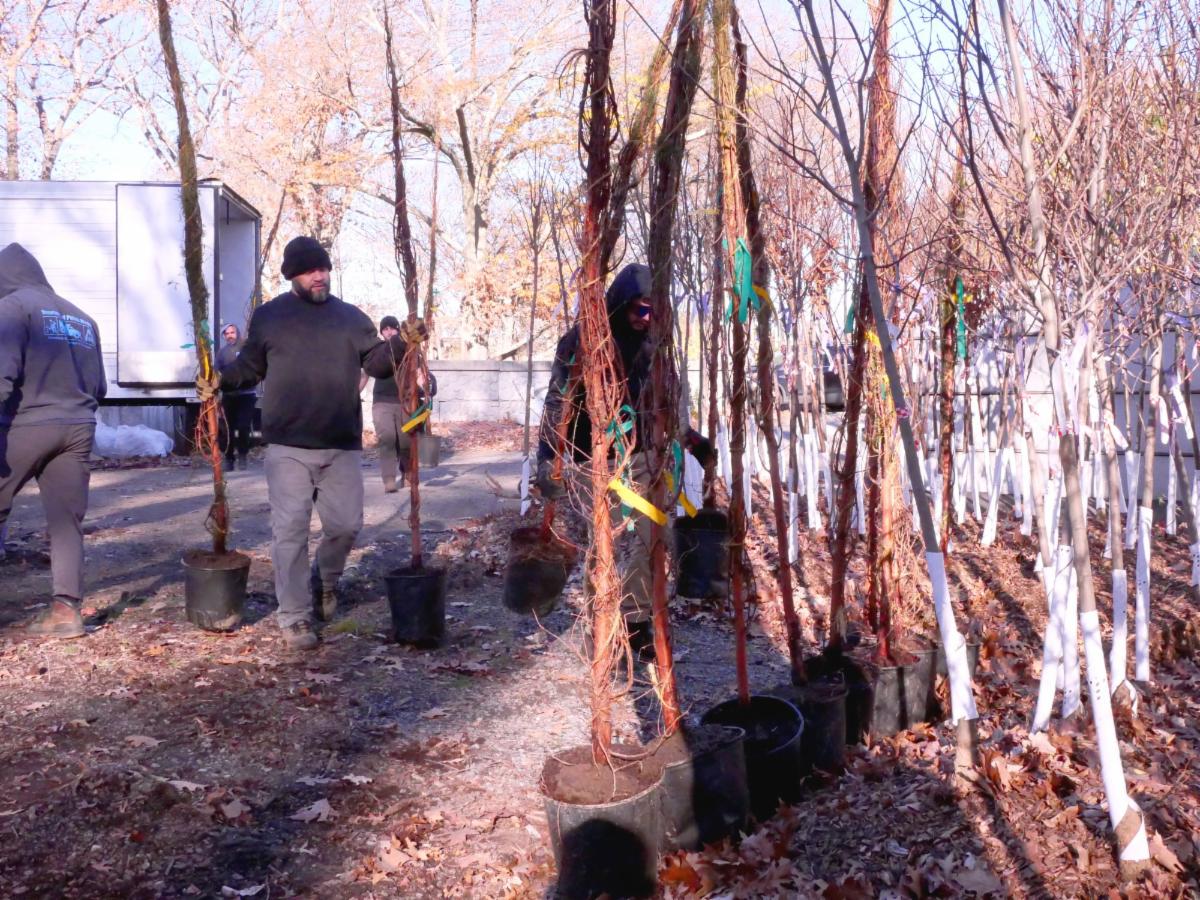
We had our annual delivery of bare root trees brought to the nursery at Fresh Pond. The 600 trees will be heeled in over the winter and planted next year.
| | | |
Species Highlight: American Elm | |
The American elm has beautiful golden fall foliage this time of year. Its gracefully spreading branches and growth reaching 50 to 70 feet at maturity make it a very attractive street tree. The American elm used to be widely planted in American cities, but Dutch Elm Disease (DED) decimated much of the population. DED is a fungal infection spread by a bark beetle and has devastated elm populations across the globe.
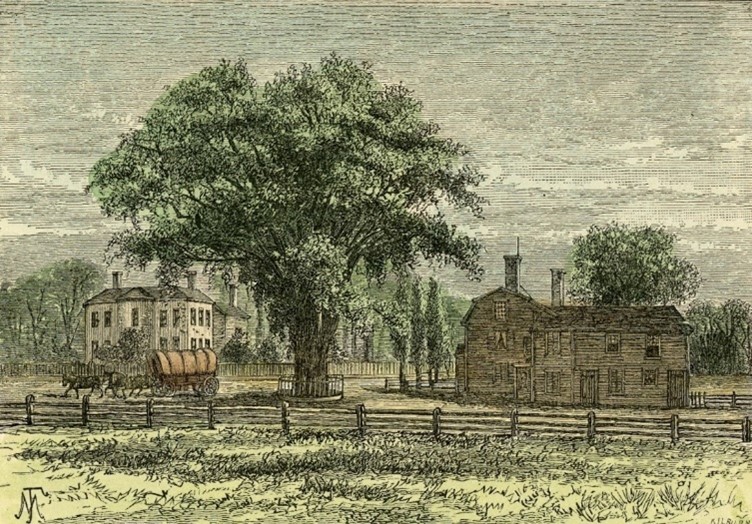
The American elm is an important tree for American history and culture, so the introduction of DED to the United States was heartbreaking for tree lovers and Americans alike. One story of the American elm’s significance to American culture has its roots in Cambridge. An elm in Cambridge Common gained fame in the 1800s as the spot where George Washington took command of the Continental Army. Legend has it that General Washington drew his sword beneath the large branches of an elm in the northwest corner of the Common, later known as the Washington Elm. Oral tradition, guidebooks, and literature exaggerated and popularized the story, with a commemorative marker placed at the tree’s base. The tree fell in October 1923, and the police had to repel souvenir hunters. Hundreds of the Washington Elm’s fragments were distributed nationwide by order of the mayor. Thanks to the Washington Elm, the American elm is the state tree of Massachusetts.
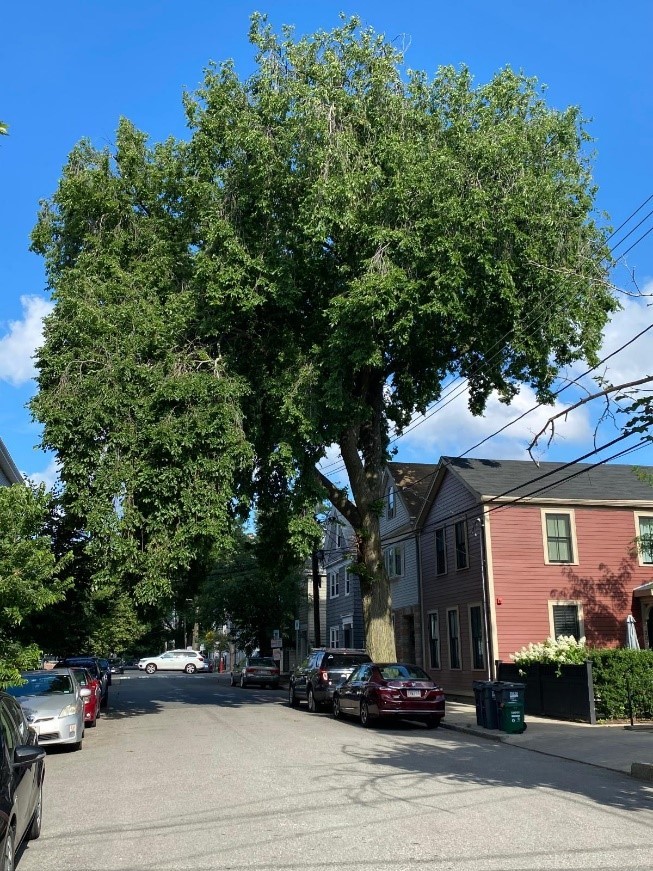
Today, you still can see beautiful American elms, thanks to cultivars with resistance to DED and treatments for DED. On Hurley St in East Cambridge, you can look up at an impressively large American elm shading the street with its classic vase-like form.
| Thanks to the Cambridge Historical Commission for research on the Washington Elm, From the story map Our Favorite Trees (arcgis.com) | |
Fay House, the Washington Elm, and the Aaron Hill house on Garden Street opposite the Common, ca. 1873 by Justin Winsor as published in The Memorial History of Boston, vol. III (Boston, 1883), 1 | |
Leaving fallen leaves in your garden, flower beds, and tree wells can be beneficial to the health of your yard, trees, other plants, and surrounding wildlife. A layer of leaves protects soil from erosion, provides habitat for insects and microbes in the soil, and protects bulbs, perennial plants, and tree roots from extreme temperature fluctuations. As the leaves decompose, they return nutrients to the soil. An insulating layer of leaves can help your lawn’s ecosystem when spring returns and your garden begins to bloom again.
On the other hand, be sure to clear leaves out of nearby street drains. If unaccounted for, leaves can easily clog drains, increasing the likelihood of floods on streets or your property.
Excess leaves should be bagged in yard waste bags for curbside pickup. Forest Friends can pick up two yard waste bags at the Public Works main office at 147 Hampshire St.
Learn more here.
| |
Forest Foe: Dutch Elm Disease | |
|
You can read more about the American elm in our species highlight for this month, but, as mentioned, the American elm has had a turbulent history. Dutch Elm Disease destroyed elm populations globally throughout the 20th century. Thanks to more careful attention to the signs of DED and innovations in treatments and cultivars, fewer elm trees now suffer from DED. You can be on the lookout for DED by checking if elm leaves have turned yellow and wilted or finding any irregularities in the bark on affected branches.
Some elm trees are resistant to DED and will not be killed by the pathogen when it enters the tree, especially with pruning of diseased branches. Elms planted today are generally cultivars resistant to DED. There are also preventative fungicide injections that can be done by a trained arborist to protect the tree if a bark beetle feeds on.
| |
|
Learn a fun fact about urban forestry in Cambridge!
The trivia answer will be revealed in next month’s newsletter!
Last month's question was "What impact does pet waste have on the City's trees?” and the answer was “A - Pet waste can burn tree trunks and bark, while harming soil as well."
| |
| Which describes all the elements that make up an urban forest? | | | |
Become a Cambridge Urban Forest Friend | |
We need your help to maintain a healthy, vibrant urban forest! Any Cambridge resident willing to regularly water the tree and provide some general care for the tree is welcome to become a Cambridge Urban Forest Friend.
How to Start
| |
|
Questions?
For questions about the Cambridge Urban Forest Friends, please contact Kristen Kelleher, Community Relations Manager at 617-349-4825 / kkelleher@cambridgema.gov.
**Please let us know if you are no longer caring for your street tree and we will remove you from the database and future emails.**
| |
Sign up for a free tree from Green Cambridge |
If you have space for a tree on your property, Green Cambridge can plant a free native tree to help expand Cambridge’s urban tree canopy! If you own your home in Cambridge, MA and would like Green Cambridge to plant a tree in your yard for FREE, visit https://www.greencambridge.org/canopycrew
| |
Thanks for reading!
If you enjoy the Cambridge Urban Forest Friends newsletter, you can spread the word about it with this sign-up link. With more sign-ups, more Cambridge residents can learn about how to best support our environment and communities. | | | | |