June 2024 Newsletter
Is your tree part of the Ivy League?
While Cambridge prides itself on its prestigious collegiate institutions, beware of ivy and other climbing vines growing on our trees. Late spring is a great time to identify and cut potentially harmful vining plants before they start to impact trees. If left unchecked, many vining plants will grow up tree trunks, eventually competing with the tree’s leaves for sunlight, taking water and nutrients from the soil, weighing down branches, and obscuring potential structural issues on the tree.

Do not try to pull live vining plants off of trees as their strong anchoring roots could damage tree bark if pulled. Vining plants are best eliminated by cutting them at least twice, once at the base near the ground, and again a few feet up, removing the plant stem in between the 2 cuts to prevent it from growing back. Always wear protection and be careful when working around vines that can irritate skin like poison ivy and English ivy. If you see a vining issue on a City tree, please report it through SeeClickFix. 
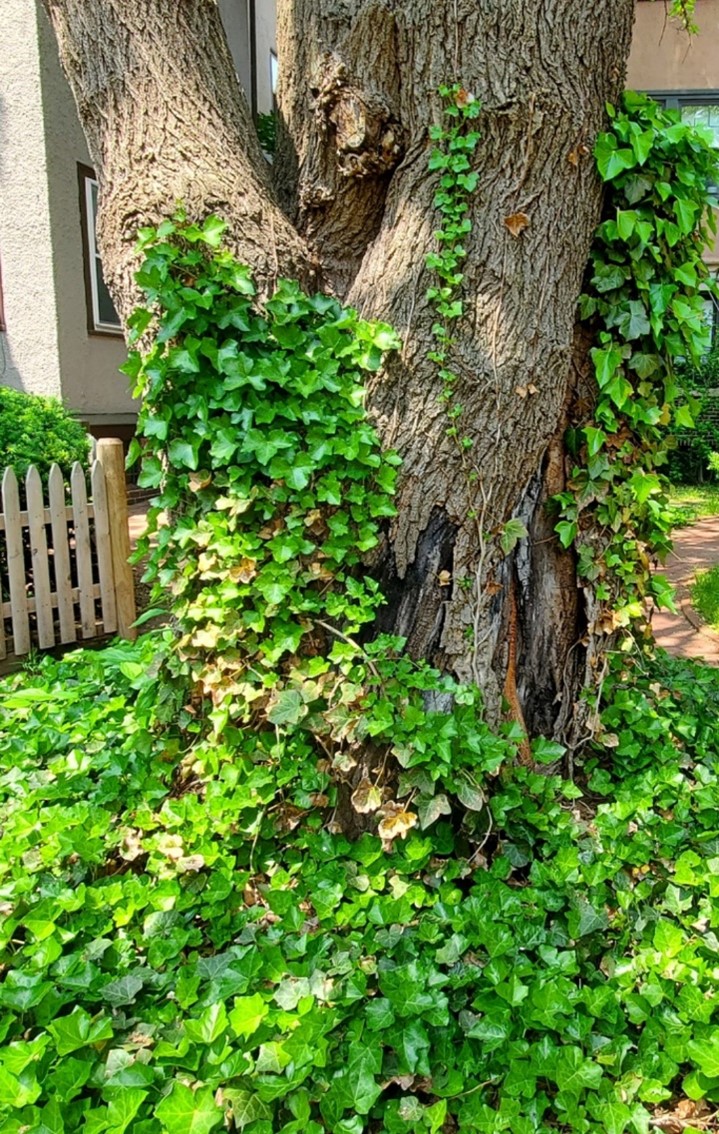
Photo 1: Ivy beginning to grow on this tree is obscuring potential structural issues. Remove ivy and other climbing vines on trees.
Celebrate Cambridge’s Urban Forestry Accomplishments!
Cambridge has long been a leader and advocate for urban forestry in Massachusetts, New England, and beyond. This month we celebrate our 32nd year winning a Tree City USA award and our 19th year earning a Growth Award! Awarded by the Arbor Day Foundation, cities and towns are recognized as a Tree City USA by achieving high levels of forestry programming. Growth Award recipients demonstrate increased levels of tree care and community engagement.

Cambridge’s Urban Forestry Department staff are committed to providing high-quality tree care for our City trees. Our staff include both MAA and ISA Certified Arborists, Tree Risk Assessment Qualified Arborists, Municipal Specialists, Board Certified Master Arborists, and Massachusetts Qualified Tree Wardens. Staff are also members and serve on boards of several professional forestry organizations, including New England ISA, Massachusetts Tree Wardens and Foresters Association, and Urban and Community Forestry Society.

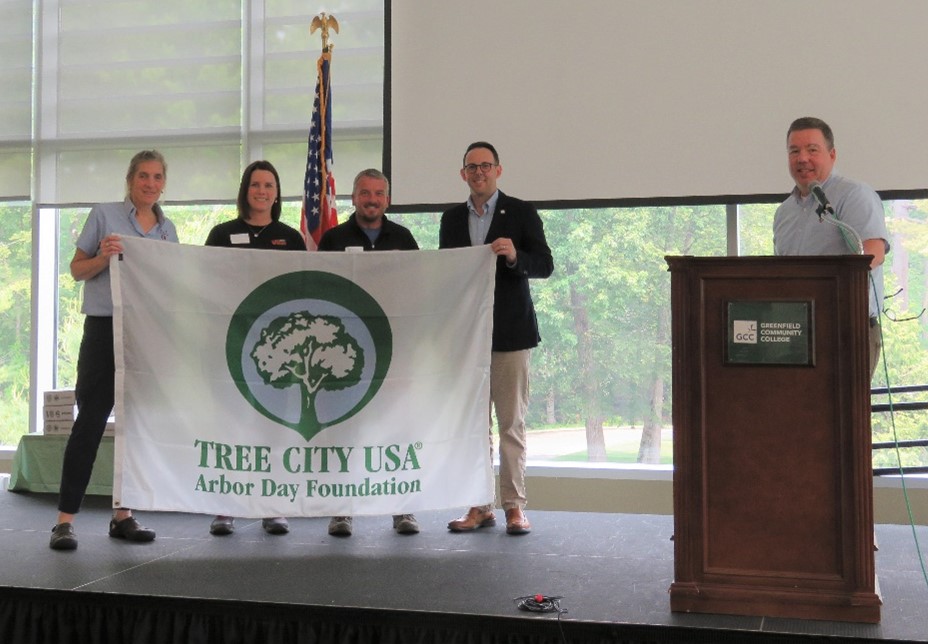
Photo 2: Cambridge Urban Forestry staff receive the Tree City USA Award and Growth Award in 2023.
Sprout Support: Water Your Street Trees!
Please help our urban forest thrive by watering your street trees, especially new and younger trees. Newly planted trees are watered by Public Works or the tree planting contractor, but new trees need a lot of water. Forest Friends can help by filling each gator bag once a week. Mature trees typically only need additional water during periods of drought. Public Work’s 2024 Water By Bike Tree Ambassadors began their summer work this month! If you see them, please say hi! Water By Bike staff will be watering street trees and providing tree well care including weeding. During their first week of work, the new WBB staff watered over 220 trees around the City! Be on the lookout for the new Forest Friends yard waste bags used by staff. Bags can be picked up by Forest Friends at the Public Works main office at 147 Hampshire St.
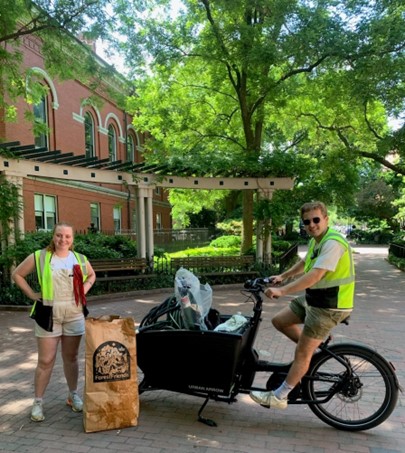
Photo 3: 2024 Water By Bike Tree Ambassadors using a Forest Friends yard waste bag for weeds and one of the 4 new E-Bikes purchased with funding from Participatory Budget Cycle 9.
Species Highlight: Northern Catalpa
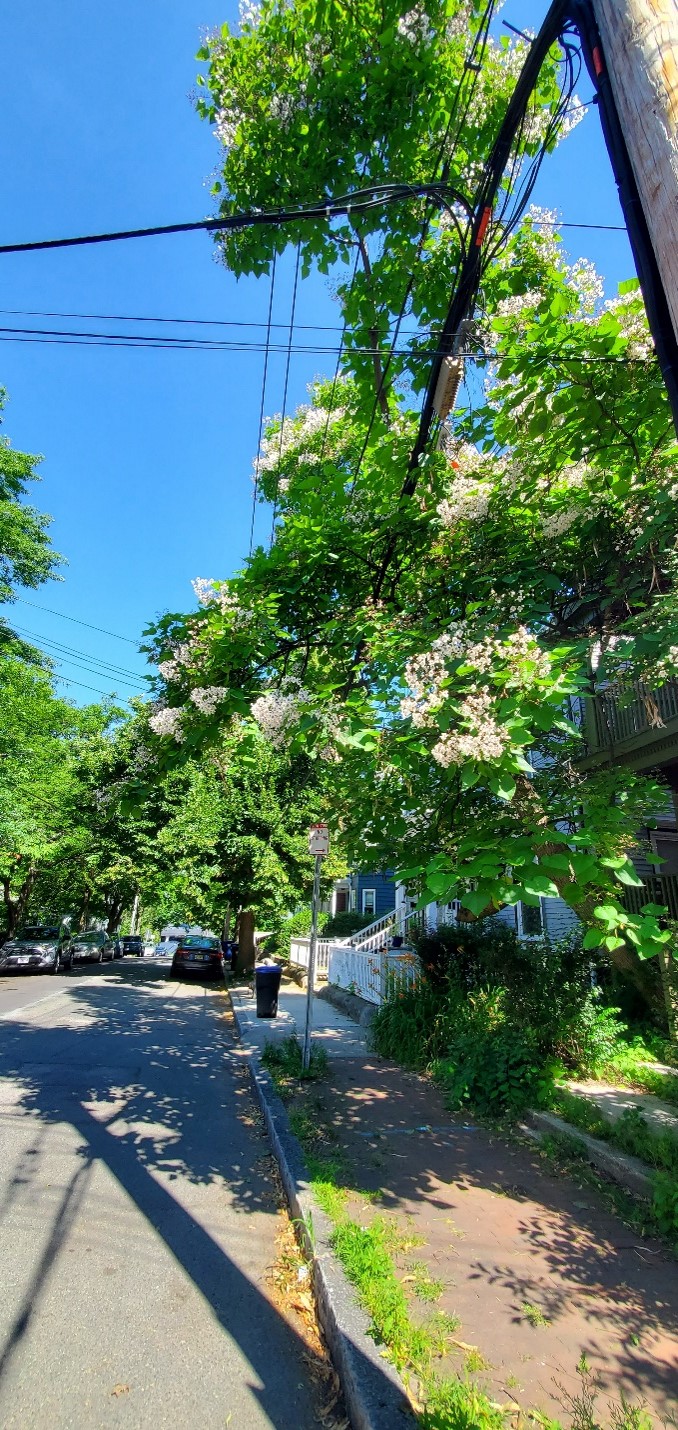
What is that tree in flower right now? If the flowers are orchid-like and white with yellow and purple in the center, it is likely a Northern catalpa! Catalpas attract pollinators during both daytime (bees and even hummingbirds) and nighttime (moths). Catalpas are easily identified year-round. ID them in the spring, summer, and fall by their heart-shaped leaves and scaly brown/gray bark. In the winter you can find them by thinking of one of their common names, “cigar tree.” Look for long bean pods that persist on branches. The City’s Urban Forest Master Plan identifies Northern catalpa as a Best Performer species for the future considering its resiliency. Catalpas are most commonly found on private property and in City parks. Joan Lorentz Park has 4 mid-sized catalpas near the tot lot and there are a few newer catalpas in the City’s microforest at Lincoln St and Windsor St. Are there any catalpas near you?

Photo 4: A catalpa planted in a front yard shades a Cambridge sidewalk.
Forest Foe: Black Swallow Wort (BSW)
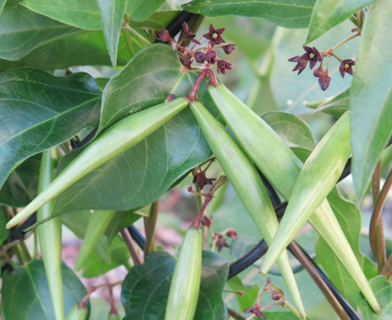
Black swallow wort is an invasive fast-growing vine. Have you seen it? Look for a vine with dark green shiny leaves that are 2-5” long with pointed tips. Flowers are small and purple with 5 petals. Seeds are dispersed by the wind when the dry brown seed pods break open later in the summer. The vine can be found most anywhere but often grows along fence lines. BSW is similar to milkweed in that it attracts monarch butterflies to lay their eggs but the leaves are toxic to the monarch caterpillars. Remove small plants with hand pulling. Larger plants can be dug. Dispose of BSW in the trash and not in yard waste or compost. More information can be found on the Mass.gov website.
Photo 5: BSW plant in flower with green pods. Photo from mass.gov.
Urban Forestry Trivia
Test your knowledge of urban forestry in Cambridge.
Which is a summer-specific health benefit that trees provide to Cambridge & other urban areas?
Urban trees absorb infectious diseases and stop the spread of viruses.
Urban trees can reduce air temperatures and heat-induced illness/mortality.
Urban trees can prevent dehydration by filling our air with oxygen.
The trivia answer will be revealed in next month’s newsletter! 
Become a Cambridge Urban Forest Friend
We need your help to maintain a healthy, vibrant urban forest! Any Cambridge resident willing to regularly water the tree and provide some general care for the tree is welcome to become a Cambridge Urban Forest Friend.

How to Start
Questions?

For questions about the Cambridge Urban Forest Friends, please contact Kristen Kelleher, Community Relations Manager at 617-349-4825 / kkelleher@cambridgema.gov.

**Please let us know if you are no longer caring for your street tree and we will remove you from the database and future emails.**
Sign up for a free tree with Canopy Crew
If you have space for a tree on your property, Green Cambridge can plant a free native tree to help expand Cambridge’s urban tree canopy! If you own your home in Cambridge, MA and would like Green Cambridge to plant a tree in your yard for FREE, visit https://www.greencambridge.org/canopycrew