October 2025 Newsletter - Maple Edition! | | |
Contents
- Fall Planting Update
- Fall Foliage Map Now Live!
- Maple Match-Up: Who’s Who?
- Leaf Bag Giveaway for Forest Friends
-
Species Highlight: Sugar maple (Acer saccharum)
- Forest Foe: Tar Leaf Spot
- Stumped! Urban Forestry Treevia
- Become a Cambridge Urban Forest Friend
-
Sign Up for a Free Tree with Green Cambridge
| |
Fall Planting Update
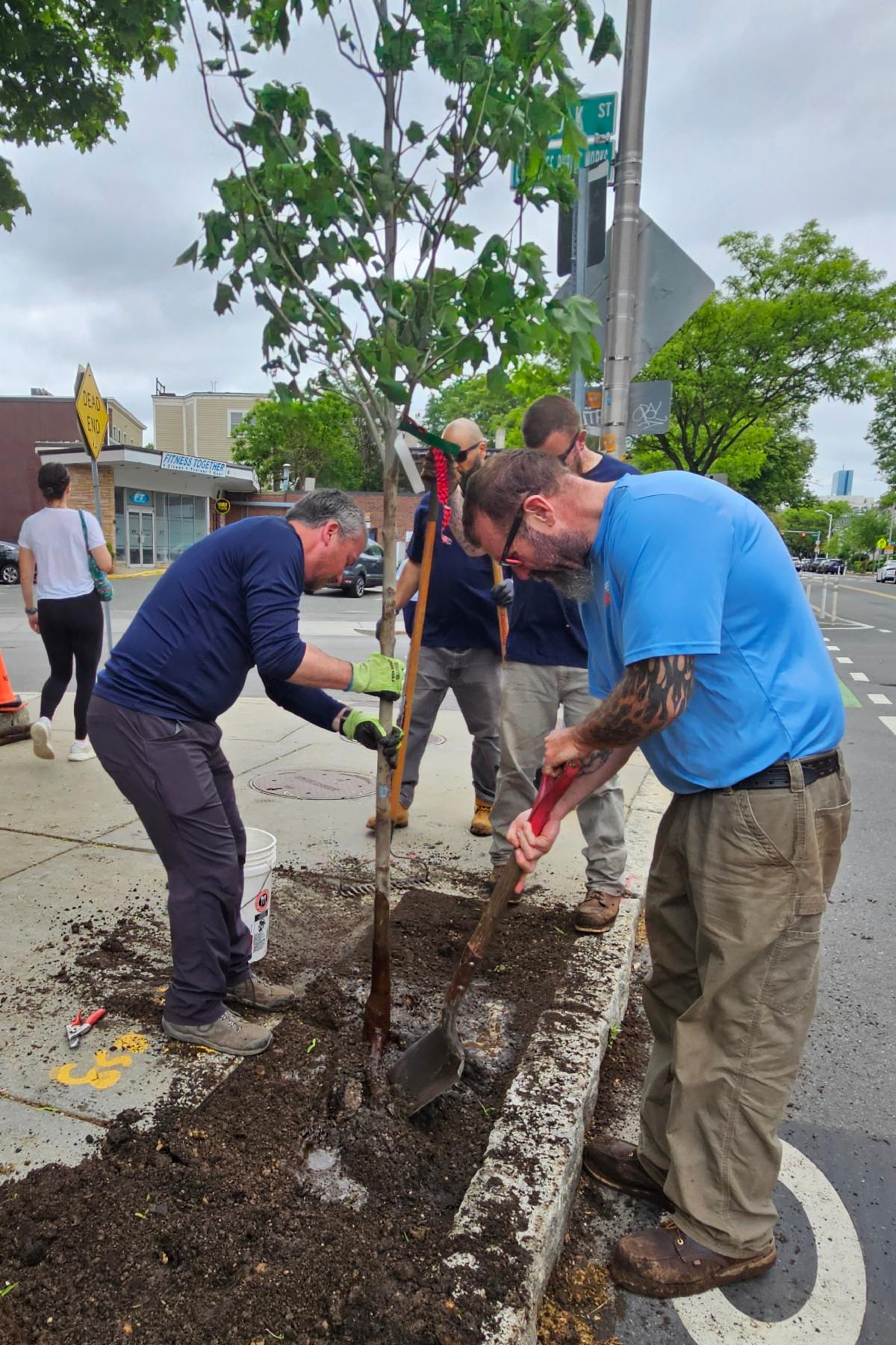
Have you been enjoying the crisp autumn air? So have the trees! As they lose their leaves and enter dormancy, fall is a is a fantastic time to plant. The City plants trees every spring and fall but fall is especially ideal because it gives trees extra time in the ground before summer heat begins. This fall, we are planting many new trees along streets, in parks, at City buildings, and in other open spaces. Check out our map of planned tree planting locations here. To request tree planting, submit a request on SeeClickFix!
| Urban Forestry plants a new tree on Hampshire St. | |
Fall Foliage Map Now Live!
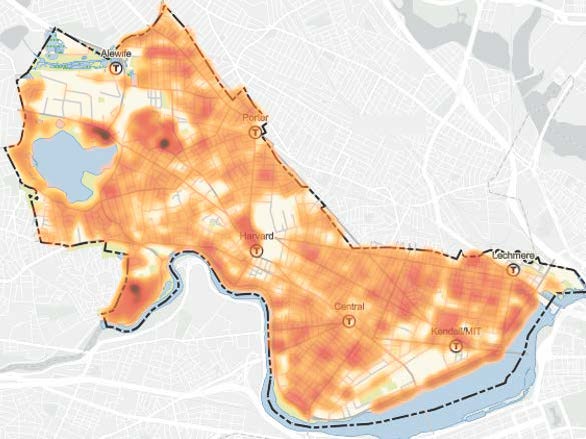
Check out our interactive fall foliage map to see where fall colors are popping up in Cambridge!
Fall Foliage Map
The heatmap highlights dense canopies with lots of fall foliage. Areas with large trees are dark red on the map, and smaller trees are light orange. As you zoom in, individual tree points appear and are shaded by the unique color their leaves turn in autumn. This map is a great way to preview the vibrant reds, oranges, and yellows you’ll find across the city. Use this map to plan your walks and bike rides around this spectacle while it lasts!
| |
Maple Match Up: Who's Who?
Curious about identifying different types of maples? Below are some of the most common maples found in Cambridge. Some are found more often along streets, others in yards, some both! Urban Forestry staff weigh in on how they identify different maple species!
First, the basics. Most maples have samaras, or winged seeds. Their branching pattern is opposite, so you’ll see two small branches directly opposite from each other on their parent branch. Tree leaves are described by their shape, margins (edges), petioles (stems), lobes and sinuses (projections and indentations). Tree bark is another indicator of species. Is the bark smooth, exfoliating, plated, or furrowed? What color is it? Does it change as the tree matures?
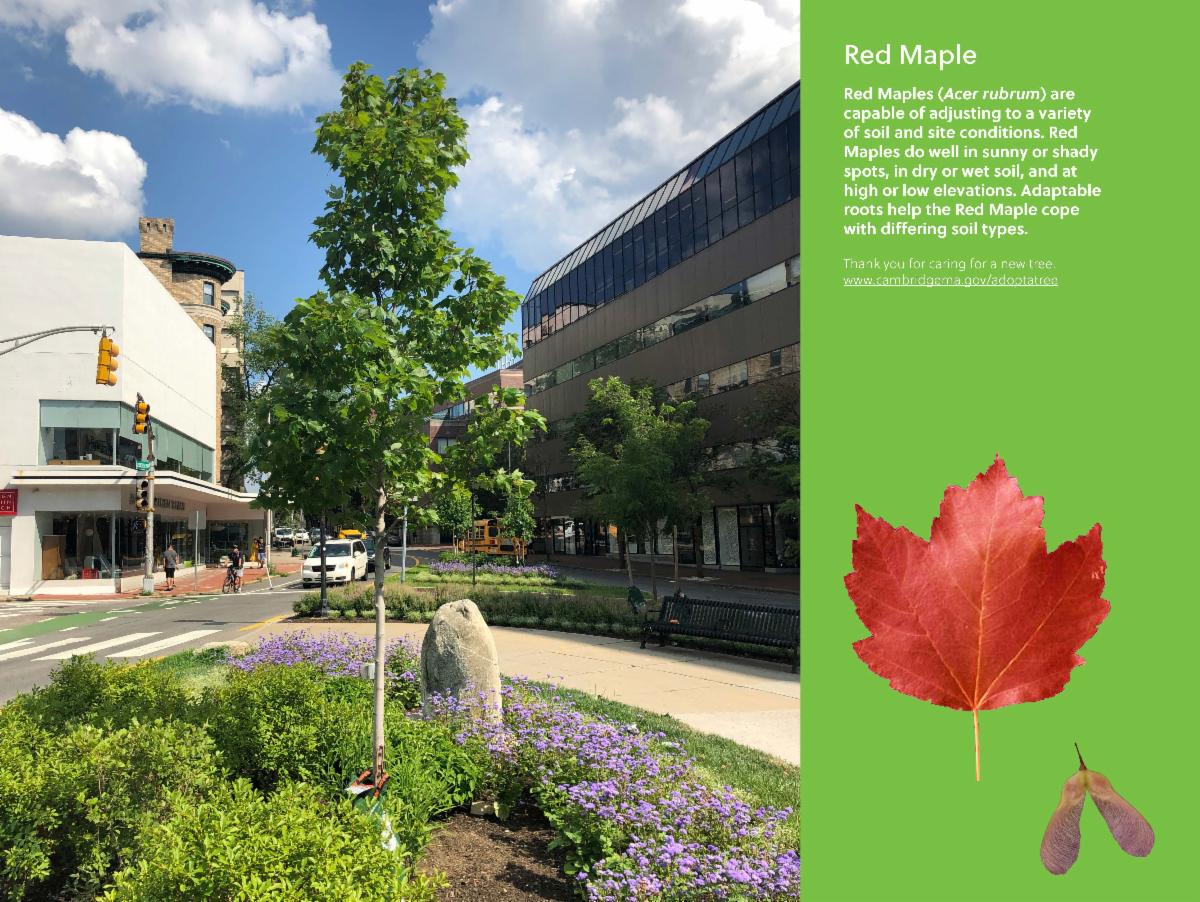
Red maple (Acer rubrum)
When you think of a maple tree, you probably picture a red maple. It is the most common tree species in North America. Known for its adaptability, beauty, and fast growth, It also has few pest/disease issues and provides many ecosystem benefits. Red maples usually have red leaves in the fall, red buds, red petioles (leaf stems), and red samaras. Their leaf shape can vary, but they are usually smaller than other maple species and have 3 lobes. Red maple buds are plump and round. Their leaf margin is serrated. The bark starts off smooth and gray, becoming rougher as the tree matures, with vertical scales and plates. You’ll find red maples everywhere: along streets, in yards, parks, and forests. Red maples come in many cultivars and varieties.
| | |
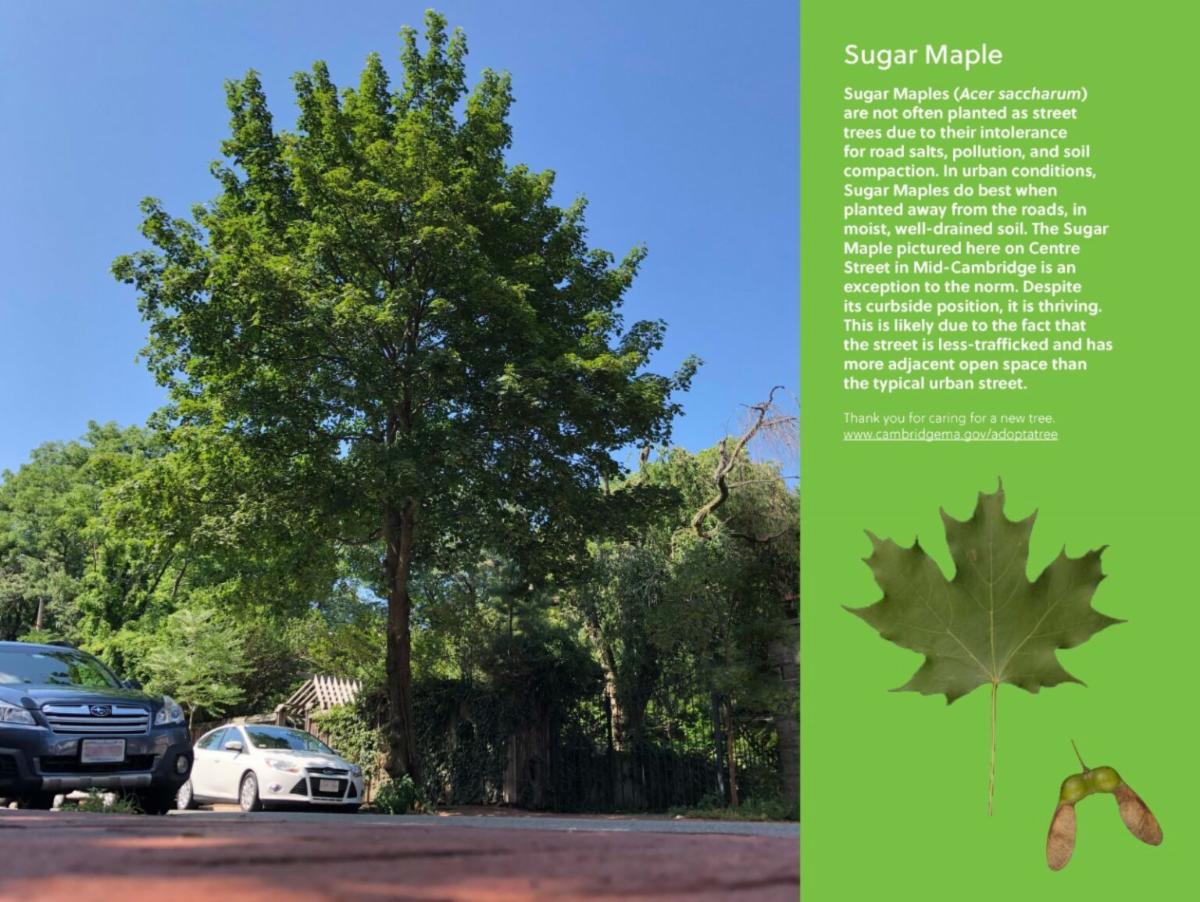
Sugar maple (Acer saccharum)
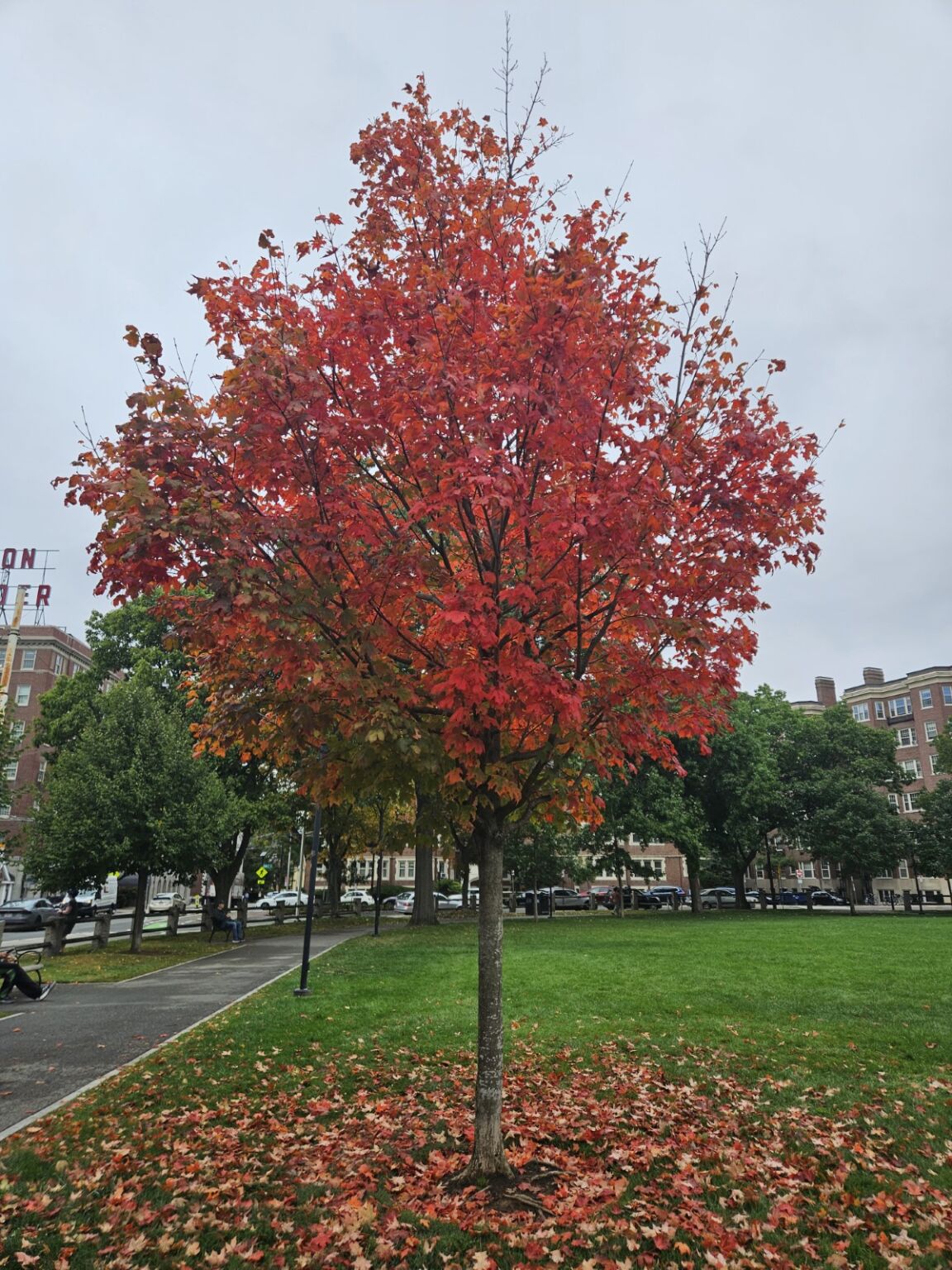
Sugar maples are a favorite among arborists. Not only are they stately, long-lived tree with strong wood and beautiful foliage, but they also provide our favorite breakfast treat: maple syrup! Sugar maple buds are pointy and brown, and not as conspicuous as red maples. Its bark is furrowed, scaly, and typically darker gray than red maple bark. Sugar maple leaves have 5 lobes and smooth edges. Fall foliage varies from sunny yellow, to bright orange, to vibrant red. Sugar maples don’t handle pollution, salt, or soil compaction very well so they’re not the best choice for streets. In Cambridge you’ll mainly find them in parks and on private property.
| | |
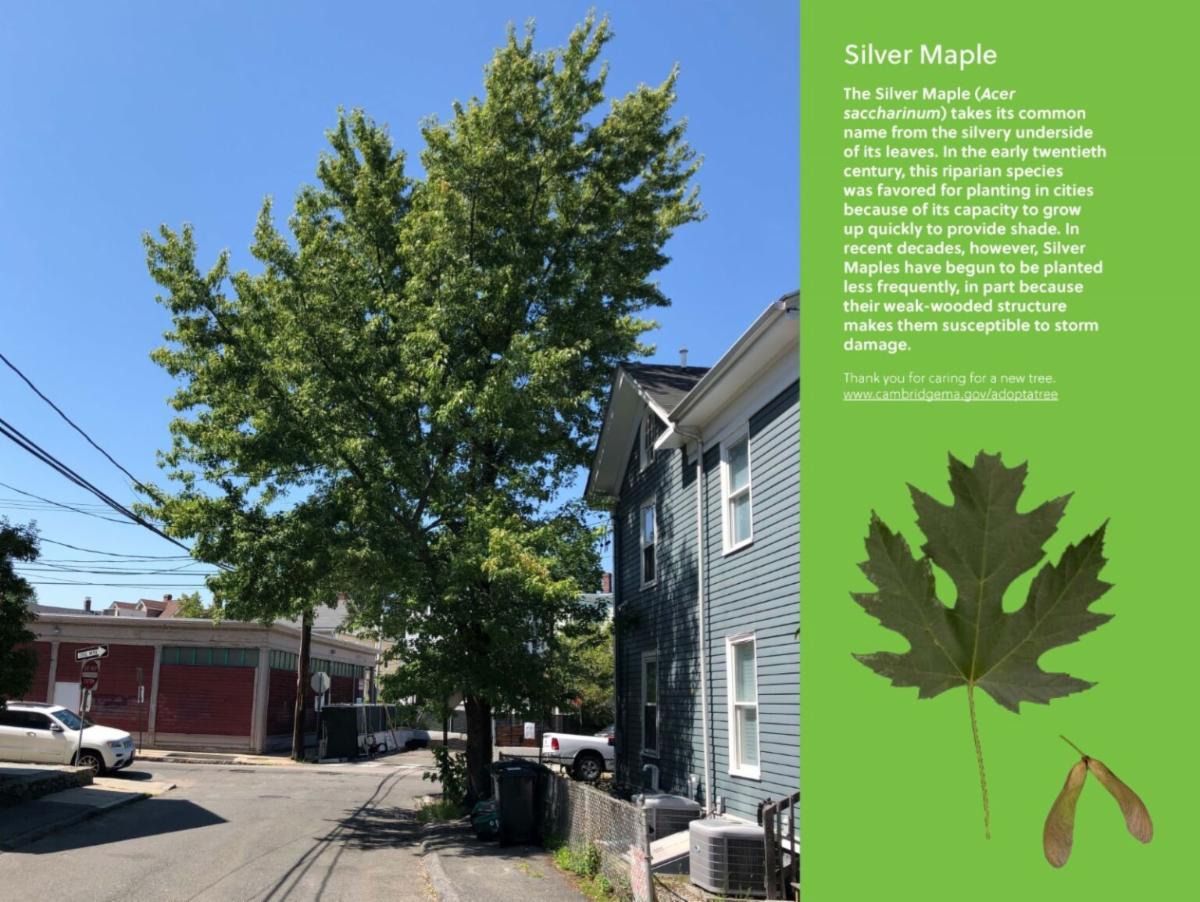
Silver maple (Acer saccharinum)
Some of the largest maples around Cambridge are silver maples. They are native to Massachusetts and the fastest-growing of our native maples. In the wild they’re found along streams because they prefer to keep their roots wet. Their leaves are pointier and have double-toothed margins. Silver maple bark is very shaggy with long vertical strips and ridges. Fall color is usually yellow or orange. The reddish-brown buds are some of the first to flower in early spring, a big benefit for pollinators.
| | |
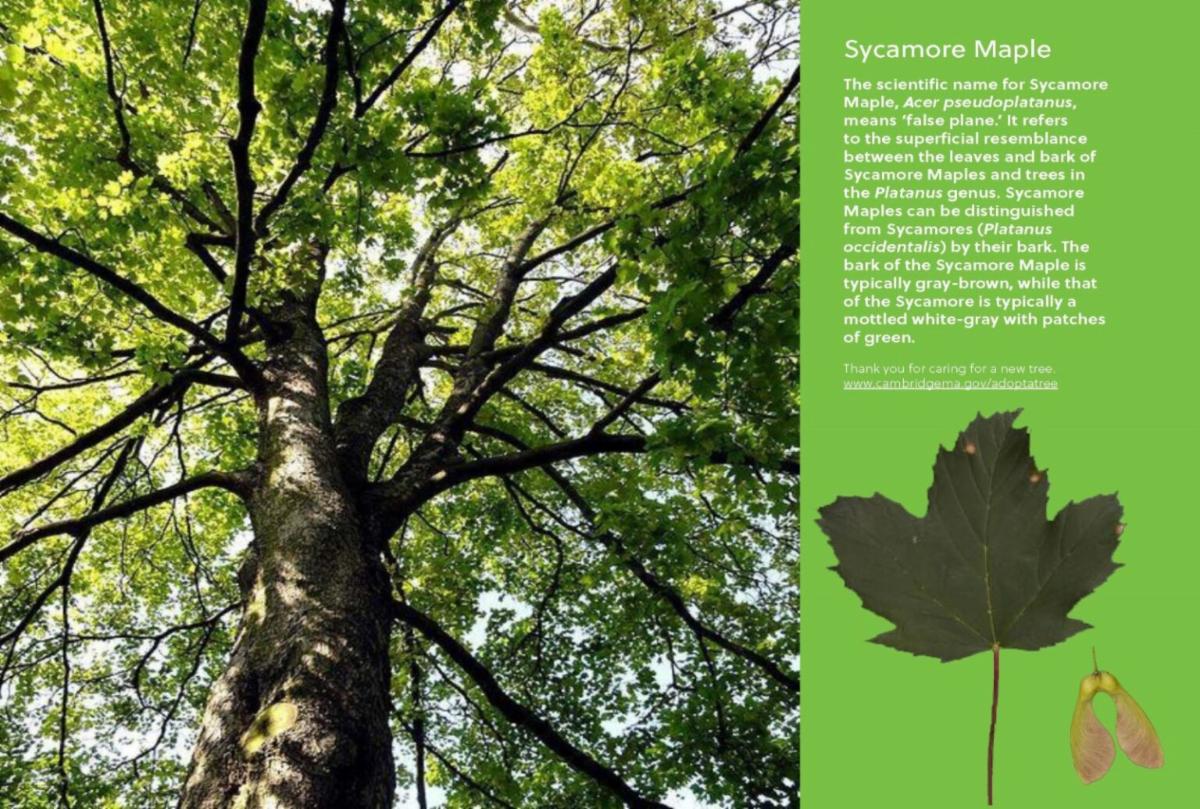
Sycamore maple (Acer pseudoplatanus)
Native to Europe and western Asia, sycamore maple is considered invasive in Massachusetts. Despite its invasive status, it still provides habitat, cooling shade, and other benefits in our city landscape. Its leaves are typically 5-lobed, thick, and leathery in texture. Petioles are red, similar to red maple, but leaves are larger and have an overall more rounded shape. The bark is smooth and gray when young but matures to a flakey patchy texture. The name pseudo-platanus (false sycamore) refers to the tree's resemblance to the true sycamore.
| | |
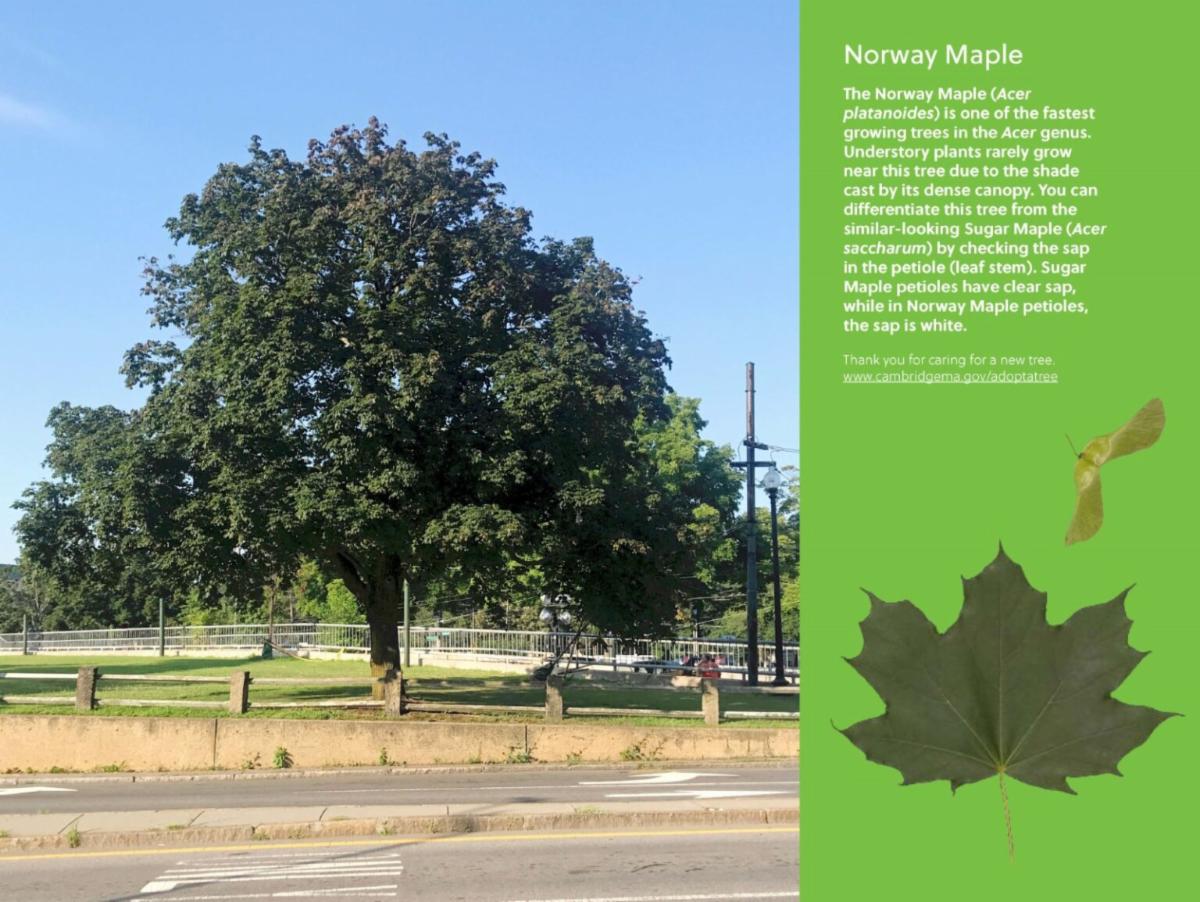
Norway maple (Acer platanoides)
Norway maple is one of the most abundant species in Cambridge. Like sycamore maple, it is an invasive species in Massachusetts. It has been in the U.S. for hundreds of years but its popularity grew after Dutch Elm Disease devastated the American elm population. Norway maples are fast-growing, tolerant of salt, soil compaction, root disturbance, and air pollution - making them ideal for urban environments. They produce an abundance of samaras that germinate quickly, even in poor or shady conditions. The bark is light brown/gray bark and becomes lightly furrowed with age. Buds are large, brown, and rounded. Leaves are usually large with a geometric shape. When broken, small twigs and leaves produce a milky sap, a characteristic only of this maple species. Fall color is typically yellow. Norway maples leaves are usually dark green, unless you come across a ‘Crimson King’ cultivar, which has dark purple leaves.
| | Leaf Bag Giveaway for Forest Friends | |
Species Highlight: Sugar maple (Acer saccharum)
| Sugar maple is notable for its sap, which contains twice the sugar content of other maples. Traditionally, sap is boiled for hours to evaporate water and concentrate sugars, producing the delicious maple syrup we love. Darker syrups are produced later in the season and have a more robust maple flavor compared to lighter golden or amber syrups. Maple sap flow is dependent on weather and with warmer shorter winters, maple sugaring is becoming more difficult. The maple syrup industry is adapting by using new technologies to create the delicious maple syrup we all know and love. Instead of traditional boiling for hours, some sugaring operations are turning to reverse osmosis. This process separates the water and sugar molecules, drastically reducing the required amount of boiling time required. | | Sugar maples are turning their brilliant fall colors right now. Pictured is a sugar maple at Cambridge Common. | |
Forest Foe: Tar Leaf Spot
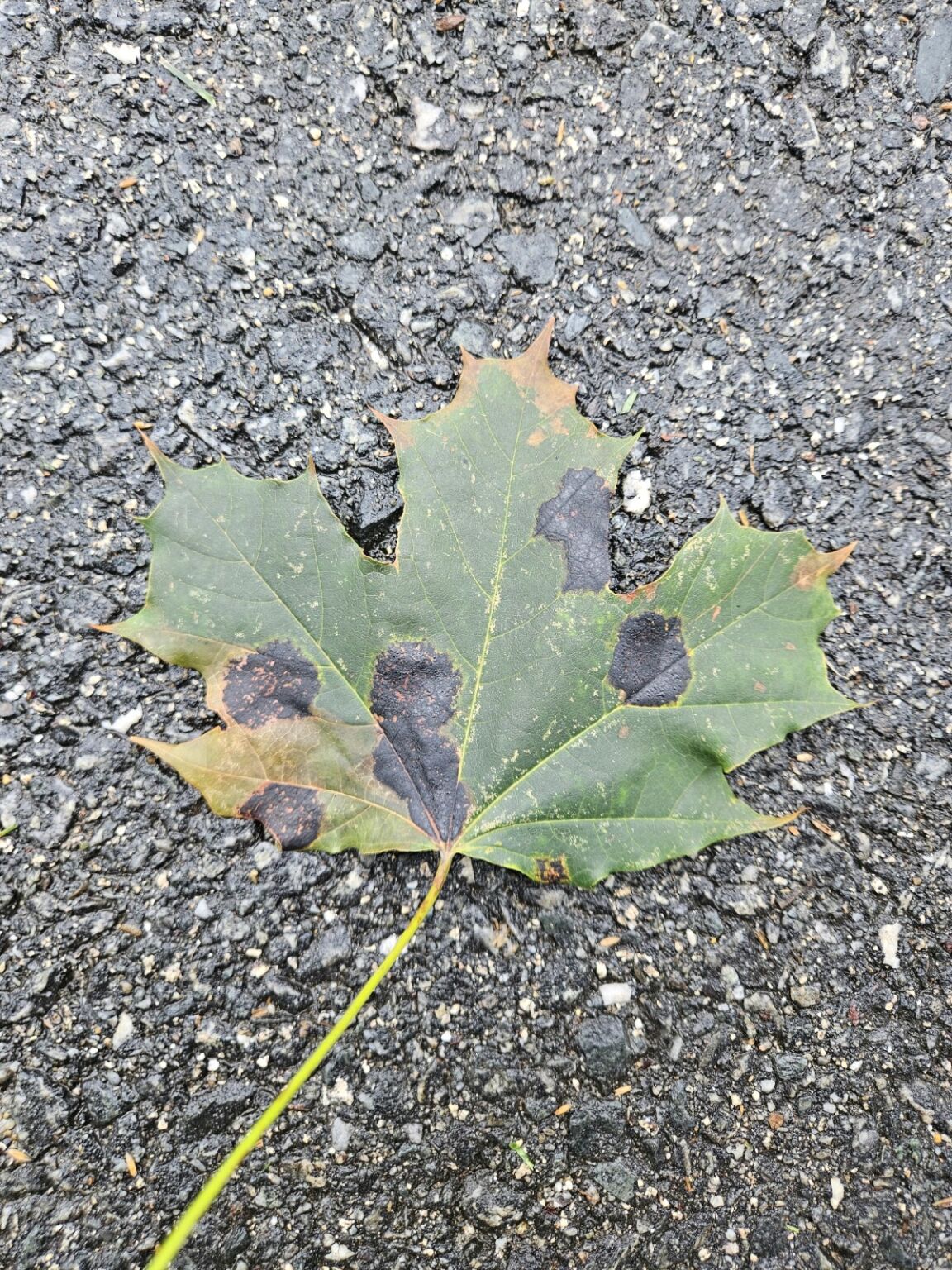
| | Have you spotted tar leaf spots? This issue affects only maples, with Norway maple being the most common host in Cambridge. This unsightly leaf spotting is caused by 3 species of fungus. Early in the summer, spots appear pale green, and by late summer or early fall, they turn black. Severe outbreaks can lead to early leaf drop but are generally not a serious threat to the host tree. If you have a Norway maple with tar leaf spot, consider raking and disposing of the infected leaves to prevent reinfection next year. | | |
Stumped! Urban Forestry Treevia
Learn a fun fact about urban forestry in Cambridge!
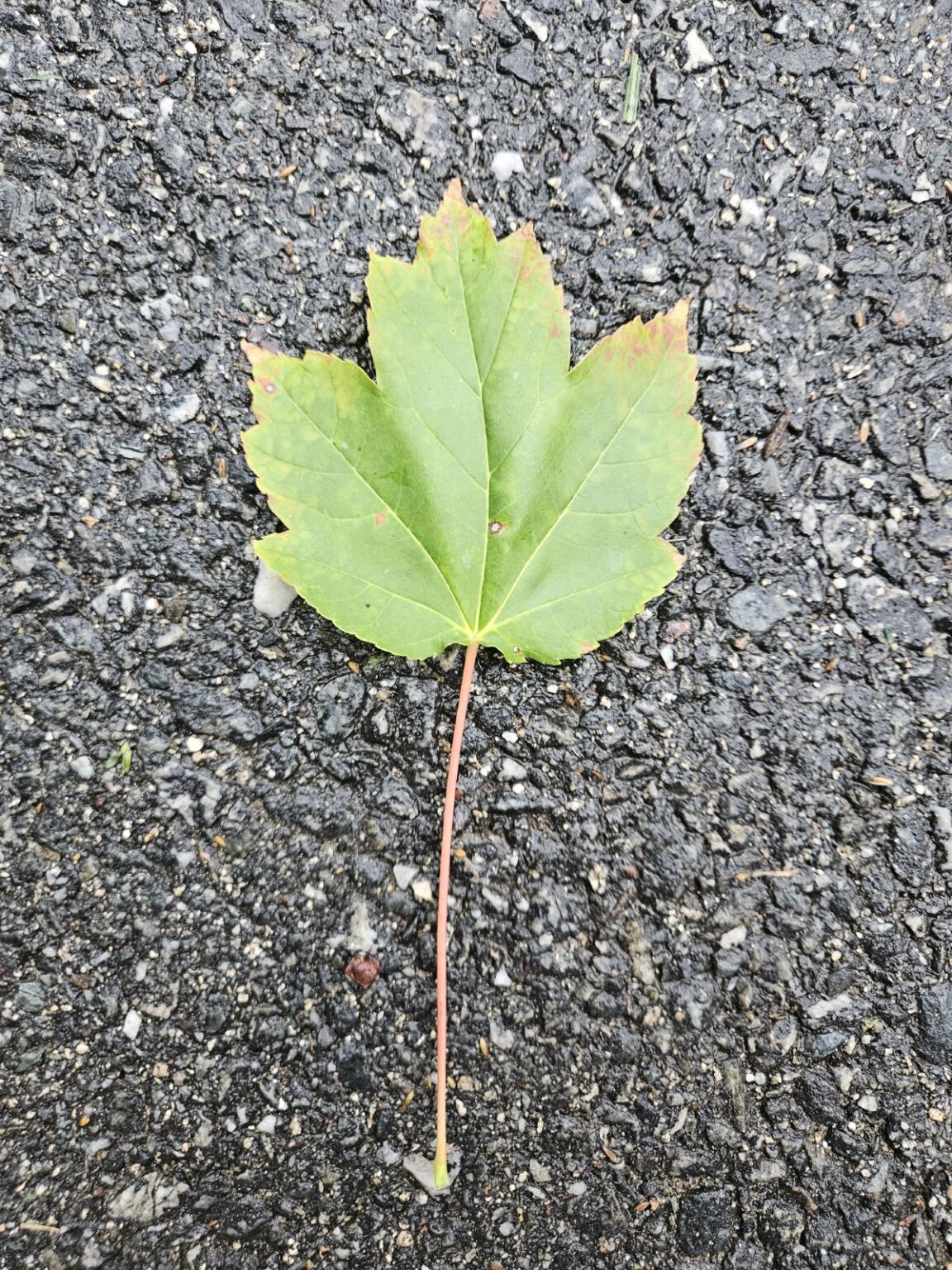
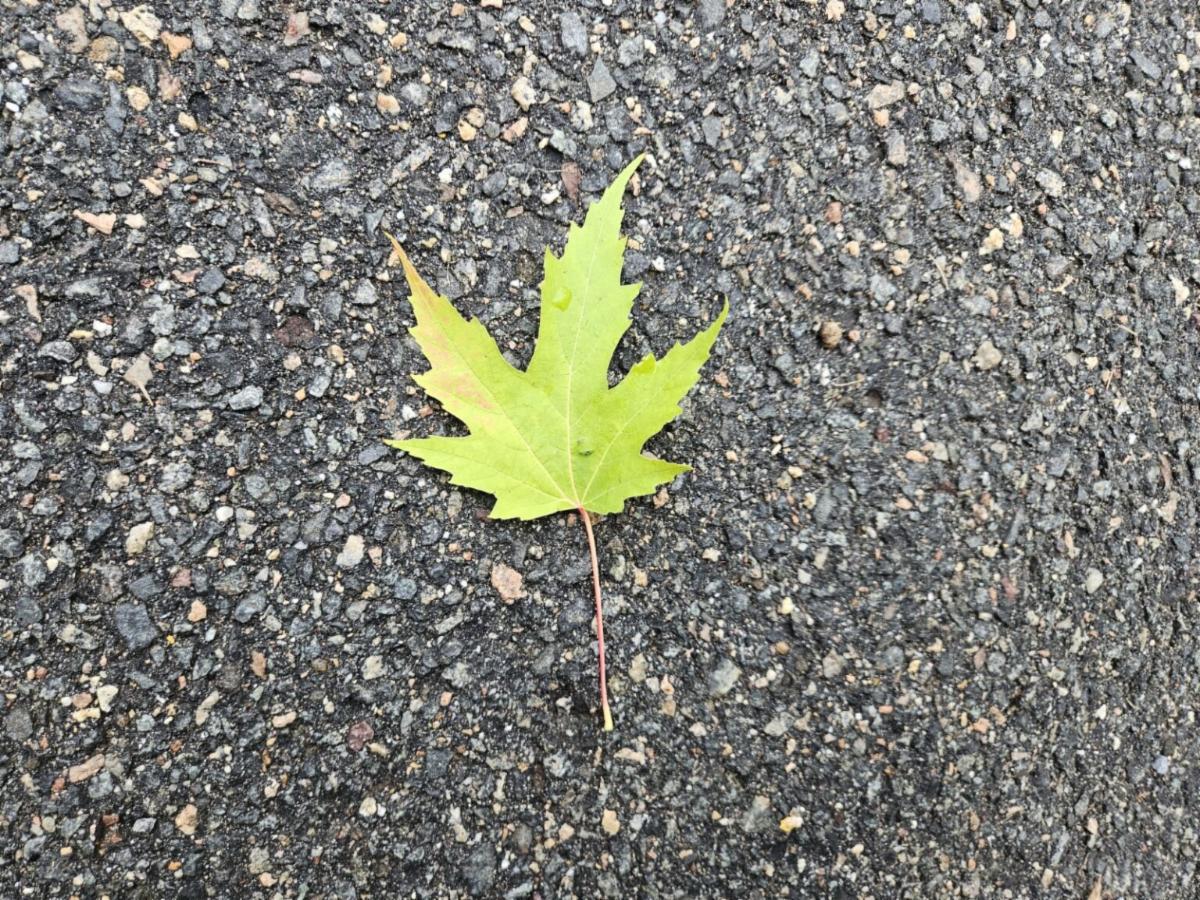
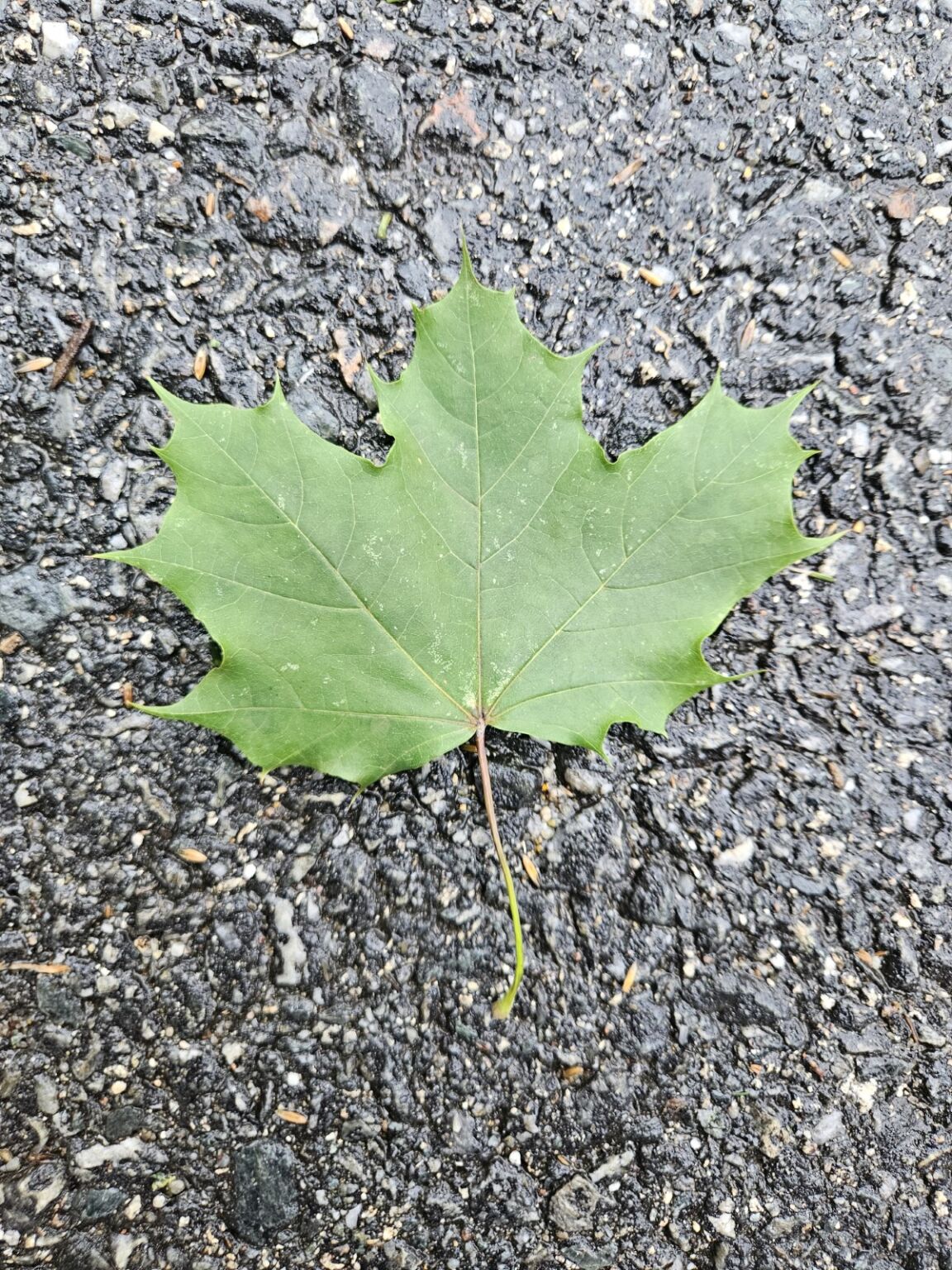
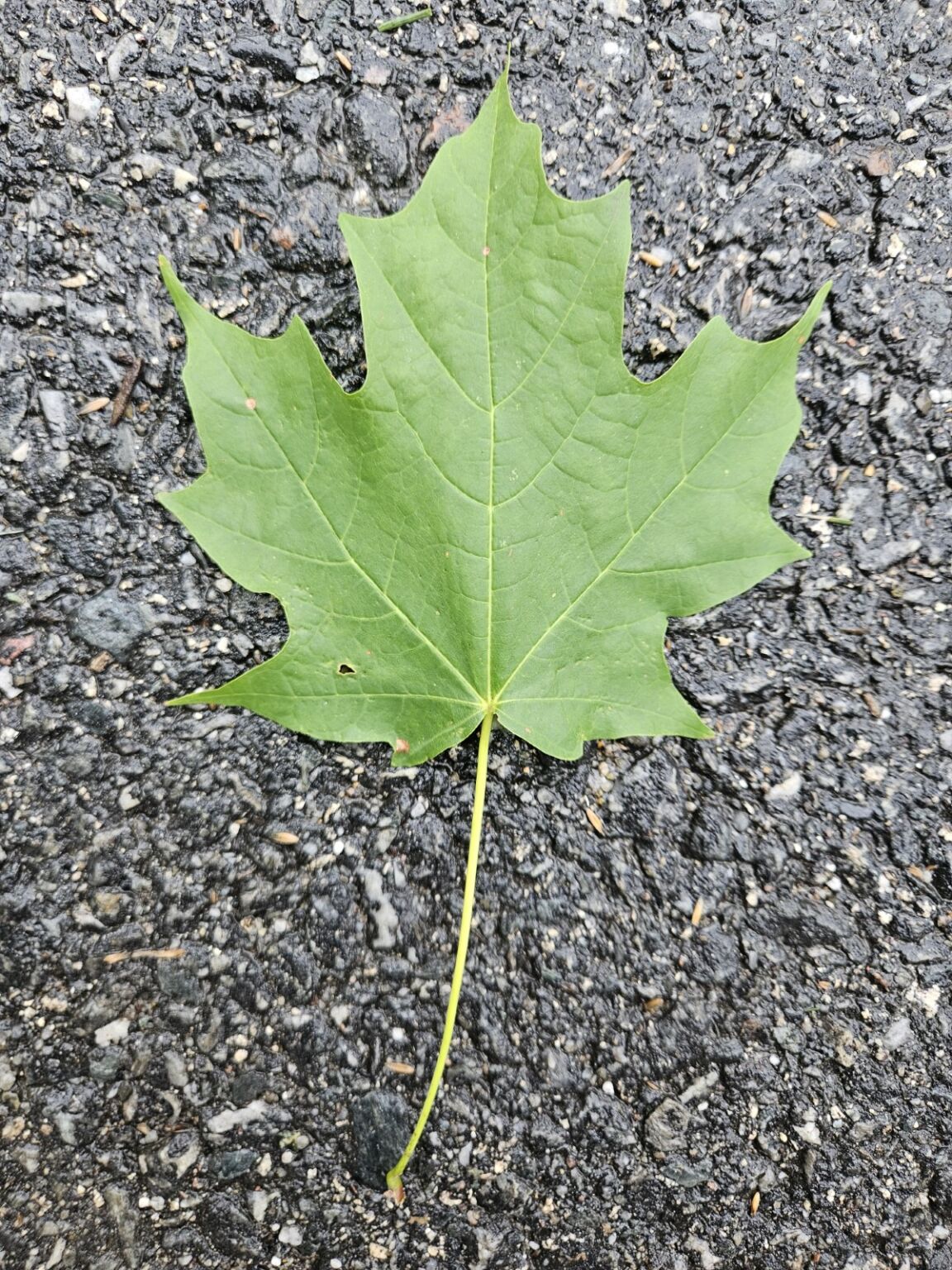
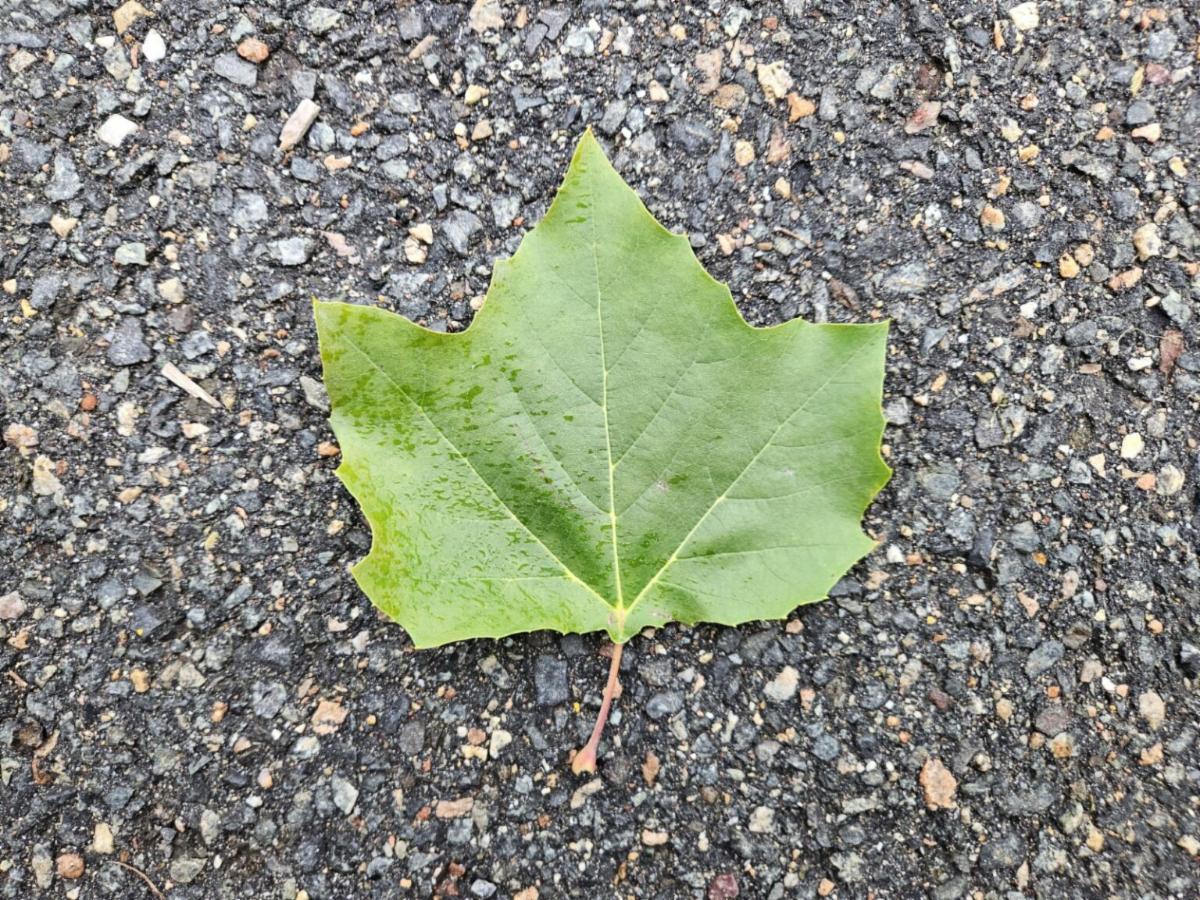
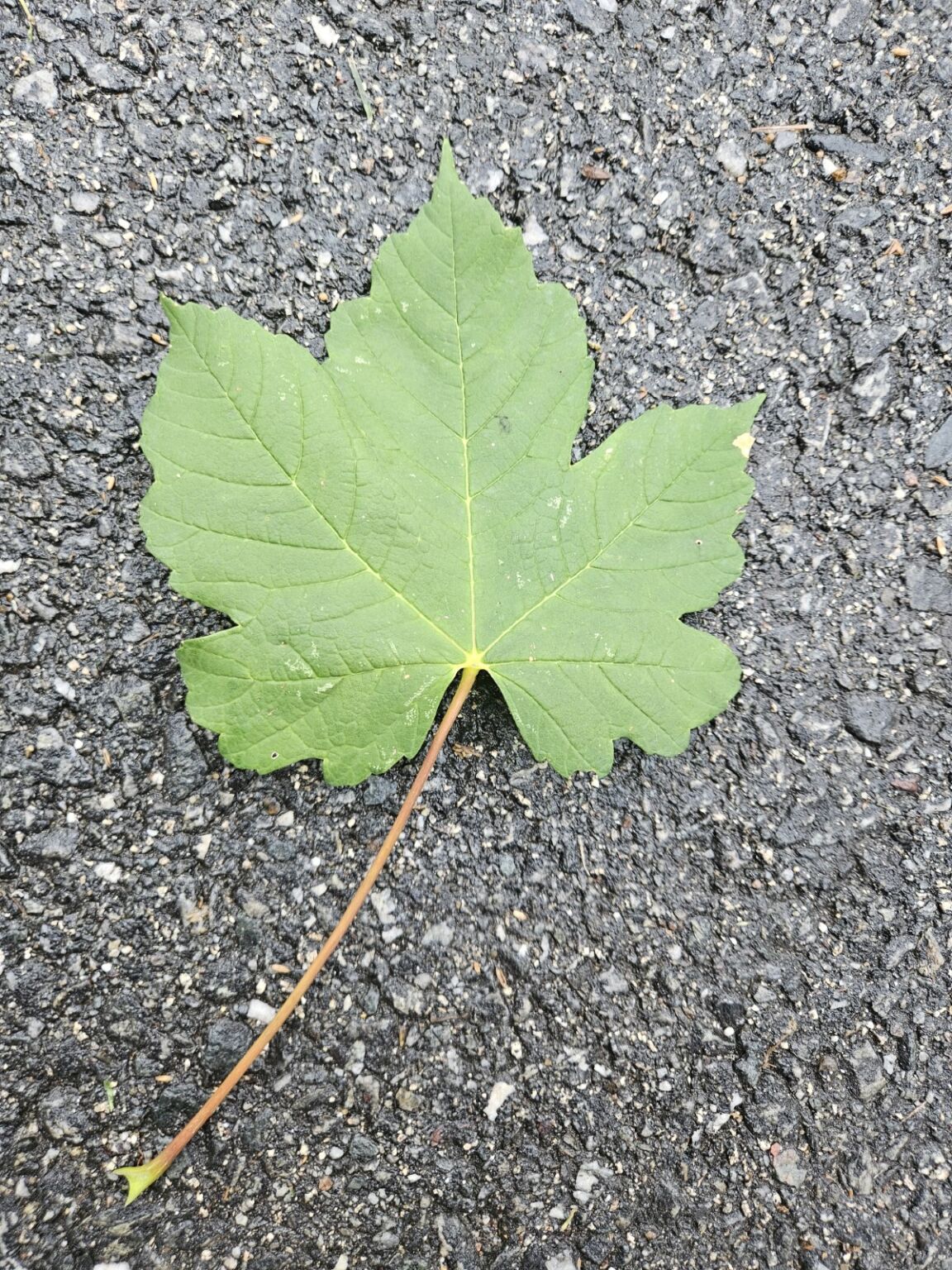
Which one of these leaves is not like the other?
| |
| All these leaves are from a species of maple except one! | | | | | |
The trivia answer will be revealed in next month’s newsletter!
Last month's question was "What happens if you leave leaves in garden beds?” and the answer was "C. The leaves will provide nutrients for the soil and support insects and plants". Did you get it right?
| | Become a Cambridge Urban Forest Friend | |
We need your help to maintain a healthy, vibrant urban forest! Any Cambridge resident willing to regularly water the tree and provide some general care for the tree is welcome to become a Cambridge Urban Forest Friend.
How to Start
| | |
Questions?
For questions about the Cambridge Urban Forest Friends, please contact Kristen Kelleher, Community Relations Manager at 617-349-4825 / kkelleher@cambridgema.gov.
**Please let us know if you are no longer caring for your street tree and we will remove you from the database and future emails.**
| | Sign up for a free tree with Green Cambridge |
If you have space for a tree on your property, Green Cambridge can plant a free native tree to help expand Cambridge’s urban tree canopy! If you own your home in Cambridge, MA and would like Green Cambridge to plant a tree in your yard for FREE, visit https://www.greencambridge.org/canopycrew
| | |
Thanks for reading!
If you enjoy the Cambridge Urban Forest Friends newsletter, you can spread the word about it with this sign-up link. With more sign-ups, more Cambridge residents can learn about how to best support our environment and communities.
| | | | |