|
April 2026 Newsletter from the 30 Mile River Watershed Association
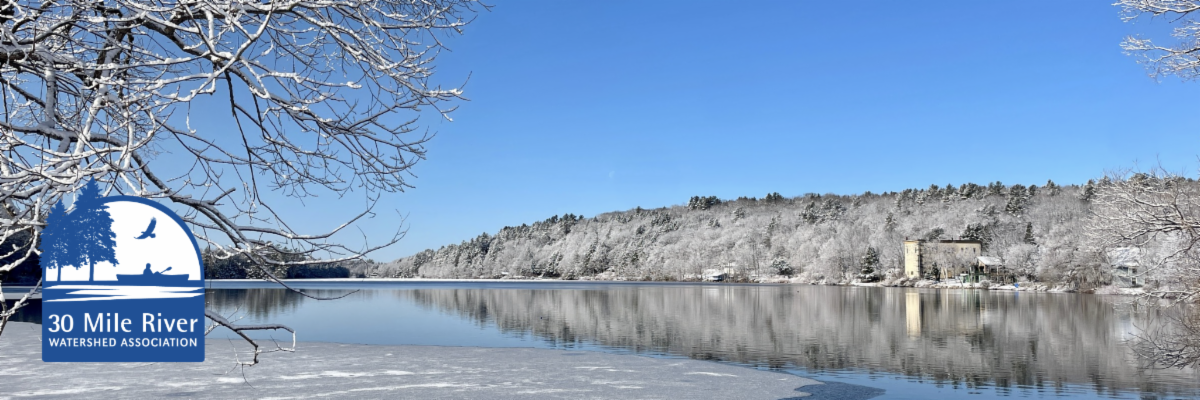
Photo: Four days before ice out, looking south down Minnehonk Lake on April 8th, 2026.
Can you spot the loon?
| | Echo, Pocasset, and Lovejoy LakeSmart volunteers needed! | | |
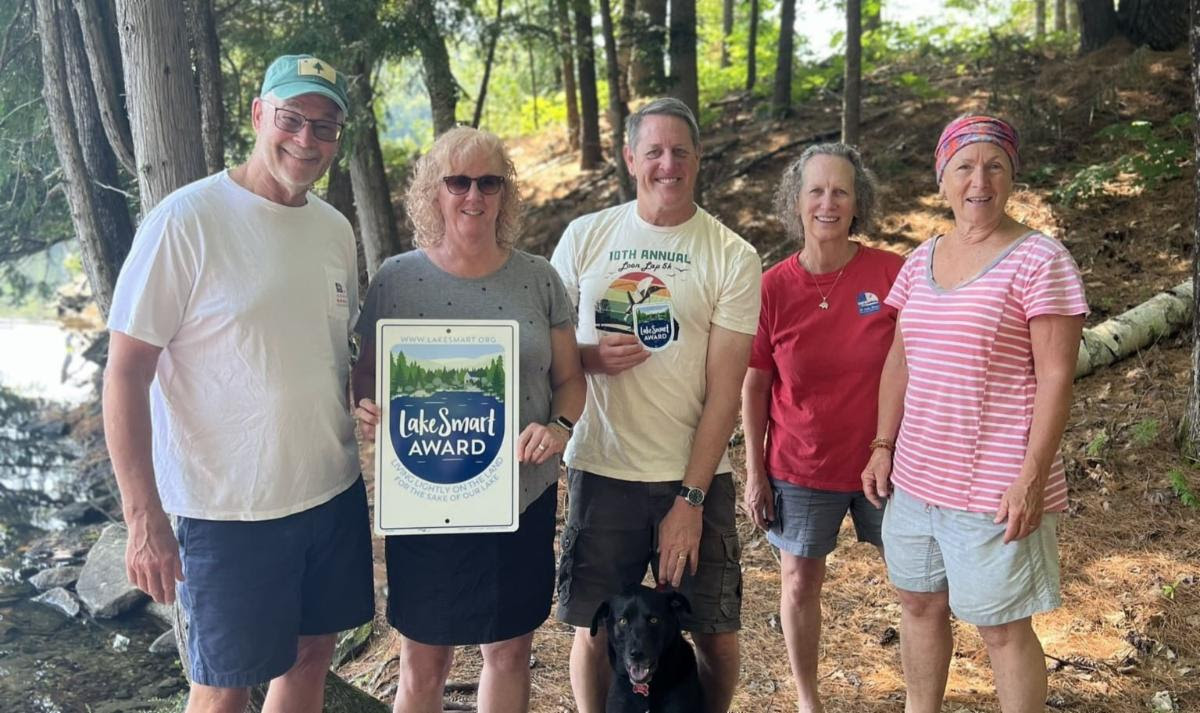
Our actions on land directly affect the health of our lakes. LakeSmart helps landowners identify impacts and provide tips and tricks on how to mitigate them. We’re looking for volunteers from Echo Lake, Lovejoy Pond, and Pocasset Lake to join our team—we want to hear from you! It’s a chance to interact with your neighbors, share knowledge of lake protection, and make a difference. As a LakeSmart Hub for our watershed, 30 Mile provides all the necessary training, support, and assistance needed. We have existing teams on Androscoggin Lake, Flying Pond, Minnehonk Lake, and Parker/Basin/David Ponds that you can also get involved with. More volunteers are always needed and welcomed on all lakes. Find information about our existing teams here.
New LakeSmart volunteer evaluators attend three online training sessions and an on-site training on their lake or one nearby, where they learn to identify signs of erosion, assess a property’s ability to prevent run-off and inputs of pollution, and make simple recommendations for improvements to the landowner.
Three free training sessions next month are designed for new volunteers, and also open to current volunteers as a refresher. All training sessions will be held via Zoom, and recorded to be uploaded to the Maine Lakes website.
New Evaluator Basics
Lake science introduction, how LakeSmart works, and an overview of the LakeSmart property evaluation. Thursday, May 7th, 12:00 PM, register here.
Installing and Using Survey123
Tuesday, May 19th, 5:00 PM, register here.
Capturing & Uploading Photos for LakeSmart Evaluations
Thursday, May 28th, 12:00 PM, register here.
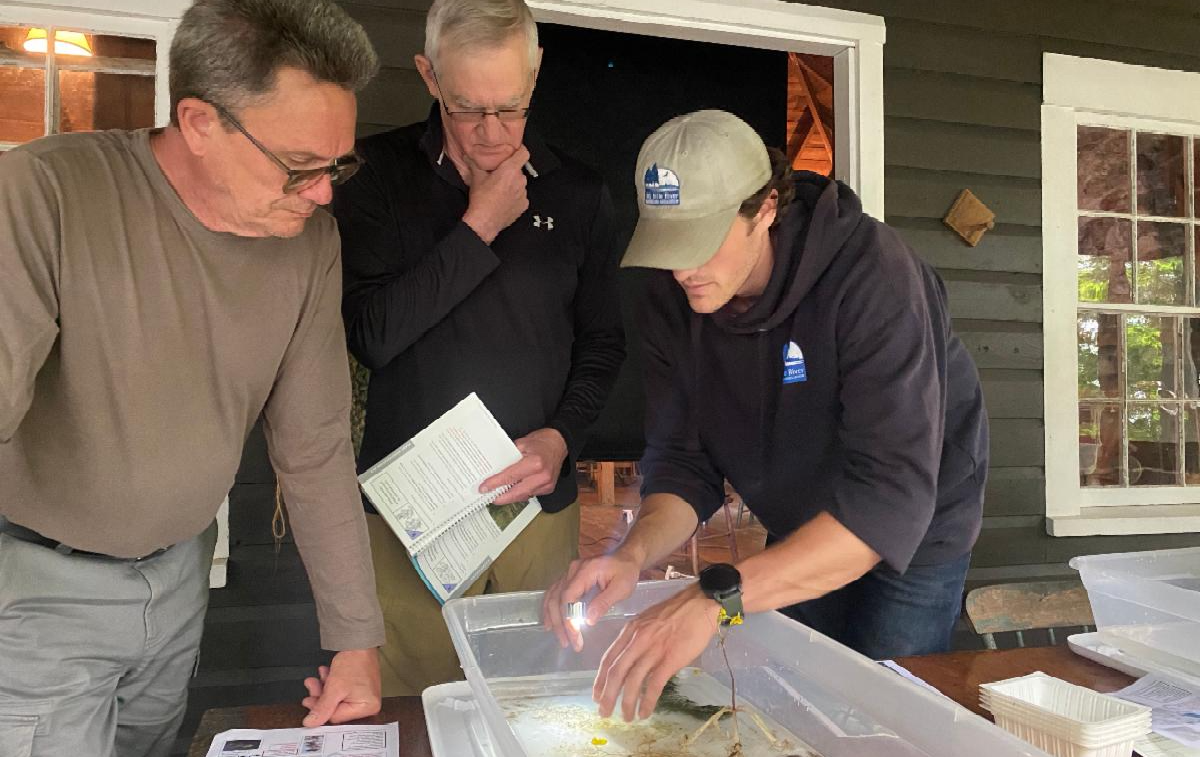
Once volunteers have completed these virtual trainings, the next step is to attend an on-site training with Maine Lakes and 30 Mile staff, who will walk through evaluations on a lakeshore property with a group.
| | |
Help safeguard your lake:
Become an Invasive Plant Patroller this season!
| | |
Invasive Plant Patrollers play a vital role in the early detection of invasives by keeping a watchful eye for suspicious plants growing in their lakes and ponds. Both infestations in our watershed were first found by volunteers.
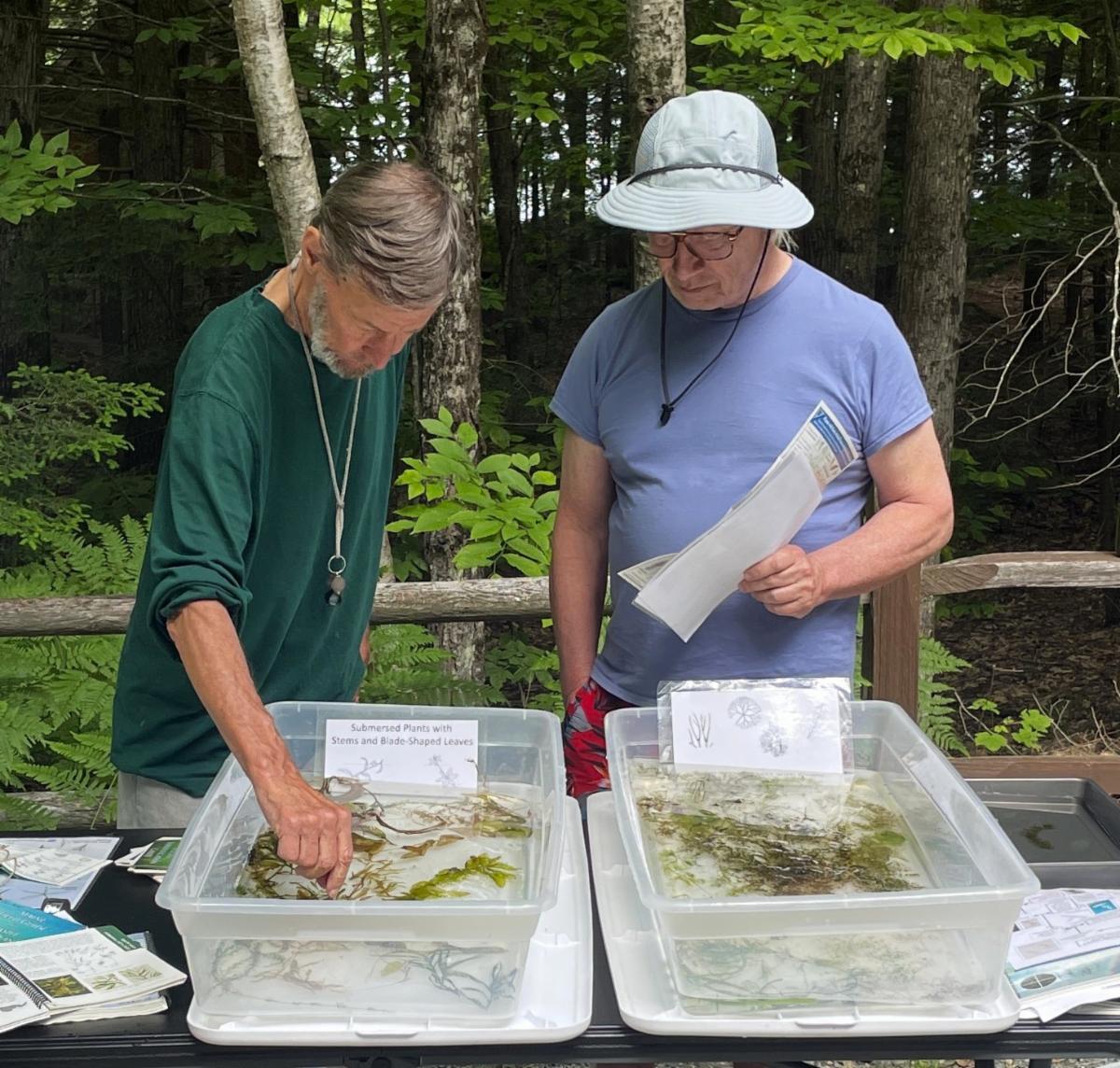
In this 3-hour, online Invasive Plant Patrol 101 class by Lake Stewards of Maine (LSM), you’ll learn the background of Aquatic Invasive Plants in Maine, key identification features of species on Maine's watch list, and how to support early detection efforts.
For those interested in becoming certified patrollers, completing IPP 101 is the first step. The second step is attending a Live Plant I.D. workshop, which we’ll be hosting at the Kents Hill School Alpine Center in July!
When: Thursday, May 14th, 9AM
Where: Virtual (Zoom)
Register here
| | |
Question of the Month:
Can I clean up shoreline debris?
| | |
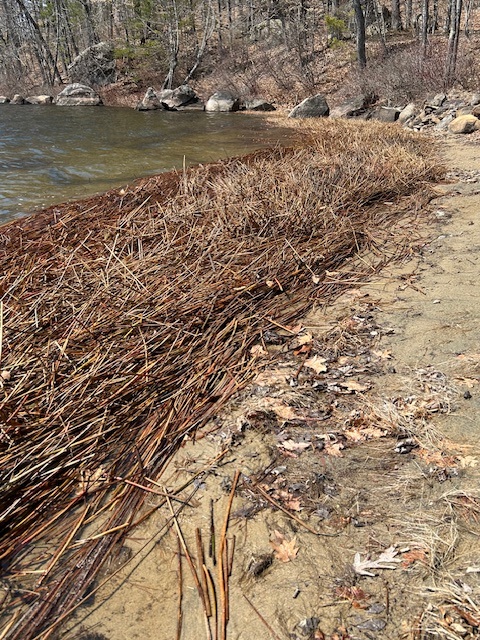
When we experience a drier growing season like last year’s, lower water levels can result in more plant growth and more vegetation exposed above the water’s surface. Over the course of the winter, these plants can loosen, get cut by ice, and break free. In the spring, when ice breaks up, providing more open water for wind and wave action, this material naturally breaks off and accumulates along the shore.
This accumulation is known as “freshwater wrack.” It’s a mix of aquatic plants, sticks, and leaf litter similar to what you see with seaweed and other debris along an ocean beach. While the amount of wrack can vary depending on conditions, it is a normal and important part of the lake ecosystem.
Wrack buildup is influenced by many factors; wave exposure, shoreline shape, water level changes, and the amount of vegetation. When plant growth is higher and water levels have fluctuated, we may see more wrack than normal.
Can it be removed?
As long as the material is not rooted vegetation, it can legally be removed. However, removal should be done in moderation. While this wrack may not be the aesthetic you’re used to, it serves as habitat and a food source for many lake organisms that play a key role in the natural nutrient cycling. These organisms support the lake’s food web, including its fisheries and loons! Leaving some natural freshwater wrack in place is important to maintaining a healthy, balanced ecosystem.
Photo: Freshwater wrack along the shore of Androscoggin Lake, April 2026 (Betsy Clark)
| | |
LAST CALL:
Order Live Stakes, improve your shoreline!
| | |
This weekend is your last chance to order live stakes for spring planting. Live stakes are an easy, cost-effective way to strengthen your shoreline buffer and protect water quality. Live stakes are woody shrub-cuttings from established native plants that, once planted, root quickly to stabilize soil, reduce erosion, and grow into healthy buffers for years to come.
Available species include meadowsweet, arrowwood, dogwoods, and willows – all great options for sprucing up your shoreline this season. You are welcome to plant the live stakes yourself, but if you won’t be present on your property until later in the season or would prefer assistance, 30 Mile staff are happy to help with installation and care tips. Click here to place your order! The form will close at the end of the day Sunday, April 26th.
Interested in learning more about livestaking? See our Live Stake Demonstration listed below, led by the Maine Forest Service in partnership with the Kennebec County Soil and Water Conservation District and 30 Mile. If you prefer to place an order later in the year, please note that the live stake request form will reopen this summer for fall orders.
| | Upcoming workshops, webinars, and events | | |
Basic & Advanced Erosion Control Practices
Required for contractors to become certified in Erosion and Sedimentation Control Practices by the DEP, but also useful for code enforcement officers, public works employees, consultants, and engineers. Led by Maine DEP and hosted by 30 Mile.
When: Thursday, April 30th, 8AM - 4PM
Where: Starling Grange Hall, Fayette
Register here
| |
Maine Aquatic Invasive Species Summit
Join professionals and volunteers for the 26th Annual Summit to learn about what is happening in the fight against aquatic invasive species in Maine.
When: Friday, May 1st, 9:30AM - 12:30PM
Where: Elks Lodge, Augusta
Register here
| |  | |
Live Stake Demonstration
Led by the Maine Forest Service and co-hosted by 30 Mile and the Kennebec County Soil & Water Conservation District, this workshop combines a short educational session on erosion control with hands-on harvesting and installation of live stakes.
When: Thursday, May 14th, 9AM - 10:30AM
Where: Minnehonk Lake Boat Launch
Register here
| |
Gravel Roads Workshop
Learn how proper maintenance protects water quality; about gravel road materials; how to evaluate a gravel road for maintenance needs; creating a road maintenance plan; and how to implement gravel road Best Management Practices. The class may include a site-walk on a local gravel road, which provides a real-life scenario for discussion of potential improvements and practices. Led by Maine DEP and hosted by 30 Mile.
When: Thursday, June 4th, 8AM - 12PM
Where: Ladd Recreation Center, Wayne
Register here
| | | NEW Best Management Practices Fact Sheets | | |
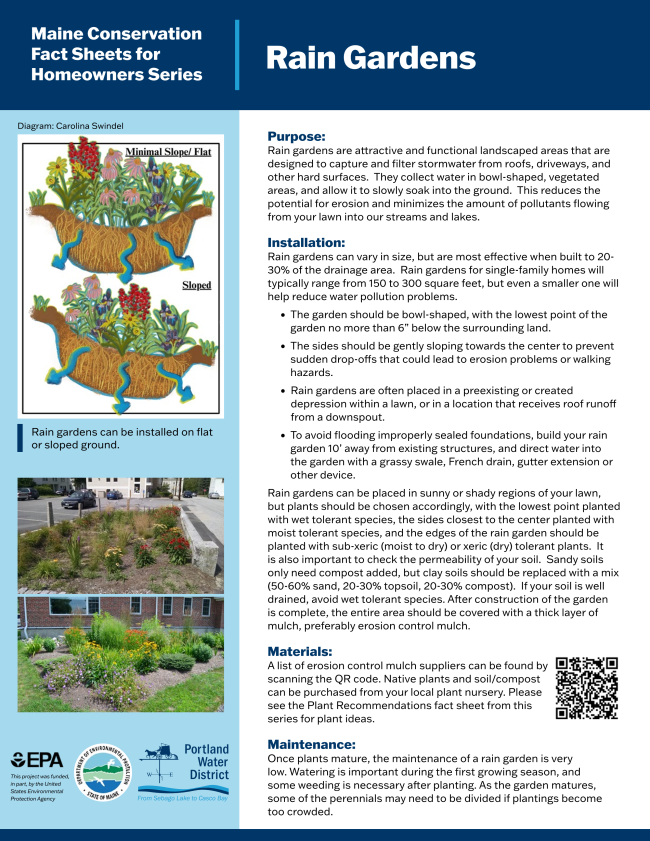
Spring is the perfect time to start thinking about lake-friendly upgrades that protect the waterbody you love. Small changes at home can make a big difference for your lake. Planting a shoreline buffer, installing a rain barrel, or adding simple runoff diverters are all quick, low-cost best management practices that homeowners can use to reduce erosion and protect water quality.
The Portland Water District, in partnership with the Maine DEP, has updated its Conservation Fact Sheets for Homeowners. Each guide is just one to three pages and walks you through practical fixes to manage stormwater runoff and stabilize loose soil on your property. They highlight straightforward, effective best management practices you can use on your property to support long-term lake health. They also outline permitting basics and construction best management practices, giving homeowners clear guidance on what to consider before starting a project.
If you’re wondering which small changes have the biggest impact, these fifteen new fact sheets are a great place to begin.
Click here to explore the full set and get inspired to make a positive difference this season.
| | |
Wishlist Items: Donations Needed for Summer Staff
As we get ready for summer staff, we’re looking for a few items:
- Chairs with canopy
- 2 or 3-drawer filing cabinet
If you have one of these items to donate (or know someone who might), please email Silas Mohlar at silas@30mileriver.org. Thank you!
| |
| |
Thanks to all of you who supported bills this legislative session. We appreciate all of your testimony, calls and emails to legislators, and signatures on every sign-on letter. We’re proud that so many of the names on the lists of supporters are from our watershed! Here is a short summary of a few lake-related bills we followed this year:
✅ LD 1904: An Act to Establish the Municipal Shoreline Protection Legal Fund
This bill creates a state legal fund to help Maine municipalities cover court costs when enforcing shoreland zoning laws. Towns draw from the fund to pursue violations and repay it if they win. The bill received $100,000 in initial funding plus DEP staff support. This is a huge win for towns enforcing shoreland zoning violations.
✅ LD 646: Resolve, Establishing the Commission to Study Unmanaged Storm Water Pollution
This bill creates a commission to study stormwater pollution and issue a report by the end of 2026. The report would cover health and environmental impacts, mitigation strategies, gaps in existing regulations, and barriers to stronger protective policies. Policy improvement as a result of this report will protect the future of Maine's lakes.
❌ LD 2141: An Act Regarding Enforcement of the Annual Reporting Requirement of the Laws Governing Unclaimed Beverage Container Deposits
The original version of LD 2141 would have directed $4 million in unredeemed bottle deposits to lake and farmland protection. The bill drew broad public support — more than 120 people submitted testimony, and many others contacted their legislators in the final weeks of the session. Ultimately, it lacked enough votes in the Senate to pass and was amended to remove the funding. Important enforcement language was retained: initiators of deposit must now report annually to the DEP or face a ban on selling or distributing beverages. This amended version was signed into law.
Finding a sustainable funding source for lake protection remains a top priority for the Lake Protection Coalition, of which 30 Mile is a part, and we hope you'll join us in the years ahead.
| | Support 30 Mile! Your gift today will make a difference in protecting our lakes from phosphorus pollution, invasive species, and other threats. Find the giving level that works for you. | | Follow us on Facebook and Instagram! | | | | |