The Grammar of Visual Language | | “Isn’t life a series of images that change as they repeat themselves?” - Andy Warhol | | |
Spontaneous marks and shapes appear as we explore and experiment with tools, media, and substances for artistic effects. We decide whether these marks or shapes are beautiful, exciting, or ugly without consciously knowing how and why. When we pour our feelings and emotions intuitively into our visual expression, sometimes we create fantastic art.
However, these efforts sometimes fall short of reflecting our tastes, values, and inclinations. Consider a more intellectual and analytical alternative if the intuitive approach is insufficient to love your work consistently. Using both intuition and intellect engages both halves of your brain. It invites a wider audience interested in understanding and interpreting your creative process's deeper and more complex meaning.
Creating art is not like work. Creativity is an evolutionary process for the artist and for the culture. Making art is an exploration of the growing edges of our skills, our understanding, and our taste. We want our work to feel fresh, exciting, and engaging to ourselves and our viewers. Personal and cultural trends arise and are soon discarded. The drawing media you loved a few years ago now feels old and stale. Yesterday’s elegant gold-framed atmospheric landscape has been exchanged for contemporary brightly colored abstracted forms with frameless wood edges.
| | |
Does following trends energize your work? Are you interested in interpreting and exploring your regional or personal culture? Capturing scenes that might soon be gone forever? Do you want to pay homage to a nostalgic style or notice an idea that’s gaining momentum? Are you yearning to add complexity and depth to your work? Would you like to be more deliberate in how you use visual language to articulate what you see and feel?
Design is a process of purposeful visual creation to convey a predetermined message. Daily, you are bombarded with designed spaces, political messages, advertisements, objects, and culture created to evoke an emotional response.
Learning how color, shape, texture, and the other elements of design capture attention will strengthen your personal messaging regardless of what media you employ, your style, or whether you work abstractly or realistically.
| | |
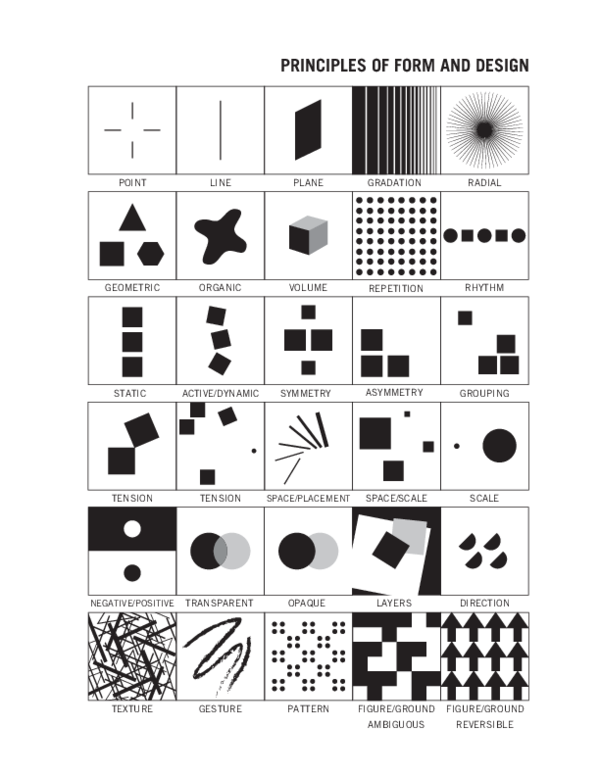
Principles of Design:
Visual language is the basis of design creation. Like spoken or written language, the grammatical laws of visual language can make our communication more effective. In the first-year curriculum of every art school or university art department, there is always a course in Basic Design that teaches the grammar of visual language.
The grammar of visual language is often referred to as “The Principles of Design,” and there is as little agreement about which principles to include as there is about which colors make up the three primaries. Above is a list of some of the most commonly referenced principles. Rarely will you make an artwork that uses only one of these principles. Having an agreed-upon grammar for creating visual art makes it much easier for artists, viewers, and educators to discuss their creative process.
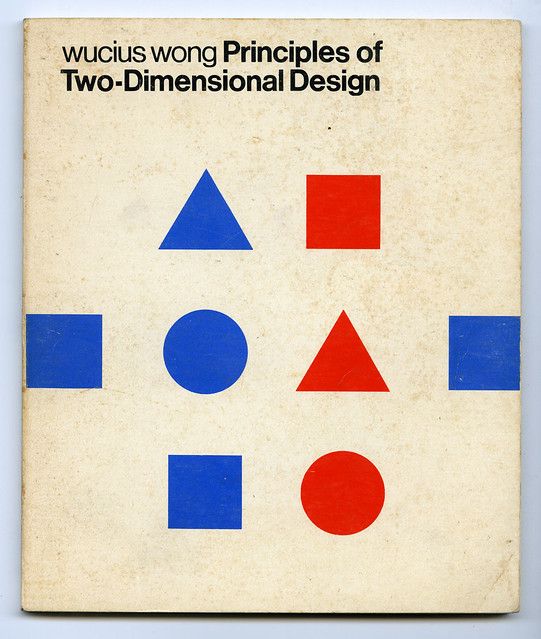
Hong Kong artist Wucius Wong wrote the foundational text taught to most graphic artists, which outlines principles of design that clarify traditional composition in a way that invites intuitive exploration and adaptation. He simplifies these hard-to-articulate aesthetics into a few “rules of engagement”
|
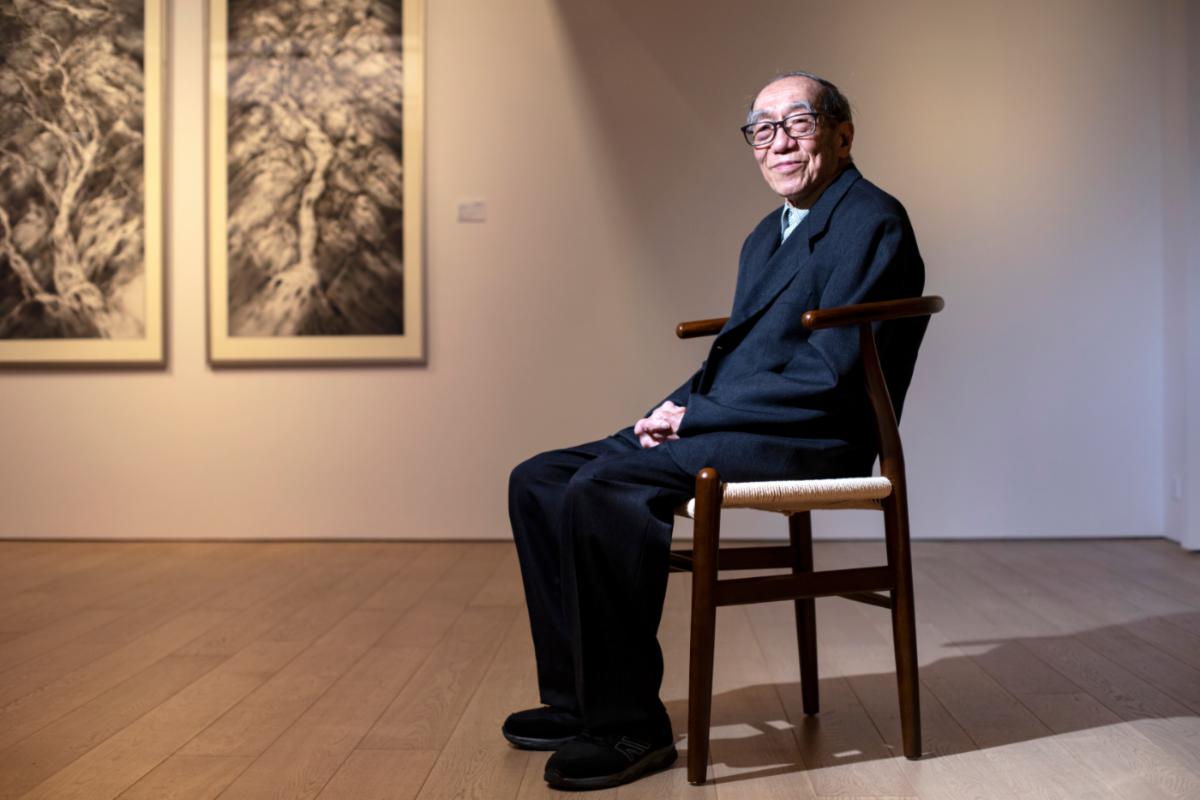
Wucius Wong:
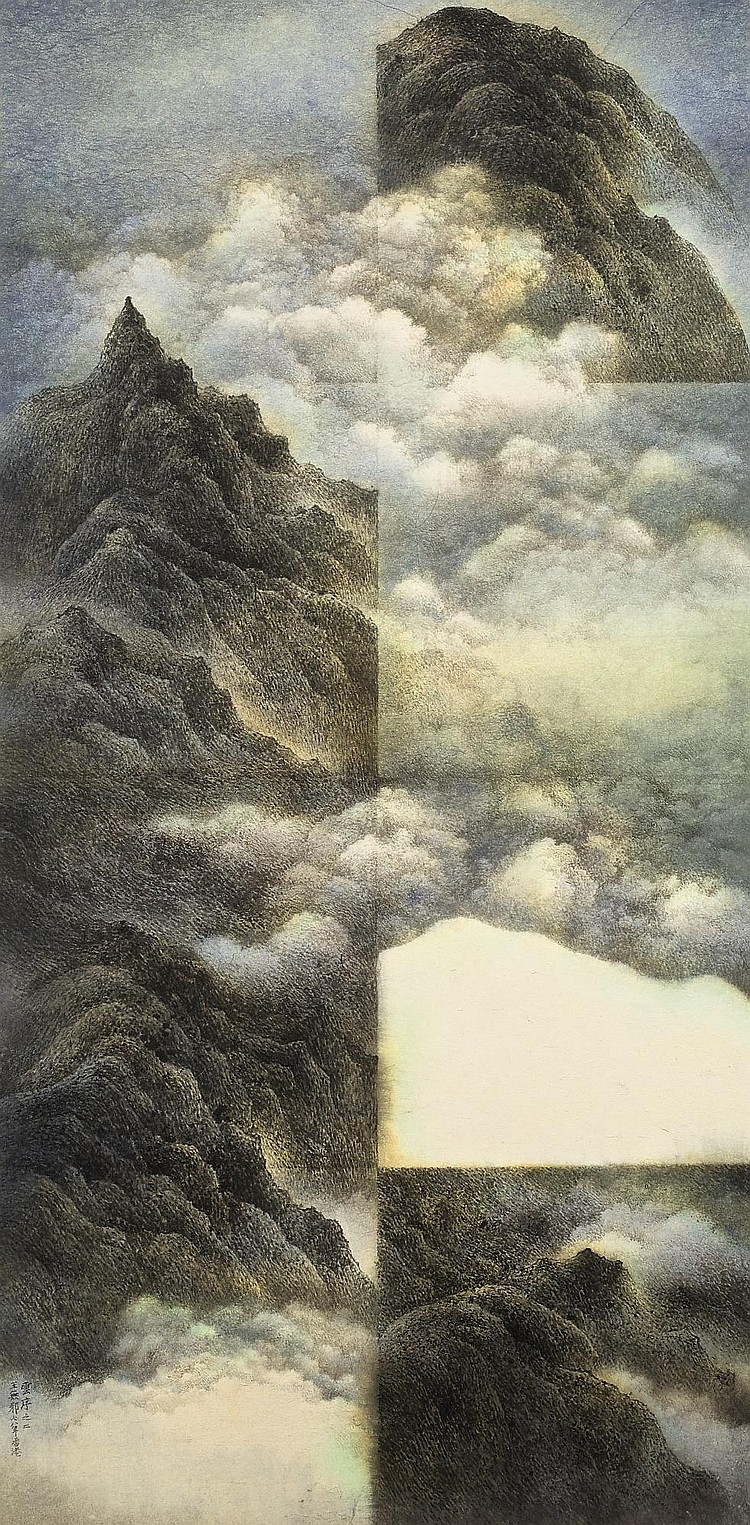
Wucius Wong was born in 1936 in Guangzhou, China. Wong became a master of Chinese ink painting, before pursuing art education in the United States. He earned his BFA and MFA from the Maryland Institute College of Art and later returned to Hong Kong to teach and curate art exhibitions. His work spans painting, sculpture, and pedagogy, with a focus on integrating Eastern and Western visual languages.
Wong is known for his innovative fusion of traditional Chinese aesthetics with systematic design principles that transcend cultural boundaries. His work integrates the geometric abstraction of the Bauhaus movement with the spiritual depth of Northern Song dynasty landscapes, creating a unique visual language that bridges East and West. He was a key figure in the Hong Kong New Ink Movement, inspiring generations of artists to explore new possibilities in traditional mediums.
| |
Wong profoundly influenced contemporary art and design education. Wong's principles of design—articulated in seminal works like Principles of Two-Dimensional Design and Principles of Form and Design— are widely used in art schools across the globe, offering clear frameworks for understanding visual composition. These texts emphasize not only technical skills but also creative experimentation, making them timeless resources for both budding and seasoned artists.
| | |
Wong's design philosophy is rooted in systematic experimentation with visual elements. Artwork that considers these principles will be more complex and interesting.He emphasizes clarity, balance, and structure while encouraging creativity through the many opportunities for variation.
Below are Wong’s key principles:
Repetition with Variation
Repeating elements create unity, while variations introduce interest. For instance, changing repeated shapes' size, orientation, or spacing can generate rhythm and complexity without losing coherence.
Gradation
Gradual size, color, or intensity transitions guide the viewer’s eye across a composition. This principle is particularly evident in Wong’s ink paintings, where subtle changes in ink density evoke depth and movement.
Contrast
Contrast is a kind of comparison whereby differences are made clear. Two forms can be similar in certain aspects and different in others.
Rhythm
Inspired by natural patterns and musical structures, rhythm alternates strong and subtle elements to suggest motion or flow.
Geometric Structure
Wong often employs grids, circles, and other geometric frameworks to organize compositions systematically while allowing room for creative deviations.
Balance Between Tradition and Modernity
A hallmark of Wong’s work is his ability to honor traditional Chinese aesthetics while embracing modernist abstraction. This duality allows his art to resonate across cultures.
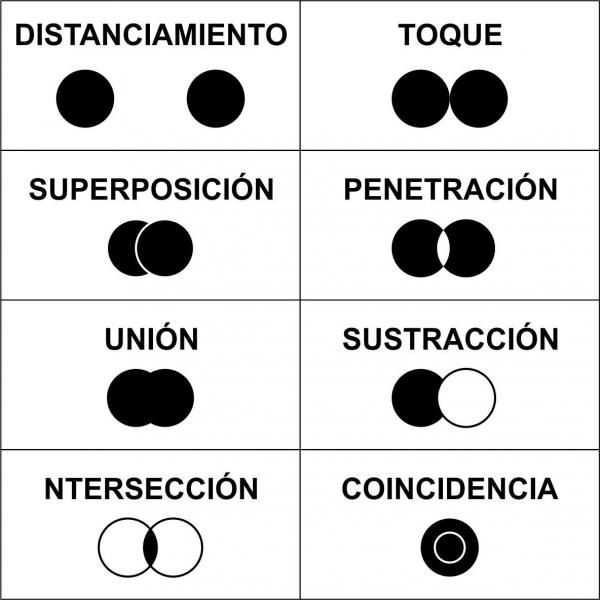
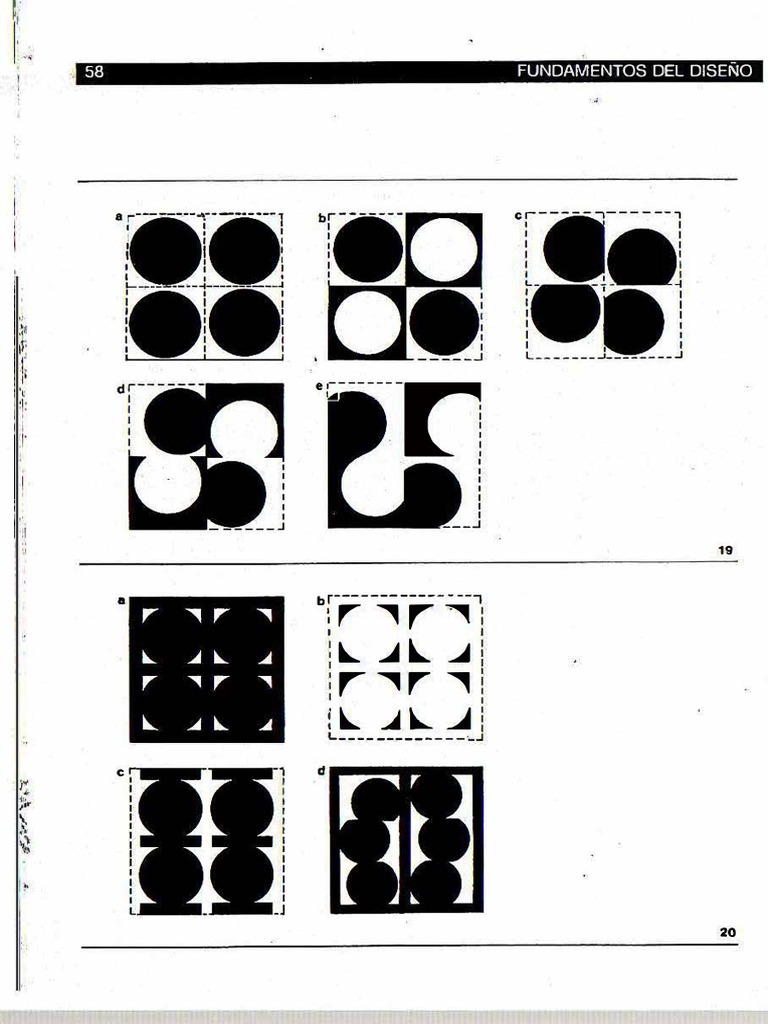
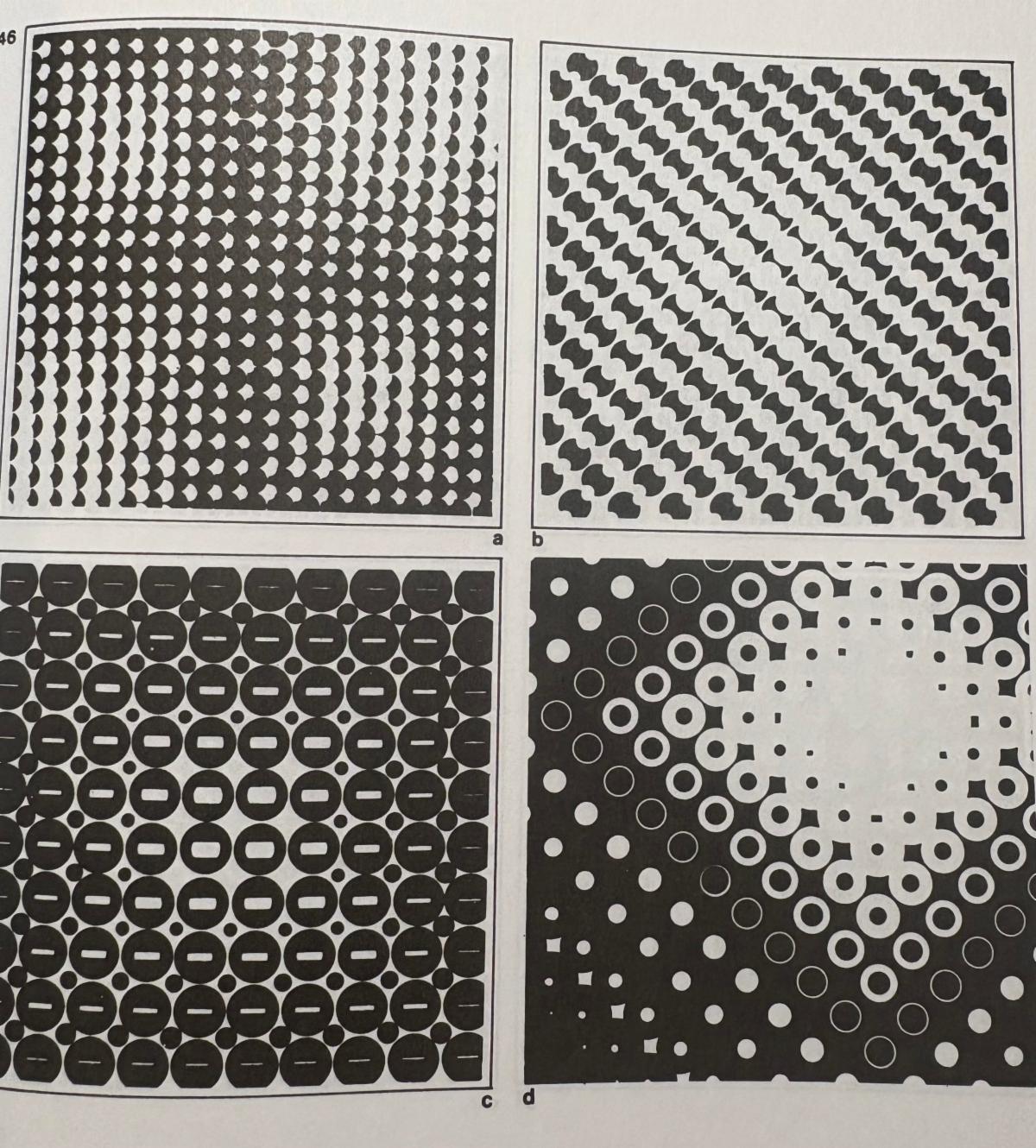
| | Interactions of Unit Forms: Some ways to create emotional impact from a single form are generated from the way we feel when the forms are distant, touching, superimposed, penetrating, united, subtracted from, intersecting, or coinciding with each other. Do these dots create a reaction for you? | |
The Power of Repetition with Variation
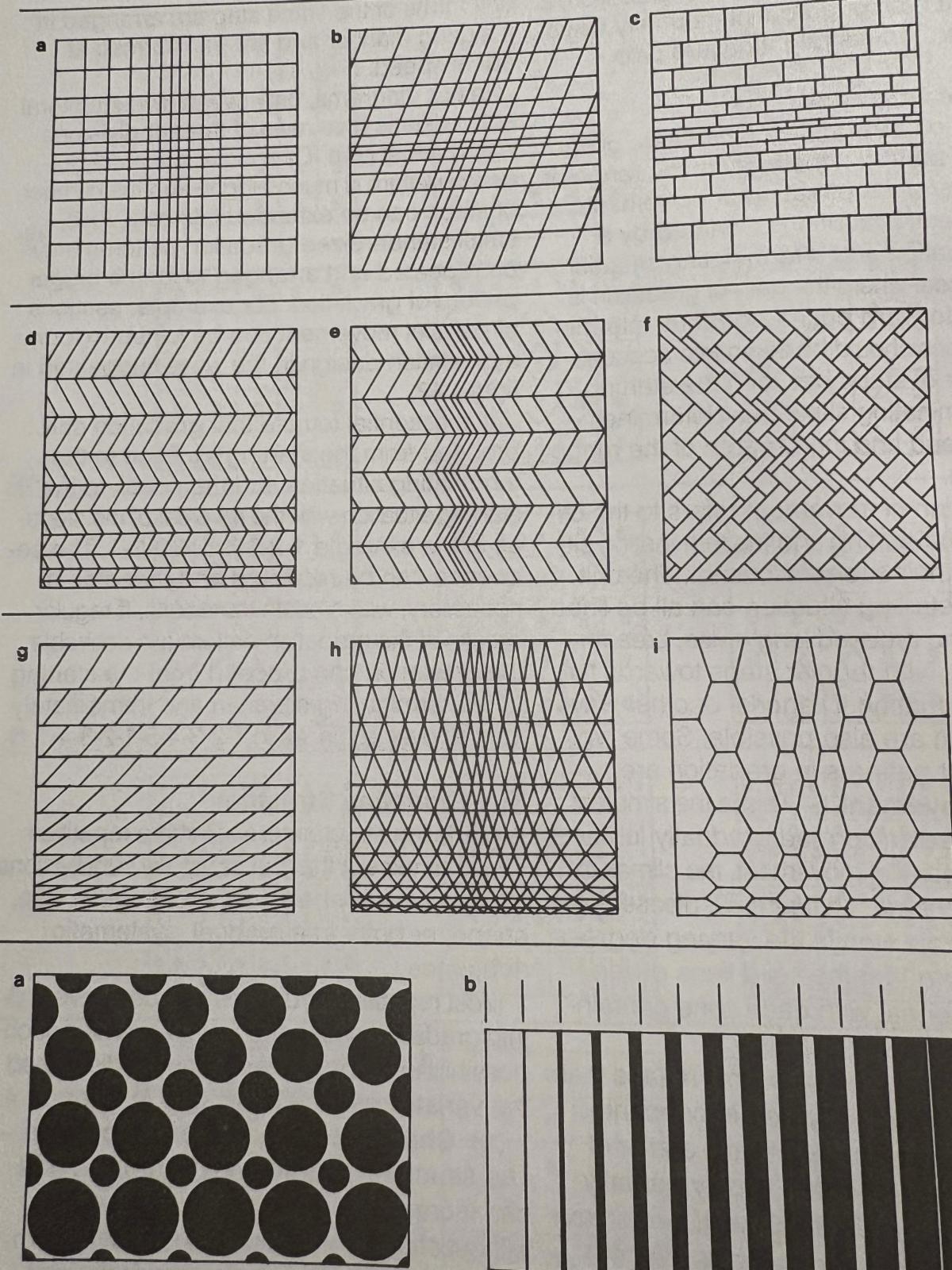
One of Wong's most impactful ideas is "repetition with variation," which combines order with creativity.
A "unit form" is a recurring element that serves as the building block for a composition.
We often refer to a “unit form” as a circle, triangle, or square shape. But it could just as easily be an organic shape like a leaf or a tree. Each form can be selected for a symbolic meaning, to represent something else, or for its emotional impact.
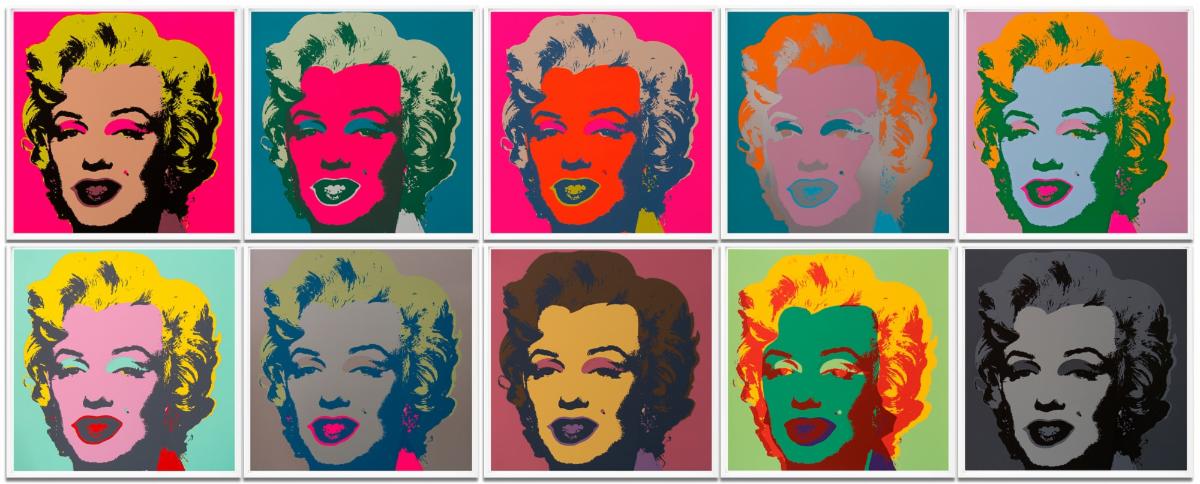
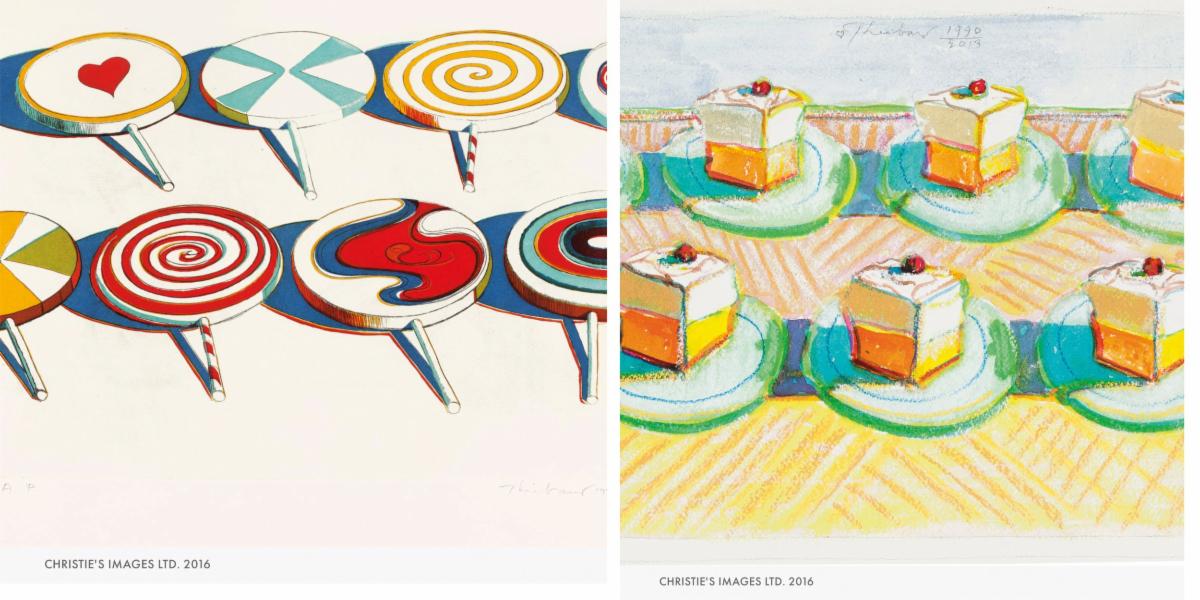
Repeating unit forms—basic shapes or motifs—provide structure, while variations in size, color, or placement add dynamism. Repetition unifies disparate elements within a composition while enhancing thematic depth and emotional resonance. Repetition implies safety and belonging, while variance introduces freedom, dynamism, and surprise.
Repetition with variation mirrors patterns found in nature (such as waves or leaves), making your artwork organic yet intentional.
Manipulating forms by introducing changes in size or orientation adds energy, and layering or overlapping forms creates complexity and can evoke depth or tension. Varying the forms can also direct attention to specific focal points in the artwork.
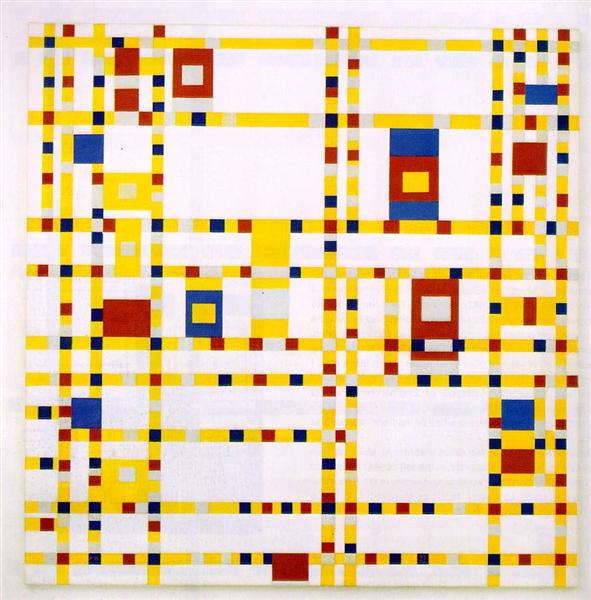
| | Piet Mondrian “Broadway Boogie Woogie" | | |
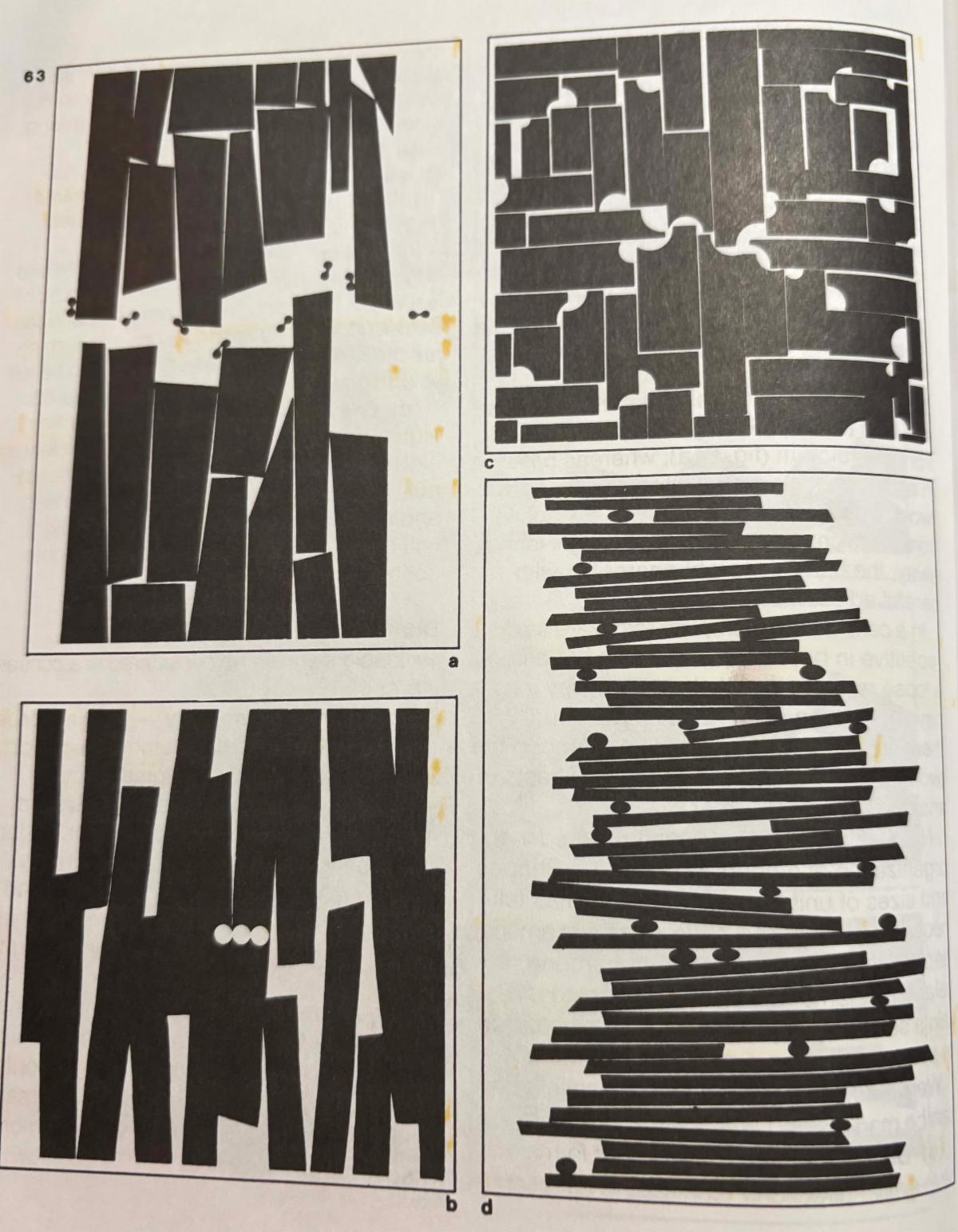
The Black Square Problem:
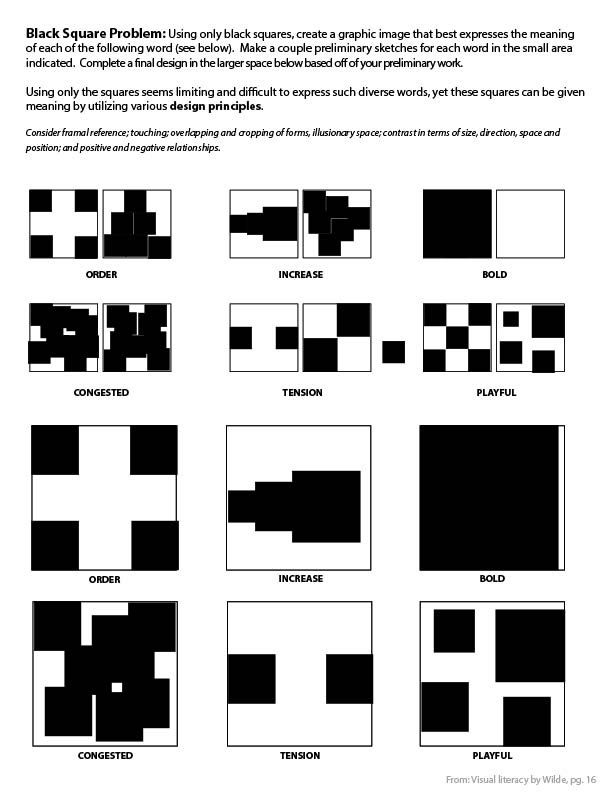
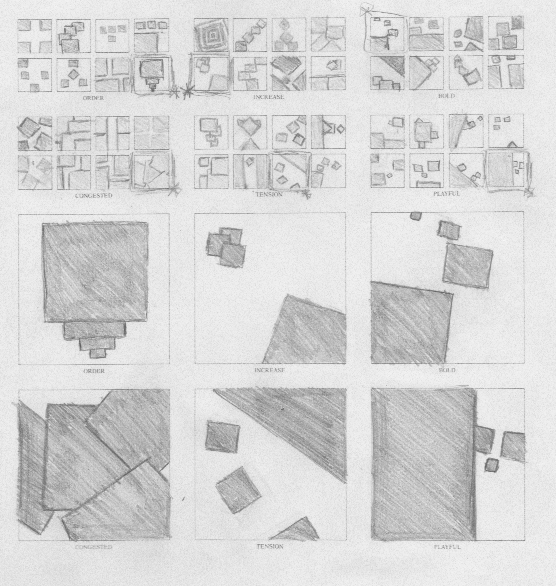
A wonderful experimental exercise to play with visual grammar is known as “The Black Square Problem”. If you Google it you will find thousands of different solutions.
This problem is frequently used in Art Schools to teach foundational design. The constraints are to use only black squares to create an image that expresses the meaning of each of the following words: order, increase, bold, congested, tension and playful.
The size of the squares can vary and overlap - you must use only squares and no other forms. When I teach this exercise, we use cut squares of black paper on a white background.
The Black Square Problem is a tremendously useful tool for training your ability to convey a message without using words. These 6 words are wonderfully expressive, but there is no limit to the emotions you can convey using only visual cues. Think of some emotions you would like to include in your artwork. I find the negative emotions easiest to portray - loneliness, sadness, anxiety, fear, or depression.
I hope you will try repetition with variation for emotional impact in your next painting.
| | |
Below are some suggested assignments to experiment with in your subsequent compositions. I've included examples of famous artists who use these principles in their work. As you scroll through the examples below, try to identify which additional principles the artist is using.
Feel free to incorporate more than one of Wong’s principles in your own work:
Repetition with Variation
- Repeat geometric shapes (e.g., circles, squares) or natural forms while varying their size, orientation, or color to establish rhythm and movement.
-
- Overlap forms to create "superunits," where individual shapes combine into larger, dynamic compositions.
- Introduce spatial variations to suggest depth or tension,
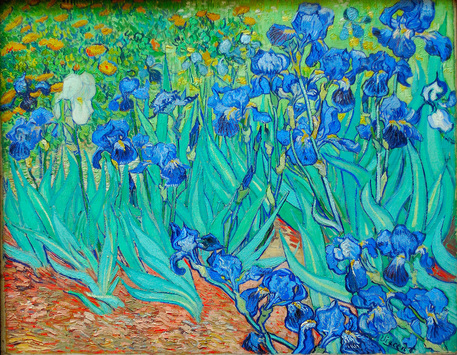
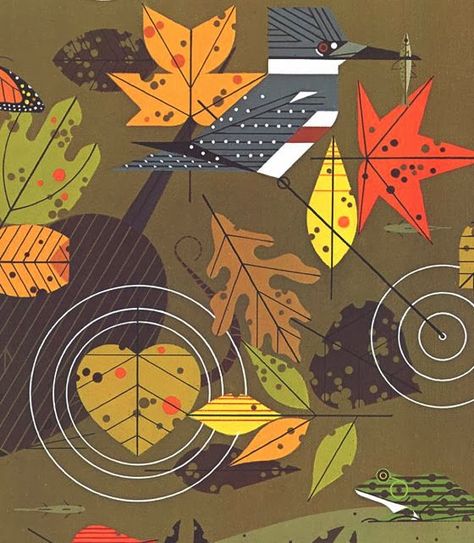
| | Wucius Wong Sample repetition with variation | | Vincent Van Gogh, “Iris”. Van Gogh varies the iris form and color as a unifying element. Would the painting be as successful without the white iris? | | Charlie Harper, “Kingfisher” Notice how the artist repeats and varies the forms in this picture. Look at his mix of organic and geometric shapes. |
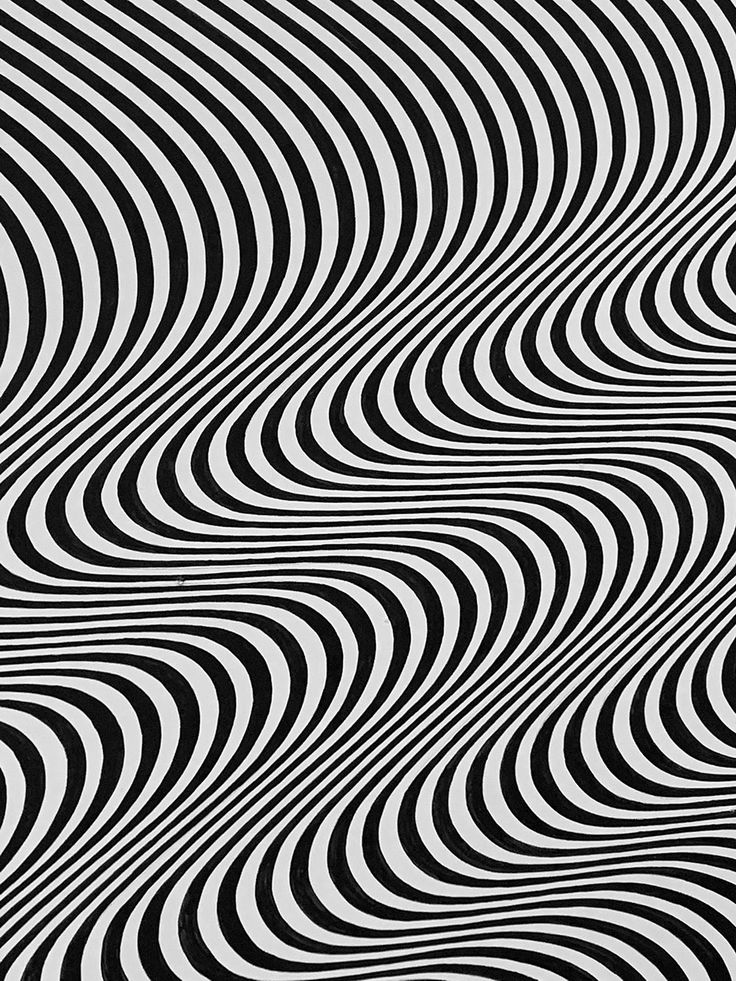
2. Gradation
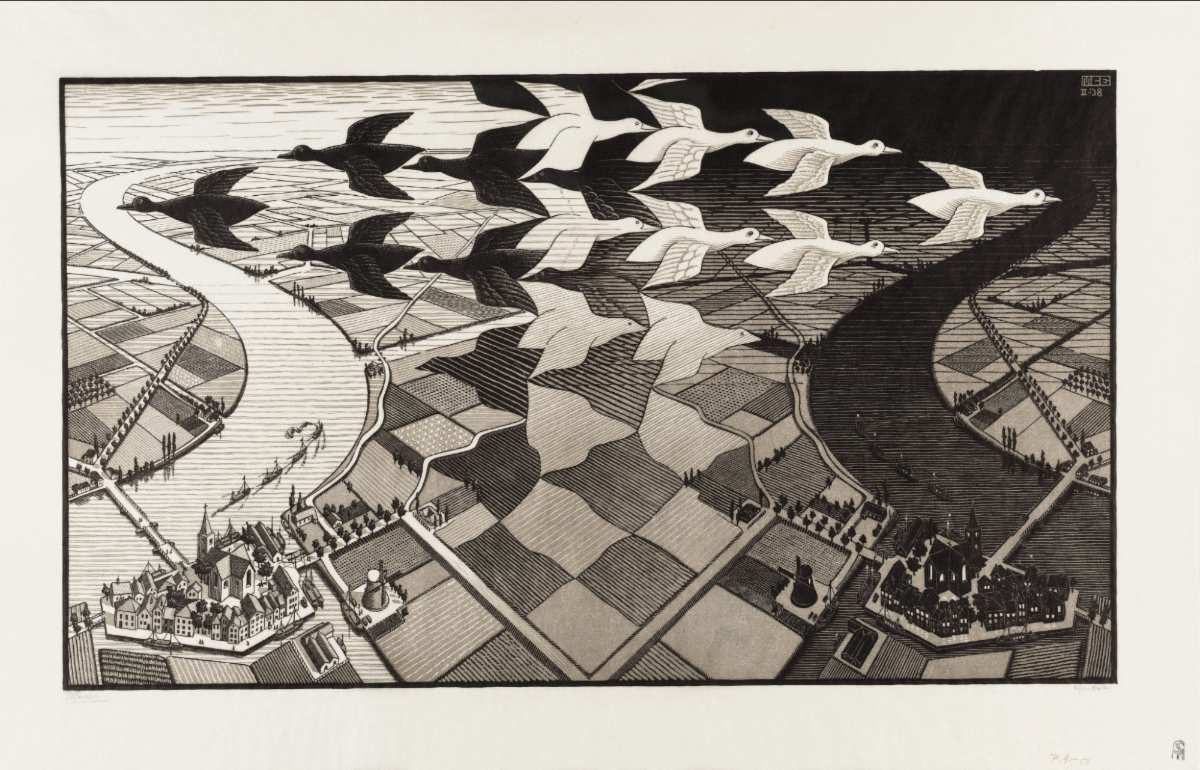
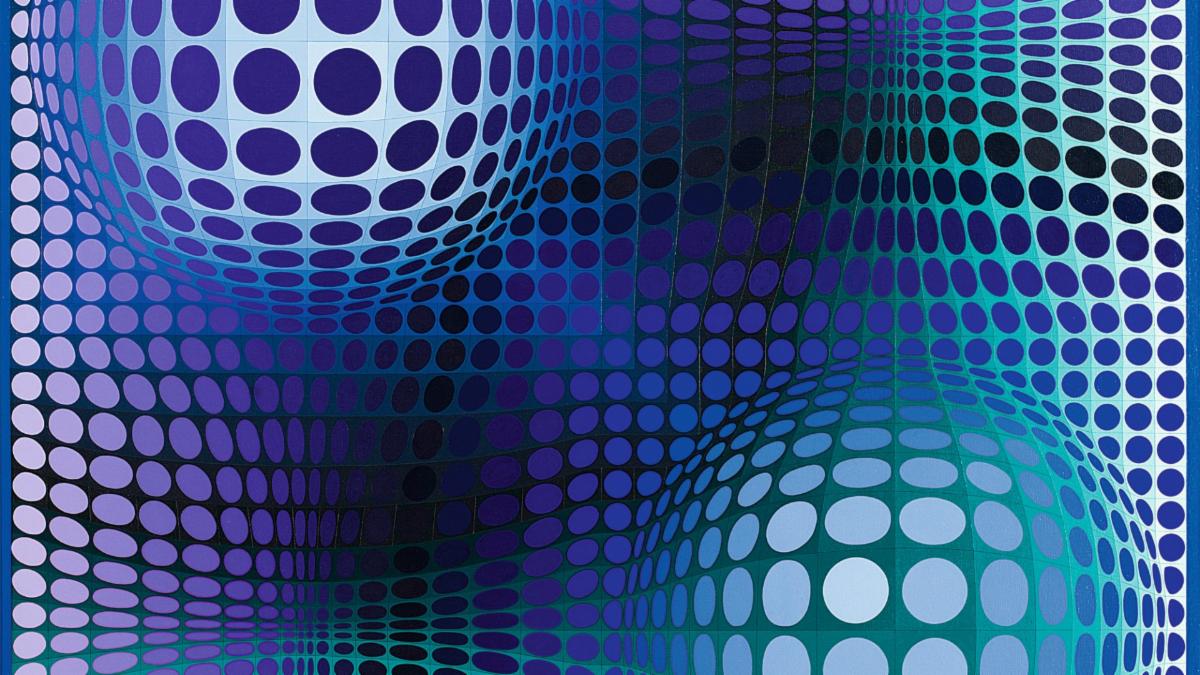
Gradation involves subtle transitions in size, color, or intensity to guide the viewer’s eye across the composition.
- Apply gradation in color palettes to create a sense of flow or movement.
- Use size gradation in repeated elements to simulate depth or perspective as smaller shapes appear farther away.
-
| |
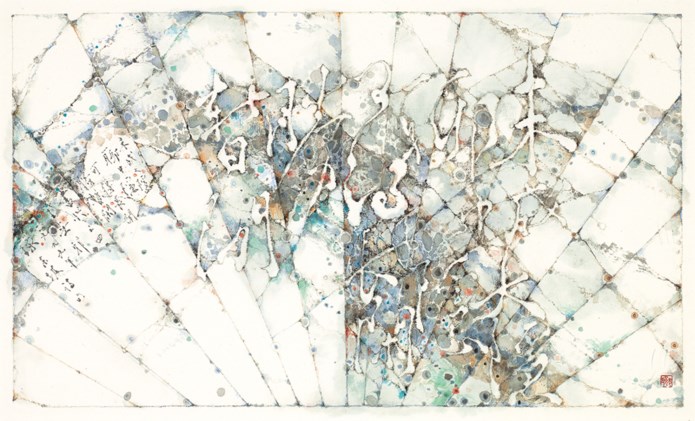
- Gu Gan’s modern calligraphy blends traditional Chinese characters with abstract geometric arrangements—a practice inspired by Wong’s analytical approach.
| | MC Escher “Sky and Water 1" | | Victor Vasarely “_” creates the illusion of three dimensional space using gradation of color and shape of the dots.s | | |
3. Geometric Structures
Wong uses grids and geometric frameworks as a foundation for organizing abstract compositions.
You can consider,
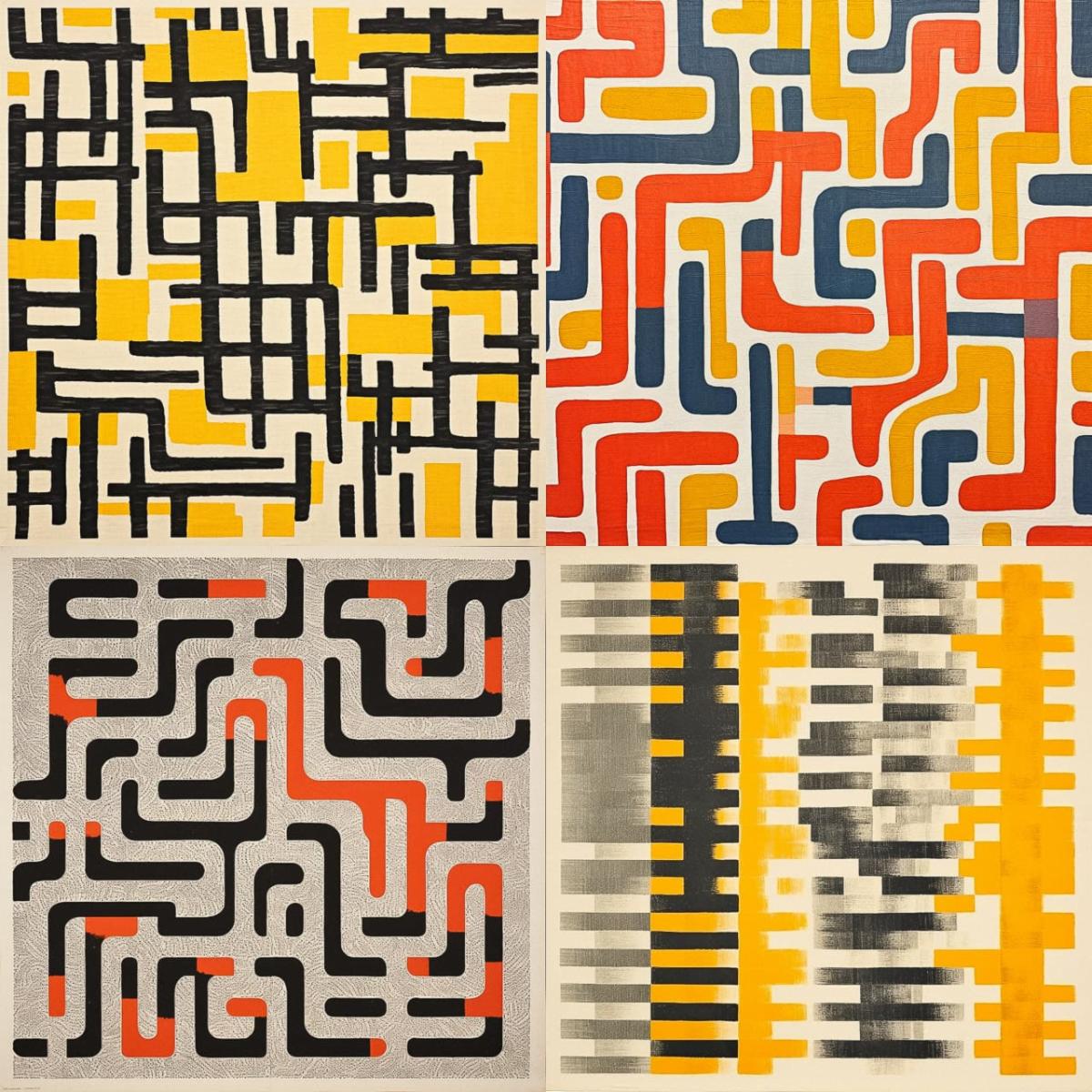
- Incorporating grids as underlying structures that anchor your designs while allowing freedom for creative deviations.
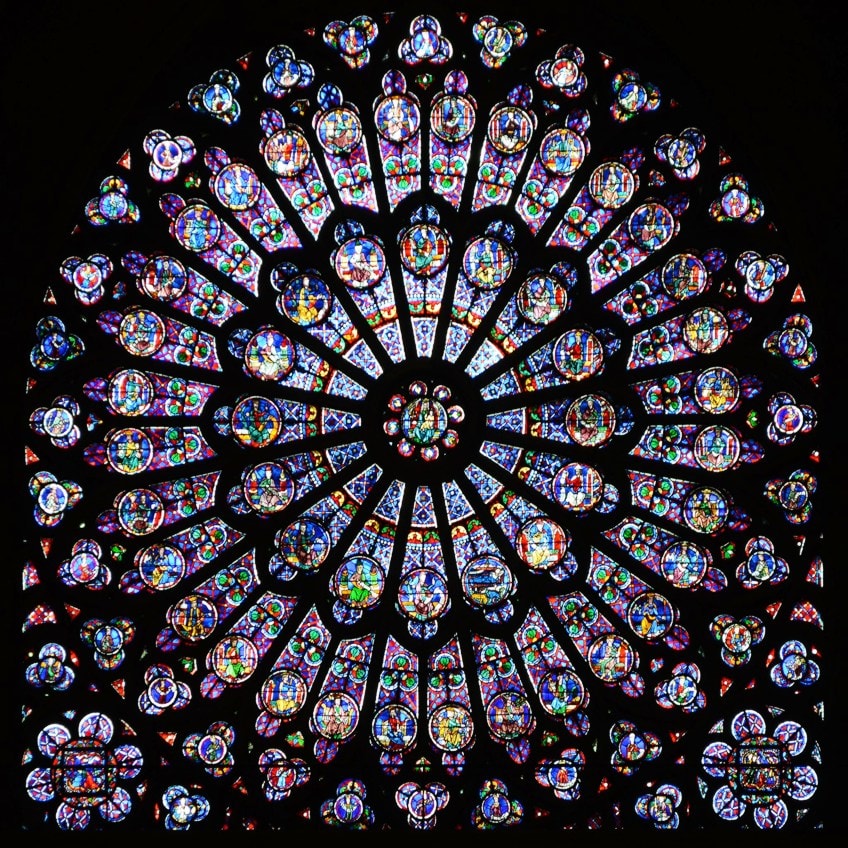
- Experiment with symmetry (translation, rotation, reflection) and asymmetry to create balanced yet dynamic compositions.
|
- A pioneer in textile art, Anni Albers utilized repeated geometric patterns in her woven designs to achieve unity while introducing subtle variations in texture or arrangement for visual interest. Her work blends functionality with aesthetic coherence.
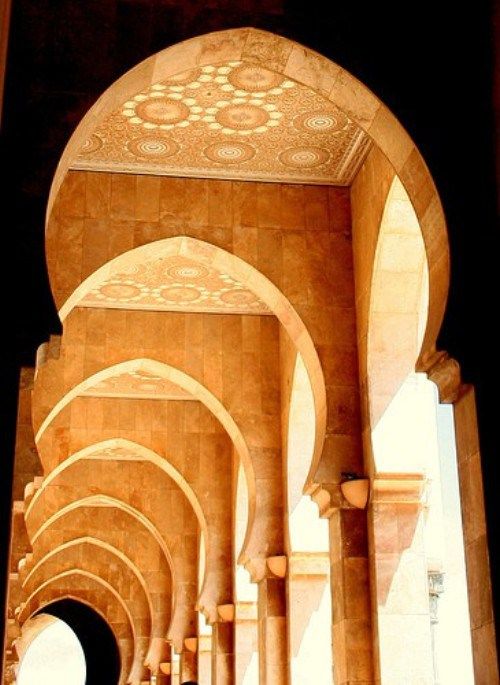
| Notice how the geometric surface pattern enhances the shape of the arches. | Your A rose cathedral window uses radial symmetry |
4. Rhythm
Wong suggests manipulating the direction and spacing between elements to generate rhythm.
You can try :
- Creating alternating patterns of bold and subtle forms to mimic natural phenomena like waves or wind.
- Using radiating lines or concentric shapes to draw attention toward a focal point.
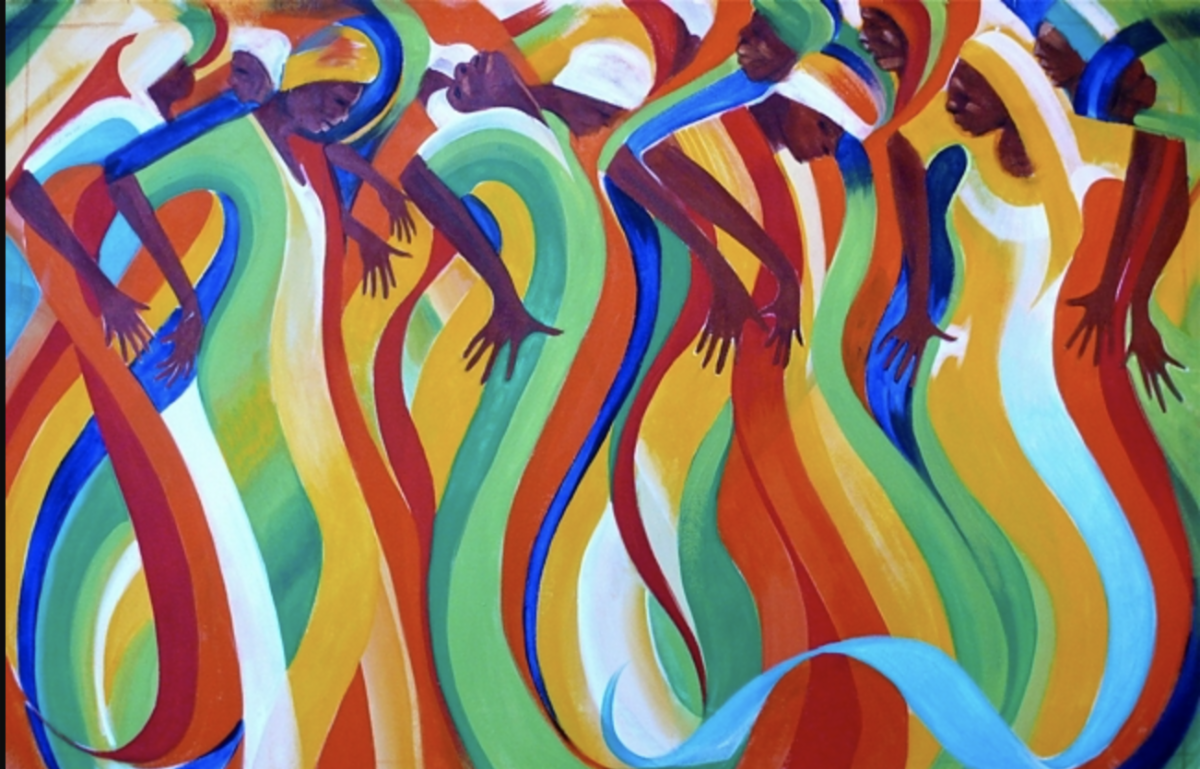
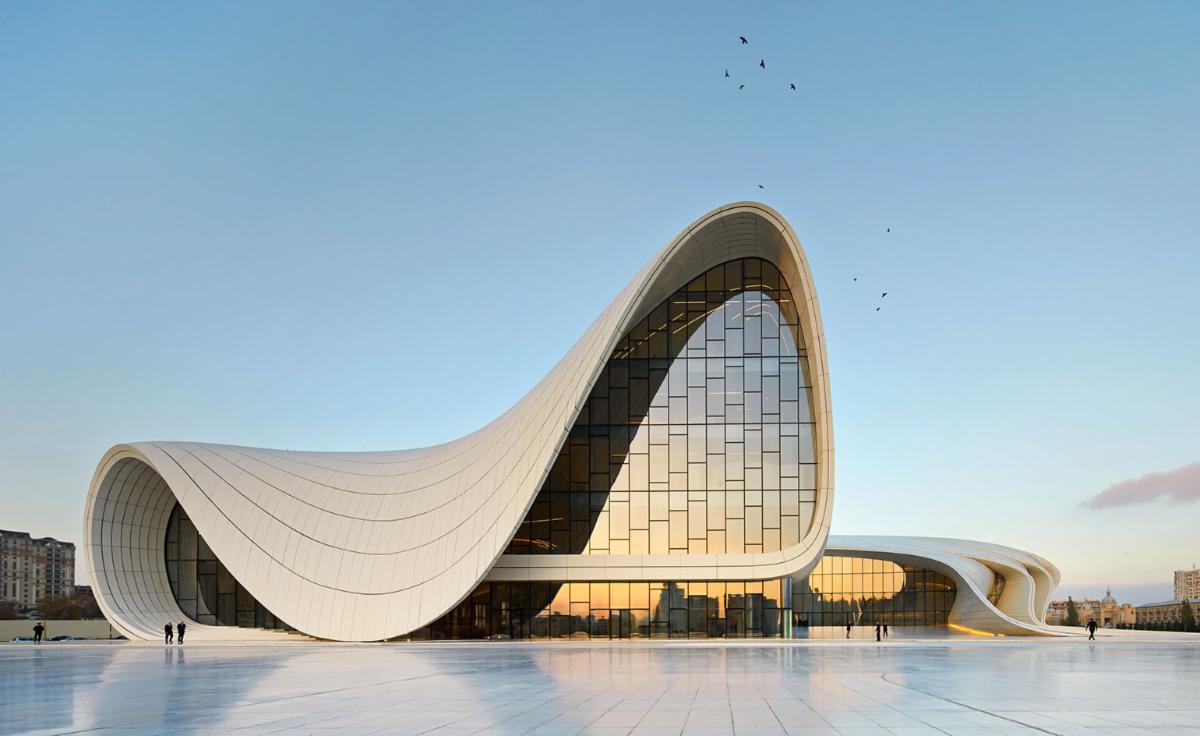
| | Marvin Green “Hat Tippers" | | Zaha Hadid’s buildings echo the shapes and rhythms of natural forms | |
5. Illusion of Depth
Wong emphasizes techniques for creating depth through overlapping shapes, size gradation, and perspective.
Artists can:
- Layer translucent materials or colors to simulate depth.
- Use perspective distortions (e.g., turning squares into trapezoids) for a three-dimensional effect.
- Overlap shapes
- Smaller is farther, larger is closer
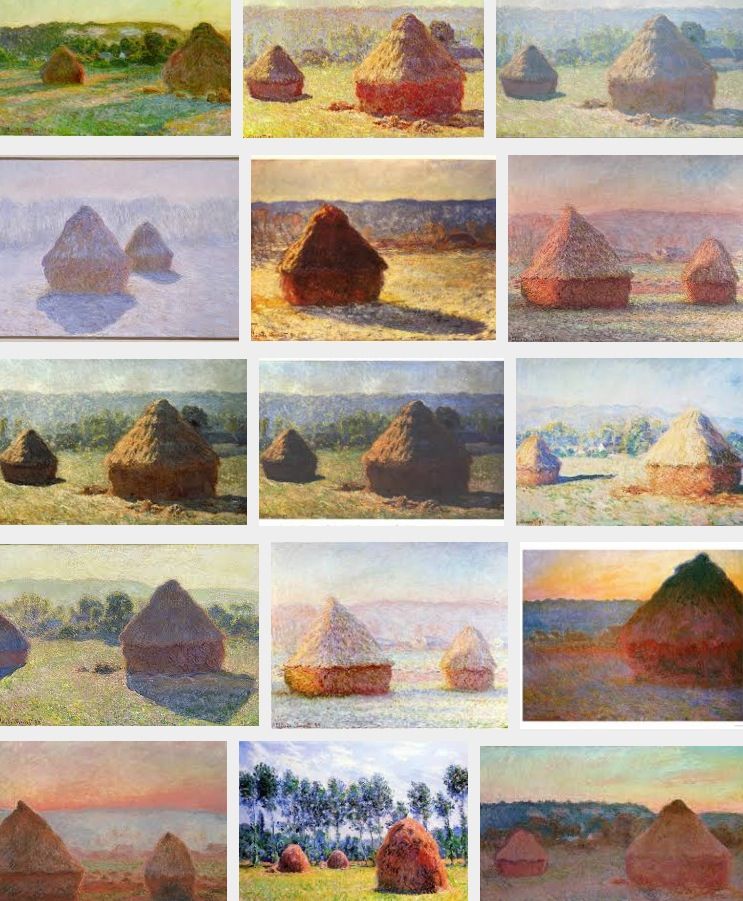
| | Claude Monet, “Haystacks”. Monet uses size, placement and atmospherics to create a sense of deep space. | |
-
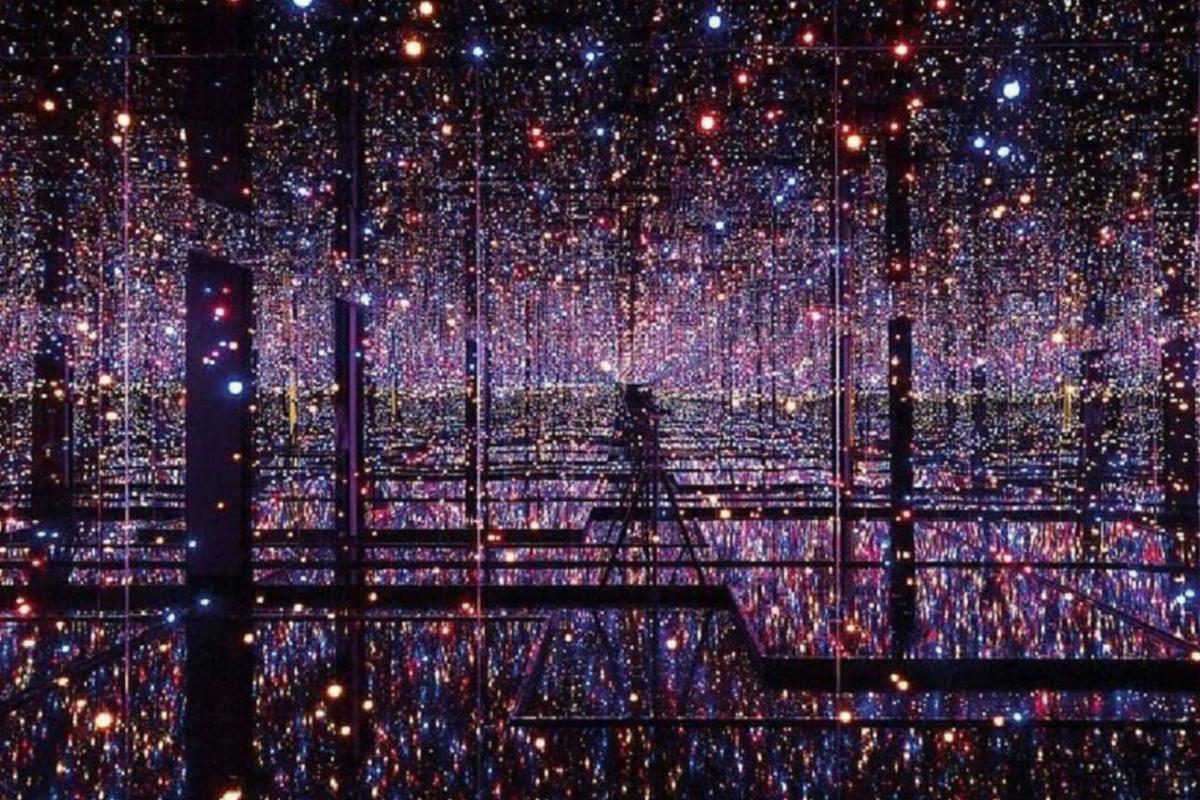
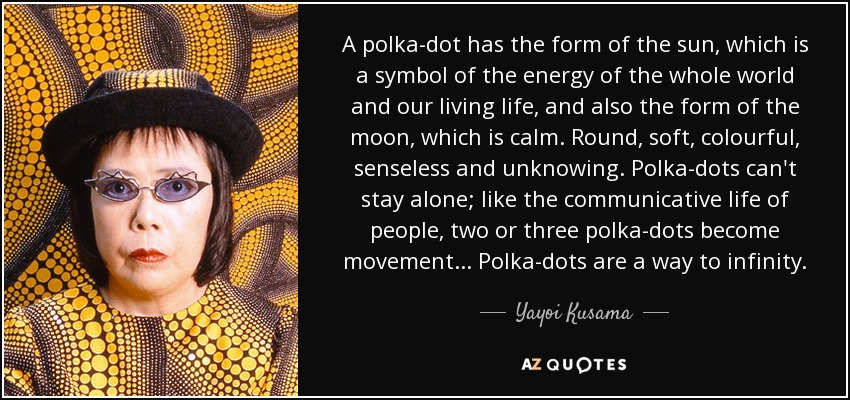
Yayoi Kusama’s works, such as her Infinity Net paintings and immersive installations like The Obliteration Room, rely heavily on repetitive motifs like dots or nets. These repeated elements evoke feelings of infinity and interconnectedness while maintaining a sense of cohesion across her compositions.
| |
6. Contrast
Contrast is a kind of comparison whereby differences are made clear. Two forms can be similar in certain aspects and different in others. Their differences become emphasized when contrast takes place. A form may not look big when seen alone but it may appear gigantic against tiny forms next to it.
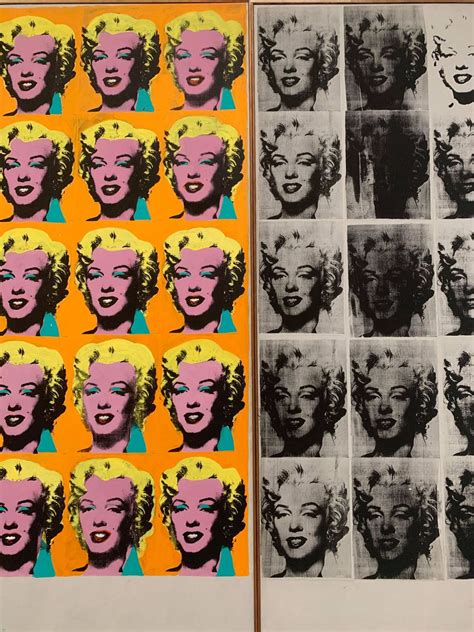
| | Wucius Wong, Sample contrast compositions | | Andy Warhol “Marilyn Diptych” By repeating the same image multiple times with slight variations in color or texture, Warhol critiques consumer culture and mass production while maintaining visual unity. His repetitive silkscreen prints create rhythm and coherence, emphasizing the ubiquity of his subjects. |
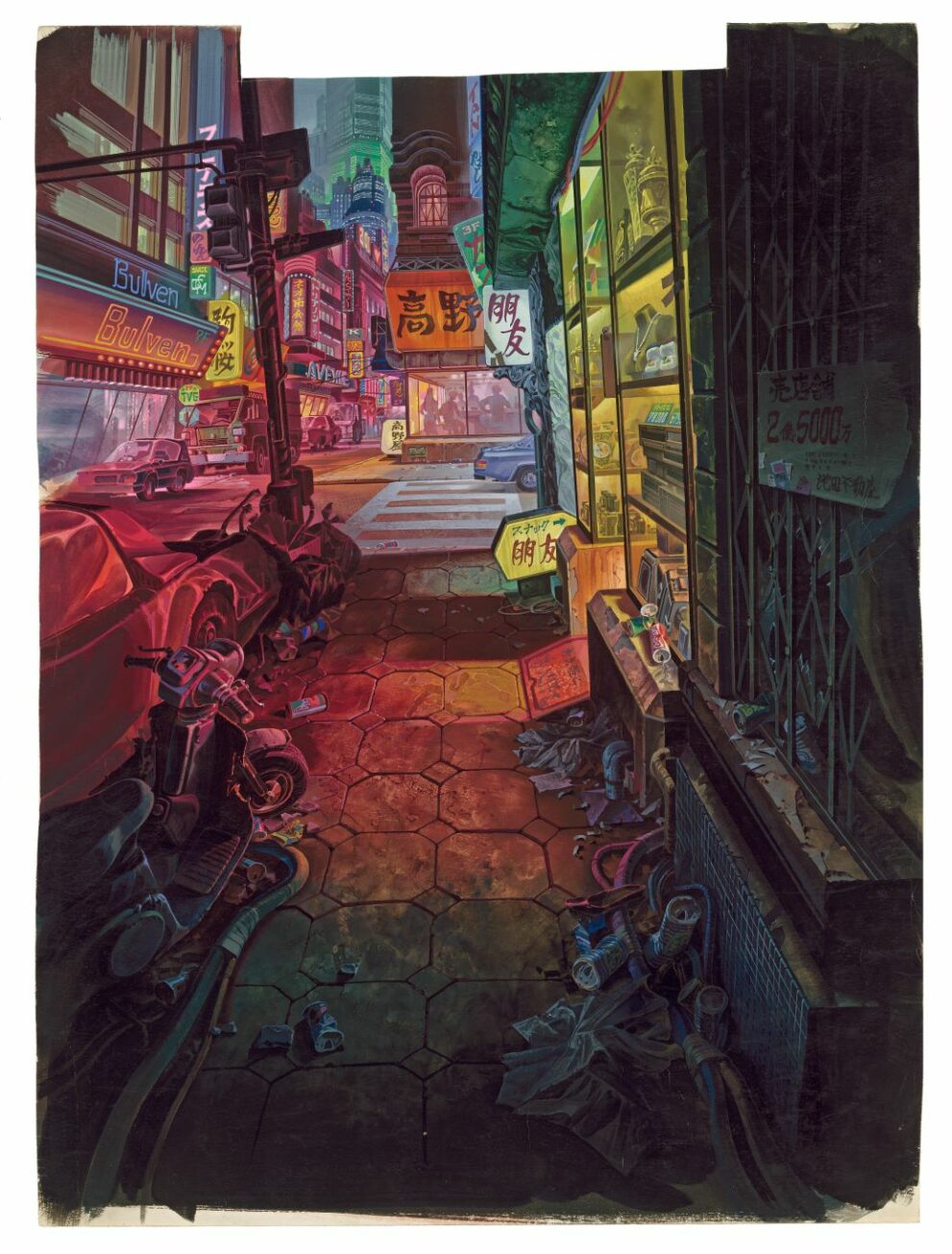
7. Balance Between Tradition and Innovation
Wong’s philosophy of blending traditional aesthetics with modernist abstraction offers a framework for abstract artists seeking cultural resonance.
You can:
- Incorporate motifs from your cultural heritage while reinterpreting them through contemporary methods.
- Utilize stylistic tools or subjects from the past and combine them with new technology or media
- Abstract an old subject or famous work of art
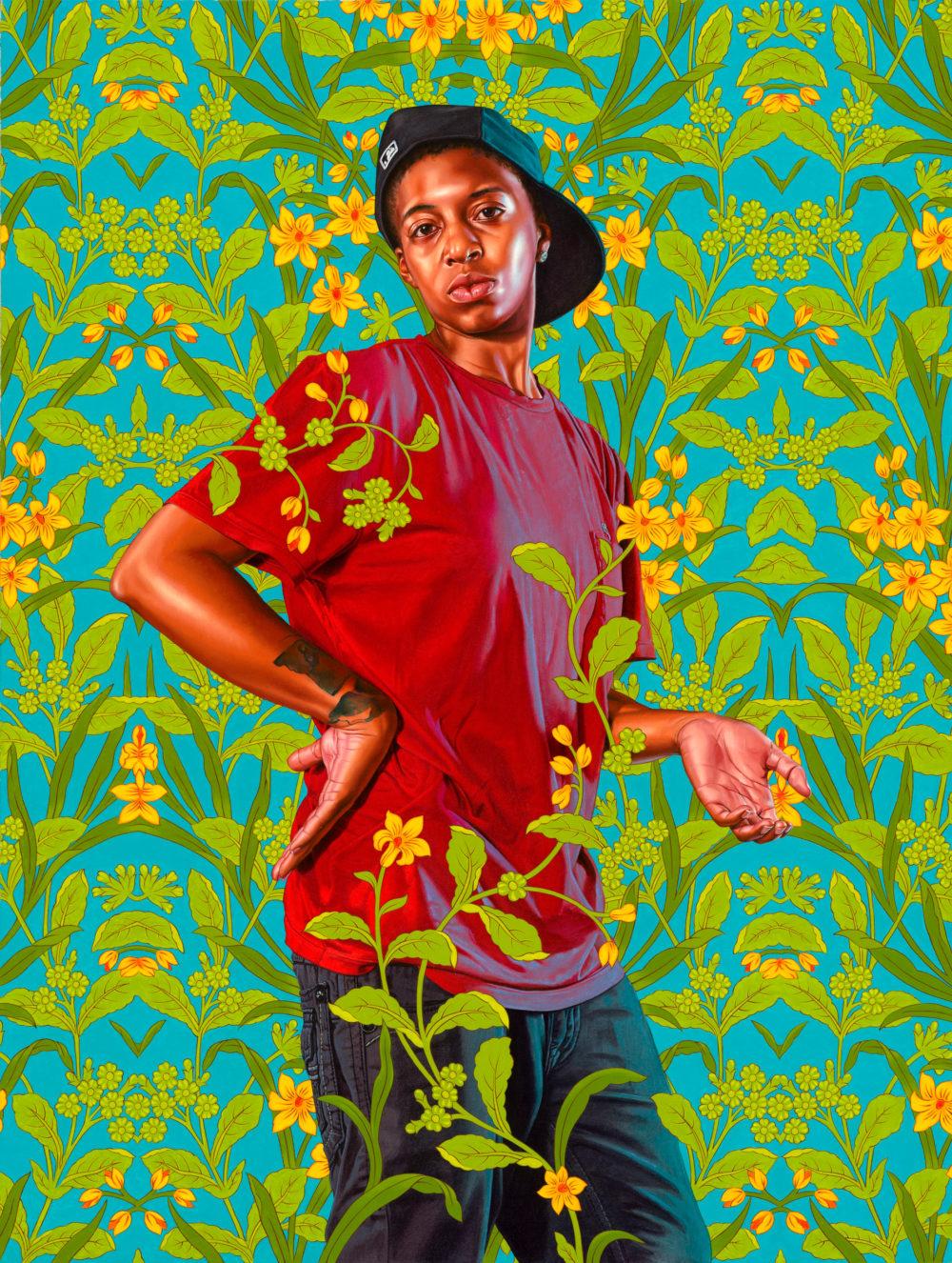
| | Set from the Japanese film Akira | | Kehinde Wiley “_”. Wiley poses models he brings in from the street in poses borrowed from famous renaissance paintings. | |
Wucius Wong left an indelible mark on contemporary art and design by championing a harmonious blend of Eastern aesthetics and Western abstraction. His ideas inspire artists across mediums to explore the infinite possibilities within structured creativity—a testament to his enduring legacy as an artist and educator. His emphasis on repetition remains a powerful tool for achieving harmony and viewer engagement in art.
Repetition is an essential element of our everyday lives: it is all around us, in patterns, art, and habits like having coffee or getting dressed each morning. Repetition, recurrence, and return are also fundamental in nature—there are shifts in the seasons and regular, rhythmic elements, such as the weather, that occur over and over again. When we consciously repeat what we experience or observe, we bring more awareness to our perceptions and more presence into our art.
| | |
Whether you’re an established artist seeking new horizons or a budding creative looking to elevate your work, I hope I have inspired you on how you can use the grammar of visual language to add complexity and interest to your art. When you paint your passion, you ignite your flames and inspire others to do the same.
Perhaps I can invite you to join my artistic “family,” where I can support your creative development. Don't hesitate to contact me if you want my mentorship, guidance, and advice in exploring your artistic path. It makes me happy to share my insights and my knowledge with you.
| |
If someone shared this newsletter with you and you'd like to subscribe, please reach out to me below with your email address. I promise, no spam, no overloading your inbox, just the good stuff.
I welcome the opportunity for connection, conversation, cooperation, collaboration, and commissions.
With Light and Delight
| |
P.S. If you didn't get the chance to download your free gift from me: Here is my "Inner Artist Inspiration Package" - a series of illustrated quotes in watercolor based on flower photos taken by family and friends.
| | | | |
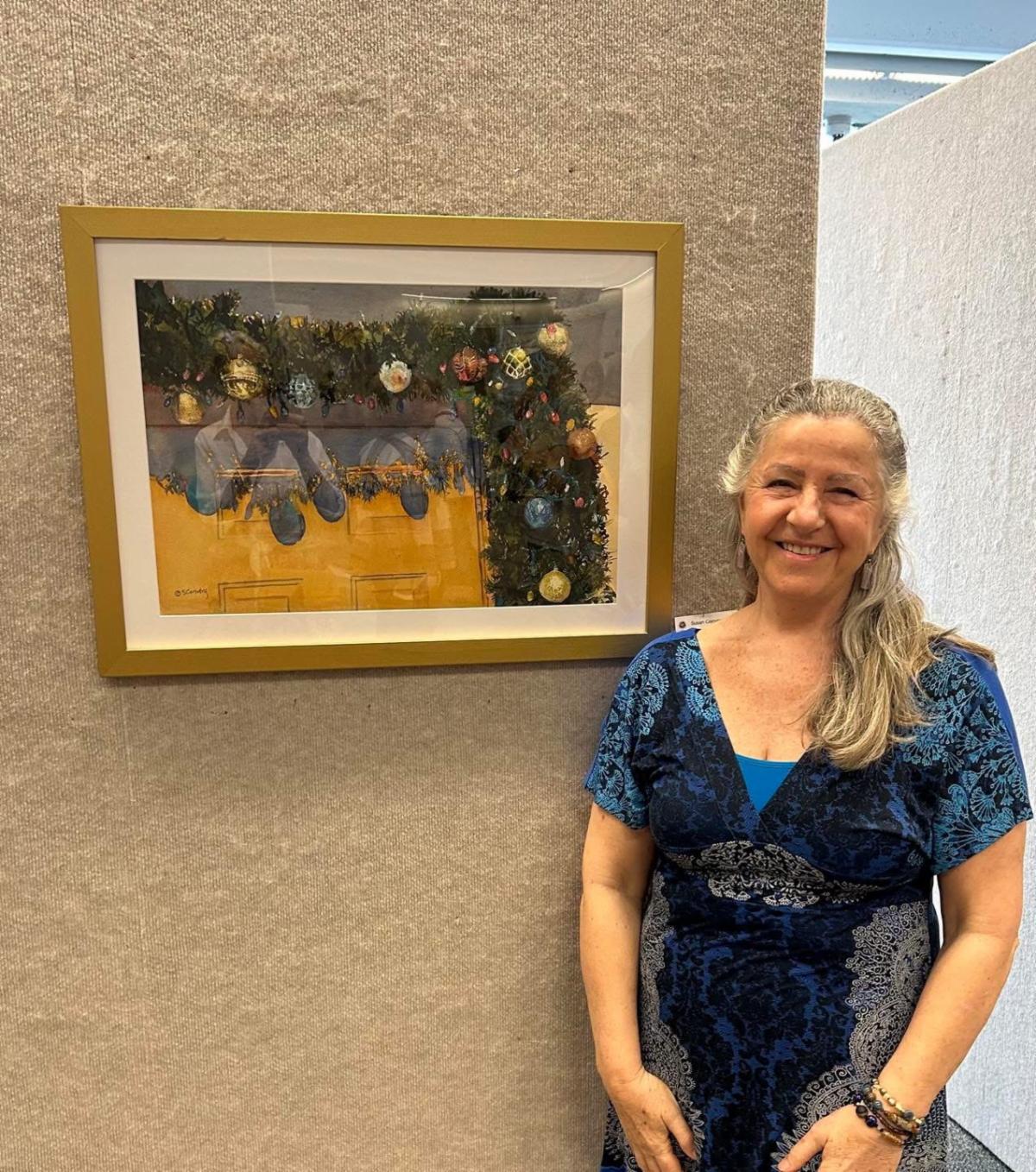
Gold Coast Watercolor Show
Wet Paint
Main Library
Gallery 6
100 S Andrews Ave.
Fort Lauderdale, FL
Extended to April 24!
March 1 -April 24, 2025
Reception Saturday, March 8, 3-5 pm
| | | | |
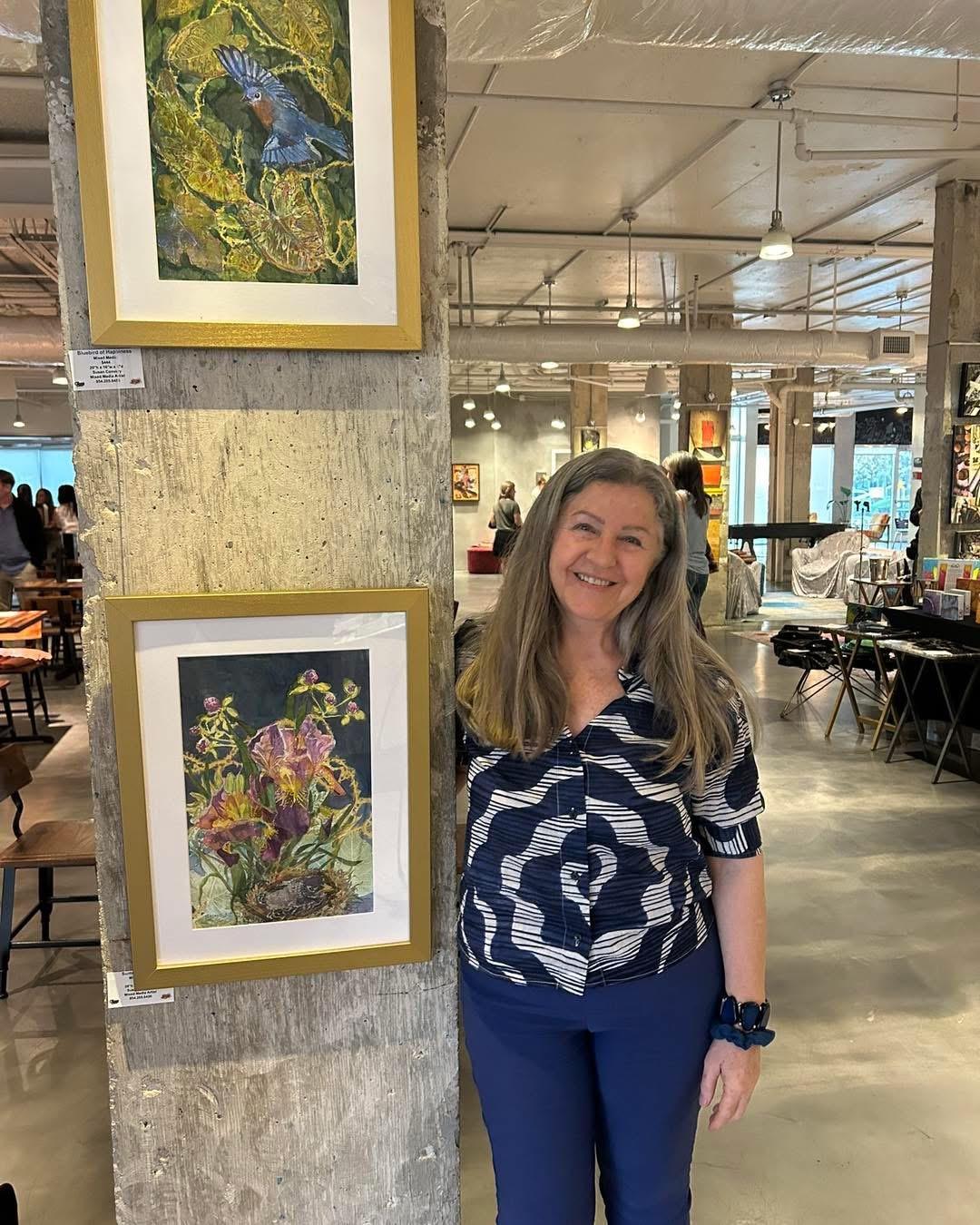
Weston Art Guild
Plunge into the Arts
Plunge Beach Resort
4660 El Mar Drive
Lauderdale-by-the-Sea, FL
March 1 - April 3, 025
.
Reception Friday, March 14, 2025 6 to 7:30 pm
Reception Tickets
| | | | |
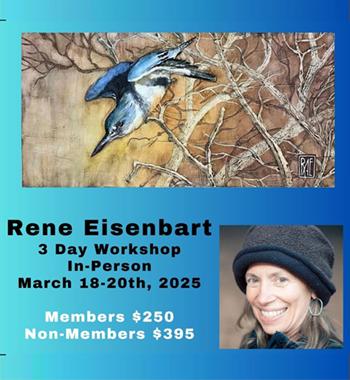
Rene Eisenbart Workshop
Gold Coast Watercolor Society
March 18 - 20, 2025
ArtServe Auditorium
1350 East Sunrise Blvd
Fort Lauderdale
Look at all the beautiful pieces her workshop inspired!
| | | This is Coming Up in April | |
| |
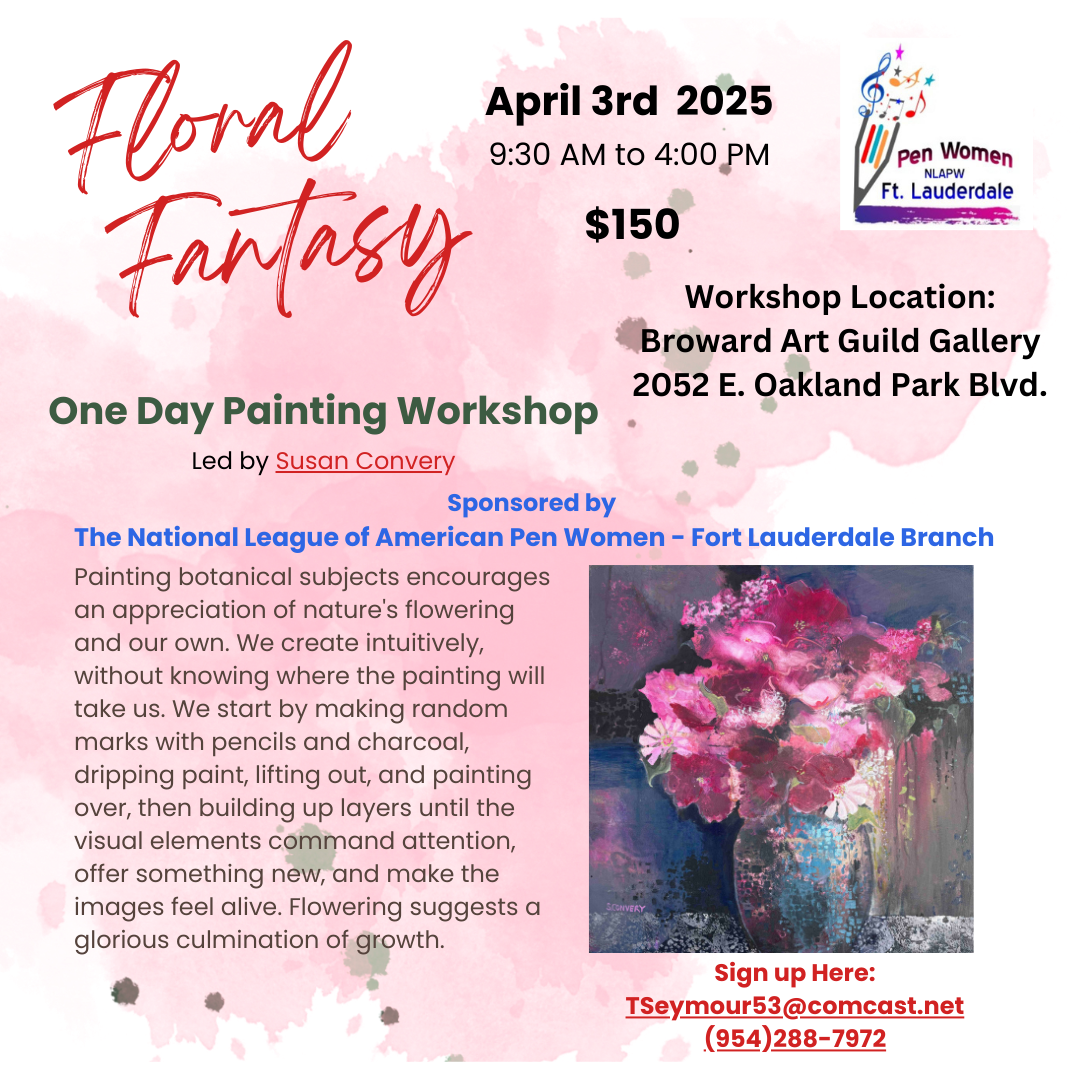
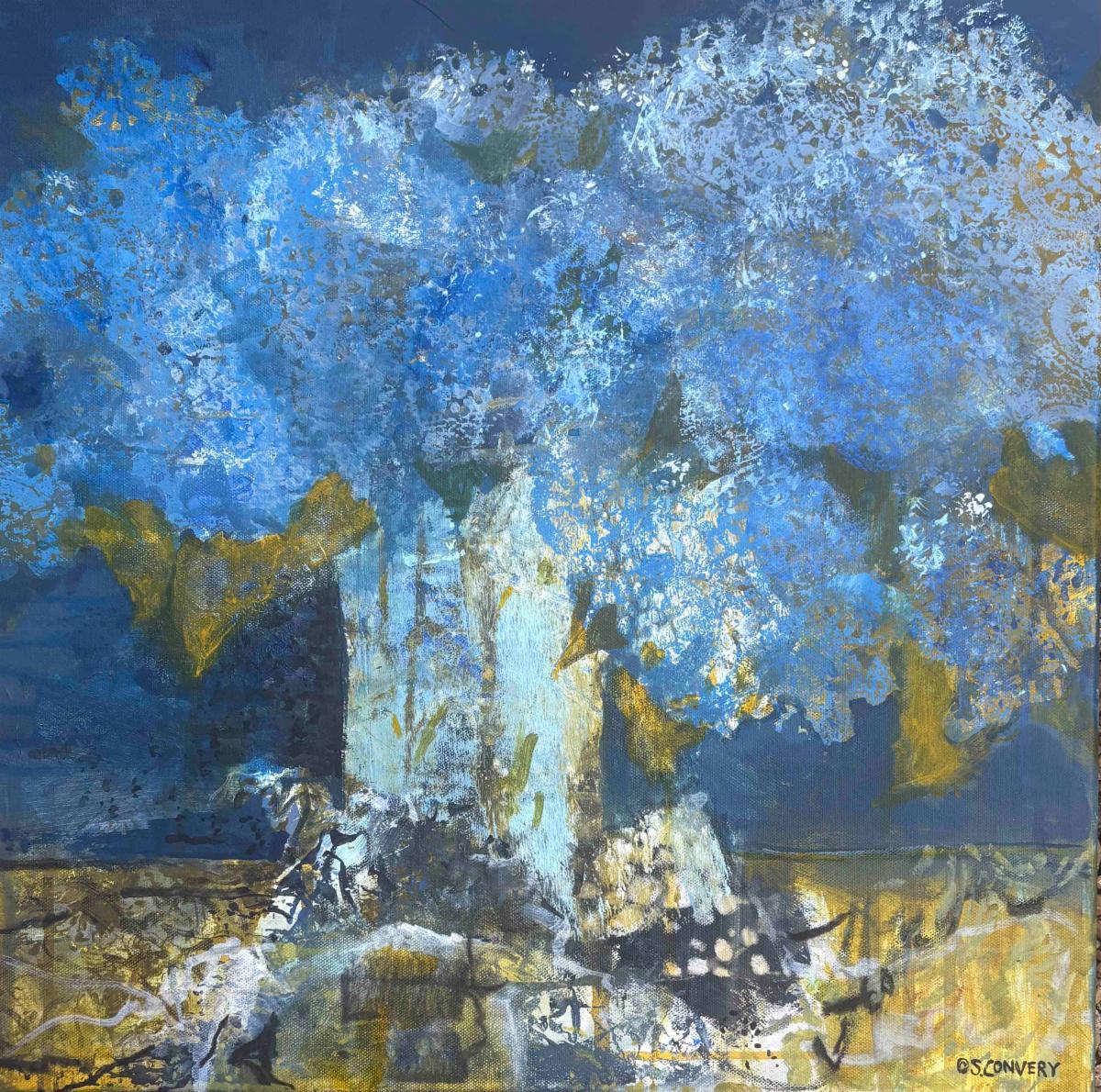
Floral Fantasy Workshop
sponsored by
National League of American Pen Women - Fort Lauderdale Branch
Join me to learn a fun new process for creating acrylic paintings of imaginary flowers. This workshop is limited to 12 participants
Thursday, April 3, 2025
9:30 am to 4:00 pm
Broward Art Guild
2052 Oakland Park Blvd
Fort Lauderdale, FL
SOLD OUT!!
| | | | | |
For the Birds
- Art Exhibition
Dates: April 2 to April 24
Reception: April 5th from 5:30 - 8:30 pm
Broward Art Guild
2052 Okaland Park Blvd
Fort Lauderdale, FL
https://browardartguild.org
| | | | |
Rebel Wine Bar
- Art Exhibition
Dates: April 7 to May 5
Reception:
3520 NE 12th Ave
Oakland Park, FL
https://rebelwinebar.com/
| | |
Private Art Retreats
A personalized experience, full of art and discovery, for those who….
- are traveling alone, or with a couple of friends
- would like a much more flexible, and free experience, and lots of fun, too, tailored exactly to your needs, interests, and experience level
- may want to combine painting with organized discovery trips and tours and really get to know the ‘real’ South Florida
- would like to book in for a shorter or longer time than most workshops
- don’t want to have to bring a mountain of supplies in their luggage
| |
Painting Joy
Created especially for artistic women in the third stage of life who are dissatisfied with their artwork and want to have more fun connecting with themselves and others. In this three-day watercolor workshop, we experiment with visual cues that inspire joy, discover personal symbols that resonate, and provide ways to bring more effervescence into our lives and art.
Please recommend any venues you know that might be interested in hosting this workshop in 2025.
I am also happy to teach this as a private retreat or for a small group in my studio.
I would very much appreciate your help in getting the next booking.
| | | | Private Lessons and Events | | | | Master Classes for High School Students |
Private, highly personalized classes in mastery for artistically-minded US & international students virtually on Zoom or in person at my home.
If you have a student who is a visual thinker, willing to push the boundaries of their own work, and serious about improving their options for college, I want to hear from you! Schedule a time to discuss how I can collaborate with you to build a portfolio that will give your student the greatest chance for success.
| | | | Art Workshops, Critiques & Presentations |
Invite me to present or lead a workshop for your school, club, or guild.
I can customize a program for your event or present my skills programs on composition, color theory, drawing faces, coordinating light/shadow or understanding the cues for depth. I am available for judging, confidence-building critiques and recorded tutorials.
| | | | Improve Your Artist Statement | |
If you would like to delve more deeply into your own inner questions and clarify your thoughts as you create an artist statement for your website, a gallery show, a sponsor, or another project, please reach out, and let’s talk. I have helped many students write compelling statements for AP Art, college applications, and competitions.
Find out More:
| | |
Sketchbook Prompt:
Choose a single form (circle, square, leaf, flower, etc) and repeat it all over the page of your sketchbook with some sort of variation in color, intensity, value, size, shape, overlap, distance, etc. Try to capture one of the words from The Black Square problem: order, increase, bold, congested, tension or playful
| |
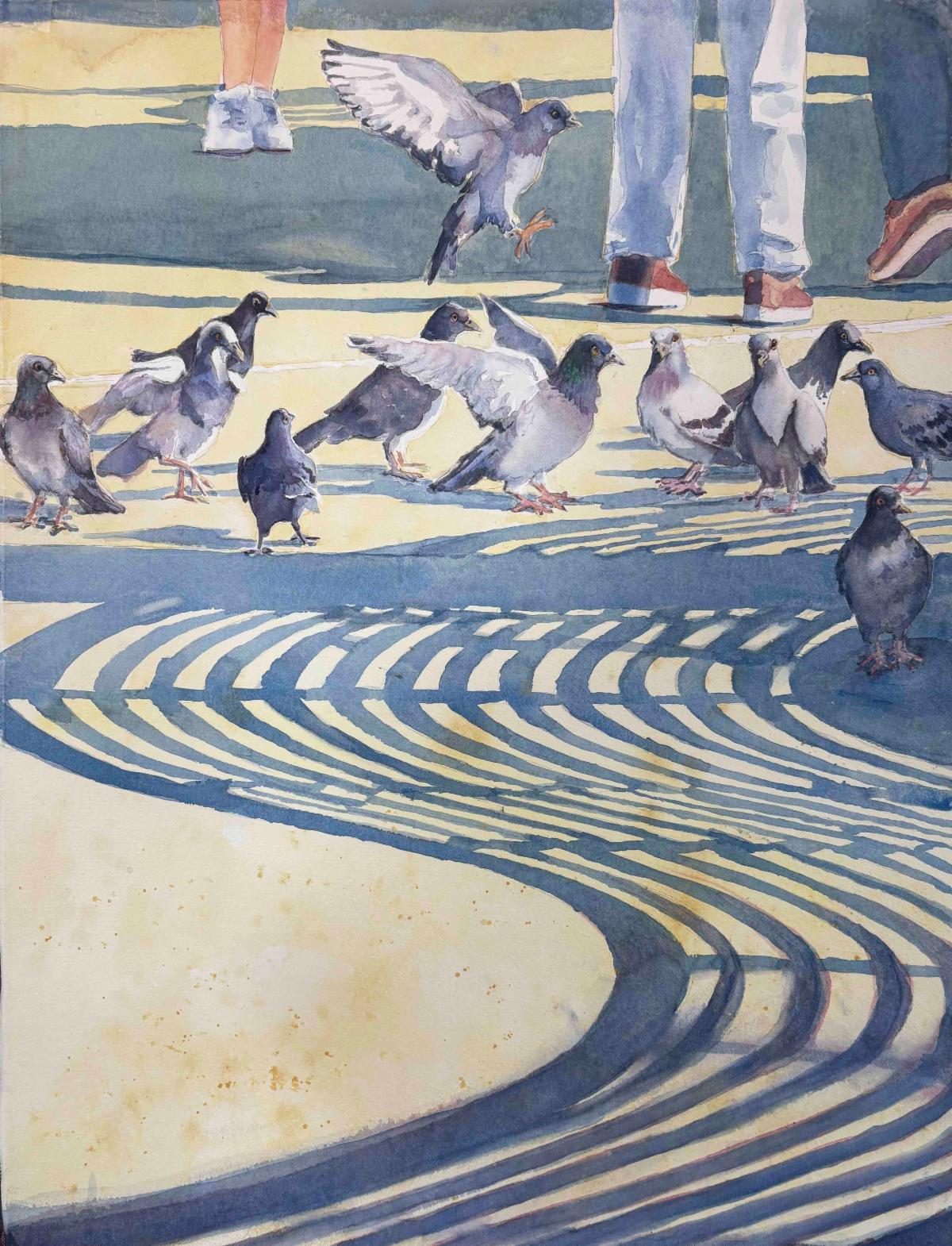
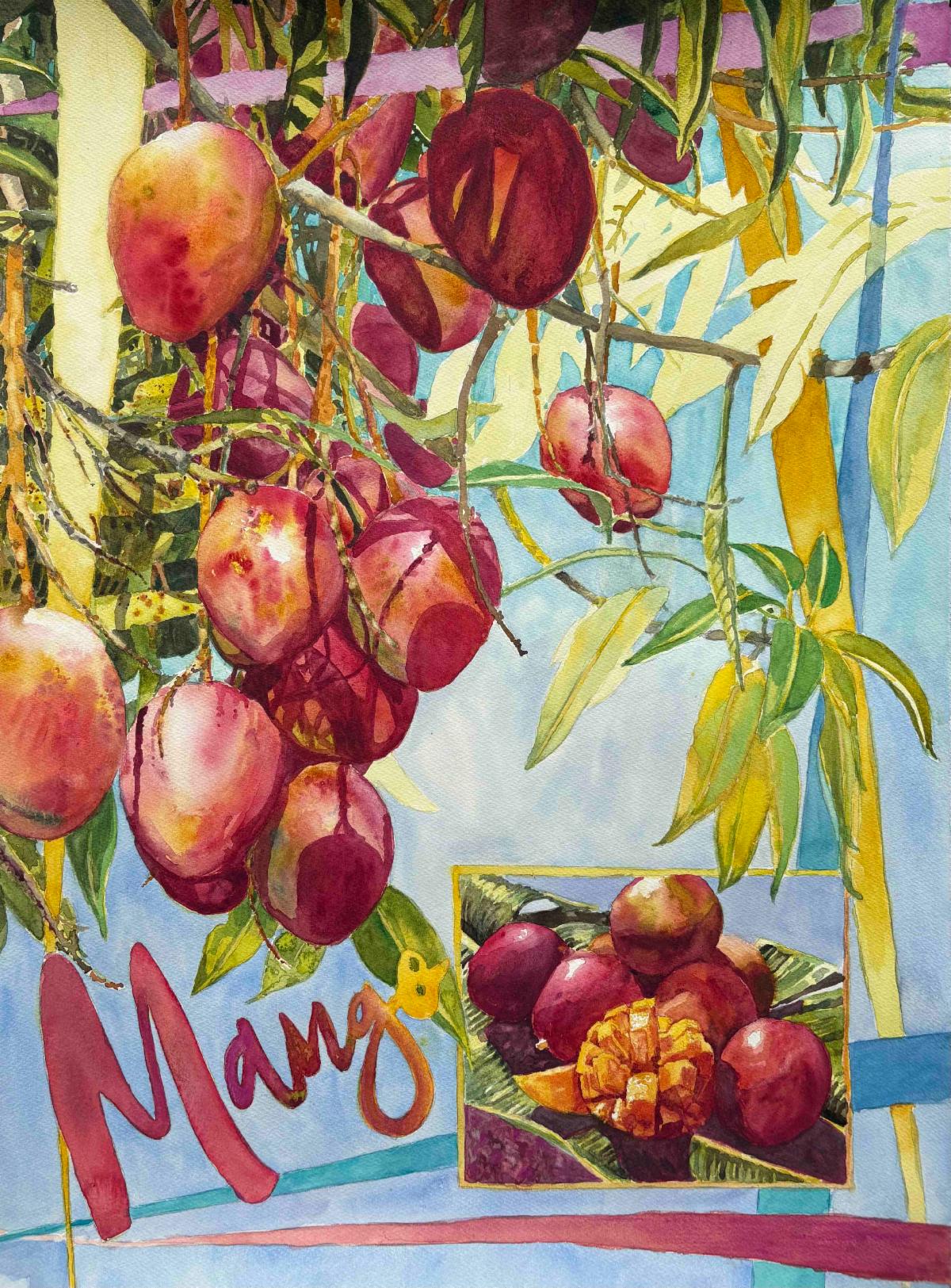
Please contact me if you are interested in adding any of the paintings below to your collection.
I will deliver if you live within a 2-hour drive and if you live further away, I will give you a reasonable price for shipping.
Venmo, CashApp, PayPal and Zelle are welcomed.
| | |
Title: Sweet as Kisses
Media: Watercolor
Size: 36”x28"
Price: $1212
Frame: Gold
| | | |
Title: Croatian Kerfluffle
Media: Watercolor
Size: 36"x 28"
Frame: Gold
Price:$1111
.
| | | |
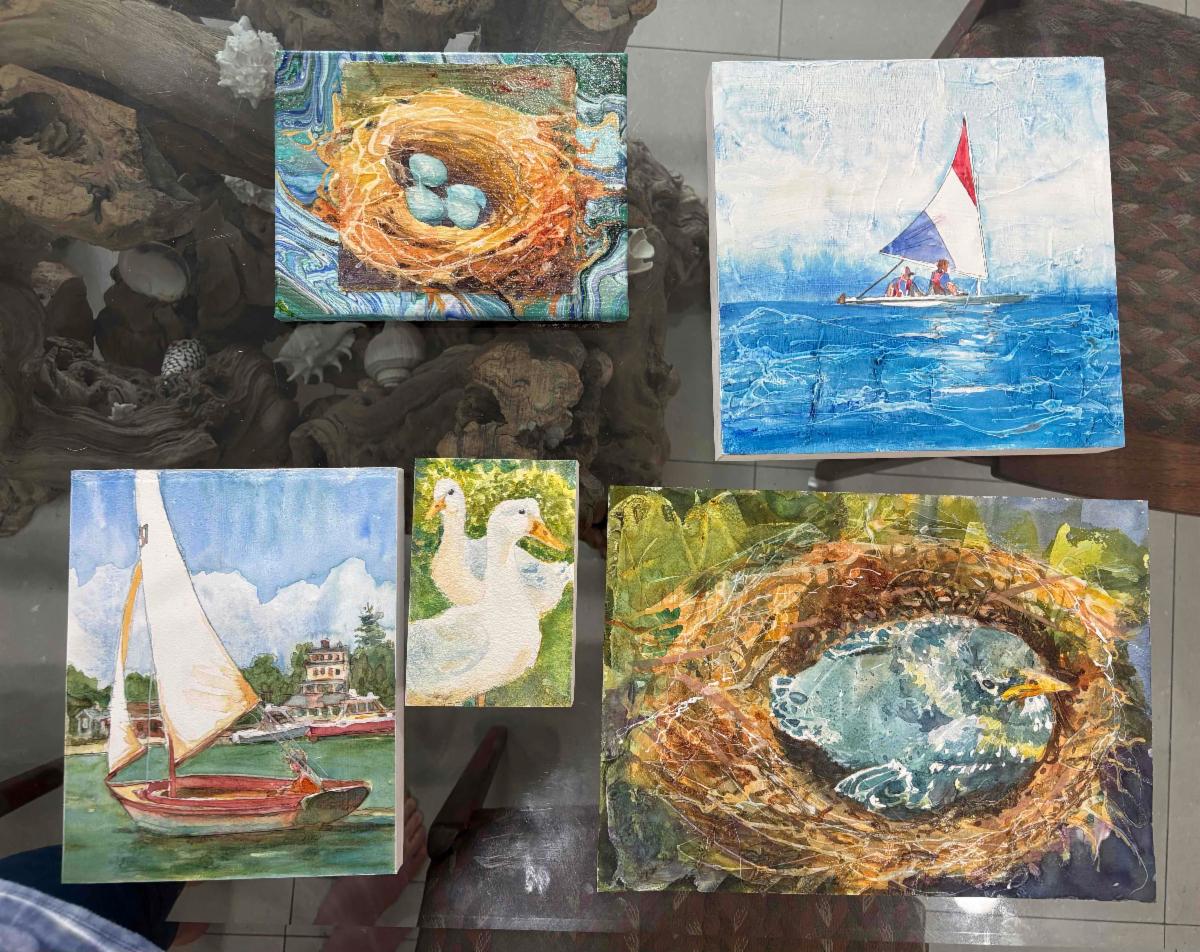
Title: Little Blue
Media: Acrylic Mixed Media
Size: 16" x 20"
Price: $444
Frame: Gold
| | | |
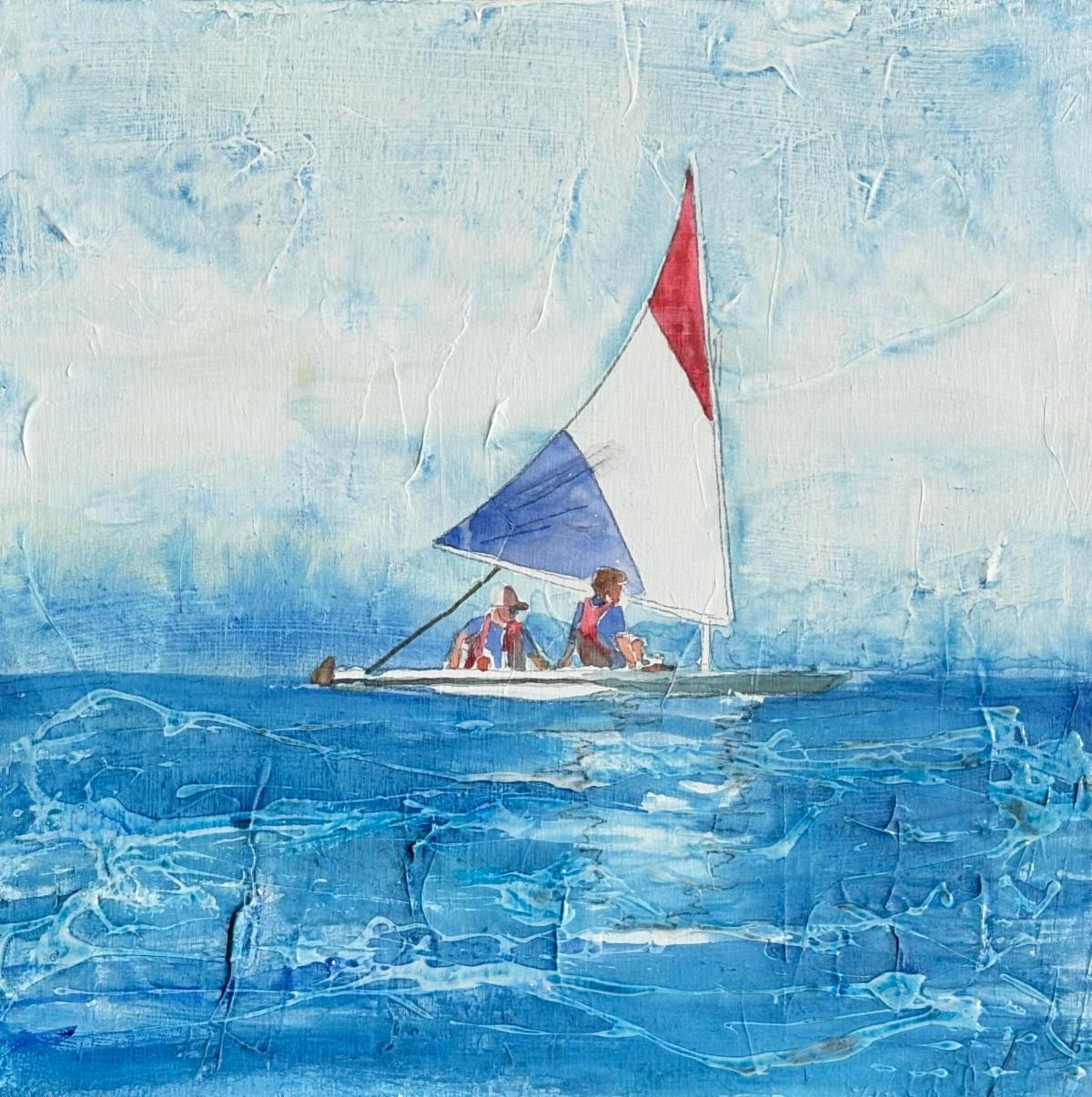
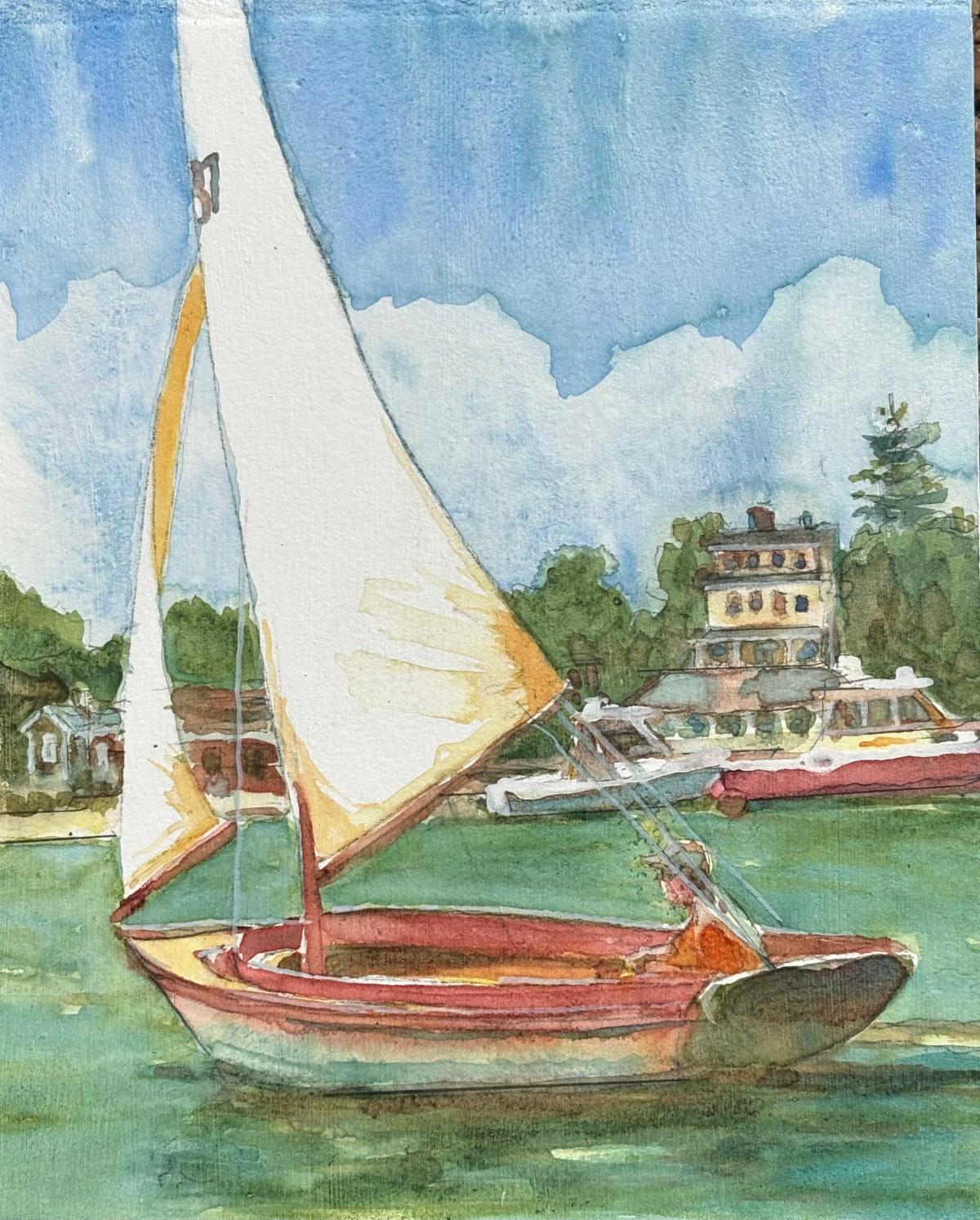
Title: Sunfish Sail
Media: Mixed Media
Size: 10" x 10"
Price: $444
Frame: White Wood Panel
| | | |
Title: Vineyard Life
Media: Watercolor on panel
Size: 10" x 8"
Price: $222
Frame: White Wood Panel
| | | |
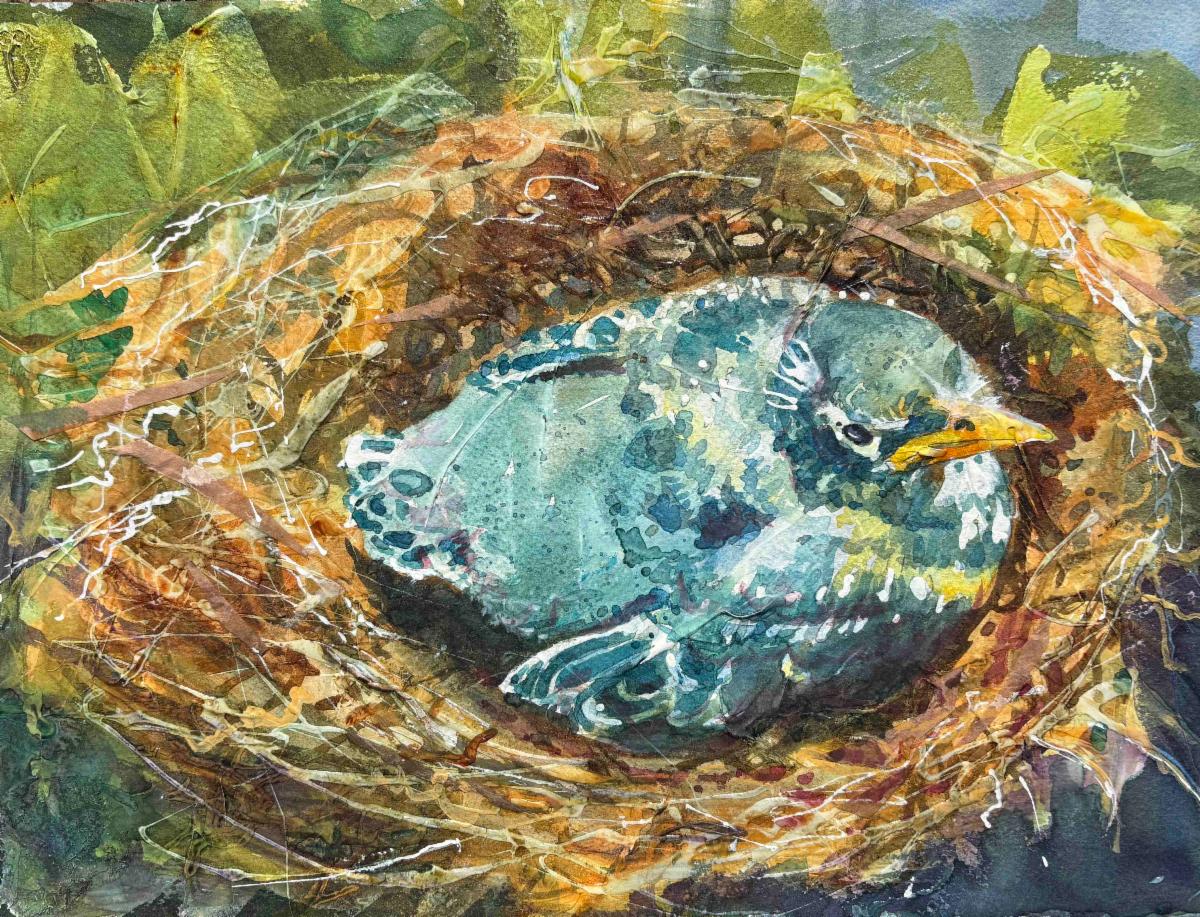
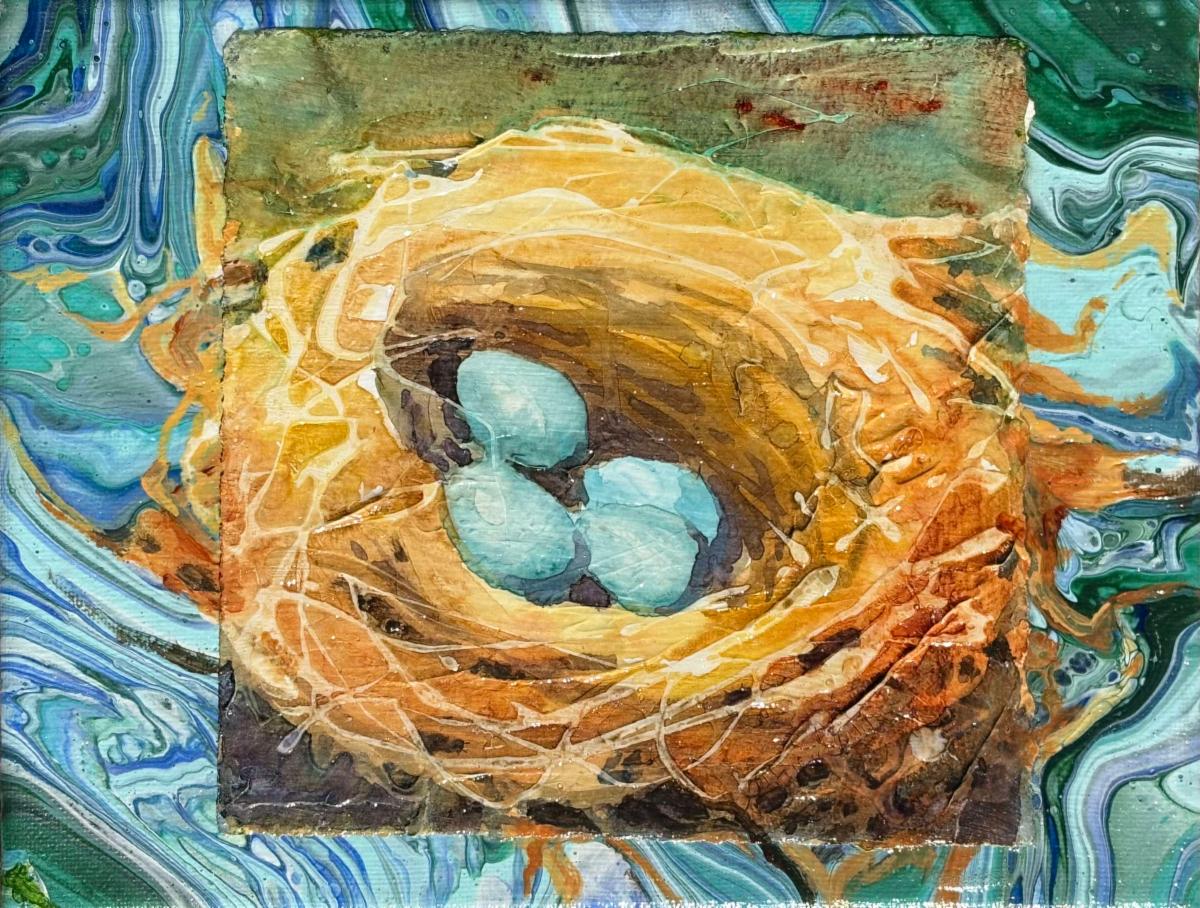
Title: Treasure Nest
Media: Mixed Media
Size: 8" x 10"
Price: $222
Frame: Gold
| | | |
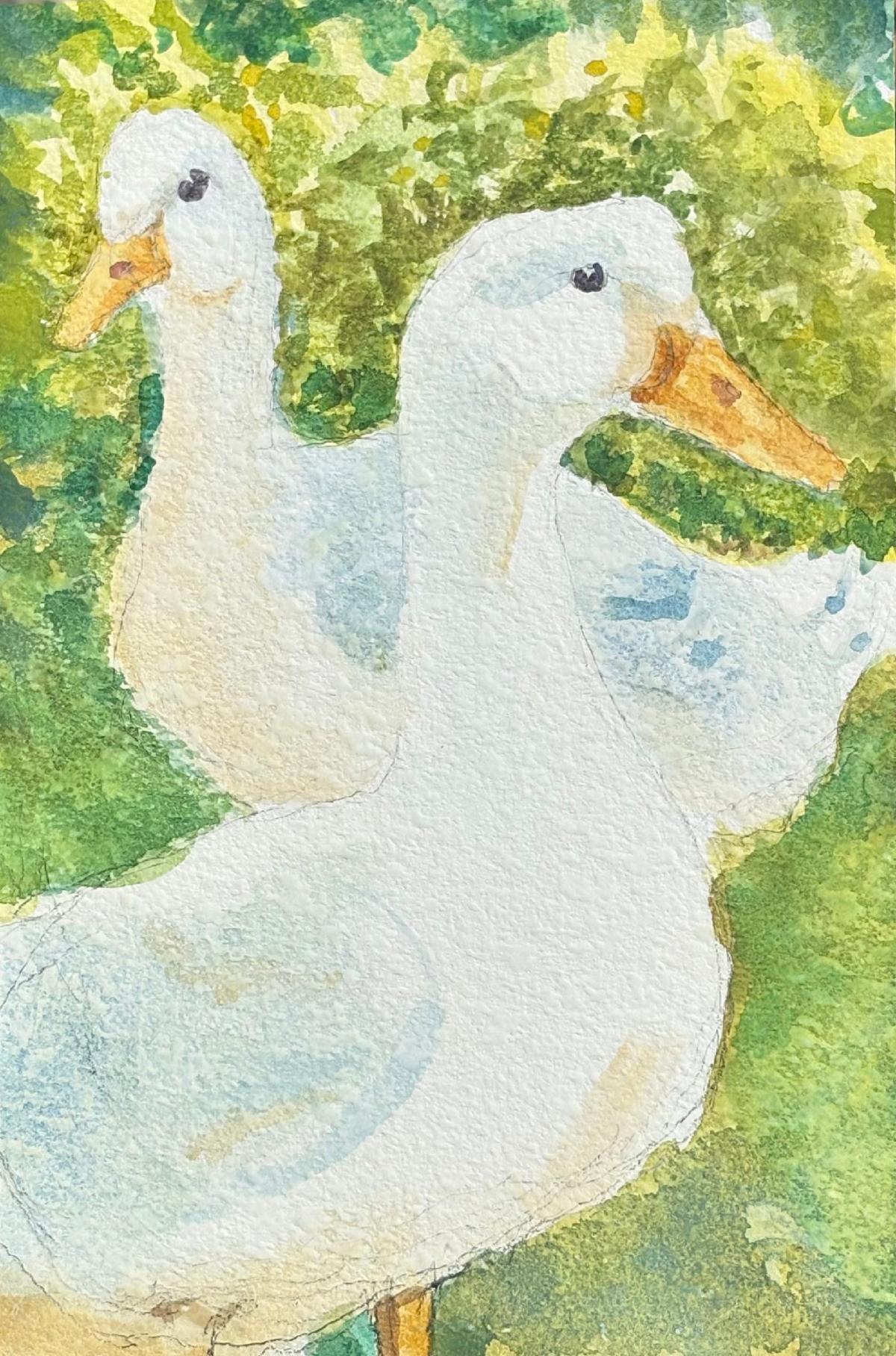
Title: Puddle Ducks
Media: Watercolor on panel
Size: 6" x 4"
Price: $125
Frame: White Wood Panel
| | | Want to see past issues of my newsletters? Visit this link on my website. | |
Subscription Information: You are receiving this email because you subscribed to my mailing list, downloaded a resource, purchased one of my products/programs, or opt-ed in some other way.
Thank you for being part of the Cr8V Soul Arts Tribe!
NOTE: Unsubscribing means you won't receive any more emails from me including information about your paid products and programs.
| | | | |