|
Alleluia! Christ is risen!
While Easter day is often about proclaiming the good news with trumpets, bells, song, and joy, the season of Easter gives us a chance to begin to live into the deeper truth of what resurrection means for our life together. This Sunday we get a beautiful post-resurrection Gospel text (John 21:1-19) in which Jesus appears to have breakfast with his disciples on the beach. At the heart of that text is a conversation Jesus has with Peter.
In the lead up to Jesus’ crucifixion, Peter denies knowing Jesus three times. On the beach after breakfast, the resurrected Jesus has a conversation with Peter, which many readers of John’s gospel understand to be an opportunity for Peter to three times affirm his love for and connection with Jesus – a threefold restoration after a threefold denial. It’s an opportunity to restore a broken relationship.
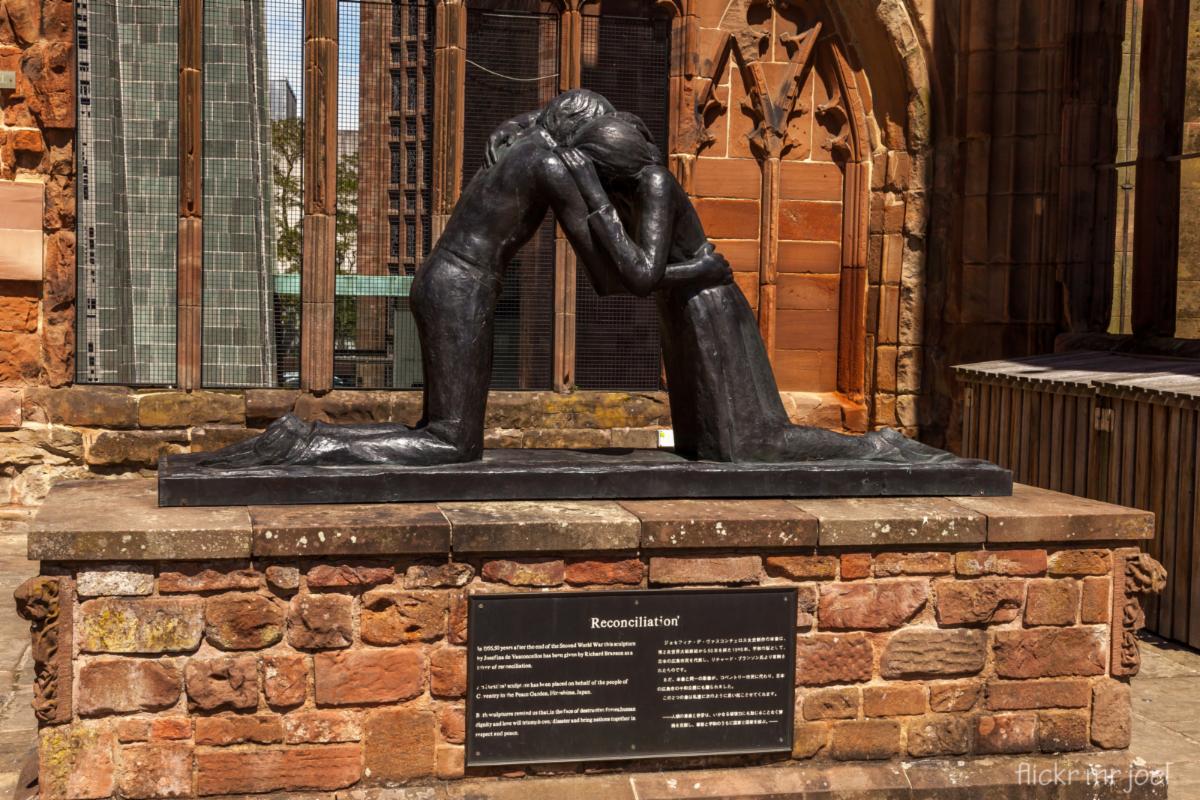
What we know as human beings is that relationships need tending. We do things, like Peter, that create fractures in our relationships, and we need ways to restore connection or, in some cases, to break off a relationship and find healing in another way. This is true in our relationships in our church communities.
We might like to think that a healthy church community is without conflict. But every church has conflict because it’s a place of relationships. Conflict becomes unhealthy when it is denied or allowed to fester and grow. Instead, a healthy congregation learns ways to repair the inevitable ruptures and live into the possibilities of new life. Put in Easter language, we are people who name honestly the pain, grief, and death that exists in our lives, and we believe God has the power to welcome us into new life.
So, how do we learn ways to name conflict in healthy ways in our parishes? There’s no one easy solution.
Jesus’ advice in Matthew 18 is a good starting point. There he reminds us to make every effort to talk directly, honestly, and compassionately with an individual with whom we have a disagreement. When that fails to resolve the problem, we might bring in a trusted person or persons to help us navigate the conversation together. When that fails, it may be time to set clear boundaries to allow for everyone to stay safe until something can shift. But the key is direct communication rather than what often happens, when instead of talking to the person we need to, we go tell other people about the problem to drum up support for our side.
We always do well to take a deep breath, speak from our own perspective, and constantly remember the image of God in every neighbor we meet.
We do well to open ourselves to creative solutions. Often our conflicts in church communities are presented as choices on a particular issue. Will we vote yes or vote no? Will we win or lose? But often there’s a need to slow down and listen to what’s behind strong opposing opinions. Maybe there’s an underlying need or hurt that requires some attention. Maybe there’s a solution that isn’t just yes or no, this or that.
When things in a congregational system build up over time without the opportunity for healing, often every decision and interaction becomes charged. Emotions run high. Attacks are made. Wounds are created. It’s these times that need the support of a trusted leader to help hold the community through a process of honest naming of issues while also holding the boundaries around appropriate communication. In these situations (and ideally before things get there) it can be really helpful to have a covenant of behavior that defines how communication happens and decisions are made. There are templates, but often something more tailored to an individual community is needed. It’s a way to have something to point to when things start getting tense.
There are simple things we can learn and also good resources available for support. But more than anything, we start by acknowledging that conflict in our lives and in our congregations is normal and that, rooted in a resurrection faith that has the capacity to make us anew, we can engage conflict in healthy ways that lead to growth and transformation. It is every week that we get to confess and hear God’s words of forgiveness. Like Peter, each of us has fallen short. And Jesus meets us there and leads us into a new Easter life. It’s not easy: the cross is in between. But God goes with us even there.
Alleluia! Christ is risen!
Peace,
|