From the Executive Director | | |
Summer is here, and as we enter the busiest season on Cape Cod, the deeply interconnected nature of our region’s systems becomes even more apparent.
As the roads grow busier, and our communities, businesses, and the natural resources that draw people here are in the spotlight, this season reminds us that the Commission’s work touches nearly every aspect of life here on Cape Cod.
The increase in seasonal travel highlights the importance of thoughtful transportation planning that supports residents, visitors, and businesses. Throughout the summer, our transportation team collects valuable data to better understand travel patterns and to plan safer, more efficient ways for people to move around the Cape.
The natural ecosystems that make Cape Cod a special destination—our coastline, coastal and freshwater resources, wooded areas, and open spaces—are vital to our region’s long-term environmental and economic health. Through initiatives like the Freshwater Strategy, Regional Pond Monitoring Program, and upcoming Regional Open Space Plan, we continue to protect the natural systems that sustain our communities and define this unique place.
Summer also brings renewed attention to one of the Cape’s most urgent challenges: housing. As visitors arrive and seasonal homes, short-term rentals, hotels, and businesses fill with activity, we are reminded of the year-round workforce that keeps our communities running. Ensuring that teachers, healthcare workers, hospitality employees, municipal staff, and others who support the region have access to housing is essential for a thriving Cape. Through implementation of the Regional Housing Strategy, as well as providing data and technical support to our municipalities, we are working toward solutions that foster a more resilient and inclusive Cape Cod.
Cape Cod’s future depends on recognizing these relationships: transportation affects housing, housing supports our economy, and our economy relies on healthy natural resources. Each element is part of a larger regional picture, and the Commission’s work is focused on helping communities plan for that future together.
--Kristy Senatori
| | |
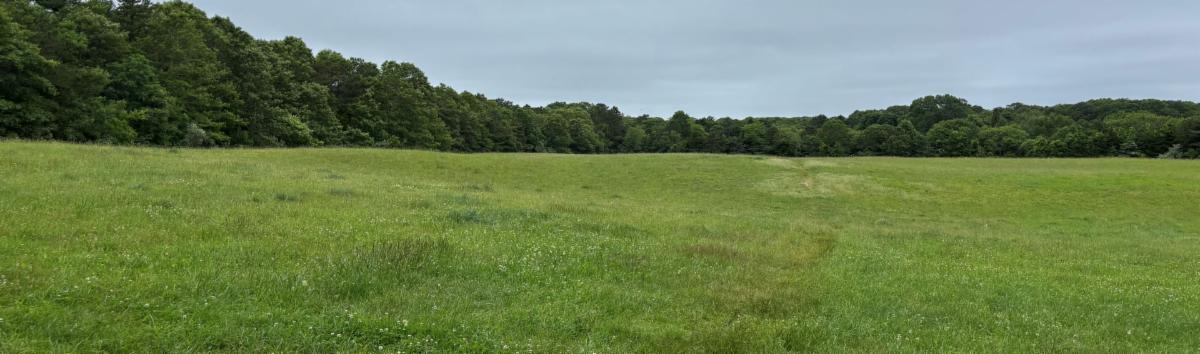
Regional open space planning underway
With limited undeveloped and unprotected land remaining on Cape Cod, a coordinated regional approach is needed to protect critical resources, strengthen connections between open spaces, and preserve lands that contribute to community character and quality of life.
The Regional Policy Plan recommends developing a Regional Open Space Plan to identify and prioritize lands of natural, ecological, and community significance for protection.
Commission staff are currently meeting with municipal representatives to better understand local open space planning efforts, acquisition and management challenges, protection priorities, and opportunities for regional collaboration.
The planning process will include data collection and analysis, mapping of undeveloped and unprotected lands, and engagement with stakeholders and community members. The result will be a Cape Cod Regional Open Space Plan that identifies priority conservation areas and provides communities with tools and resources to support implementation and long-term stewardship.
| | |
Advancing economic development across the region
The recently completed Year 2 Annual Report for the region’s 2024-2029 Comprehensive Economic Development Strategy (CEDS) highlights progress on key initiatives supporting Cape Cod’s economic future and tracks a broad range of economic, housing, workforce, infrastructure, and resilience indicators that help measure progress toward the region’s long-term goals.
The CEDS serves as a five-year roadmap for addressing the region’s most pressing challenges, including housing availability, workforce development, infrastructure needs, environmental resilience, and economic opportunity. Each year, the Cape Cod Commission reports progress to the Economic Development Administration (EDA) and identifies priorities for the year ahead.
| |
Encouraging adaptive reuse on Cape Cod
On Cape Cod, adaptive reuse can help meet housing needs without consuming more undeveloped land. This approach can support vibrant village centers, preserve historic and culturally significant buildings, and protect the region’s unique resources. By reinvesting in existing places, adaptive reuse enhances economic, environmental, and community resilience while making efficient use of developed land.
A new guidebook now explores how existing buildings across Cape Cod and the Islands can be converted into year-round housing while preserving historic fabric, environmental resources, and community design.
| |
Seasonal Communities model bylaws aim to enhance year-round housing opportunities
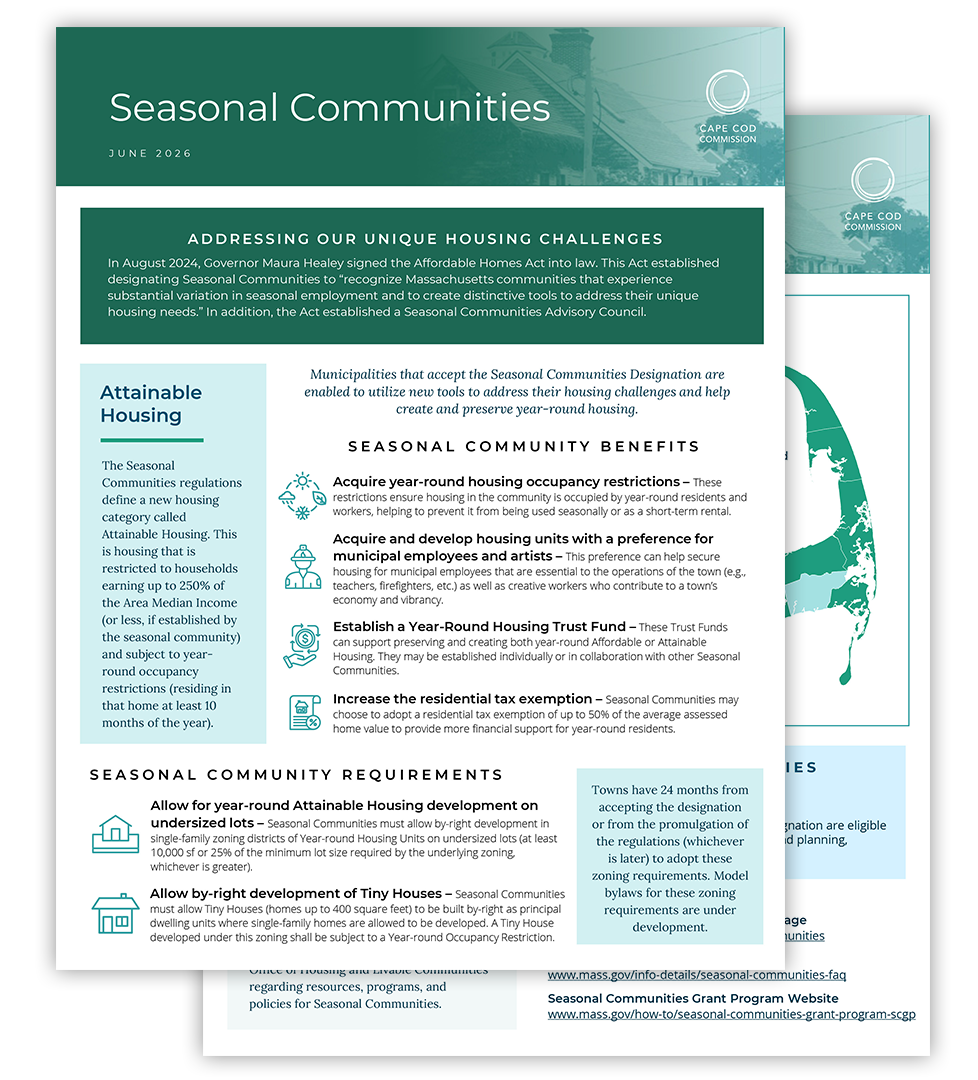
Communities that have accepted the Seasonal Communities designation will need to amend their zoning to expand year-round housing options. New model zoning bylaws will be available early fall to help towns implement two key housing strategies that are required of Seasonal Communities: allowing tiny houses and enabling attainable housing on undersized lots, both approved “by right” when they meet defined standards, including that the housing units be restricted for year-round occupancy.
In zoning terms, “by right” means projects that comply with local requirements can move forward without requiring a discretionary special permit. This helps to reduce uncertainty and streamline the approval process.
| | | |
What does the Seasonal Communities designation mean for Cape Cod?
Download a fact sheet created by Commission staff that explains the designation, the housing tools it makes available, and how communities can use it to support year-round housing.
| |
Summer traffic data collection underway
Cape Cod Commission traffic technicians are back on the road for summer 2026, collecting essential data from the region’s roadways to inform transportation planning projects for the coming year and beyond. The summer traffic technician program provides critical data for the Commission’s transportation planning, supports municipal initiatives, and informs a wide range of regional plans.
|
Identifying construction disruption assistance strategies
If you have driven around Cape Cod recently, chances are you’ve been detoured around or driven through construction sites. While sewer projects provide long-term environmental and economic benefits, construction impacts and connection costs can create significant challenges for local residents and businesses.
The Commission will collaborate with regional partners to develop recommendations for construction disruption assistance programs. The effort will focus on identifying best practices, outlining potential program models, and evaluating funding sources and administrative needs.
| |
Assistance available to small businesses and nonprofits affected by the February blizzard
The U.S. Small Business Administration (SBA) is offering low-interest Economic Injury Disaster Loans (EIDLs) to eligible small businesses and private nonprofit organizations impacted by the February 22–27, 2026 blizzard.
Businesses in Barnstable, Bristol, Dukes, Nantucket, Norfolk, Plymouth, and Suffolk counties may qualify for loans of up to $2 million to help cover operating expenses and other financial losses related to the disaster, even if no physical damage occurred.
Applications are due by March 12, 2027. Visit sba.gov/disaster for eligibility information and application details.
| | Free technical assistance available through the SNEP network | | |
The Southeast New England Program (SNEP) Network invites municipalities, Tribes, and nonprofit organizations in Rhode Island and southeastern Massachusetts to apply for no-cost technical support to begin or advance your community’s stormwater management, ecological restoration, climate resilience, or sustainable funding projects and initiatives.
The 2026 Solicitation for Community Assistance Projects is specifically focused on community scale or watershed scale planning and project scoping assistance for communities to build their local capacity and move their projects toward implementation.
The deadline to apply is July 15th, 2026 at 5:00pm.
The SNEP Network offers technical assistance and training in the following topic areas:
- Water-related management and planning(including stormwater management and retrofit planning)
- Ecological Restoration (project
- assessments and planning)
- Natural Hazard Resilience and
- Preparedness (including ordinance/bylaw review)
- Funding and Financing (e.g. project scoping, enterprise fund feasibility assessment)
- Culvert Assessment and Training
-
Stormwater Planning Series
-
See example past projects here.
*Note: This is not a grant program—Communities will be matched with free technical assistance and training through our network of regional partner organizations, rather than through direct financial support, to develop and prioritize projects, strategize the best path forward, and secure funding for implementation. In turn, communities commit their staff time to work collaboratively to advance their projects.
| | | | |