Community Schools Connection


Issue #9 May 2026

Grantee Spotlight

Twin Ridges - Grizzly Hill Elementary


Rooted in Community: Bringing Learning to Life at Grizzly Hill School

At Grizzly Hill School, Community-Based Learning (CBL) and Project-Based Learning (PBL) are helping students connect classroom learning to the world around them. Through the leadership of Karina Williams, students across grade levels have participated in hands-on, community-connected projects that bring learning to life in meaningful and memorable ways.

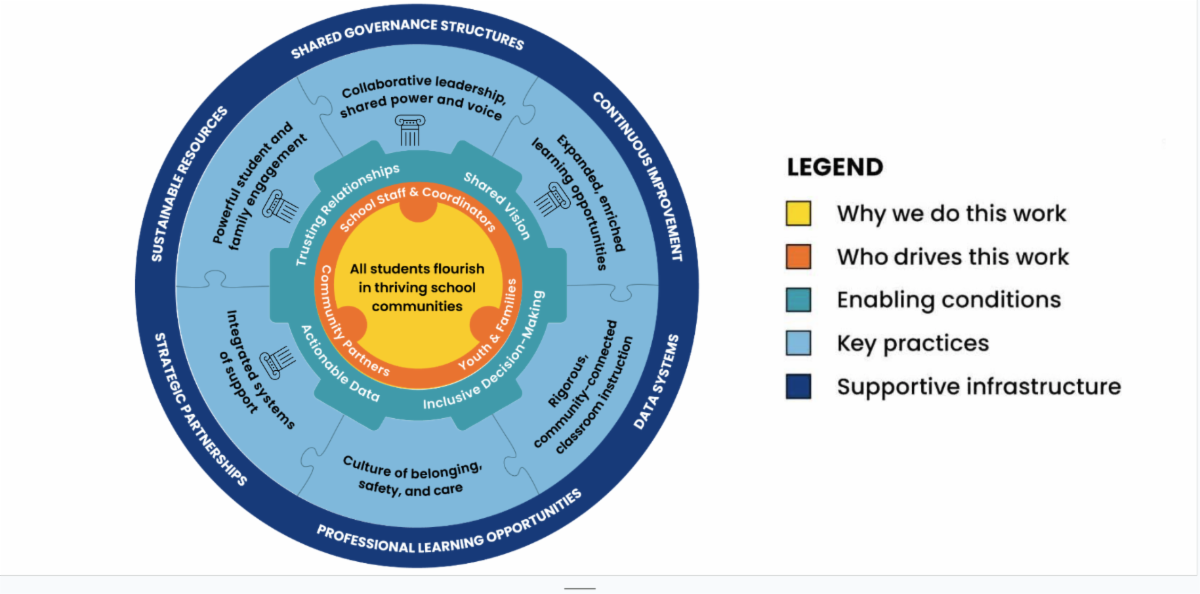
According to Nevada County Office of Education Community Schools Lead Sarah Morgan, the work was inspired by the Community Schools key practice of a “Rigorous Community-Connected Classroom.”

“Throughout the 25/26 school year, Twin Ridges Elementary School District Community Schools Coordinator Kristin Snell was able to add a valuable new member to her team: Karina Williams whose job title is Community Liaison. The Community Schools key practice ‘Rigorous Community-Connected Classroom’ was the inspiration behind welcoming Karina to the staff.”

For Karina, this work is deeply personal. Before becoming the school’s Community Liaison, she worked as a paraeducator at Grizzly Hill. She also attended the school as a child, grew up in the surrounding community, and still lives there today. Those lifelong relationships and local connections have helped her create authentic learning experiences that connect students to the community they call home.


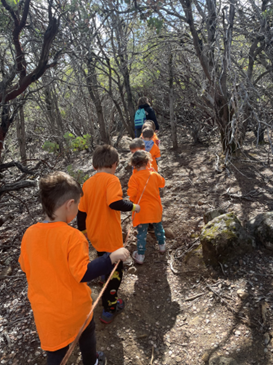
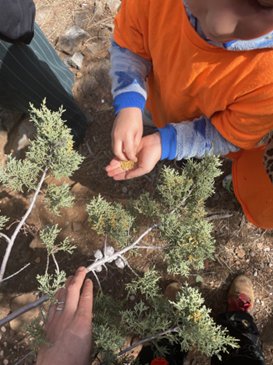
Karina began the year partnering with TK and Kindergarten teachers to design a science-focused unit centered on observation and exploration. Students created nature journals and participated in regular nature walks around the school campus and surrounding community. As they observed plants, animals, weather, and seasonal changes, students documented their thinking through drawings and shared discoveries with classmates.


As Karina expanded into the 1st and 2nd grade classrooms, teachers wanted to strengthen literacy and writing connections. Karina coordinated a visit to the local public library, where students explored books and learned more about how stories are shared within a community. Inspired by the experience, students wrote original books that were ultimately added to the library’s collection. For many students, seeing their own writing displayed in the public library was a powerful moment that helped them see themselves as authors and contributors to their community.


Throughout the year, Karina supported every grade level at Grizzly Hill School with community-connected projects lasting four to eight weeks. By helping teachers brainstorm ideas, build partnerships, and organize experiences, she was able to “get the ball rolling” with CBL and PBL implementation across the campus. One of the most exciting outcomes was seeing teachers continue incorporating community-centered learning experiences even after the supported units had ended.


Looking ahead to next year, Karina hopes to structure her schedule so she can work alongside each grade level throughout the entire school year while continuing to support teachers in integrating the broader community into classroom learning.


The work happening at Grizzly Hill School demonstrates how Community Schools can create authentic, engaging learning experiences where students see themselves, their learning, and their community as deeply connected.

Study Tour: Community Engagement in Action


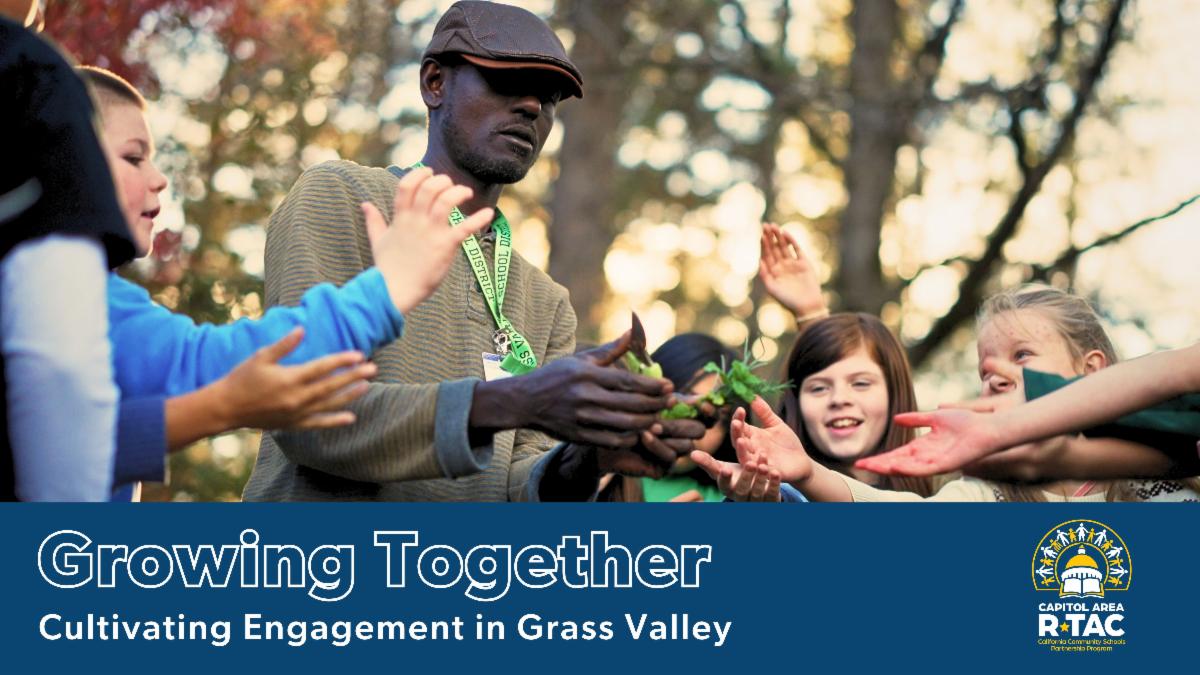
Last December, we hosted our Community Schools Study Tour, highlighting innovative parent and community engagement strategies and showcasing how relationship-centered practices can transform school culture and participation at Lyman Gilmore Middle School.


Centered on the belief that human connection is one of the most powerful tools for a school to thrive, the study tour highlighted how empathetic listening and relationship-first practices can strengthen trust, belonging, and authentic partnerships. Participants observed how intentional family and community engagement strategies can turn low engagement into active participation and create more inclusive school environments for students and families.


Learn more at Capitol Area R-TAC


Watch the Study Tour: Grass Valley video


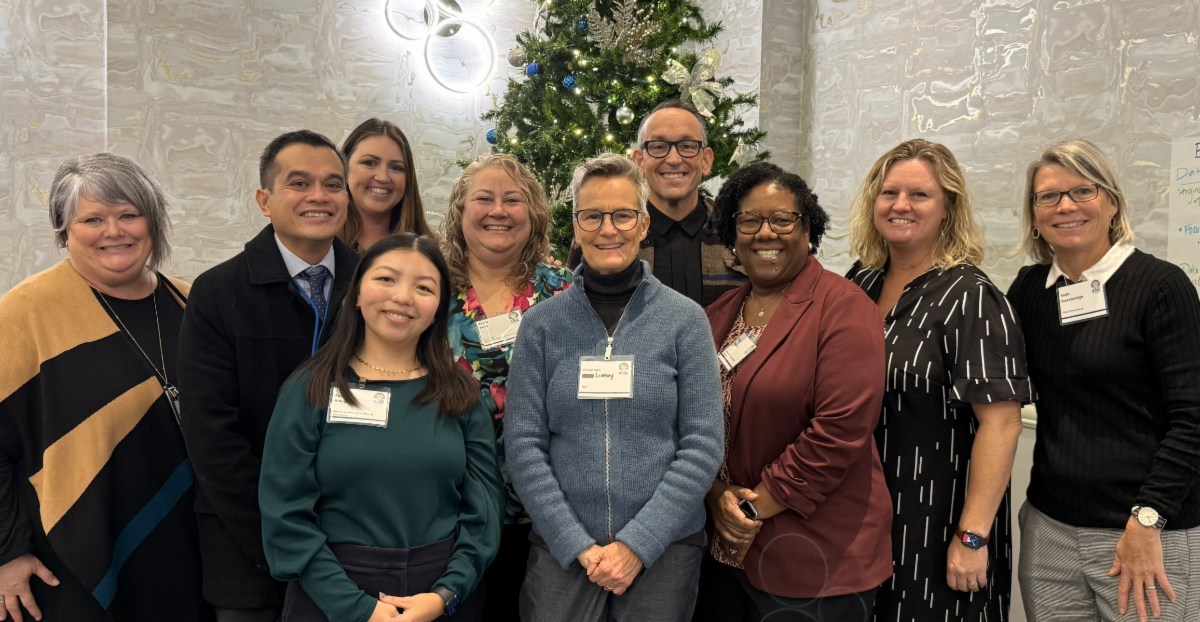
Meet the Team

R-TAC

Professional Learnings

September, 2026

  • 17th - RTAC Community Meeting


October

  • 7th - District Lead Improvement Community


  • 14th - Community Schools in Practice


  • 15th - COE Lead Community of Practice


  • 22nd - Site Team Improvement Communities


November

  • 12th - RTAC Community Meeting


December

  • 2nd - District Lead Improvement Community


  • 9th - Community Schools in Practice


  • 10th - Site Team Improvement Communities


  • 17th - COE Lead Community of Practice


January

  • 13th - Community Schools in Practice
  • 21st - RTAC Community Meeting


February

  • 4th - Site Team Improvement Communities


  • 18th - COE Lead Community of Practice


  • 24th - District Lead Improvement Community


March

  • 10th - Community Schools in Practice


  • 18th - Site Team Improvement Communities


April

  • 14th - District Lead Improvement Community


  • 14th - Community Schools in Practice


  • 22nd - COE Lead Community of Practice


  • 29th - RTAC Community Meeting


SCOE/PCOE Community Schools Related Professional Learnings

PCOE 


May


June


July


SCOE 


May


June


ALL Summer Sessions In EPiCC


2026-2027 Sacramento County Reads


News & Updates

California Community Schools Partnership Program (CCSPP)

Community Schools Investment Update (2026-2027)

The Governor’s May Revise expands investment in Community Schools, which integrate academic, health, mental health, social services, expanded learning, and family engagement supports. Proposed funding will support expansion to high-need schools, strengthen implementation and accountability, support secondary school redesign, and continue statewide technical assistance, behavioral health partnerships, and MTSS alignment to improve student outcomes.


Read the full update here.


2026 Annual Progress Report

The Annual Progress Report (APR) for the California Community Schools Partnership Program (CCSPP) serves as a tool to assess implementation efforts, and to encourage reflection as part of an ongoing process of continuous improvement.


Site-Level APR- Due on June 30th, 2026

Submit at: Qualtrics implementation site link


LEA-Level- Due on July 31st, 2026

Submit at: Qualtrics implementation LEA link 

If you have any questions, please feel free to contact our Capitol Area R-TAC Team.


State Transformational Assistance Center (S-TAC)

2026 Community Schools EMPOWER Summit

Join us in Ontario, CA on September 10–11, 2026 for S‑TAC’s annual EMPOWER Summit—bringing together educators, students, families, and partners from across the state to celebrate progress and spark new ideas. Expect dynamic keynotes, interactive sessions, and inspiring stories that highlight what’s possible when schools and communities unite.

Registration


Regional Transformational Assistance Center (R-TAC)

New 2026–2027 Professional Learning Offerings

We’ve redesigned our professional learning offerings for the upcoming school year based on your feedback. Updates include a streamlined set of sessions, clearer descriptions, and expanded opportunities for peer learning.


New offerings include facilitated site- and district-level Improvement Communities,  Community Schools in Action to include peer learning, and additional tailored technical assistance aligned with participant needs.


We look forward to learning with you in the year ahead.


26-27 Professional Learning Sessions &n Dates


R-TAC Partner Highlight

Building a Braided Safety Net in Rural Colusa County

In rural communities, no single partner can meet the full range of student and family needs. Geography limits access. Funding has gaps. Staffing is stretched. Colusa County has spent years building a response to that reality by layering multiple systems until the gaps are covered.


Kevin Douglas, Student Support Services Manager at Colusa County Office of Education, describes the county's approach as one built on deep integration across partners. TCCAP, the Tri Counties Community Action Partnership serving Colusa, Glenn, and Trinity Counties, is one of those core layers. Through Enhanced Care Management, Community Health Workers, and transportation services, TCCAP connects families of students to health and social services that would otherwise be out of reach. With support from Partnership HealthPlan of California, TCCAP rebuilt its referral systems so families were actually connected to services, not just handed information. Behavioral Health, Public Health, and Health and Human Services round out the county's support response. "They are now foundational pieces of our support when a family's needs are identified," Douglas said.


At the school site, that layered approach takes a deeper shape through B.E.S.T. (Behavioral Emotional Support Team) for Students, a federally funded program that placed an additional mental health clinician in each Colusa County district, and Student's First, Pierce Joint Unified School District's mental health department funded by braiding CYBHI and Community Schools dollars. Principal Noah Gomez at Lloyd G. Johnson Jr. High School has seen the difference. Before these programs, students in emotional crisis had nowhere to turn. Now they do. "We were able to immediately connect the student with an on-site therapist," Gomez said. "That student now receives consistent mental health support directly integrated into their school day." For rural districts across the region, Colusa County's model is clear: sustainability comes not from finding the right single partner, but from braiding relationships, funding streams, and systems until the net holds.

Explore the Statewide System of Support Toolkit — a one-stop hub connecting educators to statewide tools, resources, and professional learning supports designed to improve student outcomes across California.

CS Forward Framework

Download the full Framework: Essentials for Community School Transformation document.