February 13, 2026

Mandates Threaten Alfa Health Plans

Alabama lawmakers continued discussing rising health care costs this week while committees debated bills aimed at mandating health coverage that would drive costs even higher.


HB 400 by Rep. Ed Oliver, R-Dadeville, would require health care providers to pay a set amount to ambulance companies for services provided. It is one of several bills aimed at mandating payments by health coverage providers. 


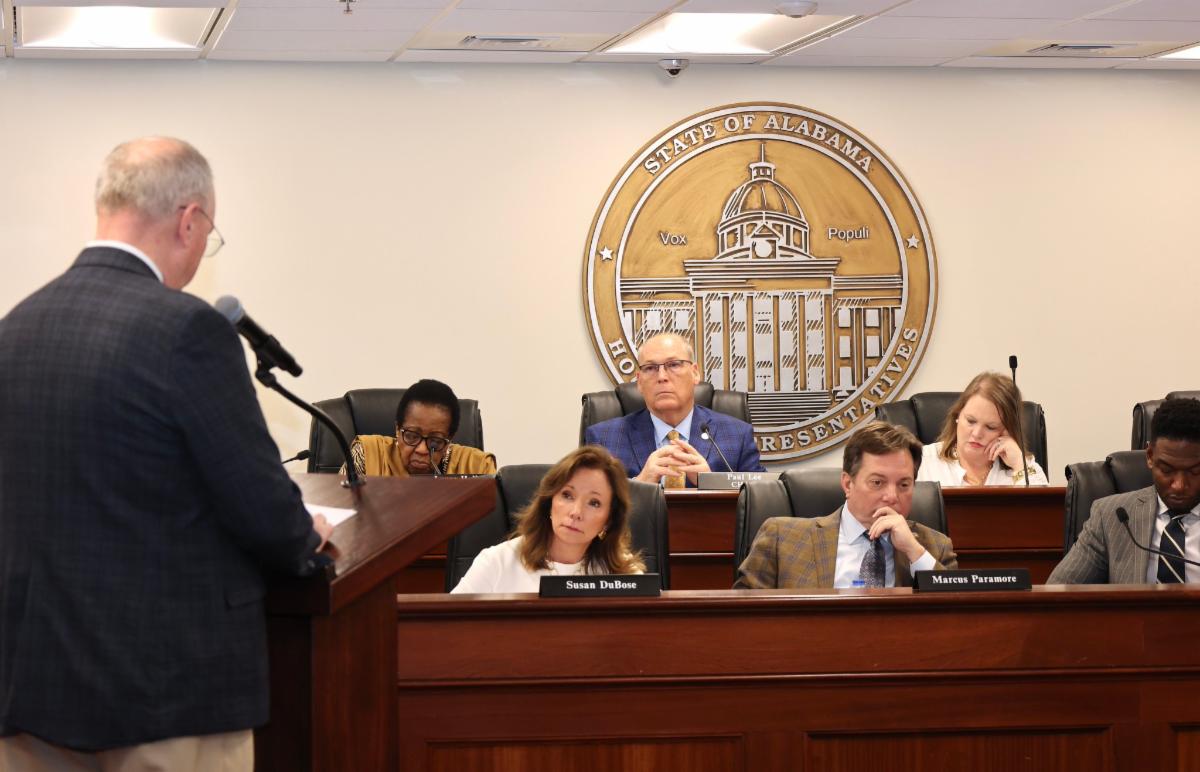
The legislation was addressed in the House Health Committee Wednesday where Rep. Susan DuBose, R-Hoover, flagged the risk of increased prices being borne by policyholders. 


“When we add these mandates...how much does it end up costing the consumer?” DuBose questioned during the committee meeting. “What will be added to premiums when we include these extra mandates? I’ve got a lot of savvy constituents in my district, and they’re constantly contacting me about the cost of health care, and they realize that every time we add a mandate, it increases premiums.” 


Rep. Marcus Paramore, R-Troy, also expressed concern with the bill’s increased cost to the state. 


“Some of this seems pretty hefty on what it will do with PEEHIP and some other areas in our state,” Paramore said. “That’s already a major concern for us in the budgetary process as it is, but we’re adding another...hefty obligation to this in the fiscal note. I just have some heartburn over adding additional millions of dollars to the fiscal note based on a program that’s already struggling for us to fund.” 


Other legislators shared apprehension regarding increasing health care costs. Senate Finance & Taxation Education Committee Chairman Arthur Orr, R-Decatur, told attendees at a legislative issues gathering Tuesday that legislators' expectations were high compared to what limited budgetary funding could accomplish this year. 


“I think the biggest hurdle we’re going to face is managing the expectations,” Orr said. “The money has been pretty lofty, but now with PEEHIP and other needs taking a large part of that, the capacity and maneuverability we’re going to have is declining.” 


Alabama Farmers Federation External Affairs Department Director Brian Hardin said health coverage mandates negatively affect policyholders. 


“HB 400 is one of at least seven bills, with additional companions, that could raise premiums significantly for individuals and families if they were to pass,” Hardin said. “Federation members are already struggling with inflation and other increased operating costs. They can't afford premium increases like the ones that could be caused by HB 400.”


Federation internal polling revealed 85% of voters expect premium increases this year, with 43% nationally saying health care costs are their biggest issue. 


“The Federation recognizes the challenges rural residents face regarding ambulance services,” Hardin said. “We applaud Rep. Oliver for his desire to help, but mandates that increase costs are not the answer. The Legislature overwhelmingly passed Alfa Health Plans last year to increase affordability. One year later, a slew of mandates threaten to increase those premiums.”

Sound Science Vote Scheduled

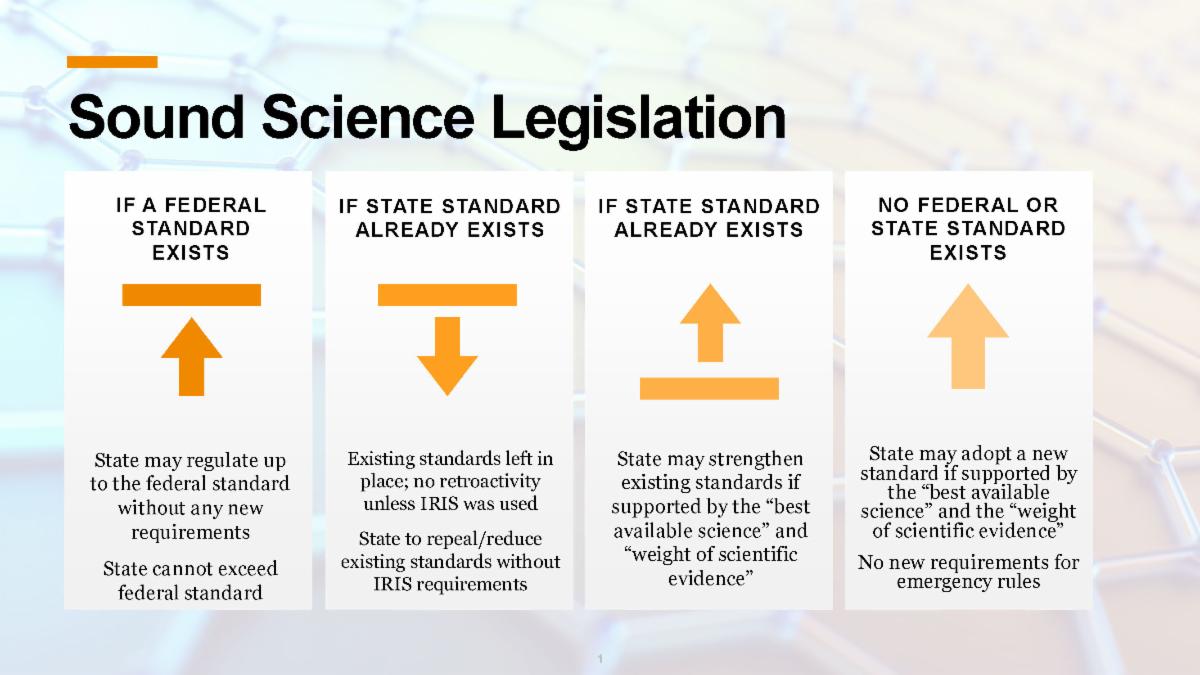
The Alabama House of Representatives is expected to vote Feb. 17 on legislation to require state environmental regulations to reflect sound science-based standards and evidence. 


SB 71 by Sen. Donnie Chesteen, R-Geneva, would restrict state agencies from adopting environmental protection rules more stringent than federal standards. The legislation passed the Senate Feb. 3 and was reported favorably out of the House Agriculture & Forestry Committee Feb. 5. SB 71 is on the proposed House Special Order Calendar for Feb. 17. A companion bill, HB 162 by Rep. Troy Stubbs, R-Wetumpka, awaits action in the House.


Alabama Farmers Federation External Affairs Department Director Brian Hardin said ensuring environmental standards are based on the best science is a win for farmers. 


“Farmers are the environmental stewards of the land they work, so preventing unnecessary regulation is pivotal to their success,” Hardin said. “This legislation is supported by the Federation because of its common-sense approach in basing standards on the best available science and not allowing over-regulation.”


SB 71 follows the Trump Administration's "Restoring Gold Standard Science" executive order requiring federal agencies to be informed by the most credible and impartial scientific evidence available when making regulatory decisions.

Affordability Protection Plan Introduced  

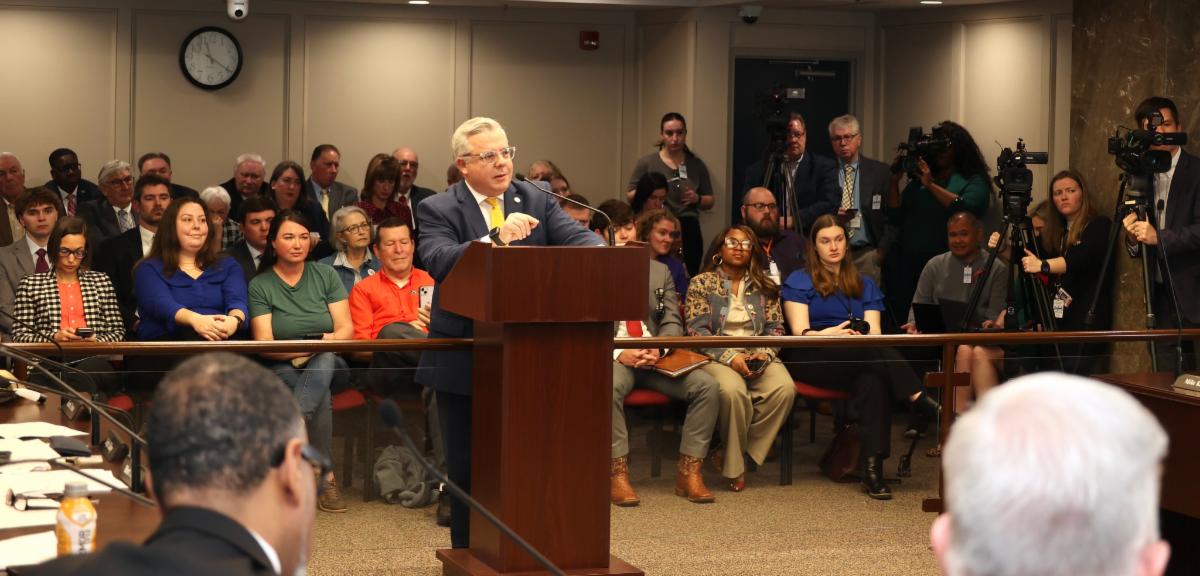
Rep. Chip Brown, R-Hollinger's Island, discussed HB 392 with the House Transportation, Utilities & Infrastructure Committee Feb. 10.

A bipartisan group of Alabama legislators introduced a three-bill package this week aimed at addressing increasing utility costs while creating an appointment process for the Alabama Public Service Commission (PSC).


Alabama Farmers Federation President Jimmy Parnell said the Affordability Protection Plan ensures farmers and forest landowners have adequate energy supplies while protecting them from regulations influenced by out-of-state actors. 


“We appreciate the bipartisan efforts of the Legislature to ensure energy remains affordable for Alabama farmers, families and businesses,” Parnell said. “Our state is blessed with reliable energy resources and a growing economy. Energy is vitally important to agriculture and forestry. These bills will ensure our members have access to the power they need and that regulatory decisions are not influenced by out-of-state groups who are not accountable to voters.”


SB 270 by Sen. Lance Bell, R-Pell City, and a companion, HB 403 by Rep. Neil Rafferty, D-Birmingham, would prevent utility providers from shifting the costs of infrastructure updates to customers due to increased data center needs. These bills would require the PSC to review contracts between large-load data centers and require the centers to cover increased costs. 


SB 265 by Sen. Andrew Jones, R-Centre, and a companion, HB 399 by Rep. Leigh Hulsey, R-Helena, would reform data center incentives and reduce their property tax exemption. 


SB 268 by Sen. Bobby Singleton, D-Greensboro, and a companion, HB 392 by Rep. Chip Brown, R-Hollinger’s Island, would restructure the PSC from a publicly elected body to an appointed one. Appointments would be made by the governor, with two appointments coming from lists provided by the House speaker and Senate president pro tem. 


Federation district director Bill Cook of Montgomery County spoke in support of HB 392 during a House Transportation, Utilities & Infrastructure Committee meeting Feb. 10.


"I spent much of my life in the greenhouse business, and electricity was among the largest operational costs," Cook said. "My farmer friends who raise poultry and catfish, as well as those who have irrigation systems, also heavily rely on affordable power. I'm concerned about the growing influence of out-of-state money in Alabama and what that could mean for the Alabama Public Service Commission. Radical policies fueled by activists could undermine our hope for profitability and Alabama's economic growth."


The plan has also received support from Gov. Kay Ivey and U.S. Sen. Tommy Tuberville. 


HB 403, HB 399 and HB 392 were reported favorably out of the House Transportation, Utilities & Infrastructure Committee Feb. 10. 

Rural Roadmap Report Released

Alabama lawmakers received a report on the state’s Rural Roadmap Initiative this month, highlighting research and policy recommendations to strengthen rural Alabama. 


Act 2025-425, which passed in the 2025 regular session, directed legislators to create the initiative “to serve as the cornerstone of a comprehensive statewide rural development program designed to provide recommendations to revitalize and empower Alabama’s rural communities....” 


The initiative is a bipartisan effort aimed at promoting the rural landscape through intentional policy choices, sustained investment and long-term strategy between state and local leaders. 


The initiative targeted six subcategories of importance to rural communities including agriculture and small business; economic development; health care; infrastructure; workforce development and training; and quality of life and placemaking.


Agriculture and Small Business Subgroup members include Lee Haynes, president of the Cullman County Farmers Federation (CCFF); Steve Lake, CCFF member and former Alabama Farmers Federation district director; and Joe Lambrecht, Elmore County Farmers Federation member and former Federation district director.

Bills in Brief

Utility Tax Exemption: HB 244 by Rep. Danny Crawford, R-Athens, would amend Alabama’s utility gross receipts tax and utility service tax statutes to exclude the use or purchase of natural gas and electricity consumed as fuel or energy in commercial greenhouses, pivot irrigation systems and poultry houses from these taxes. SB 159 by Sen. Jack Williams, R-Wilmer, is a companion bill. HB 244 is expected to be addressed in the House Ways & Means Education Committee next week, as well as SB 159 in the Senate Finance & Taxation General Fund Committee. The Alabama Farmers Federation supports this legislation and encourages members to contact their representatives and senators to express support. 


Driver License Exams: HB 88 by Rep. Phillip Pettus, R-Killen, would mandate driver license exams be administered in English only. The Alabama Farmers Federation expresses concerns over this bill due to the unintended consequences this could have on foreign guest workers on farms using the H-2A program. The bill was carried over in the House Public Safety & Homeland Security Committee Feb. 4. 


State Forester Role and Benefits: HB 267 by Rep. Chris Sells, R-Greenville, would update the governance and operational procedures of the Alabama Forestry Commission. This bill refines the role and benefits of the state forester; removes the commission’s authority to appoint forest law enforcement officers; and enhances regulations around prescribed burns and fire prevention. The legislation also appeals multiple outdated provisions and aims to modernize forestry regulation and fire management. The bill was reported favorably out of the Senate Agriculture, Conservation & Forestry Committee Feb. 11 and awaits action by the full Senate.


Land Banks: SB 204 by Sen. Linda Coleman-Madison, D-Birmingham, would revise and expand the governing framework for Alabama's local land bank authorities. This bill would shorten property redemption periods for tax-delinquent properties and authorize local governments and land bank authorities to purchase tax-delinquent properties at public auctions with minimum bids. Senate Judiciary Committee Chairman Will Barfoot, R-Pike Road, expressed concerns with the bill saying shortening the periods creates issues for family members of recently deceased property holders while giving a superior claim to governing authorities over individuals or groups who typically bid on land. The bill was carried over in the Senate Judiciary Committee Feb. 11.


Farm-to-Food-Bank Credit: HB 175 By Rep. Ben Robbins, R-Sylacauga, would establish an income tax credit for farmers who donate edible products to qualifying food banks. The bill passed the House Feb. 10 and was referred to the Senate Finance & Taxation General Fund Committee.


Off-Road Vehicle Operation: SB 218 by Sen. Keith Kelley, R-Anniston, would authorize the operation of off-road vehicles on public roads in unincorporated, rural areas with speed limits not to exceed 45 mph. Vehicles would have to meet certain requirements. Exemptions for agricultural use are included. The bill awaits committee action in the Senate.


Veterinarian-Client-Patient RelationshipSB 85 by Sen. Larry Stutts, R-Tuscumbia, amends veterinary practice laws to define and regulate the veterinarian-client-patient relationship (VCPR). This bill was reported favorably out of the Senate Agriculture, Conservation and Forestry Committee Feb. 11 and awaits action in the full Senate.


Animal Abandonment: SB 263 by Sen. David Sessions, R-Grand Bay, would create the crime of animal abandonment and classify it as misdemeanor or felony depending on the circumstances. The Federation is working with the sponsor to protect farmers and agriculture operations. The bill was reported favorably out of the Senate Agriculture, Conservation & Forestry Committee Feb. 11.


Feral Hog Transportation: HB 414 by Rep. Brett Easterbrook, R-Fruitdale, would remove criminal penalties associated with the transportation of live feral swine. The bill was introduced Feb. 10 and referred to the House Judiciary Committee. The Federation is opposed to this legislation.


Judicial Deference Revisal: SB 167 by Sen. Arthur Orr, R-Decatur, would modify the judicial review process of agency rulings, ending judicial deference. This bill would provide courts greater authority to independently interpret laws and regulations without automatically deferring to state agency interpretations. This bill is predicated on the 2024 U.S. Supreme Court ruling in Loper Bright Enterprises v. Raimondo which overruled Chevron deference, ending federal judicial deference to state agencies. SB 167 was reported favorably out of the House Judiciary Committee Feb. 11.


Housing Trust Fee Increase: SB 244 by Sen. Rodger Smitherman, D-Birmingham, would double the recording fee for mortgages, deeds of trust, contracts of conditional sale and similar instruments securing debt on real or personal property in Alabama. The bill was introduced in the Senate Feb. 3 and referred other the Senate Finance & Taxation General Fund Committee. A companion bill, HB 401 by Rep. Kelvin Datcher, D-Birmingham, was introduced in the House Feb. 5 and referred to the House Ways & Means General Fund Committee.


Logging Efficiency Fund: SJR 36 by Sen. Will Barfoot, R-Pike Road, aims to increase the fund which was established in 2023 by the Rural Logging Efficiency Act to assist counties and local governments with the maintenance, repair, replacement and construction of rural bridges critical to the forestry supply chain. The joint resolution introduced in the Senate Tuesday would urge Alabama’s Congressional delegation to identify and provide federal funding to the state’s Logging Efficiency Grant Fund. SJR 36 was approved by the Senate Feb. 10 and is expected to be considered by the House next week. 

The Legislature will convene the 13th day of 2026 regular session Feb. 17.

The House will convene at 1 p.m. and the Senate will convene at 2 p.m.


Sign Up for Future Capitol Connection Newsletters!

Capitol Connection | Alabama Farmers Federation | (334) 288-3900 | AlfaFarmers.org


Questions?

 Brian Hardin - Director, External Affairs Department

 Preston Roberts - Assistant Director, External Affairs Department

Russ Durrance - Director, State Legislative Programs

Morgan Desselle - Legislative and Policy Assistant

Beth Chapman - Beth Chapman and Associates, LLC

STAY CONNECTED
Facebook  Instagram  X  Youtube