Lawmakers Asked to Choose Who Pays More for Ambulance Services | | |
Mandates dictating higher rate payments by health coverage providers continued to gain momentum this week as the Legislature passed the halfway point of the regular session.
Two such mandates were approved by House and Senate committees Wednesday, further threatening affordable coverage for many self-employed Alabamians, farmers, teachers and state employees.
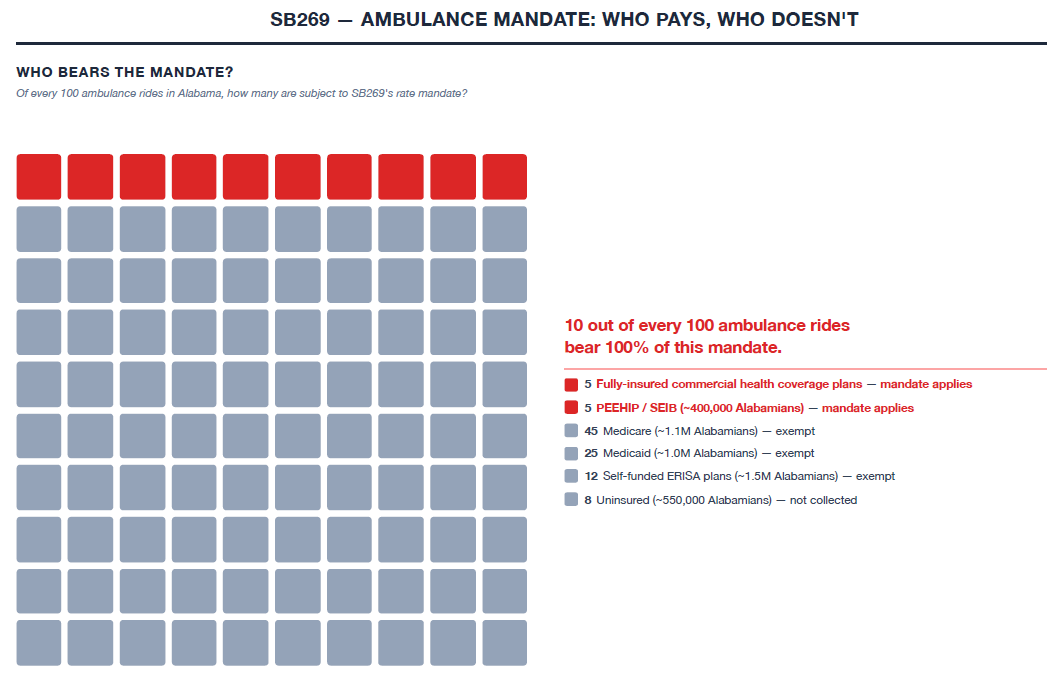
SB 269 by Sen. Bobby Singleton, D-Greensboro, would establish payment rates from health insurers to ambulance service companies, requiring higher reimbursement rates with increased costs typically passed on to consumers. This bill would require reimbursement rates triple the current Medicare fee schedule, or approximately $1,000 per transport. SB 269 was reported out of the Senate Banking & Insurance Committee Feb. 25. A companion bill, HB 400 by Rep. Ed Oliver, R-Dadeville, was passed by the House Ways & Means General Fund Committee Feb. 25.
Exemptions in the bills for Medicaid, Medicare and self-funded employer plans under federal ERISA law would shift the increased cost on to roughly 1 million Alabamians. This means nearly 390,000 teachers and state employees under PEEHIP and State Employees Insurance Board (SEIB) and 560,000 people covered under the fully insured commercial market, or 1 out of 10 Alabamians, are at risk of increased premium costs.
Alabama Farmers Federation External Affairs Department Director Brian Hardin said SB 269 and HB 400 aren’t the only bills raising concerns for farmers and small business owners.
“There are currently seven mandate bills that have been introduced this session, with rumors of more to come,” Hardin said. “These mandates are a hidden tax on Alabama families, not just affecting Alfa Health Plans, but almost all plans provided in the state. Voters have said their biggest issue is affordability, and these plans only increase costs.”
The bills’ legislative fiscal note also raised concerns. SB 269 is expected to cost the state $1.6 million in PEEHIP support while also increasing SEIB by $640,000.
Hardin said rural ambulance services provide a necessary role and a solution is needed to fix ongoing issues, but these bills only add to the problems.
“This is a commendable effort by Sen. Singleton and Rep. Oliver, but we should not add costs to hard-working families while not fully solving the problem,” Hardin said.
While only 10% of ambulance rides are represented by commercial and state employee plans, almost 70% are made up of Medicaid and Medicare consumers.
Another mandate bill, HB 300 by Rep. Frances Holk-Jones, R-Foley, was approved by the Senate Feb. 26. This bill will further require health coverage providers to fully cover breast cancer screenings, further passing costs to consumers through increased premiums. The bill awaits Gov. Kay Ivey’s signature.
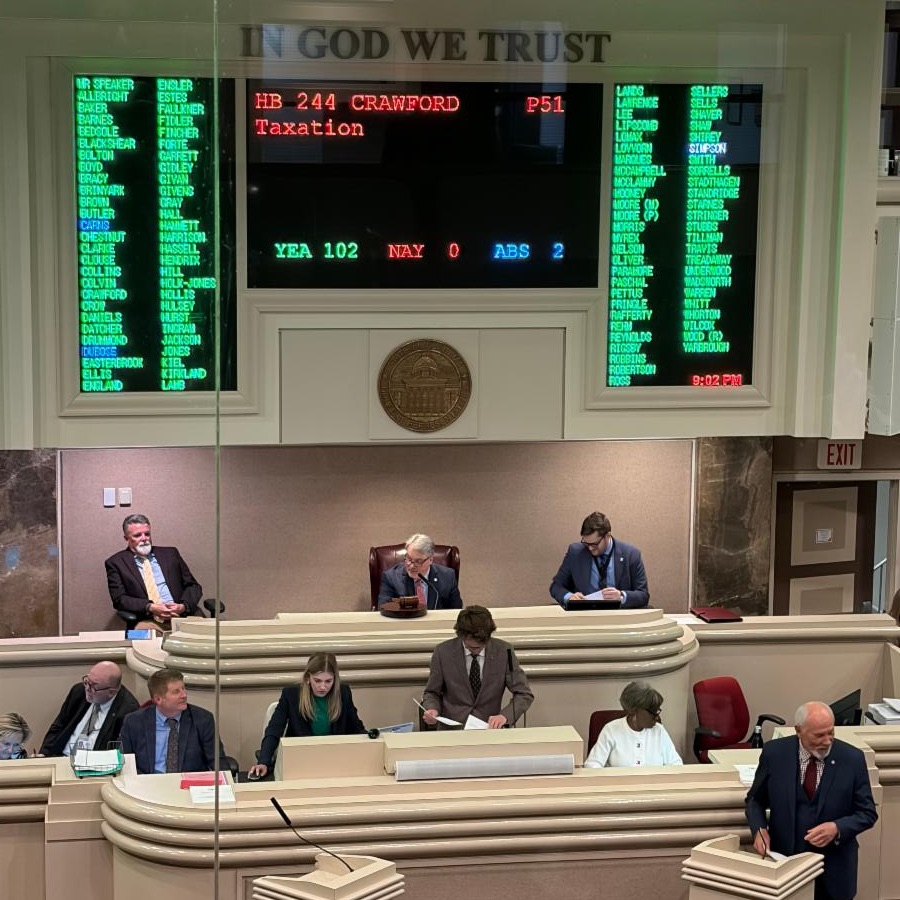
| | Utility Tax Exemption Awaits Senate Action | | Rep. Danny Crawford, R-Athens, carried HB 244, which was passed by the House Tuesday night. | | |
Legislation to exempt utility costs from state taxes was approved by legislators this week as affordability concerns continue to rise across the state.
HB 244 by Rep. Danny Crawford, R-Athens, would amend Alabama’s utility gross receipts tax and utility service tax statutes to exclude the use or purchase of natural gas and electricity consumed as fuel or energy in commercial greenhouses, pivot irrigation systems and poultry houses. The bill was unanimously approved by the House Feb. 24.
Alabama Farmers Federation External Affairs Assistant Department Director Preston Roberts said this bill helps offer a silver lining for farmers struggling with growing costs and struggling markets.
“We appreciate Rep. Crawford’s leadership in the House, and we look forward to working with the Senate to get this passed,” Roberts said. “Bills like this support our farmers during a tough farm economy by cutting costs. As farmers continue to fight increasing input costs, legislation like this helps keep agriculture affordable.”
HB 244 was referred to the Senate Finance & Taxation Education Committee where a companion bill, SB 159 by Sen. Jack Williams, R-Wilmer, was passed last week.
| | Alabama FFA Members Flock to Goat Hill | | |
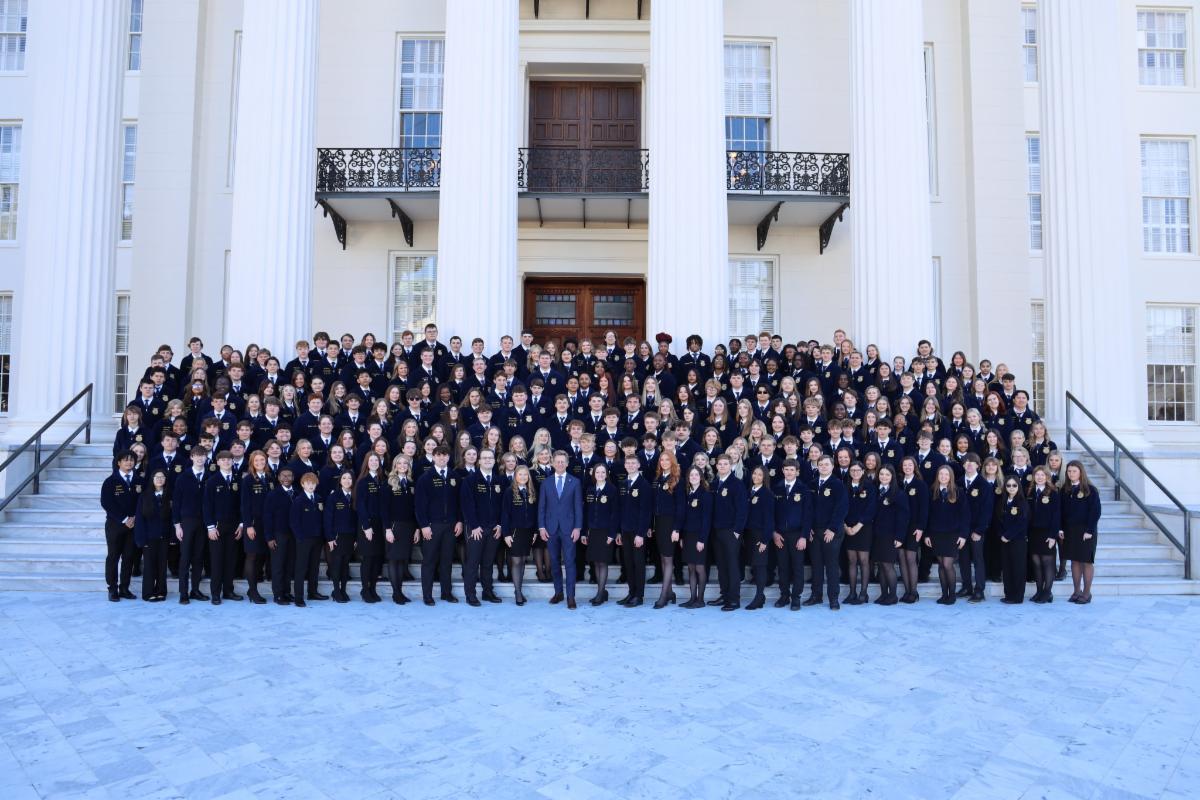
Blue and gold jackets emblazoned with names of students and schools from across the state gathered Feb. 24 at the Alabama Capitol in Montgomery.
FFA students met early for a photo with Superintendent of Education Eric Mackey before splitting off between the Alabama Cattlemen’s Association and capitol auditorium to hear from elected officials and state leaders.
Alabama Farmers Federation State Legislative Programs Director Russ Durrance said the event allowed students to learn about the legislative process and the importance of agriculture in the State House.
“It’s encouraging to see so many young people interested in the state’s political and legislative processes,” Durrance said. “But more importantly, it’s essential for them to promote agriculture with their legislators and officials during an event like this. These students are a reminder that farming and career tech are essential to Alabama.”
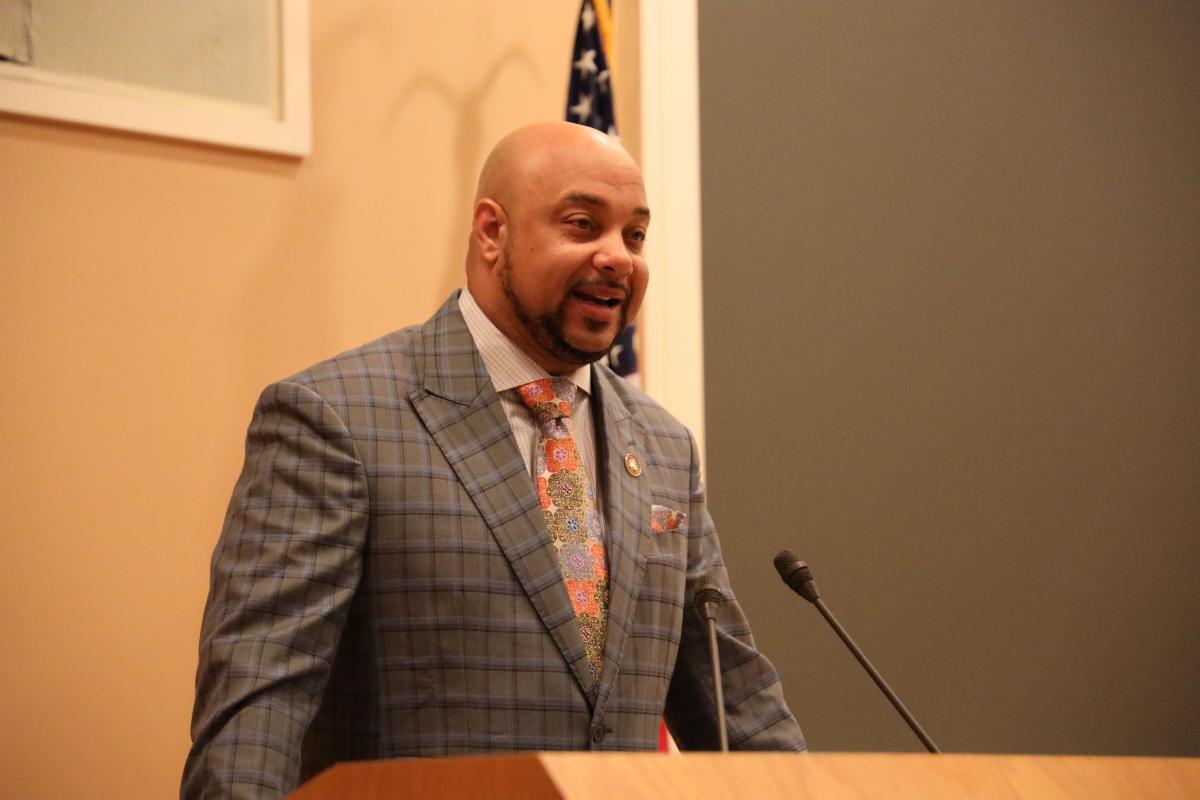
Rep. Patrick Sellers, D-Pleasant Grove, shared an encouraging message pushing students to stand out as leaders.
“It’s about responsibility and leadership,” Sellers said. “Don’t lose sight of agriculture and what it means to our state, our communities and the rest of the world. I love the impact that FFA makes on children, on our students, in our youth, the discipline, the courteousness, the leadership skills that are being developed.It is just awesome.”
Alabama Department of Workforce Secretary Greg Reed spoke with students about the importance of exploring their career-tech opportunities.
“Their success is our success, and the future of Alabama is in their hands,” Reed said. “Whether they want to be a farmer, or a machinist, or a brain surgeon, or an astronaut, or a welder, or a nurse, it doesn't matter. We want to make sure that those opportunities are available to them and that they have a chance to decide what's best for their career and for their opportunity.”
Katherine Robertson, chief counsel to Alabama Attorney General Steve Marshall, shared her deeply rooted passion for agriculture and the risks posed by the purchase of land by foreign adversaries.
“Our office has been extremely dedicated to protecting farm land, whether that's from overregulation or foreign adversaries because, as I told the group, I think that Alabama's farmers are the reason that we have the values that we have, and we want to do everything we can to protect the industry,” said Robertson, the Alabama FarmPAC-endorsed candidate for attorney general. “I’m an eighth-generation farm girl, so agriculture is a huge part of my heritage. As I look around and see families that are raising their children right, I don’t think you can find a better group than farming families.”
Other speakers included Secretary of State and FarmPAC-endorsed candidate for lieutenant governor Wes Allen; Senate President Pro Tem Chief of Staff Jess Skaggs; Rep. Van Smith, R-Billingsley; and Rep. Jeff Sorrells, R-Hartford.
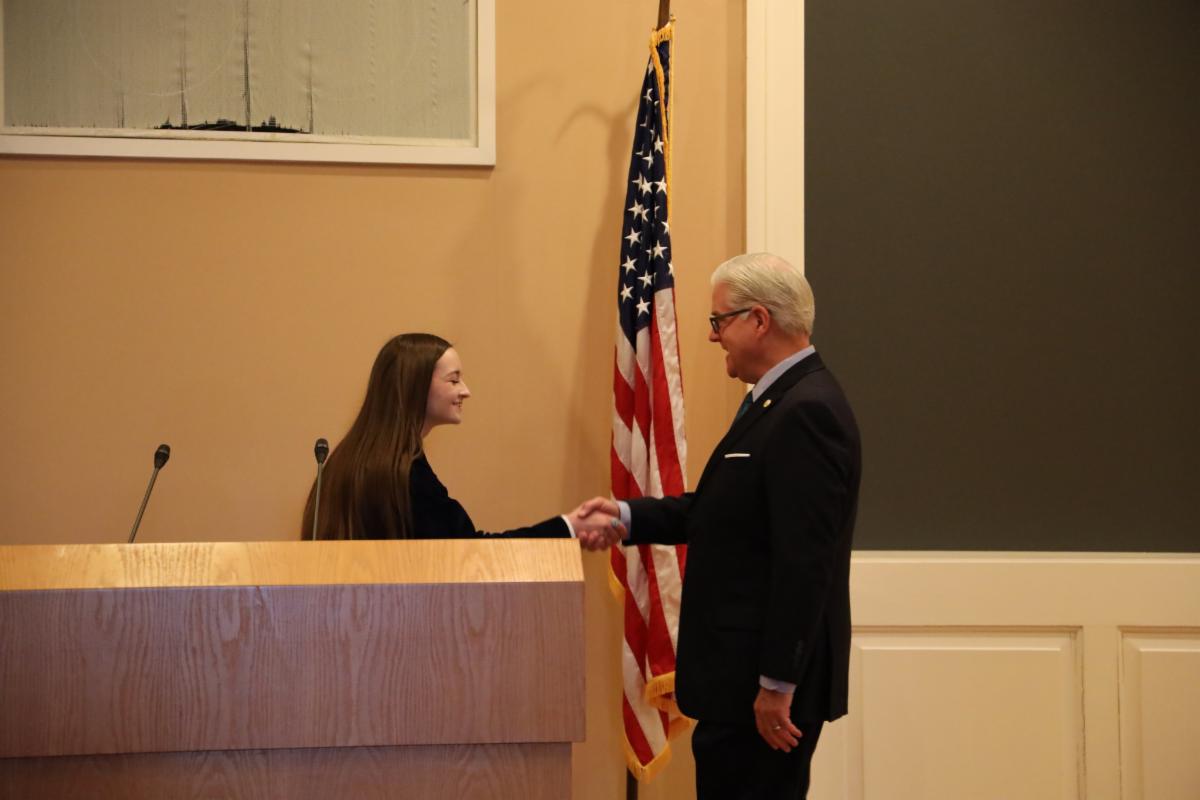
| | Alabama Secretary of Workforce Greg Reed interacts with Alabama FFA State President Alyx Johnson at the Capitol. | | Rep. Patrick Sellers, D-Pleasant Grove, visited with students at FFA Day on the Hill Feb. 24. | | |
Off-Road Vehicle Regulation: SB 303 by Sen. Keith Kelley, R-Anniston, would authorize the operation of off-road vehicles on certain public roads in unincorporated areas. This bill requires the vehicle to meet safety and equipment requirements and limits speeds on public roads to 45 mph. The bill contains exemptions for agricultural use and for the use of off-road vehicles on private property. SB 303 was reported out of the House Public Safety & Homeland Security Committee and awaits a full House vote.
Agriculture Authority Boards Update: SB 288 by Sen. Tim Melson, R-Florence, would amend the Alabama Code to allow agriculture authority boards to appoint successors for directors. This bill aims to enable authorities to procure goods and services through national or regional cooperative purchasing programs. SB 288 passed the Senate Feb. 19. The bill awaits a full Senate vote. The bill was referred to the House County & Municipal Government Committee.
Feral Swine Transportation: HB 414 by Rep. Brett Easterbrook, R-Fruitdale, would remove criminal penalties associated with the transportation of live feral swine. The bill was carried over in the House Judiciary Committee Feb. 25. The Federation opposes this legislation.
Alabama Public Service Commission: SB 268 by Sen. Bobby Singleton, D-Greensboro, and a companion, HB 392 by Rep. Chip Brown, R-Hollinger’s Island, would restructure the PSC from a publicly elected body to an appointed one. Senate President Pro Tem Garlan Gudger, R-Cullman, announced Feb. 25 the bill would not be considered this legislative session.
Veterinarian-Client-Patient Relationship: SB 85 by Sen. Larry Stutts, R-Tuscumbia, amends veterinary practice laws to define and regulate the veterinarian-client-patient relationship (VCPR). The bill was amended and approved by the Senate Feb. 25 and referred to the House Agriculture & Forestry Committee.
Open Fields Doctrine: HB 494 by Rep. Ben Harrison, R-Elkmont, would require government agents to obtain a warrant before entering private real property or seizing personal property, with specified exceptions like consent, exigent circumstances, or animal welfare issues. It mandates notification and procedural actions upon entry and invalidates evidence and arrests based on illegal searches or seizures.
Alabama Agricultural Enhancement Program: HB 523 by Rep. Thomas Jackson, D-Demopolis, would set up framework for the Alabama Agricultural Enhancement program by obligating the commissioner of Agriculture and Industries to publish a report to the governor and the Legislature detailing a cost-share program that farmers could use to make improvements to their operations and to invest in certain agriculture sectors. HB523 is assigned to the House Ways and Means General Fund Committee.
| | New House Leadership Selected | |
New leadership roles were filled within the Alabama House Republican Caucus and the House Health Committee, positioning several lawmakers in key posts for the remainder of the legislative session.
Rep. James Lomax, R-Huntsville, was selected by the House Republican Caucus as House majority whip following the selection of Rep. Paul Lee, R-Dothan, as the House majority leader last week.
The House Health Committee will now be chaired by Rep. Jeff Sorrells, R-Hartford, with Rep. Mark Shirey, R-Mobile, serving as vice chair.
Alabama Farmers Federation External Affairs Department Director Brian Hardin congratulated these leaders for their new positions.
"Rep. Lomax has proven himself as a friend to farmers and a leader among House Republicans, and we know he will continue to support Alabama agriculture as House majority whip," Hardin said. "We are also pleased to see continued strength in House Health Committee leadership with Rep. Sorrells and Rep. Shirey. We know they will work hard to protect farmers and promote Alfa Health Plans and other affordable health converage."
| | Meetings of the Alabama Legislature are livestreamed during the session. Click the link below to view committee meetings, the House chamber or Senate chamber. Then, use the dropdown menus to select the location or meeting name. | | | | |