|
Legislators were confronted with rising costs and slowing revenue growth this week as state agencies defended their funding requests during budget hearings.
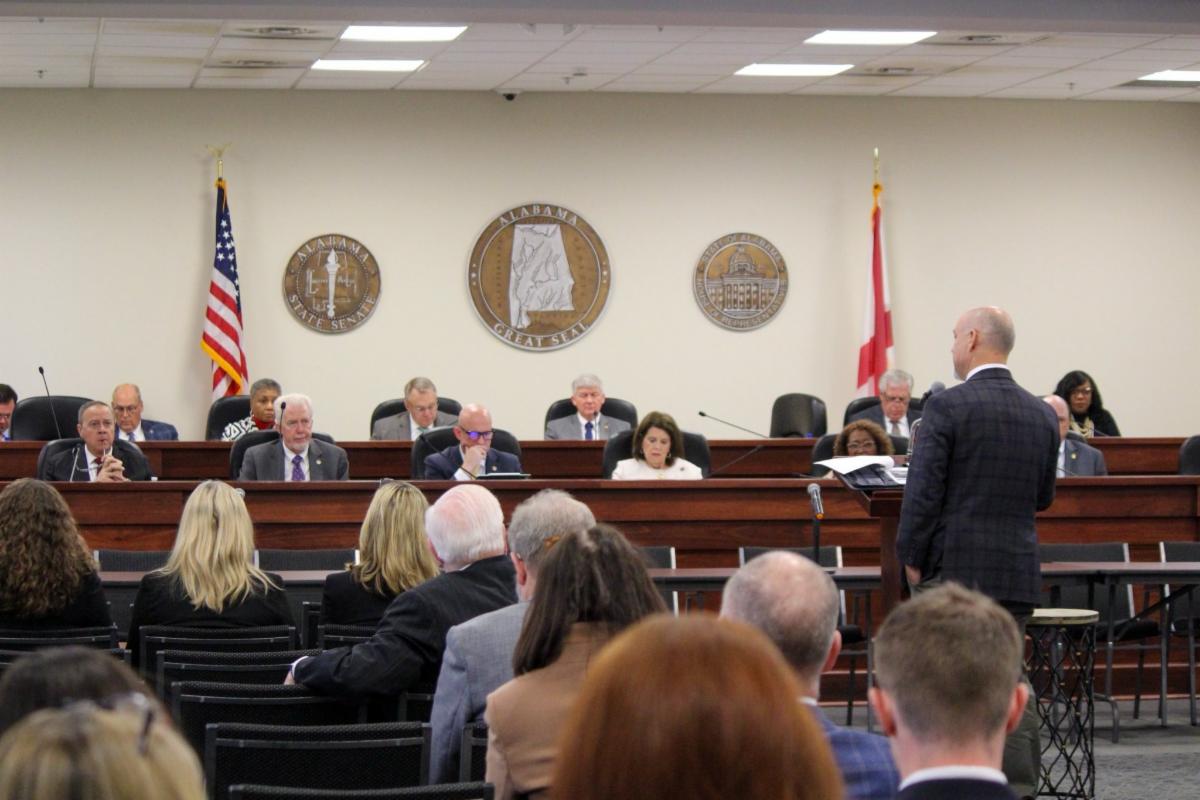
Skyrocketing health care costs were a common theme as agency heads asked senators and representatives to allocate more than provided in Gov. Kay Ivey’s overall level-funded budget during a Joint General Fund Budget hearing.
Stephanie Azar of the State Employees Insurance Board (SEIB) asked lawmakers to preserve Ivey’s request of an additional $150 per month, per employee toward health insurance premiums. She noted the SEIB has already dipped into its trust fund for $30 million to make it through 2026.
“When you hear me talk about health care inflation, we’re referencing that services costs (are) just going up — it’s costing more to do business,” said Azar, who added the rising cost of health care is a national problem. The Alabama Department of Public Health also is requesting an additional $19 million in the Education Trust Fund (ETF) budget to cover costs of the Children’s Health Insurance Program, which provides coverage for about 100,000 Alabamians through ALL Kids.
The Alabama Medicaid Agency is requesting level funding, despite serving fewer people — another indication of rising costs. Commissioner Bo Offord noted Medicaid will cost the state $1.27 billion in FY 2027, up 3% from the current year. However, the agency is carrying over $94 million, which should cover the increase.
“That’s the need to run the program without any unknown legislation or regulation that could increase the cost,” Offord said.
Health care costs also are expected to have a significant impact on the ETF budget, with the Public Education Employees’ Health Insurance Plan (PEEHIP) expected to experience a shortfall between $350 million and $410 million by 2027. Lawmakers have indicated this will be met through a combination of direct appropriation, contributions from the retiree trust fund and higher premiums. The affordability of health care is having an impact in other areas as well.
The Alabama Farmers Federation sounded the alarm about rising health care costs last year. Farmers and other self-employed members not eligible for subsidies or employer-provided coverage faced premiums higher than their home mortgage or rent. The Legislature answered the call by authorizing Alfa Health Plans. Coverage began in January for the first members accepted, with anecdotal savings of around 50%.
“As a membership organization with a long history of offering group health coverage for farmers and rural families, the Farmers Federation was proud to lead the way in providing another option for affordable health care,” said External Affairs Department Director Brian Hardin. “It took a lot of hard work and our farmers sharing their personal experiences, but Alfa Health Plans are already making a positive difference for members. We appreciate the Legislature hearing their pleas and voting overwhelmingly to authorize the creation of Alfa Health Plans.”
Hardin said the increased focus on affordability — especially for health care — affirms lawmakers’ decision.
“The increased costs we are seeing for employer, state employee and Affordable Care Act plans demonstrate the need for market-driven options like Alfa Health Plans,” Hardin said. “We will work to preserve the affordability of these plans for our members.”
Meanwhile, others who’ve seen premiums increase and subsidies decline are joining the refrain for affordable health coverage.
According to a recent survey, 85% of Republican primary voters expect their insurance costs to increase this year. The same voters say affordability will be the No. 1 issue on their minds when they head to the polls in May.
As lawmakers wrestle with a host of health-related questions, the majority of those polled preferred less government intervention in health care decisions, with 69% saying health plans should have flexibility to meet customers’ needs and only 16% opting for state mandates.
Businesses are particularly concerned about the rising cost of health care. This week’s Birmingham Business Journal listed “Growing Health Insurance Headaches” as the No. 1 crucial issue for small businesses in 2026. The publication cited the International Foundation of Employee Benefit Plans’ prediction of a 10% increase in premiums this year.
The Alabama House Democratic Caucus addressed the health care crisis in a news conference this week.
“Over 350,000 Alabamians have no health insurance, and that number is rising as we speak,” said Rep. Pebblin Warren, D-Tuskegee. “On top of that, we have over 25 rural hospitals in danger of permanently closing, and we face a shortage of doctors, nurses and specialized medical caregivers throughout our state.”
Ivey and legislative leaders have emphasized the need to enhance health care in rural areas. Last month, the governor announced Alabama will be awarded more than $203 million in the first year of the Rural Health Transformation Program made possible by the One Big Beautiful Bill Act.
Identifying strategies for improving rural health care is also one of the priorities of the Alabama Rural Roadmap Initiative. Senate President Pro Tem Garlan Gudger, R-Cullman, told reporters, “Alabama’s future depends on the strength of all of our communities, and that means taking bold actions to support our rural towns and regions.” Speaker of the House Nathaniel Ledbetter, R-Rainsville, also has called for more investment in rural areas, specifically for mental health. The American Farm Bureau Federation’s Farm State of Mind® initiative brought to the forefront the impact of financial stress on farm families, noting farmer suicide rates are two to five times higher than the national average.
|