|
 |
|
2022 was a big year for public-sector support of carbon farming and climate-beneficial agriculture at the local (counties), state, and national levels. CCI’s long-standing partnership with the United States Department of Agriculture, Natural Resources Conservation Service (NRCS) on integrating carbon into traditional conservation planning support and training endeavors has finally come to fruition in NRCS’s adoption of Carbon Farm Planning as a Conservation Planning Activity under its Environmental Quality Incentives Program (EQIP). This historic recognition of carbon as a key resource concern by NRCS will provide a solid foundation upon which emerging NRCS climate-focused programming—and financing—can stand.
Under the Biden Administration, the USDA is now deeply engaged in scaling climate-beneficial agriculture, as evidenced by the launching of the Partnerships for Climate-Smart Commodities grant program. A $3B government investment to incentivize innovation, partnerships, and supply-chain development for climate-beneficial agriculture. CCI is a partner on two of the 70 projects awarded funding for FY: 2023-28 (details below).
The California Department of Food and Agriculture (CDFA) established a new Conservation Agricultural Planning Grants Program, providing state funding support ($23M for FY: 2021-22) for the development of NRCS-approved conservation planning, design, and implementation, and conservation evaluation and monitoring activities, including carbon farm planning. Dedicated State funding to expand agricultural technical assistance (TA) and conservation planning is a core component of CCI’s mission, and essential for California to meet its climate goals.
County planning departments across California have taken strides over the last couple years to integrate agriculture into their climate mitigation, adaptation and resiliency planning. CCI has taken a leadership role in assisting Resource Conservation Districts and their agricultural conservation partners in the development and adoption of local agricultural climate mitigation policies and programs, including key goals, strategies, and funding to scale carbon farming as a central county government climate mitigation strategy. Recently approved Climate Action Plan Updates incorporating CCI’s carbon farming framework include Marin County Climate Action Plan 2030 and San Mateo County Community Climate Action Plan. Other examples of how we are helping to integrate carbon farming into county and city climate and land use plans are linked here: including Sonoma County, Santa Clara County, Contra Costa County, and the City of San Jose.
CCI is in the process of developing guidance and training for local and regional governments and agricultural leaders on how to create countywide action plans for scaling up regenerative agriculture and carbon farming through their climate, land use, and agricultural conservation plans. This guidance will also provide recommendations and processes on climate justice policies and the engagement of BIPOC producers and communities.
|
|
Strategic Priorities for 2023
-
Building a robust workforce for scaling carbon farming by expanding our professional training and education program and partnerships in California and nationally.
-
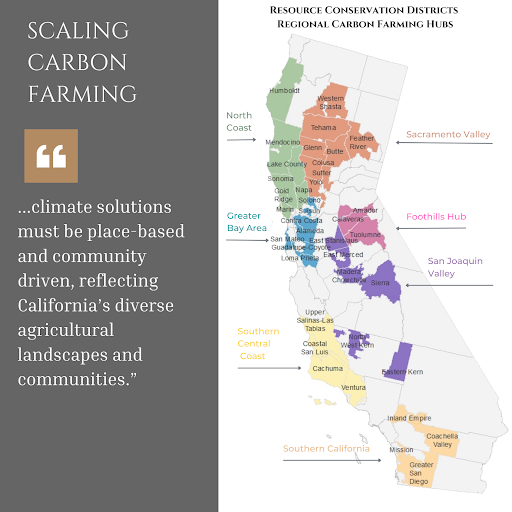
Increasing the capacity of local and regional conservation organizations and agencies to provide technical and financial assistance to California farmers and ranchers through the establishment of Regional Carbon Farming Hubs.
-
Ensuring robust climate resiliency targets and agricultural strategies that support farmers and their on-farm conservation planning and implementation partners are central to the State’s NWL plan, being finalized in 2023 (see “Securing State Investments” below for more information) and central to local climate action and resiliency plans.
| |
|
Carbon Farming Training and Education:
Building a Robust Workforce for Scaling Carbon Farming
| |
|
Expanding Training Opportunities in California
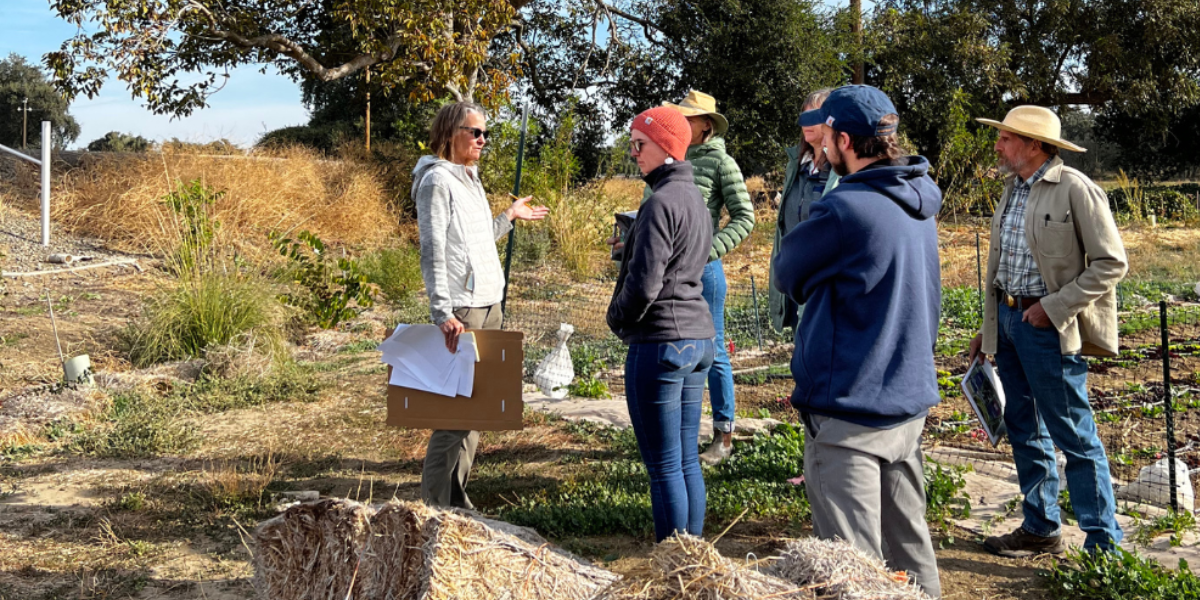
CCI continues to expand its national training and education partnership with Colorado State University's COMET-Team and the National USDA NRCS office. In spring 2022, we moved our open-source carbon farm training curriculum to the professional platform Litmos and made major upgrades to the curriculum. Moving the curriculum to the new platform will enable us to significantly scale the reach and impact of CCI's training and education program, allowing us to better track participant experience, learning objective achievements, and completion of learning modules. The efficiencies built into the new platform will help us continue to refine the platform based on user experience, increase training participant numbers, and offer training completion and continuing education unit hours for USDA NRCS employees and technical service providers.
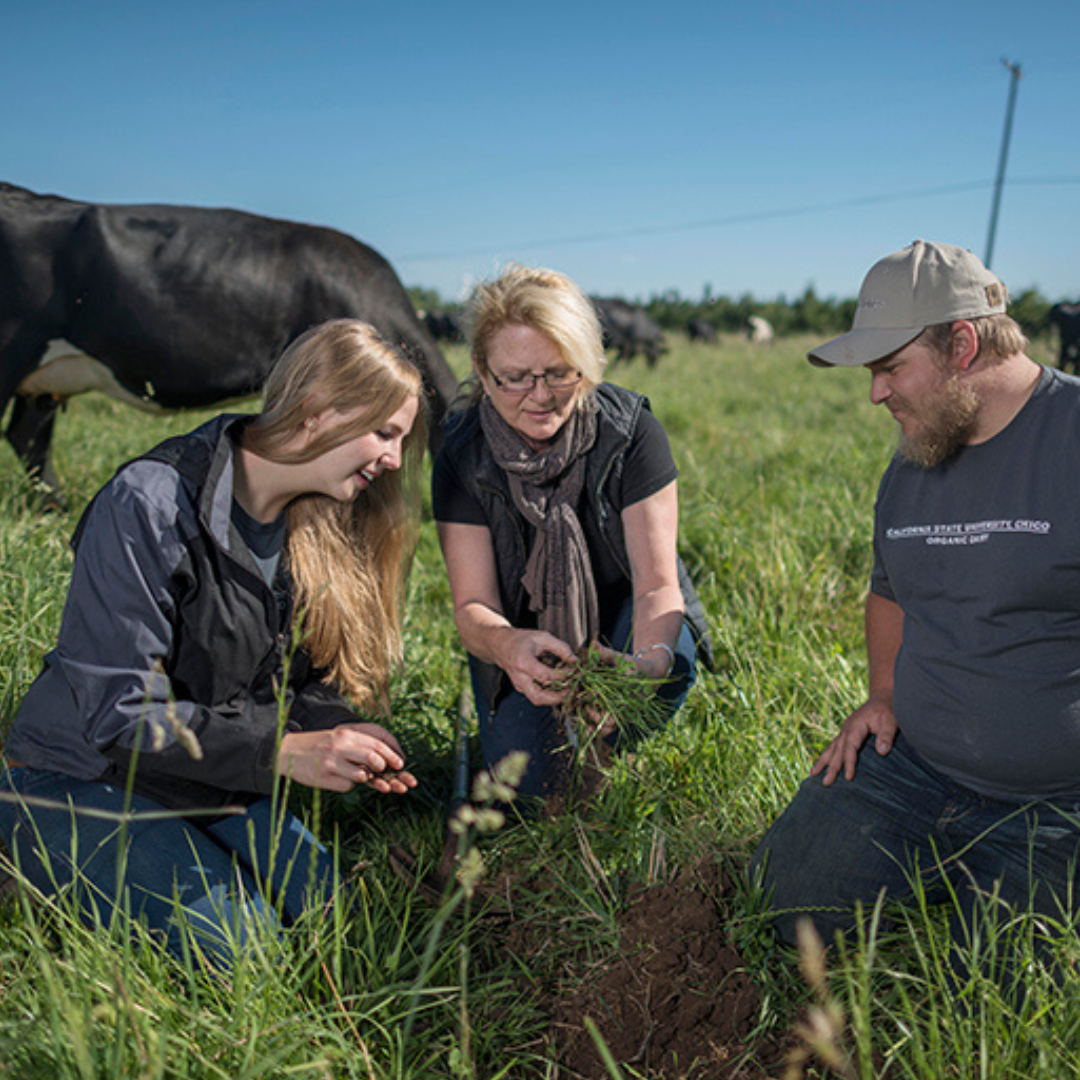
In June 2022, CCI, in partnership with Chico State University's Center for Regenerative Agriculture and Resilient Systems (CRARS), rolled out our new online curriculum using a professional training platform. This was our third annual training with Chico State University, providing training to 56 natural resource professionals in California. Demand for this training continues to increase.
CCI and CRARS are committed to building comprehensive workforce development programs in climate-beneficial carbon farming for the new generation of natural resource management professionals graduating from university agricultural and related natural resource programs. To meet the growing demand for trained agricultural conservation planners and technical assistance providers, CCI and CRARS are exploring ways to expand and replicate our highly successful training program in partnership with other California polytechnic universities in the years to come.
CCI is thrilled to be a part of the new Carbon Farming Partnership in Yolo County alongside the Center for Land-Based Learning (CLBL), Yolo County Resource Conservation District (RCD), and the Yolo Land Trust. The group's goal is to increase the pace and scale of carbon farm planning and implementation in Yolo County by providing new farmers with tools, training, and technical assistance to develop and implement Carbon Farm Plans and other climate beneficial land management practices. CCI will assist CLBL in integrating climate and carbon farm planning into their California Farm Academy curriculum.
Expanding Education and Training Partnerships Nationally
Scaling our work nationally with support from the Sustainable Agriculture Research and Education (SARE) Professional Development Program and in collaboration with the National Center for Appropriate Technology (NCAT).
CCI could not have found a better partnering organization than NCAT to help us expand our carbon farm planning training nationally. NCAT has been helping people build resilient communities through local and sustainable solutions that reduce poverty, strengthen self-reliance, and protect natural resources since 1976, with a focus on sustainable agriculture and clean energy systems. NCAT’s sustainable agriculture programs are funded in large measure through USDA. Over the next 5 years, CCI and NCAT will be training agricultural conservation professionals in eight additional states (Texas, Tennessee, Georgia, Indiana, Montana, South Dakota, Wyoming, and New York). CCI will train NCAT staff to write carbon farm plans and to deploy CCI’s online carbon farm planning curriculum nationally.
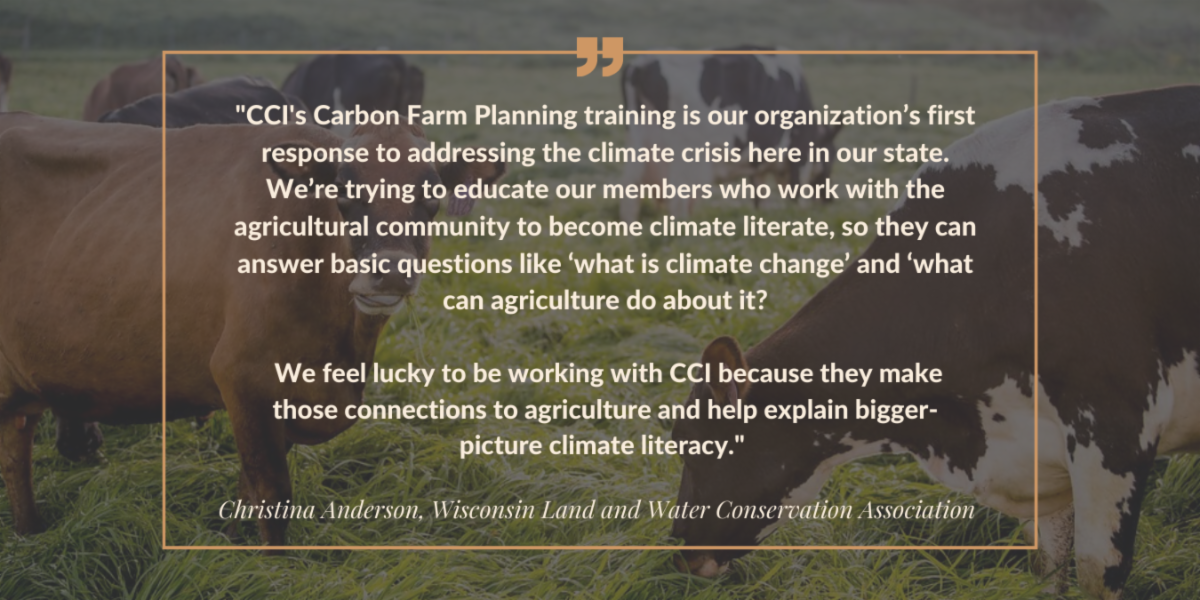
SARE grant funding has been critical in advancing CCI’s carbon farm planning framework and has funded CCI staff over the past two years to train agricultural conservation professionals in North Carolina with the NC Foundation for Soil and Water Conservation and Wisconsin with Wisconsin Land and Water Conservation Association. In 2023, SARE will be funding CCI and NCAT Texas to offer carbon farm planning training and technical support to agricultural professionals in Texas.
| |
|
Funded by USDA’s National Institute for Food and Agriculture, SARE programs are administered in four regions around the country (North Central, Northeast, South and West). SARE’s Professional Development Program provides training, grants and resources for agricultural professionals, such as Cooperative Extension Service, NRCS, and Conservation District staff, to build their awareness, knowledge and skills to advance sustainable agriculture concepts.
Thank you to our partners in helping us scale this work.
| | |
|
Training Next-Generation Regenerative Farm and Ranch Planners: A Conversation with Dr. Cynthia Daley
CCI interviewed Dr. Cynthia Daley to get her perspective on how we can scale the workforce to meet the demands of our climate challenge.
READ MORE
| | | |
|
|
Takeaways from CCI-trained planners and how their greater understanding of the carbon cycle and nature-based climate solutions influences their work with farmers and ranchers.
READ MORE
| | |
Securing State Investments to Scale Carbon Farming | |
For the last two years, CCI has served as a leading member with the Food and Farm Resilience Coalition (FFRC). Formed in 2021, the FFRC seeks investments in our state’s food and farm systems to support farmworker well-being and safety, healthy food access, climate-resilient farms, and regional food economies. During the 2022 Legislative Session, CCI and FFRC successfully secured over $700M in legislative investments, building on the $1.3B secured last year. In addition, CCI co-sponsored AB2649, a bill that would have established the most ambitious climate targets in the country for natural and working lands (NWL),) sector. Although the bill passed both legislative chambers in Sacramento, it did not advance to the Governor for his signature. It did, however, significantly influence the development and passage of AB1757, which creates a statutory requirement for the State to develop ambitious climate and carbon sequestration targets and strategies for the NWL sector by January 2024. See CCI’s recommendation letter to the State regarding the NWL Scoping Plan. | |
Advancing Just and Resilient Food & Farming Systems | |
|
CCI works in partnership with climate justice leaders and organizations across California to build the voice, leadership, and capacity of Black, Indigenous, and People of Color (BIPOC) farmers and communities to envision and advance a just and equitable food and farming system. In 2022, CCI continued work with its partners in the BIPOC Agroecology Network (BIPOCAN) to further develop an effective platform for BIPOC and justice leaders from across the state.
BIPOCAN convened multiple co-learning workshops across the state, with nearly forty leaders and organizations at each workshop, to identify the range of issues impacting BIPOC farmers, farmworkers, and land managers, and the capacity building required to support them. In September, BIPOCAN launched a new fund and invited proposals from regional coalitions of BIPOC land managers to support a range of capacity building and skills development workshops, co-learning sessions, business development projects, and advocacy campaigns as a central strategy to both support regional action and to create a vibrant, relationship-centered community and collaborative network.
During the 2022 Legislative Session, CCI, working with the Farm and Food Resilience Coalition and its allies, secured, amongst a score of other state budget victories, $50M for Joe Serna Jr. Farmworker Housing Grant Program, $15M for Low-Income Home Weatherization for Farmworker Housing, and $1M for a New Land Equity Task Force.
| |
Building Our Carbon Farming Network with Multi-year Funding Support | |
|
The Sonoma Marin Ag and County Climate Coalition Project was awarded up to $10M to pilot a regional, market-based approach to creating climate-resilient agricultural landscapes. The project will leverage existing RCD carbon farming programs and emerging local and regional food partnerships across the two Bay Area counties to create a regional supply chain, tracking system and marketing campaign for “climate-smart agricultural products” – agricultural commodities produced using farming, ranching or forestry practices that reduce greenhouse gas emissions and sequester carbon. The project is also designed to help county governments achieve ambitious climate action planning goals.
The pilot builds upon long-standing partnerships among the two county governments, three local RCDs, UC Cooperative Extension, CCI, Marin Agricultural Land Trust, other climate and agriculture-centered community-based organizations, and USDA NRCS to support, monitor and verify the implementation of impactful climate-smart practices. Anchored in historic local conservation partnerships, the adaptive co-management approach of the project is designed to serve as a regional model for coordinated climate-beneficial agriculture implementation and was designed to be scalable to any region in the state or country.
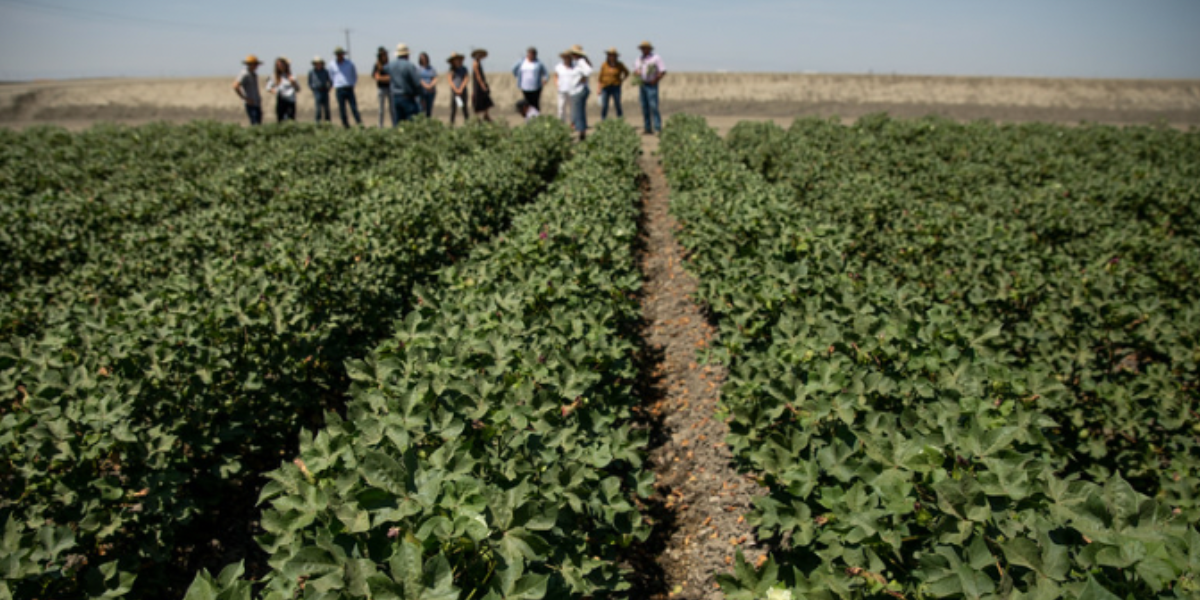
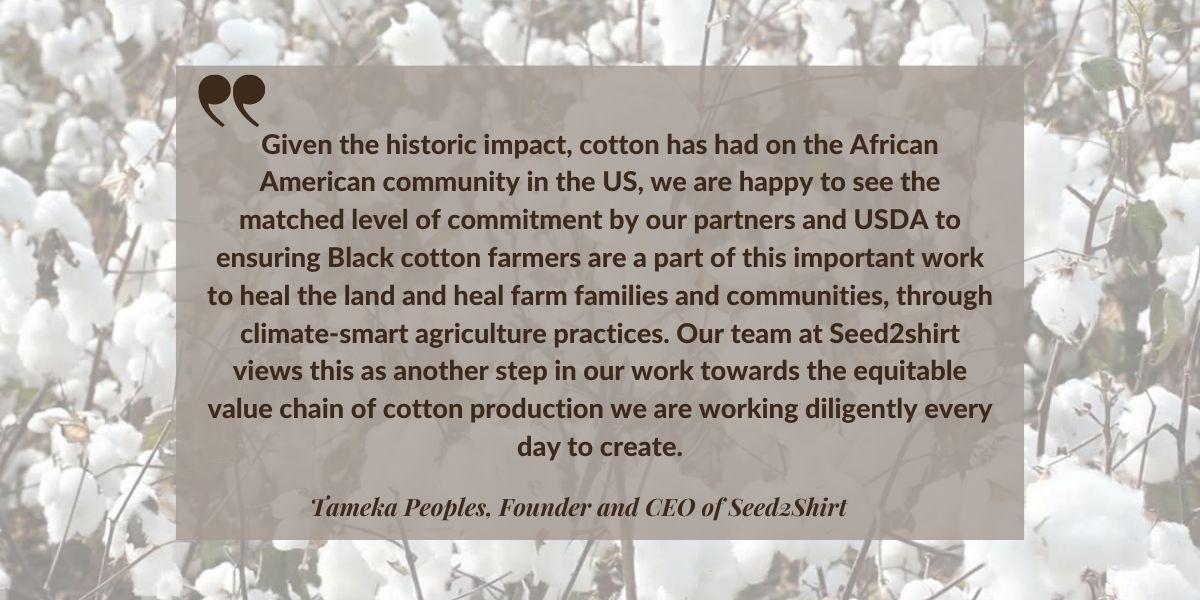
Our Climate Beneficial Fiber: Building New, Accessible, and Equitable Market Opportunities for Climate-Smart Cotton and Wool Project was awarded up to $30M to support the National Center for Appropriate Technology (NCAT), Fibershed, CCI, Colorado State University Department of Soil and Crop Sciences, Seed2Shirt, and New York Textile Lab to expand climate-beneficial wool and cotton production on 135 farms and ranches spread across 2.1 million acres in nine US states. The project builds on Fibershed’s existing Climate Beneficial™ fiber program, which has a track record of growing America’s ability to produce climate-smart fiber, regenerate our soils, and expand economic opportunities for wool and cotton growers. The project is committed to meeting the equity goals of the Justice40 Initiative and will prioritize engagement with underserved, BIPOC producers.
|  | |
|
Over the five-year grant period, CCI will partner with NCAT to accelerate the deployment of our train-the-trainer carbon farm planning program and online professional training curriculum, as well as to partner with Colorado State University to create an open-source, Carbon Farm Planning and Verification Platform to streamline climate-beneficial agriculture planning and verification for producers, verifiers, and supply-chain stakeholders alike. We will also receive funding to hire new carbon farm planning and regional coordination staff for the San Joaquin Valley in California, along with implementation dollars for on-farm climate-beneficial management practices.
New multi-year philanthropic support for the RCD Regional Carbon Farming Hubs in California
We are deeply grateful to the Elizabeth R. and William J. Patterson Foundation for its generous three-year funding award to CCI, California Association of Resource Conservation Districts (CARCD), and The Climate Center. Funding will support the Regional Carbon Farming Hubs and our coordinated efforts in shaping the Natural and Working Lands (NWL) Scoping Plan and the state’s Climate Smart Land Strategy (2023-2024), including establishing ambitious 2030, 2038 and 2045 climate targets for working lands and shaping key strategies, priority actions, and investments to reach those targets, an effort being lead by the California Natural Resources Agency (CNRA).
| |
Growing the Importance of Carbon Farming | |
|
A selection of articles and resources about carbon farming from 2022:
-
Opportunities to Accelerate Nature-Based Climate Solutions: A Roadmap for Climate Progress, Thriving Nature, Equity, and Prosperity. The Biden-Harris Administration released an outline of strategic recommendations to put America on a path to unlock the full potential of nature-based solutions to address climate change, nature loss, and inequity. Read more here.
-
These Sonoma County Businesses Aren't Just Cultivating Crops or Raising Livestock, They're Farming Carbon |The Press Democrat explores how Gold Ridge and Sonoma RCDs support strategies to implement carbon farming practices in the area. Read more here.
-
Soil's Power as a Climate Solution | CCI's Dr. Jeff Creque shares his insights on soil's power as a climate solution, including a description of how soil sequesters and releases carbon and an overview of agriculture's impacts on soil health. Read more here.
-
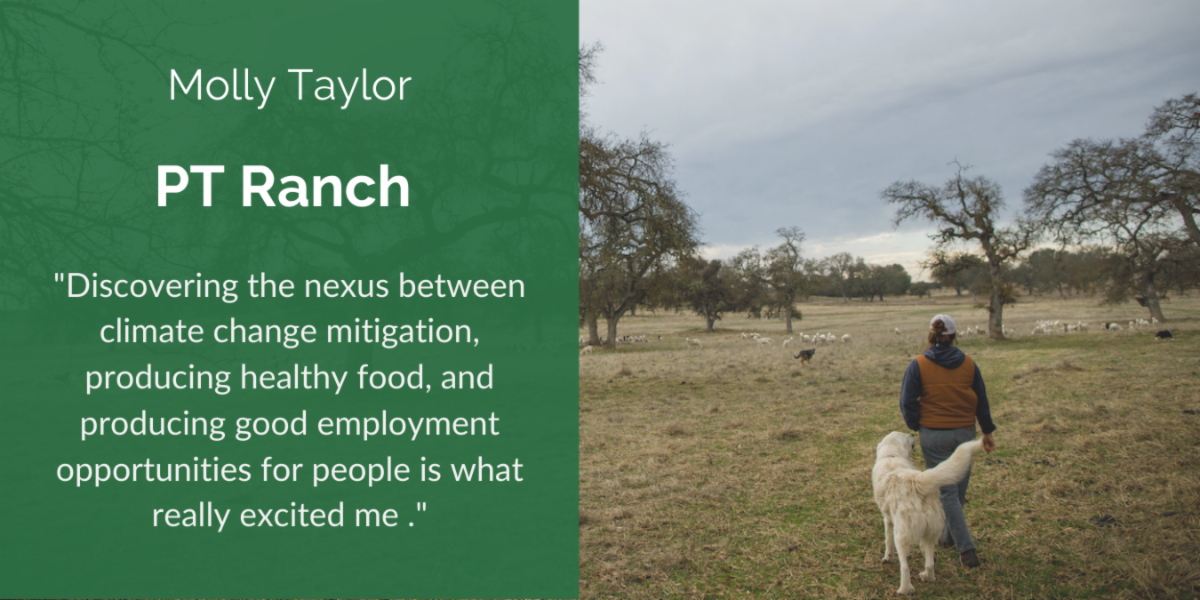
Carbon Farming and Co-Benefits at PT Ranch | PT Ranch worked with partners, including CCI, to develop a carbon farm plan that optimizes carbon capture and storage opportunities while providing local environmental and social benefits. Read more here.
-
Grassland Soil Carbon Sequestration: Current Understanding, Challenges, and Solutions | Grasslands can act as an important carbon sink, with estimates of the potential for global grasslands to sequester 3.4 to 10.1 billion metric tons of CO2 per year. Read more here.
-
Comprehensive Evidence Implies a Higher Social Cost of CO2 | A new study published in Nature Portfolio estimates the social cost of carbon dioxide emissions is $185 per metric ton of CO2, 3.6 times higher than the US government’s current value of $51 per metric ton of CO2. Read more here.
-
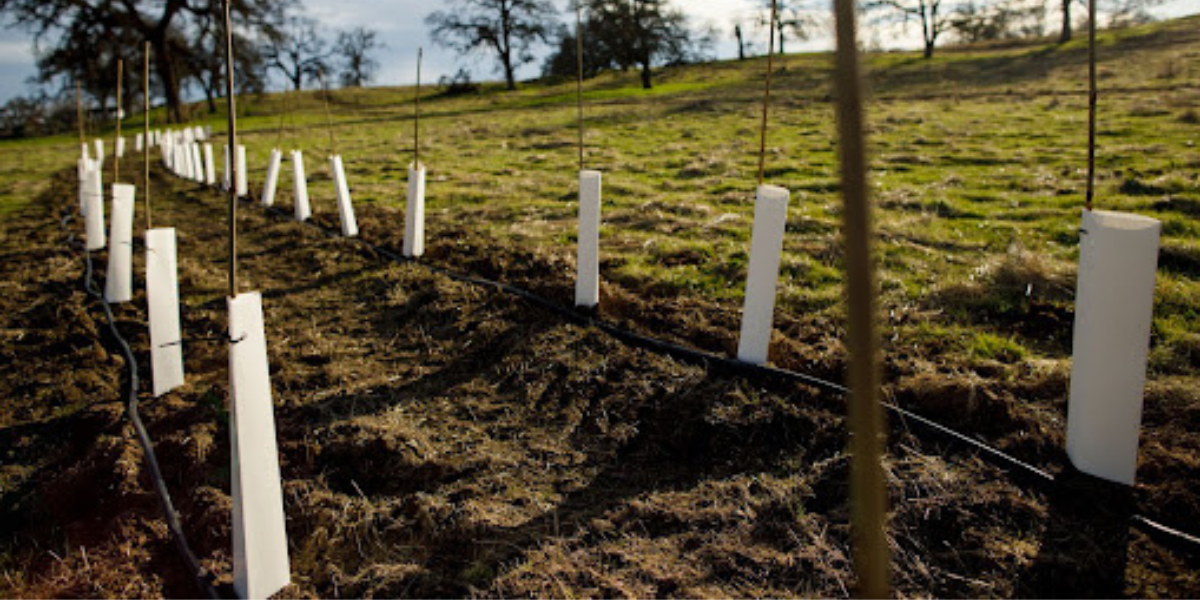
Tending the Edges: The Benefits of Hedgerows on Bay Area Working Lands | This resource illuminates some of the benefits of hedgerow plantings, describes related conservation practices and provides resources for land stewards to get started planting. Read more here.
-
Recarbonizing Global Soils | Last year, FAO Global Soil Partnership published a series of insightful manuals on decarbonizing soils around the world. Read more here.
| | | | |