|
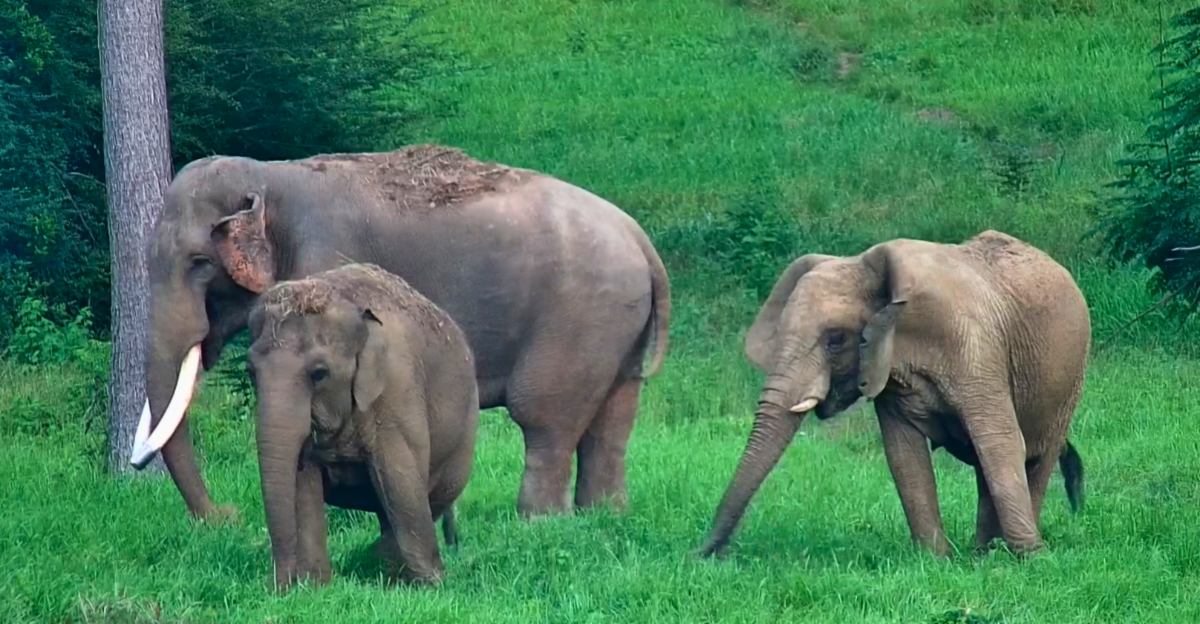
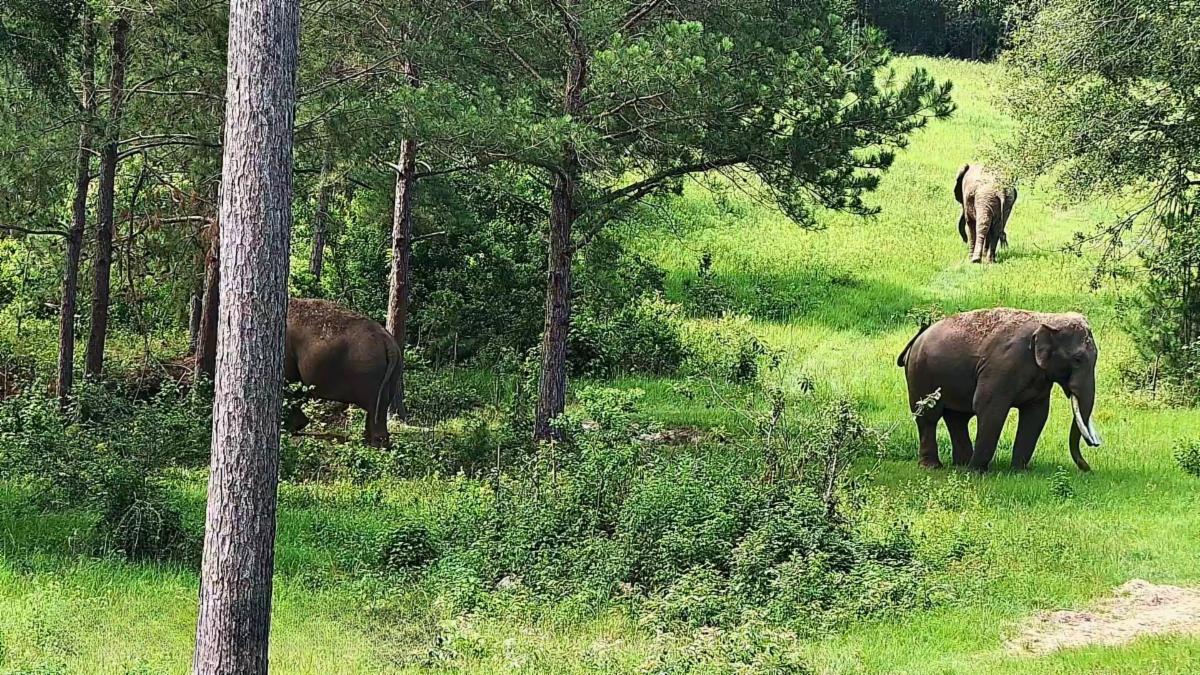
Hours spent observing Bo, Tarra, and Mundi on the EleCam provide valuable insight into how they relate to one another and to the habitat they call home. We watch their relationships deepen, see them exercise autonomy, and observe how each elephant's rehabilitation journey unfolds in its own unique way.
Today, aside from vitamin and mineral supplements, they meet their nutritional needs entirely from their habitat. Open areas throughout the Refuge provide abundant grasses, especially lush at this time of year. Other sections are dense with browse—vines, shrubs, and trees that offer nutrients and foraging opportunities unavailable in processed, store-bought feeds.
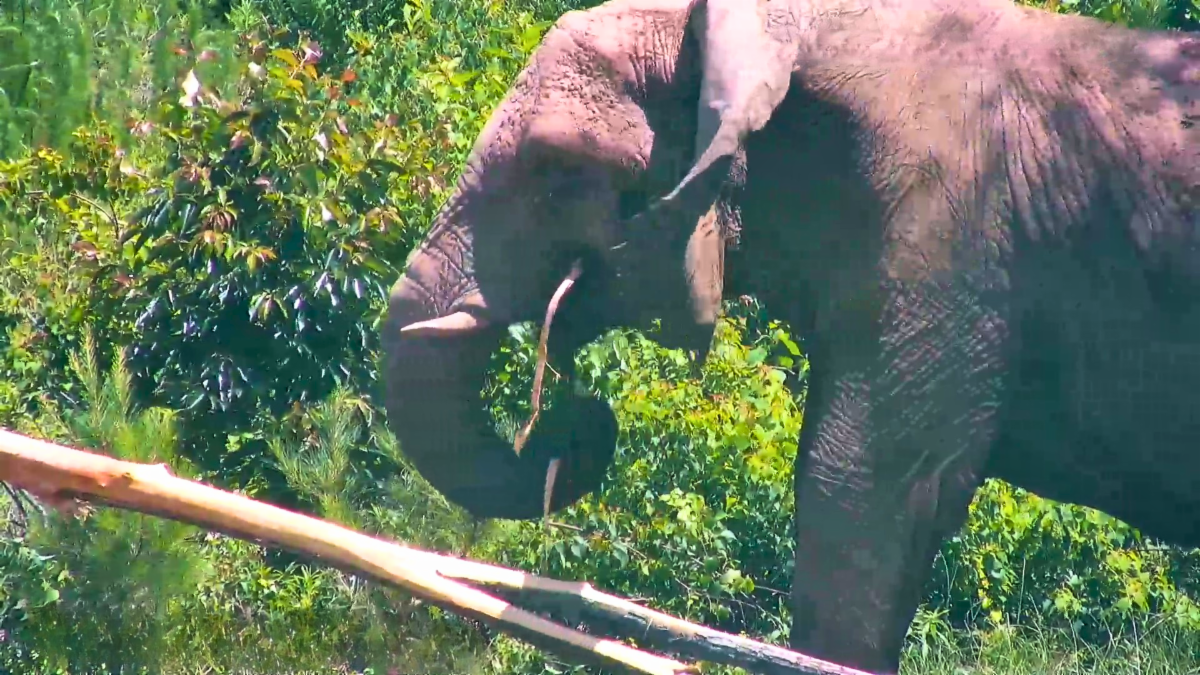
| | Mundi enjoying the bark of her labor | | |
Recently, the EleCam focused on Mundi for nearly thirty minutes as she harvested a small tree growing along the pond's edge. First, she pulled the tree down to reach the tender branches more easily. With remarkable precision, she stripped each branch from the trunk and consumed it carefully, wasting nothing. Once the tree was bare, she turned her attention to the thin outer bark.
Using her solitary tusk, Mundi inserted the tip at an angle beneath the bark and pried it loose. She then grasped the exposed edge with the finger-like appendage at the end of her trunk and peeled away long strips. It was a deliberate and painstaking process requiring skill, concentration, and motivation. No human-made enrichment device can truly replicate the complexity and rewards that nature provides.
If there is one lesson autonomy in a vast natural habitat teaches us, it is this: you can remove an elephant from the wild, but you cannot—and should not want to—remove the wild from the elephant. What we witness at ERNA demonstrates that when elephants are given the freedom to make choices and engage with a natural environment, they begin to resemble their wild-living counterparts in meaningful ways.
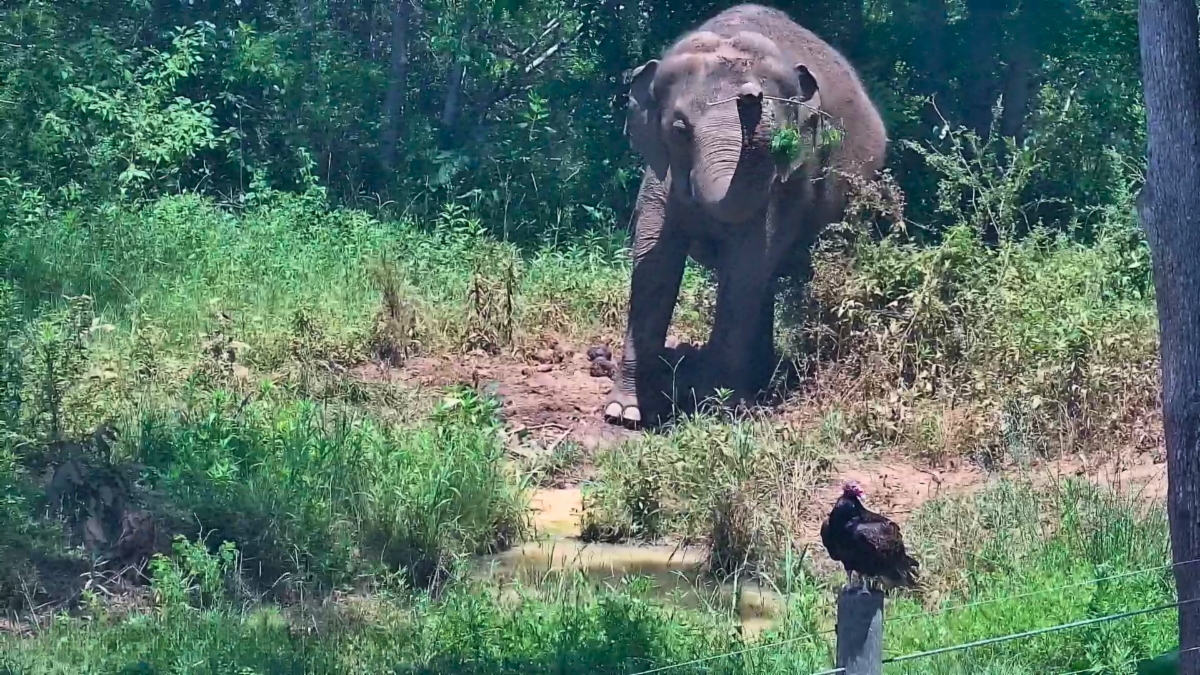
| | Tarra spots a feathered friend | | |
Sanctuary itself was once a radical idea. It was created to provide elephants with a safe haven—a place where they could live free from exploitation and harm. Although sanctuary was often criticized by exhibitors, advocates persevered, and many elephants benefited as a result.
More than thirty years have passed since a natural-habitat sanctuary first began welcoming elephants. During that time, they challenged long-held traditions and exposed many shortcomings in the elephant exhibition industry. Perhaps the time has come for the next evolution in elephant care—one that challenges not only old traditions, but even some assumptions that have become part of sanctuary itself.
Could the future lie in shifting the focus from rescue alone to rehabilitation, with the ultimate goal of rewilding whenever possible?
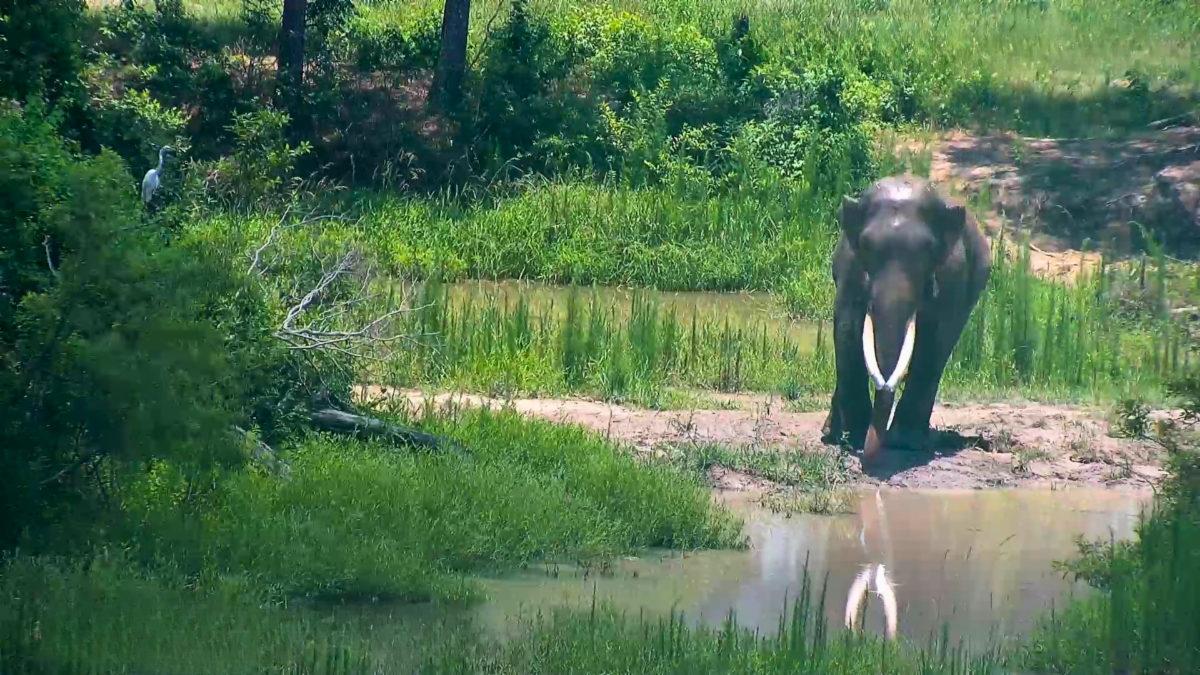
| | Bo shares the pond with a quiet visitor | | |
Some will understandably hesitate at the suggestion. They may question whether elephants who have spent years under human control can fully reclaim their natural lives. These concerns arise from a place of compassion. Yet while providing safety and care for captive-held elephants is a worthy achievement, it should not necessarily be viewed as the final destination. We can aspire to more than protection. We can work toward rehabilitation that restores choice, purpose, and as much of an elephant's natural life as possible.
The journey from exhibition to sanctuary was a necessary step forward. The journey from sanctuary to genuine autonomy may be the next. We hope this idea becomes part of a growing conversation among those who believe elephants deserve more than simply surviving—they deserve the opportunity to truly live.
Because of your trust in our philosophy and your support of our work, Bo, Mundi, and Tarra are able to live as close to free as is currently possible. We hope their lives inspire others to take the next step, however challenging it may be, and continue pushing beyond tradition in pursuit of a better future for captive-held elephants.
| | Tarra, Mundi and Bo living closer to true freedom | | Expanding Care Across the Habitat | | |
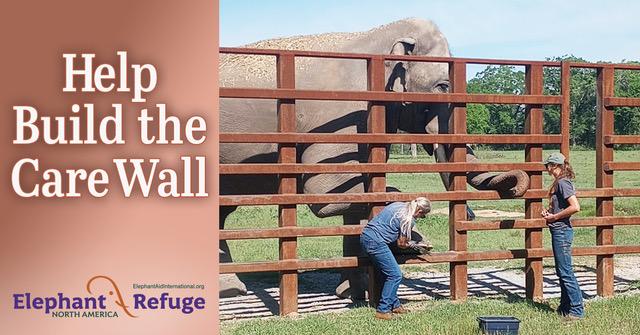
At Elephant Refuge North America, trust comes first. The Care Wall is a habitat-based veterinary structure that allows elephants to participate in routine procedures through a reinforced barrier with carefully designed openings.
Using positive reinforcement, elephants choose to present a foot, ear, trunk, or other body part, allowing caregivers and veterinarians to provide care safely and calmly, without restraint.
ERNA's 850-acre habitat is divided into two areas. The 100-acre area features a Care Wall that offers valuable options for delivering veterinary care. Now we're bringing that same access to the 750-acre area, where Bo, Tarra, and Mundi spend much of their time. Rather than requiring the elephants to travel to a central care area, this new structure brings veterinary access to where they already roam.
We are raising $40,000 to fund the materials, fabrication, concrete foundation, labor, installation, and safety inspection.
Your gift makes it possible. Please consider contributing today to help us reach our $40,000 goal for the Care Wall.
| | |
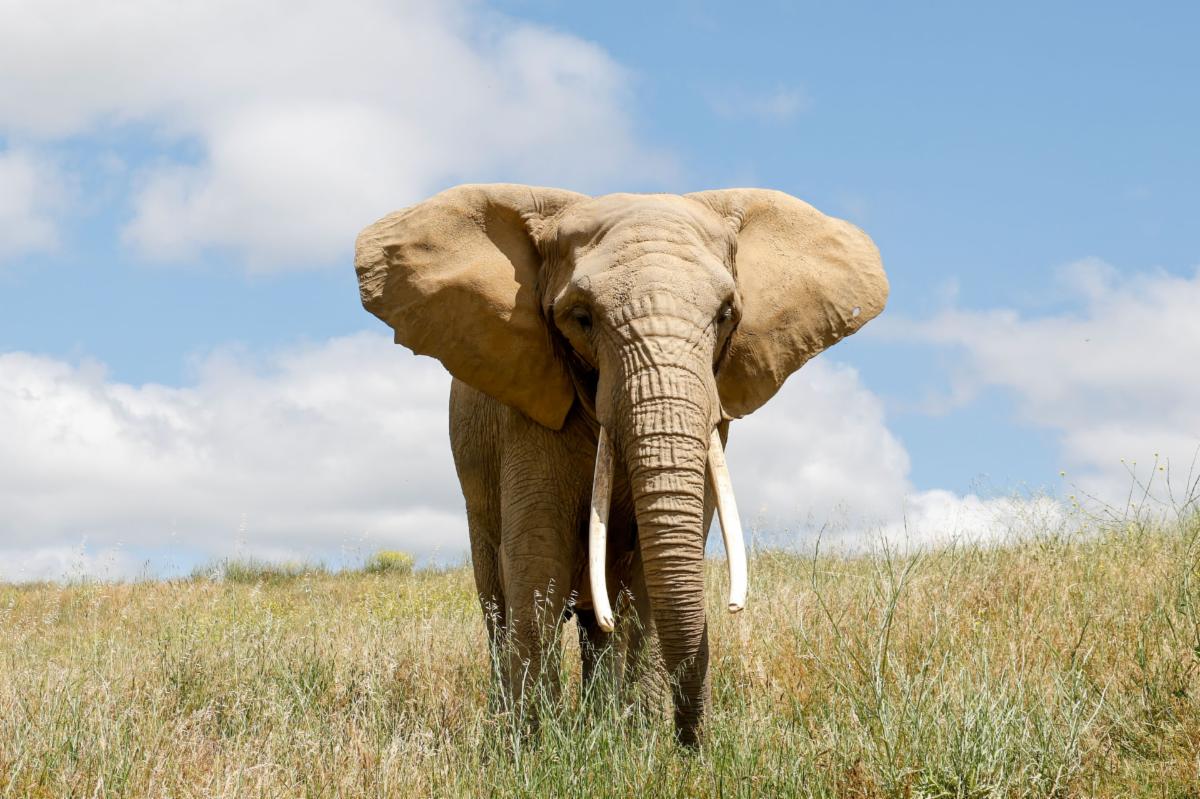
We are saddened by the passing of Toka, a 56-year-old African elephant whose life journey reflected both the challenges faced by captive elephants and the possibilities that emerge when their needs become the primary focus.
After decades spent in a zoo setting, Toka was relocated to the Performing Animal Welfare Society (PAWS), a sanctuary in Northern California. There, she spent the remainder of her life with the space, social opportunities, and freedom of choice that every elephant deserves. Her final years demonstrated the profound value of an environment designed around the elephant rather than public entertainment.
Reflecting on Toka's life, EAI Founder and CEO Carol Buckley said:
"Toka was among the few elephants fortunate enough to be released to a true sanctuary, where autonomy and a progressive approach to care are central priorities. PAWS continues to provide that environment, highlighting the contrast between sanctuary care and the conditions many elephants experience in the exhibit industry. From this perspective, Toka's story serves as a reminder that significant challenges remain in how elephants are managed and cared for in many exhibition settings."
While we mourn Toka's passing, her story continues to underscore why higher welfare standards and greater opportunities for sanctuary placement remain vital.
We send our condolences to the dedicated staff and specialists who knew Toka throughout her sanctuary years. Her life will continue to inspire efforts to create a better future for elephants everywhere.
| | Rewilding Captive Elephants | | Reintegrated elephants in a free-roaming system
Photo courtesy of Elephant Reintegration Trust | | |
What if lifelong captivity isn't the only future available to elephants?
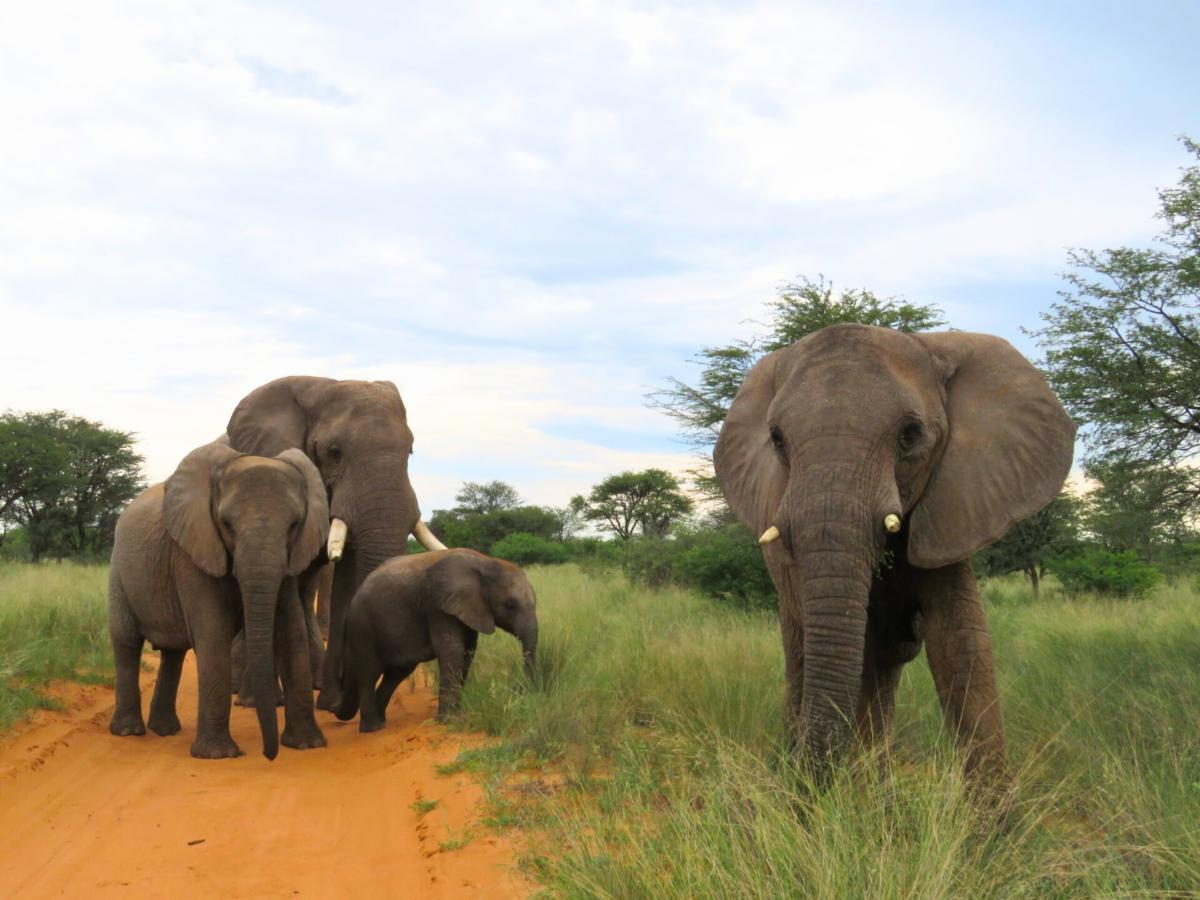
For years, many zoo and entertainment industry leaders have asserted that rewilding captive-held elephants simply isn't possible. But real-world examples from Africa and Asia are showing that, with the right conditions, expertise, and long-term commitment, some elephants can regain greater freedom, autonomy, and natural behaviors.
In Carol’s latest blog, she explores the growing conversation around elephant rehabilitation and rewilding: what it means, why it matters, and how it could help reshape the future of elephant welfare and conservation.
Rewilding won't be the right path for every elephant. But the evidence increasingly suggests that it deserves serious consideration as part of a continuum of care that includes rescue, rehabilitation, and, where possible, a return to life in a natural habitat.
The future of elephant conservation may be bigger than we once imagined.
| | Carol’s Corner: Bo's Pedicure | | |
Step into life at the Refuge with Carol, offering an inside look at the elephants’ world, their routines, personalities, and favorite places. In this month’s video, Bo voluntarily participates in his pedicure at the Care Wall in the 100-acre habitat as Carol trims his nails and Haylie assists.
Click the image above to watch!
| | As always, we greatly appreciate your interest, commitment and help. You make our work for elephants possible. Thank you! | | Support EAI Every Time You Shop | |
One World... One Elephant at a Time
| | | | |