|
Career-Focused Pedagogy Newsletter | January 2026 Edition
In this edition, you’ll find:
- 2025 Faculty Engagement in Review
- Pedagogy in Practice: Career-Infused Teaching Spotlight
- Upcoming faculty programming
- Assignment Idea
- Guidance to support your spring course preparation
- An overview of our faculty support services
Together, these resources are designed to help you integrate career-focused pedagogy into your teaching and support student success.
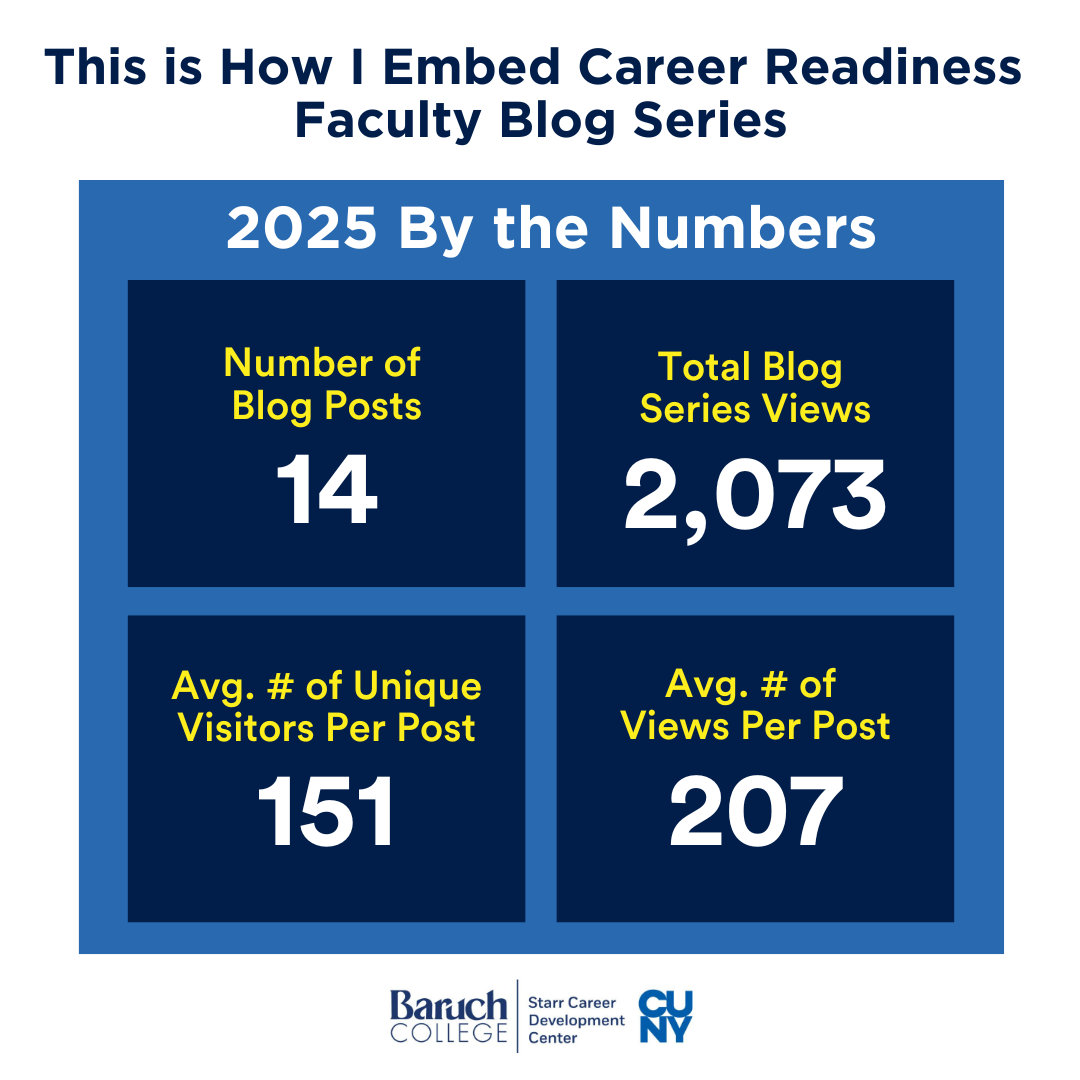
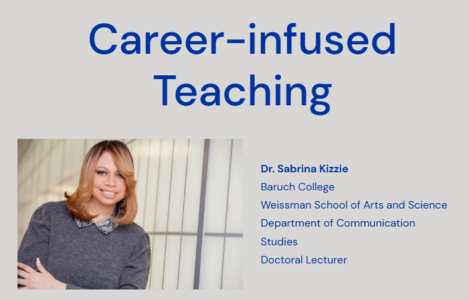
| | | 2025 Faculty Engagement in Review | | Pedagogy in Practice: Career-Infused Teaching | | The following Pedagogy in Practice: Career-Infused Teaching spotlight featuring Sabrina Kizzie, a doctoral lecturer in the Communication Studies Department, was originally posted on the Center for Teaching & Learning (CTL)’s Teaching Excellence Week website. While no stranger to our blog series, Sabrina provides additional insights into career-focused pedagogy in this end-of-year post. | | | You're Invited! Save the Dates | | |
Embedding Career Readiness into the Curriculum:
An Intro to Career-Focused Pedagogy
Embedding career readiness into the curriculum is essential for equipping students with the skills, experiences, and knowledge necessary to thrive in an increasingly competitive and evolving job market. Today's employers value more than academic achievements; they seek graduates who can adapt to real-world challenges, communicate effectively, solve problems creatively, and collaborate in diverse teams. By embedding career readiness into the curriculum, faculty bridge the gap between education and employment, ensuring students see the relevance of their studies in a practical context.
At the end this workshop, you will be able to:
- recognize the important of engaging in career-focused pedagogy,
- understand the role faculty and academic departments play in preparing students for the world of work,
- identify strategies to prepare students for the world of work, and
- summarize ways to embed career readiness into your curriculum.
| | | |
Wikipedia at 25:
Authority, Legitimacy, & the Future of Knowledge
Twenty-five years ago, Wikipedia launched with the ambitious idea that knowledge could be created collaboratively and shared freely with the world. Just a quarter century later, the online encyclopedia has become a foundational part of the global information landscape, drawing billions of page views each month and impacting how people learn and make real-world decisions. But what have we learned about its role in our knowledge ecosystem — and what comes next?.
Panelists:
- Phoebe Ayers, Librarian, Massachusetts Institute of Technology
- Carwil Bjork-James, Associate Professor of Anthropology, Vanderbilt University
- Ryan McGrady, Senior Research Fellow, Initiative for Digital Public Infrastructure, University of Massachusetts, Amherst
- Steven Mintz, Professor of History, University of Texas at Austin
| | | |
Faculty Upskilling Session:
Preparing Students in an AI-Powered World
PwC are excited to announce that we will be hosting our next AI webinar for faculty. This session will highlight the AI and human skills PwC is prioritizing for new joiners and how we are upskilling them for success in today’s profession.
| | | |
Work Visa Options for International Students and Graduates:
Updates for Faculty, Staff, and Administration
Baruch College, Zicklin School of Business is thrilled to welcome Mark Rhoads back to campus! Mark is an immigration attorney at the law firm McCandlish Holton and brings nearly 30 years of experience in immigration law. He works with employers across the United States to help secure work visas and permanent resident green cards for international employees. Mark also supports college and university career services through his involvement with the National Association of Colleges and Employers (NACE).
| | | |
Helping English Majors Pivot from College to Career:
An Online Workshop with Cathy Day (Ball State University)
Faculty have an important role to play in professionalizing English majors. But what can teachers of literature and composition do to mentor students who are entering an incredibly difficult job market? How does a poet or a scholar help a student get a job in marketing? Answer: There’s a lot that English faculty can do to help students approach the career search from a position of strength. In this workshop, Cathy Day, Professor of English at Ball State University, shared best practices her department has used to maintain strong English enrollments over the last ten years.
| | | Preparing for the Winter/Spring Semester | | |
From a pedagogical perspective, disseminating career-related resources for students enriches their educational experience by connecting academic learning with real-world application. Below are some low time-commitment strategies with potentially high impact.
Develop a Course Skills Objective
Students often have difficulty identifying and articulating the skills they have developed thorough their coursework (e.g., projects). By explicitly highlighting the workplace-desired skills students will develop as a result of taking your course, students will be able to better equipped to bridge the gap between their education and industry. For maximum impact, skills should be highlighted on the syllabus and each responding course assignment.
Include Syllabus and/or Assignment Statement Promoting Starr
There are many approaches to creating syllabi, but college-wide discussions of teaching at Baruch suggest some consensus around many of the items that should appear there. In addition to the syllabi requirements outlined by Baruch, we strongly recommend highlighting career services.
-
Option 1: Remember one of the benefits you get from this course is not just a designation on your transcript, but a great line on your resume that will impress schools and employers. How do you do this? Add a “Projects” section to your resume. Document your role (e.g., group leader) and provide specific, action-oriented, descriptions of what you did and what skills you learned. For more ideas on how to include a course on your resume visit the review the Starr Career Development Center’s Resume & Cover Letter Writing Guide.
-
Option 2: The Starr Career Development Center (Starr) offers a variety of services to all Baruch undergraduate students (i.e., Marxe, Weissman, & Zicklin) to support their academic and career development such as resume reviews, mock interviews, career assessments, graduate school advising, and access to jobs and internships. Starr can also assist you in translating your academic experience (e.g., course projects) onto your resume. Visit their website to learn more.
| | | Career-Focused Pedagogy Brightspace Site | | |
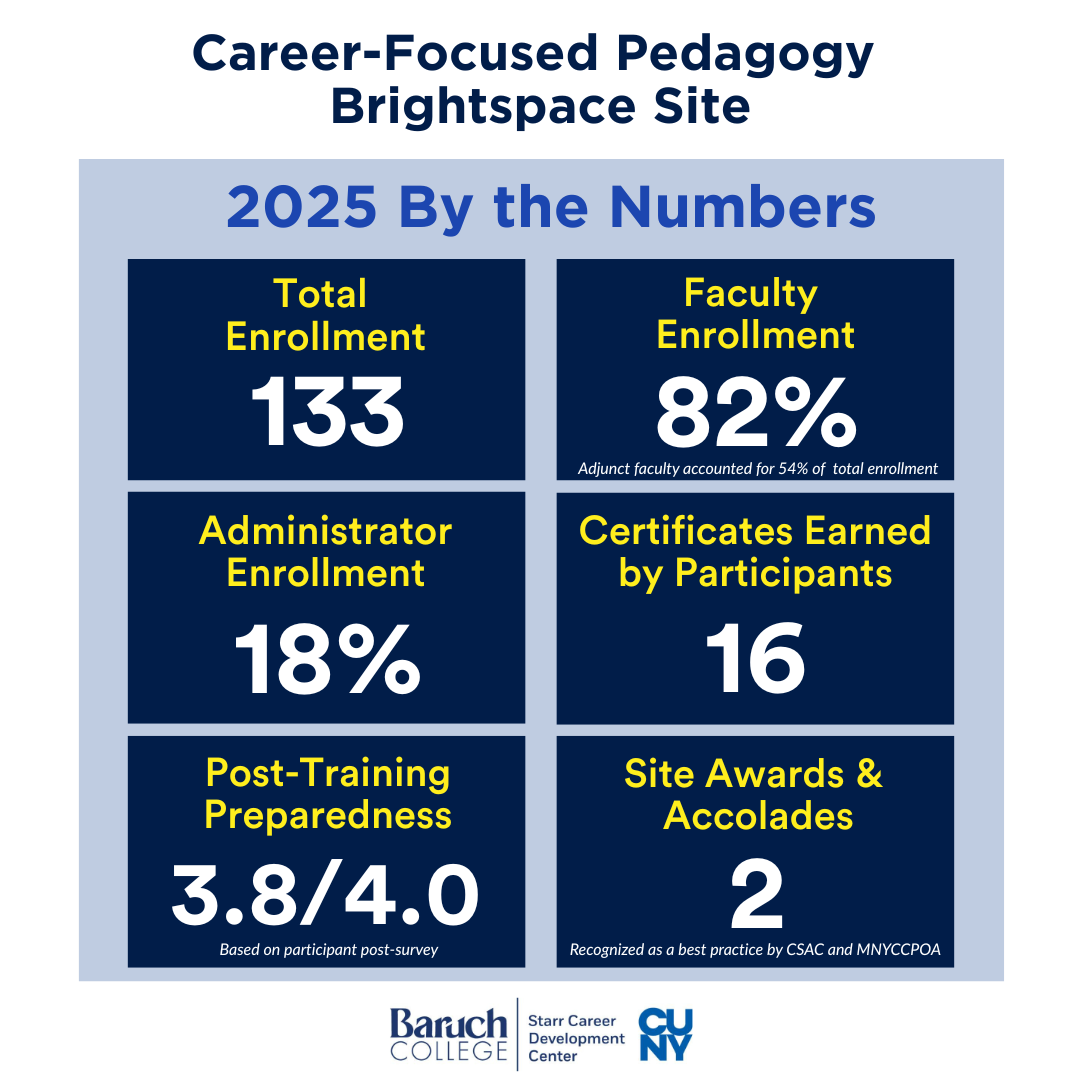
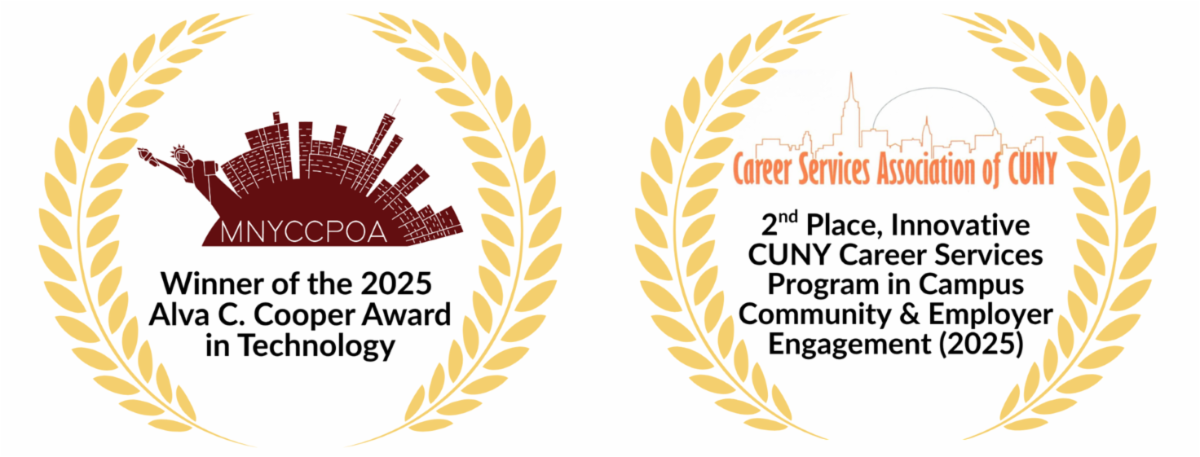
Our award-winning Brightspace site serves as a central repository of career-focused pedagogical teaching tools, resources, and information. Additionally, the Site enables faculty to explore various career-focused pedagogical approaches, reflect on their current teaching practices, identify opportunities for integrating career readiness, and elevate their teaching.
Resources Include
- Ready-to-share flyers, handouts, and other materials tailored specifically for Baruch students.
- Discipline-specific resources to support career-focused pedagogical instruction.
- Repository of ready-to-use assignments and classroom exercises.
- Guidance on how to re-envision existing assignments to include a career readiness focus.
- Step-by-step guide for developing skill-based course objectives.
- Teaching-focused services from departments like career services and Alumni Relations to enhance student engagement and learning.
What do Faculty Have to Say?
"The subject matter was just what I needed to enhance the value of my in-class lectures and class discussions." - Paul Jannace, Allen G. Aaronson Department of Marketing & International Business
| | | Overview of Faculty/Staff Services | | |
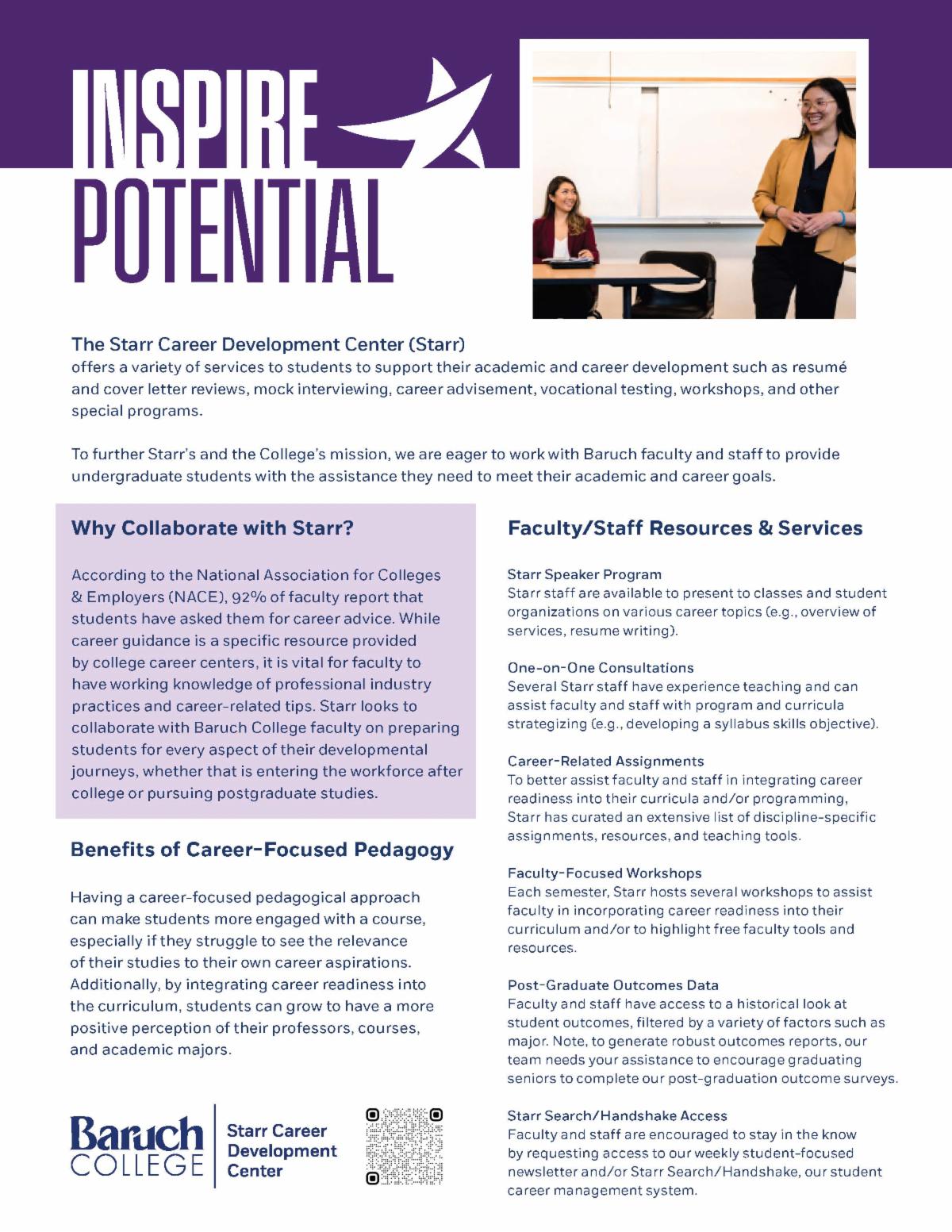
We offer a variety of services to students to support their academic and career development such as resume and cover letter review, mock interviewing, career counseling, vocational testing, workshops, and various special programs.
To further our mission, and ultimately the College’s mission, we are eager to work with faculty and staff to provide our students with the assistance they will need to meet their academic and career goals. We invite faculty and staff to partner with the us in providing student support by utilizing the services below.
| | | |
Why Engage with Starr?
While career guidance is a specific resource provided by college career centers, it is vital for faculty (and staff) to have working knowledge of professional industry practices and career-related tips.
| |  | |
Resources & Services
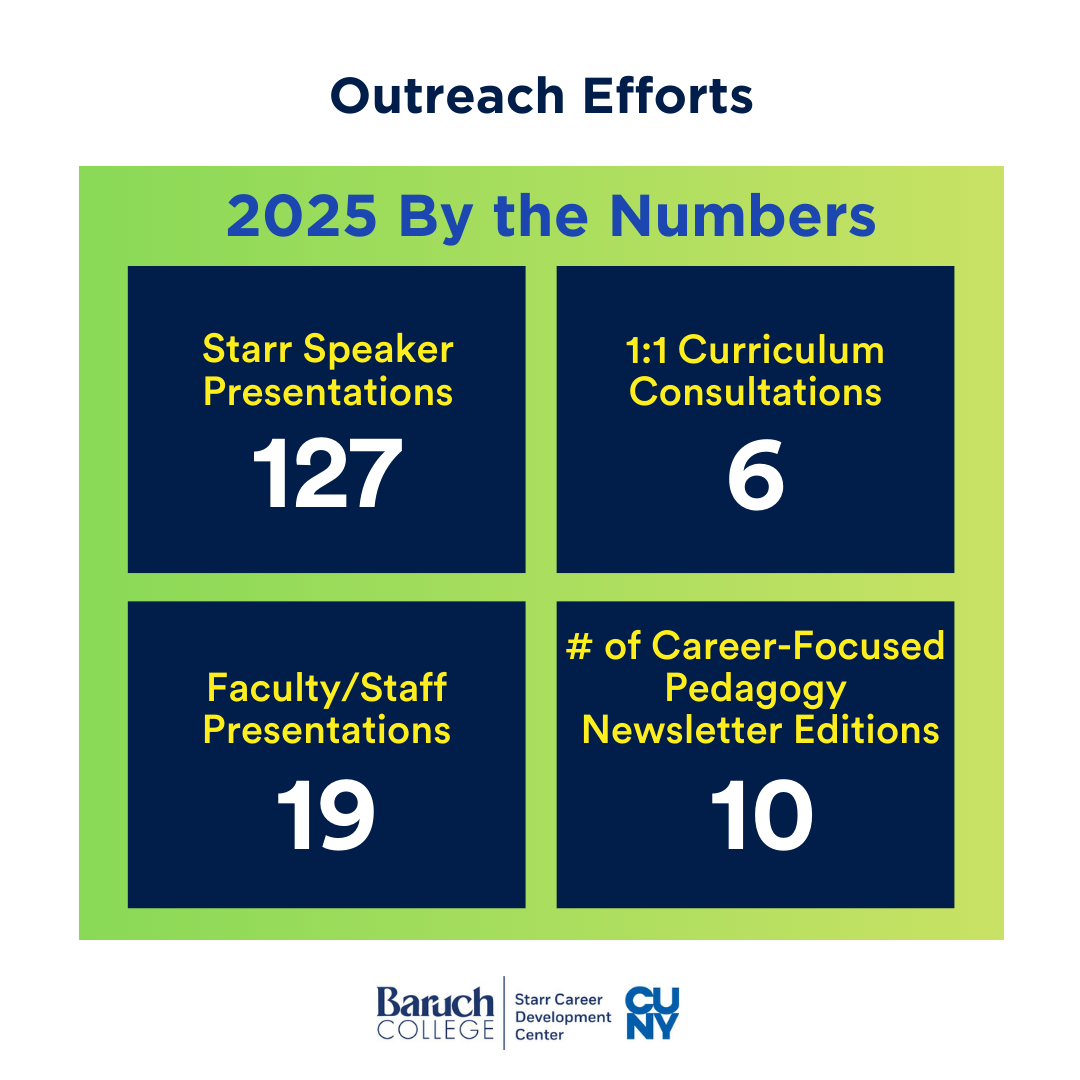
Starr Speaker Program - Starr staff are available to present to classes and student organizations on various career topics (e.g., overview of services, resume writing).
One-on-One Consultations - Several Starr staff have experience teaching and can assist faculty and staff with program and curricula strategizing (e.g., developing a syllabus skills objective).
Career-Related Assignments - To better assist faculty in integrating career readiness into their curricula and/or programming.
Post-Graduation Outcomes Data - Faculty have access to a historical look at student outcomes, filtered by a variety of factors such as major.
Starr Search/Handshake Access - Faculty are encouraged to stay in the know by requesting access to our weekly student-focused newsletters and/or Starr Search/Handshake, our student career management system.
| | | | | |