Visit Our Website

October 2024 - Catch up on the latest news from CAARI!

Dear William,


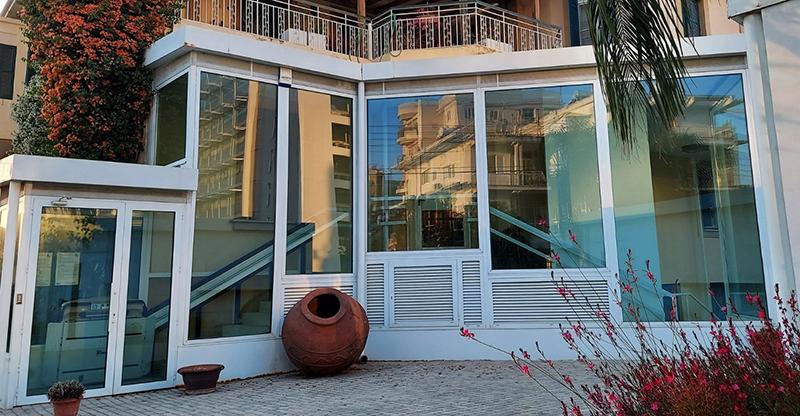
As you can sense in the sharp reflections in CAARI’s library windows, the days in Nicosia are still pretty hot. But here as elsewhere, October is “the month of the cross” when we take up our customary tasks; vacation times recede, schools return to session, and CAARI’s library settles into the rhythms of the new semester. CAARI’s activities, however, accelerate, as you will see in the report from the Director.


This Newsflash brings three different invitations. The first, immediately below, is the annual call for fellowship applications. CAARI is unique among learned institutions in offering fellowships specifically for research centered on Cyprus and the eastern Mediterranean. Review the list, spread the word about them, and even apply for one.


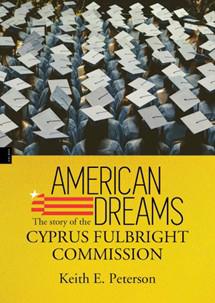
The second invitation is to a fascinating new book, American Dreams, by former CAARI Trustee Keith E. Peterson, who introduces it below the Director’s report. It relates the story of the Cyprus Fulbright Commission established in 1962 by President Kennedy and dismantled under Keith’s oversight during his final Foreign Service appointment here in 2014. Though the State Department still offers Fulbright research fellowships, the Cyprus Fulbright Commission had a distinct history. Both CAARI’s own history and the history of America’s complex engagement with Cyprus in the decades around and after 1974 are woven into Keith’s compelling narrative. 


The third invitation is to a major CAARI event that combines great archaeological artifacts, fresh research, and good Cypriot food. This event is not in Nicosia but in Philadelphia in the USA, where CAARI will join with the Cyprus Society of Greater Philadelphia to host a fund-raising gala at The Penn Museum, the University of Pennsylvania Museum of Archaeology and Anthropology. The program is displayed below. We urge you to make plans to come with family and friends. But if you can’t come, do think about sending a gift.  


Apply for CAARI Fellowships!


Encourage your colleagues, students, and friends to apply for CAARI's fellowships. Information about each grant, including application forms, stipends, and expectations, is available at: www.caari.org/fellowships. 


CAARI’s fellowships include:

  • Three graduate student stipends offering support for travel to Cyprus and lodging at CAARI. Application deadline: December 6, 2024.
  • Two CAARI/CAORC postdoctoral fellowships that fund a month's research in Cyprus. Application deadline January 6, 2025.
  • The postdoctoral fellowship in honor of Professor Eddie Peltenburg, that can support a full academic year's research time in Cyprus. Application deadline: January 6, 2025.
  • Scholar in Residence: Application deadline: January 6, 2025.


Other relevant fellowship opportunities are listed on the Fellowships page, as well. Browse the possibilities, and apply!


Message from CAARI’s Director


Dear friends and supporters of CAARI,


We are certainly back into active mode with October in Cyprus! The days are still sweltering but the evenings are extremely pleasant right now. In Nicosia we have hit the ground running with a number of conferences and workshops.


Dr. Ourania Kouka of the Archaeological Research Unit of the University of Cyprus hosted a workshop funded by the German Academic Exchange Service (DAAD) on Dealing with Material Culture in the Eastern Mediterranean between Excavation and Digitization. We heard colleagues from Lebanon, Egypt, Cyprus and Germany discussing a fascinating range of topics from understanding botanical terms in ancient texts to Egyptian material culture abroad. Then the Deputy Ministry of Culture organized a conference: Cultural Rights in Times of Crisis with Dr Alexandra Xanthaki, UN Special Rapporteur in the Field of Cultural Rights, as keynote speaker. This was an extremely interesting event offering a number of perspectives on cultural rights as human rights, with speakers on topics such as protecting freedom of artistic expression and enabling community inclusivity in scientific discoveries. A presentation on protection of cultural heritage on Cyprus was given by the Director of the Department of Antiquities, Dr Giorgos Georgiou.


Last week I also attended an event at the Centre of Visual Arts and Research (CVAR) organized by the Public Affairs Officer, Elaine Paplos, at the US Embassy in Cyprus to welcome the new Fulbright cohort as well as grant awardees and those with connections to the Embassy. Despite the demise of the Fulbright Commission on Cyprus, discussed by Keith Peterson in this Newsflash, Fulbright connections between the US and Cyprus are strong with several US teaching interns, doctoral students and senior researchers coming to Cyprus each year. CAARI is always keen to serve as hosting institution for researchers with a cultural or heritage remit. This year we are very happy to have our former graduate student fellow Caroline Barnes here for the year on a Fulbright scholarship, researching for her doctoral dissertation on the Bronze Age.


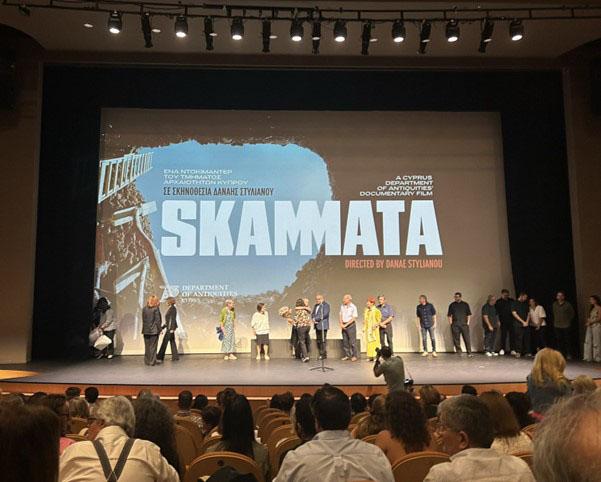
The biggest event of the new semester so far was the screening of the Department of Antiquities’ documentary Skammata (trenches) directed by Danae Stylianou at the Nicosia Municipal Theatre. The documentary was produced for the fiftieth anniversary of the events of 1974 and included the stories of archaeologists who were working in the northern areas at the time of the invasion, including Alison South, Jenny Webb, Odile Le Brun and Sophocles Hadjisavvas. As you can see in the photo it was a packed house with pretty much the entire archaeological community of Cyprus present, as well as many non-archaeologists! It is a fantastic film, and I hope that everyone has the opportunity to see it one of these days.

The cast, crew and Department of Antiquities staff on stage at the end of the screening of Skammata in Nicosia.

CAARI’s lecture series for the autumn is now up on our website (https://caari.org/events/), and we have three exciting speakers lined up for you to enjoy, either with us in the CAARI library, online or later on our YouTube channel. In another exciting development, along with my co-editors Thomas Kiely and Anna Reeve, we have received the proofs from Sidestone Publishing for our forthcoming volume Empire and Excavation. Critical perspectives on archaeology in British-period Cyprus. The papers are with the authors for checking, and we expect the volume out early in 2025. It is a monster at 462 pages, and we are really delighted with the result.


I’m off to the UK next week for a hectic, week-long lecture tour of London, Nottingham, Belfast, Cambridge and back to London again for the Hellenic Society. Then it is a very short time until our Celebrating Cyprus’ Cultural Heritage in American Life and Learning event at the Penn Museum in Philadelphia, discussed below. I very much look forward to visiting Philadelphia (and the lovely collections at the Penn) for the first time and having the opportunity to meet with long-time friends of CAARI—including some of you reading this Newsflash, I hope—whom I’ve not yet had the opportunity to meet.


Best wishes,


Lindy Crewe, PhD

Director, CAARI


Invitation to a Book:

American Dreams: The Story of the Cyprus Fulbright Commission


Keith E. Peterson

Former Foreign Service Officer, Former CAARI Trustee

In the summer of 2014, my last overseas assignment in the Foreign Service was fast coming to an end and I had almost completed the task of closing down the Cyprus Fulbright Commission. 


The USAID money that had made the Commission, on a per capita basis, the largest in the world was about to end.  As chairman of the Commission’s board, I had overseen the downsizing of the Commission from 11 employees and three offices to four employees and one office in the Fulbright Center at the Ledra Palace crossing.


When the fiscal year ended, the Fulbright program would be moved to the public affairs section of the U.S. Embassy and run by a single person, but there would no longer be a Commission with a staff and a bicommunal and binational board.


The Commission’s last director, Anna Argyrou, said “someone needs to write a history of this Commission” and I decided I should be that person. I had served twice in Cyprus and served on the Commission board both times. 


The result, after seven years of research and writing, was American Dreams: The Story of the Cyprus Fulbright Commission, which has been published by Armida Books in Nicosia, but is available globally on Amazon. My share of the proceeds will be donated to a nonprofit. 


As I explained to my sometimes-skeptical friends, the Commission was unique for four reasons. First, it was always bicommunal, with Greek and Turkish Cypriots working and benefiting together. I argue that particularly in the wake of the 1974 war, it became “fiercely” bicommunal. 


Second, it became huge. The money appropriated by the U.S. Congress for the resettlement of the 40 percent of Cyprus’s population displaced by the war was ultimately repurposed to create the Cyprus American Scholarship Program or CASP. Miraculously, the CASP lasted 33 years and, in constant dollars, provided more than a quarter of a billion dollars for the education of the Cypriot people. 


Third, it invested millions of those dollars in conflict resolution work, bringing some of the most important American scholars in conflict resolution to work with Cypriots to try to create the conditions for reconciliation. The Commission and its Executive Director Daniel Hadjittofi were under immense pressure. Many Greek Cypriots called them traitors. Turkish Cypriot leader Rauf Denktash said that Fulbright was trying to “brainwash” his people. But the Commission persevered. 


Finally, when you give that much money to that many bright Cypriots, they go off into the world and do amazing things. They can be found throughout Cypriot society as ministers, ambassadors, business leaders, and university rectors and professors. More than 400 grantees went on to earn their doctorates. 


Of course, the Commission played an outsized role in the founding of the Cyprus American Archaeological Research Institute, paying the salaries of the directors in its early years and giving substantial grants to help it found its library and buy the house where it is headquartered today.   


As CAARI’s first Director, Dr. Anita Walker, related, ASOR was concerned whether it could continue to support CAARI after its first year, but first Commission Executive Director Renos Kamenos said “this is an insult to Cyprus!” An urgent endorsement from Kamenos, the American Ambassador, and Vassos Karageorghis of the Department of Antiquities persuaded ASOR to reconsider, and CAARI survived. 


The Commission also provided dozens of grants to bring some of the most important American scholars in Eastern Mediterranean archaeology to Cyprus. Dr. Ellen Herscher was the first American Ph.D. student to receive a grant from the Commission. The CAARI chapter also tells the stories of Dr. Julie Hansen and mother and daughter Fulbrighters Pamela and Hannah Gaber. 


The Commission’s third and longest serving Director, Stuart Swiny, wrote: “The names of past Fulbright fellows constitute a Who’s Who of American scholars publishing on Cyprus topics: Bernard Knapp, James Muhly, Barbara Kling, Gloria London, Priscilla Keswani, Joseph Greene, Glenn Markoe, Ellen Herscher, David Reese, Jane Barlow, Pamela Gaber, Joanna Smith, John Leonard, and David Roessel, among others.” Stuart and Laina Swiny were generous in reading the chapter devoted to CAARI and made indispensable suggestions and edits to the final draft. 


American Directors of CAARI served on the Fulbright Commission board and made sure that multiple research grants were reserved for CAARI each year. When Tom Davis was CAARI Director and served on the Fulbright Commission board, he would wear his CAARI hat or Fulbright hat as needed to support both research and rescue archaeology in Cyprus. He welcomed Fulbright scholars in other fields to stay at the CAARI hostel, which includes the “Fulbright Suite.” He thought the cross pollination among scholars was important. 


The book’s text is chronological, but each chapter focuses on key events.  The first and second chapters provide a brief history of Cyprus and of American involvement in the island (including Luigi Palma Di Cesnola). Chapter three, Renos and Stella, tells the story of the origin of the Commission, its first executive director – Renos Kamenos – and Stella Yiasemidou, soon his bride, and the Commission’s first dozen years. 


Chapters four and five deal with the board and with CAARI.  The chapter on the board introduces key characters, particularly former Nicosia Mayor Lellos Demetriades and his alternate, Dr. Chrysotomos Sofianos. Demetriades served 40 years on the board and the pair fought constantly to preserve the Commission’s independence. Demetriades was also a staunch supporter of CAARI. 


Chapters six and seven -- CASP and Daniel -- detail the origins of the CASP program, most notably in a conversation between Ambassador Galen Stone and Senator Claiborne Pell, and the story of Daniel Hadjittofi, who would go from refugee in 1974 to Fulbright scholar to the Executive Director of the Commission at age 26 after Renos Kamenos’ untimely passing. 


Chapter eight explains the conflict resolution efforts and the final chapter – The Long Goodbye – describes the turbulent end of the Commission, including a fight with an aggressive American Ambassador and battles with the Government of Cyprus in the wake of the Annan Plan vote when the commission equalized its grants between Greek and Turkish Cypriots instead of apportioning them by population as had always been done. 


The Cyprus Fulbright Commission was such a unique institution and the people involved in running it were incredibly smart and incredibly brave. The Fulbright and CASP scholars who related their American experiences illustrated Senator Fulbright’s belief that education is a slow moving but powerful force for good. It was an honor to be involved with the Commission and it was painful to be charged with the responsibility for closing it. I am so pleased that I was given the opportunity to tell its story.


Invitation to Celebration

Celebrating Cyprus’ Cultural Heritage in American Life and Learning

The Penn Museum

Sunday, 24 November 2024, 2:00 – 5:00 PM


You are cordially invited to join CAARI and the Cyprus Society of Greater Philadelphia in a festive afternoon of Cypriot archaeology, culture, and cuisine at The Penn Museum. The event is dedicated to the celebration of Cyprus’ centuries-long cultural legacy and its ever greater appreciation in American life and learning. All proceeds will be devoted to CAARI’s Fellowship Fund and the Cyprus Society’s Scholarship Fund.


Admission to the Museum and special access to the Museum’s recently installed Eastern Mediterranean Gallery are part of the event. The program includes many people familiar to the CAARI community.


Guests will be greeted by Mr. Evangelos Savva, Ambassador of Cyprus to the USA. Dr. Lindy Crewe, Director of CAARI and Dr. Stelios Tsinontides, past President of the Cyprus Society will introduce their organizations and the ways in which they support expanding knowledge of Cyprus


A panel including Ambassador Savva and five archaeologists from CAARI will discuss current archaeological projects on Cyprus and the opportunities they offer for students. It will be moderated by Mr. Keith Peterson, whose book will be available for signing, and will include:


  • Evangelos Savva, Ambassador of the Republic of Cyprus to the United States: Cyprus’ Cultural Heritage as a Factor in Present-Day America.
  • Dr. Lindy Crewe, Director of CAARI and excavations at Bronze Age Kissonerga-Skalia: The Cyprus American Archaeological Research Institute (CAARI) and 1974: Fostering International Collaborations and Research in Cypriot Heritage Studies.
  • Dr. Young Richard Kim, Associate Professor, Classics and Mediterranean Studies, University of Illinois Chicago: The History and Culture of Cyprus: Thoughts from Abroad.
  • Dr. Artemis Georgiou, Assistant Research Professor, Archaeological Research Unit of the University of Cyprus, Principal Investigator of "ComPAS: Commercial Patterns Across the Sea" and Dr. Anna Georgiadou, Research Scientist, Archaeological Research Unit of the University of Cyprus. Research Associate on the ComPAS project: Revisiting Cypriot Connectivity with the Mediterranean: New Insights from the ComPAS Project.
  • Dr. Laura Swantek, Associate Professor, Anthropology, Phoenix College. Director of the Kourion Urban Space Archaeological Project: Connecting Cultures: American Students and the Legacy of Kourion.


Dr. Lauren Ristvet, one of the curators of the exhibition, will introduce the Eastern Mediterranean Gallery, and then guests will be free to move through it, viewing the great Cypriot artifacts there, and talking with Penn Curators. At the end, all may feast together on good Cypriot cuisine and Cypriot wine during the reception in the Museum’s Upper Baugh Gallery.


Information about sponsorships, reservations and ticket prices, ground transport and parking, and lodging in the vicinity of The Penn Museum is available on the CAARI website’s events page: https://caari.org.events.


Information on how to register or support the event available here:

https://caari.org/wp-content/uploads/2024/09/Short_Program_Registration-Form_09172024.pdf. Registration should be submitted by 28 October 2024.


To All our Friends and Supporters


To those who help us keep CAARI effective and hospitable, we send our sincerest thanks! We look forward to seeing as many of you as possible at The Penn Museum on November 24. We send heartfelt thanks to those who have helped us over the first hurdle in the challenge of deteriorating surfaces on the exterior stonework of our building in Nicosia. We are exploring official U.S. and Cypriot resources of aid. But help from our friends is also needed and very warmly appreciated, too. There will be further steps. But with your help, and a lively attendance in Philadelphia, we will surely preserve both our home and our fellowships uncompromised. Do help if you can!


Annemarie Weyl Carr

Vice President, CAARI Board

Contact Us