December 2025 - Catch up on the latest news from CAARI! | | |
December customarily brings a gathering together and giving thanks for the gifts of year thus far. CAARI has much to be thankful for – the much-needed repair of the building stonework in Nicosia, the close of a successful year of research from a gifted group of fellows, and our growing community of friends and supporters. This theme of fellowship was likewise felt as many scholars that have walked through CAARI’s doors numerous times gathered in Boston for the annual meeting of the American Schools of Overseas Research (ASOR) where the vitality of ideas on the archaeology and history of Cyprus was clearly on display in three well-attended sessions.
.
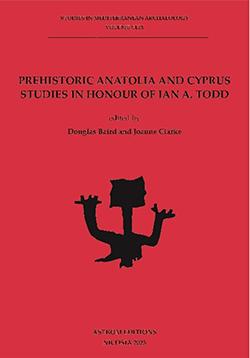
First, we hear from CAARI’s director with a series of exciting updates, including the new book on prehistoric Anatolia and Cyprus published in honor of Dr. Ian Todd and former Peltenburg fellow, Dr. Anna Spyrou’s upcoming documentary entitled The World Shrinks. We are looking forward to both.
Next, we are taken on an exciting tour of the experiences of field school student, Amanda Porter, as she details working at Kissonerga-Skalia. Her words certainly will remind some readers of their early experiences in Cypriot archaeology that left such a lasting mark.
CAARI’s 2025 Scholar in Residence, Prof. Tyler Jo Smith, reports on her innovative study and thorough work on ancient Greek festivals and art with a focus on Athenian vase imports. Next, we hear from CAARI Trustee, Bill Andreas and CAARI Librarian, Anthoulla Vassiliades, on the impact that cuts in federal funding sources may have on the CAARI library collections and what you can do to help.
Finally, we are elated to share that with the generous support of the Honor Frost Foundation that CAARI will be offering a graduate research fellowship in maritime studies. Consider applying or sharing this new opportunity with maritime archaeology students!
| | |
Message from CAARI’s Director
Dear friends and supporters of CAARI,
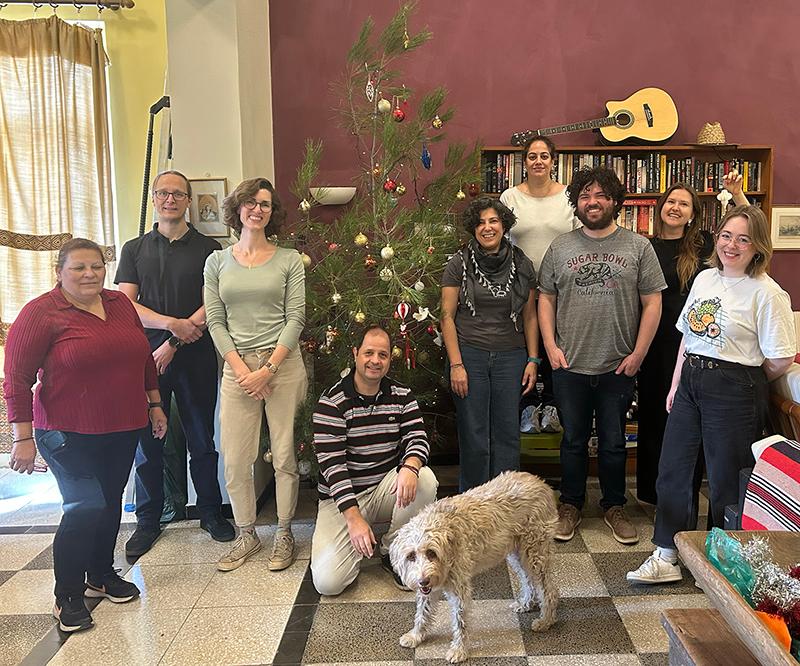
It has certainly been a busy year and all of us here are looking forward to spending time with family and friends over the holidays. I’m also looking forward to a little pottery time in the Cyprus Museum stores in the coming weeks, taking the opportunity to look at some Bronze Age material that researchers at CAARI are examining for their projects. This week we decorated CAARI for Christmas, as you can see in the photograph below, and we are now feeling all festive.
| | CAARI staff and researchers decorating the Christmas tree upstairs in the Scholars’ Residence (with help from our resident barkaeologist, Darcey). | | |
Since my last report, we have held two events at CAARI and I have given three lectures, one at the Archaeological Research Unit and two online: for the Mycenaean Seminar series at University College London and for ASOR. On the 23rd October we held a book launch for Prehistoric Anatolia and Cyprus. Studies in Honour of Ian A. Todd, edited by Douglas Baird and Joanne Clarke. The volume contains many excellent papers celebrating Ian’s archaeological work in both Cyprus and Türkiye and is a must-read for any prehistorians in these regions. Ian came up from Kalavasos for the event and we think was really pleased to be with us all for the celebration! As you will see below, we have an additional copy we can give away as a gift for special donations for the library—an urgent need in these straightened financial times.
This week was our final hybrid lecture of the year. Nicoletta Demetriou spoke on her Cyprus Music Archive, a project to collect and disseminate the poetry, folk songs and oral traditions of Cyprus before they are lost. This is such an excellent project, aiming to digitize sound and videos in old formats and to record the memories and creative output of both Greek Cypriot and Turkish Cypriot musicians, and to host it all online as a freely available resource. Once it is live, hopefully in spring 2026, I will update everyone on how they can access and enjoy the sounds and sights of Cypriot traditions.
Below you will read a piece on the experience of the field school we run at Kissonerga-Skalia each summer and I am very touched by Amanda’s report! She did such a great job in the field and in the lab and it is these experiences that allow people to gain the skills needed to feel confident as researchers. This is why our CAARI fellowships for graduate students are so important, enabling students to spend a decent amount of time building their skills and knowledge. Our graduate student fellowship applications have now closed for the year but there is still time until the 12th of January to apply for the Edgar J. Peltenburg Fellowship in Cypriot Prehistory, the Scholar in Residence or our exciting new marine/maritime archaeology fellowship funded by the Honor Frost Foundation (see below for details).
The next exciting event in Nicosia pre-Christmas will be the premiere this week of our former Peltenburg Fellow Anna Spyrou’s documentary The World Shrinks, directed by Markos Kassinos. This is the outcome of her research conducted on the prehistoric and present day indigenous cattle of Cyprus, first at CAARI and since then at the Cyprus Institute, funded by the Leventis Foundation. Our sneak preview of the trailer a few weeks ago indicates that it is a really high-quality film and if you have the opportunity to view it, here or at festivals around the world, please do so.
With best wishes to all our friends here and abroad for the holidays,
Lindy Crewe, PhD
Director, CAARI
| | A Love Letter to Kissonerga-Skalia | |
Amanda Porter
Columbia University
| | |
This summer was my second season participating in the CAARI excavation at Kissonerga-Skalia, and it was just as exciting as the first. Kissonerga-Skalia is a Bronze Age settlement on the western coast of Cyprus, 8km north of Paphos. The site was occupied from the Early Cypriot Bronze Age (c. 2500 BCE) into the beginning of the Late Bronze Age (c. 1600 BCE). This is a remarkably interesting, and sometimes puzzling, site to excavate. The soil does not usually have distinct color changes, due to being baked in the sun, so it is important to pay attention to the soil’s texture. Additionally, the upper level of the site is within the plow-zone, causing the different chronological layers and artifacts to be mixed together. While these aspects may seem daunting at first, they help archaeology students learn how to excavate meticulously.
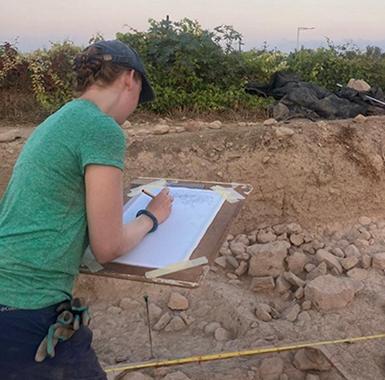
The field school at Kissonerga-Skalia prepares students for every step of archaeological excavation, from the cleaning up of the area and uncovering of tarps to the final days of planning and recovering the site with tarp and backfill. I happily returned to my old unit, Trench Q, to pick up where I left off last year. This trench is riddled with several wall constructions and pits that cut into each other, suggesting that they are not contemporaneous. I spent much of the excavation defining various formations of rocks and stones to see whether we could determine the size of a pit or which wall was constructed first. We even uncovered a surface that continued under one wall on either side, indicating that the wall was built later on top of the surface layer. What I love about archaeology is how there is always more to discover and how we will never know all the answers. In addition to exploring the relationships of the different walls, my trenchmates and I also uncovered many artifacts including pottery sherds, animal bones, shell, and ground stone tools. It is always exciting to find ancient materials that you would normally only read about or study in classes. One of the crucial steps of excavation is careful drawing and planning at the conclusion of the season. It is important to measure and draw the unit as precisely as possible to help future excavation seasons to have a starting point and to have an accurate record of what is found. The well-rounded training at Kissonerga-Skalia has provided me with many skills that can be transferred to archaeological projects in any region.
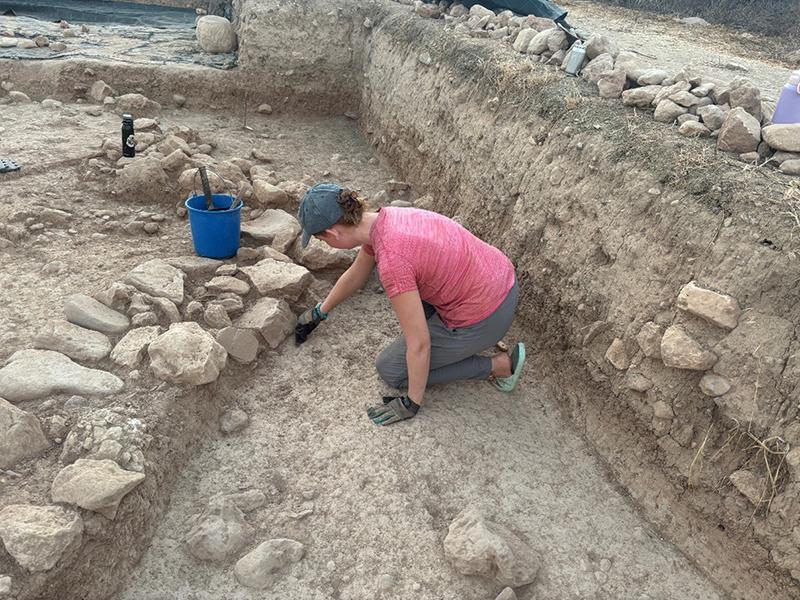
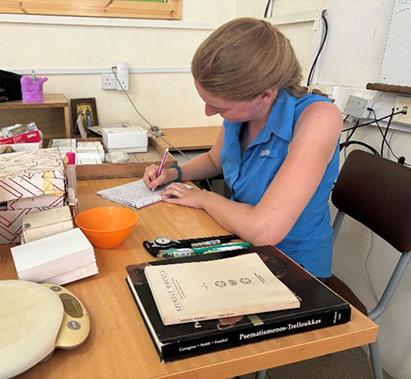
| Amanda Porter excavating a surface near a wall at Kissonerga-Skalia. | After a day’s work excavating, we would break into different groups to clean and catalogue excavated materials such as pottery, animal bone, shell, chipped stone, and ground stone. This season I served as the Small Finds Registrar, and I worked closely with prehistoric Cypriot material culture and studied small and rare artifacts that I and my fellow students had excavated. The artifacts dated between the Late Chalcolithic and late Middle Bronze Age. The range of small finds this season included juglets, ground stone tools, beads, and metal objects. I cleaned, measured, weighed, and catalogued these small finds firsthand. Some objects were too fragile to wash, so I dry brushed them to gently remove excess dirt and to articulate their shape. I researched these artifacts for typologies and comparable examples in site reports from other Cypriot sites, and I collaborated with the project’s specialists. Additionally, I made boxes for each artifact type so that the small finds could be securely transported to museum storage for future study. Through this unique opportunity, I gained experience handling artifacts as well as familiarity with various materials and object types that will be beneficial for future work in excavations or museums. | | Amanda drawing a site plan | | And working on small finds in the lab | | My second experience at Kissonerga-Skalia was just as memorable and rewarding as the first. I loved being able to return to a site I was already familiar with and to gain an even greater understanding and appreciation for prehistoric Cyprus. I would happily return to Kissonerga-Skalia and Cyprus again in the future many times more! | | |
Through ‘Cypriot’ Eyes: Athenian Vases and Ritual Practices during the Cypro-Archaic
Tyler Jo Smith
University of Virginia
Professor of Classical Art & Archaeology
CAARI Scholar In-Residence
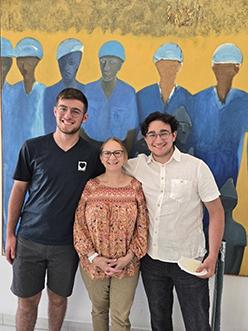
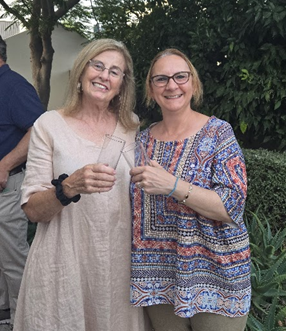
| | This summer I had the pleasure and honor of spending the entire month of June at CAARI as the Scholar in Residence. While in Cyprus, I was able to conduct research on Athenian vase imports discovered at archaeological sites across the island. Because it was my first time in Cyprus, it was necessary for me to gain a better sense of the topography and the general history of the sites and areas where this material has been found. Fortunately, I was able to attend the Annual CAARI Archaeological Workshop, where I caught up on the most recent news, chatted with students and colleagues, and made many new friends. My time in Cyprus was divided equally between library research using the wonderful resources at CAARI and travel to sites and museums. | | At the Annual CAARI Archaeological Workshop with University of Virginia students Matan Goldstein and Karel Kaymak. | | Celebrating at the CAARI garden party with Dr. Pam Gaber. | | |
My research on Athenian vases and ritual practices in Cyprus is part of a larger book project on the topic of ancient Greek festivals and art. In the book, I move beyond previous approaches to the topic, which focus on collecting examples according to known festivals and their honored deities, or view scenes on vases as either ‘illustrations’ of past events or idealizations of them. Rather, I am exploring Greek vases and religious festivals both at home and abroad, while incorporating archaeological context into the discussion. Figure-decorated pottery found at sanctuaries, where festivals must have taken place, provides robust data sets of shapes and images. Using these examples, it is also possible to question mechanisms of production, trade, and use in antiquity. In focusing on examples found outside Greece, I have recognized several ‘zones’ of contact and interaction where material of relevance has already been discovered and identified, including Cyprus and the Levant. In looking at examples from Amathous, Polis, and other sites, I question the meaning of festival iconography, cultic practices, and ‘special’ shapes within the context of the various Greek, non-Greek, and coexistent audiences that may have used them. What does it mean when ‘festival’ vases are discovered outside of the Greek mainland and islands, and especially in mixed cultural areas?
Other scholars before me have laid important groundwork for this research by publishing Greek pottery imports from excavations and on display in museums in Cyprus and beyond. Although several of these publications where already known to me, such as Einar Gjerstad’s Greek Geometric and Archaic Pottery in Cyprus (1977), and Martin Robertson’s contribution to Kition IV, on “The Attic Black-figure and Red-figure Pottery” (1981), my research in the CAARI library unearthed many more examples embedded in museum catalogues, doctoral dissertations, and site reports. The pottery rooms in the Cyprus Museum were inaccessible due to refurbishment, but there was no shortage of key examples to study at other museums, including the Leventis Municipal Museum, Larnaka Archaeological Museum, Archaeological Museum of Marion-Arsinoe, Archaeological Museum of Paphos, and directly across the street from CAARI at the delightful Ledra City Archaeological Museum.
| | Prof. Tyler Jo Smith touring Paphos with Prof. Demetrios Michaelides. | | |
My stay at CAARI and on Cyprus was greatly enriched by opportunities to discuss my research and ideas with several scholars whose work I greatly admire. In mid-June, I was invited to join a group of scholars and students from Athens and Alexandria for their workshop in Paphos on “The Social Value of Funerary Art,” which included a stimulating lecture by Demetrios Michaelides held at the American University of Beirut Mediterraneo campus and his expert tour of the mosaics on-site. I am extremely grateful to Maria Iacovou, Pam Gaber, and Nancy Serwint, each of whom generously shared their time with me and provided valuable bibliography related to my project. A special note of thanks goes to Michael Toumazou for his encouragement and support of my Cyprus-based research and to Lindy Crewe and all the staff at CAARI for making me feel so welcome during my stay.
A month literally flew bye, and I was only able to scratch the surface of the subject of Greek pottery imports in ritual contexts during antiquity. I very much look forward to returning to CAARI soon and to continued engagement with the dynamic modern culture of the island.
| |
A Message about the CAARI Library | Bill Andreas (CAARI Treasurer) & Anthoulla Vassiliades (CAARI Librarian) | |
The above reports remind us of the excitement that field and research work can hold, the lasting personal and professional connections that are made, and the crucial role that CAARI plays in facilitating these interactions. A critical resource that CAARI provides is the extensive collection of research resources in the library. The CAARI library is the oldest publicly available collection of archaeological research material in Cyprus.
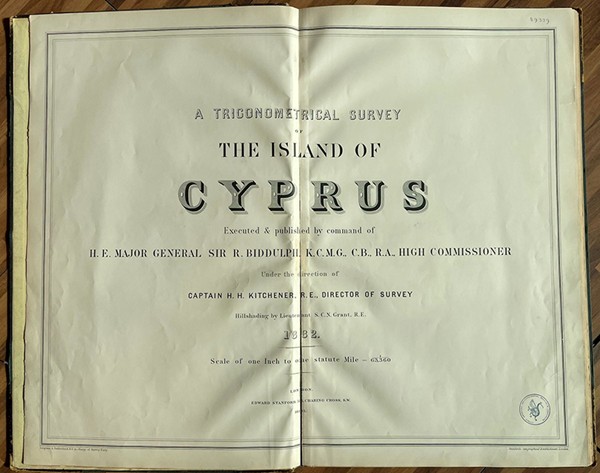
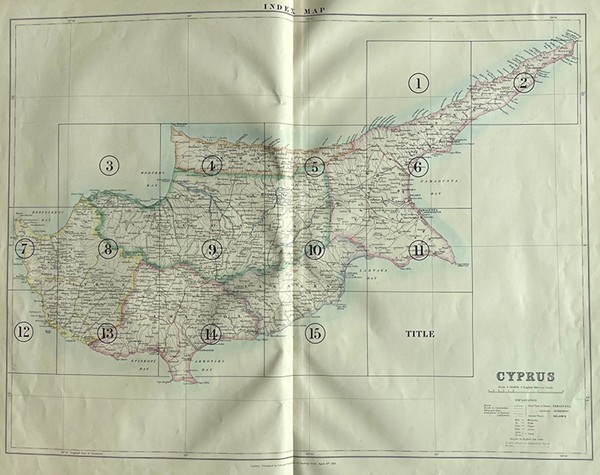
There’s much more to the CAARI library than may first meet the eye. CAARI is home to important archives, heavily annotated copies of works owned by esteemed archaeologists, and volumes available by request only. One such by-request-only volume is: A Trigonometrical Survey of the Island of Cyprus by Lord Horatio Kitchener published in London in 1885. This large oblong folio contains a title page, index and 15 sheets of an extremely detailed map. Twenty-eight-year-old Kitchener began the surveying work for the map in 1878 for the British Foreign office primarily for their use in income and tax policy. After a short hiatus in 1879, Kitchener returned to Cyprus and completed the map in 1883, and it was published in 1885.
| Title page of the Kitchener Map | Only a limited number of copies were printed and for most of its published life, there seems to have been no easily available copy of the map in Cyprus. In the early years of CAARI, archaeologists who needed to use the map had to go to the British bases and use their copy. CAARI possesses J.R. Stewart's copy of the map, which was donated by Eve Stewart. Former CAARI director Stuart Swiny carried the map from Australia to Cyprus (it was correctly thought to be too valuable to post). | | Index of the 15 Detailed Maps | | |
Today there are several high-quality scans of the map available along with supporting information but using the original is still a valuable experience. The Sylvia Ioannou Foundation makes a copy available here (also available as a Google App) and the National Library of Scotland makes a copy available here. For more information about the map see Rodney W. Shirley, The first full triangulated survey and mapping of the island (The Bank of Cyprus Cultural Foundation, Nicosia 2001).
All who examine Kitchener’s maps are thrilled at the valuable details contained within: the slag heaps, the springs and wells, as well as other now-vanished features of the landscape. Next time you visit CAARI, ask the librarian to bring it out for you to take a look at this precious resource. The Kitchener Map is one of the cornerstones of the CAARI special collection of archival books and documents, the stewardship of which is a core component of our library's mission.
| |
Help Support the CAARI Library!
This unique library collection is made so through careful, consistent, and selective purchases and kind donations, curated by CAARI librarian Anthoulla Vassiliades. However, just as many research activities have been affected by the disappearance of federal funding sources, so too is the CAARI library affected. The CAARI library previously received $12,000 annually for various library activities from a series of federal sources.
We ask you to assist us in filling this financial gap and give the library the ability to obtain the important bibliographic resources that make research at CAARI such a fulfilling experience.
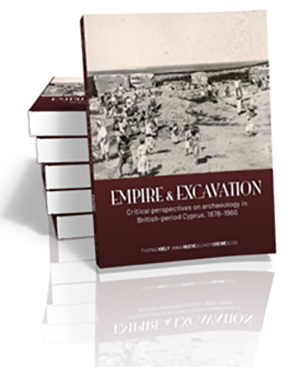
Top donations will receive a copy of either the new volume in honor of Dr. Ian Todd or the proceedings of the Empire and Excavation conference, edited by Dr. Thomas Kiely, Dr. Anna Reeve, and CAARI Director, Dr. Lindy Crewe. Please see the links for a synopsis on each volume.
| | |
Donate to CAARI online:
HTTPS://CAARI.ORG/DONATE
| |  | |
Or by mail:
CAARI
209 Commerce Street
Alexandria, VA 22314 USA
or
CAARI
11 Andrea Dimitriou Street
Nicosia 1066 Cyprus
| | |
CAARI-HFF Graduate Fellowship in Maritime Archaeology
We are thrilled to announce a new graduate fellowship in maritime archaeology generously sponsored by the Honor Frost Foundation. The fellowship offers one grant of £2000 to a graduate student of any nationality enrolled in a graduate program in any nation - with a preference given to scholars in Egypt, Cyprus, Lebanon, and Syria.
The fellowship will be offered for this first time this year. CAARI is accepting applications until January 12, 2026. Follow this link for more information and for instructions on how to apply:
https://honor-frost-foundation.wizehive.app/program/targeted-grants/info.
| | To All our Friends and Supporters | | |
We send our sincerest thanks to all who have helped support our aims and efforts. Special thanks go out to those who have helped us over hurdle in the challenge of the deteriorating surfaces on the exterior stonework of our building in Nicosia.
If you’ve shared in the joy of perusing the shelves of CAARI’s library and found the perfect reference for a research project, we ask you to help us ensure future scholars can share in that satisfaction. While large donations make significant contributions, small donations are likewise crucial to CAARI achieving its goals.
Do help if you can: https://caari.org/donate.
| | |
Zuzana Chovanec, Ph.D.
CAARI, Development Chair
| | | | | |