December 2024 - Catch up on the latest news from CAARI! | |
|
Dear William,
Autumn has been busy in Nicosia with many lectures, conferences, and cultural events, some related to the anniversary of 1974, others displaced by the ongoing conflicts on the mainland, but many reflecting the sheer vitality of Cyprus’ own cultural heritage community. They have kept CAARI’s residents busy. And suddenly it’s December, with Christmas festivities and the ensuing New Year’s celebrations looming closer at hand than seems possible. CAARI residents have already decorated the famous CAARI Christmas tree, and the festive annual Vasilopita is only weeks away. It’s time for the winter Newsflash, too! The Report from the Director will bring out the international scope of her own activities, with lectures in both the UK and the USA, as well as the dense regimen of inhouse and external responsibilities that CAARI demands. There is good news on the domestic front, for forthcoming cost estimates on the stone required to repair CAARI’s building are likely going to be lower than expected. This will allow the funds from our loyal donors to go farther than expected. Our thanks go out to those who have contributed already—and those who we hope will contribute—to this need.
Two research reports come from two of this year’s graduate student Fellows. They address widely different eras and divergent kinds of cultural activity that invite very different research methodologies. Thus they illustrate especially clearly the wide range of disciplines and research methods that come together and cross-pollinate here at CAARI. They are followed by the report from CAARI’s 2024 Scholar in Residence, whose very specialized expertise was devoted to organizing for future analysis a vast trove of as-yet unstudied human remains excavated in 2018 from a tomb in ancient Kition.
The final portion of the Newsflash is devoted to the festive Celebration of Cyprus’ Cultural Heritage in American Life and Learning, a pioneering public event that CAARI organized together with three other Cypriot or Cyprus-related institutions: the Cyprus Society of Greater Philadelphia, the Embassy of the Republic of Cyprus in Washington, and The Penn Museum (The University of Pennsylvania Museum of Archaeology and Anthropology) in Philadelphia.
| |
|
Message from CAARI’s Director
Dear friends and supporters of CAARI,
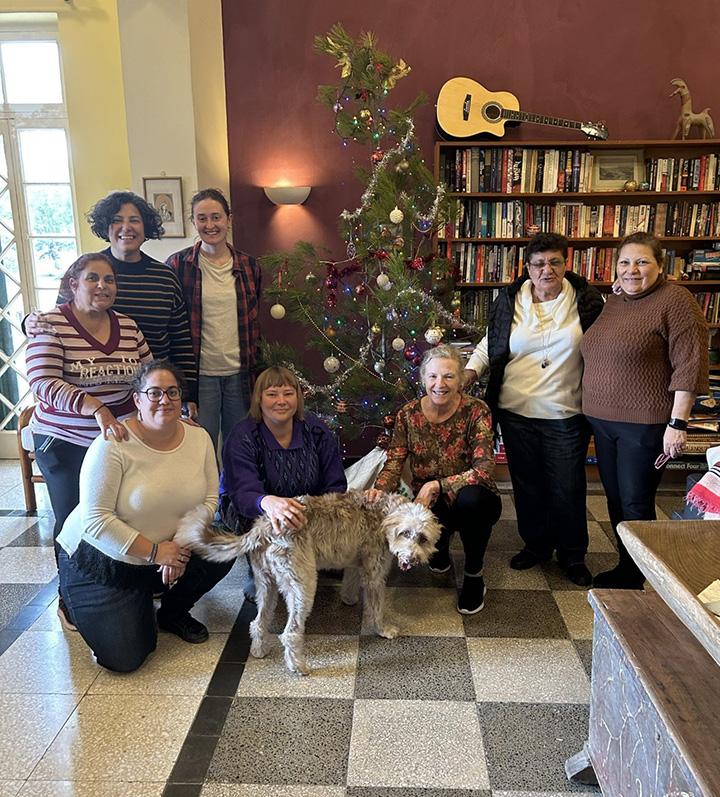
As noted in the introduction and as you can see in the photograph here, we are enjoying the festive season on Cyprus. Academic events are over for the year but we do have a lot of exciting Christmas markets in Nicosia, including an amazing event last weekend called ‘Claytopia’ where around 30 local potters displayed and sold their work as well as demonstrating their skills. I am pretty certain that every single archaeologist in attendance bought at least one piece of pottery. How can we resist?
| |
The Christmas tree in the residence with CAARI staff and fellows and Darcey refusing to pose nicely for a photo. | |
It has been a busy time since our last newsflash. Not only did I undertake a whirlwind lecture tour of five UK cities in one week in October for the Hellenic Society, but very quickly thereafter I was off travelling again in November. First up, I went to Brussels to examine a PhD thesis. Straight from there, I flew to Boston for the ASOR conference and accompanying CAARI board meetings. In addition to a packed and super interesting conference program, it was lovely to get some proper autumn weather with beautiful red and yellow leaves on display, along with the many squirrels frolicking around the parks (an exotic beast to an Australian)! As you will read in the description of our November 24 event at the Penn Museum below, we really did have a fantastic day and are so grateful for the extremely warm welcome from the Cypriot diaspora of Philadelphia.
All this semester’s lectures are now up on our YouTube channel so if you didn’t manage to join us live or online, you can catch yourself up over the holidays and learn about Roman-period copper smelting, the types of grains people were eating in the past, and how we can improve field survey methodologies. We have now scheduled our spring speakers, as well. First up, you can look forward to a lecture from CAARI Senior Research Fellow Prof. Bernard Knapp launching his new volume, Cyprus and Ugarit: Connecting Material and Mercantile Worlds, followed by Peltenburg Fellow Dr. Ellon Souter talking about her fascinating research into prehistoric ground stone tools. Additional exciting research topics will follow, so keep an eye out for our lecture notices.
In the meanwhile, from all of us here at CAARI, we wish you all a peaceful and happy holiday season.
Best wishes,
Lindy Crewe, PhD
Director, CAARI
| |
|
The Shapes of Water: The Ecological, Productive, and Ideological Dimension of the Human-Water Relationship in Ancient Cyprus
Giulia Albertazzi
Archaeological Research Unit, University of Cyprus
The Danielle Parks Memorial Fellowship
| |
|
When I applied for a research fellowship at CAARI, I was already familiar with the Institute, its extensive library collection, and its amazing staff. However, I never expected to be awarded the Danielle Parks Memorial Fellowship. Thanks to this support, I was able to dedicate three months of my first PhD year to in-depth bibliographic research, which allowed me to refine and test my research questions.
My doctoral project aims to investigate the role of freshwater resources in shaping both the natural and social landscapes of pre- and protohistoric Cyprus. Specifically, I am interested in exploring how freshwater availability and distribution may have influenced political, ideological, economic, and socio-cultural developments over the longue durée, from the Neolithic period to the Early Iron Age.
Key research areas include examining the dynamics between settlement patterns and water resource locations, the evolution of water management methods, and the solutions developed to optimize water availability through collection, disposal, and drainage systems. Additionally, I aim to study the importance of water for production purposes and its socio-cultural significance. During my stay at CAARI, I focused on creating preliminary maps of archaeological sites, water resources, and water management structures documented in pre- and protohistoric contexts. While still in the early stages, this mapping allowed me to conduct initial spatial analyses and refine the methodological framework that will inform my dissertation.
| |
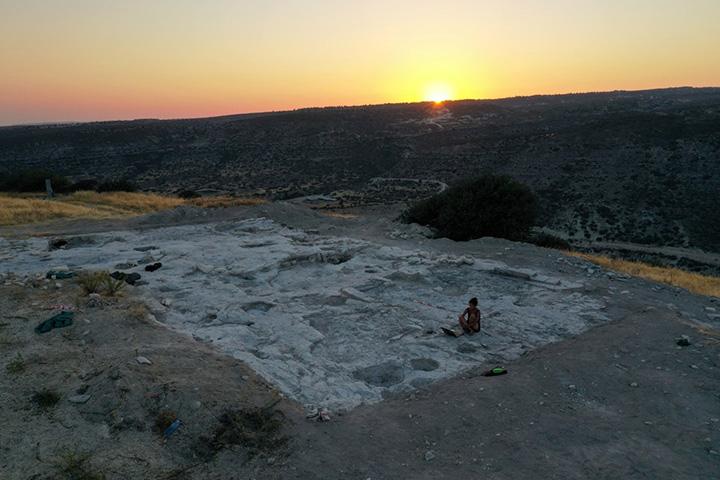
Giulia Albetazzi in the Kouris Valley - GPS point registration. | |
Beyond these advancements, I used my time at CAARI to prepare for my first project presentations at two international conferences. This experience gave me an invaluable opportunity to receive feedback from peers and scholars and practice articulating my research with clarity.
Perhaps the most memorable aspect of my time at CAARI was the vibrant community I became a part of. My fellow residents were a great source of support during intense study sessions, and I strongly hope that our time together fostered lasting friendships.
| |
|
Historicities of the Displaced Soul: Suffering, Struggle, and Salvation among Internally Displaced Greek Orthodox Cypriots
Kellan Klaus
University of Chicago
The Helena Wylde Swiny and Stuart Swiny Fellowship
| |
 | | Words cannot express how grateful I am to CAARI for offering me the 2024 Helena Wylde Swiny and Stuart Swiny Fellowship. With this fellowship, I was able to spend this summer attending a variety of events commemorating the 50th anniversaries of July and August 1974. This period of research was critical for my dissertation project, “Historicities of the Displaced Soul: Suffering, Struggle, and Salvation among Internally Displaced Greek Orthodox Cypriots.” This project is an ethnographic study of the spiritual lives of Greek Orthodox Cypriots who were internally displaced by the 1974 war. I work specifically with communities who have constructed churches in displacement dedicated to the patron saints of their villages on the other side of the Buffer Zone. By participating in church services and pilgrimages organized by these communities and conducting interviews with displaced Greek Orthodox Cypriots and their families, my dissertation investigates how the division of the island figures within my interlocutors’ relationships with the saints and shapes their efforts to piously endure the dislocated present through the traditions of Greek Orthodox Christianity.
Part of my research studies how Greek Orthodox modes of piously confronting human finitude address the anxieties and aporias immanent to life in the dislocated present. An important practice in this regard are memorial services for the missing and the fallen from the anti-colonial struggle, the period of intercommunal violence, and the 1974 war. This fellowship allowed me to attend memorial services held by displaced village communities amid the heightened significance of this year’s July and August anniversaries. This fellowship also allowed me to grasp a broader view of how the July and August anniversaries were being remembered across southern Cyprus. I attended art-exhibits, film screenings, public memorial services, and watched documentaries aired on local television stations, illuminating a wide variety of forms of remembering and not-forgetting the precipitating events of the present political situation. During my down time, the CAARI library proved an incredible resource for expanding my knowledge of the modern history of Cyprus, nuancing my understanding of the present.
| |
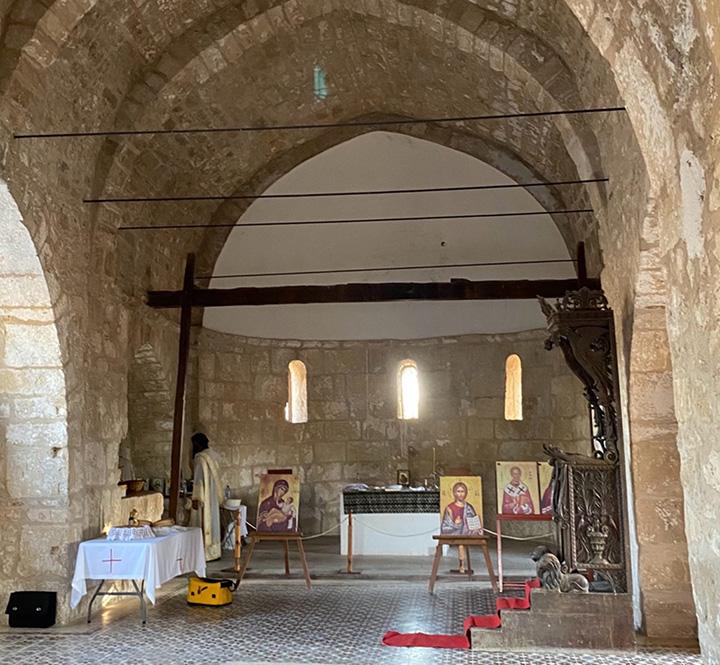
I took this photo during a pilgrimage to celebrate the patron saint of a village within the saint’s original church in the north. Pictured is the preparation of the sanctuary prior to the Divine Liturgy. | |
I would be remiss if I did not mention my deep gratitude for the kindness and generosity of the CAARI staff and the joyful fellowship of the community of scholars I had the privilege of living and working with. Their aid and fellowship made CAARI feel nothing short of a second home. Thank you to the Staff, the Board, and the community of scholars who made my time as the 2024 Helena Wylde Swiny and Stuart Swiny Fellow such a wonderful experience.
| |
|
The Ancient Kition Bioarchaeological Project
Dr. Nicholas Herrmann
Texas State University
Scholar in Residence
| |
|
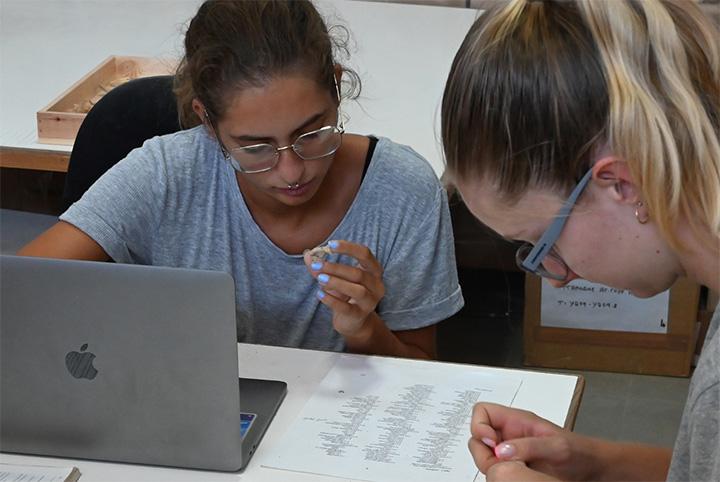
With support from the 2024 CAARI Scholar in Residence Fellowship, I as well as the Ancient Kition Bioarchaeological Project team focused on the cleaning and analysis of human remains from a large two-chamber tomb excavated by the Department of Antiquities (DoA) from the site of Kition in Larnaka. The tomb (T1), located on Πάροδος Αγίου Γεωργίου Κοντούμ, was excavated in 2018. Since that time, the remains have been curated at the storeroom in Larnaka. Dr. Efthymia Nikita from the Cyprus Institute and co-director of the research initiated the cleaning of the tomb burial sample in the spring and early summer this year with the assistance of multiple interns and Cyprus Institute PhD candidate Gkampriella (Gaby) Selempa. However, given the considerable size of the burial sample the full team worked for two and a half weeks to complete cleaning the remains and then started the osteological analysis.
| |
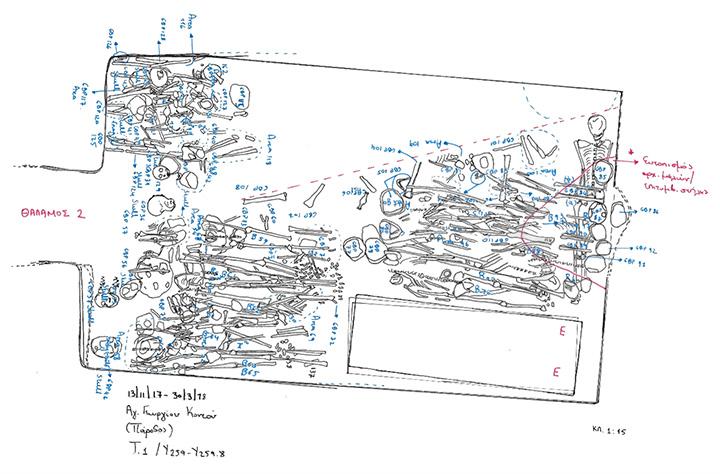
Composite map of Chamber 2 of the Kition tomb diagramming the sites of its many human remains. | In total forty-five boxes of human remains were transferred to the storeroom in Nicosia for cleaning and analysis. The remains were recovered in both chambers of the tomb and a total of five sarcophagi were recovered from the two chambers, four from chamber 1 and one from chamber 2 (a composite map of the DoA field drawings is provided to show the vast number of individuals buried in chamber 2 of the tomb). | |
Rebecca Stowe and Marta Mucko working on fragments of human remains from Chamber 2 of the Kition tomb. | |
Over the course of the study season, the research team completed the analysis of thirteen boxes of human remains from three sarcophagi and general burials from each chamber of the Kition tomb. A total of 1012 Bone Identification (BoneID) numbers were assigned. These BoneIDs represent 981 elements and 11,776 fragments. The total sample analyzed in 2024 weighs 14.5 kg and represents at least 18 individuals. The remains analyzed to date are only a small portion of the total burial sample from the tomb and much more laboratory work is required to complete the analysis in the coming years.
The core research team included Herrmann (TXST), Nikita (CYI), Selempa (CYI), Krysten Cruz (TXST), Rebekah Stowe (TXST), Maria-Nektaria Antoniou (CYI – volunteer), and Marta Mucko (U of Edinburgh – ASOR Strange/Midkiff Families Fellowship). In addition to the work with Kition, Cruz continued work on the analysis of human remains from Tomb 49 from Ay. Omoloyites in Lefkosia, which is an ongoing project for Herrmann and Cruz. The Ay. Omoloyites Tomb 49 efforts targeted the remains from select thekes which had not been examined. Laboratory work on the two collections initiated on 19 July and continued until 9 August with library research, photograph processing, and data cleaning at CAARI the following week.
Finally, the analysis of the three thekes from Tomb 49 represents the final identified contexts associated with the Ay. Omoloyites tombs, so it is anticipated that Herrmann and Cruz will move forward with a summary publication for the entire tomb in combination with the two associated tombs (Tombs 47 and 48) which have been the focus of a long-term osteological analysis since 2014.
| |
|
Celebrating Cyprus’ Cultural Heritage in American Life and Learning
Annemarie Weyl Carr
Professor Emerita, SMU in Dallas, TX
CAARI Vice President
| |
|
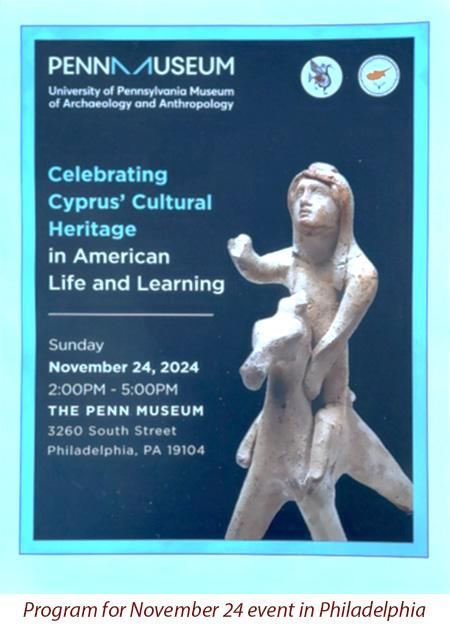
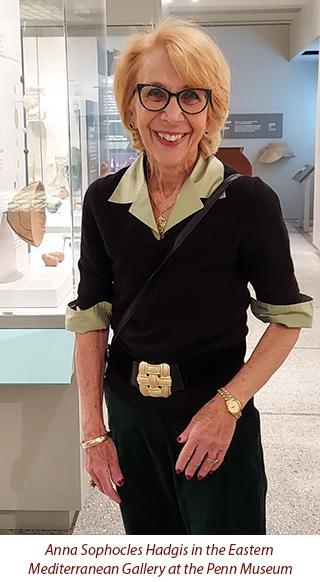
On November 24, CAARI joined with three other institutions in a celebration of Cyprus’ centuries-long cultural heritage and its role here in America. It took place in Philadelphia. Though the event acknowledged the anniversary of 1974, it was not somber. It was truly festive: a celebrative appreciation of Cyprus’ cultural resilience and connectivity over time. It was a joyous occasion, and we send thanks to all who participated in it. Very special thanks are due to Mrs. Anna Sophocles Hadgis, who conceived and organized it. A former Trustee of CAARI, a senior docent at The Penn Museum, and a member of the Cyprus Society of Greater Philadelphia, Anna has a vivid, ongoing commitment to CAARI, and it led her to create this festive collaboration.
CAARI and the Cyprus Society of Greater Philadelphia were at the core of the planning, guided by a dedicated central committee of representatives from each. Along with Anna Sophocles Hadgis, effusive thanks are due to Mr. George Kyvernites, Dr. Costas Pistos, and Dr. Stelios Tsintonides of the Cyprus Society, and Drs. Zuzana Chovanec and Annemarie Weyl Carr of CAARI. Both organizations exist to expand knowledge and understanding of Cyprus’ heritage; both work to support stipends for further study—CAARI for its pre-and post-doctoral research fellowships, the Cyprus Society for an annual scholarship for the ongoing education of an outstanding high-school graduate; and both placed learning at the center of their goal for the event.
| |
|
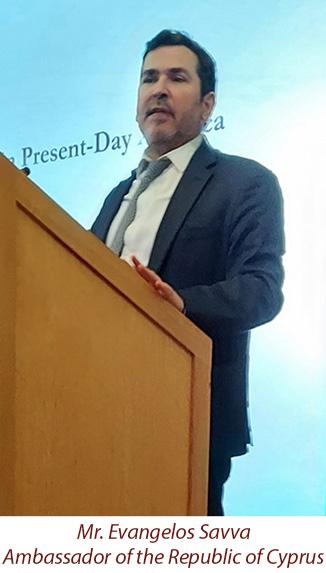
Learning appealed deeply to the event’s third participant: the Embassy of the Republic of Cyprus in Washington. The Ambassador of the Republic of Cyprus, Mr. Evangelos Savva, has devoted significant energy during his time in the United States to encouraging Cypriots in diaspora to cultivate and celebrate their Cypriot cultural heritage. He gave his full support to the event and this shaped its title: Celebrating Cyprus’ Cultural Heritage in American Life and Learning.
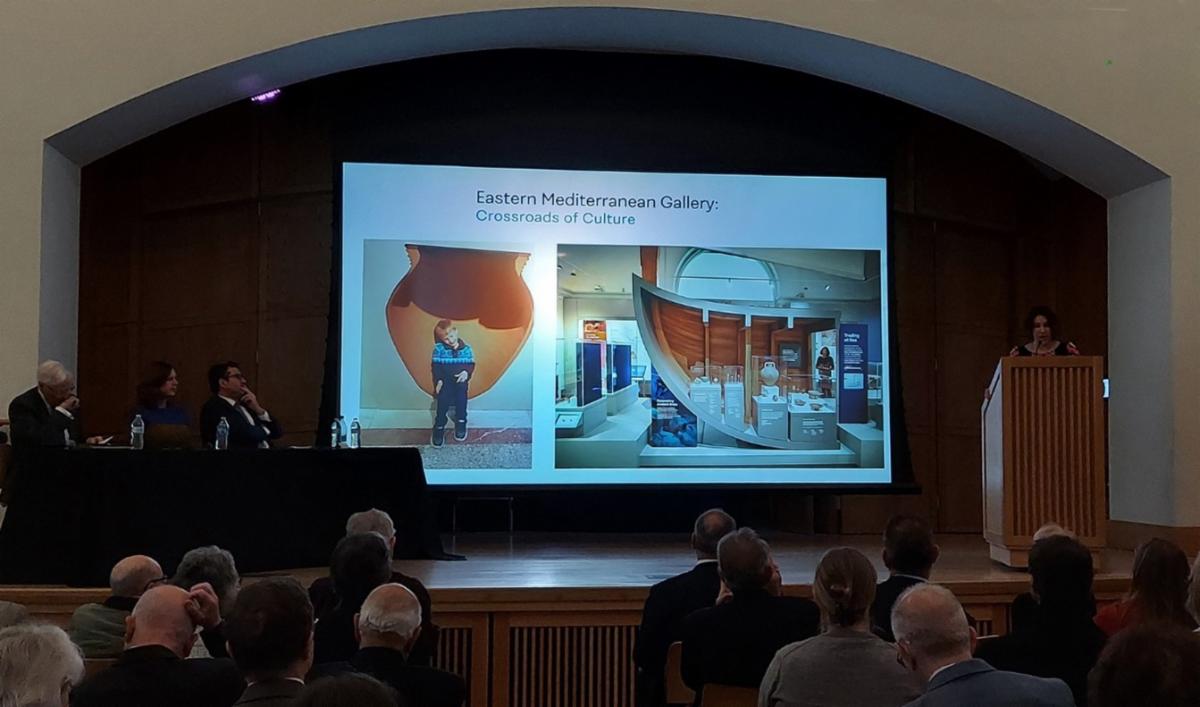
The fourth participant was The Penn Museum in Philadelphia, which provided a stellar setting for the event. It opened its galleries to the guests and made the gracious Widener Auditorium available with its superb technical staff. Among treasures from around the globe, The Penn Museum houses artifacts from its excavations in both Lapithos and Kourion on Cyprus. These are in the newly reinstalled Eastern Mediterranean Gallery, and guests were invited to move freely through the Gallery and discuss the Cypriot treasures with Penn curators.
The Penn Museum provided the event’s location and enchanting Cypriot artifacts; the Cyprus Society drew upon its regional constituency to gather a wonderfully responsive, SRO audience; and CAARI, along with Mr. Savva, assumed responsibility for the program.
| |
|
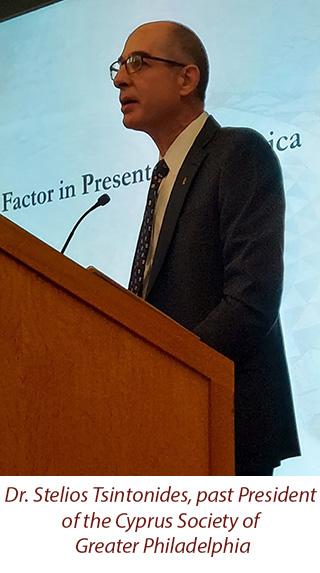
Dr. Jennifer Brehm, the Penn Museum’s Director of Learning and Community Engagement, opened the program, welcoming its Cypriot theme and inviting guests to enjoy the museum’s vast range of treasures. Ambassador Savva followed her. He was introduced by Dr. Stelios Tsintonides (pictured below), past President of the Cyprus Society, who also offered a brief introduction to the Society’s dynamic, 70-year history, which began in 1956 in response to the exile of Archbishop Makarios.
| |
|
Ambassador Savva spoke on Cyprus’ Cultural Heritage as a Factor in Present-Day America. He pointed out the Cypriot artifacts in American museums, the vitality of Cypriot-American societies like that of Philadelphia, and cultural events focused on Cyprus like the recent symposium on attitudes to 1974 in the diaspora organized by CAARI Trustee Young Richard Kim. But he also invoked the painful abrasions, both spiritual and physical, that have been inflicted upon Cyprus’ cultural heritage by the division of the Island, and he urged Cypriots in the diaspora to be aware of them, and to raise American consciousness about the ongoing toll of this separation.
The Ambassador’s overview of Cypriot culture in America was followed by an international panel of four scholars from CAARI. They gave individual slide presentations on their current research projects on Cyprus’ cultural heritage, all on site in Cyprus itself.
The panel was moderated by Mr. Keith E. Peterson (pictured below), former CAARI Trustee and author of a book on the Fulbright Commission in Cyprus featured in our October Newsflash. The Fulbright Commission was among America’s biggest contributions to learning on Cyprus, and Dr. Tsintonides noted that he himself had been a Fulbright recipient. He was one of those who—as Keith Peterson said—"had gone on to do wonderful things.”
| |
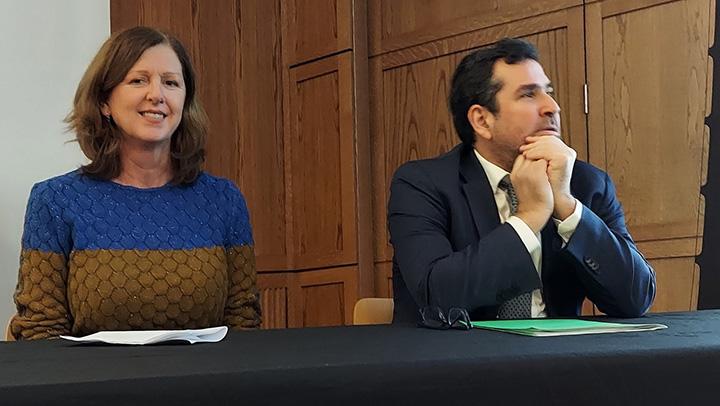
Dr. Lindy Crewe, Director of CAARI, and Ambassador Evangelos Savva. | Dr. Lindy Crewe, Director of CAARI, was the first panelist. Her presentation, The Cyprus American Archaeological Research Institute (CAARI) and 1974: Fostering International Collaborations and Research in Cypriot Heritage Studies, focused on the many contributions CAARI has made to fostering research on Cyprus, both in the US and internationally. She explained how CAARI came to be founded, as part of the agenda of Vassos Karageorghis, then Director of the Department of Antiquities, to reinvigorate Cypriot archaeology following the events of 1974. It was in a sense a happy outcome of those events. Since then, CAARI has occupied a key position in the heritage studies landscape of Cyprus. It collaborates closely with Cypriot institutions, supports a regular flow of fellowships for researchers from abroad, and hosts lectures and the annual summer archaeological workshop for local audiences. Then shifting to her role as a practitioner of Cypriot archaeology, she discussed the impact that the continuing division of the island has had on our understanding of the archaeology of Cyprus, and explored more recent work, particularly at her own archaeological site of Kissonerga-Skalia in the southwest of Cyprus. | |
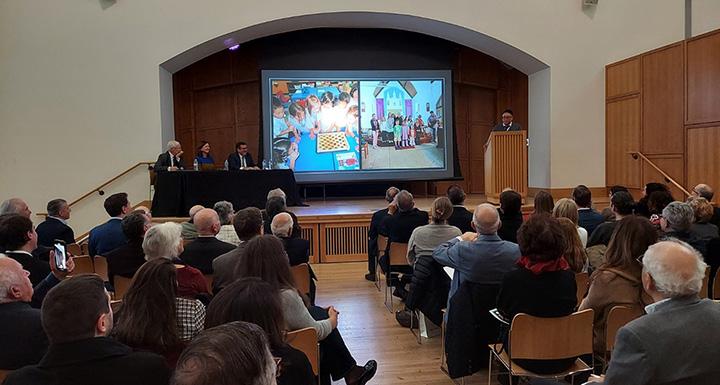
Dr. Young Richard Kim tells of his family’s experience on Cyprus. Mr. Keith Peterson, panel moderator, sits at the far left, with Dr. Crewe and Ambassador Savva. Young’s slides show children’s activities in Cyprus. | |
Dr. Young Richard Kim, CAARI Trustee and Associate Professor and Head in the Department of Classics and Mediterranean Studies at the University of Illinois Chicago, followed Dr. Crewe. His presentation, The History and Culture of Cyprus: Thoughts from Abroad, looked back on his Fulbright research fellowship year of 2012-13, when he worked each day in CAARI’s library, pursuing the history of Cyprus in the fourth century CE. He, his spouse, and their two sons had lived in Nicosia. They immersed themselves in the history and culture of Cyprus by exploring cities and sites across the island, from the old city of Nicosia behind its Venetian walls, to the archaeological remains at Kourion, the Paphos zoo, and the white sand beaches in Ayia Napa. Most importantly, they got to know the people of Cyprus and formed lifelong friendships. His slides included captivating scenes of families and children at play. He reflected on what they, a family of Korean Americans living in Cyprus, had come to appreciate about the people and culture of the island, along with what he himself learned as a scholar about the complex layers of Cypriot history and identity.
Two scholars under the shared title, Revisiting Cypriot Connectivity with the Mediterranean: New Insights from the ‘ComPAS’ Project, then discussed the interdisciplinary research project ‘ComPAS’ (“Commercial Patterns Across the Sea”), which has received a European Research Council Starting Grant of €1,254,354 to investigate Mediterranean commercial connectivity in the Late Bronze Age and Early Iron Age in the Eastern Mediterranean (ca. 1650 – 1100 BCE, and 1100 - 750 BCE).
| |
|
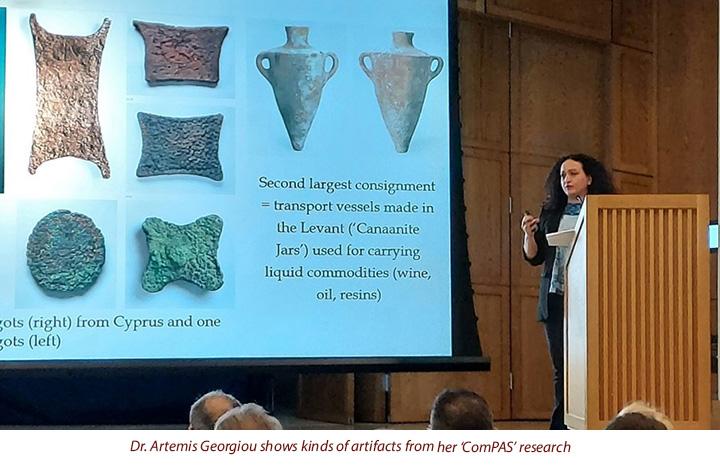
Dr. Artemis Georgiou, Assistant Research Professor at the Archaeological Research Unit of the University of Cyprus and the Principal Investigator of ‘ComPAS’, introduced the project’s aims and methodology. Cyprus, she emphasized, is central to any discussion of connectivity among Mediterranean cultures because of its wealth of copper resources and its strategic position on the sea lanes linking the West with the East. The project will make a comprehensive survey of maritime transport vessels—ceramic containers designed to harbor commodities during transport by sea. This will clarify as fully as possible the sources, commodities, and chronology of the island’s commercial activity during the Late Bronze and Early Iron Ages. Her slides gave a clear picture of what transport vessels were, how they have survived, and what kinds of evidence they offer.
| |
|
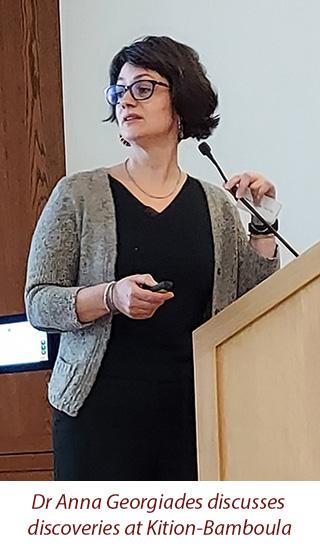
Dr. Anna Georgiadou, in turn, Associate Researcher for the ‘ComPAS’ Project in the ARU at the University of Cyprus, presented a case study from the project in which the contents discovered in some containers had yielded unexpected insights. This was in the coastal settlement site of Kition-Bamboula in modern Larnaca, excavated by the French mission. The site yielded many Levantine vessels of Early Iron Age date which are under investigation for their provenance and content. Among the various commodities attested was purple dye, traces of which were identified in a large vessel specifically designed for its production. This adds new information about that precious and fascinating dye. A more intimate insight into precious content was yielded by a Levantine transport amphora that had been reused in ancient times for the burial of an infant child within the settlement.
| |
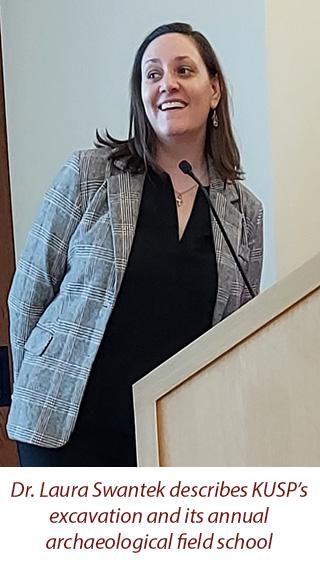
| | | Dr. Laura Swantek, CAARI Trustee, Associate Professor of Anthropology at Phoenix College and Director of the Kourion Urban Space Archaeological Project (KUSP), made the last presentation, Connecting Cultures: American Students and the Legacy of Kourion. KUSP had a special double significance for this event. First, KUSP continues the archaeological work begun at Kourion in 1934 by the University of Pennsylvania. So it is that the Penn Museum has the artifacts from Kourion which captivated guests of this event. KUSP has excavated multiple buildings on the Kourion acropolis, seeking answers about the evolution of the city, and the changes brought about by a massive earthquake in the mid-fourth century CE. Second, KUSP also functions as a field school. Every year, students from multiple colleges and universities come to Kourion to learn how to be archaeologists, and about Cypriot culture. Thus Kourion shows how Cypriot archaeology can offer opportunities for American students, fostering the bonds of Cyprus and America that Ambassador Savva encouraged. Dr. Swantek spoke vividly of her own experiences of Cypriot life as a student and a CAARI fellowship recipient, and about the many experiences KUSP students have working at Kourion and learning about Cypriot culture.
| |
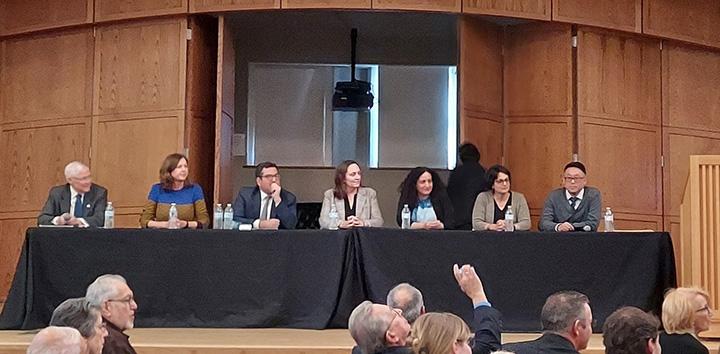
The panelists during the discussion: from the left, Mr. Keith Peterson, Dr. Lindy Crewe, Ambassador Savva, Dr. Laura Swantek, Dr. Artemis Georgiou, Dr. Anna Georgiades, and Dr. Young Richard Kim. | The five panelists then joined with Ambassador Savva and Keith Peterson to answer questions from the audience. Warmed by the scenes of sun, sea, sites, and people in Cyprus and by the enthusiasm of the researchers, the audience was quick to respond. The photo above already shows the first raised hand. That first question, posed to Dr. Georgiou about the shapes of marine transport vessels, was so engaged and observant that it encouraged many more. | |
|
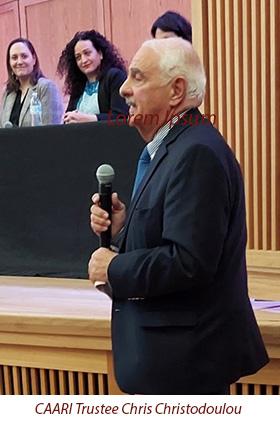
They included one from CAARI Trustee Mr. Chris Christodoulou, who was in the US at that time. His vivid description of the yearly descent of archaeologists from around the world upon CAARI to start their seasons captivated his listeners. One can hardly imagine a more responsive audience, and it was only with some effort that Anna Hadgis was able to summon attention to what was, after all, the greatest treat of the program: the opportunity to see the Eastern Mediterranean Gallery and its Cypriot artifacts.
This was introduced by Dr. Lauren Ristvet, Curator of the Eastern Mediterranean Gallery’s new installation. As if responding directly to the ‘ComPAS’ project discussed by Drs. Georgiou and Georgiadou, she emphasized first of all the central motif of the ship, that runs throughout the whole Gallery.
| |
Dr. Lauren Ristvet shows installation shots of the Eastern Mediterranean Gallery, including an amphora and the outline of a ship. | |
As the two researchers had indicated, it was sea traffic that bound the culture of Cyprus to the chronologies, achievements, and conflicts of the Eastern Mediterranean societies around it. For that very reason, guests seeking Cypriot objects in the Gallery would not find them clustered together in one place. They are sprinkled throughout, making visible their relationship to those of other Eastern Mediterranean societies. What are clustered together, however, are the dozens of small, enchanting clay figurines from Kourion. These acquired their own apologist, for as guests surged off to see them, they were joined by University of Pennsylvania doctoral student, Ms. Gwyneth Fletcher, whom CAARI people had just heard at the ASOR Meeting delivering a splendid paper on those very Kourion figurines. She was just as persuasive in their presence.
Conversation swelled as the guests spilled from the Auditorium into the Gallery, and it mounted in waves as they then moved from the visual feast of the Gallery to the gustatory feast of a reception, with Cypriot food and Cypriot drink, topped off with Commandaria for all. It was a buoyant close to an afternoon of shared intellectual and emotional affirmation, joining Cypriots in the diaspora to their centuries-deep cultural heritage at home.
The event had been conceived above all for Cypriots here in America. But it yielded a powerful message for all of us in CAARI, too, who mostly come to Cyprus from abroad. This message was enunciated by Dr. Tsintonides during the discussion period. It took the form of a question, which he posed to each of the four scholars. Each of them responded to it, in varied and thought-provoking ways. As he formulated it later in writing, it is:
| |
|
“I’d like to ask each of the participants this question. Keith noted that in the past the Cyprus Fulbright Commission awarded scholarships to both Greek and Turkish Cypriots in an effort to recognize both communities in Cyprus, and some beneficiaries may indeed be here in the audience. I was indeed one of the recipients of scholarships administered by the Cyprus Fulbright Commission. Can each of our panelists comment on how your work—and CAARI’s—can help the two communities find common ground, which will allow expansion of archeological excavation and research in the northern occupied part of Cyprus?”
It is a very meaningful question. Each of us who works on Cyprus should bear it in mind.
| |
|
To All our Friends and Supporters
An event like the program in Philadelphia is a new kind of venture for CAARI, though CAARI had been a nonparticipating sponsor of Dr. Kim’s symposium in Chicago. We have not tried to offer programs in the US or Canada. Our portion of the Philadelphia proceeds will go to our fellowship fund. The event in Philadelphia was enabled by the whole-hearted help of Anna Sophocles Hadgis, The Penn Museum, and the wonderful members of the Cyprus Society. If you would like to see a possible similar event in your area, let us know by sending an email to Dr. Chovanec at usa.office@caari.org.cy.
Meanwhile, we send our sincerest thanks to all who have helped support our aims and efforts. Special thanks go out to those who have helped us over the first hurdle in the challenge of the deteriorating surfaces on the exterior stonework of our building in Nicosia. The latest information on the stone looks encouraging, as noted in the introduction here. There will be further steps. With your help, we will surely preserve both our home and our fellowships uncompromised. Do help if you can: caari.org/donate.
| |
|
Annemarie Weyl Carr
Vice President, CAARI Board
| | | | | |