May 2024 - Catch up on the latest news from CAARI! | |
|
Dear William,
May is a delicious month to be in Nicosia, with breezy days, bright skies, flourishing greenery, and flowers filling the air with color and scent. May has been all the more vibrant this year because it included Easter. Across the island, clusters of big, brightly colored Easter eggs have punctuated intersections and parks; churches have resonated with the chant of festal services; and pastry shops have been redolent of Easter delicacies, especially golden tsourekia, the braided loaves of Easter Bread, and plump flaunes, the uniquely Cypriot cheese breads baked with mastic, mint and other aromatic spices, both sweet and savory. The week following Easter is generally a time of relaxation, but CAARI’s staff resumed their busy schedule, preparing to co-host the Cyprus Institute’s archaeological science conference a week later. You will hear about this in the Message from CAARI’s Director.
This Newsflash is dedicated to the happy task of announcing the recipients of this winter’s fellowship competition. We present their names and research projects with pride. The range and significance of their projects is a testimony to CAARI’s central role in supporting Cypriot and eastern Mediterranean studies through its fellowships. CAARI’s are the only fellowships offered specifically for research on Cyprus. We are grateful to all who help us sustain them, and take real pleasure in presenting the research that this generosity enables.
The Newsflash concludes with a glimpse ahead to the July edition, for this will be an innovation: an edited compendium of reflections on the significance of food both as archaeology and in archaeological practice, edited by CAARI Trustee and Secretary, Dr. Laura Swantek.
| |
|
Message from CAARI’s Director
Dear friends and supporters of CAARI,
It is hard to know where to begin to tell you about all the exciting archaeological activities that have been going on at CAARI and around Cyprus! We have held two CAARI lectures since my last report: the first by Dr Thomas Kiely, Cyprus Curator at the British Museum on Law and (dis)order? Managing the archaeological heritage of Cyprus in early British times, 1878–1914 and the second by Fulbright Fellow Prof. Steven Falconer, University of North Carolina Charlotte, on Bronze Age Village Life and Landscape Dynamics at Politiko-Troullia, Cyprus. Both lectures are extremely interesting and available to watch on CAARI’s YouTube channel.
The round table workshop we held in April was also a great success. CAARI US Embassy Fellow Dr Nathan Meyer’s seminar on Archaeology and Data Literacy was super engaging and thoroughly enjoyed, even by the non-archaeologists in attendance! Fulbright Fellow artist Elisabeth Heying showed us a presentation of her work and demonstrated how she collects and processes minerals to make her own pigments to create her beautiful artworks. We all attended the opening of Elisabeth’s exhibition, Fragments and Throughlines, last Friday night. It runs until the end of May at Thinker Maker Space gallery.
CAARI, along with the Archaeological Research Unit, co-hosted the fourth International Conference on Archaeological Science in the Eastern Mediterranean and Middle East (ICAS-EMME) with STARC of the Cyprus Institute this week as well. It comprised three full days of parallel sessions with over 100 local and international archaeologists presenting papers and posters. There were some excellent papers covering topics from food to animals to climate change and threats to cultural heritage.
| |
|
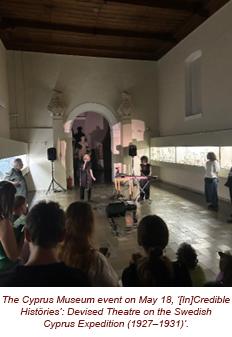
These weeks have also been filled with events as part of International Museum Day and Saturday night we attended an amazing show at the Cyprus Museum, entitled ‘[In]Credible Histöries’: Devised Theatre on the Swedish Cyprus Expedition (1927–1931). A group of performers from the project ‘Performing Collections, Performing Archives’ led us around different spaces in the museum, telling stories of the Expedition and the Cypriots who encountered them. We are all excited for the forthcoming 100 year-anniversary of the arrival of the Swedish Cyprus Expedition and there will doubtless be many further events to come.
For now, a small resting period until our next scheduled event. I remind those of you who will be on Cyprus that the 40th CAARI summer archaeological workshop will be held on Saturday 15th of June. The program will be up soon on CAARI’s website. We have a full program of talks from Cypriot colleagues at the Department of Antiquities and the Archaeological Research Unit as well as our visiting teams from the US and Europe. I will be off digging at Kissonerga-Skalia from the last week of June and welcome visitors if anyone finds themselves in the Paphos District. I will update you on our exciting finds in the next Newsflash.
Kalo Kalokairi to all,
Lindy Crewe, PhD
Director, CAARI
| |
|
WWW.CAARI.ORG/SUPPORT
Zuzana Chovanec
CAARI Development Chair
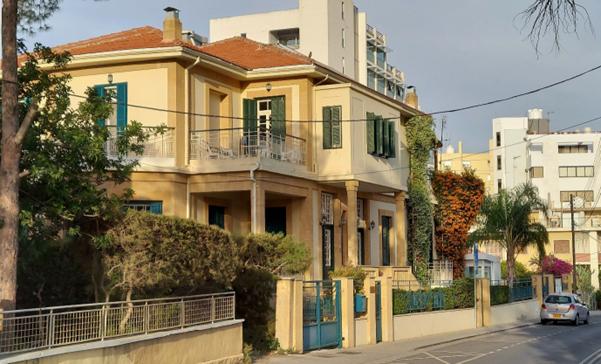
There is much to be excited about at CAARI, as the research aims of the following cohort of new fellows clearly show. However, while we often focus on what occurs within our walls, we bring to the attention of our readers the need to redress the sandstone that forms the foundation and exterior of the house in Nicosia. As is typical of the sandstone buildings in Cyprus, CAARI’s stone exteriors need maintenance and repair. At this stage, we ask our generous friends to assist us in the first stage of this large undertaking by helping us with the first $5,000 needed to procure the sandstone material.
To show our gratitude for helping us kickstart the project and in preparation for our next issue on the archaeology of food, all donations exceeding $350 will receive a copy of Georgina Hayden’s award-winning cookbook, Greekish: Everyday Recipes with Greek Roots, which draws on her own Cypriot heritage. We thank you for your consistent and generous support.
WWW.CAARI.ORG/SUPPORT
or
| |
|
CAARI
11 Andrea Dimitriou Street
Nicosia 1066
Cyprus
| |  |
|
CAARI
209 Commerce Street
Alexandria, VA 22314
USA
| |
|
Congratulations to CAARI’s New Fellows
| |
|
Edgar J. Peltenburg Postdoctoral Fellowship in Cypriot Prehistory
Established four years ago through a major endowment, this fellowship is unique to CAARI. Each year it supports the work of an outstanding young scholar in the field that Professor Peltenburg developed so significantly.
Dr. Ellon Souter
University of Manchester
Retooling Narratives on the Advent of the Cypriot Bronze Age: Ground Stone Tool Industries of the Late Chalcolithic to Early Cypriot Period (2800/2700-2100BC)
| |
|
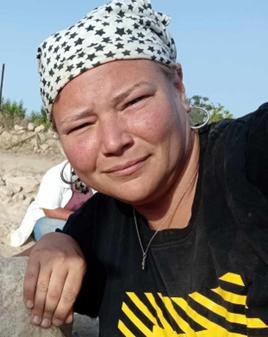
I am very grateful to be chosen as Peltenburg Fellow 2024-2025. The fellowship will facilitate my analysis of ground stone tools in Cyprus and exploration of the mechanisms responsible for the advent of the Cypriot Bronze Age.
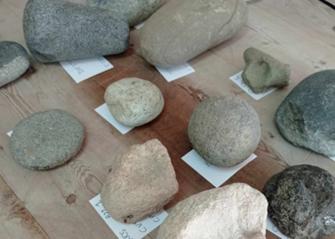
Ground stone tools are abundant on Cypriot prehistoric sites, where they were used to process many different materials. Their technological analysis elsewhere has proven them capable of illuminating community-wide traditions, intra-community change, and cultural interaction. This makes them a particularly useful medium for assessing developments over the Late Chalcolithic-Early Bronze Age transition in Cyprus (2800-2100BC).
| |
|
This transition is commonly viewed as driven by extra-island influences and/or an incursion of mainland migrants. Inspired by Peltenburg’s work, my research allows for the emergence of indigenous agencies. My PhD on this topic argued for multiple routes to the Bronze Age but focused on southwest Cyprus. During the fellowship, I will widen the scope to sites located outside of this area, including using legacy collections from those sites closer to the north of the island, where migrants are suggested to first arrive. This project will encourage a nuanced and multifaceted conceptualization of change, which may challenge dominant narratives. I am super excited to soon be immersed in the CAARI research environment!
| |
|
CAARI/CAORC Postdoctoral Fellows
Annual funds from the U.S. Department of State through the Council of American Overseas Research Centers (CAORC) enable CAARI to offer two postdoctoral grants to American scholars to pursue research that will bring Cyprus into both their classroom teaching and their publications.
Dr. Diane Bolger
University of Edinburgh
Lemba Archaeological Project Western Cyprus Survey
| |
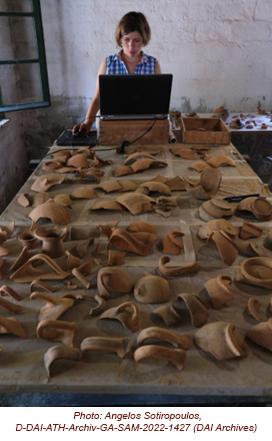
 |  | The Western Cyprus Survey (WCS) is the final field project of the Lemba Archaeological Project (LAP) and the only one of our projects not yet fully published. Since the untimely death of Eddie Peltenburg in 2016, I have taken over as Director of the LAP and serve as Project Manager for the WCS. As principal Ceramics Specialist, I will be publishing the pottery from Late Neolithic to Early Bronze Age periods, which form the primary focal point of our research. As a CAARI/CAORC Research Fellow, I plan to spend a month at CAARI in the autumn of 2024 to begin a detailed analysis of the Neolithic˗Early Bronze Age pottery data, which has now been entered into the WCS database. In addition, I will organize a workshop with other WCS specialists in order to formulate our plans for the final publication. Finally, I will make extensive use of the CAARI library to read up on previous survey projects undertaken in western Cyprus. But most of all, I look forward to spending a month at CAARI as part of its rich and diverse archaeological community.
| |
|
Dr. Leilani Lucas
College of Southern Nevada, Las Vegas, Nevada
Cultivating Insights: Exploring Transitions in Culinary Traditions in Cypriot Prehistory
| |
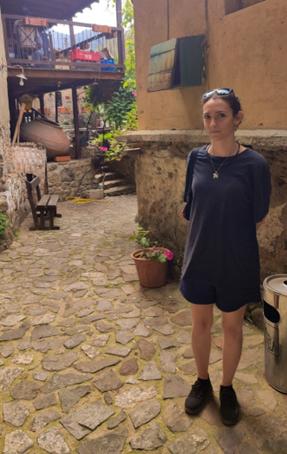
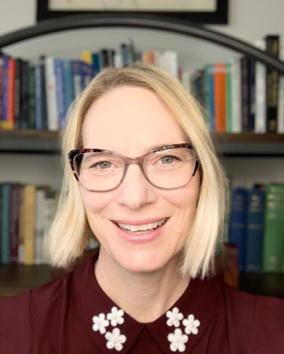 | | My research delves into the prehistoric culinary practices and food culture of southwest Cyprus by merging the archaeobotanical data with artifacts related to food preparation, cooking, and consumption. In addition to analyzing new charred macro-botanical data, this study investigates the charred 'amorphous' fragments recovered from Kissonerga-Skalia and Prasteio-Mesorotsos. Utilizing high-resolution microstructural analyses and the chain of operation approach, I aim to decipher these charred 'amorphous' remnants, transforming them from mere 'unidentifiable' fragments into tangible representations of meals and elevating them from ecofacts to artifacts. By recognizing food remains as artifacts, I plan to contextualize them alongside other material evidence related to cooking and consumption, providing deeper insights into the diversity of early culinary traditions. During my time at CAARI, I will conduct comprehensive background research on the island’s evidence for the artifacts and installations associated with cooking and consumption technologies, enabling a deeper understanding of food practices in prehistoric southwest Cyprus.
| |
|
CAARI Predoctoral Research Fellowships
CAARI offers the only research grants for graduate students that are specifically earmarked for Cyprus. It is impossible to overestimate the importance of these grants in attracting gifted young scholars who work on Cyprus, and in enabling the research that they do. They are made possible by our endowment and contributions from our donors.
US Embassy in Cyprus Fellowship
Elizabeth Neill
Boston University
Ancient Geographies, Modern Travels: Provenance(s) of Imagined Creatures on Archaic Painted Pottery
|
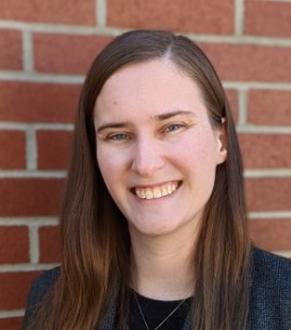 | | In my dissertation, I analyze where and how different “species” of imagined creature pots were moved around the Archaic Mediterranean and modern world, and what impact these movements have had on our understanding of the Archaic world. My project studies pottery that a) illustrates a non-human hybrid creature or animal given fantastical characteristics and b) was produced and/or deposited in the Mediterranean between 660 and 480 BCE. I use ArcGIS and StoryMaps to create visualizations of ancient and modern geographies, identifying patterns in regional preferences for certain species, correlations between production and findspots, and the impact of the ancient and modern vase trades on how we understand creature pots. The digital portion of the project is intended as a tool for the museum public and university students to engage with the geographies of ancient painted pottery and to tackle the complex issue of provenance in relation to moveable pieces of material culture. I plan to integrate Cypriot materials into the project while in residence at CAARI and look forward to engaging with scholars and local audiences in Cyprus.
| |
|
Anita Cecil O’Donovan Fellowship
Elisabeth Ilgner
University of Oxford
Grave Goods in Context at Polis Chrysochous:
Extracting Meaning from 19th-Century Assemblages
| |
‘A picture is worth a thousand words.’ Although the pots excavated at Polis Chrysochous (western Cyprus) in the late 19th and early 20th centuries were mostly intact, the tomb sets they belonged to have broken into pieces on their way to museums and collections all over the (western) world. With the help of archival and published material I started putting these pieces together.
The new dataset with over 9,000 objects allows insights into hidden aspects of the ancient burials’ contexts. My work may help to show how the focus of settlement at ancient Marion changed at least once around 500 BCE and how this might connect to the location of the site’s harbor, an essential asset of Cyprus’ Iron Age city-kingdoms. At CAARI, I want to conduct more in-depth analysis of individual burial areas and co-operate with local archaeologists to feed the results of the project back into the archaeological community.
| |
|
The Danielle Parks Memorial Fellowship
Giulia Albertazzi
Archaeological Research Unit, University of Cyprus
The Shapes of Water: The Ecological, Productive, and Ideological Dimension of the Human-Water Relationship in Ancient Cyprus
| |
|
The aim of my doctoral research is to carry out a systematic and holistic investigation of the role played by freshwater resources in co-shaping the natural and social environments of pre- and protohistoric Cyprus. Close attention will be paid to the circumstances within which freshwater availability and distribution could have complemented processes of political, ideological, economic, and socio-cultural evolution, in the longue durée comprised between the Neolithic period and the Early Iron Age. In this broad timespan, indeed, the available data highlight the persistence of a regionally segmented political geography, which might have inhibited the formation of a unitary geopolitical entity until the Ptolemaic dominion of the island. This feature, therefore, constitutes a unique opportunity for conducting a diachronic and comparative study in specific territorial units, corresponding to the main river valleys of Cyprus.
Five dimensions through which human agents’ engagement with water can materialize in the archaeological record will be explored: the relationship between settlement pattern dynamics and the location of water resources; the evolution of water supply methods; the specific solutions elaborated for optimizing water availability through collection, disposal, and drainage systems; the importance of water for productive purposes; and the elaboration of sociocultural meanings through water.
| |
|
The Helena Wylde Swiny and Stuart Swiny Fellowship
Kellan Klaus
University of Chicago
Historicities of the Displaced Soul: Suffering, Struggle, and Salvation among Internally Displaced Greek Orthodox Cypriots
| |
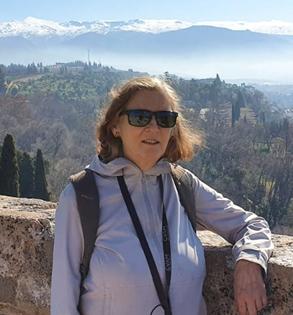
| | 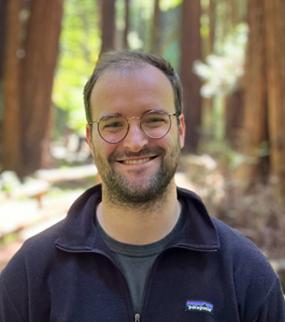 | Since the events of 1974, a local diasporic tradition of Greek Orthodox Christianity has emerged among internally displaced Greek-speaking Cypriots. This tradition combines Greek Orthodox practices of pious remembrance of the saints and one’s need for salvation with the Greek Cypriot diasporic struggle to “not forget” lost homes and ways of life. While Δεν Ξεχνώ is today often co-opted for political purposes, assuming a monolithic interpretation of the phrase obscures the variety of ways in which displaced Greek-speaking Cypriots struggle to maintain connections to the past. My research examines this intersection of the pious struggle to remember and the diasporic struggle to “not forget” among new church communities established by internally displaced Greek Orthodox Cypriots in the Republic of Cyprus-controlled south. Through ethnographic methods, I explore how Greek Orthodox practice gives form to the struggles of internally displaced Greek-speaking Cypriots beyond secularism’s separation of the religious and the political. My interlocutors’ modes of piously enduring the pain of the dislocated present address impasses regarding the afterlife of violence in socio-cultural anthropology.
| |
|
Scholar in Residence
Each year, CAARI welcomes an established scholar to reside for a period at the Institute as a mentor and model. Interchange across disciplines and age groups is an invaluable part of the CAARI experience.
Dr. Nicholas Herrmann
Texas State University
Bioarchaeological Investigations of Ancient Kition
| |
|
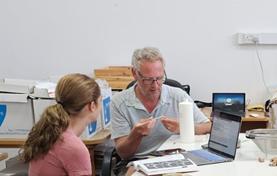
The ongoing bioarchaeological research on tombs from Ancient Kition represents a collaboration between Texas State University with the Department of Antiquities and the Cyprus Institute. Dr. Herrmann will be working with Dr. Efthymia Nikita from STARC at the Cyprus Institute and Department Archaeologist Polina Christofi on the documentation and analysis of a large burial collection from a tomb excavated by the department in 2018. Students from Texas State University and the Cyprus Institute will be involved in the analysis. The results of the project will be combined with prior research on various tombs that the research team have examined since 2019.
| |
Just to the right you can see a laboratory picture in which I am at work with Rebekah Stowe, investigating skeletal material from our 2023 season in Cyprus. (Photo thanks to Krysten Cruz).
| |
|
The Next July Newsflash
Food in and Food as Archaeology
When we think back on our time spent in Cyprus, some of our strongest memories are of meals shared with friends whether they were dinners at the end of a long field day, a village wedding, or lunch following the CAARI workshop during which old stories are told and strengthen our connections with each other. Our next CAARI Newsflash will be devoted to these memories and the importance that studies of food have on our understanding of the past. This issue will include recipes, descriptions of shared meals, and new research on food and drinks. Stay tuned for a delicious July CAARI Newsflash.
| |
|
With Thanks to All!
To our friends and supporters, we send our sincerest thanks! As you have seen in Dr. Zuzana Chovanec’s statement above, CAARI’s colonial-era home faces a bracing financial challenge in maintaining the stability of its beautiful, historic, but slowly crumbling golden Nicosia limestone cladding. We are hard at work exploring official U.S. and Cypriot resources of aid. But help from our friends would be very warmly appreciated, too. With your help, we can preserve both our home and our fellowships uncompromised. Do help if you can!
| |
Annemarie Weyl Carr
Vice President, CAARI Board
| | | | | |