|
Cecil County Agriculture
NEWSLETTER FOR FARMERS AND PRODUCERS
| | |
Doris Behnke
Principal Agent Associate
Agriculture/Horticulture
dbehnke@umd.edu
410.996.8135
Sam Covington
Nutrient Management Advisor
scoving2@umd.edu
410.996.8138
Donna Witkowski
Administrative Assistant
dwitkow1@umd.edu
410.996.8131
| |
Maryland Legislators Move to Speed Up Palmer Amaranth Enforcement
February 13, 2026
By Jonathan Cribbs
ANNAPOLIS, Md. — As Palmer amaranth spreads more aggressively across parts of the Eastern Shore, lawmakers are moving to speed up enforcement against landowners who allow the invasive weed to go uncontrolled.
Palmer amaranth has been listed as a noxious weed in Maryland since 2020, and landowners are already required by law to control or eradicate it. What the bill changes is how quickly enforcement escalates once the weed is detected.
A bill, introduced by the Talbot County delegation, would require the Maryland Department of Agriculture to issue an eradication order when Palmer amaranth is found on any property statewide and give the landowner two weeks to eliminate it. The department would then reinspect the property every two weeks until the weed is eradicated. Landowners who fail to comply would face administrative penalties of $500 for a first violation, $1,000 for a second and $2,000 for subsequent violations.
| |
Cecil County Ag Education Days
April 28-30, 2026
Designed for 7th grade students, this three-day event is a culmination of activities that will supplement and support agricultural content encountered during the school year, in the Cecil County science 7th grade curriculum. It will allow the students to discover the county's rich agricultural history, career opportunities in a variety of agricultural sectors, and explore interests specific to their Cecil County communities.
| |
Survey - Weed Seed Movement on Equipment
This survey is part of a research effort led by Collins Bugingo, Seed Biologist, and Lynn Sosnoskie, Weed Specialist, at Cornell University. The goal is to better understand how weed seeds move on agricultural equipment and how growers currently think about, manage, and mitigate that risk.
Your responses will help inform future research, extension materials, and practical guidance tailored to different production systems and regions.
The survey should take approximately 8 minutes to complete. Your participation is voluntary, and all responses will be kept confidential and reported only in aggregate. There are no right or wrong answers—we are interested in your experience and perspective.
You may skip any question you prefer not to answer. Thank you for sharing your time and expertise.
| | |
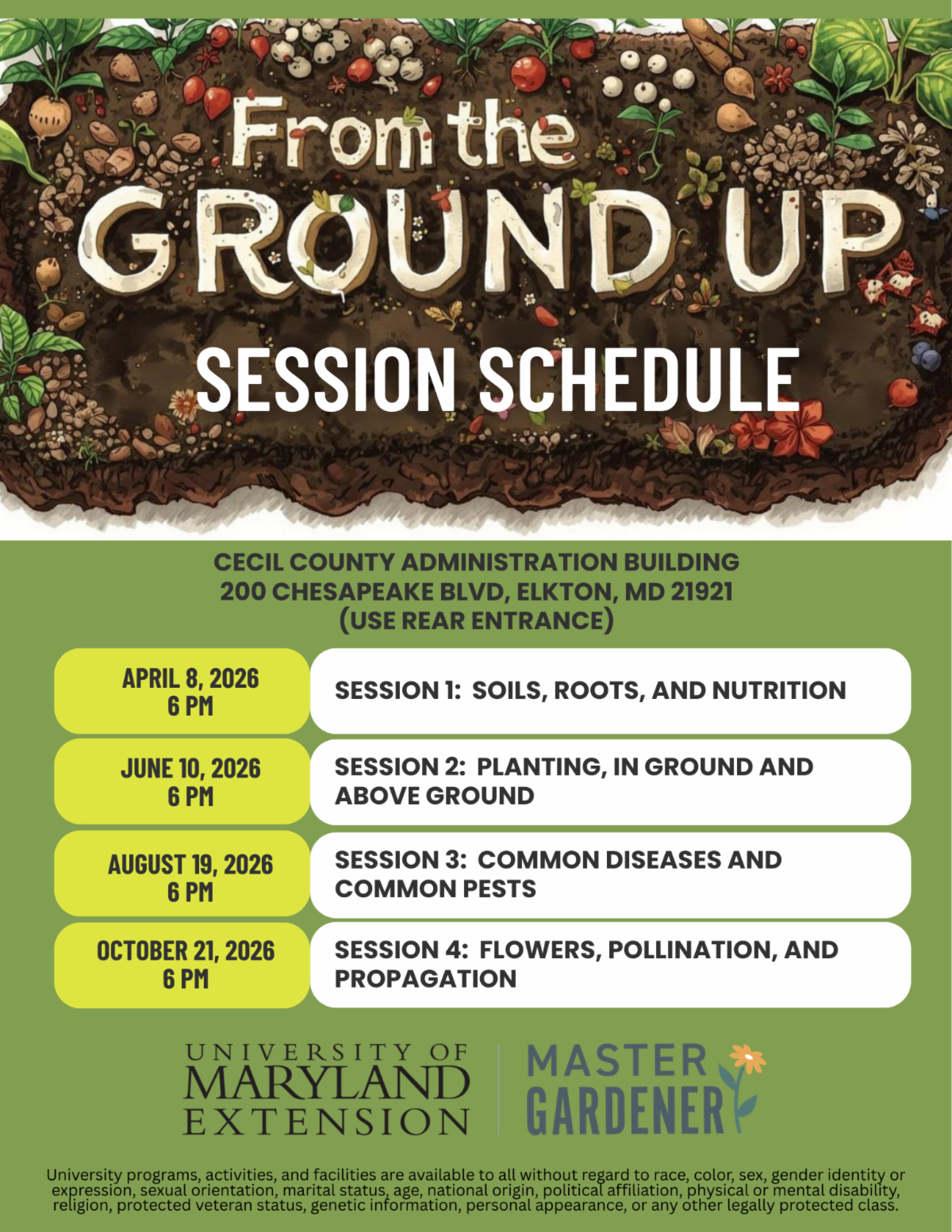
Check out additional sessions in this program being offered by the Cecil County Master Gardeners.
You do not have to attend every session.
Each session of this program is designed as a stand alone session.
Attend one, two, three, or all four sessions. Completely up to you!
| | Now in its 6th year, Maryland's Conservation Buffer Initiative provides farmers with attractive incentive payments to plant streamside buffers on farmland to improve the health of local streams and the Chesapeake Bay. This program can help you turn marginal land next to streams or floodplains into a valuable asset for both your farm and local water quality. Applications for this year's program will be accepted from through April 30, 2026. | |
Register Your Poultry
Backyard flock owners are required to register their flocks with the Maryland Department of Agriculture to assist in protecting Maryland's poultry industries from diseases such as HPAI. The information collected helps animal health officials identify at-risk animals and premises. To register please visit Maryland Poultry Premises Registration.
| | | |
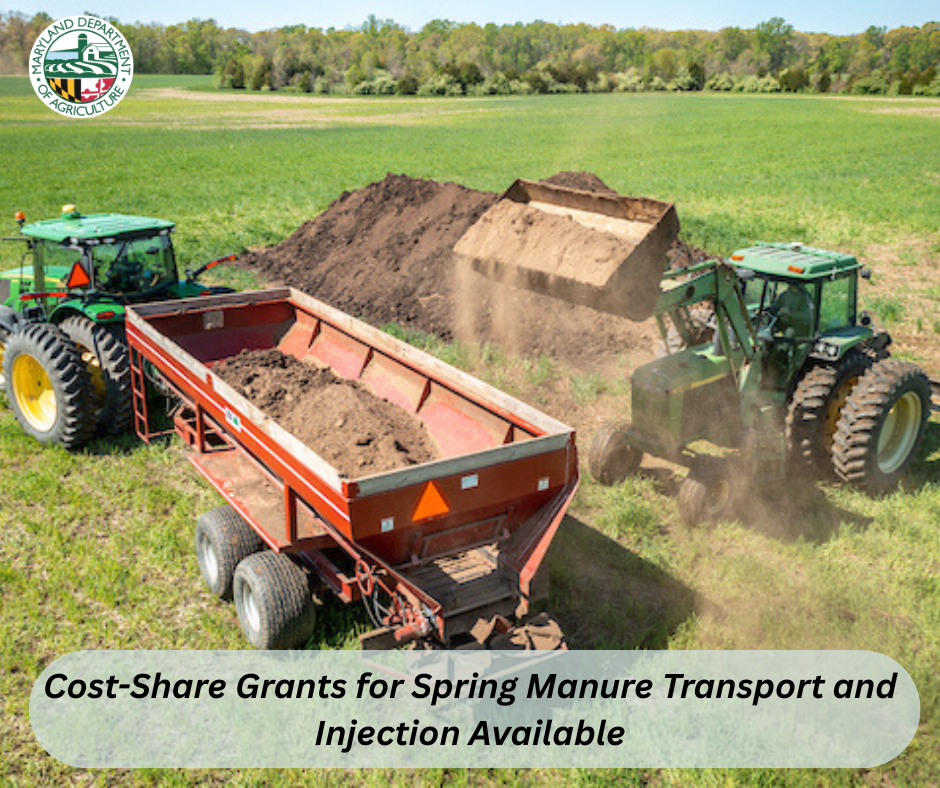
The Maryland Department of Agriculture reminds farmers that they can apply for cost-share funding to help cover the cost of transporting certain types of manure to crop fields with acceptable soil phosphorus levels. Additionally, grants are available to offset the cost of injecting liquid manure into the soil to prevent nutrient runoff and reduce odors.
If you plan to transport manure this spring and summer, please be aware that all projects must be completed by September 9, 2026. Claims for payment should be submitted to the department’s Conservation Grants Office by October 9, 2026.
When transporting poultry manure, please visit our website to check for important Control Orders from the Maryland Secretary of Agriculture regarding safe handling, storage, and transport practices to mitigate the risk of Highly Pathogenic Avian Influenza (HPAI).
For more information, visit the Maryland Department of Agriculture website.
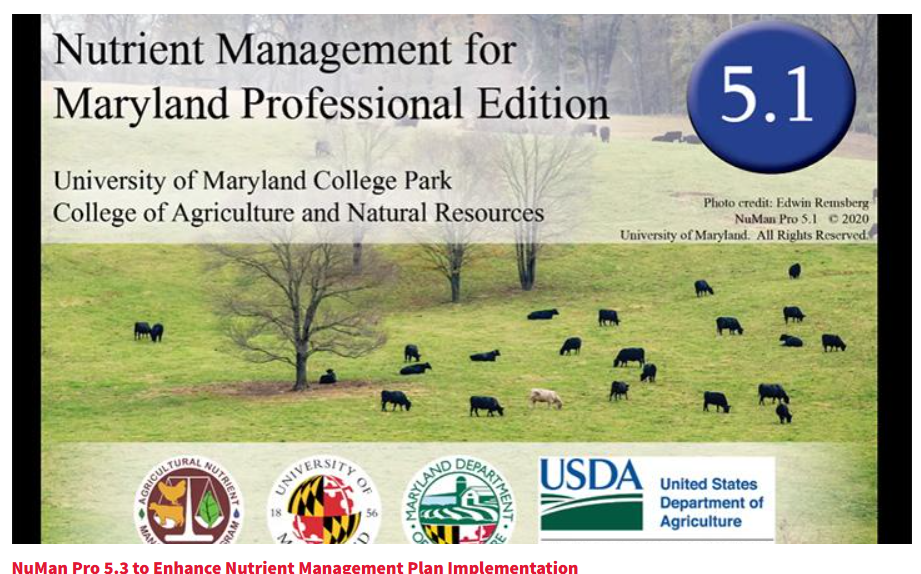
| | University of Maryland Releases NuMan Pro 5.3 to Enhance Nutrient Management Plan Implementation | |
Paraquat Training
Syngenta will continue to provide paraquat training via its online training portal while channel inventories of Gramoxone® Herbicide still exist. Our commitment to stewardship, safe use, and regulatory compliance remains unchanged, and we recognize how essential this training is for certified applicators across the country.
If you need assistance accessing the training, please reach out to your Syngenta representative or visit the paraquat training portal. Gramoxone Herbicide is a Restricted Use Pesticide. Always read and follow label instructions.
| |
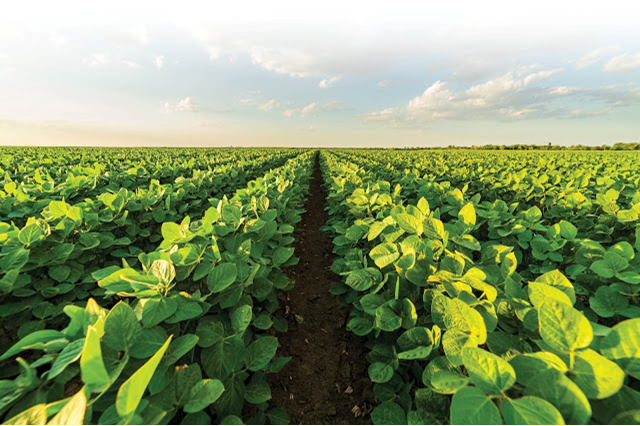
New Scouting Guide Helps Soybean Producers Identify Seasonal Pests
To help farmers defend against these pests, Hayden Schug, Charles County Agriculture & Food Systems Educator with University of Maryland Extension (UME), has released a new scouting field guide for producers to identify pests before they become a problem.
The updated publication, called “Common Soybean Pests in Maryland (FS‑2025‑0759),” is the latest evolution of what began as fact-sheets authored by Galen Dively in the 1980s, and represents the go-to resource for soybean producers in Maryland for more than 40 years.
| | |
Maryland Agriculture Reporting Tool (MART)
The University of Maryland Extension, along with state and local partners, is excited to introduce the Maryland Agriculture Reporting Tool (MART). This free, secure, online platform is designed to simplify recordkeeping, improve decision-making, and help Maryland farm producers meet both state and federal reporting requirements. MART can be accessed at https://mdagreporting.org/.
Traditionally, many small- to medium-sized farm producers have depended on paper forms or Excel spreadsheets to track crops, nutrient applications, and harvest data across multiple farms. This method can be tedious and time-consuming—especially when calculating totals or preparing compliance reports. MART offers a streamlined, secure alternative that consolidates all this information in one place.
Visit https://mdagreporting.org/ to explore MART or contact the University of Maryland Extension – Talbot County for more information about training sessions and upcoming features.
| | |
The Maryland Risk Management Education Blog is provided by the University of Maryland Department of Agricultural and Resource Economics. This blog provides readers with information on risk management issues important to Maryland agriculture, upcoming events, and new materials that
may interest readers.
Sign up to receive email updates of new content
(your email will be kept private and not sold).
| | | Maryland Risk Management Education | |
The educational blogs and podcasts provide readers and listeners with information on risk management issues important to Maryland agriculture, upcoming events, and new materials that may interest readers.
Blogs and podcasts focus on issues related to agricultural policy, insurance and law.
| | | The University of Maryland Agriculture Law Education Initiative website has many informative videos available for viewing. Topics include, but are not limited to: Agritourism, business entities, contracting, marketing, the legal system, leasing, succession planning, food safety, farmland, labor, liability, livestock, and water law. | |
|
2025 Maryland State Soybean Variety Trials Results Available
The University of Maryland offers a fee-based, soybean variety performance testing program to local and national seed companies. The results from these replicated trials provide agronomic performance information about soybean varieties tested at four locations in Maryland considered representative of the state’s geography and weather conditions.
We are grateful for the funding provided by Maryland Soybean Board (MSB) to support these trials. MSB provides our program with checkoff funding to support applied agricultural research and generate results that directly benefit Maryland soybean growers.
The soybean trials results factsheet can be downloaded from the MD Crops website at https://psla.umd.edu/extension/md-crops.
| | |
2026 Maryland Field Crop Budgets
Crop budgets vary greatly by operation! Prices and cost estimates are averages collected from retailers across the state. Input prices will vary by crop, management, region, varieties and other criteria and may not be reflective of YOUR true costs.
| | |
2025 County Rental Rates Now Available Online
Cash rent lease agreements continue to be the most common type of agricultural lease in Maryland, providing a fixed annual payment per acre and relieving landowners of operating and marketing decisions. The USDA's National Agricultural Statistics Service (NASS) annually estimates average cash rental rates per acre for irrigated cropland, non-irrigated cropland, and pastureland at the county and state levels based on data collected from farm-level surveys.
| | | |
University of Maryland Extension
Cecil County Office
410.996.5280
| |
|
University programs, activities, and facilities are available to all without regard to race, color, sex, gender identity or expression, sexual orientation, marital status, age, national origin, political affiliation, physical or mental disability, religion, protected veteran status, genetic information, personal appearance, or any other legally protected class. | | | | |