|
African American Culinary Traditions
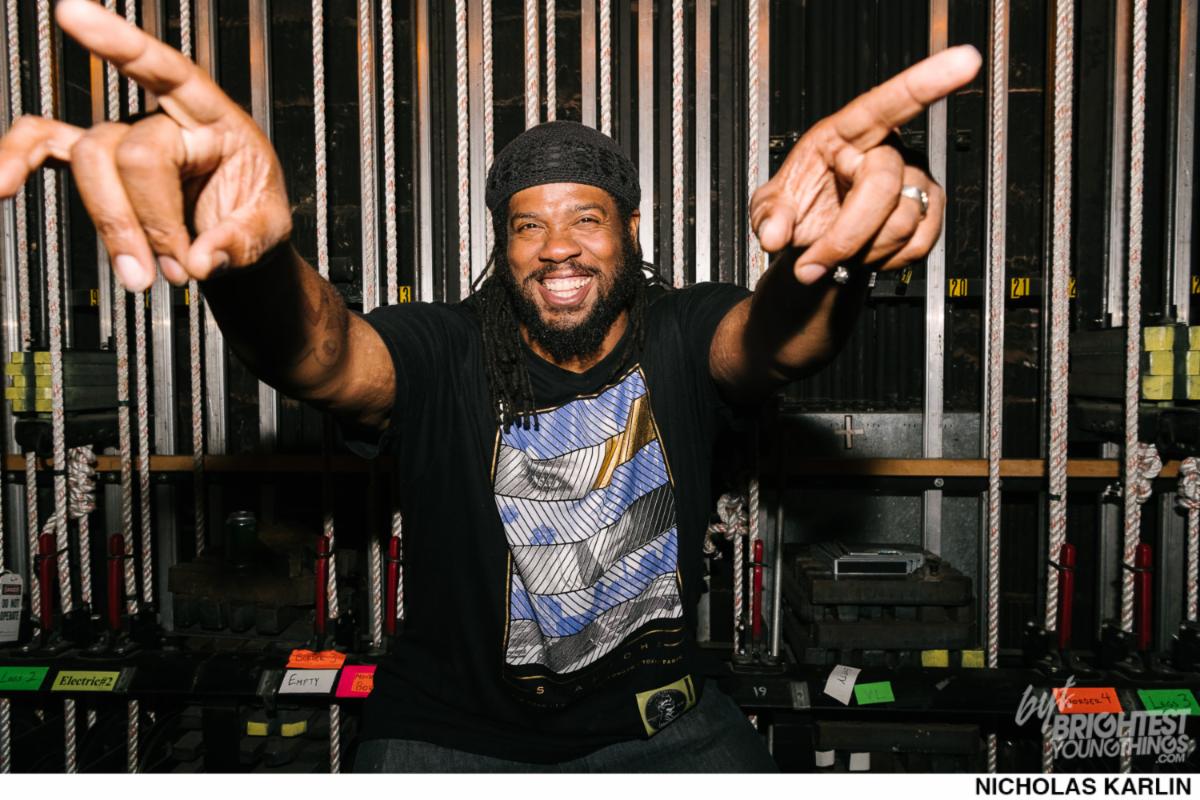
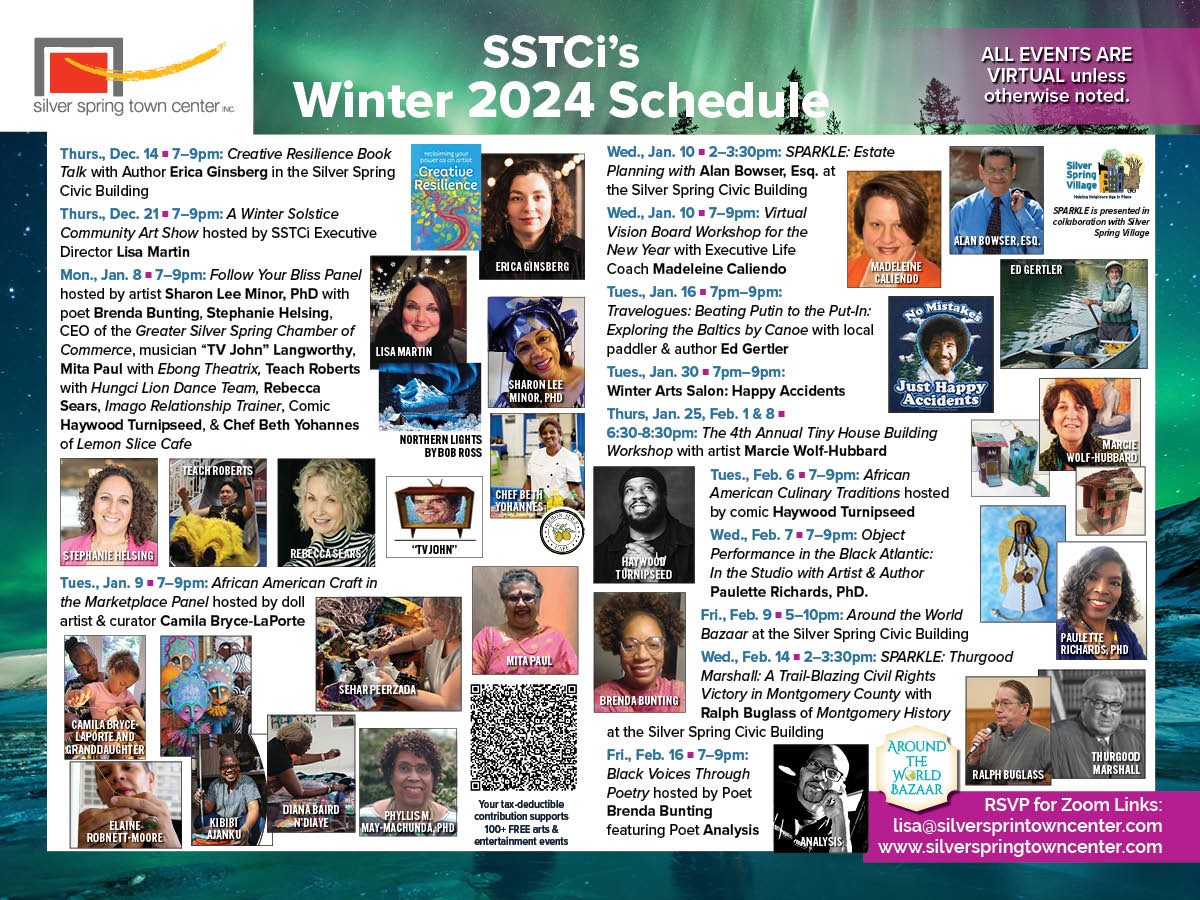
with Comic Haywood Turnipseed
Tuesday, February 6th 7pm-9pm
| |
|
Join us for African American Culinary Traditions Tuesday, February 6th 7pm-9pm on Zoom hosted by comic Haywood Turnipseed and featuring a diverse array of community members sharing their food memories and family culinary traditions.
Haywood will be joined by the following panelists:
Jan Brown - Retired & Board Member with MHP
Brenda Bunting - Poet, Educator & SSTCi Board Member
Keith Correy - Stand Up Comedian, Baker, T-Rex rider
Clayton Evans - Executive Director of CREATE Arts
Sean Hilliard - Grill Master/Podcaster/Entrepreneur
K.D. Myles - Multi-Creative: Tarot Reader, Sound Meditation Healer, Hoodoo Practitioner, Food Enthusiast; IG: @lotussoulchick and @foodiesandfriends_dmv
Seun Ogunlegan (Big O) - Podcaster/Host of In The Black Podcast!, Avid Cook, and Food Enthusiast
Sehar Peerzada - Textile Artist & Fashion Designer
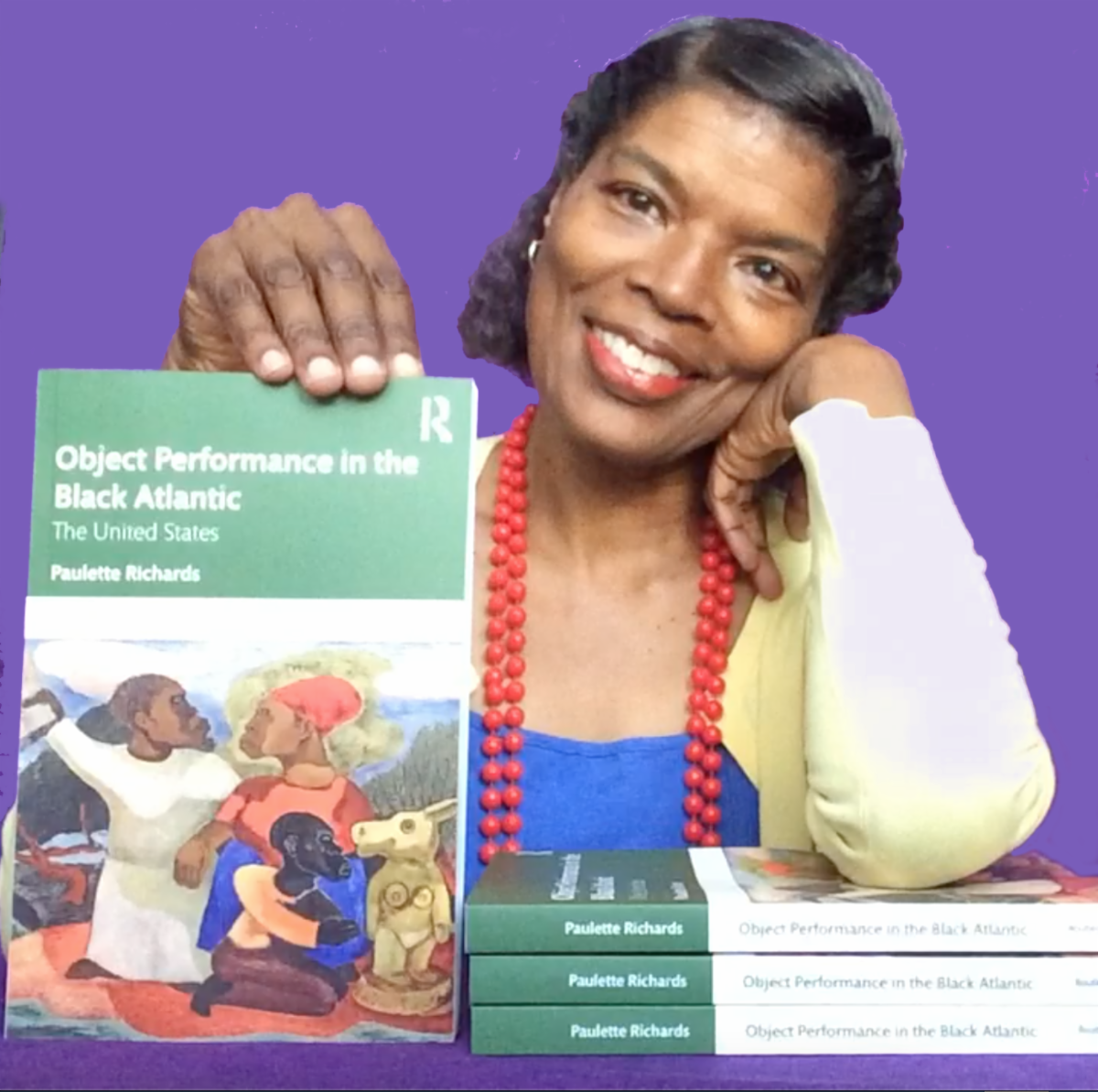
Paulette Richards, PhD. - Author of Object Performance in the Black Atlantic
Frank Rose - Culinary Artist, Avid Cook, Caterer, Comic & Mentor
Jordan Segue - Comedian / Chef / Avid Cook / Caterer
Dominque Smith - Sr. Director, Marketing, Membership + DEI Programs, ADLM
Kevin "the Fat Vegan" Sutton - #kevinthefatvegan #plantbased #vegan #culinaryprofessionals
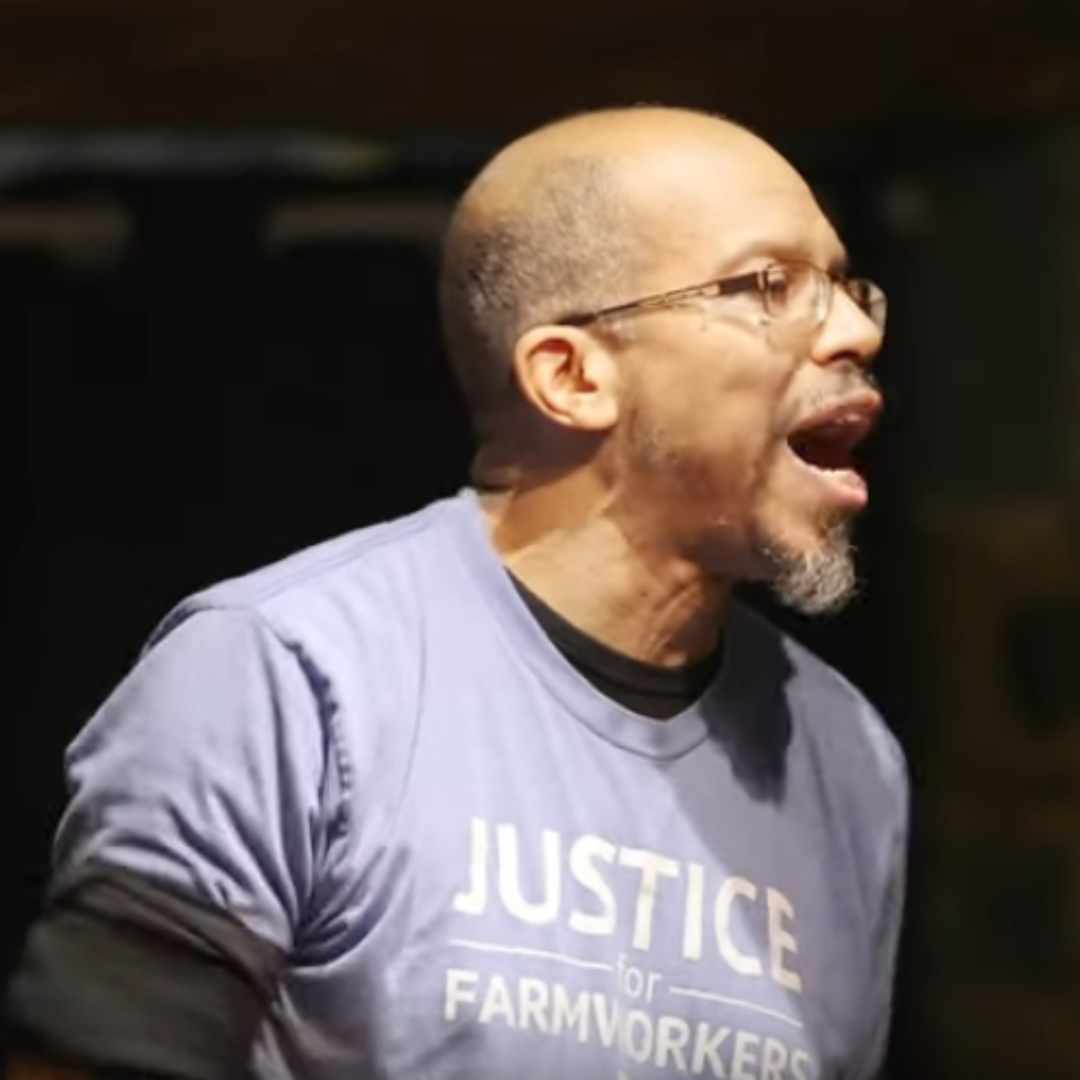
Haywood Turnipseed Jr. stands out in the stand-up comedy scene. From lighting up prestigious venues like the Kennedy Center to sharing stages with comedic heavyweights globally, Haywood showcases his prowess in blending laughter with a unique perspective. Beyond the spotlight, he resides in South East Washington DC, leading a vibrant life with his wife, three children, pets, and supportive mom. Juggling roles, he also serves as the Lead Telecommunications Specialist at the National Gallery of Art, proving that humor is just one facet of his captivating multiverse. Haywood Turnipseed Jr. is not merely a comedian; he’s a whimsical wizard with words, leaving audiences in awe long after the laughter subsides.
| |
|
Object Performance in African American Visual Art with Dr. Paulette Richards
Wednesday, February 7th at 7pm
| |
|
Join us Wednesday, February 7th at 7pm on Zoom for Object Performance in African American Visual Art with Dr. Paulette Richards.
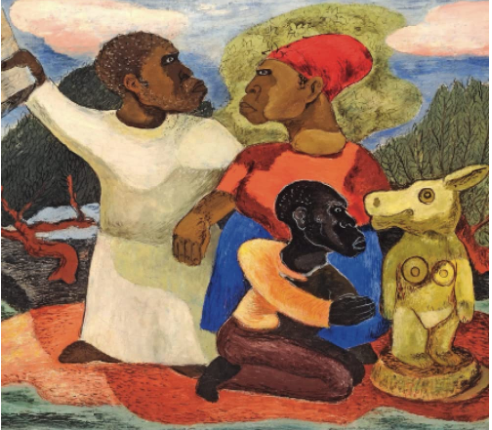
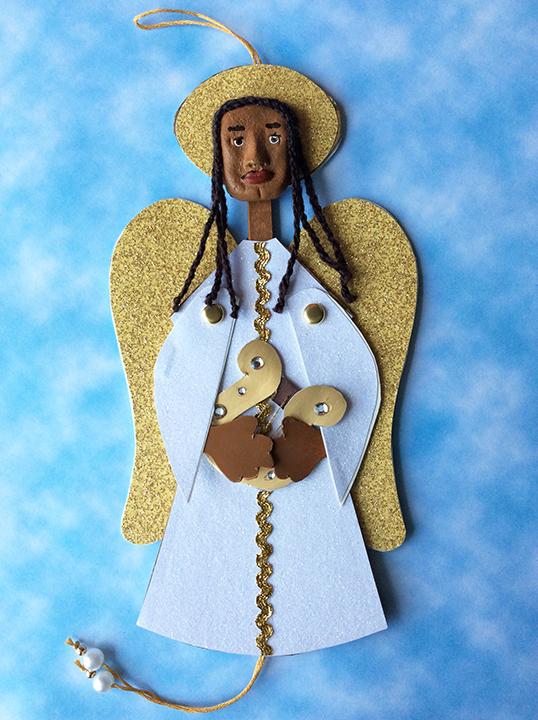
When asked, “What defines a beautiful puppet,” most puppet artists respond, “It moves well in performance.” Defining what makes a beautiful Black puppet, however, is much more complex. Dr. Richards will therefore examine the work of renowned African American visual artists who make puppets and other performing objects to determine what African Americans have considered distinctly beautiful about Black puppets. Ashley Bryan, Faith Ringgold, and Nick Cave sought to fill what they saw as a void in the representation of African American experience by creating puppets, masks, and other performing objects. Kara Walker has used silhouettes and shadow puppets to grapple with the grotesque specter of blackface minstrelsy that arose during the period when African Americans lacked power to represent themselves. While these artists all pursued advanced training in western art techniques, their aesthetics draw heavily on the embodied knowledge of craft skills handed down from enslaved African ancestors and from deliberate study and reclamation of African art. Further, since African art was traditionally inseparable from contexts in which it was danced, this presentation will demonstrate that beautiful Black puppets rejoin an African aesthetic that valued art in motion.
| |
Independent researcher, Dr. Paulette Richards has taught at Georgetown University, Tulane University, and Georgia Tech. During her time as a 2013/ 2014 Fulbright Scholar in Senegal, she began to focus her multi-disciplinary interest in African Diasporan cultural studies on puppets, masks, and performing objects.
Co-curator of the Living Objects: African American Puppetry exhibit at the University of Connecticut’s Ballard Institute and Museum with Dr. John Bell, she holds a Ph.D. from the University of Virginia. More recently she curated a traveling exhibit on The Wonderland Puppet Theater. Her book, Object Performance in the Black Atlantic is available from Routledge.
| |
|
FREED - Female RE-Enactors of Distinction
at SSTCi's Around the World Bazaar
Friday, February 9th 5:15pm-6pm
in the Atrium of the Silver Spring Civic Building
| |
|
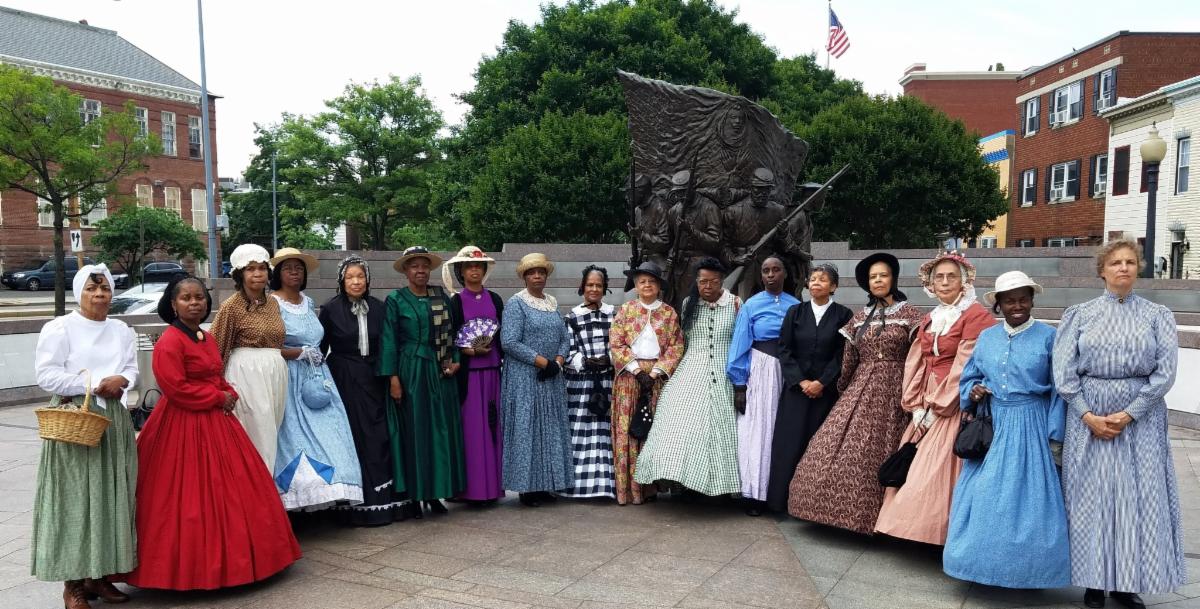
Female RE-Enactors of Distinction (FREED), an auxiliary group established under the African American Civil War Memorial Freedom Foundation and Museum, is committed to accurately depicting Civil War history, especially the role of African Americans, including the U.S. Colored Troops and their families during the U.S. Civil War.
It is the mission of FREED to educate the public and to promote the accomplishments of the African American Civil War Soldiers and the women who supported their fight for freedom. We engage in re-enactments, dramatic readings, and various other educational programs in order to share the stories of these distinctive men and women.
Dr. Frank Smith is the Founding Director of the African American Civil War Memorial Freedom Foundation, a 501(c)(3) non-profit corporation incorporated in the District of Columbia.
For more information on FREED or to schedule a presentation, you may contact then at 202.577.6956, 301.404.2991, or 202.525.8521.
| |
|
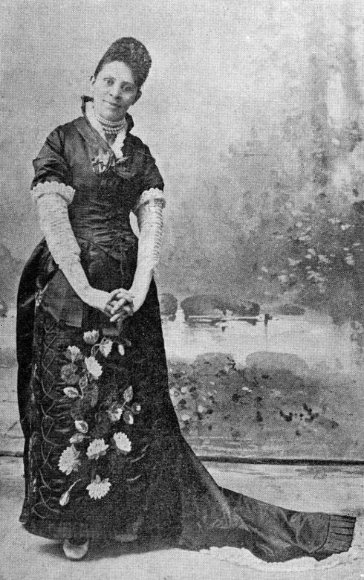
HALLIE QUINN BROWN (ca 1850 - 1949), an educator, lecturer, author, founder, and reformer, was born to former slaves around 1850 and passed away in 1949. After graduating from Wilberforce University in 1873, she embarked on an illustrious career in education. She taught in several schools and on plantations in the South; served as dean of Allen University in Columbia, South Carolina and lady dean at Tuskegee Institute. She taught at public schools in Dayton, Ohio and opened her own night school for migrants from the South.
Known as, “Ms. Hallie,” she was one of the greatest elocutionists in Europe and America and spent three decades as a professor of elocution at Wilberforce University. She developed and organized the Colored Women’s League in Washington, D.C. In 1896, this organization joined the National Federation of Afro-American Women to form the National Association of Colored Women. Before she stopped traveling in 1899 as a lecturer and public speaker for African American culture and temperance, she was presented twice to Queen Victoria at Windsor Castle as a guest and notable elocutionist. She spoke at the 1895 convention of the World’s Women’s Christian Temperance Union in London and was a representative for the United States at the International Congress of Women in 1899. This is a small sampling of the many organizations and activities she is connected to.
| |
|
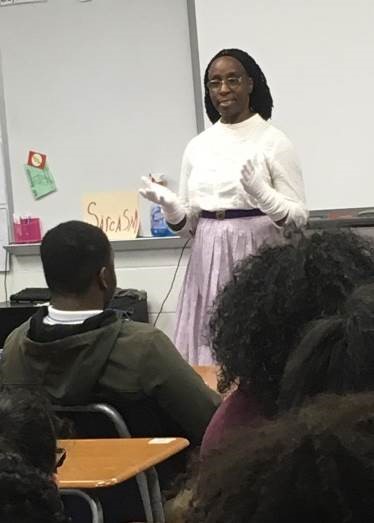
Miss Brown is portrayed by Patricia A. Tyson, an alumnus of the historic Military Road School and a retired employee of the Department of State and the Maxwell-in-Washington School of Syracuse University in Washington, D.C. She is the coordinator for FREED and is active in the historic preservation of various elements of American history, especially African American history that is sometimes unknown, forgotten, or overlooked. “As a former Sunday School teacher, I was drawn to Miss Brown because of her deep faith in God and her love for people. She is an exciting and important part of American history that is seemingly unknown. I desire to have Miss Brown speak to your heart as she has to mine that together we may move mountains-- for with God nothing is impossible.”
| |
|
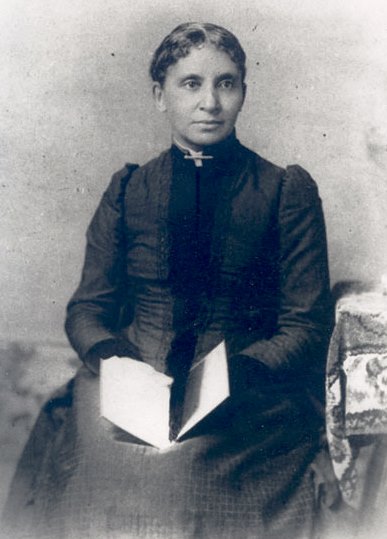
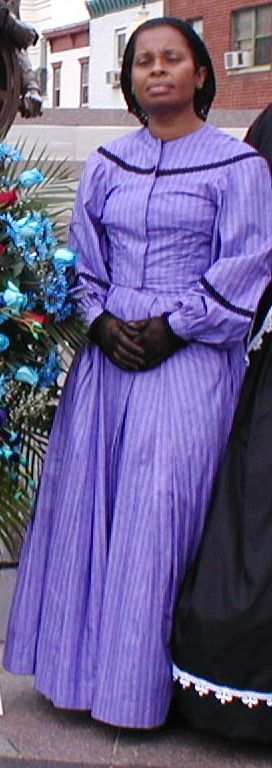
CHARLOTTE FORTEN GRIMKE (1837 - 1914) was born August 17, 1837, in Philadelphia, Pennsylvania. Despite their wealth and prominence, the Forten family experienced the racial prejudice of Philadelphia’s segregationist society and donated much of their wealth, personal resources, and energies to the abolitionist, anti-slavery movement. Charlotte, whose diaries chronicled her life between 1852 and 1862, became a life-long activist, utilizing her teaching and writing skills to fight prejudice and injustice. Although Charlotte’s husband, Francis Grimke, initially experienced life as a slave, upon gaining his freedom, he was formally educated and entered the ministry. Francis and Charlotte shared a passion for activism; and were well known throughout Washington, D.C., where he served as pastor of the Fifteenth Street Presbyterian Church until well after Charlotte’s death on July 22, 1914.
| |
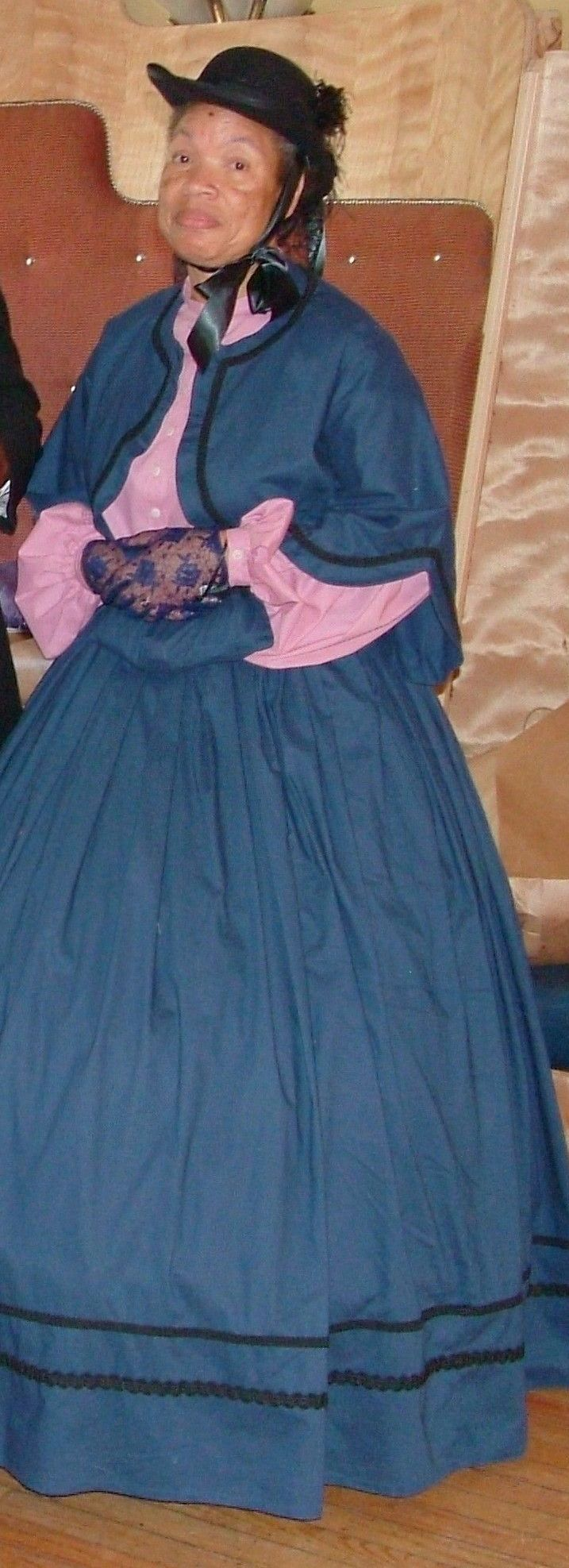
 |  | Charlotte Forten Grimke is portrayed by Catherine Ajenifuja, Caribbean Queen for Christ. Mrs. Ajenifuja is a native of Barbados WI, a former Captain in the U.S. Army Nurse Corps, and a veteran of the Gulf War. Catherine and her husband, Abraham, have 6 children and a grandchild. She home-educated their children over a 17-year period along with other forms of education. She and her husband formed a non-profit organization, Adopt-a-School, which partners the faith community with local schools. She coordinates volunteers and is involved in the Parent Teacher Student Association (PTSA) in the local high school. She is very active in her church community, as Sunday School teacher, volunteer coordinator in the hospitality ministry and Intercessor. She is a health and success educator with a special passion for millennials. She is heavily involved in missions in Haiti and is planning to go to Kenya next. She believes that if “you have faith as small as a mustard seed,….nothing will be impossible for you.”
Catherine inherited Charlotte’s character and feels connected to her because of her passion to educate youth and journaling. Catherine has kept a journal ever since she left home to go to college at the age of 18. Her desire is to help people to become aware of modern-day enslavement, found in the misuse of technology and electronics.
| |
|
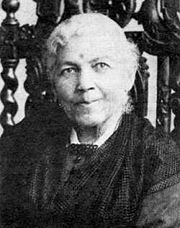
HARRIET ANN JACOBS (1813 – 1897) Harriet Jacobs, daughter of Delilah, the slave of Margaret Horniblow, and Daniel Jacobs, the slave of Andrew Knox, was born in Edenton, North Carolina, in the fall of 1813. Until she was six years old Harriet was unaware that she was the property of Margaret Horniblow.
Before her death in 1825, Harriet's relatively kind mistress taught her slave to read and sew. In her will, Margaret Horniblow bequeathed eleven-year-old Harriet to a niece, Mary Matilda Norcom. Since Mary Norcom was only three years old when Harriet Jacobs became her slave, Mary's father, Dr. James Norcom, an Edenton physician, became Jacobs's de facto master. Under the regime of James and Maria Norcom, Jacobs was introduced to the harsh realities of slavery. Though barely a teenager, Jacobs soon realized that her master was a sexual threat.
From 1825, when she entered the Norcom household, until 1842, the year she escaped from slavery, Harriet Jacobs struggled to avoid the sexual victimization that Dr. Norcom intended to be her fate. Although she loved and admired her grandmother, Molly Horniblow, a free black woman who wanted to help Jacobs gain her freedom, the teenage slave could not bring herself to reveal to her unassailably upright grandmother the nature of Norcom's threats. Despised by the doctor's suspicious wife and increasingly isolated by her situation, Jacobs in desperation formed a clandestine liaison with Samuel Tredwell Sawyer, a white attorney with whom Jacobs had two children, Joseph and Louisa, by the time she was twenty years old. Hoping that by seeming to run away she could induce Norcom to sell her children to their father, Jacobs hid herself in a crawl space above a storeroom in her grandmother's house in the summer of 1835. In that & "little dismal hole," she remained for the next seven years, sewing, reading the Bible, keeping watch over her children as best she could, and writing occasional letters to Flint designed to confuse him as to her actual whereabouts. In 1837 Sawyer was elected to the United States House of Representatives. Although he had purchased their children in accordance with their mother's wishes, Sawyer moved to Washington, D.C. without emancipating either Joseph or Louisa. In 1842 Jacobs escaped to the North by boat, determined to reclaim her daughter from Sawyer, who had sent her to Brooklyn, New York, to work as a house servant.
|
 | | For ten years after her escape from North Carolina, Harriet Jacobs lived the tense and uncertain life of a fugitive slave. She found Louisa in Brooklyn, secured a place for both children to live with her in Boston, and went to work as a nursemaid to the baby daughter of Mary Stace Willis, wife of the popular editor and poet, Nathaniel Parker Willis. Norcom made several attempts to locate Jacobs in New York, which forced her to keep on the move. In 1849 she took up an eighteen-month residence in Rochester, New York, where she worked with her brother, John S. Jacobs, in a Rochester antislavery reading room and bookstore above the offices of Frederick Douglass' newspaper, The North Star. In Rochester Jacobs met and began to confide in Amy Post, an abolitionist and pioneering feminist who gently urged the fugitive slave mother to consider making her story public. After the tumultuous response to Uncle Tom's Cabin (1852), Jacobs thought of enlisting the aid of the novel's author, Harriet Beecher Stowe, in getting her own story published. But Stowe had little interest in any sort of creative partnership with Jacobs. After receiving, early in 1852, the gift of her freedom from Cornelia Grinnell Willis, the second wife of her employer, Jacobs decided to write her autobiography herself.
Harriet Jacobs is portrayed by Christine Bennett who was a teacher at Watkins Elementary School in Washington, DC. She has three beautiful children and three grandchildren.
|
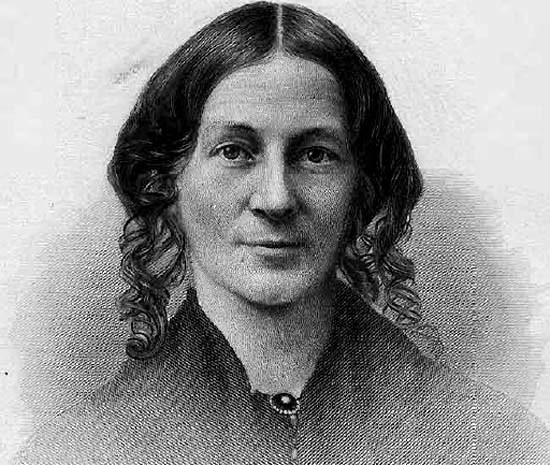 | | MYRTILLA MINER (1815-1864) “Far too many of the women who made a difference in our entwined histories—white and black—are forgotten or overlooked. One such woman was Myrtilla Miner... (She) suffered from very poor health (and) found a joy for life in reading and borrowed every book she could get her hands on. She finagled an education, and ended up teaching, which led to her employment at a school for the daughters of plantation owners in Mississippi. This was her first look at the vicious plantation enslavement system. She was horrified, and at first tried to think up plans to free those she saw and heard under the lash. Those plans were soon abandoned but she resolved that she could at least help by giving reading lessons. She naively asked the owner of the plantation where the school was housed if she could teach the slaves to read, not knowing that was a criminal offense in Mississippi, which he explained to her, adding, “Why don’t you go North to teach the ni**ers if you are so anxious to do it?” She did— and entered the pages of history… [Excerpted from Myrtilla Miner: Teaching ‘colored girls’ to teach by Denise Oliver Velez, Daily Kos Dec 08, 2013.]
In 1851, despite fierce opposition, Miner established the first school in Washington, D. C. beyond the primary level for African American girls—at a time when slavery was still legal in the District. Although enrollment grew from 6 students to forty within two months, opposition both verbal and physical, including rock throwing and arson, continued. Miner even learned how to use a revolver in order to defend her school. In 1857, then Mayor Walter Lenox wrote in the National Intelligencer, that it was not “humane to the colored population, for us to permit a degree of instruction so far beyond their political and social condition… With this superior education there will come no removal of the present disabilities, no new sources of employment equal to their mental culture; and hence there will be a restless population, less disposed than ever to fill that position in society which is allotted to them.” Once threatened by mob violence, she shouted: “Mob my school! You dare not! If you tear it down over my head I shall get another house. There is no law to prevent my teaching these people and shall teach them even unto death!”
By 1857, ill health forced Miner to withdraw from active involvement, and in 1860, despite its success, the school closed temporarily. On December 17, 1864, Miner died from complications after a carriage accident. The school reopened immediately after the Civil War. In 2015, she was inducted into the Abolitionist Hall of Fame. nationalabolitionhalloffameandmuseum.org
From the 1870s through World War II, Miner Teacher's College educated the majority of African American elementary school teachers in DC and, according to historian Constance Green, offered "a better education than that available to most white children." [The Secret City: a history of race relations in the nation's capital; Princeton University Press, 1967.] In 1929, Congress accredited the school under the name Miner Teachers College. In 1955, it merged with the white teacher training school. In 1976, the school was incorporated with other institutions to form the University of the District of Columbia (UDC), one of the 107 Historically Black Colleges and Universities in the United States.
Miss Miner is portrayed by Lisa Jacobson, a proud UDC graduate, and former Outreach Coordinator at the Nannie Helen Burroughs Project which advances the legacy of the pioneering African American educator, religious leader and civil rights advocate. nburroughsinfo.org. In her spare time, Lisa has been researching the Miner School graduates who taught at Burroughs’ training school.
| |
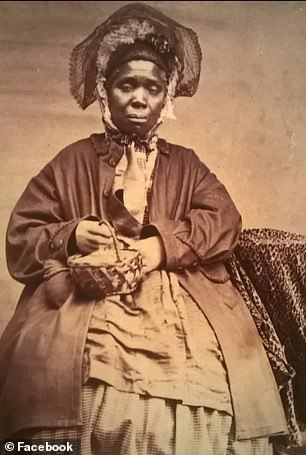
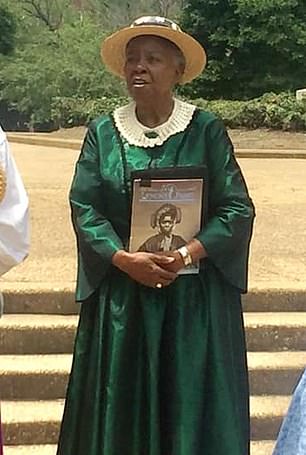
CHARLOTTE SCOTT
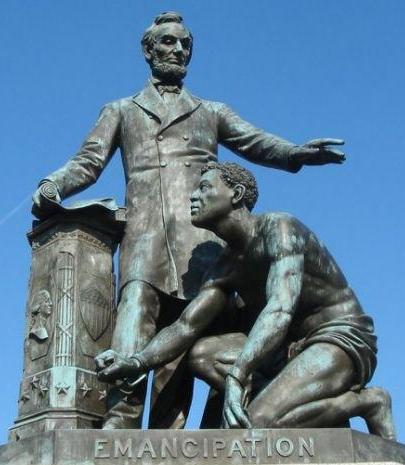
(ca.1803/1805 – 1891) “A Friend of Lincoln” Charlotte was born a slave on one of the plantations owned by Captain William Scott and his wife Ann on a large tract of land divided by the James River in today’s Lynchburg, Virginia. She served various Scott households, circulating between them. Slaves were considered property and after William’s death, through the line of inheritance, she became the property of Thomas, one of the two youngest sons of the twelve Scott children. By that time, Charlotte was married to Willis -- another Scott slave -- but they did not live together. Willis was inherited by Hugh, the other younger son. Because the two brothers had adjacent farms, Charlotte and Willis saw each other oftener than many slave couples. Charlotte helped raise Thomas’ daughter Margaret and was later gifted to her when she married Dr. William Rucker, her second cousin. When Thomas died Charlotte became Margaret’s property. Dr. Rucker was not comfortable with owning slaves. His loose talk landed him in jail but he later escaped with help. When the Civil War broke out, Margaret took action to take the Rucker sons, Charlotte and other household slaves to Marietta, Ohio for safekeeping. However, in 1862, as a condition set forth by the Union army, the slaves had to be freed before they could be transported. Once a free woman, Charlotte adopted the surname “Scott.” Having a surname was something generally denied slaves. In 1865 Charlotte was working for the Scotts and taking in laundry and earning fair wages as set by the Proclamation when Charlotte learned of Abraham Lincoln’s assassination. She felt his loss personally. So much so that she decided such a great man and friend to colored people must have a monument to be forever remembered. She took the first step by donating her hard-earned five dollars as a freedwoman to get things rolling. Collections were taken up within the Black community. By December 1865, the grand sum of $16,242 had been collected entirely from former slaves. The US Colored Troops of Natchez donated the larger portion of monies raised. On the eleventh anniversary of Lincoln’s assassination – April 14, 1876 – a monument to him known as the Freedman’s Memorial or Emancipation Statue was dedicated in Lincoln Park, Washington, DC. It was declared a public holiday with a parade, festivities and the esteemed Frederick Douglass as keynote speaker. President Grant had the honor of unveiling the bronze before a crowd of around 25,000. Charlotte was there to see her name on the plaque as tribute to her heartfelt sympathies and success in having this monument installed
|  | |
MARCIA E. COLE is a graduate of the University of the District of Columbia. She uses various literary forms to teach African American history: Her play A Matter of Worth set in the 1850’s treats slavery; storytelling through poetry -- Going for Freedom: True Accounts of Flight and more are compiled and published in Ms.
Cole’s books Light in Dark Places: History in Verse and Behold A Ball of Light History in Verse. Learn more at: emancipationmonument.org
Some want the monument removed. I say leave it where history placed it.
| |
Black Voices Through Poetry
Hosted by Poet Brenda Bunting
Featuring Poets Analysis & Ian Sydney March
Sunday, February 16th, 7pm-8.30pm
| |
We invite you to our next annual Black Voices Through Poetry hosted by SSTCi Board Member & Award-Winning Poet Brenda Bunting featuring Poets Analysis & Ian Sydney March. This program takes place virtually on Zoom Friday, February 16 at 7pm.
This year's Black History Month theme is "African Americans & the Arts." What better way to celebrate than by sharing some spoken word and poetry?
| |
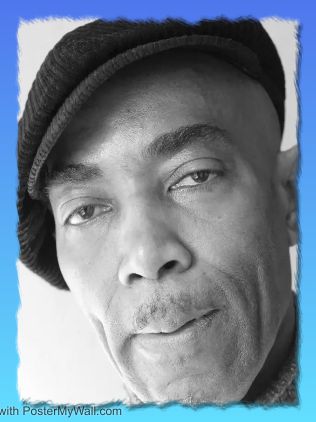
A lover of justice and human rights, Analysis is a spoken-word poet, rad Left minister, bookseller and educator! The Baltimore native, who studied Public Communication at the American University and Divinity at Howard University, has featured and spotlighted at venues across the Mid-Atlantic, New England and world. Analysis is the host of Red Emma's Mother Earth Poetry Vibe, which takes place at the worker-collectively owned Red Emma’s Bookstore Coffeehouse. He is the author of Somewhere Through the Haze and the album A Couple Thousand Years Later, and is a member of Simply Poetic Entertainment and of Restoration Village Arts.
Emily Dickinson famously said, ‘If I feel physically as if the top of my head were taken off, I know that is poetry.’ Analysis cuts heads. –Pamela Murray Winters, poet
@analysisthepoet
| |
Ian Sydney March, a native of Kingston Jamaica, is a poet, essayist, musician, journalist, educator, and a recipient of Creative Writing Grants from The DC Commission on the Arts and Poets and Writers. He has served as a panelist for the DCCAH Artist Fellowship Grants and Arts and The Arts and Humanities Council of Montgomery County as a judge for the Larry Neal Writers Award and Poetry Out Loud. Publications include “Stealing Mangoes” and essays and poetry published in numerous anthologies, including “Beyond the Frontier: African American Poetry for the 21st Century.” Sydney has also compiled and edited an anthology of fiction and poetry “Writers on the Green Line.” An alumnus of the Johns Hopkins Graduate Program in Writing and former associate editor of Takoma Review, Ian Sydney March is currently an instructor of English and Writing at Montgomery College and a Contributing Editor for the Sligo Journal.
| |
About Our Host
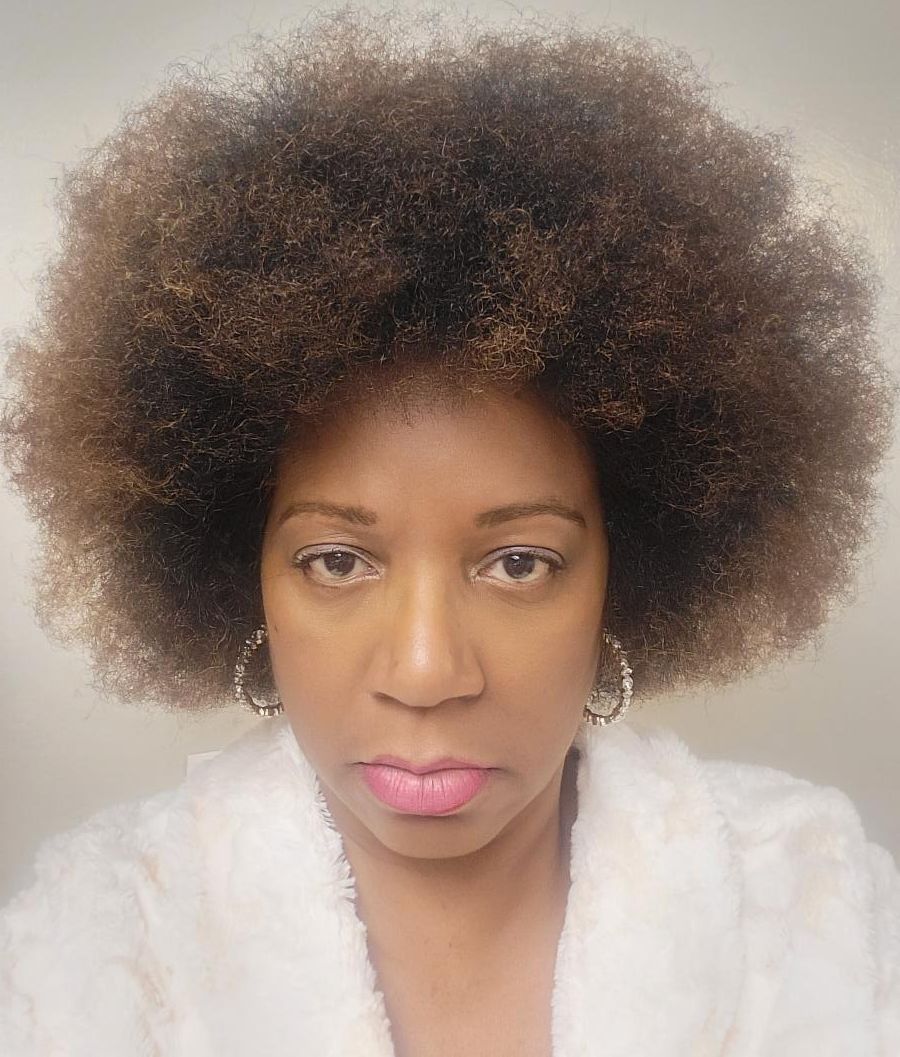
Brenda Bunting is an award-winning Orator, published Poet, and Spoken Word Artist. She is an author, workshop facilitator, and literary leader in Prince George's County and a life member of the Kentucky State Poetry Society. Brenda also serves on the Board of Directors of Silver Spring Town Center Inc.
"Poetry is my quiet lover. She has always been there for me like a divine twin, expansive and lonely, incredible and audacious. She lives inside me like a light that cannot be extinguished a beautiful place of welcoming with purity, safety, and authenticity unceasing. I have cultivated her in the secret of myself and live to share with others."
| |
Two Free Tx Exclusively for SSTCi Friends
Live Garra Theatre's Black History Week of performances including Mardi Gras festivities
at the Silver Spring Black Box
February 13th-18th
|  | |
Live Garra Theatre is offering a few FREE PAIRS of TIX to our SSTCi Friends for your choice of performance to the week-long extravaganza.
Send an email to lisa@silverspringtowncenter.com to request your tix. To update your Friends' status, make a $50 or more tax-deductible donation to SSTCi at www.silverspringtowncenter.com.
Live Garra's performances in celebration of Black History Month 2024
Tue Feb 13, 2024 - Sun Feb 18, 2024 "A THIRST FOR FREEDOM"
The centerpiece event of the Black History week celebration is a new play that tells the story of what life was like for Black Americans from the end of slavery as an American institution to the beginning of the great migration out of the South.
Mardi Gras Jazz Night
Tuesday, February 13, 2024 - 08:00 PM EST
A Thirst For Freedom
Friday, February 16, 2024 - 08:00 PM EST
A Thirst For Freedom
Saturday, February 17, 2024 - 03:00 PM EST
A Thirst For Freedom Reception
Saturday, February 17, 2024 - 08:00 PM EST
A Thirst For Freedom Sunday, February 18, 2024 - 03:00 PM EST
|  | |
Silver Spring Town Center, Inc. | 240.595.8818 |
Silver Spring Civic Building, One Veterans Pl, Silver Spring, MD 20910 | www.silverspringtowncenter.com
| |
|
Your copy should address 3 key questions: Who am I writing for (audience)? Why should they care (benefit)? What do I want them to do (call-to-action)?
Create a great offer by adding words like "free," "personalized," "complimentary," or "customized." A sense of urgency often helps readers take action, so consider inserting phrases like "for a limited time only" or "only 7 remaining!"
| | | | |