The Institute for Health Equity Research, Evaluation & Policy | |
Celebrating Hispanic Heritage Month | |
The Mass League's Institute for Health Equity Research, Evaluation, and Policy (IHE) is celebrating Hispanic Heritage Month with the theme Knowledge to Practice.
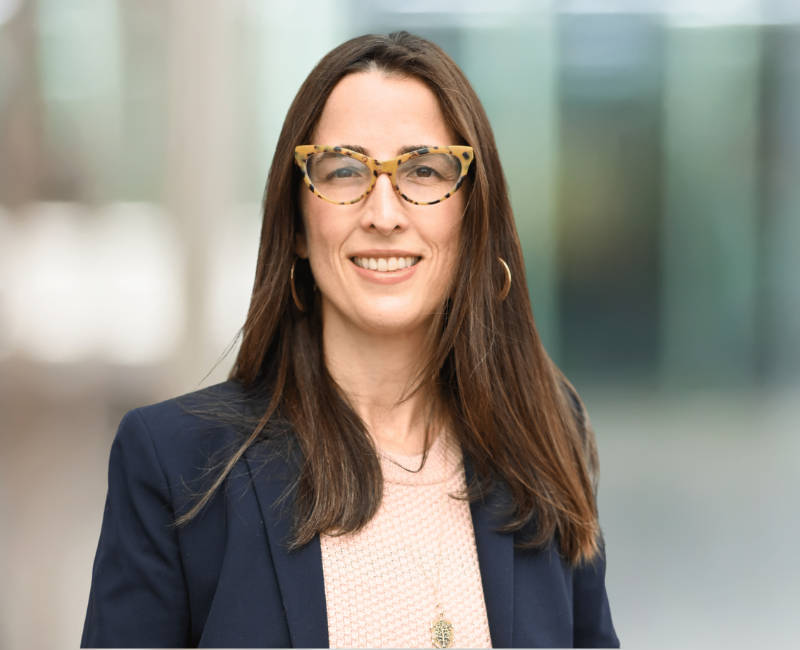
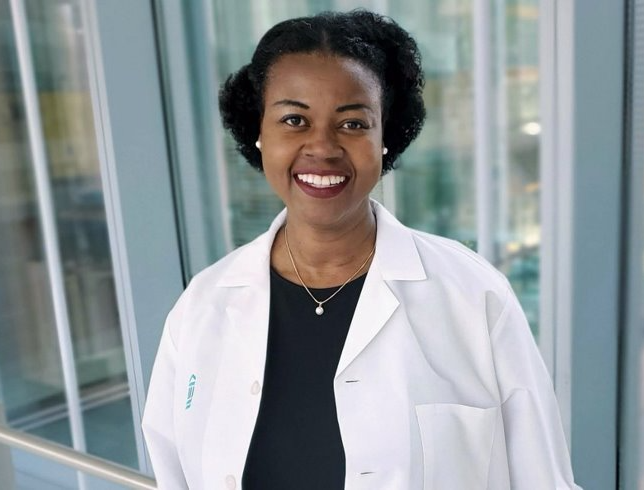
Community Health Centers deliver evidence-based practice to serve roughly one million patients in Massachusetts. The work of Dr. Cristina Huebner Torres, the Chief Research and Population Health Officer at Caring Health Center, gives a powerful example of how community health centers translate knowledge to practice.
Michiko Andrade, Communications Director at the Massachusetts League of Community Health Centers, had a conversation with Dr. Huebner Torres earlier this week via Zoom and asked a series of questions (see below):
| |
National Hispanic Heritage Month is September 15-October 15. | |
|
Knowledge to Practice:
An Interview with Dr. Cristina Huebner Torres at Caring Health Center
| |
MA: Dr. Huebner Torres, you are the Chief Executive Vice President, Strategy and Research Officer at Caring Health Center, a Federally Qualified Health Center (FQHC) in Springfield, Massachusetts. Would you tell us more about your role and your work at Caring?
CHT: I have worked at the Caring Health Center (CHC) for nearly 17 years. From my early years at the health center, I have been motivated by the mission of federally qualified health centers as a national model to advocate for policy that addresses the intersectional needs of the communities served and to develop services that are culturally and linguistically appropriate to improve patient access to care and optimal health outcomes. With the ongoing support of leadership and the 51% consumer-led board, I have overseen the development and sustainability of the Research and Population Health Department (RPH), which has grown from 4 people to nearly 50 and is almost entirely grant-funded and sustained. We translate quality improvement data and research findings into health center innovations. The success of this work is based on the incredible dedication and talent of a team-based approach, and the health center workforce and our external partners make this possible.
MA: Could you tell us more about the research that you are working on now?
CHT: Our current efforts build on long-standing collaborations and the CHC research approach that examines issues that emerge from health center practice. I am working on a multi-stakeholder FQHC-led implementation science research initiative to examine equity, reach, and implementation of the nationally mandated social risk screening and response efforts. Addressing the social care needs of communities is foundational to the civil rights origins of community health centers. Recent research findings indicate that Black, both Hispanic and non-Hispanic, patients are approximately 2-fold more likely to be screened for social risks in health centers nationwide compared to non-Hispanic white patients; however, they are also 90% less likely to report a social risk compared to non-Hispanic white patients1. With the policy mandate to conduct universal social risk screening, it is critical to establish an evidence base and consider the equity of how screening and response are implemented. We are fortunate to have current and past critical research and translation partnerships with the Mass League of Community Health Centers, Harvard’s T.H. Chan School of Public Health, Oregon Community Health Information Network (OCHIN), UMass Amherst, the University of Arizona, Medicaid Accountable Care Organizations (ACOs) including the Community Care Cooperative (C3), the UMMS-B Department for Healthcare Delivery and Population Science and the BeHealthy Partnership ACO, and others.
MA: You have developed and administered several initiatives designed to improve the health and well-being of people of color and other groups: what do you find most rewarding about these initiatives?
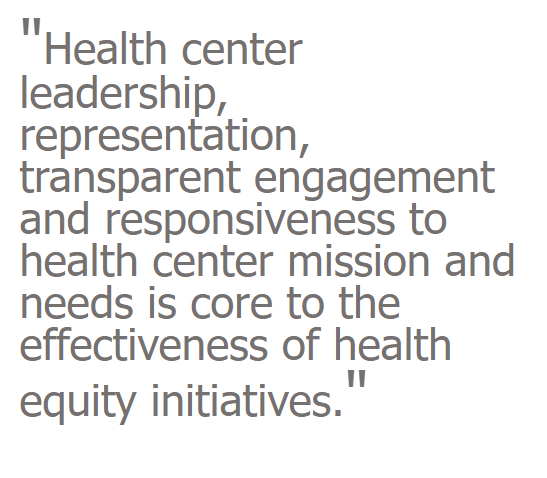
CHT: What I find most rewarding is building culturally responsive and sustainable innovative public health strategies that are informed by the needs identified by the health center’s patients, workforce, and governance—the majority of whom at each level are members of the community served by the health center. The way research is approached, the questions that get asked, how the findings are disseminated and translated into practice, and the potential members of a research team shift when health centers are leaders and collaborators in the process. I find it incredibly rewarding to partner with health center staff, patients, and external stakeholders, collaboratively co-creating this process. Health center leadership, representation, transparent engagement, and responsiveness to health center mission and needs are core to the effectiveness of health equity initiatives.
| |
MA: Was there an experience that led you to develop a career in science that you could share?
CHT: Growing up, I was always at the intersection of arts and science. Living in a household that brought different cultures together—my mother is Puerto Rican, and my father is German-American—I have always valued being among various cultural beliefs and practices. Health centers often serve a global population. Caring Health Center is the largest refugee health assessment site in Massachusetts, serving over 39 languages.
While completing my bachelor’s in medical anthropology, I lived in Otavalo, Ecuador, and studied at a health center called Jambi Huasi (Quechua for “House of Health”). A collaborative group of lay midwives, herbalists, traditional healers, and medical doctors delivered services, and patients could choose who they saw for their care. After college, I began my first job as a street ethnographer at the Hispanic Health Council in Hartford, CT. I worked with an interdisciplinary group of medical anthropologists, community health workers, medical doctors, and community members to better understand pathways in drug use and networking and their impact on youth culture and development. More recently, I have also found it critical to voice the necessary intersection between being a scholar/practitioner, a scientist and community health leader, and a advocate and activist of the change needed to drive equity research forward. These experiences and many others shaped my experience of pursuing an interdisciplinary career in public health that seeks to understand better the intersection between culture, health, policy, advocacy, arts, and community to promote and improve health and healthcare.
MA: September 15 to October 15 is Hispanic Heritage Month. As you reflect on heroes currently and historically, are there leaders who have inspired you or your work?
CHT: Among the many Hispanic leaders, I admire in science, the arts, government, education, business, advocacy, and other sectors, inspiration for my work has come directly from my mother and my grandmother (mi mamá y mi abuela).
Mi abuela, Dolores “Lola” Torres Rodriguez, obtained education up to the 3rd grade in Puerto Rico. She became a criada (a housekeeper) for relatives in exchange for her upbringing when her mother died, and her father left. She was one of the strongest and smartest women I have ever known. Her commitment to education and opportunity led her to bring my mother from Humacao, where she was born, to Vieques, and ultimately to the Bronx, New York, and then to New Jersey. My mother, Ileana Lydee Huebner Torres, like mi abuela, has inspired me daily to live my life knowing that our Puerto Rican identity and history are core to our commitment to community and to working with the community to make a change.
My mother obtained her Master’s degree and was a high school Spanish teacher for 40 years. Her passion for the Spanish language and Latino culture translated into love for her students, whom she inspired as a teacher—she was nominated teacher of the year twice, and students wrote to her year after year thanking her for her passion for the Spanish language.
Both mi mama y mi abuela (my mother and my grandmother) have been the source of tremendous inspiration in my own experience as a Puerto Rican woman and my dedication to a career in science and healthcare where I feel inspired every day to work directly with health centers and the communities we serve to improve how healthcare is delivered in the U.S.
| |
For more information on the work of Dr. Huebner Torres and initiatives at Caring Health, including the launch of the new Tania M. Barber Learning Institute at Caring, please visit www.caringhealth.org.
1Torres CIH, Gold R, Kaufmann J, et al. Social Risk Screening and Response Equity: Assessment by Race, Ethnicity, and Language in Community Health Centers. Am J Prev Med. 2023;65(2):286-295. doi:10.1016/j.amepre.2023.02.018
|
|
The Institute for Health Equity Research, Evaluation, and Policy | |
The Massachusetts League of Community Health Centers (Mass League) is proud to announce the creation of the Institute for Health Equity Research, Evaluation and Policy, Inc. (IHE), a 501(c)(3) non-profit organization designed to support Emancipatory research driven by community health centers. | |
|
IHE Executive Director:
Cheryl R. Clark, MD, ScD
| |
Dr. Clark is Executive Director of the IHE and Senior Vice President at The Mass League of Community Health Centers.
| |
Learn more about IHE:
"New institute looks to shake up health equity research" in The Worcester Business Journal, June 23, 2023
The Brigham Bulletin, July 12, 2023
"A Comprehensive Journey Toward Health Equity: Dr. Cheryl Clark At The Helm" in The Seamless Connection: Slice of Health Care Network podcast, September 12, 2023
"Q&A: Partnering with Community Health Centers to Advance ‘Emancipatory Research’" in The Brigham Bulletin, July 12, 2023
| | | | |