Volume 4, Issue 7 - July 2026 | | |
Dear Friends,
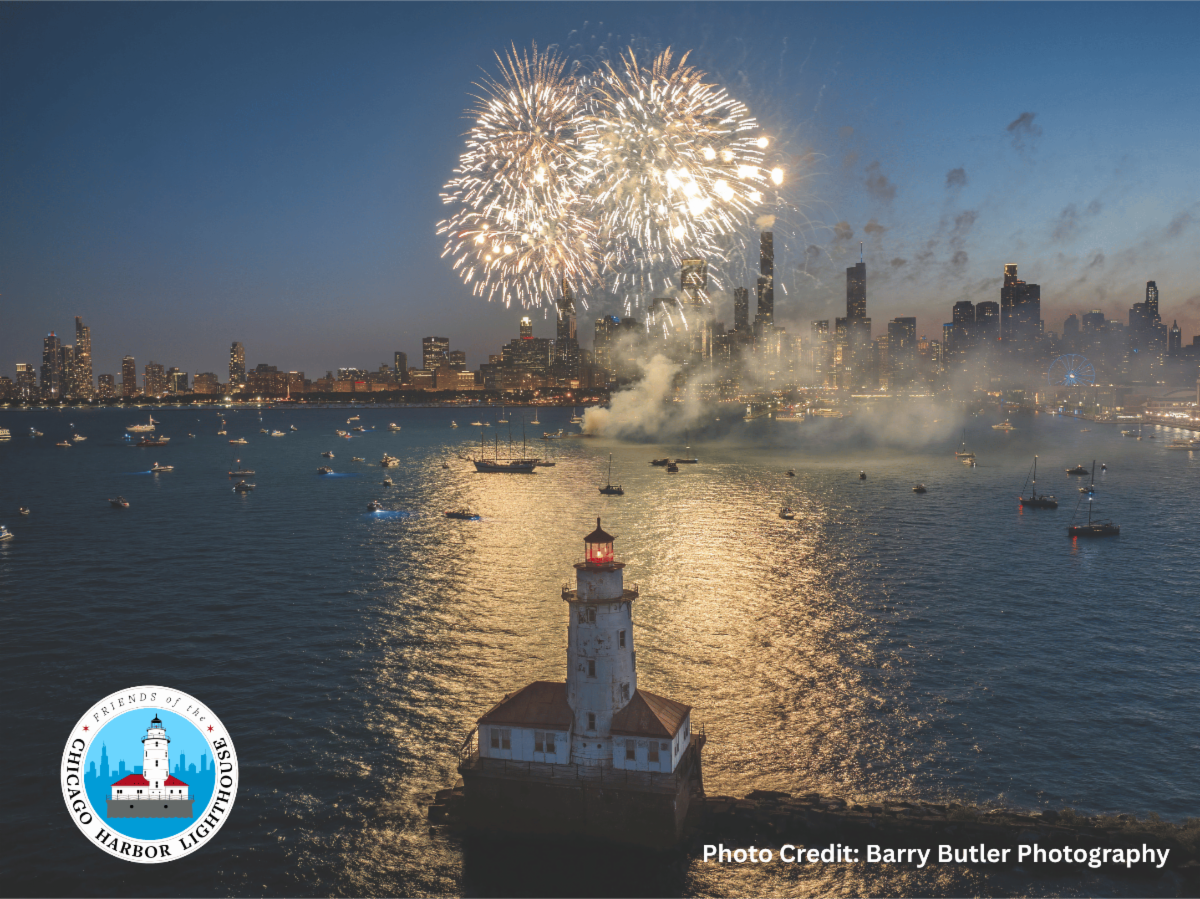
Nothing says the Fourth of July in Chicago quite like fireworks over the lakefront and the Chicago Harbor Lighthouse.
The skyline lights up, boats gather on the water, families line the shoreline, and for one magical evening, our city turns its eyes toward Lake Michigan.
In the middle of it all, standing quietly at the entrance to the harbor, is the Chicago Harbor Lighthouse — watching over the lakefront just as it has for more than 130 years.
As we celebrate Independence Day and as our country looks ahead to America’s 250th birthday in 2026, I hope we all take a moment to appreciate the history that surrounds us. We are blessed to live in a city where the lake is part of our identity, where the harbor tells the story of commerce, recreation, immigration, architecture, engineering, public service, and community.
The Chicago Harbor Lighthouse is one of the great symbols of that story.
It has stood through storms, celebrations, wars, world’s fairs, changing skylines, and generations of Chicagoans who have looked out from the shore or passed by on the water and felt something special. It is more than a structure. It is a witness. It is a promise. It is a reminder that the people who came before us built things with purpose, beauty, and faith in the future.
| | |
June was an exciting and meaningful month for Friends of the Chicago Harbor Lighthouse.
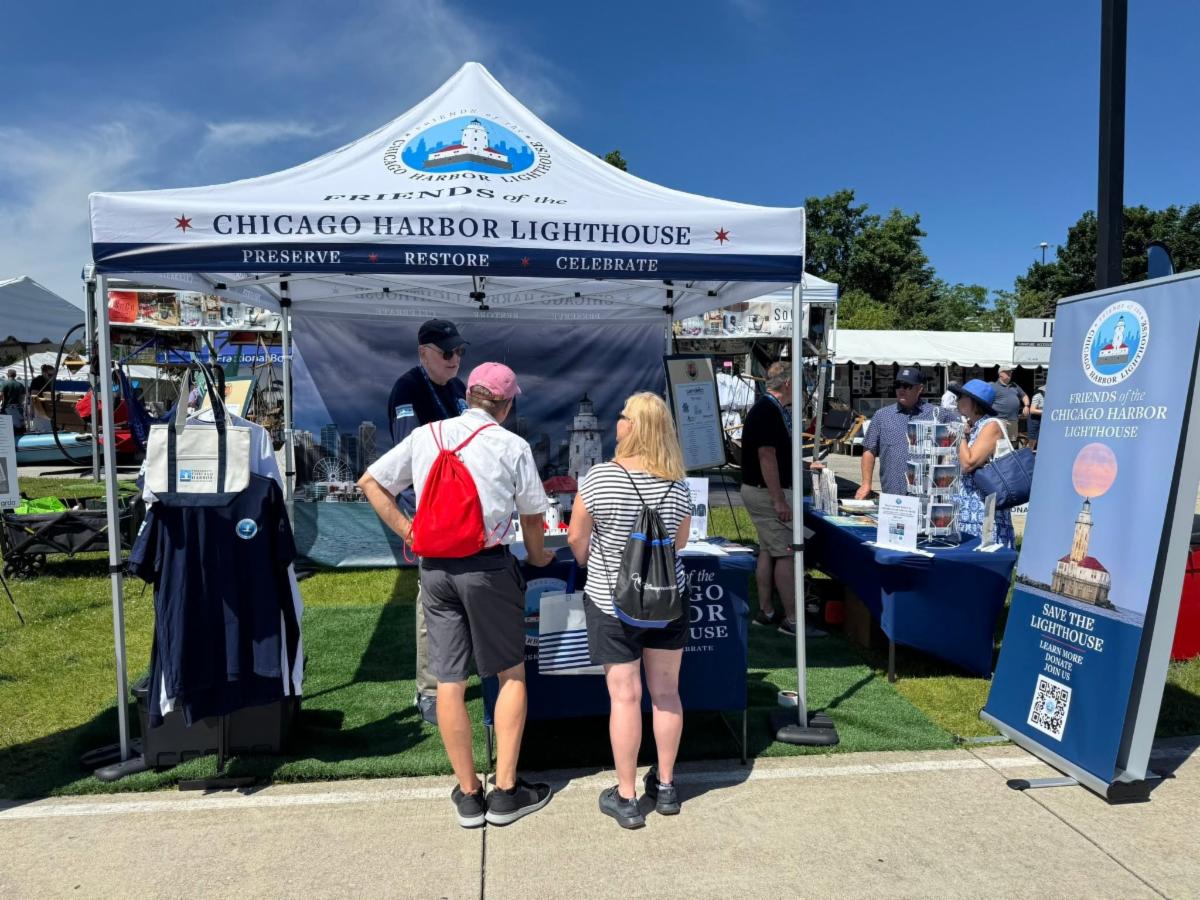
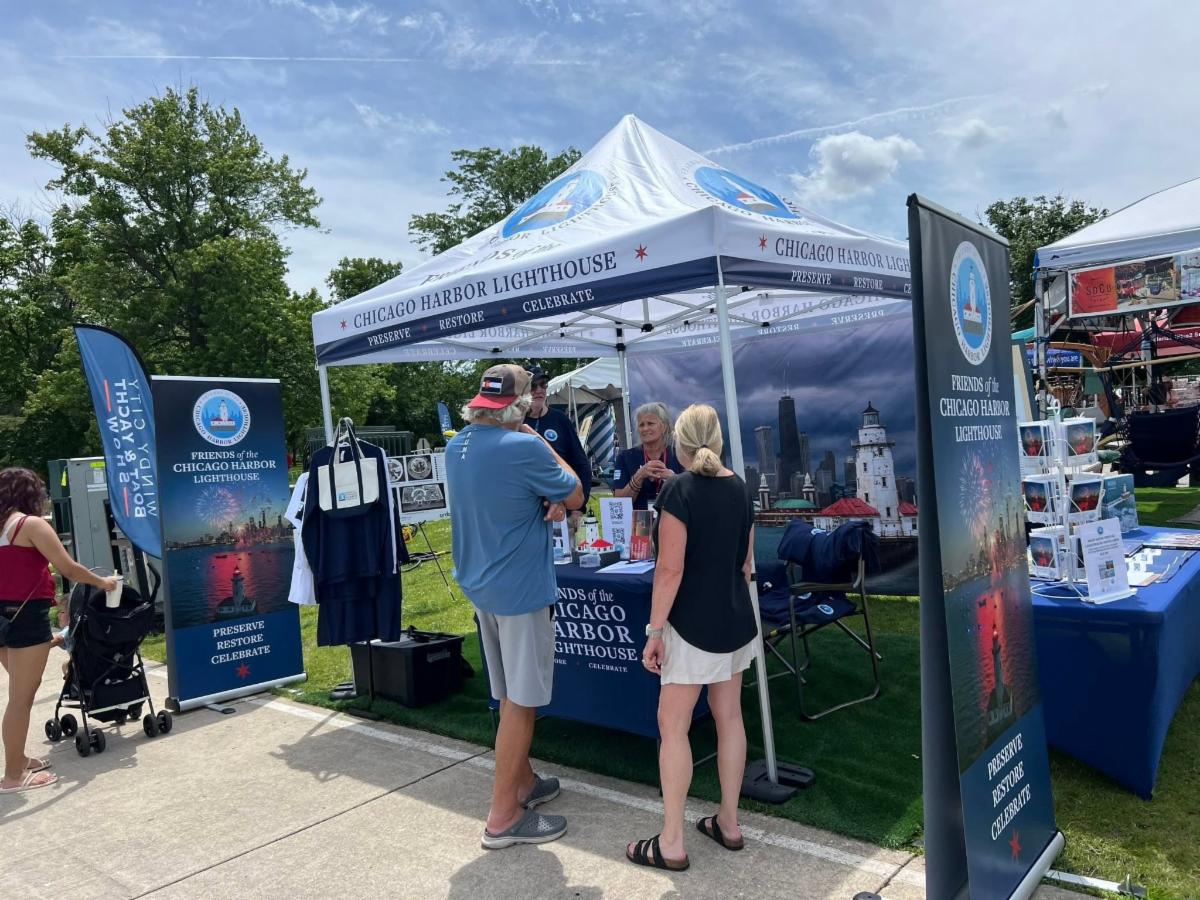
We made our first public appearance at the Windy City Boat & Yacht Show at Burnham Harbor, and the response was truly incredible. Thank you to everyone who stopped by our booth, introduced yourself, shared a story, bought merchandise, made a donation, signed up for our newsletter, or simply said, “Thank you for doing this.”
It was so great to meet so many of you in person and share our mission to Preserve, Restore, and Celebrate the Chicago Harbor Lighthouse. We heard from boaters who pass the lighthouse every season, photographers who have captured it at sunrise, families who have wondered about it for years, and Chicagoans who simply want to see this landmark saved. Those conversations reminded us that this mission belongs to all of us.
I also want to thank our volunteers, board members, working group members, and supporters who helped make that first public appearance possible. Showing up matters. Telling the story matters. Inviting people into the dream matters. Every conversation builds momentum.
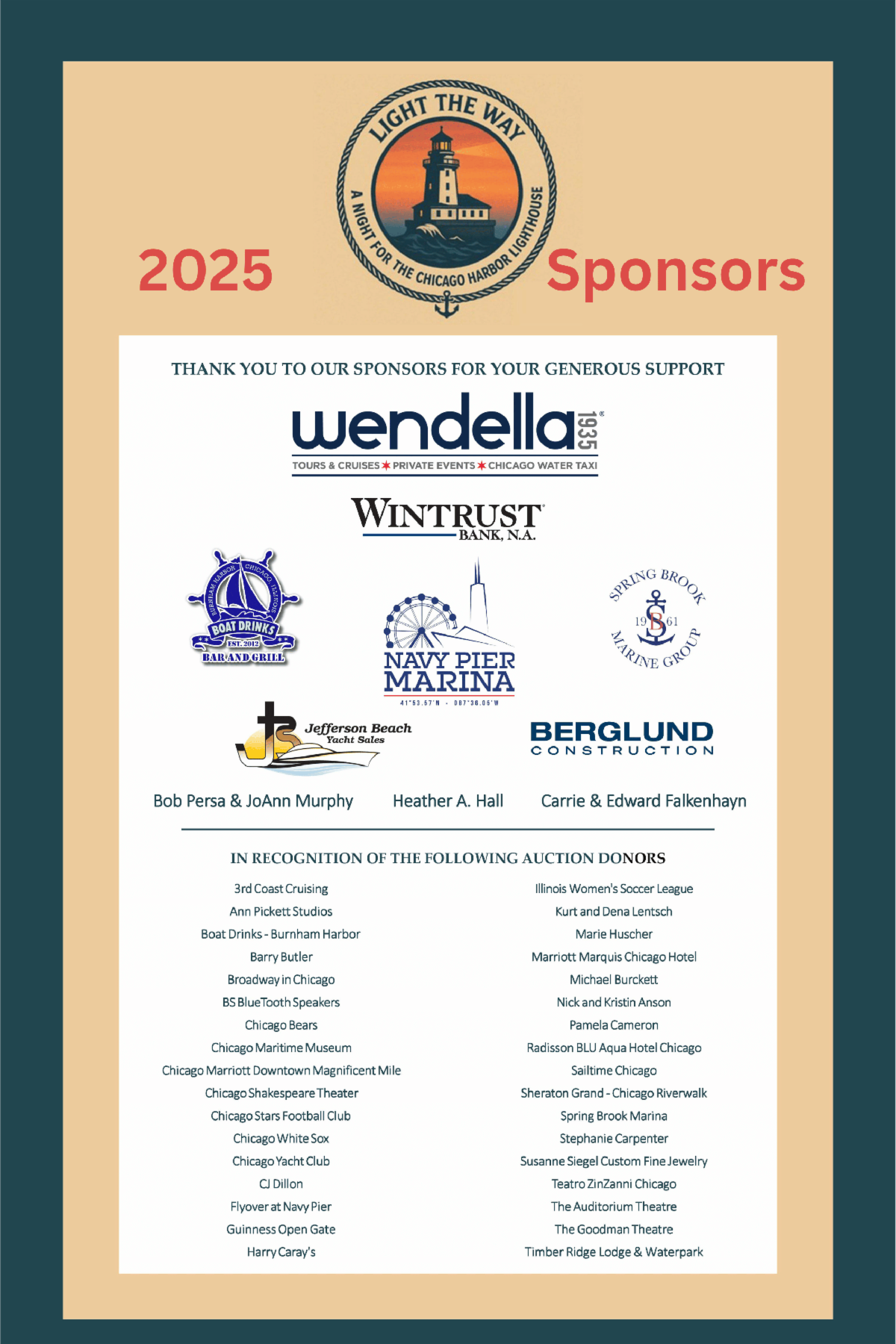
We are also deeply grateful to the sponsors who have already committed to Light the Way 2026, our second annual National Lighthouse Day fundraiser.
Your early support gives us the confidence to keep moving forward and helps set the stage for a very special evening on Friday, August 7, 2026, aboard Chicago’s First Lady.
We still have sponsorship opportunities available, and we are also seeking silent auction donations to help make the evening a success. If you have been thinking about making a special commitment to the lighthouse, this is the time.
This month’s newsletter reflects the heart of our mission. You will read about our first public appearance at the Windy City Boat & Yacht Show and the incredible support we received from the boating community. You will read about our connection to the 117th Chicago Yacht Club Race to Mackinac, a race that begins near the Chicago Harbor Lighthouse and finishes near the Round Island Lighthouse — truly a race between two historic Great Lakes beacons.
You will also enjoy a powerful article from our historian, Steve Clements, from the FOCHL photo archive, telling the story of the last generation of lighthouse keepers and Coast Guardsmen who once called the Chicago Harbor Lighthouse home.
These stories are connected. They remind us that the lighthouse is not just about the past. It is about the present moment and the future we are trying to build together.
As fireworks light up the lakefront this Fourth of July, I hope you will look toward the water and think about the lighthouse. Think about the generations it has served. Think about the keepers who once lived there. Think about the sailors, boaters, and working vessels it has guided. Think about the young people who may one day visit, learn, and be inspired by this remarkable place.
Together, we can make that future possible.
Every donation, every ticket, every sponsorship, every volunteer hour, every shared story, and every person who joins this mission brings us closer to the day when the Chicago Harbor Lighthouse is restored, celebrated, and safely opened for future generations.
Happy Fourth of July. Be safe, be grateful, enjoy our beautiful lakefront, and thank you for believing in this dream.
Together, we will save the Lighthouse.
Be Safe and Be Well!
Regards,
Kurt Lentsch
Chief Dreamer and President
| | FOCHL Makes Its First Public Appearance at the Windy City Boat & Yacht Show | | |
Friends of the Chicago Harbor Lighthouse made its first official public appearance this June at the Windy City Boat & Yacht Show at Burnham Harbor, and the response was nothing short of incredible.
For three days, our booth became a gathering place for boaters, lighthouse lovers, Chicago history enthusiasts, photographers, families, and longtime friends of the lakefront.
So many people stopped by to share stories about passing the lighthouse by boat, seeing it from the shoreline, photographing it at sunrise, or simply wondering for years about its future. The message we heard again and again was clear: Chicago loves this lighthouse, and people are ready to help save it.
Our team introduced visitors to FOCHL’s mission to Preserve, Restore, and Celebrate the Chicago Harbor Lighthouse. We shared updates on the transfer process, our Phase 1 “Make Safe Access” restoration goals, future educational programming, and the long-term dream of creating meaningful public access to this historic Chicago landmark.
The show also gave us the opportunity to launch our new outreach booth, share our story with hundreds of boaters, grow our newsletter list, sell FOCHL merchandise, and raise awareness about the urgent need to move this project forward. From t-shirts and totes to Barry Butler Photography Lighthouse Notecard sets, every purchase and every conversation helped build momentum for the restoration effort.
We are especially grateful to everyone who stopped by, made a donation, purchased merchandise, signed up for updates, volunteered, or simply offered words of encouragement. Your support matters. Every handshake, every story, and every “how can I help?” reminded us why this mission is so important.
A very special thank-you goes to our volunteers who staffed the booth, welcomed visitors, answered questions, shared the FOCHL story, and represented the organization with energy and pride throughout the weekend. This first public appearance would not have been possible without you.
We also want to thank the sponsors, partners, and supporters who continue to stand behind this mission, including our generous Light the Way sponsors and the many organizations helping us bring the lighthouse back into the public conversation.
Your commitment gives us the confidence to dream bigger, work harder, and keep moving toward the day when the Chicago Harbor Lighthouse is safely restored and celebrated for generations to come.
The Windy City Boat & Yacht Show was an important first step in bringing FOCHL directly to the boating community, and the response confirmed what we already believed: the Chicago Harbor Lighthouse belongs in the heart of Chicago’s lakefront story.
Thank you to everyone who helped make our first public appearance such a success. Together, we are building the future of this landmark—one conversation, one donation, and one dream at a time.
| | The Race Between Two Lighthouses: Chicago Harbor to Round Island | | |
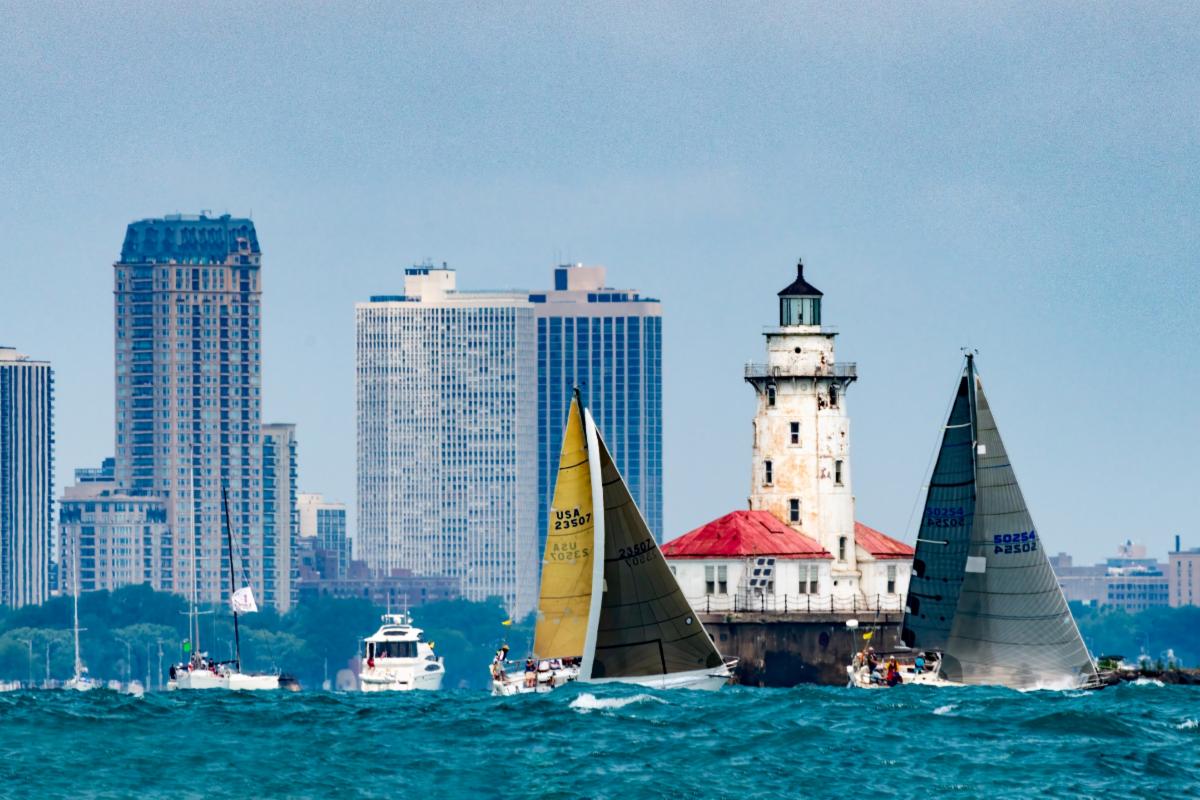
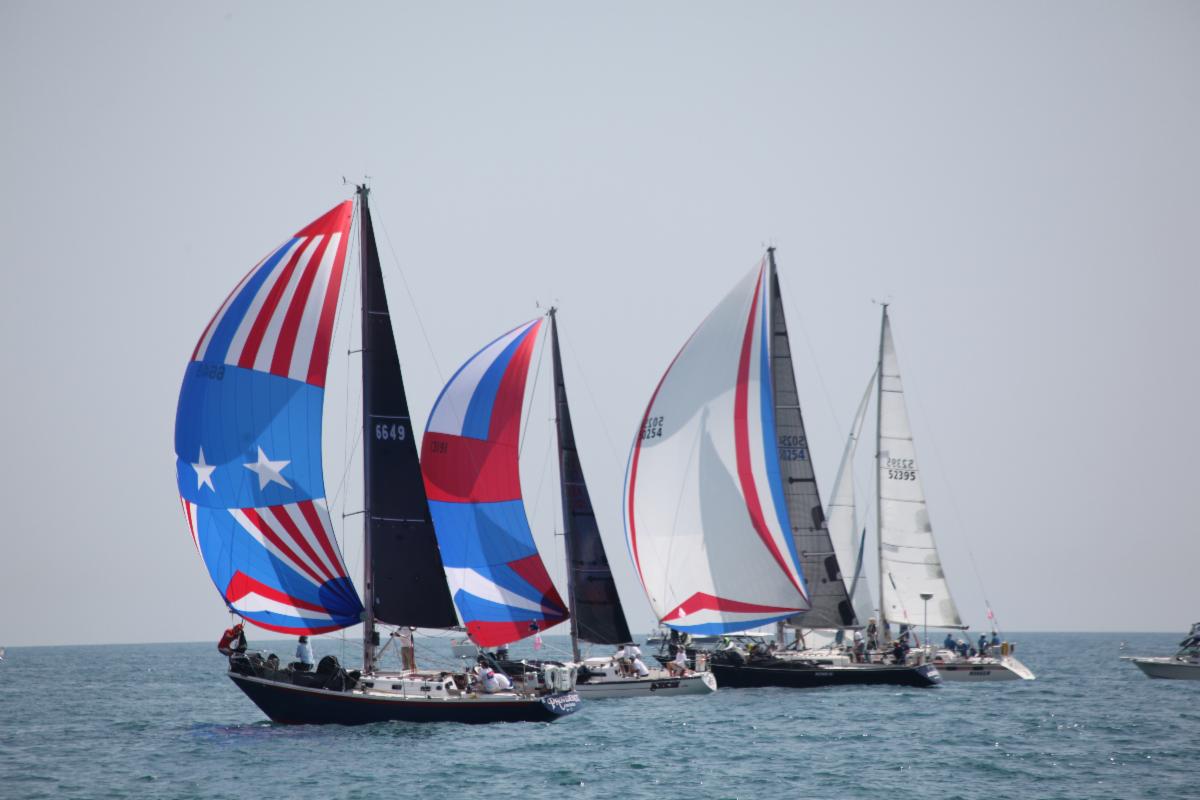
Each July, one of the great traditions of the Great Lakes begins just off Chicago’s lakefront.
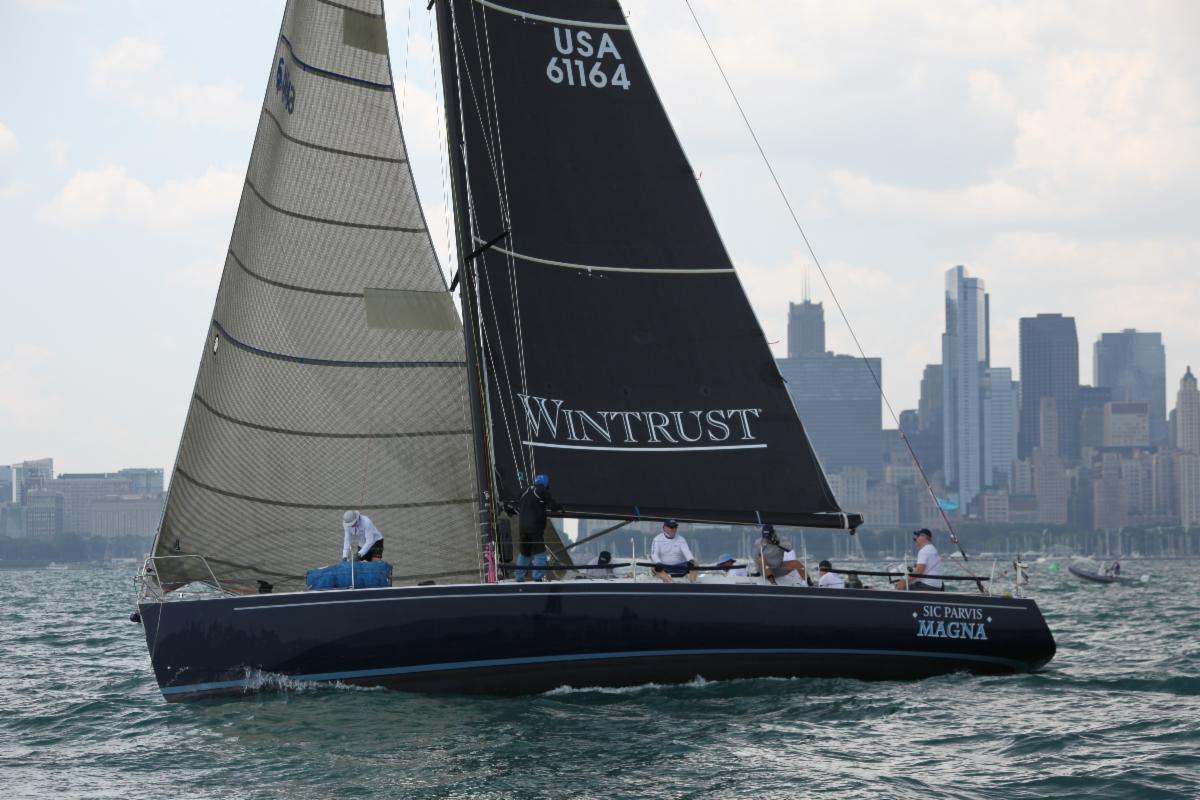
The Chicago Yacht Club Race to Mackinac, known simply as “The Mac,” is more than a sailing race. It is a test of seamanship, courage, preparation, teamwork, and deep respect for Lake Michigan. For sailors, it is a 333-statute-mile journey north.
For those of us who love lighthouses, it is something even more poetic.
It is a race between two lighthouses.
| | |
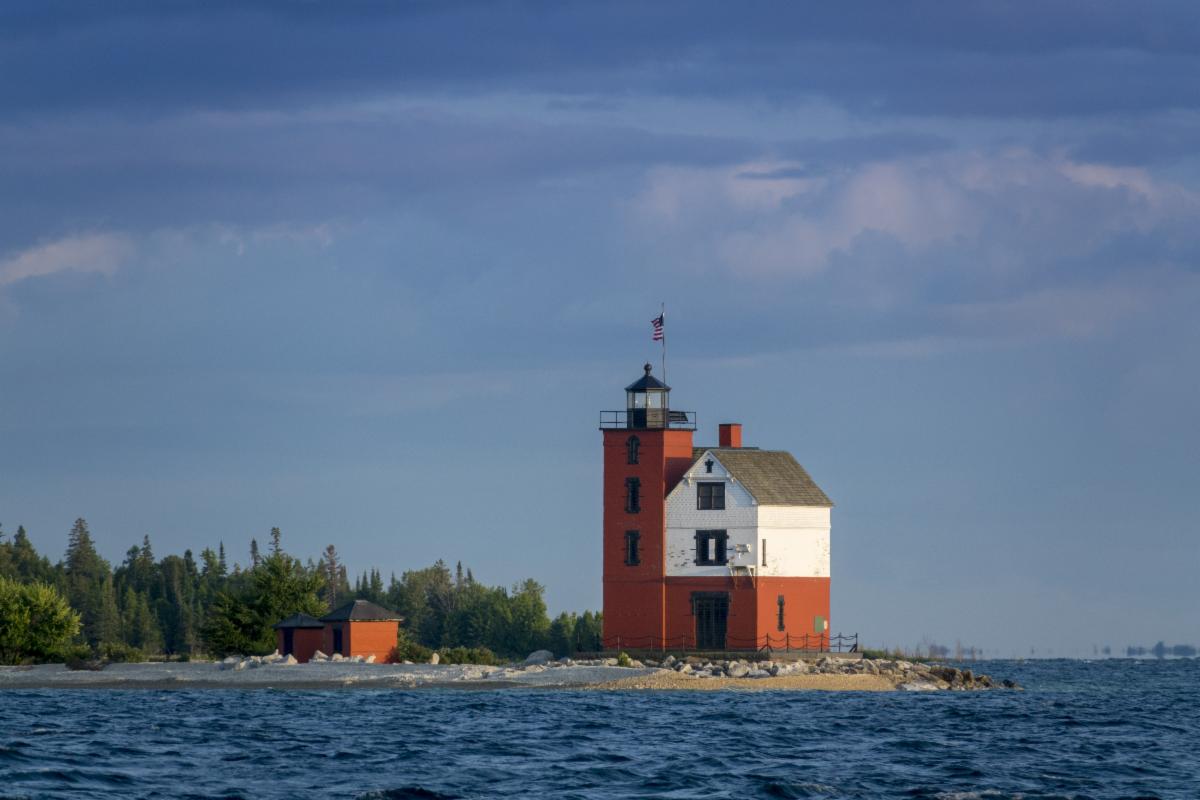
At the southern end and the Start Line stands the Chicago Harbor Lighthouse, watching over the entrance to our city’s harbor, just east of Navy Pier and the mouth of the Chicago River. At the northern end, near the Straits of Mackinac, stands the Round Island Lighthouse, one of Michigan’s most beloved beacons, welcoming sailors as they approach Mackinac Island.
Two lighthouses. Two shorelines. Two powerful symbols of Great Lakes maritime history.
This race is personal for FOCHL. For many of us, the Race to Mackinac is more than a historic sailing tradition — it is part of our own story on the lake. For more than a decade, yours truly and our Board Secretary and resident historian, Steve Clements, have had the honor of serving on the CYC Race-to-Mac Race Committee as the PIN boat at the start of the Race to Mackinac.
From that position on the water, you feel the energy of the fleet, the tradition of the race, and the presence of the Chicago Harbor Lighthouse standing watch over it all.
Several members of the FOCHL Working Group also bring deep Race-to-Mac experience to our mission. Graham, Judith and Ross, Katye, Anne, Aimee, and Christina are veteran Race to Mac racers who understand the skill, preparation, teamwork, and respect for Lake Michigan that this race demands.
Together, their experience reminds us that the Chicago Harbor Lighthouse is not just a landmark we admire from shore — it is an active part of Chicago’s boating and sailing life.
It is one of those moments when Chicago’s maritime past and present come together.
The Chicago Harbor Lighthouse was built in 1893 during the World’s Columbian Exposition and later moved to its present location during the 1917–1918 breakwater expansion that helped protect Municipal Pier, now Navy Pier.
For more than a century, it has marked the entrance to Chicago’s harbor, standing as the city’s only surviving lighthouse and a familiar landmark for generations of boaters, sailors, photographers, and lakefront dreamers. It is a Chicago Landmark, a National Register property, and the heart of our mission at Friends of the Chicago Harbor Lighthouse.
The Round Island Lighthouse was built in 1895 on a sand and cobblestone spit between Round Island and Mackinac Island. Commissioned in 1896, it helped guide vessels through the narrow and often challenging waters of the Straits of Mackinac.
After decades of service, it was decommissioned in 1947 when the nearby Round Island Passage Light took over its navigational duties. Like so many historic lights, Round Island faced years of neglect and storm damage, but thanks to dedicated preservationists, volunteers, and lighthouse lovers, it was stabilized, restored, and relit.
Today, it remains one of the great symbols of Mackinac Island and a reminder of what is possible when people refuse to let a lighthouse disappear.
That shared story matters.
Both Chicago Harbor and Round Island were built during the great age of Great Lakes navigation. Both stood watch over busy waterways that shaped the growth of their regions. Both protected mariners in waters that can be beautiful one moment and unforgiving the next.
And both remind us that lighthouses were never built as decorations. They were built as promises.
A promise that someone was watching.
A promise that the harbor was near.
A promise that those out on the water mattered.
| |
For Race to Mackinac sailors, the Chicago Harbor Lighthouse is one of the last fixed landmarks of home before the long run up Lake Michigan. Round Island Lighthouse becomes one of the first signs that the dream is almost complete.
Between them are shifting winds, quiet nights, storms, calms, strategy, teamwork, fatigue, and the unforgettable magic of freshwater offshore sailing.
As the 117th Chicago Yacht Club Race to Mackinac gets underway this July, FOCHL sends our best wishes to every skipper, crew member, race volunteer, family member, and supporter who helps make this historic race possible.
Sail fast, sail safely, and take a moment as you pass the Chicago Harbor Lighthouse to remember that this beacon has been part of Chicago’s maritime story for more than 130 years.
We also encourage the Race to Mackinac community to celebrate both ends of this remarkable course. Support the preservation of the Chicago Harbor Lighthouse. Support the continued care and appreciation of the Round Island Lighthouse.
These two lights may stand hundreds of miles apart, but through this race, they are forever connected.
One marks the start of the adventure.
One marks the dream at the finish.
Both deserve to shine for generations to come.
To help keep these lights shining, please consider making a donation:
Support the Chicago Harbor Lighthouse:
https://give.savethelighthouse.org
Support the Round Island Lighthouse:
http://www.roundislandlightmichigan.com/donate-now.html
From all of us at Friends of the Chicago Harbor Lighthouse, fair winds and following seas to the 117th Race to Mackinac fleet.
Sail fast. Dream big. Help us Save the Lighthouse.
| | |
From the Photo Archive: The Last Generation of Lighthouse Keepers
By: Steve Clements
| | |
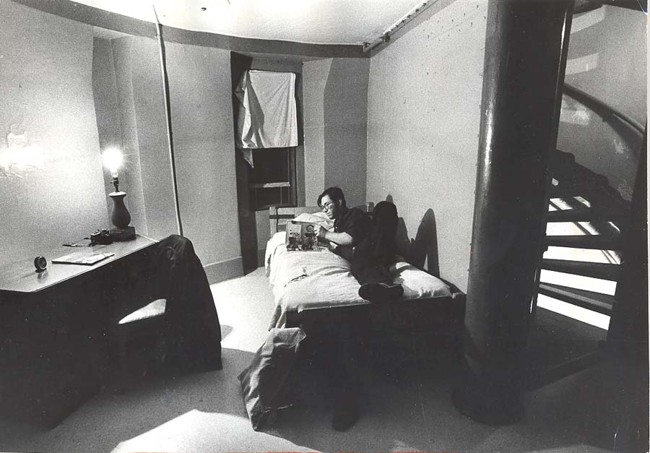
The young Coast Guardsman in the photograph above probably had little idea he was witnessing the end of an era.
The image, dated October 28, 1976, shows Fireman Fred Karlhofer relaxing on his bunk inside Chicago Harbor Lighthouse. He is reading a car magazine. Nearby sits a simple desk, a chair, a camera, and a bare light bulb. A towel hangs over the window in the door, perhaps to darken the room while he sleeps. Behind him, the spiral stairway climbs toward the lantern room.
It is an ordinary moment. Yet, in hindsight, it represents one of the final chapters in nearly a century of continuous human occupation at Chicago Harbor Lighthouse.
Most of us think of lighthouse keepers as the men who polished brass, wound clockworks, tended great Fresnel lenses, and faithfully maintained their stations for decades. That image was certainly true during much of Chicago Harbor Lighthouse's history.
| |
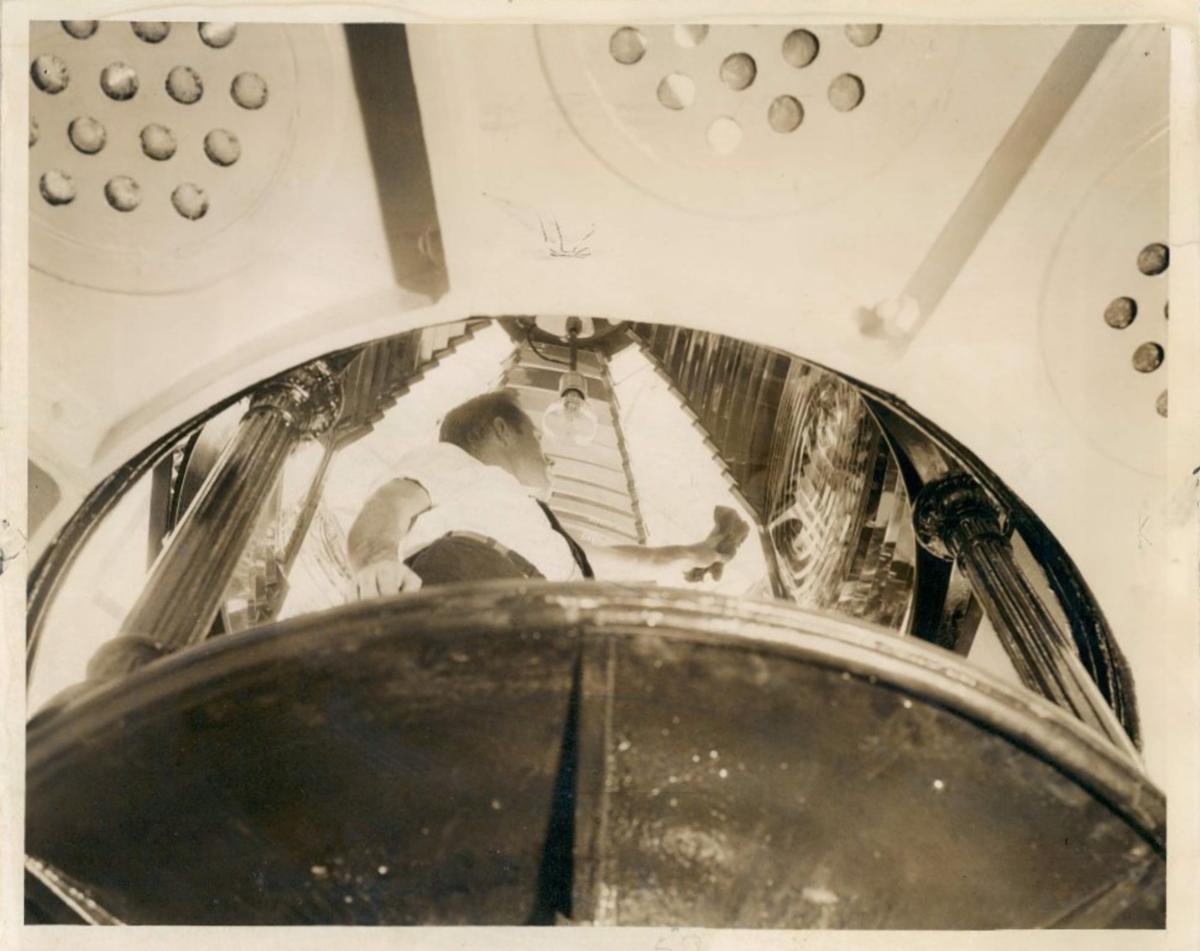
A 1939 photo of an unidentified lighthouse keeper working on the daily polishing
of the Chicago Harbor Lighthouse Fresnel Lens
| |
The 1929 Lighthouse Service inventory paints a picture of an incredibly sophisticated operation. Four keepers staffed the station. They maintained the third-order Fresnel lens, a Type F diaphone fog signal, diesel engines, compressed-air systems, electrical equipment, heating systems, communications equipment, and every other system necessary to operate what was, in effect, a small industrial facility standing alone in Lake Michigan.
Keeping the light itself operating required constant attention.
The great Fresnel lens revolved on thirty-five one-inch steel balls. A clockwork mechanism, powered by a seventy-foot cable attached to a 125-pound descending weight, kept the lens turning. Every three hours and twenty minutes, from dusk to dawn, the on-duty keeper had to wind the mechanism again. Generations of keepers lived by that relentless rhythm, tending not only the lens and its clockwork but also every system that kept the station operating safely. Over years of service, they came to know the lighthouse intimately: every click of the clockwork escapement, every sound of the machinery, every vibration of the fog signal, and every subtle change that signaled something needed attention, day after day.
For many of those keepers, the lighthouse was more than a workplace.
It was home.
Some spent decades assigned to the same station. For example, Thomas J. Bailey, a civilian employed by the US Lighthouse Service, was Principal Keeper when the 1893 Lighthouse was first lighted, and he remained in his position for 13 years. They settled in, developed routines, and became intimately familiar with every inch of the structure and equipment. Their profession demanded not only technical skill but extraordinary dedication.
By the time Fred Karlhofer arrived, however, that world had changed significantly.
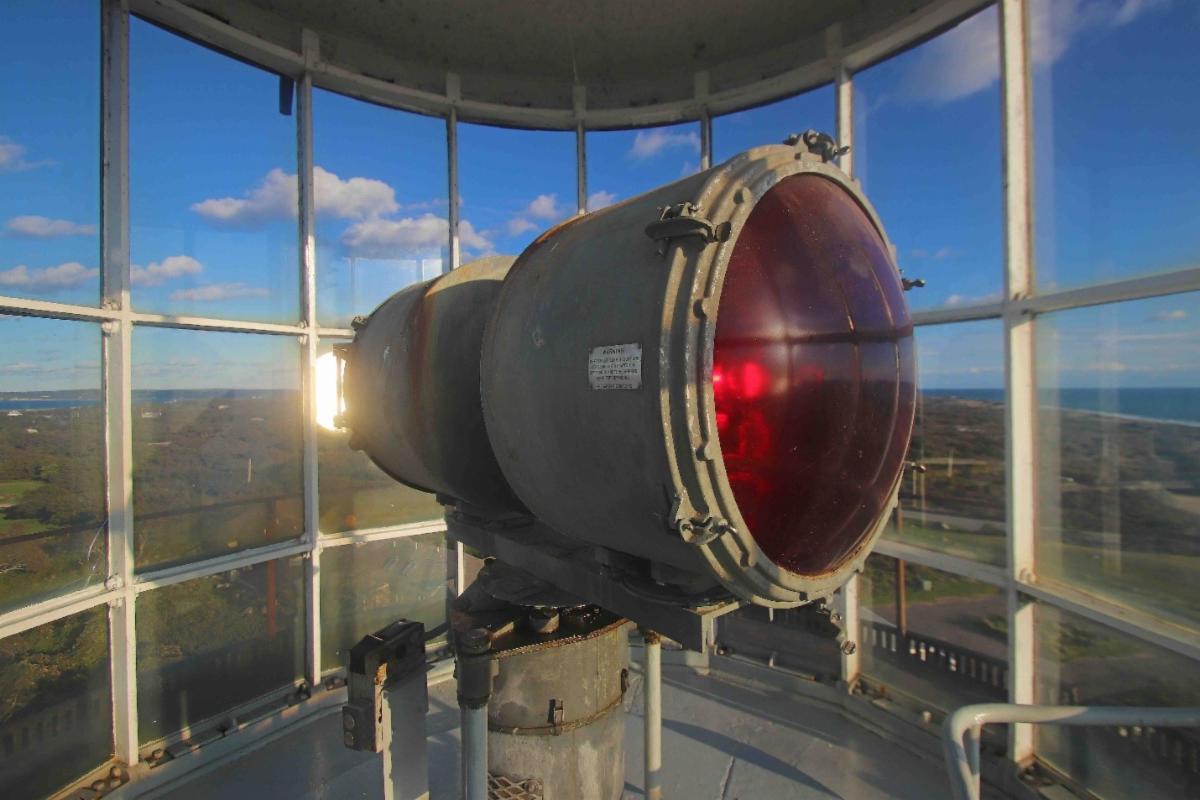
In the late 1960s, the historic Fresnel lens was removed and replaced with a modern dual-rotating DCB-224 aerobeacon.
Along with the lens, the elaborate clockwork that had driven it for more than seventy years disappeared. The descending weight, the clock cable, the governor, and the constant routine of winding and adjusting the mechanism became history.
Electric motors now perform work that generations of keepers had once carried out by hand.
| | |
DCB-224 Aerobeacon installed at Gay Head Lighthouse in Massachusetts. Much simpler and
easier to maintain and operate than a traditional Fresnel lens.
| | |
It would be easy to assume that once the clockwork disappeared, so did the people.
But they did not.
Karlhofer's photograph reminds us that nearly a decade passed between the removal of the Fresnel lens and the lighthouse's automation in 1979.
During those years, Coast Guardsmen continued living and working at Chicago Harbor Lighthouse, even though the station had entered an entirely new phase of its existence.
That raises a fascinating question.
Why?
The answer is that a lighthouse was always much more than a lantern.
Although the famous lens no longer required daily tending, the station itself still demanded skilled personnel. Motors, electrical systems, generators, communications equipment, fog-signal machinery, emergency systems, structural maintenance, and countless other mechanical components continued to require inspection and upkeep. Someone still had to ensure that one of the busiest harbor entrances on the Great Lakes remained a dependable aid to navigation.
Karlhofer's title offers another clue.
He was identified not as a lighthouse keeper but as a Coast Guard Fireman, a junior engineering designation within the service. While we know very little about Karlhofer himself, the title suggests that his work and life on the lighthouse was likely quite different from that of the civilian keepers who had occupied the lighthouse decades earlier.
The photograph itself seems to reinforce that impression.
His room is remarkably sparse. A bunk. A chair. A small desk. A few personal belongings. Rather than the home of a career lighthouse keeper, it has the feel of temporary duty quarters. There are no obvious signs of someone settling in for years. Instead, it appears to be the room of a young serviceman assigned where and when he was needed.
That small detail may tell us something important about how lighthouse service had evolved.
Earlier keepers often spent years, even decades, at a single station. By the 1970s, Coast Guard personnel were commonly assigned wherever operational needs required. While we do not know how long Karlhofer served at Chicago Harbor Lighthouse, he appears to represent a different generation, one whose role was less about making a lighthouse a home and more about maintaining an increasingly automated facility.
It is also tempting to wonder whether Karlhofer and his fellow Coast Guardsmen were doing something even more significant.
Throughout the 1960s and 1970s, the Coast Guard transformed hundreds of staffed light stations into automated aids to navigation. That transition did not happen overnight. New equipment had to be installed, tested, maintained, and proven reliable before resident personnel could finally be withdrawn.
Perhaps that was part of the work taking place at Chicago Harbor Lighthouse during those final years.
Perhaps Karlhofer belonged to the generation responsible for guiding the
station through its last transition from a place where people lived to a place that no longer needed them.
We may never know exactly what his daily routine looked like. We do know that three years after this photograph was taken, the last resident personnel departed, ending nearly ninety years of continuous human occupation of the lighthouse.
Looking at the image today, it is impossible not to notice the contrast.
The cast-iron tower surrounding Karlhofer was the same structure constructed during the World's Columbian Exposition in 1893 and first lighted immediately after its closing. Beneath him were floors once occupied by generations of keepers whose lives revolved around clockworks, fog signals, and the relentless responsibility of tending the light.
Yet in his hands was a modern car magazine.
It is a wonderfully ordinary detail.
It reminds us that the final generation to live at Chicago Harbor Lighthouse were not legendary keepers from the US Lighthouse Service and another age. They were young Coast Guardsmen serving during a period of enormous technological change.
They inherited a nineteenth-century lighthouse while helping prepare it for a twenty-first-century future.
Fred Karlhofer may not have realized he was among the last.
But thanks to one quiet photograph, we can appreciate the remarkable transition he helped represent.
In the end, this is not simply a story about the last lighthouse keepers.
It is the story of some of the last people who called Chicago Harbor Lighthouse home.
Epilogue: One last mystery
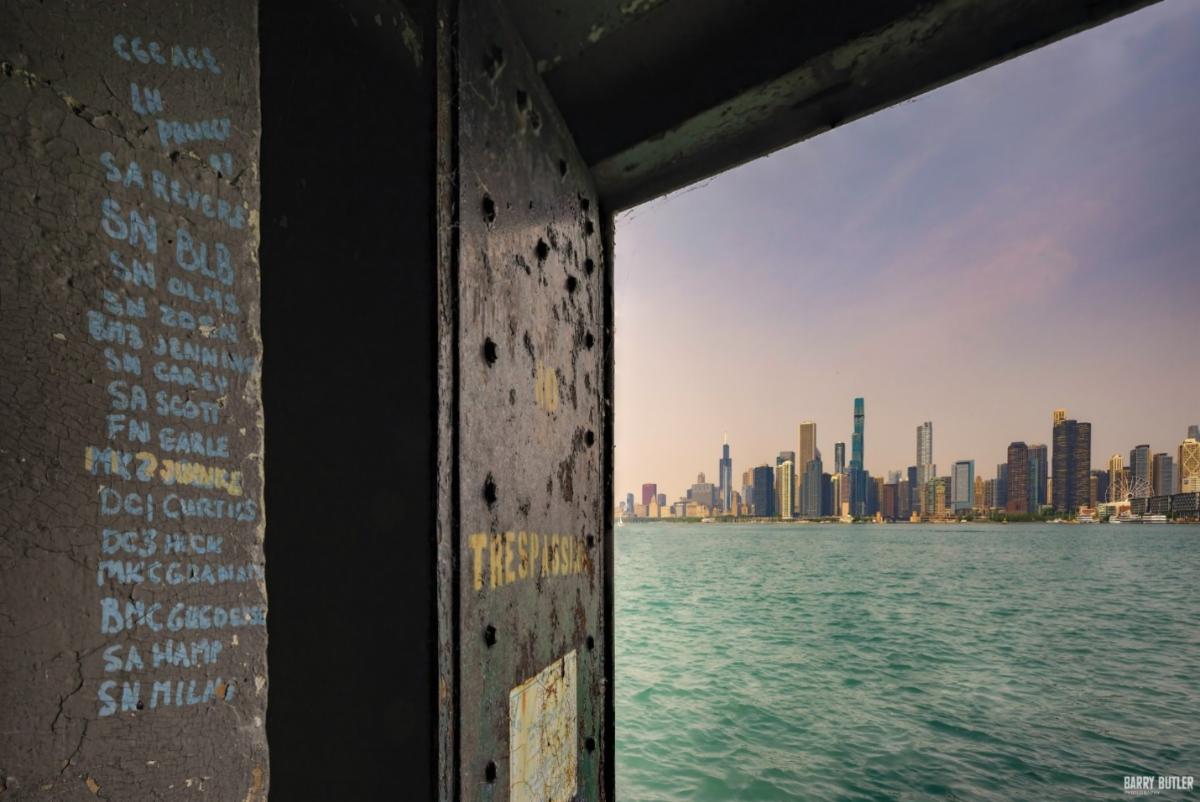
One final mystery remains. Painted on the inside of the door frame where generations of keepers, Coast Guardsmen, and supply crews stepped onto the lighthouse is a list of names accompanied by abbreviations such as BM3, MK2, DC1, SN, and SA, which are recognized as U.S. Coast Guard occupations and pay grades used during the 1970s.
| | Looking toward Chicago through the doorway once used by lighthouse keepers and Coast Guardsmen. On the left, a faded list of Coast Guard names and ratings offers one final mystery: could these have been the men who locked the door for the last time? Photo Credit: Barry Butler | | |
We may never know with certainty who these men were or why they left their names behind. Perhaps they were simply a maintenance crew passing through. Or perhaps they were the Coast Guardsmen who, as the lighthouse was automated in 1979, emptied the building of its equipment, furnishings, and the countless necessities of daily life before securing the station for the last time. If so, these faded names may represent the final generation of Coast Guardsmen to walk out that door, leaving behind a lighthouse that would continue to shine, but never again as someone's home.
As Friends of the Chicago Harbor Lighthouse works to preserve and restore this remarkable landmark, we are mindful that our mission extends far beyond saving cast iron, brick, and steel. We are preserving the stories of the people who gave the lighthouse its purpose.
Every artifact, logbook, and photograph helps us better understand the generations of keepers and Coast Guardsmen who called the lighthouse home. Many of their names have faded from memory, and we know only a little about Fireman Fred Karlhofer.
Yet one quiet photograph reminds us that history is not made only by famous names or dramatic events. Sometimes it is found in the ordinary moments of ordinary people whose lives intersected with an extraordinary place.
By preserving and sharing these stories, we ensure that future generations will come to appreciate not only how Chicago Harbor Lighthouse worked, but also the dedicated men who kept its light and its legacy alive.
| | Light the Way 2026: Be Part of the Night That Helps Save the Chicago Harbor Lighthouse | | |
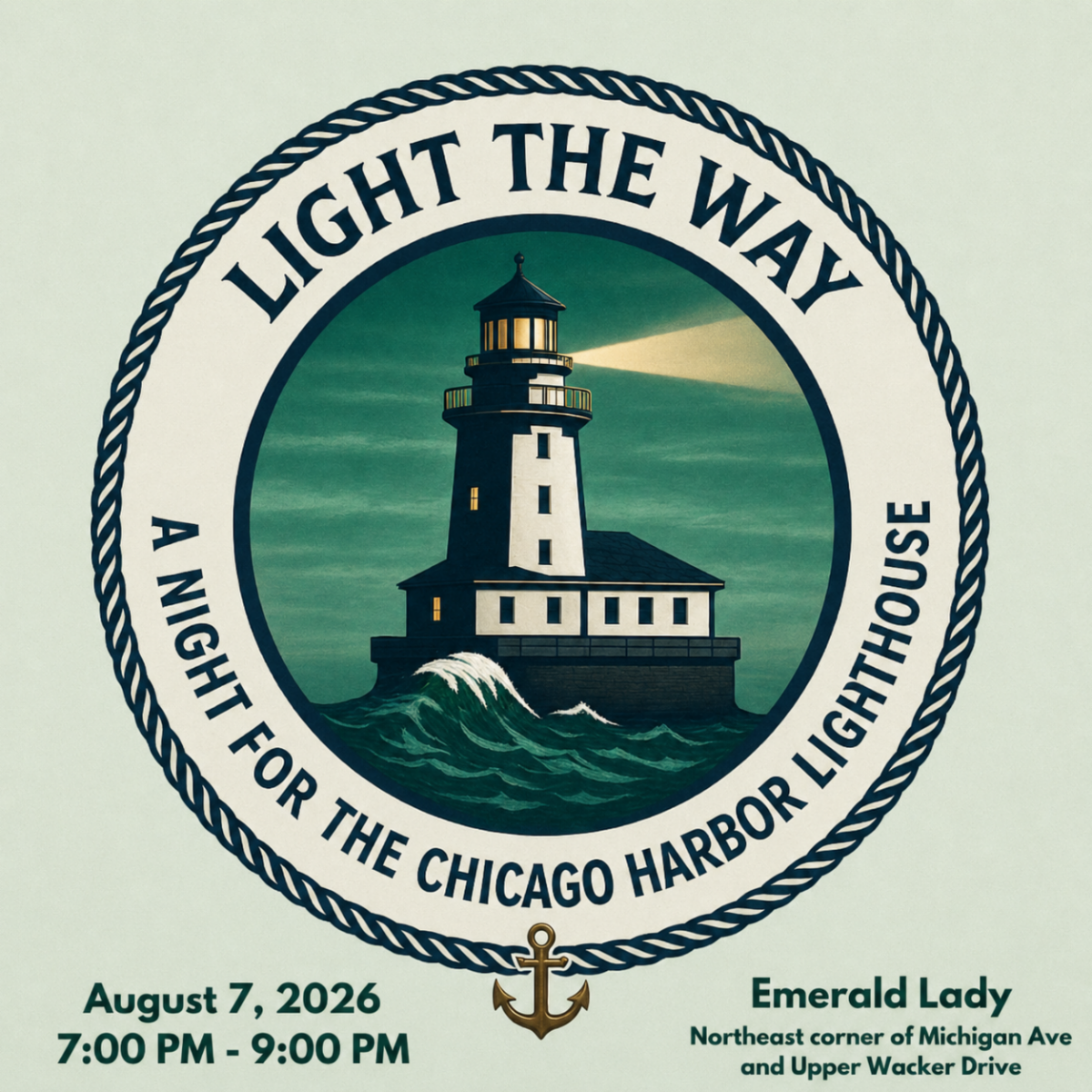
On Friday, August 7, 2026, supporters from across Chicago will come together for one unforgettable evening with one shared purpose—to help preserve one of our city's most iconic landmarks.
Light the Way 2026: A Night for the Chicago Harbor Lighthouse is more than a fundraiser. It is an opportunity to become part of the story of restoring the Chicago Harbor Lighthouse for future generations.
The response has already been incredible. Nearly half of all available tickets
sold during the first week, and we fully expect this event to sell out well before National Lighthouse Day. If you're planning to attend, now is the time to reserve your seats.
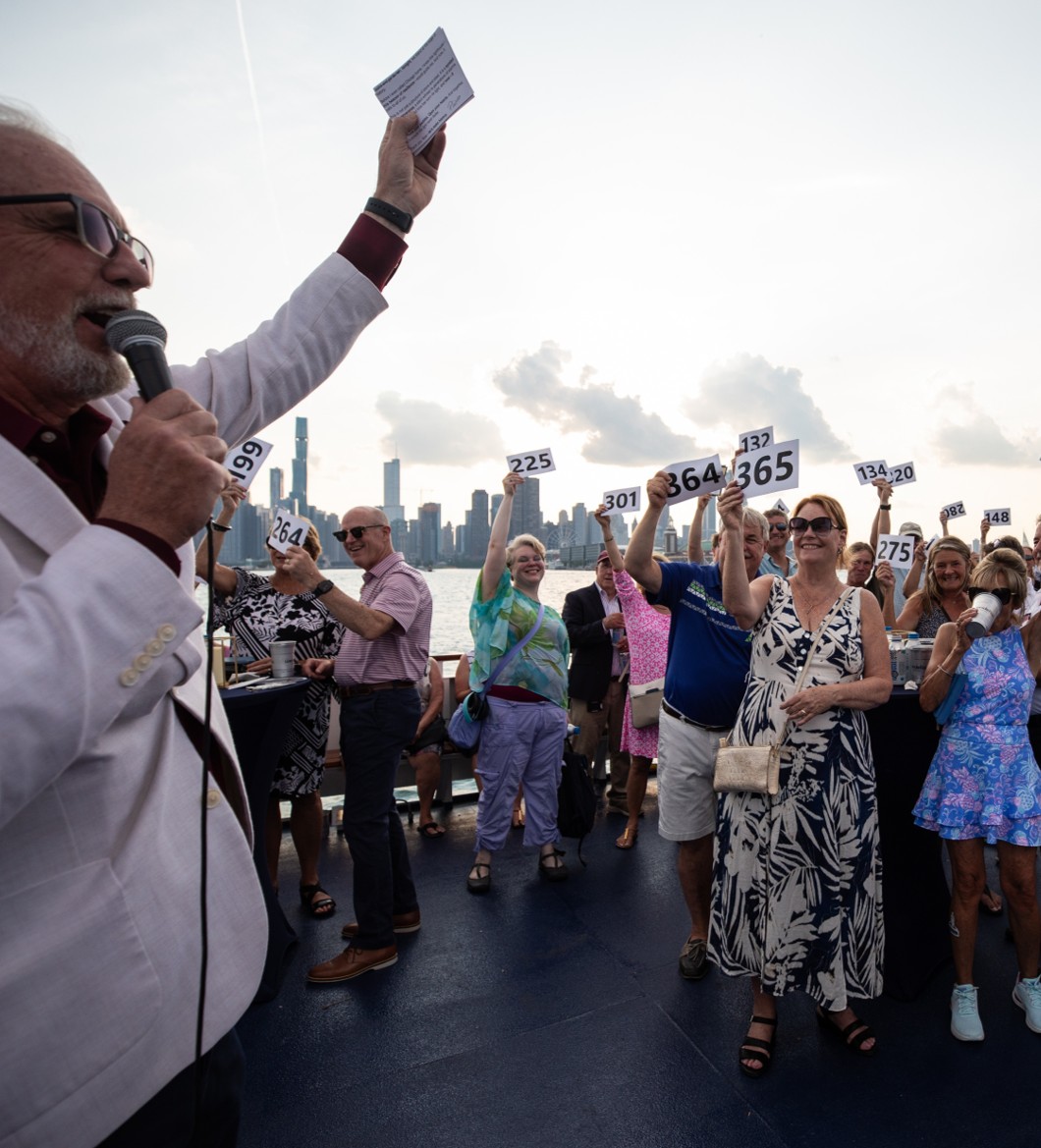
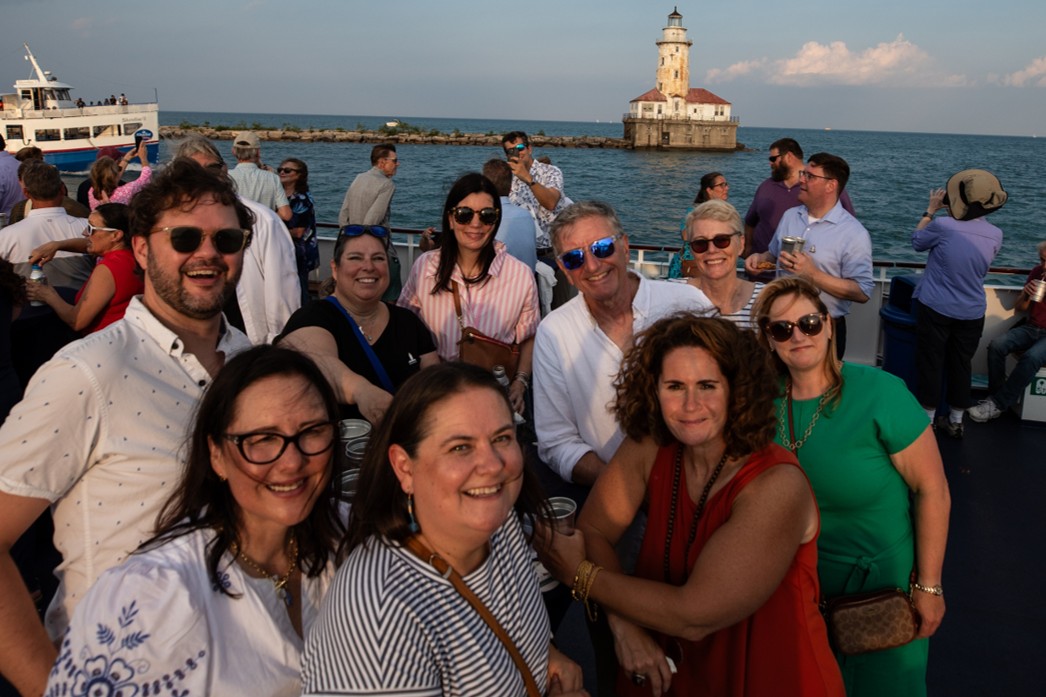
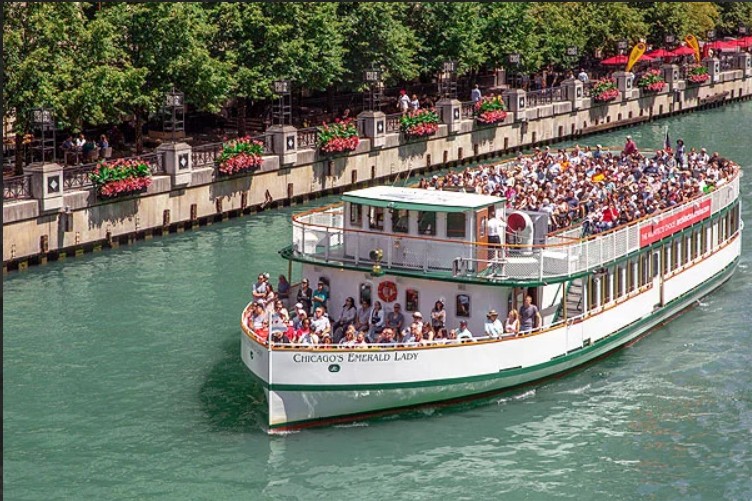
Guests will begin the evening with an exclusive waterfront Happy Hour at The Northman Beer & Cider Garden before boarding Chicago's First Lady's Emerald Lady for a two-hour cruise on beautiful Lake Michigan. Together we'll celebrate Chicago's maritime heritage while enjoying spectacular skyline views, exceptional food from Harry Caray's, exciting live and silent auctions, inspiring stories about the lighthouse, and opportunities to make a lasting impact on one of Chicago's most treasured landmarks.
| | |
Most importantly, every ticket purchased helps advance our mission.
We are closer than ever to taking ownership of the lighthouse, and every dollar raised helps prepare us for the preservation and restoration work that will soon begin.
Event Details
Friday, August 7, 2026
6:00–7:00 PM
Waterfront Happy Hour at The Northman Beer & Cider Garden
7:00–9:00 PM
Cruise aboard Chicago's First Lady Emerald Lady
Tickets: $200 per person
Purchase your tickets today:
https://savethelighthouse.org/light-the-way-2026
Become a Sponsor
Looking for an opportunity to make an even greater impact? We are still welcoming event sponsors who want to help preserve one of Chicago's most recognizable landmarks while aligning their business or organization with a meaningful community initiative.
Sponsorship opportunities provide valuable recognition before, during, and after the event while helping maximize the funds raised for the restoration of the Chicago Harbor Lighthouse.
Donate a Silent Auction Item
We're also seeking donations for our silent and live auctions. Unique experiences, artwork, sports tickets, vacation stays, dining packages, boating experiences, gift certificates, and one-of-a-kind items all help make the evening a success while raising critical funds for our mission.
If you or your business would like to donate an auction item or discuss sponsorship opportunities, we'd love to hear from you.
Contact us at info@savethelighthouse.org or 312-883-1400.
This is a pivotal year for the Friends of the Chicago Harbor Lighthouse. Together, we have built incredible momentum, and we are on the verge of beginning the next chapter in the lighthouse's history.
Whether you attend, become a sponsor, donate an auction item, or simply help spread the word, you are helping ensure that this Chicago icon will continue to inspire generations to come.
We hope you'll join us on August 7 as we Light the Way—and help write the next chapter in the story of the Chicago Harbor Lighthouse.
| Share the Story of the Chicago Harbor Lighthouse—One Note at a Time | |
Some photographs do more than capture a moment—they tell a story.
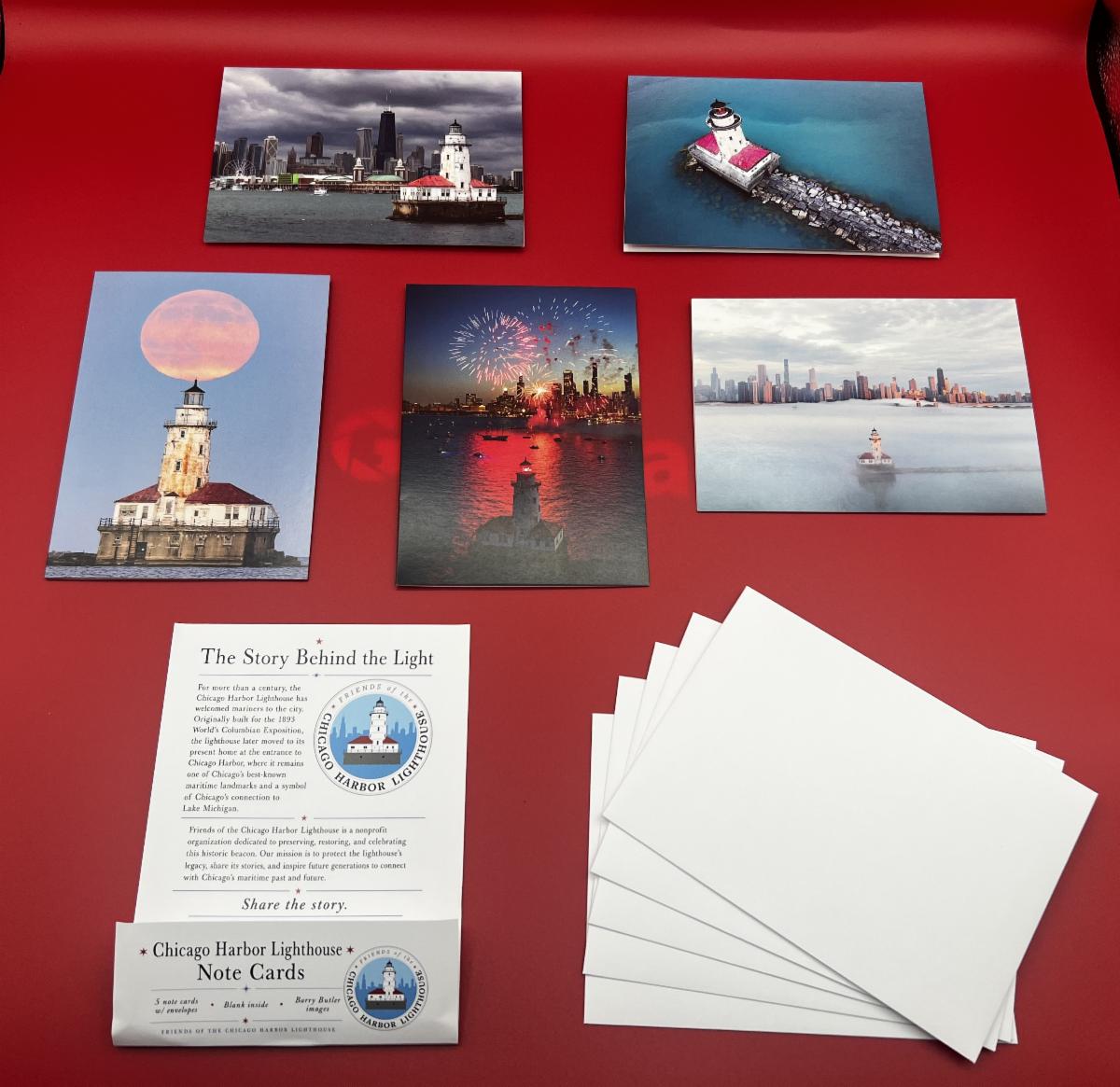
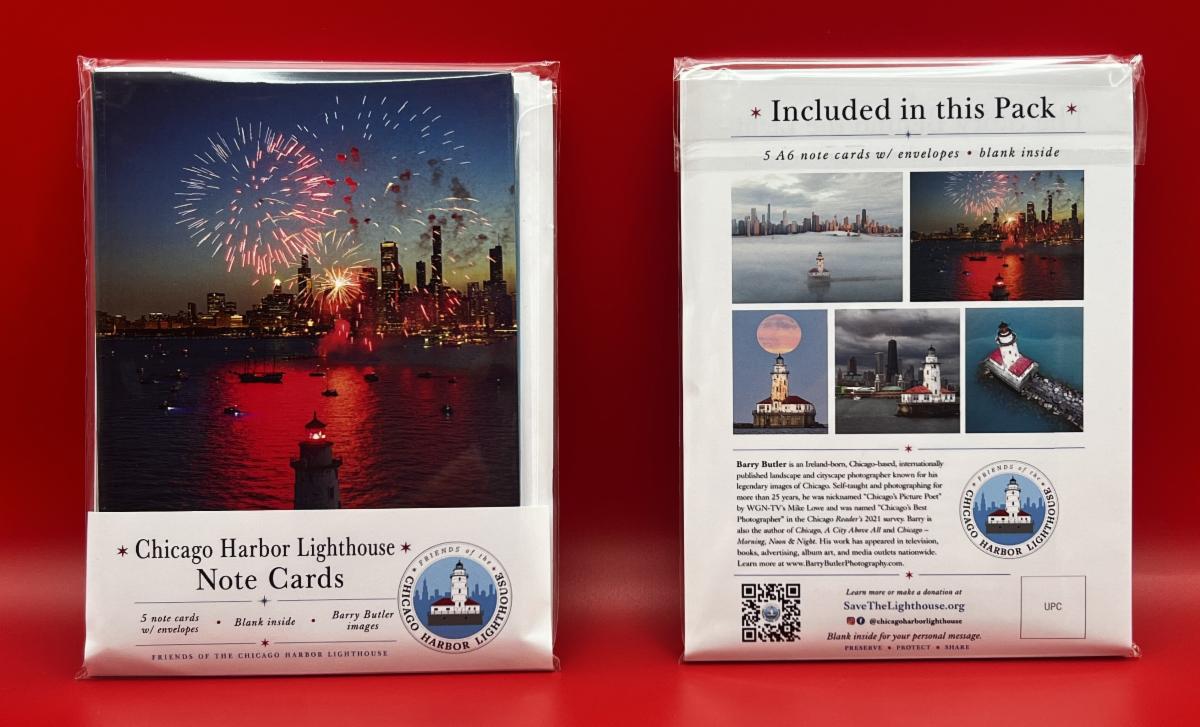
We are incredibly excited to introduce our new exclusive Barry Butler Photography Chicago Harbor Lighthouse Note Card Collection, created exclusively for the Friends of the Chicago Harbor Lighthouse.
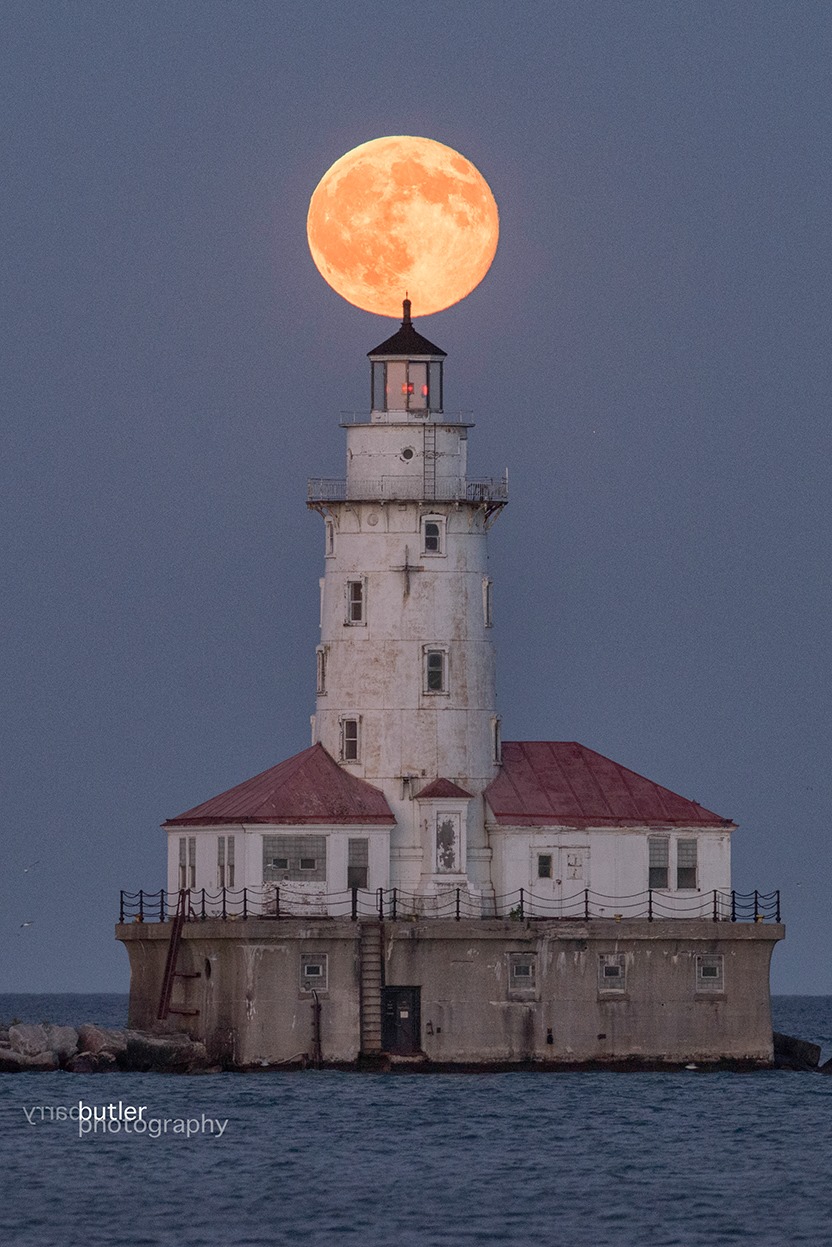
Barry has spent years photographing Chicago's lakefront, patiently waiting for the perfect light, weather, and perspective to showcase one of our city's most iconic landmarks. The result is a beautiful collection of images that celebrates the strength, beauty, and timeless presence of the Chicago Harbor Lighthouse.
Each premium set includes five stunning note cards featuring Barry's remarkable photography, making them perfect for thank-you notes, birthdays, special occasions, or simply keeping in touch with family and friends. They're also a wonderful keepsake for anyone who loves Chicago, Lake Michigan, boating, photography, or lighthouses.
But these note cards represent something even more meaningful.
Every purchase helps support the preservation and future restoration of the Chicago Harbor Lighthouse. As Friends of the Chicago Harbor Lighthouse prepares to take ownership of this historic beacon, every item purchased through our store helps us move one step closer to opening its doors for future generations to experience.
These note cards made quite an impression during our first public event at the Windy City Boat & Yacht Show. Visitors were drawn to Barry's incredible photography, and many told us they couldn't leave without taking a set home. We are grateful for that support, and we're thrilled to now make them available to everyone.
Our sincere thanks go to Barry Butler for his extraordinary generosity in allowing us to share his artwork in support of this mission. His photography has helped countless people see the lighthouse in a new light, inspiring others to become part of its future.
Whether you're looking for a thoughtful gift or simply want to support the restoration of one of Chicago's most treasured landmarks, we hope you'll consider adding a set to your collection.
Together, we're preserving more than a lighthouse.
We're preserving Chicago's story.
Order your exclusive Barry Butler Photography Note Card Set today using the link below and help us Save the Lighthouse.
| Ways to Help Save the Lighthouse | |
Friends of the Chicago Harbor Lighthouse is moving closer to the day when we can begin the important work of making safe access, stabilizing the structure, and restoring this beloved Chicago landmark. We need your help to keep that momentum going.
Here are a few ways you can support the mission:
Donate: Every gift moves us closer to restoration.
https://give.savethelighthouse.org
Buy Light the Way 2026 tickets: Join us Friday, August 7, 2026, for our National Lighthouse Day fundraiser aboard Chicago’s First Lady.
Become a sponsor: Help offset event costs and make a greater impact.
Donate a silent auction item: Experiences, artwork, gift cards, boating packages, dining, sports tickets, and vacation stays all help make our fundraiser a success.
Purchase FOCHL merchandise: Shirts, hats, stickers, patches, and notecard sets help raise awareness.
Share this newsletter: Forward it to someone who loves Chicago, history, boating, or the lakefront.
Every conversation, donation, ticket, volunteer hour, and shared story moves us closer to restoring, celebrating, and safely opening the Chicago Harbor Lighthouse for future generations.
| | |
We’re proud to share that Friends of the Chicago Harbor Lighthouse has again earned the 2026 Candid Gold Seal of Transparency.
This recognition reflects our ongoing commitment to openness, accountability, and responsible stewardship. It is important to us that our donors, supporters, and community know we hold ourselves to the highest standards as we work to preserve, restore, and celebrate the Chicago Harbor Lighthouse.
To learn more about Candid and the Gold Seal of Transparency, visit Candid.org.
| | If you are part of an organization that has an interest in financially supporting our efforts to Preserve, Restore, and Celebrate the Chicago Harbor Lighthouse, please reach out to Nick Naber (nicknaber@savethelighthouse.org), our Board Treasurer and a member of our fundraising working group. | | Copyright © 2026 Friends of the Chicago Harbor Lighthouse - All Rights Reserved. | | | | |