Are you ready for the April 8
total solar eclipse?
By GUEST BLOGGER Posted: Feb 15, 2024
Photo by Mathew Schwartz on Unsplash.
By Dennis Schatz, Institute for Learning Innovation and past president of the National Science Teaching Association (NSTA).
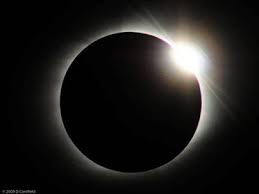
Do you remember the excitement around the 2017 total solar eclipse? Well, it is going to happen again on Monday, April 8 of this year! We will not have the opportunity to see another total eclipse cross the U.S. until 2045, so the coming April is the perfect opportunity to use this beautiful celestial event to inspire interest in science by everyone, and as a wonderful learning experience.
Everyone in North America (some 500 million people) will see at least a partial eclipse of the sun each time, while the people located in the narrow path on this map (courtesy of NASA) will see a total eclipse.
For many locations in the northeastern U.S., this eclipse will occur during prime afterschool programming time. And, many schools along the path of totality have canceled school, so out-of-school programs will need to be prepared to help their youth make the most of this rare celestial event.
To assist all types of individuals working with youth, the National Science Teaching Association (NSTA) produced a variety of free resources and guides about the eclipse. These are collected in a special eclipse page on the NSTA website. You can think of this as one-stop-shopping for information and activities related to the eclipse.
Among the materials available on the NSTA website are:
- Solar Eclipse Guide for Educators – This 28-page, illustrated booklet includes ways to find out what will happen at your location, background and teaching suggestions regarding the eclipse, plus safe viewing strategies.
- Solar Eclipse Guide for Administrators – Includes key information program administrators will need to encourage them to support youth observing the eclipse, rather than forbid them from going outside.
- Eclipse Handout to Share with Family Members and Friends – Two-page handout for the eclipse that gives the key facts about what happens during the eclipse and suggestions for safe viewing strategies.
- Eclipse Resources Collection – Guides to free eclipse-related activities you can do at home; eclipse connections in fiction, films, music, and other fields; reliable eclipse websites to go to; and more.
- NSTA Journal Articles with Classroom Learning Experiences – These provide effective teaching strategies for use in your program.
- Links to other key organizations with resources related to the eclipse.
Key to making the eclipses a successful learning experience is knowing how to observe them safely. IMPORTANT SAFETY NOTE: You cannot look directly at the partially eclipsed or annular eclipse without observing the eclipse indirectly or using special viewing filters (glasses).
One of our favorite ways to view a solar eclipse is to use something found in most homes - a colander for rinsing pasta or salad. To use it during the eclipse, stand with your back to the Sun and hold the colander so that the Sun’s light shines through it onto the ground or a wall. Inside the colander’s shadow there will be many tiny images of the eclipsed Sun.
You can purchase safe-solar-viewing glasses inexpensively, and there are many easy-to-do indirect ways to view the eclipse. See more detail about this in the NSTA Solar Eclipse Guide for Educators.
The eclipse provides a wonderful, free laboratory for exploring the predictable way nature’s cycles work. May you have clear skies to experience the awe-inspiring total solar eclipse.
|