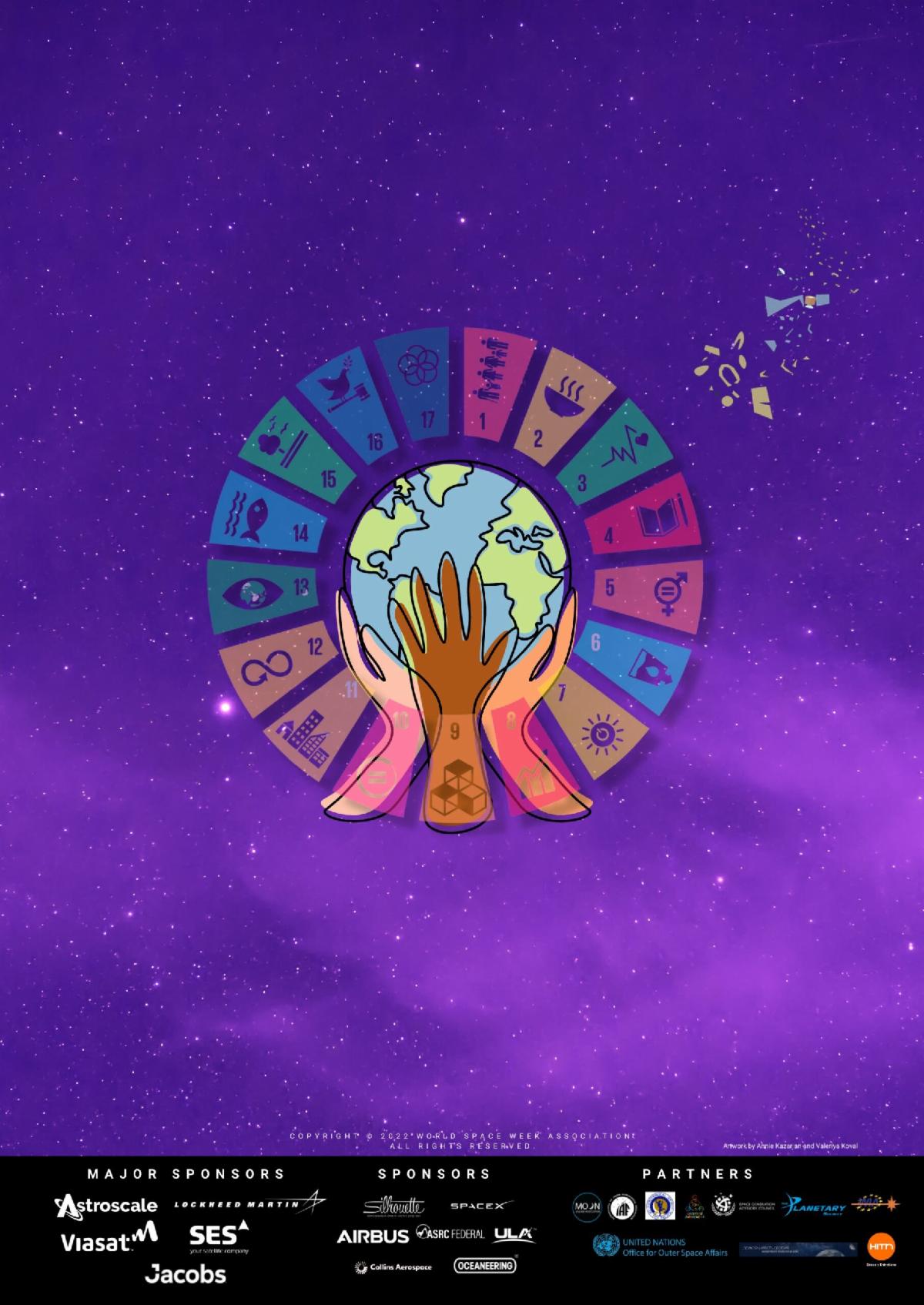
From orbiting research labs to satellites that track hurricanes and relay telecommuniations around the world, engineering's contributions to space exploration have also benefited life on Earth. It takes diverse teams to unlock the secrets of the universe - and K-12 classrooms hold the key. Your rocket scientists will have a blast doing this activity marking World Space Week October 4 - 10. See who sails to glory!
|
|
Bonus points:
World Space Week's educational resources include science and language arts activities based on Robert A. Heinlein's short story, "Have Spacesuit - Wil Travel." |
|
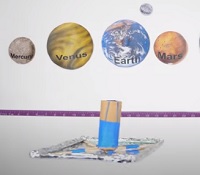
Teams of students in grades 7 to 9 follow the engineering design process to construct and improve model solar sails made of aluminum foil to move cardboard tube satellites through “space” on a string. During the process, they learn about Newton’s laws of motion and the transfer of energy.
|
|
|
|
|
|
Talk about "high impact" engineering! On September 26, NASA intentionally crashed a small spacecraft into an asteroid, providing the world's first full-scale demonstration of planetary defense missions.
|
|
|
|
U.S. students in grades 6 to 12 to submit ideas for high-altitude researcb experiments. Some 60 winning teams will receive $1,500 to build their experiments, which will be flown on a NASA balloon.
|
|
|
|
|
|
Earth Observation Day is Oct 11 |
Launched by the American Geosciences Institute in 1998, Earth Science Week this year focuses on the essential role of Earth science in helping pope make decisions that maintain and strengthen our planet's ability to support thriving life.
|
|
|
|
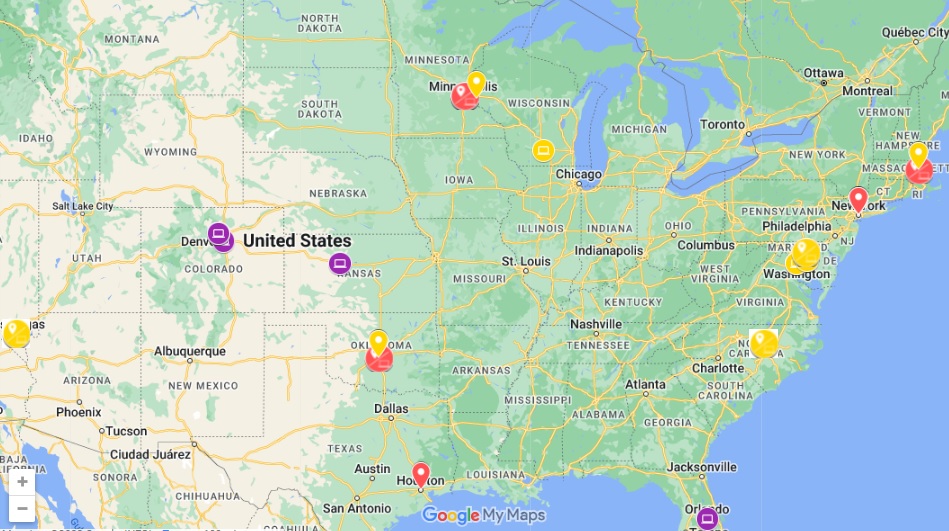
Find in-person and online engineering education offerings for kids as young as pre-kindergarten on the new interactive U.S. map created by ASEE's Pre-College Engineering Education Division.
|
|
Student Contests & STEM Programs |
|
"Striving for Sustainability Globally" is the theme of the American Geosciences Institute's video contest, which is open to individuals or teams of all ages, photgraphy contest, and K-5 visual arts contest. Winners will receive $300. Submissions due October 14, 2022.
|
|
High school teams from around the world develop and pitch real-world STEM solutions to aviation, health, cybersecurity, and other global problems in this prestigious entrepreneurial contest named for astronaut Pete Conrad. Register teams by Oct. 14, 2022.
|
|
U.S. middle and high school students in congressional districts nationwide gain hands-on practice with coding and computer science by designing apps. Competition deadline is Nov. 1, 2022.
|
|
U.S. high school students16 years old and up have an opportunity to work on a real research project with scientists and engineers over the summer at one of several Naval Research Labs around the country, receiving a stipend of $4,000 to $4,500. Applications are due Nov. 1, 2022.
|
|
Real-world mentors and problem solving for local communities is a hallmark of this NGSS-aligned virtual contest for 6th to 9th graders sponsored by the U.S. Army. State, regional, and national awards range from $500 to $5,000 in U.S. Savings Bonds. Registration closes Jan. 25, 2023.
|
|
How have female and/or non-white engineers contributed to engineering's greatest achievements? That's the topic of the latest National Academy of Engineering's annual EngineerGirl essay contest for students in elementay, middle, and high school. Winners receive up to $500. Submit essays by Feb. 1, 2023.
|
|
Held in partnership with Discovery Education, this annual challenges invites students in grades 5-8 to create 1-2 minute videos for a chance to win $25,000 and a 3M mentorship. Ten finalists and up to 51 state winners will be selected for their passion for science and spirit of innovation. Registration opens in December.
|
|
Amazon's K-12 STEM initiative for underserved students offers free coding camps, AP prep, and college scholarships.
|
|
Educator Grants & Professional Learning |
|
The Toshiba America Foundation offers up to $5,000 for middle and high school teachers to create engaging math and science lessons. Applications for 6-12th grade grants above $5,000 are due Nov. 1.
|
|
Ten K-12 teachers or college educators will receive $1,000 in Vernier technology, a one-year license for its award-winning Graphical Analysis Pro app, and three hours of virtual professional development. Apply by Nov. 30.
|
|
Open to teachers in all 50 states, the Distrcit of Columbia, and Department of Defense schools can receive up to $3,000 to support STEM programs and activities, including innovative virtual or distance learning initiatives.
|
|
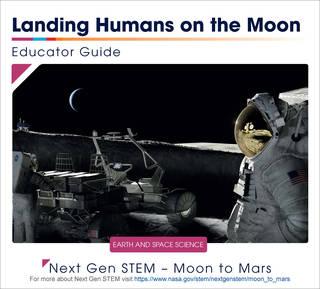
Bring the excitement of future lunar expeditions to your middle school classroom.
“Landing Humans on the Moon” features four standards-aligned activities to help students learn about the Moon and create a model of a human landing system for lunar expeditions.
Visit the site to download the guide and watch video demonstrations of the activities.
|
|
NSTA's Daily Do Playlists are instructional sequences of two or more lessons that help students coherently build science ideas over time. Lessons have been updated to facilitate remote learning.
|
|
The National Energy Educational Development Project (NEED) offers free, live virtual energy education workshops and other professional learning opportunities for P-12 teachers in subjects from electricity to climate science to solar, wind, and nuclear energy.
|
|
Engineering Career-Exploration Resources |
|
STEM Careers. -- Show students what engineers do with Discovering You: Engineering Your World, a new video series from NBCLearn, Chevron, and ASEE.
Chemical Engineering Careers. -- YouTube series launched by the Camille and Henry Dreyfus Foundation aims to convey the major positive impact that chemical engineers and scientists have on society. Each video includes a proposed lesson for incorporating the cutting edge research into the classroom.
NASA Internships. -- High school, college, and grad students can work with engineers and scientists on sending the first woman to the moon and other missions.
|
|
|
|
|
Explore eGFI: Helpful Links |
|
Whether you seek timely, authentic engineering activities, teaching resources, or professional development opportunities, ASEE's free eGFI Teachers newsletter is your go-to source for STEM! |
|
Engineering, Go For It (eGFI) is part of the American Society for Engineering Education (ASEE), a non-profit organization committed to enhancing efforts to improve STEM and engineering education.
1818 N Street, N.W., Suite 600
Washington, DC 20036
|
|
|
|
|
|
|