|
"We must rise boldly because climate change is not waiting for politics.
Our movements are not bending. We are not breaking.
We are defining and building a healthy and just future for all.”
Osprey Orielle Lake, WECAN Founder & Executive Director
| | |
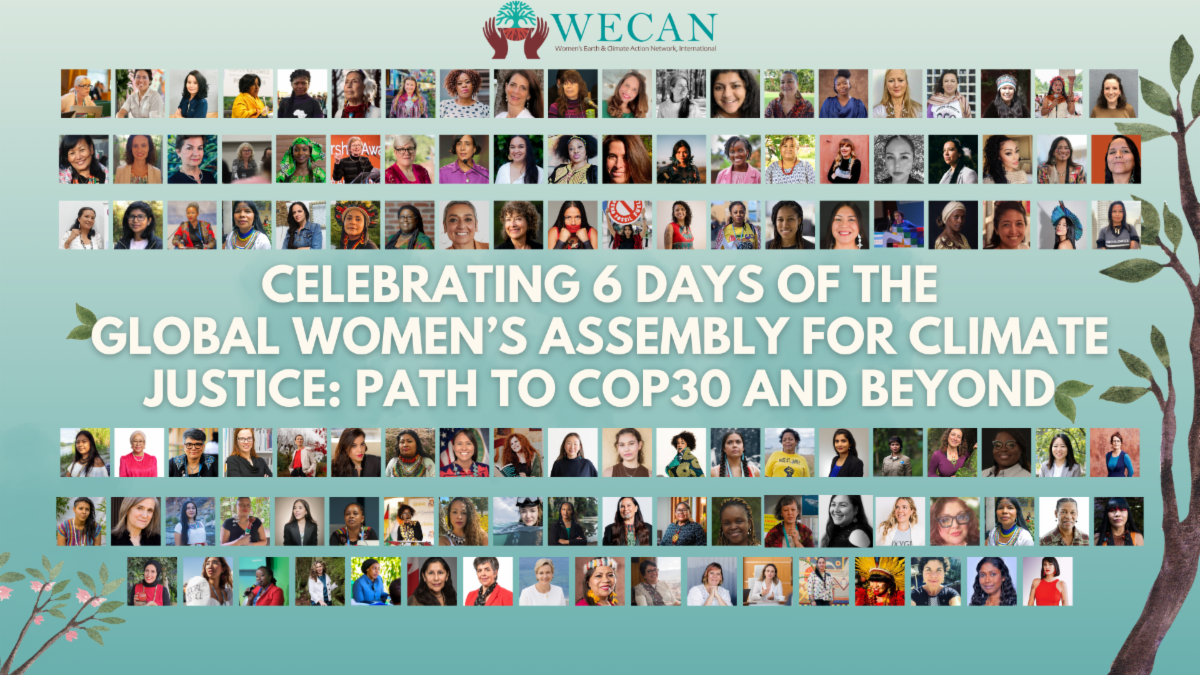
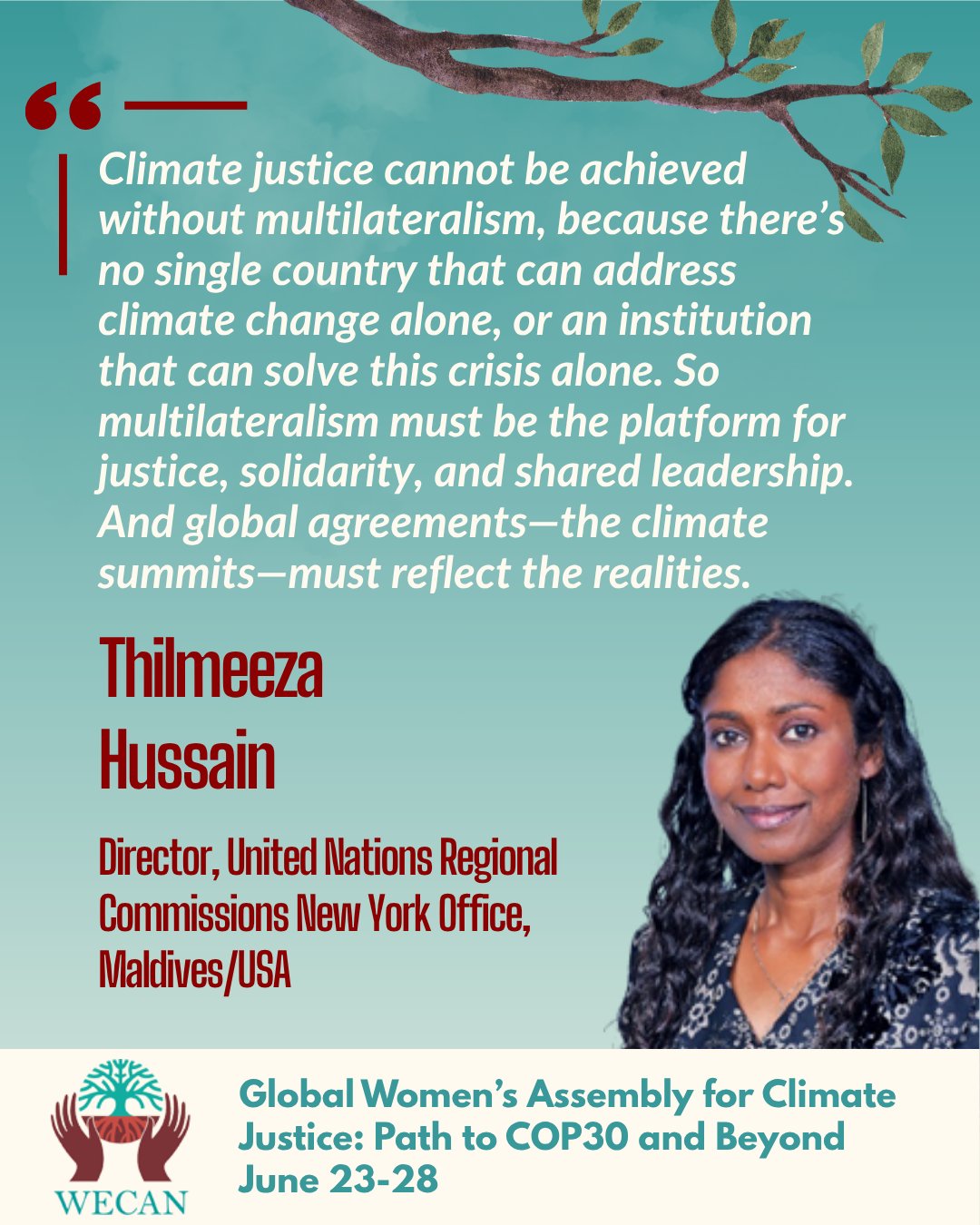
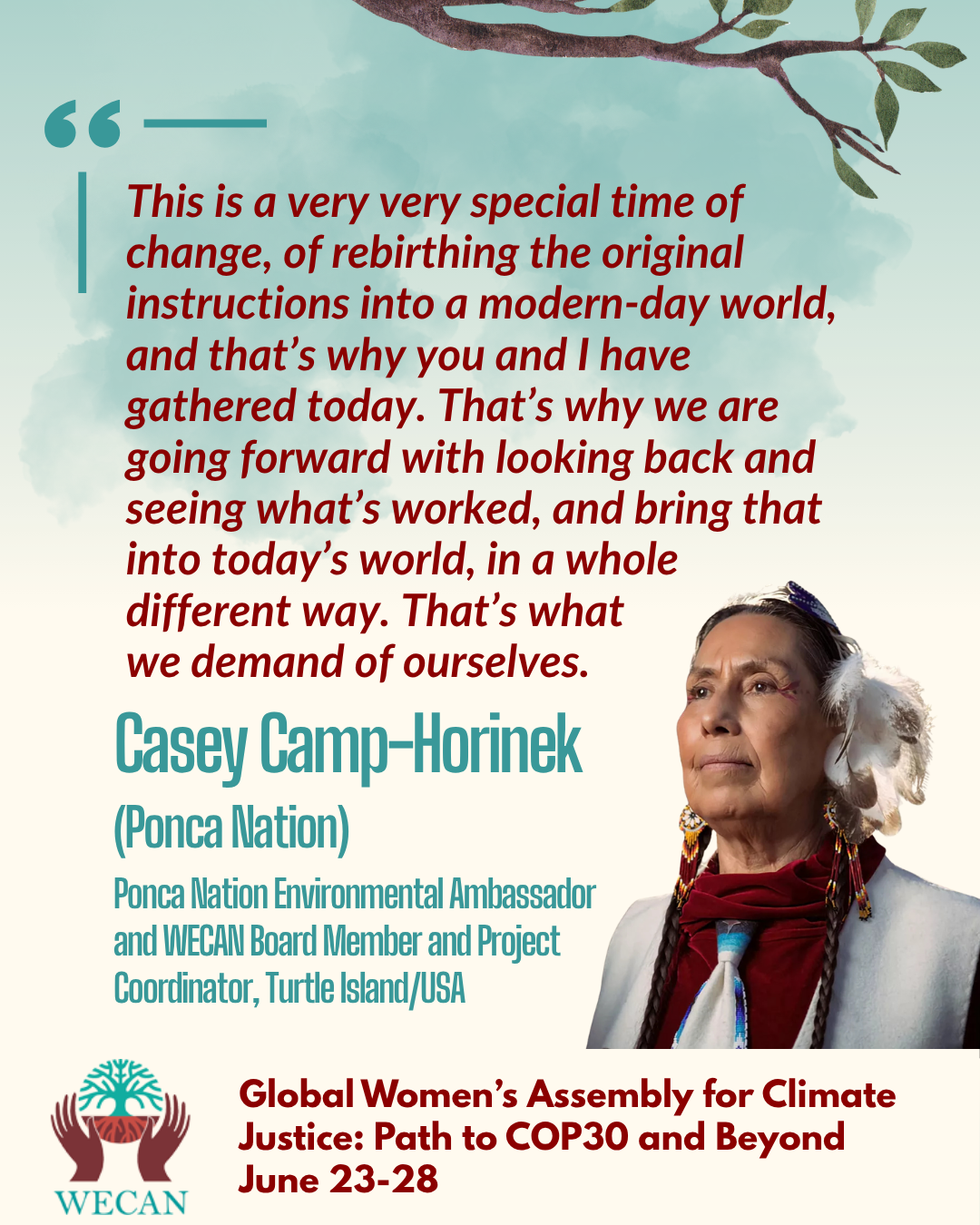
As deadly, record-breaking heat waves and floods sweep across the planet, over 125 women climate leaders in all of their diversity from 50 countries came together for a powerful week of dialogue, strategy, and action during the Global Women’s Assembly for Climate Justice: Path to COP30 and Beyond.
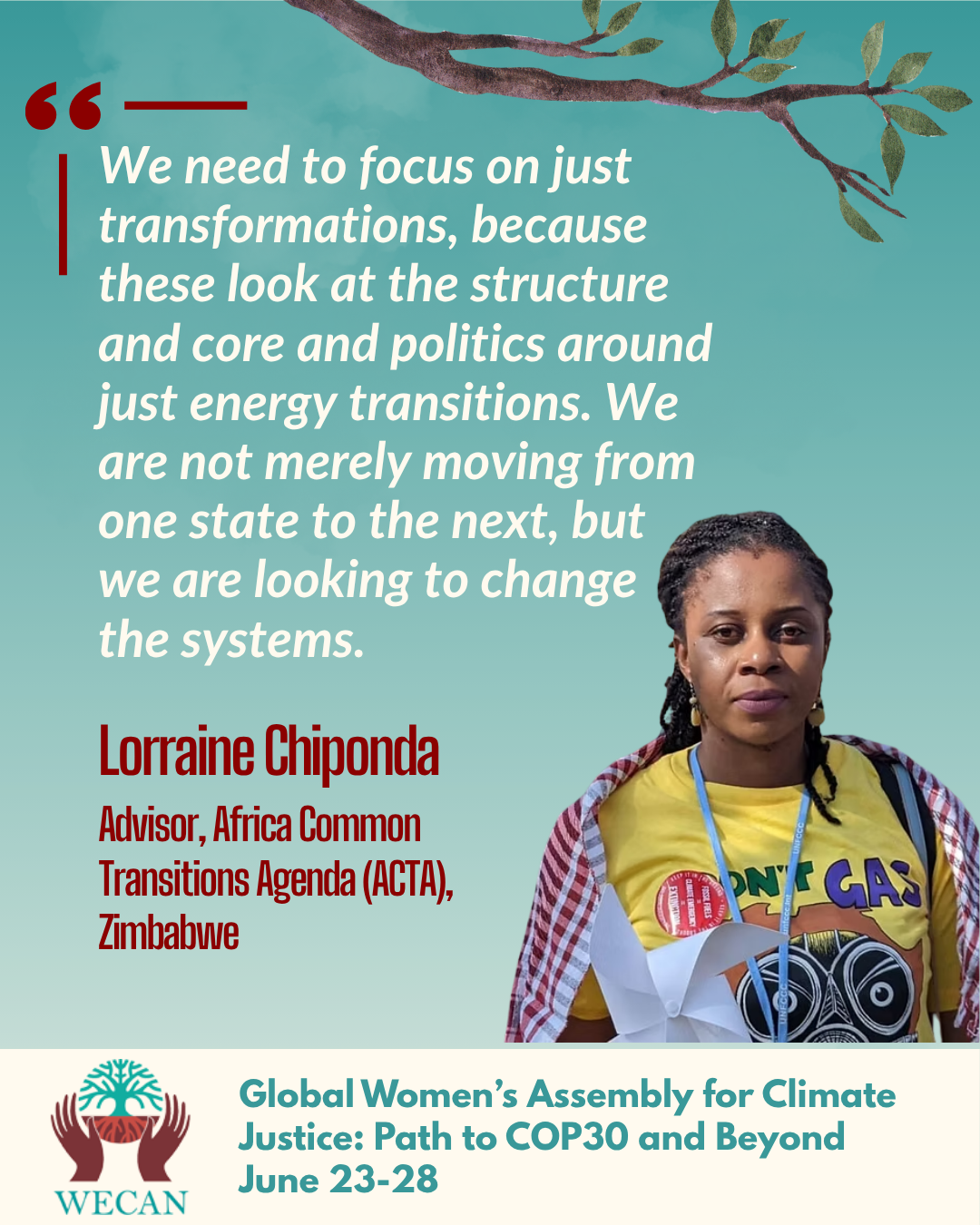
The convening was hosted by the Women’s Earth and Climate Action Network (WECAN) and speakers included parliamentarians, grassroots leaders, youth activists, scientists, and frontline organizers. The Assembly was a clarion call for immediate, systemic change, including fighting for democracy, negotiating an end to fossil fuel expansion, implementing just transitions and well-being economies, ending deforestation, advancing the rights of nature, implementing feminist climate policies, increasing women’s representation and leadership at all levels of decision-making, and more.
We are thrilled that viewers and participants averaged well over 100,000 each day of the Assembly across several digital platforms!
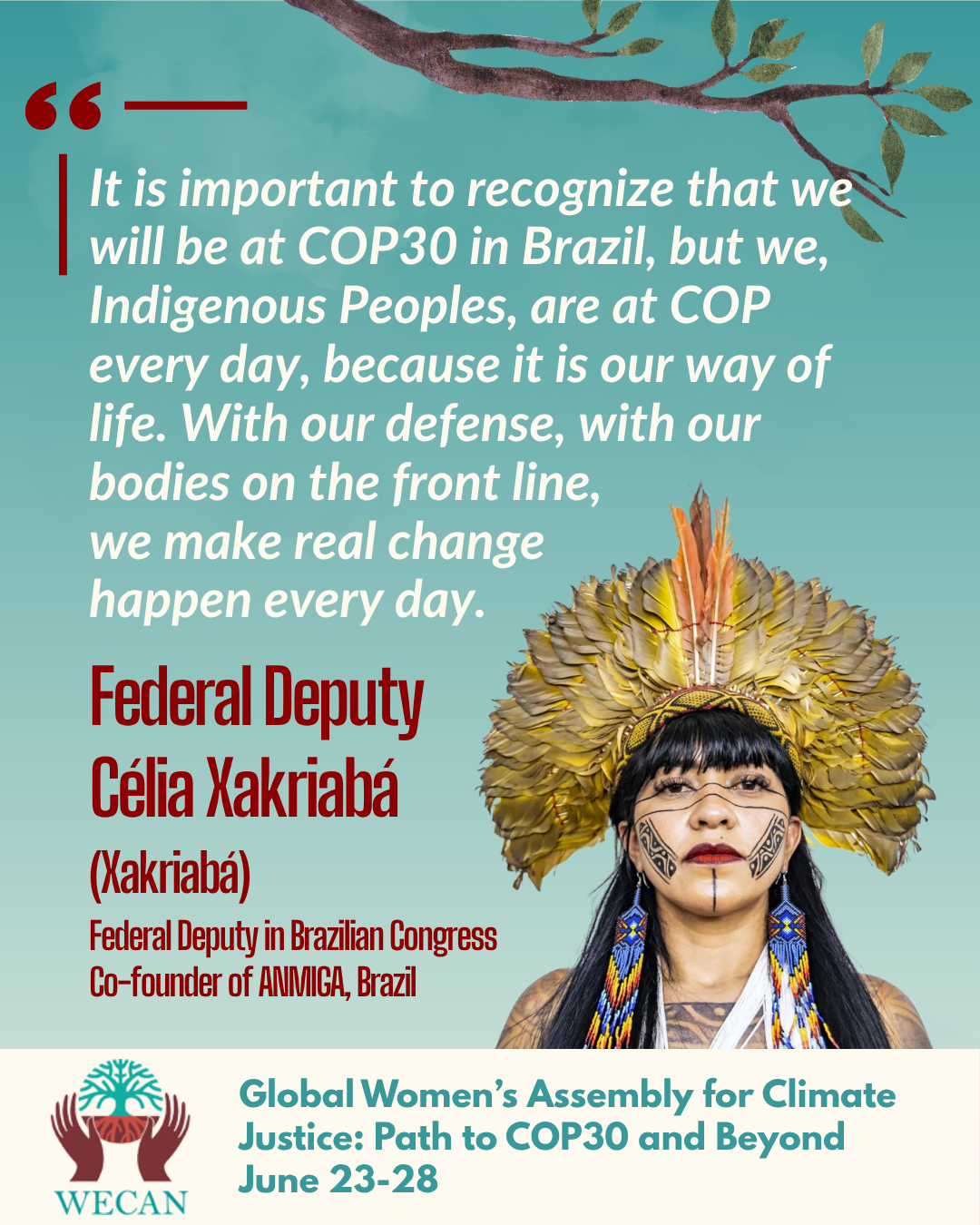
During the Assembly, speakers reflected on the path to COP30. They emphasized the need to uplift the leadership and lived experiences of women, especially those from grassroots, frontline, marginalized, and Indigenous communities, who are leading some of the most effective and scalable climate solutions today.
The Global Women’s Assembly for Climate Justice: Path to COP30 and Beyond has left us deeply inspired and energized for the work ahead, even as we experience rising authoritarianism. Thank you to every speaker, attendee, and partner organization who made this gathering possible. Your leadership is lighting the way forward!
Full recordings of all sessions are now available on YouTube and Facebook at the buttons below. Next week, each panel will also be available as individual recordings, so check soon for more details.
Find speaker highlights and more from the Assembly on WECAN's Instagram, Facebook, and LinkedIn. Stay tuned on social media for ongoing coverage and highlights of the Global Women's Assembly for Climate Justice!
| | Call to Action from the Global Women's Assembly for Climate Justice | | |
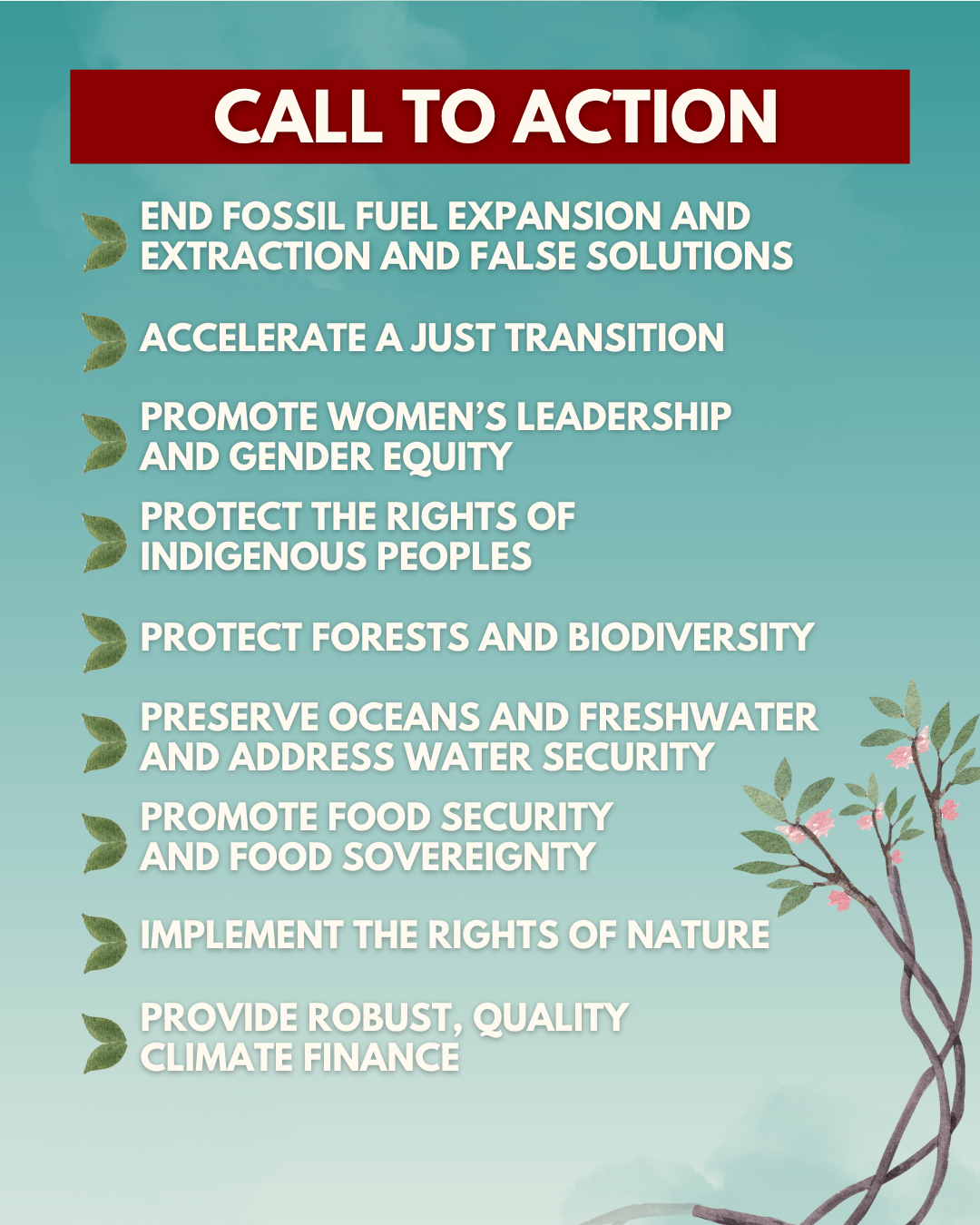
As part of the Assembly, more than 200 organizations from over 50 countries released a global Call to Action, urging governments, financial institutions, and corporations to take effective and immediate climate action by enacting policies that match the scale of interlocking and accelerating climate and social crises. The Call to Action is still open for organizations to sign on, and we will be delivering it to governments at Climate Week in New York City and COP30 in Belem.
Read the Call to Action here and sign!
The Call to Action comes at a time when threats to democracy and science are escalating and highlights that the window for tackling the climate crisis is rapidly closing. The next few years are crucial for mitigating the worst outcomes of the climate crisis, and are calling for transformative action for people and planet!
| | |
"Braiding Roots for Climate Justice” WhatsApp group
To facilitate the ongoing connections made at the Assembly, WECAN is starting the “Braiding Roots for Climate Justice” WhatsApp group to stay connected for furthering climate justice work. Learn more here.
The Braiding Roots for Climate Justice WhatsApp community is a space for fostering a community that exchanges resources, shares information across regions, encourages collective action, and inspires radical imagination. The community platform on WhatsApp is meant for sharing research, toolkits, campaigns, action updates, and ideas. Whether participants are new to advocacy work, furthering their frontline leadership, or are experts in their field, this is a space for everyone to come together, cross-pollinate ideas, learn, and grow from one another.
| | Report: How Local Community Power is Central to a Just Renewable Energy Transition | | |
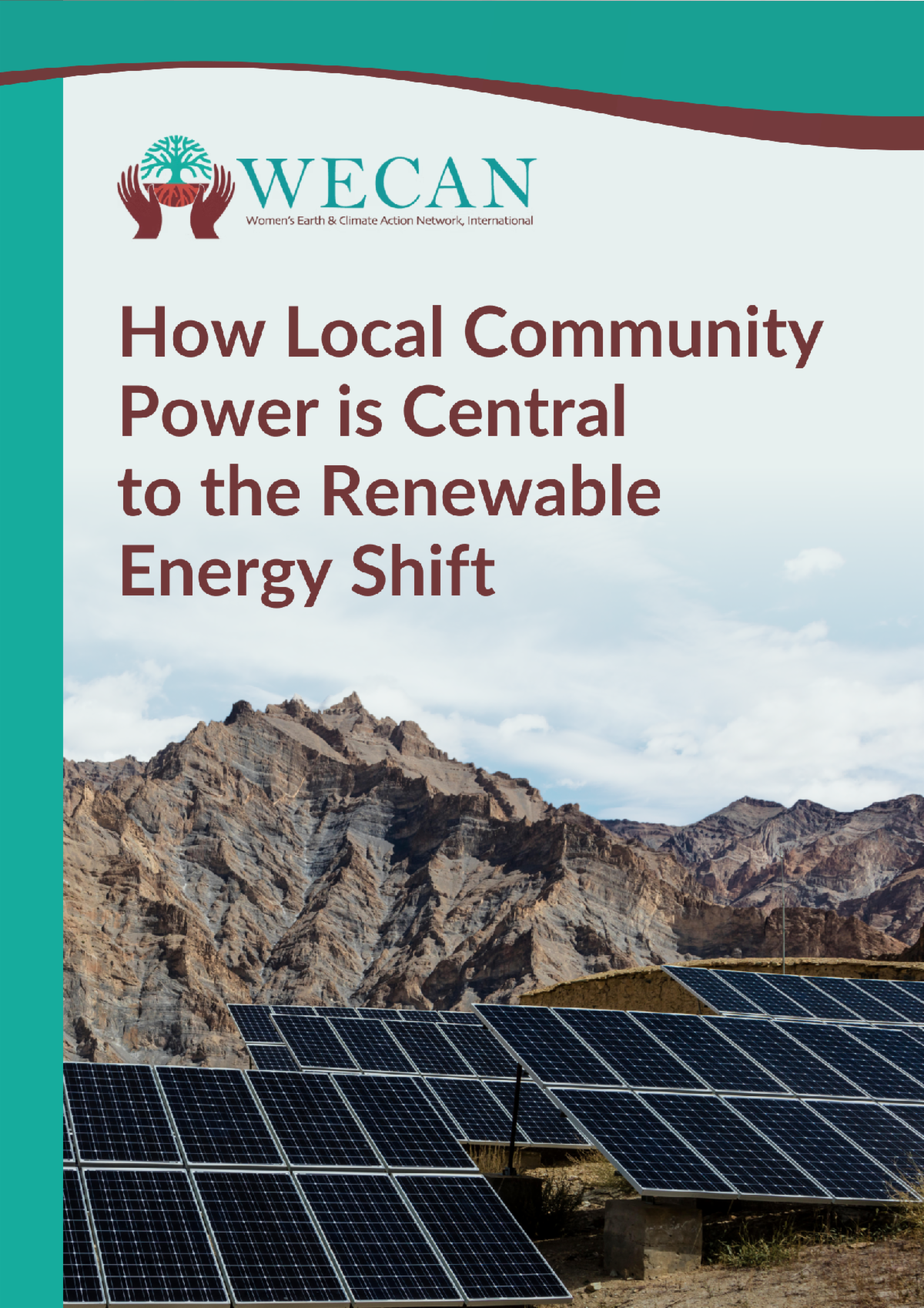
At the Global Women's Assembly for Climate Justice, WECAN launched a new report, “How Local Community Power is Central to a Just Renewable Energy Transition,” which highlights effective and equitable community-led, rights-based energy solutions as key to ending the fossil fuel era and achieving a just transition.
From solar microgrids in Ladakh, India, to energy cooperatives in Spain, communities across the world are already leading the way toward a regenerative energy future, grounded in justice, democracy, and ecological well-being. As governments prepare for COP30, we must follow the leadership of frontline communities and scale real solutions.
Read the full report here!
In addition to demonstrating solutions, the report explores some of the barriers to implementing a just transition and the complexities of shifting away from current social and economic structures. The authors warn that the energy transition cannot replicate the same injustices as the fossil fuel economy. Instead, this transition must prioritize planetary boundaries and community-owned renewable energy projects that are rooted in democratic governance and local empowerment.
| | |
Media Highlights
To learn more about the Global Women's Assembly for Climate Justice, and highlights from the Assembly discussions and speakers, see the following media links!
| | Thank you to everyone who supported and connected with us during the Global Women's Assembly for Climate Justice! We are honored to be in this movement with you and we are moving forward for people and planet. Please see below for additional WECAN campaign updates. | |
Report Back: Advocating for the
Tongass National Forest in Washington D.C.
| | |
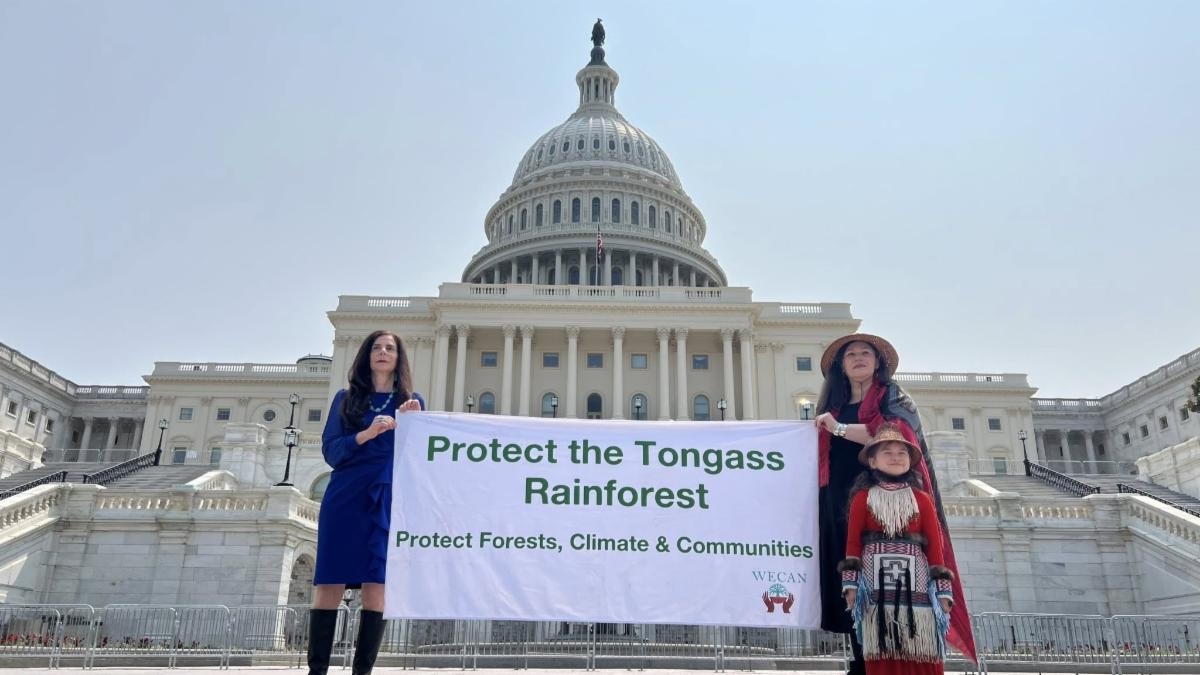
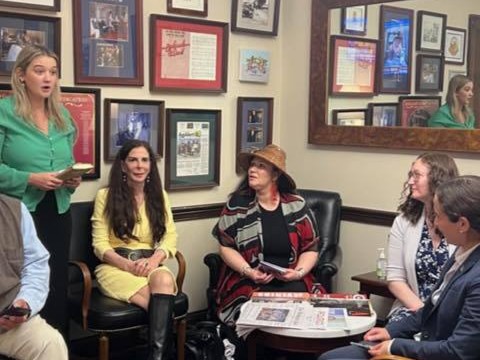
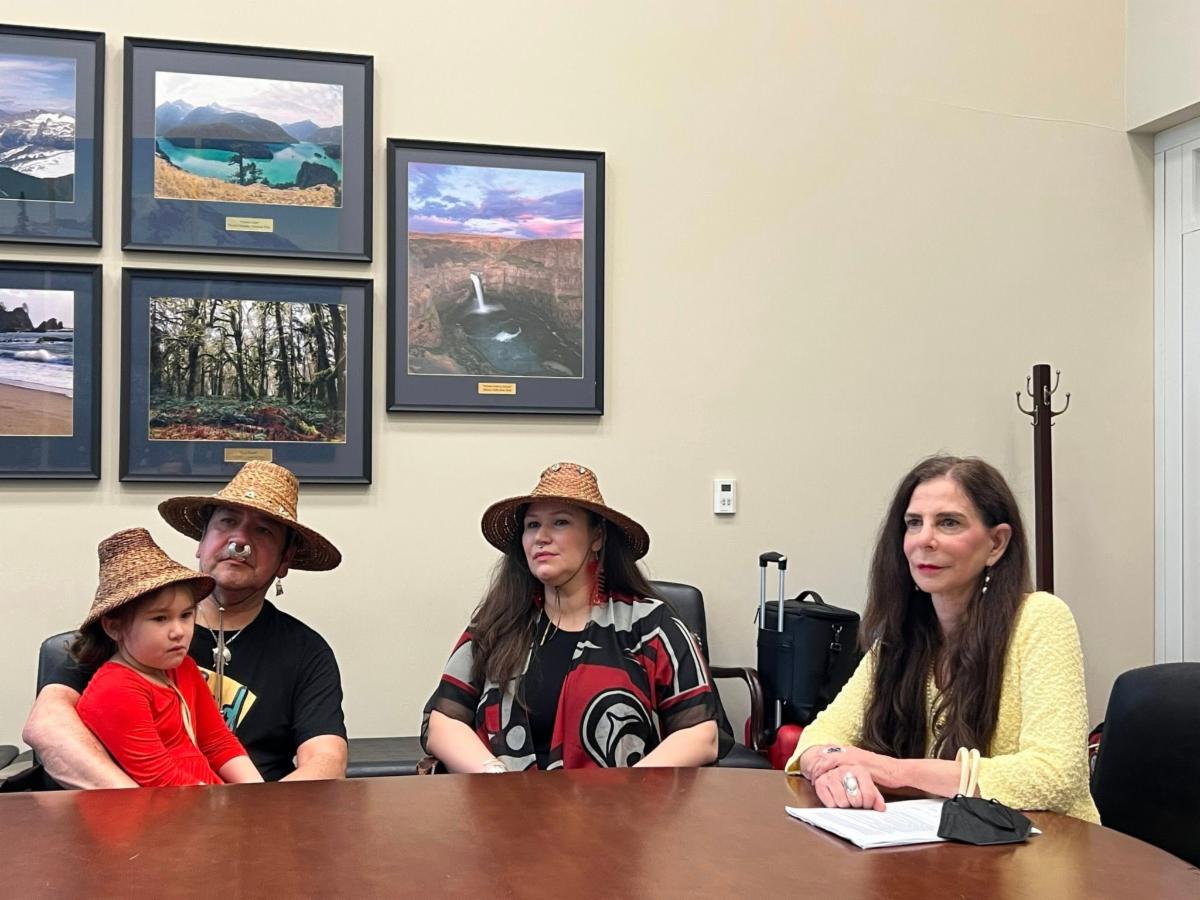
From June 2-5, WECAN joined forces with forest defenders and environmental groups from across the United States in Washington D.C. to demand that the Administration and Congress take action to protect U.S. National Forests and Public Lands.
WECAN representatives met with congressional leaders and spoke out in the defense of forests, specifically the Tongass Forest in Alaska, and called for the codification of the Roadless Area Conservation Act (RACA), a critical measure to protect national forest lands from further development and prevent industrial scale old-growth logging. WECAN representatives included, Yolanda Fulmer (Tlingit), WECAN Tongass Representative, Aleijah Fulmer, WECAN Tongass Representative and Yolanda’s six-year-old daughter, and Osprey Orielle Lake, WECAN Executive Director.
| | |
“We need this protection now more than ever, so I am here standing strong for these trees. We have been the caretakers of the Tongass since time immemorial, and we continue to stand for these trees.
I continue to stand for the future.”
Yolanda Fulmer (Tlingit), WECAN Tongass Representative
| | |
The Tongass Rainforest of Alaska is the traditional homelands of the Tlingit, Haida, and Tsimshian Peoples; the largest national forest in the U.S.; and has been called 'America’s climate forest' due to its unsurpassed ability to sequester carbon and mitigate climate impacts. For decades the Tongass has been negatively impacted by industrial-scale logging and roadbuilding. In the 2000's the Roadless Rule was put into place to stop development across National Forests, including the Tongass, allowing the forest to heal and recover. During the first Trump Administration, the Roadless Rule was repealed, but in 2023, thanks to advocacy by Tribal leadership, and local and national groups, including WECAN, the Roadless Rule was formally reinstated. Even with a destructive history of industrial logging, the Tongass still contains the largest remaining tracts of temperate old-growth rainforest in the world and a vital solution to our current climate crisis.
Tragically, but not surprisingly, on June 23, 2025, the U.S. Department of Agriculture announced plans to strip Roadless Rule protections nationwide, including from Alaska’s Tongass National Forest. This would remove critical safeguards against industrial logging and roadbuilding from over 9 million undeveloped acres within the 17-million-acre forest. The attempt by the Administration to log these forests is a threat to the climate and a violation of Indigenous sovereignty, endangering cultural lifeways, local economies for everyone in Alaska, and food access for Tribal nations across the Tongass.
While we prepare again to protect sacred forests and stand with Indigenous peoples, it is clear that the Roadless Rule must be codified into law, to ensure that it cannot be rescinded by any Administration moving forward.
Following our recent advocacy work in Washington D.C., we are very glad to see that Representatives Andrea Salinas and Yassamin Ansari, along with Senators Maria Cantwell and Ruben Gallego and more, renewed the work to codify the U.S. Forest Service’s Roadless Rule protections into law, through the Roadless Area Conservation Act (RACA). This is a vital step in upholding Indigenous sovereignty and combating the climate and biodiversity polycrises. As record-breaking heatwaves and droughts hit the country, now more than ever, we must stand with the forests and Indigenous communities. Learn more here.
WECAN has a longstanding campaign to protect the Tongass National Forest, including organizing multiple Indigenous Women’s Tongass Delegations to D.C., and we are here to continue fighting for the Tongass to remain standing! Learn more about our campaign here.
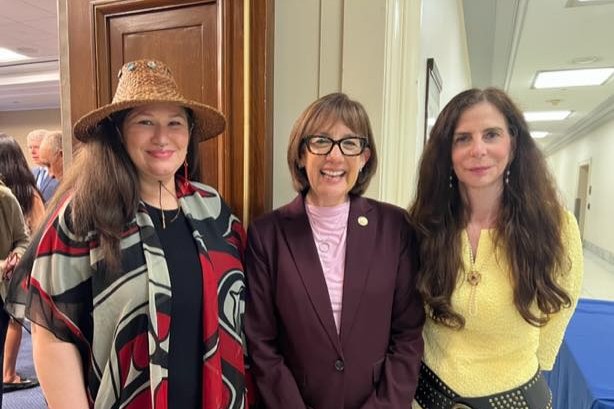
| | While in D.C., Yolanda Fulmer (Tlingit), WECAN Tongass Representative (left), and Osprey Orielle Lake, WECAN Executive Director (right), met with Congresswoman Andrea Salinas (center) regarding her leadership in reintroducing the Roadless Area Conservation Act (RACA) to the U.S. Congress. Photo Credit: WECAN | | Stop Line 5 Pipeline Campaign Update | | |
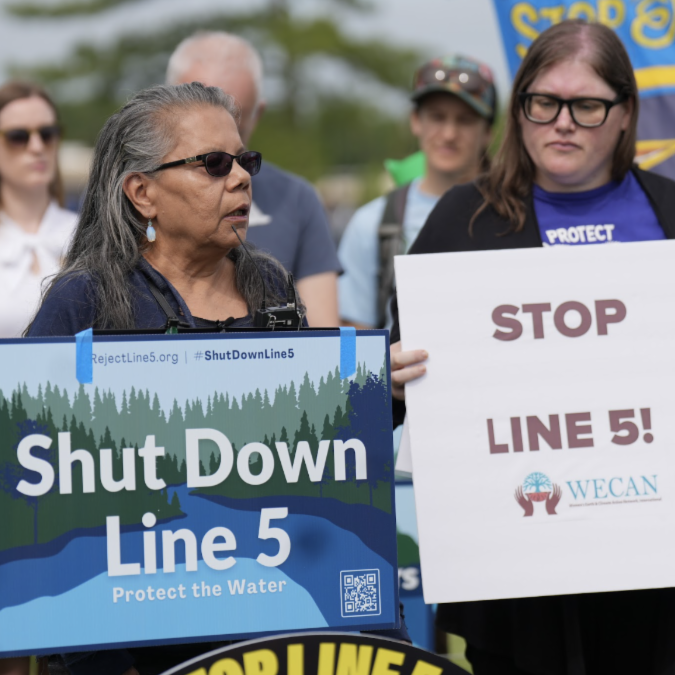
WECAN has continued to monitor and address the potential fast-tracking of the Line 5 pipeline, which transports 22 million gallons of crude oil each day through northern Wisconsin, Michigan’s Upper Peninsula, and under the Straits of Mackinac.
On June 30, the Army Corps of Engineers closed a 30-day comment period allowing public comment on the Draft Environmental Impact Statement (DEIS) for the proposed Line 5 replacement project, which includes replacing a section of the pipeline with a tunnel under the Straits of Mackinac. The DEIS comment period is usually 60 to 90 days, however, it was cut in half because of the 'energy emergency' Executive Order published this year.
We are waiting to see if the pipeline will receive approval for the Line 5 tunnel under the Straits of Mackinac, which would lead to devastating and irreparable harm to local ecosystems, tribal nations, and community livelihoods. Many tunnel experts have cited that this specific project is technically very challenging and dangerous, which could lead to an oil spill in the Great Lakes region, posing a grave danger to all the communities and ecosystems that rely on the Great Lakes. Enbridge’s planned expansion and operation of Line 5 not only diverts us from our climate targets and objectives but also significantly worsens the escalating impacts of the global climate crisis.
Enbridge’s proposal to expand Line 5 comes despite the strong opposition of the Bad River Band of Lake Superior Chippewa and other Tribes. The new Line 5 pipeline expansion and re-route threatens local aquifers and waterways, Treaty rights, and the climate. Furthermore, a recent article has exposed how Enbridge has destroyed Indigenous sites. Additionally, historical evidence demonstrates that as a result of extractive projects in and around Indigenous communities, the influx of pipeline workers and "man-camps" exacerbates the epidemic of Missing and Murdered Indigenous Women and Two-Spirit people.
WECAN is honored to facilitate and support the Indigenous Women’s Treaty Alliance and to amplify the demands of the Bad River Band, please learn more about our Stop Line 5 advocacy here.
| |
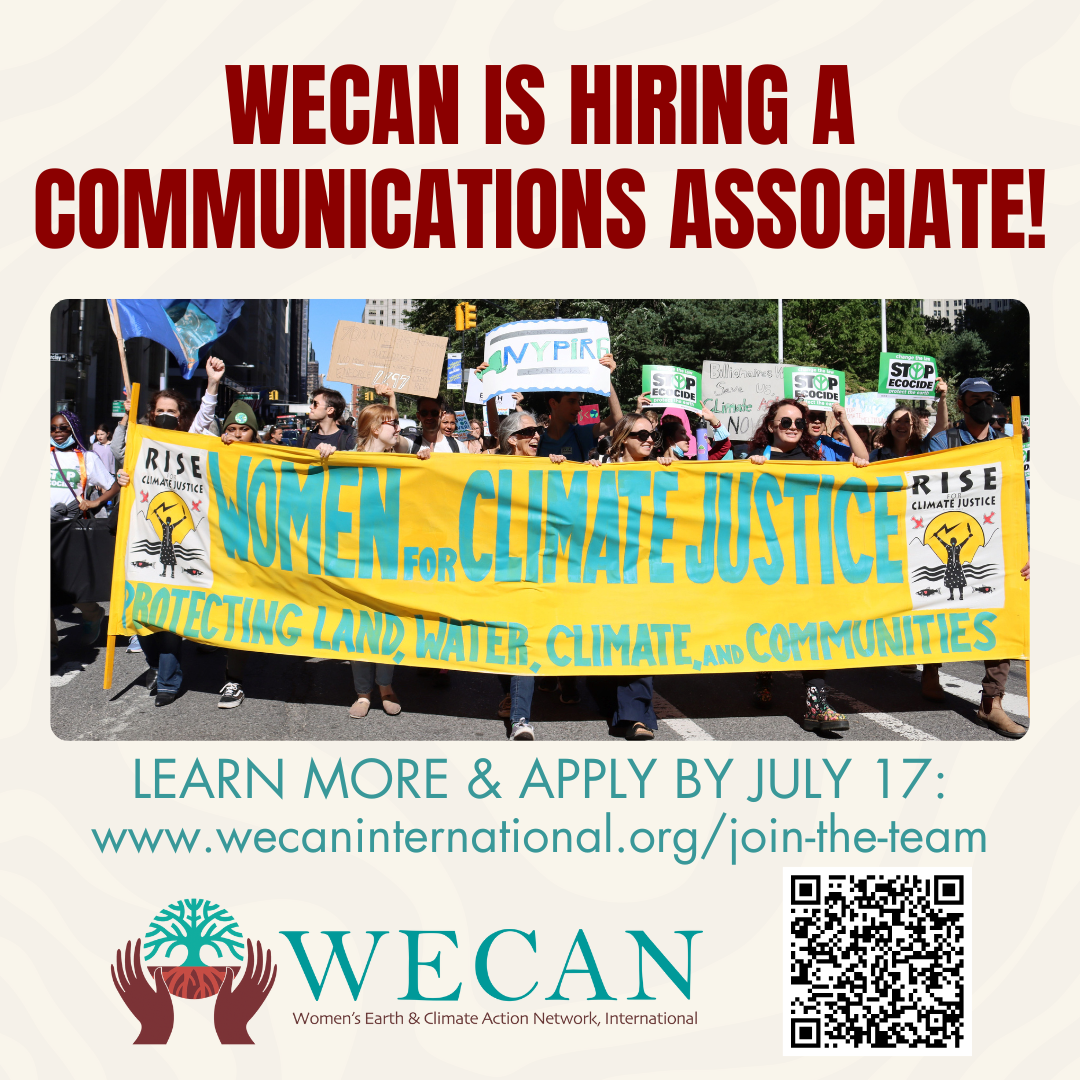
HIRING: Communications Associate
Apply by July 17
| | |
WECAN is currently hiring for a Communications Associate to join the team!
This is an exciting opportunity to join a passionate team working for climate justice, systemic change, and women’s and feminist leadership in global climate solutions. We are seeking a creative and strategic thinker who can manage multiple social media platforms, create compelling content, and support communications efforts across WECAN programs and campaigns.
View the full job description
and apply here by July 17!
| | Please consider supporting WECAN as we continue to uplift the leadership and solutions of women worldwide fighting for climate justice and the defense of the planet for current and future generations. | |
For the Earth and All Generations,
Women's Earth and Climate Action Network
(WECAN) International Team
| | S T A Y C O N N E C T E D | | | | |