Celebrating Legacy:

Honoring Black History in West Virginia

To honor Black History Month celebration, the West Virginia Chamber of Commerce will highlight West Virginia landmarks that have made important contributions to Black History. These sites hold deep significance, telling stories of resilience, achievement, and cultural impact that have helped shape the history of our state.

Standing Tall: Notable Figures of

Black History Celebrated with

West Virginia Statues


Katherine Johnson, Carter G. Woodson, and Hal Greer all hold significant places in Black history, particularly within the context of West Virginia.

Katherine Johnson


Katherine Johnson was an extraordinary mathematician whose work at NASA was pivotal during the early years of the U.S. space program. Born in White Sulphur Springs, West Virginia, in 1918, her calculations of orbital mechanics were critical to the success of numerous missions, including John Glenn's orbital flight. Johnson broke through both racial and gender barriers in a field dominated by white men, becoming a symbol of excellence in STEM (Science, Technology, Engineering, and Mathematics). Her story has inspired countless individuals to pursue careers in science, demonstrating the impact of education and perseverance.


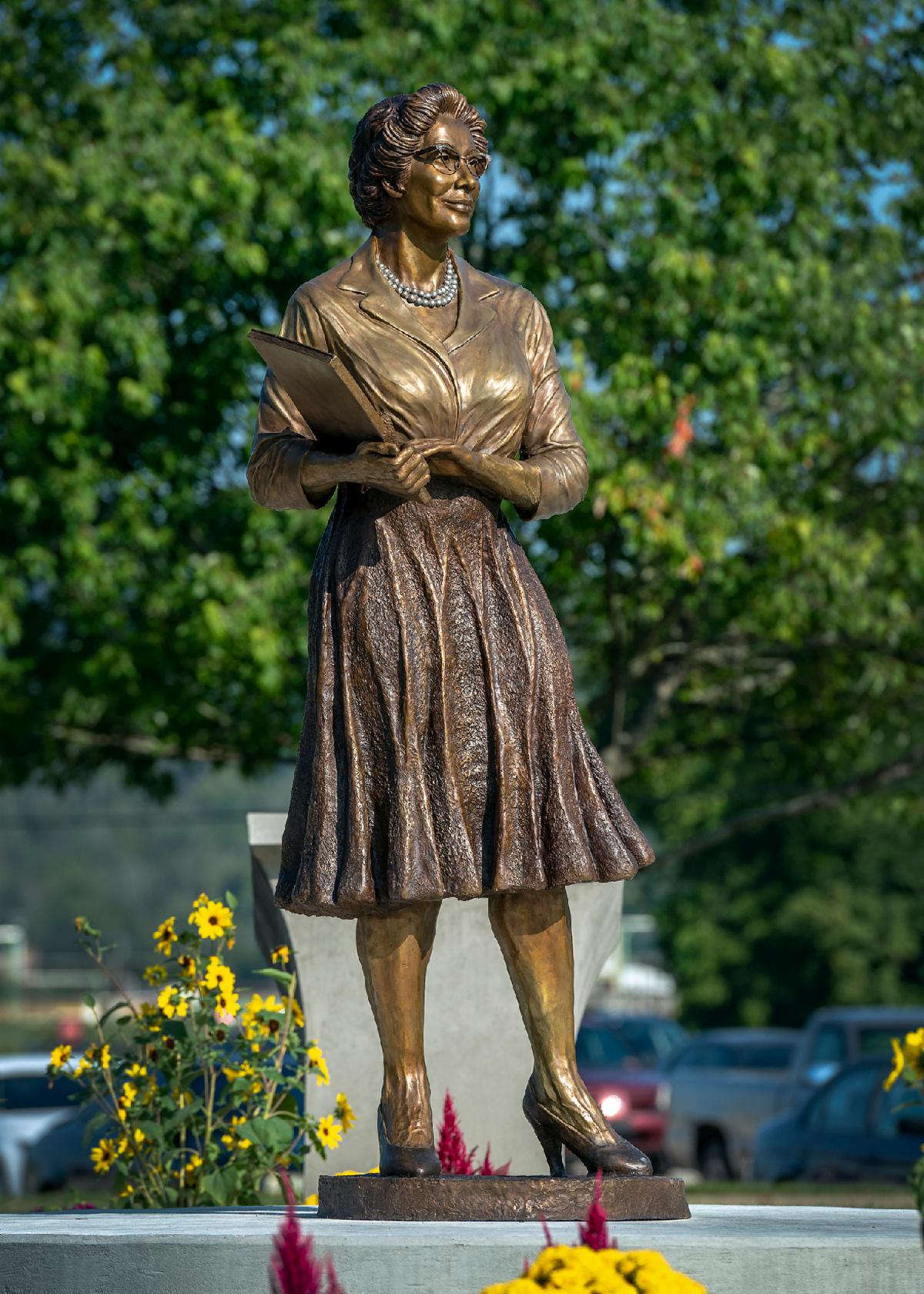
Katherine Johnson attended the dedication of a scholarship in her name and the unveiling of a statue honoring her in 2018 on West Virginia State University’s campus in Institute, WV (pictured above). Click here to learn more about Katherine Johnson.

Carter G. Woodson


Carter G. Woodson, often referred to as the "Father of Black History," was born in New Canton, Virginia, but his influence extended into West Virginia where he spent a significant portion of his early life. Living in a time when African American contributions were largely overlooked, Woodson dedicated his life to documenting the history of Black Americans. He established Negro History Week in 1926, which later evolved into Black History Month.


After obtaining his education, Woodson returned to West Virginia to teach at Douglass High School in Huntington. Woodson's time in West Virginia not only marked the beginning of his illustrious career in education but also laid the groundwork for his groundbreaking contributions to the study and recognition of African American history.


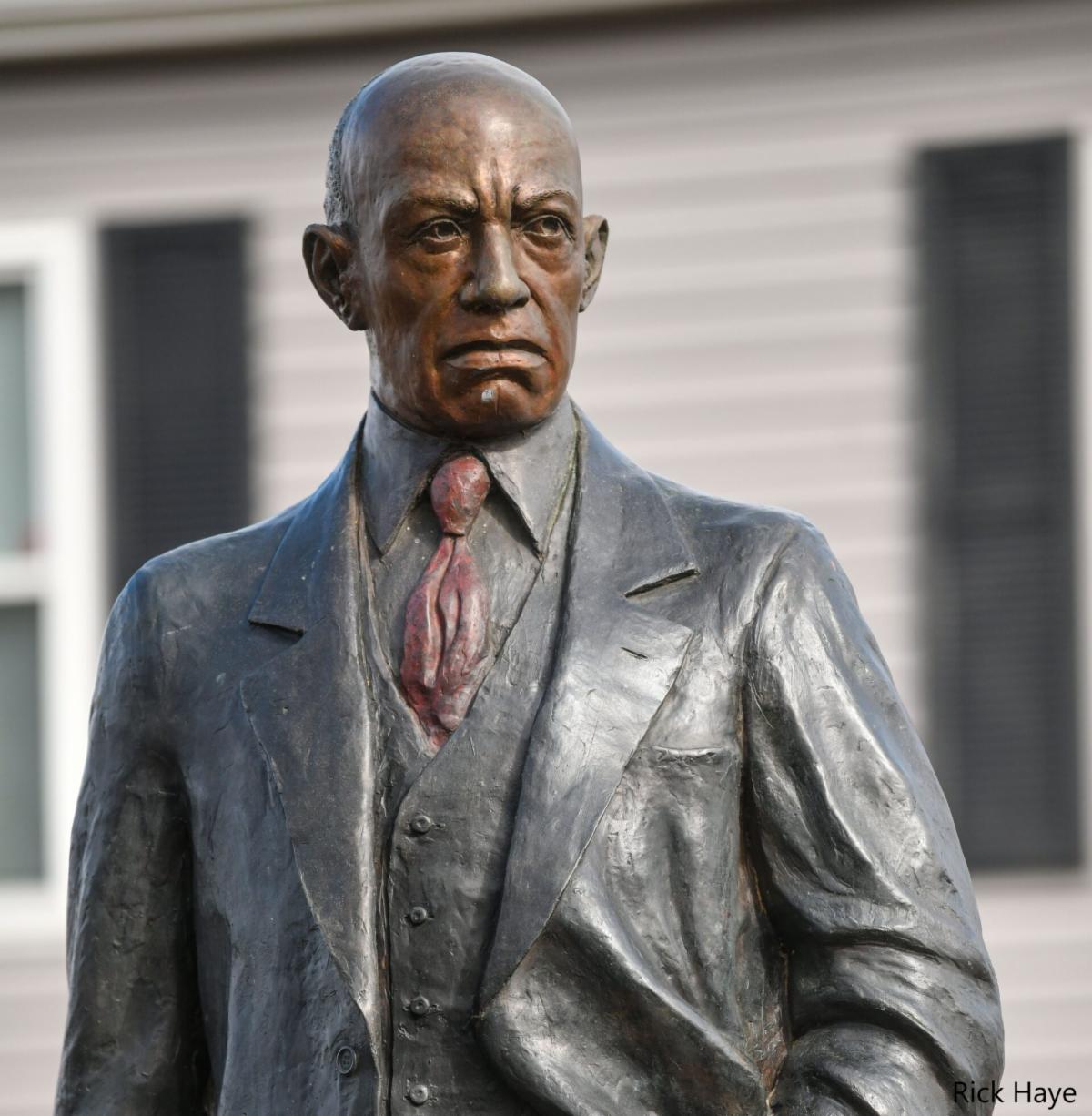
A statue honoring Dr. Woodson is located in Huntington on Hal Greer Blvd., erected in 1995. Click here to learn more about Carter G. Woodson.

Hal Greer


Hal Greer was a prominent figure in basketball history, particularly known for his impressive career in the NBA after starring at Marshall University. As a guard, Greer played for the Philadelphia 76ers from 1958 to 1973, where he became known for his scoring ability, playmaking skills, and tenacious defense. He was selected as an NBA All-Star ten times and was crucial in leading the 76ers to an NBA championship in 1967. Greer’s contributions to the game extended beyond his athletic prowess; he was a role model for aspiring athletes and showcased the significance of hard work, dedication, and perseverance in achieving success. His legacy continues to inspire future generations of basketball players.


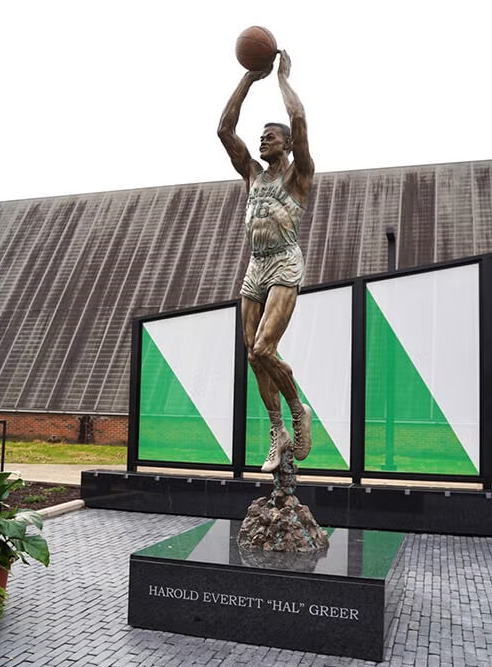
In 2021, Marshall University unveiled a bronze statue of Hal Greer outside the Cam Henderson Center on 3rd Avenue in Huntington. Click here to learn more about Hal Greer.


The statues of these individuals represent a legacy of resilience, brilliance, and advocacy in West Virginia's Black history. Their contributions highlight how Black individuals have shaped not only their immediate communities but also the broader landscape of American history. By overcoming obstacles and breaking down barriers, Johnson, Woodson, and Greer have left an indelible mark on the fight for equality and recognition of Black history.


*Photo thanks to West Virginia State University, Visit Huntington & Marshall University.

Facebook            Instagram            X            YouTube