Celebrating Three Decades of Restored Mobility | | |
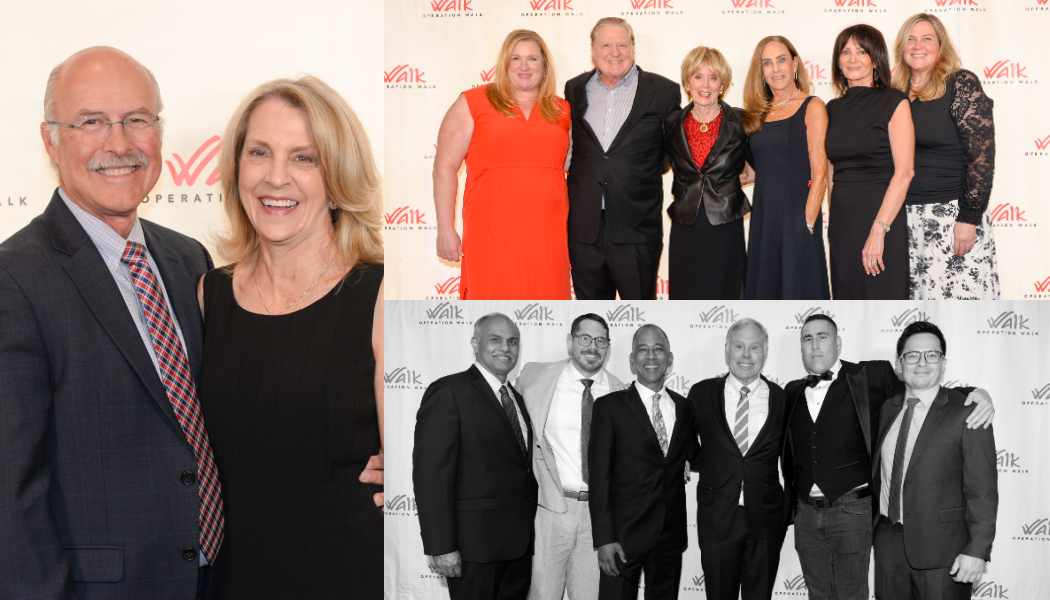
On Saturday, May 16th, the Operation Walk Los Angeles community gathered at Annandale Golf Club. The 30th Anniversary Gala was a celebration of hope, compassion, and the life-changing gift of mobility.
The evening served as a recognition of over thirty years of dedication, vision, and hard work by Operation Walk’s founders: Dr. Lawrence D. Dorr, Mary Ellen Sieben, and Jeri Ward. From a singular vision to establish a volunteer medical humanitarian organization, their legacy has grown into a global movement. The gala honored not only the founders but also the hundreds of medical volunteers, logistical coordinators, and passionate supporters who have stepped forward to join this vital mission over the past thirty years.
The generosity on display throughout the evening was inspiring. While the final fundraising totals are still being calculated, preliminary reports indicate that the event raised over $300,000. These funds will directly impact lives, allowing the Operation Walk Los Angeles team to travel to the Philippines this upcoming summer.
As Operation Walk reflects on thirty years of providing the first step to a new life, we look towards the future. The year 2027 is already shaping up to be an exciting chapter. With plans underway to establish brand-new mission sites, expand medical education for international healthcare professionals, and create a fresh generation of patient success stories, the future has never looked brighter.
Click the link below to view our full photo gallery or to make a donation in celebration of 30 years of mobility. Many thanks to all who attended and supported our 30th Anniversary Gala. We loved celebrating with you!
| | Music and Mobility
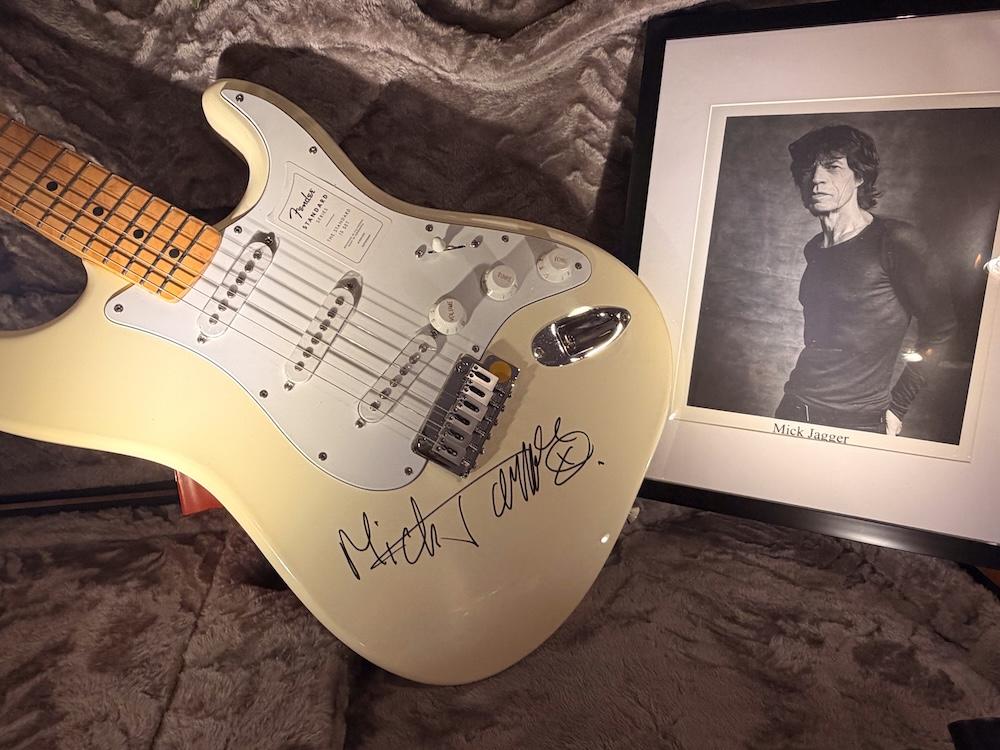
Sharron Whiteley, RN | | Fender Stratocaster signed and donated by Sir Mick Jagger supporting OpWalk LA
| | |
“I’ve been close friends with Pia Squillino since my early teens. Growing up, we were part of a group of six girls who did almost everything together. Although we all eventually moved away, built careers, and started families of our own, we’ve remained incredibly close.
Pia moved to London and went on to become Sir Mick Jagger’s personal assistant. Fortunately for me, her work often brings her to Los Angeles, so we still see each other regularly. I honestly couldn't do her job—she is exceptionally organized, dedicated, and hardworking.
When I asked her if Sir Mick might be interested in supporting Operation Walk, Pia encouraged me to write a letter explaining the organization, what we did, and how we helped people. She was already familiar with my volunteer work and knows how passionate I am about our cause.
The timing couldn't have been better. In 2025, we were preparing for our trip to Cuba, and in 2016 the Rolling Stones performed their historic free concert in Havana. Cuba was already a place that Sir Mick Jagger and his team were aware of, which helped provide context for our work there. He made an initial donation of $10,000. An amount to cover two joint replacements.
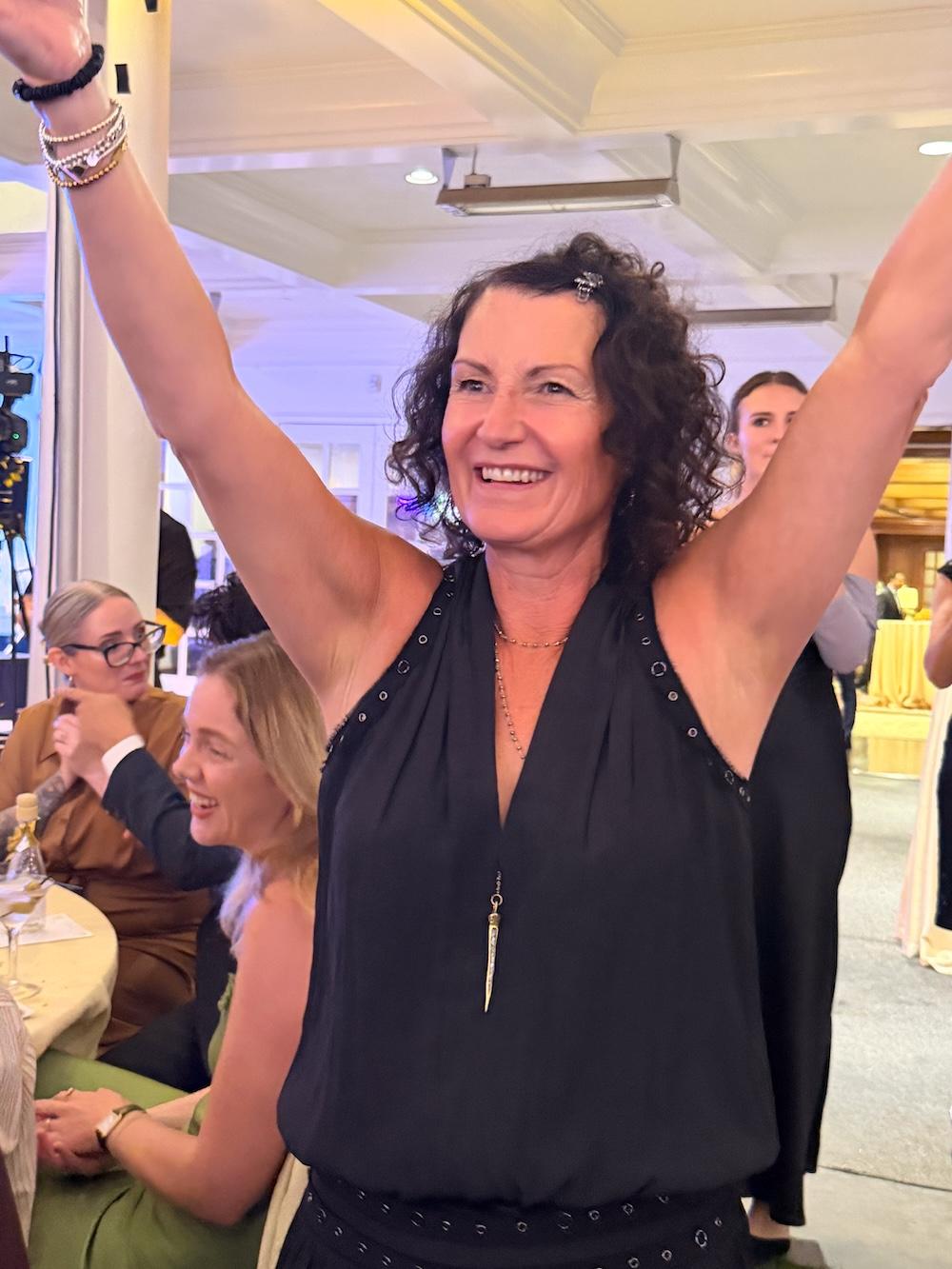
| | Sharron Whiteley, RN, celebrating after the live auction | | |
After our mission was complete, team leader Julie Anderson, RN, suggested sharing Frank’s story. Frank Martinez is an 18-year-old who has spent most of his life battling spondyloarthritis, a disease affecting the spine and joints. Frank was initially unable to have his bilateral hip replacements in 2024 but was able to receive both surgeries during our 2025 mission. He is now fully mobile, attending University, and building a future.
I sent Pia a video of Frank’s first steps after surgery, and I believe that played an important role in securing an additional donation. Sir Mick was able to see firsthand the impact his initial funding had made and how he helped transform lives. Seeing those results made the project much more personal and tangible.
We are grateful to both Pia and Sir Mick for his donation of a signed Fender Stratocaster Guitar with a hard case to our Gala live auction. Because of their generosity and support, we are able to fully fund five patient surgeries on our next mission in 2027.”
| | |
An unforgettable evening requires an immense amount of collaboration. Operation Walk extends its gratitude to our Steering Committee, whose planning brought the vision of the gala to life, as well as the generous Gala sponsors whose backing makes these events possible.
A special thank you goes to the Annandale Golf Club for hosting the OpWalk community. Most of all, thanks to our incredible volunteers who pulled together behind the scenes to orchestrate an amazing evening for everyone in attendance.
Thank you all for your dedication, generosity, and spirit!
| | Memories of Cebu City, Philippines, 2001
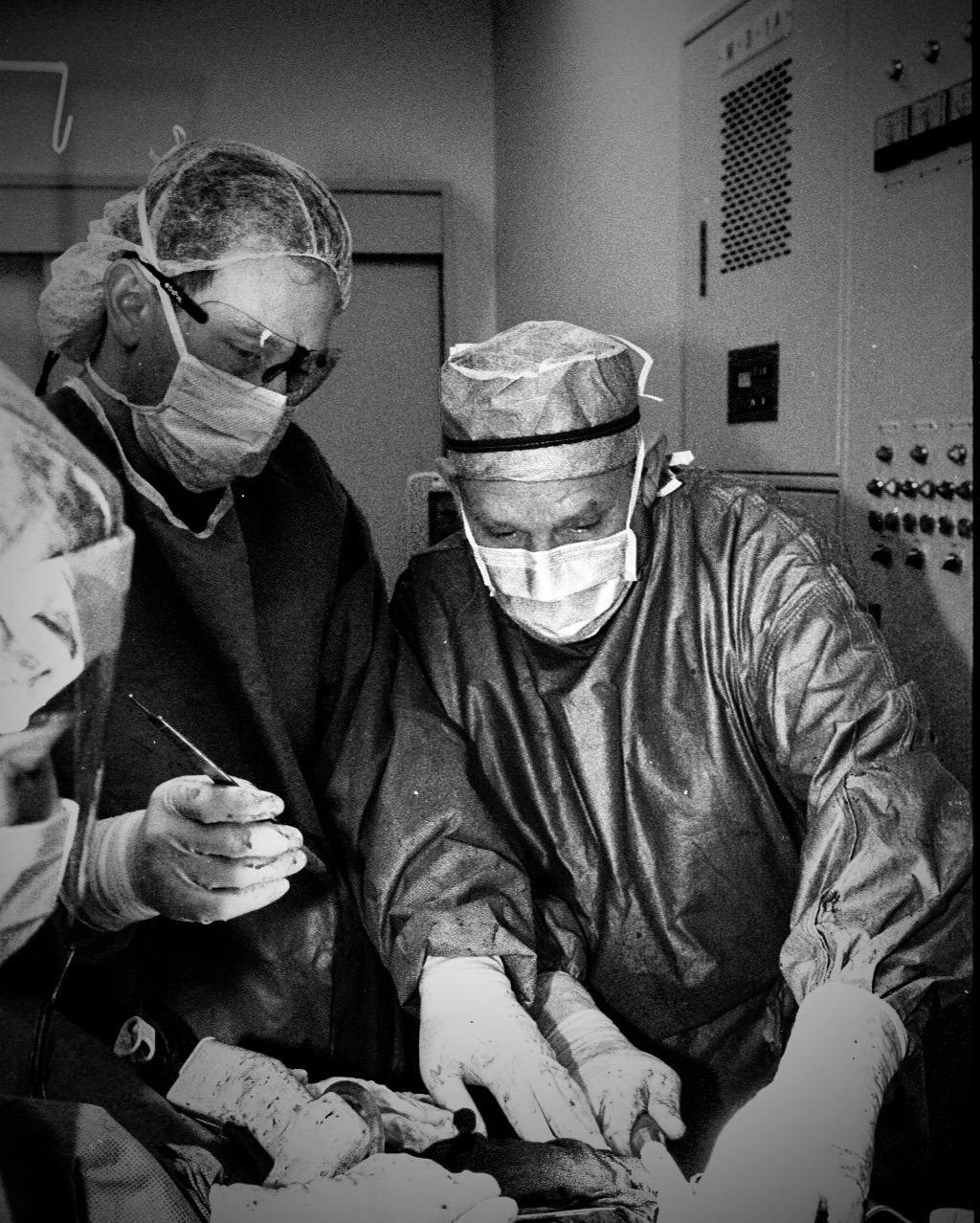
Donald B. Longjohn, MD | | Dr. Lawrence Dorr and Dr. Donald Longjohn in Cebu City, Philippines, 2001 | | |
When I think back to that mission in 2001, I am reminded of how our location proved to be full of challenges. The hospital in Cebu had double-booked themselves for medical missions. A team of neurosurgeons were using the ORs, so we ended up using little outpatient exam rooms for surgery.
We placed OR tables diagonally to fit the cramped quarters. The scrub tech had to go in first with the instruments and then the bed with the patient - sealing in the tech. We taped sterile drapes to the wall because the instrument tables were right up against it. You can visualize how small the room is since Dorr is right up by the wall. Pre-op and post op were in what was the waiting room of the clinic. Patient rooms were set up in the lobby of the hospital with chalkboards as room dividers in the area where they typically did peritoneal dialysis.
Another obstacle was the power. During a surgery I was observing, the power went out for 20 minutes and there was no generator. I had to make use of my Surefire tactical flashlight so Dorr could see to operate. The elevators were also extremely unreliable. Jeri Ward, our Director, was caught in an elevator with temperatures in the triple digits. There were no emergency buttons to call the fire department; she just had to wait it out until the power came back on.
I remember the people being committed to one another, making do with so little. There weren’t any wheelchairs available, and patients were carried piggyback by relatives. The level of poverty was astounding.
The typical care for a hip fracture was traction. If the fracture was through the top of the femur, the area that is wider and more likely to heal, a pin was placed through the top of the tibia, below the knee and twine was wrapped around it. That twine was attached to an old antifreeze jug filled with sand or a collection of pipe elbows - depending on how much weight was needed and what was on hand. The jug was tossed over the end of the bed to act as traction. After about a month, they would start moving the leg a bit and when it no longer hurt, they took off the traction, pulled out the pin and sent them on their way without an x-ray to see how it had healed. That was the best-case scenario. If the initial X-ray showed a fracture in the neck of the femur, there was nothing to be done. Those patients were sent on their way.
That mission made me appreciate what we have here at home in the United States, but I think that is true of all Operation Walk missions. It also reinforced, in those early years, that we could rely on one another to pull through, no matter the conditions we faced. Even though our environment was austere, we provided surgeries for patients who didn’t have access to joint replacement. That is always the final goal.
| | Passing Down the Gift of Compassion | | |
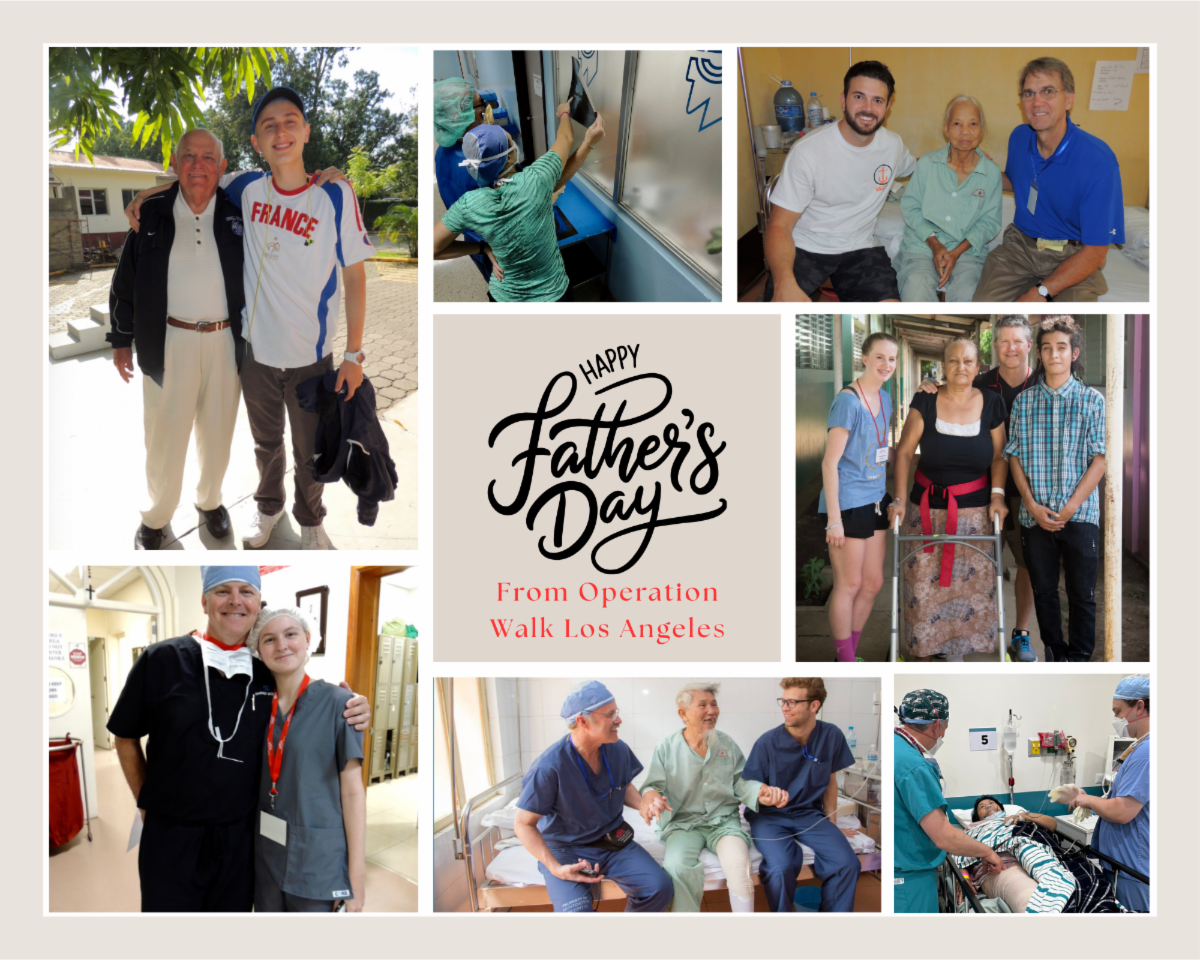
This month, we reflect on the men who have shaped our lives. Whether they are fathers, grandfathers, uncles or mentors, these men provide the foundation of support upon which we build our futures.
At Operation Walk, we see a unique side of fatherhood. We see men who lead by example in the operating room, in the wards, and in the heart of global communities.
There’s no classroom quite like a surgical mission. We celebrate our volunteers who have invited their children and grandchildren to join them. For these families, "quality time" takes on a new meaning.
While our volunteers provide life-changing joint replacements, these dads are opening the hearts and minds of their own children. Watching a father or grandfather navigate the challenges of a mission teaches the younger generation that being a "provider" isn’t just about supporting a household; it’s about providing hope to the world.
To the fathers who have scrubbed in, the grandfathers who have mentored our residents, and the dads at home supporting our team members while they are away: Thank you.
Happy Father’s Day from the entire Operation Walk family.
| | | | |