|
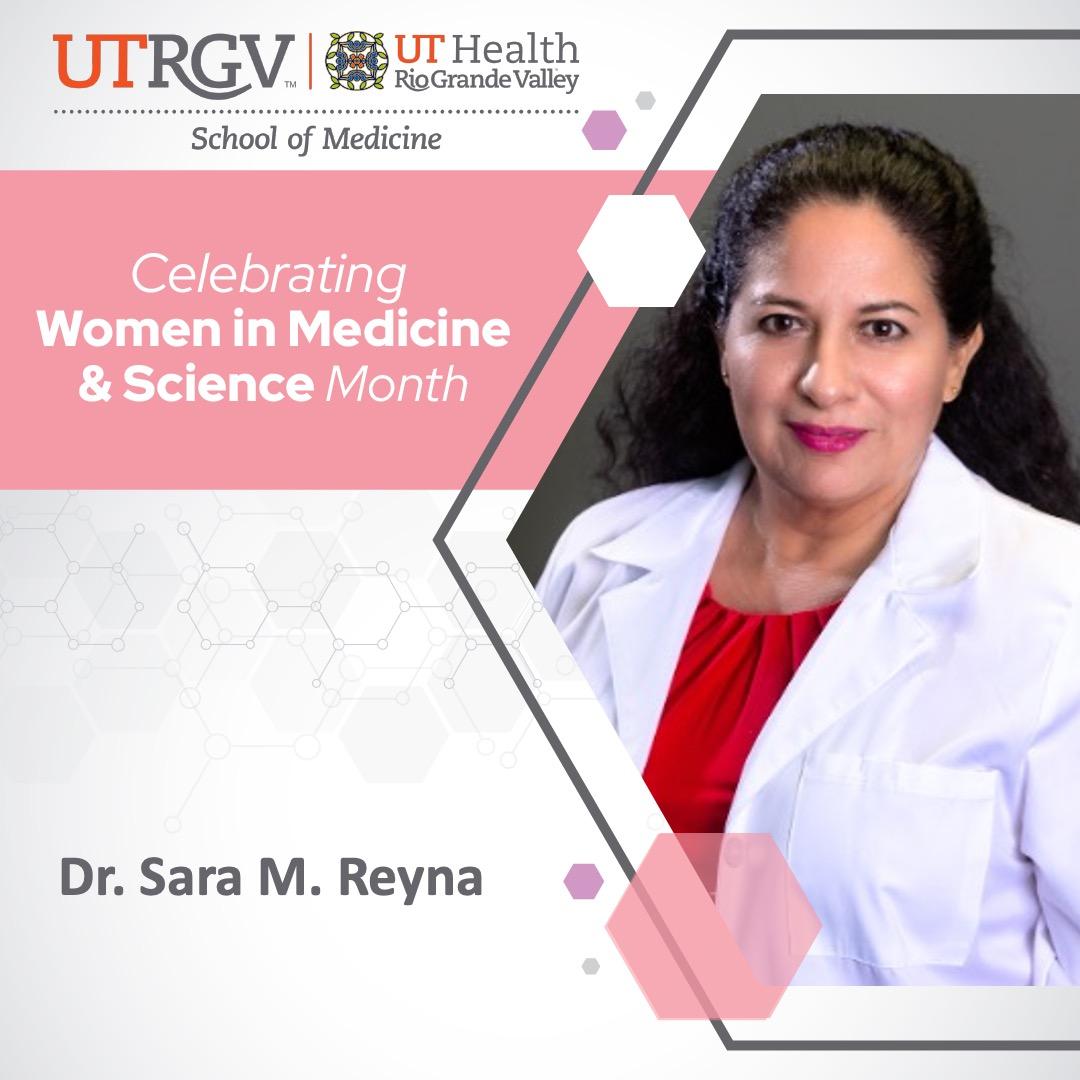
Today, we meet and celebrate:
Dr. Sara M. Reyna
Name and Last name:
Sara M. Reyna
Hometown:
San Juan, TX
What school did you graduate from, and what degree did you graduate with?
Bachelor of Science in Microbiology at Texas A&M University at College Station and PhD in Microbiology and Immunology at UT Health Science Center at San Antonio
What inspired you to pursue a career in medicine?
As an undergraduate, I spent one summer at UTHSCSA in a summer research program where I participated in a project that characterized antibodies of the autoimmune disease myasthenia gravis. This involved the use of an animal model of the disease. Through this research, I learned the importance of biomedical research in exploring the cause(s) of human disease and how this research can help find new and safe cures and treatments that can significantly impact the quality of life of individuals. At that time, this research experience solidified my decision to pursue my PhD with the hope of having a lab of my own where I can continue that task of finding treatments and cures for human disease.
What do you enjoy most about working at the UTRGV School of Medicine and UT Health RGV?
What I enjoy about working at UTRGV School of Medicine is the students. The enthusiasm of our UTRGV students to learn and do better is astounding. Our school has amazing students who show tremendous talent for outstanding stewardship and to develop into contributing citizens of our society. They bring so much energy, and I learn from them.
How has the landscape for women in medicine changed since you started your career?
I see more young women entering the field of biomedical research. The resources and support for women to balance family/personal life and career are much greater.
What advice would you give to young women considering a career in medicine?
This is a huge question with a plethora of answers. Here are three pieces of advice:
(1). Build your professional network: This includes professors, colleagues, and mentors who will guide you through your studies (undergraduate and beyond) and career (postdoctoral, faculty). These individuals will provide guidance on how to maneuver all things academic and professional. Each will have expertise in a particular topic. Don't be afraid/hesitant to ask the hard questions to help you maneuver the many paths of your schooling and career.
(2). Build your support system: This includes family, friends, and others in your professional network. These individuals genuinely know who you are and your morals, ethics, and beliefs. They will help you stay grounded and true to yourself. They will help you find your strength and discern through life's and career's many choices and tribulations.
(3). Stay healthy in mind, body, and soul. Take time to rest. Read a good book. Schedule exercise. Eat nutritious meals. Meditate and pray. All these aspects comprise the base core to sustain piece advice #1 and #2 mentioned above.
What unique strengths do you think women bring to the medical profession?
Women have the innate ability to nurture. Therefore, I believe that women bring a heightened sensitivity to others' needs and emotions, which is imperative in mentoring students and how women approach problem-solving and critical-thinking strategies.
Can you expand on a challenge you faced in your career as a woman in medicine and how you overcame it?
One of my main challenges occurred before my career started, but it is part of the foundation of my career path. About three years into my PhD program, my dissertation supervisor informed me that I could not continue in his lab because of a lack of funding. Although I had passed my PhD qualifying exam and completed all my coursework, some faculty members were adamant that I finish with a master's degree and be done with my graduate studies. I was not having that. I had to present to a faculty committee where I eloquently defended that I knew my science and could generate data. I firmly stated that I deserved to continue with my PhD studies. Of course, this did not mean I deserved my PhD, for I still had to work hard to earn it. Soon after the meeting, the faculty committee could not deny my request.
The good ending or beginning of the story is that the faculty member with whom I spent the summer as an undergraduate researching myasthenia gravis stepped forward and took me into his lab. I started a whole new dissertation project. Five years and two children later, with the full support of my husband, I received my PhD. Some would say, "Life comes full circle". I call it providence.
Looking back, it was indeed an arduous journey, but at the same time, magnificently humbling and rewarding. I learned to adapt to change and not to compare my education and career trajectory to others. I realized that sometimes we find ourselves discouraged by others, but with our strong faith and determination and the right people supporting us, we will make it. I am where I am supposed to be.
|