|
Today, we meet and celebrate:
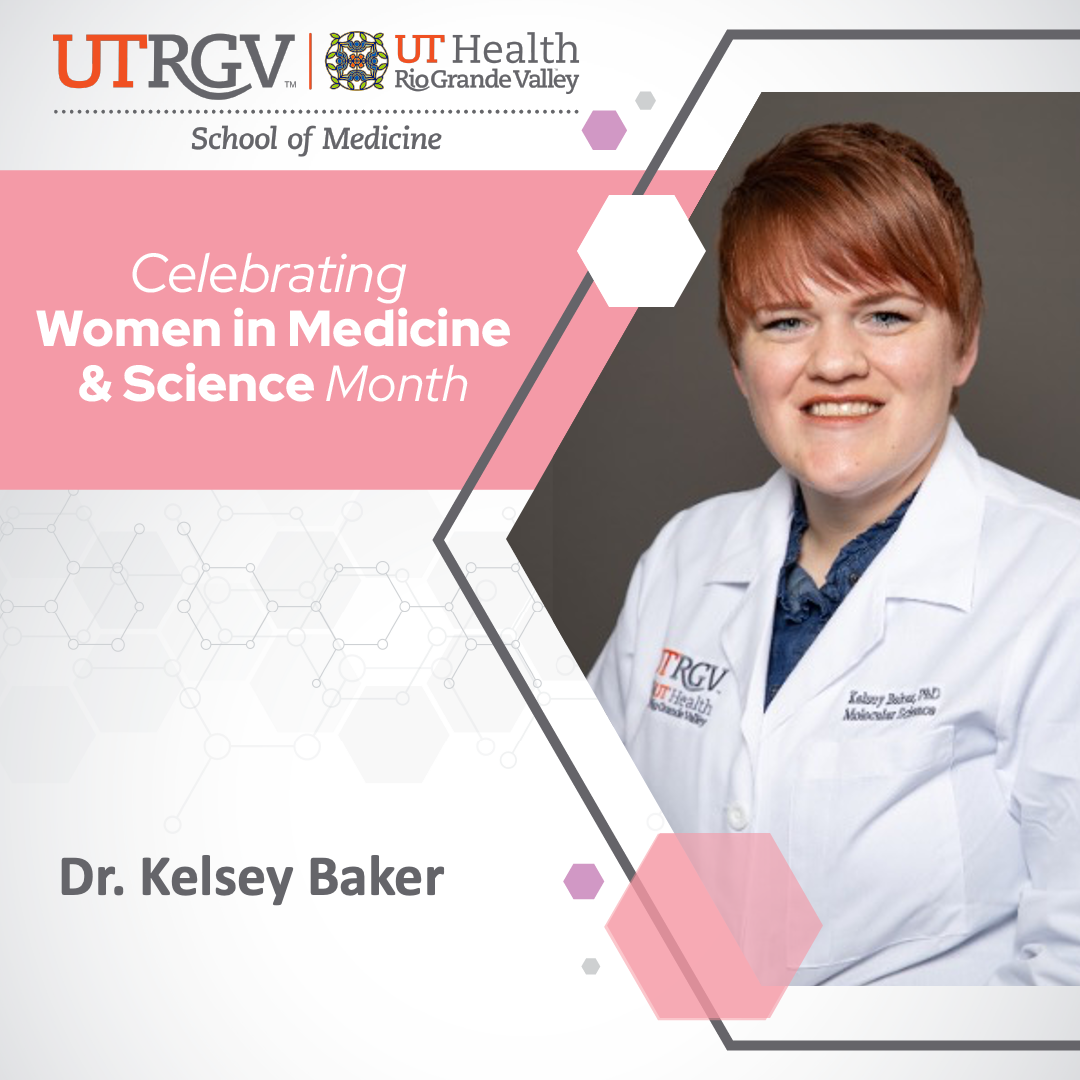
Dr. Kelsey Baker
Hometown:
Stansbury Park, Utah
What school did you graduate from, and what degree did you graduate with?
I obtained my bachelor’s degree in Biomedical Engineering with a minor in Chemistry in Salt Lake City, UT; my graduate degree (PhD) was completed in Cleveland, OH in Biomedical Engineering. My field of study focused on biomaterials, neuroinflammation, and neuroscience. I have been involved in basic to translational science.
What inspired you to pursue a career in medicine?
I didn’t always know I wanted to be in medicine, but I have always known I wanted to be in academics. Even as a child I would tell my mother that I wanted to be a writer or teacher when I grew up. During my bachelor’s degree, I began to discover that while I liked solving problems (engineer mind!), I was only genuinely passionate about them if they could cause a change in the health of an individual. While functioning bridges and automobiles are all exciting things, I became very passionate about applying my engineering principles to improve healthcare. This, combined with my love for academics, inspired me to pursue a career in academic medicine.
How has the landscape for women in medicine changed since you started your career?
The landscape for women in medicine continues to improve and grow. During my initial educational training, there were very few groups for women in science and medicine. In addition, I can recall all too keenly the feeling of being one of a few women in a classroom for a scientific or medically related field. As a teacher in these courses now, I have seen the tide turning firsthand. We have more programs that foster growth for women in medicine, such as the GWIMS from the AAMC. Specialized programs continue to be developed, and women have begun to have more positions in leadership and academic medicine.
What advice would you give to young women considering a career in medicine?
Identify key mentors and allies that can help guide and direct you along your career path. As the first person in my family to seek higher education, I didn’t have someone at home with whom I could “bounce ideas” or “talk next steps” readily. I relied heavily on discussions with mentors and allies. Develop this strong network, and don’t be afraid to ask them the hard questions – chances are, they have been where you are before and can provide guidance and advice on navigating the waters.
My other advice would be to remember that you always belong at the table. During my post-doctoral work, I would go to meetings, and I would always tend to pick a seat on the rim of the room, away from the table – perhaps you know what chairs I am talking about! My mentor pulled me aside one day and asked me why I did that. I told her I wasn’t at the same level as those at the table. She encouraged me not to let my insecurities as a woman in medicine prevent me from sitting at the table and voicing my concerns or contributing my ideas. This has stuck with me and had a profound influence on my career.
What unique strengths do you think women bring to the medical profession?
Women bring a lot of unique strengths to the medical profession. Some of these are related to our anthropologic instincts of nurturing and comforting. I have also found that sometimes women approach problems differently than men, and thus when working together, we can come up with unique solutions and approaches that allow for out-of-the-box products.
Can you expand on a challenge you faced in your career as a woman in medicine?
As I tell my medical students, I do and continue to have imposter syndrome. It is not something that has gone away. In fact, I find that some days, my imposter syndrome can “beat me down” and leave me feeling like a failure and someone unable to achieve the task at hand. I have found that self-awareness is critical if you have imposter syndrome (there are free surveys online to check!). If you do, you need to surround yourself with a strong group of mentors and peers who can affirm that you are doing a good job (or feedback on improving). I also like to keep letters of recommendation from previous supervisors handy – then on my bad days of feeling like an “imposter” …. I read them and can be reminded of the accomplishments I have had.
|