News Centered on Food Safety image of start
 

Stories from the Field

Southern Nevada Health District

Strong food safety culture is an important component to a solid food safety program. Resources designed to assist retail food service leaders in improving food safety culture that are both data-driven and free are limited. 


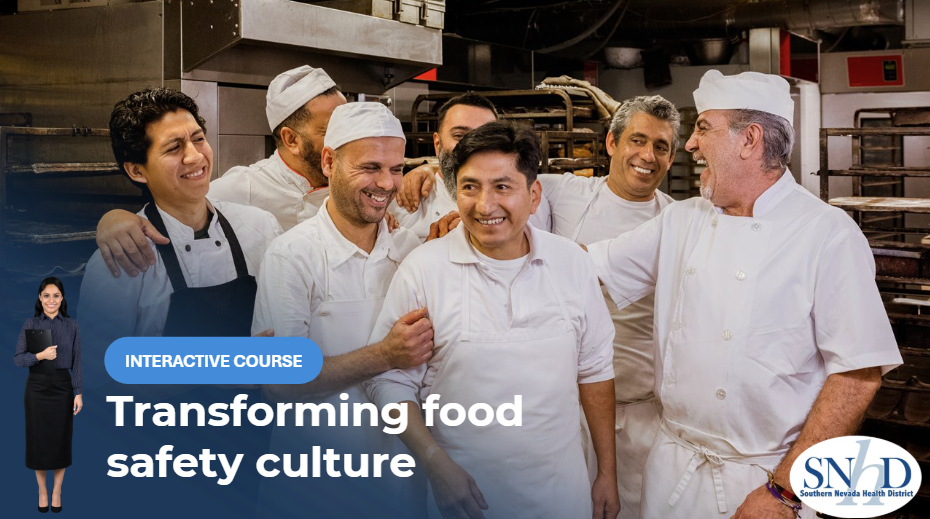
To address the critical obstacles and promotors of food safety culture, the Southern Nevada Health District (SNHD) developed Transforming Food Safety Culture, a free, web-based training to improve food safety culture. With restaurant experts, managers and employees in mind, SNHD conducted a mixed methods study to understand restaurant culture and how to intertwine best food safety practices in the most effective way. This training was born as a result of a mixed methods study conducted to improve the food safety culture for restaurant workers. Through qualitative focus groups and quantitative surveys, SNHD identified strategies to improve food safety as told by front line workers and managers with lived experience in retail food establishments. Surveys were conducted in person and remotely, with English and Spanish options, covering eight food safety culture-related topics. Themes from these discussions were further explored in a survey that consisted of 41 questions, also available in English and Spanish.


Transforming Food Safety Culture, walks users through strategies for improvement in food safety culture, and the obstacles that prevent it. This interactive tool offers the user an opportunity to interview the team members of a struggling restaurant, and apply what they’ve learned by making specific suggestions for best practices. Users are able to revisit the mock restaurant where they can see the impact of implementing their suggested strategies. Users have access to knowledge checks and an impactful video from The Alliance to Stop Foodborne Illness to enhance and solidify their understanding for real-world application. This training was designed with retail food managers and food workers in mind, but is also beneficial for regulators, owners, and leaders in other food settings.


Register and share Transforming Food Safety Culture with your teams and colleagues. Just one change in an environment can make a large difference.


Laurie Farmer, FDA: "This is fantastic. I like how it gets to the heart right away. The examples of real-world situations with right and wrong behaviors was so helpful. And best practices!"

The New York Food Safety Symposium

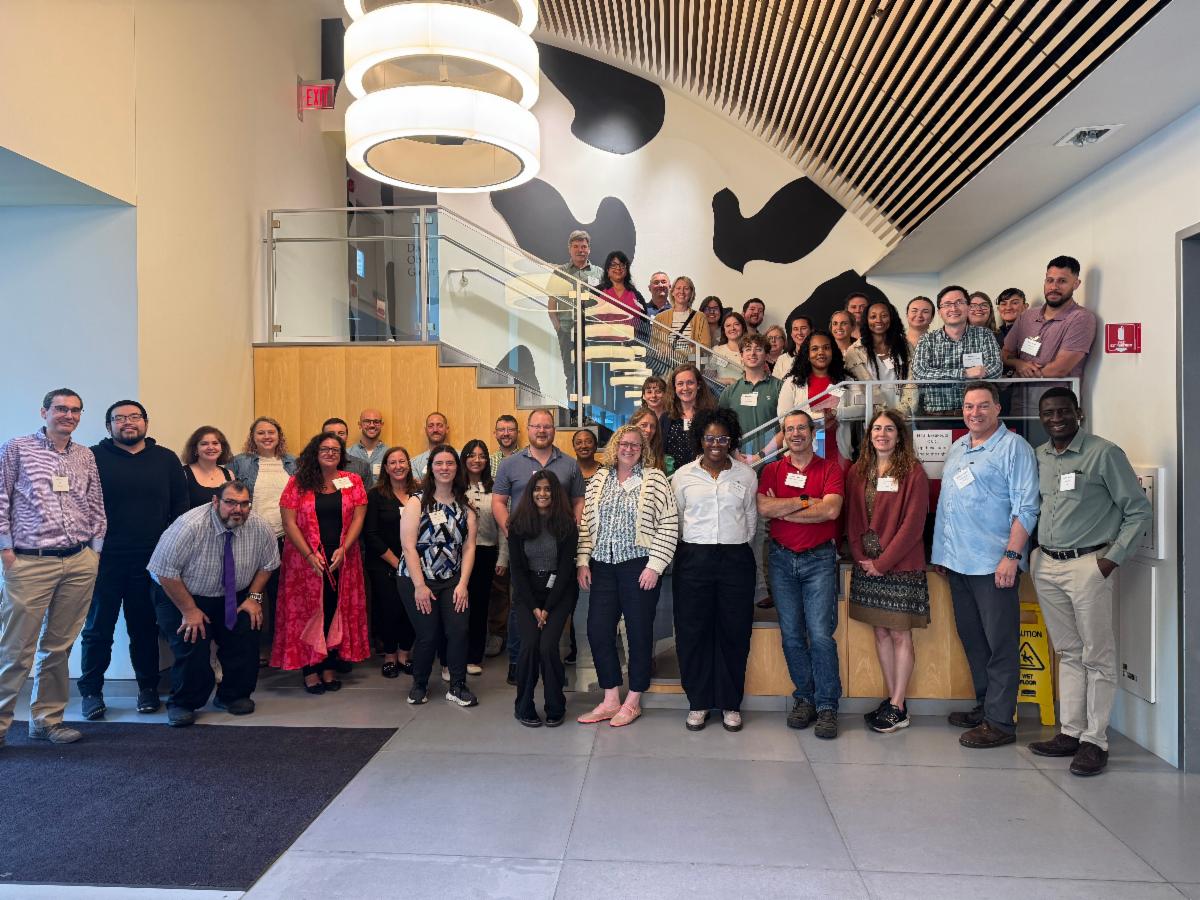
The NY Food Safety CoE hosted a Food Safety Symposium at Cornell University on July 22-23, 2026. Attendees that represented laboratory, epidemiology, environmental health, and agriculture-markets from eleven NY CoE network states/jurisdictions, and CDC, had the opportunity to discuss and promote enhancing foodborne outbreak investigation capacity.


A main area of focus was strategy for allocating potentially diminishing resources to maintain or improve foodborne disease surveillance, including development and use of emerging tools for surveillance and outbreak response. Attendee-driven topics for discussion included investigation prioritization; vibrio surveillance and investigation; produce outbreak investigations; prevention and root cause analysis; whole genome sequencing analysis of reoccurring, emerging, and persisting enteric bacterial strains; AI application in public health, and public health storytelling and success stories. The agenda also included a tabletop exercise based on a true multistate salmonella outbreak, incorporating surveillance, analysis and environmental sampling best practices.


"A very rewarding symposium. So nice to connect with other states and put our brains together to share ideas and solutions to common issues."


Food Safety CoE Products

The weather is cooling down, and the seasons are changing. Summer to Fall, Cyclospora to Norovirus. No matter the time of year, the Food Safety CoEs are here to help you gear up for your next outbreak with tools and tips for a smooth investigation. Noro season is here, but never fear!

National Outbreak Reporting Field Aids

Norovirus Outbreak Management Toolkit

Bleach Guidance Document

Rectal Swab Instructions

How to Collect Stool Using a Bulk Container

Outbreak Response Protocol


In Case You Missed It...

Building Workforce Capacity Through an Academic-Practice Partnership: A University Student Team Model


On October 1st, the WA Food Safety CoE hosted a webinar on building capacity and discussing how the University of Washington's SEAL Team uses academic-practice partnerships to engage students in real-world public health work while supporting agency needs and building the future workforce. Didn't get the chance to register? Watch it here to catch up on innovative ideas to support your team.


Food for Thought

Multistate animal-contact-related nontyphoidal Salmonella enterica outbreaks in the United States, 2009-2022: Network and and machine learning analyses of exposure sources, settings, and serovars

Salmonella is one of the most common enteric illnesses that we see each year. While it is commonly associated with foodborne transmission, it is also critical to investigate and understand Salmonella infections from animal contact. This review identifies the most common animal vehicles to prioritize the most effective prevention strategies to decrease infection.


Smart Technologies in Food Safety and Quality Monitoring: A Review of Technological Advances, Opportunities and Challenges

Our world is making technological advances everyday. Taking advantage of the positives of these advances can assist in prevention efforts of foodborne illness. New techniques can also pose new challenges and questions to ensure quality and safety. Dive in to learn more about what the newest technology could do for the future of food safety.


We Want to Hear From You!

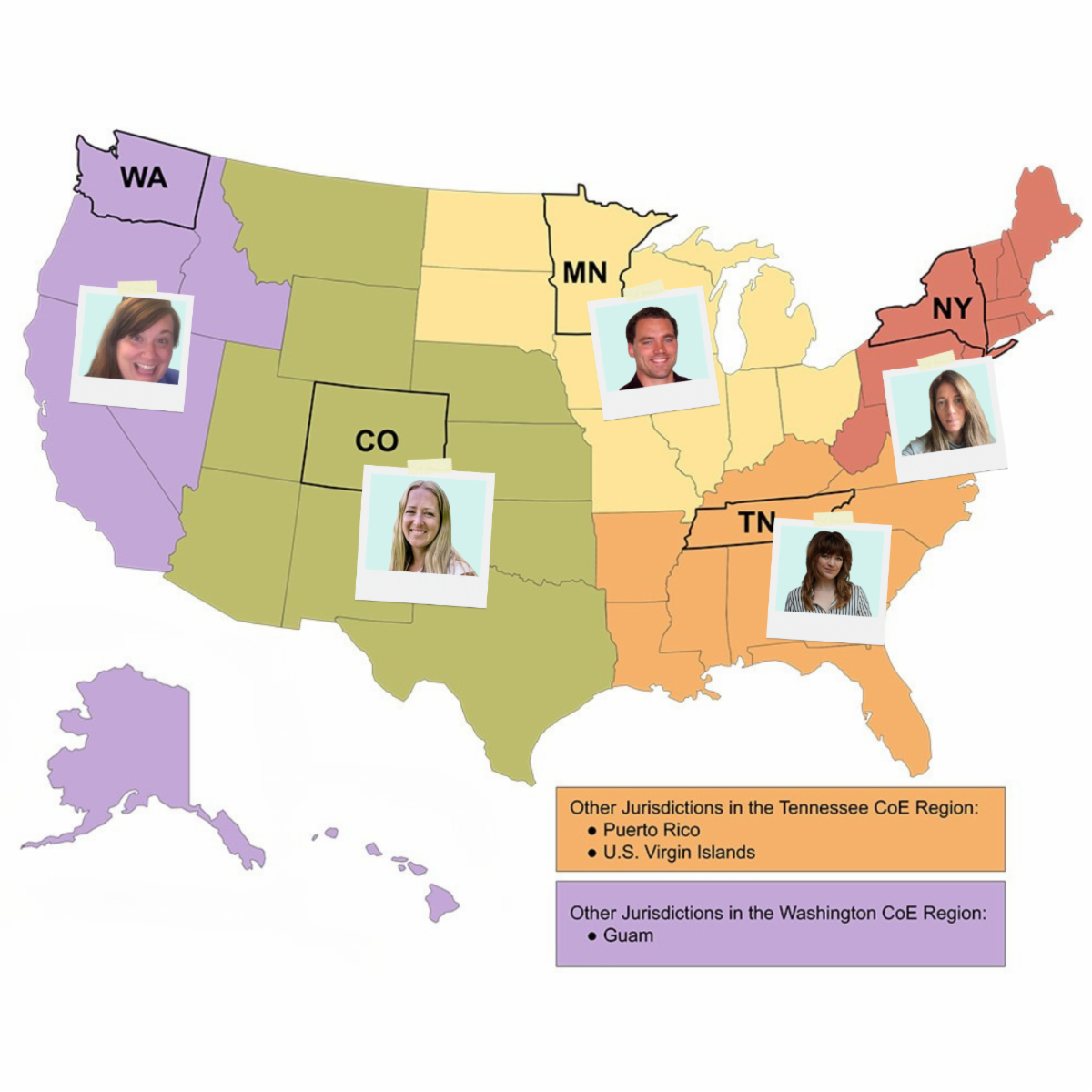
We are here for you! Reach out to your Regional Center of Excellence for support when implementing resources with your teams.

LinkedIn  YouTube  Web