Newsletter for the Central & Midwest Regions of the U.S. DOE Onsite Energy TAPs | | |
|
Michigan Healthy Climate Conference | |
May 16-17, 2024
Lansing, MI
| | |
|
|
May 20-22, 2024
Rosemont, IL
| | |
|
IDEA 115th Annual Conference and Trade Show | |
June 17-20, 2024
Orlando, FL
| | |
|
2024 Midwest Clean Energy Conference | |
August 26-28, 2024
Chicago, IL
| |
Technical Assistance is Now Available to Midwest and Central facilities Interested in Onsite Energy | The U.S. Department of Energy offers technical assistance for onsite clean energy deployment through its partnerships. The University of Illinois Chicago’s Energy Resources Center can help with transitioning to clean energy, reducing costs and emissions, and crafting an energy strategy. Contact them to explore opportunities for your site. | |
|
Regional Onsite Energy Project Highlights | |
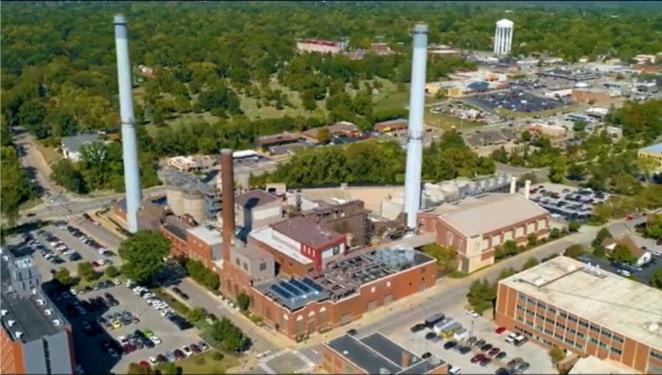
How the University of Missouri's 101-Year-Old Power Plant Produces Renewable Energy | |
University of Missouri Power Plant | |
|
The University of Missouri, located in Columbia, Missouri, began operation in 1839 as the first land-grant university west of the Mississippi River. It is the largest university in the State of Missouri with a student population of over 31,000 students from all 50 states and 120 countries.
The university power plant, which opened in 1923, has evolved over the past 101 years. It operates 24/7 with a wide range of equipment, some of which was installed as recently as 2002 (CHP gas turbine generators with heat recovery steam boilers), 2013 (biomass fueled fluidized bed steam boiler matched with a 19 MW steam turbine generator), 2017 (backpressure steam turbine generator), 2024 (8MW backpressure steam turbine generator) and some, such as steam turbine generators and steam boilers, dating back to the mid to late 1900s. It is operated as a district energy micro-grid providing the campus’s 16 million square feet of building space with onsite energy generation including steam, electricity, chilled water for cooling, underground utilities, drinking water, campus building automation, and energy efficiency options.
In addition, over 34% of the university’s energy use is renewable with a portfolio of biomass, wind, and solar. The efficient operation of the university’s CHP based micro-grid and its commitment to renewable fuels has resulted in greenhouse gas reductions of over 76% since the base year of 2008. For more information...
| |
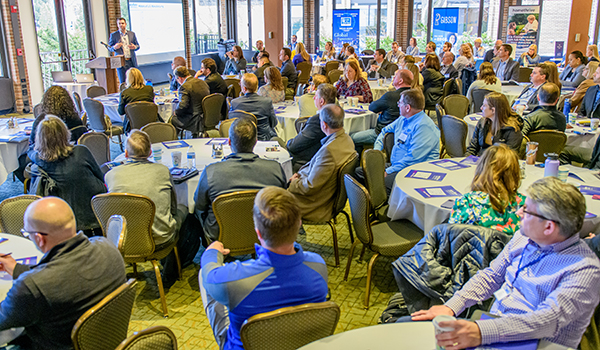
2024 Michigan Manufacturers Association Operations Conference | The 2024 MMA Operations Conference, aimed at Michigan’s manufacturing sector, delivered a suite of strategies and tools addressing key operational areas like organizational culture, HR, marketing, cybersecurity, production efficiency, procurement, financial management, and environmental health and safety. Highlights included a keynote speech, nine diverse breakout sessions, an Industry 4.0 pitch event, and extensive networking opportunities. Notably, the conference also provided SHRM credits to HR professionals for the first time. The panel discussions, featuring US DOE’s Central OETAP Assistant Director Ben Campbell, covered vital topics such as energy management best practices, MISO demand response programs, solar energy implementation, updates on Michigan’s energy legislation, and the advantages of combined heat and power systems. | |
|
2024 IDEA Campus Energy Conference | |
|
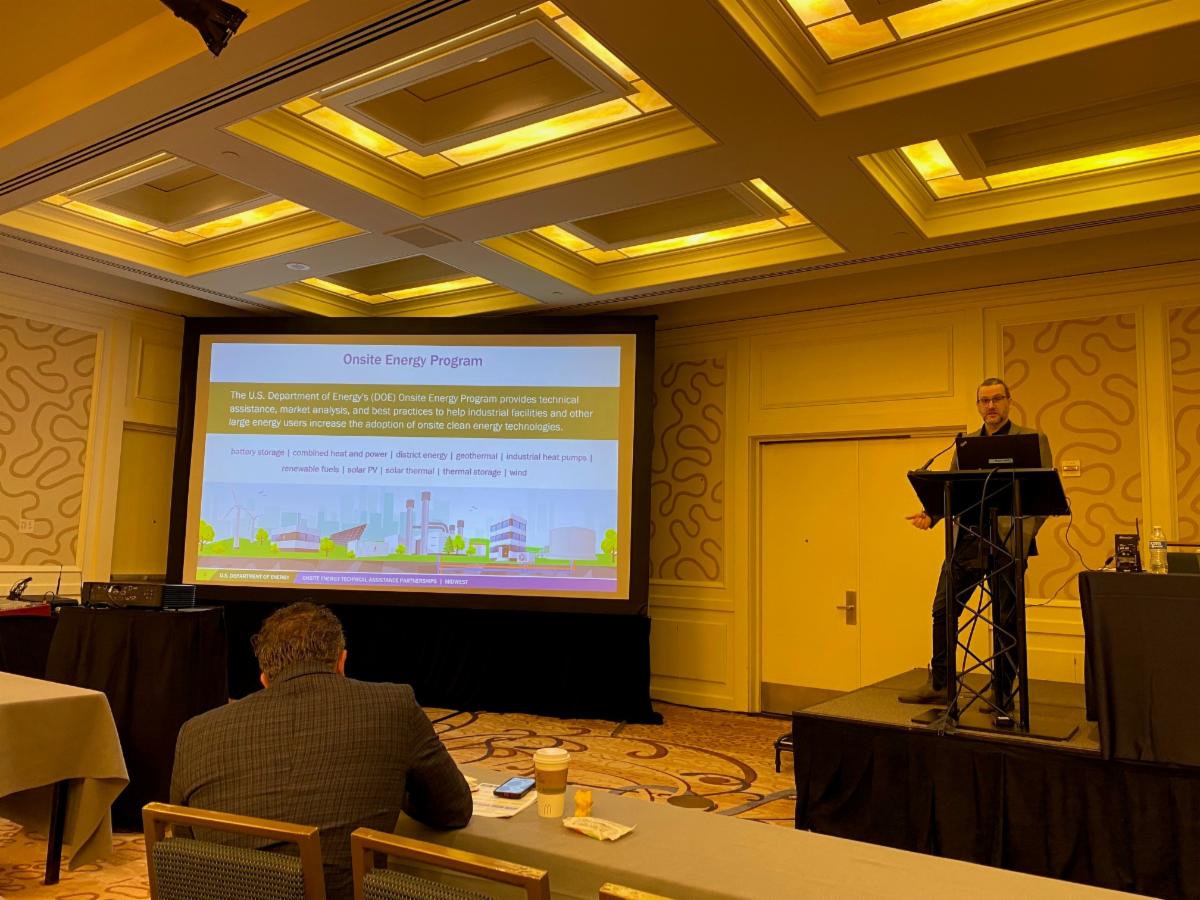
In February the International District Energy Association held their Campus Energy Conference in San Francisco. In a presentation titled, “Understanding and Quantifying the Decarbonization Benefits of CHP in Campus District Energy Systems: University of Missouri Case Study,” Graeme Miller, Assistant Director of the US Department of Energy’s Midwest Onsite Energy TAP, alongside James Wilbur of the University of Missouri discussed the university’s district energy system and its ability to reduce carbon compared to a baseline scenario dramatically.
The Onsite Energy TAP has been working closely with the University of Missouri to analyze its multi-fuel district energy system in order to assign carbon content to the generated energy streams (electricity, steam, chilled water). The assignation of carbon content to produced energy types will help the university’s colleges and departments understand how the consumption of electricity, steam, and chilled water affects their direct carbon emissions.
The Central and Midwest Onsite Energy TAP has been working on issues surrounding the quantification of GHG emissions savings from district energy, CHP, and onsite energy.
| |
 | |
Who are the U.S. DOE Onsite Energy TAPs?
The US Department of Energy Unveiled Onsite Energy Technical Assistance Partnerships to collaborate with Industrial facilities and larger energy users interested in adopting Clean Energy to lower costs, reduce emissions, and improve their resilience.
Connect with us, your Midwest and Central Onsite Energy Technical Assistance Partnerships from the U.S. Department of Energy (DOE)'s Onsite Energy Program! We can help evaluate sites for onsite energy potential, and design deployments that maximize economic impact, reduce risk, and minimize operations and maintenance costs.
We are located within the University of Illinois Chicago and serve the states of IL, IN, IA, KS, MI, MN, MO, NE, OH, and WI.
Questions? Contact
Cliff Haefke, Director, U.S. DOE Central and Midwest Onsite Energy TAPs, chaefk1@uic.edu
Ben Campbell, Assistant Director, U.S. DOE Central Onsite Energy TAP, bcampb24@uic.edu
Graeme Miller, Assistant Director, U.S. DOE Midwest Onsite Energy TAP, gmille7@uic.edu
|
| | | |