|
Central Oregon Public Health
Monthly Update
December 26, 2025
| | |
The Central Oregon Public Health Newsletter is now available in Spanish!
To receive it in your mailbox click here.
Usted puede encontrar el boletín de este mes en español aqui
| | Coping with Changes and Transitions During the Holidays | | |
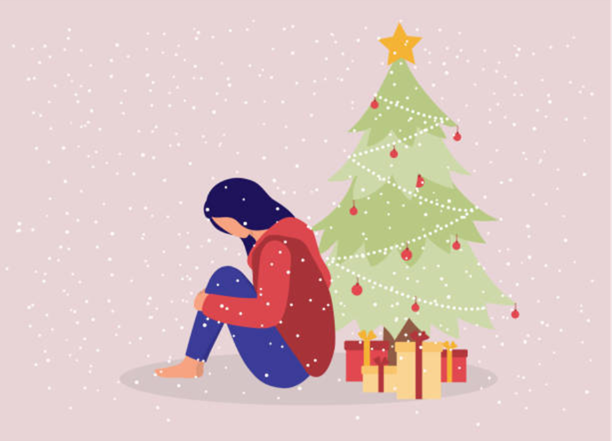
The holidays and changing seasons can be fun and exciting, but sometimes they bring challenges. During these times, our routines might change. Schools close, businesses adjust hours, and weather can affect our plans. These changes may make things stressful, and it can impact our mental health.
For Students and Adults
Holiday transition periods– before, during, and after– can create stress for many reasons.
-
Students might miss their friends or school routines. They might be more isolated than they are during school times. Students can experience additional mental health struggles leaving school for a break and returning. If your student is struggling, you can reach out to their school counselor.
-
Adults might struggle with different work hours, difficulties with childcare during school breaks or finding time for activities, including self-care.
-
Places we go for support like gyms, therapy, or the places we socialize at may have new hours or be closed for long periods of time.
-
Emotional Expectations - there can be pressures to “feel happy” or “be festive”, which can be overwhelming or mismatched with someone’s true experience. Additionally, holidays can surface memories of people who have passed away or relationships that have changed.
-
Financial stress - gifts, travel, food, and events can stretch budgets.
-
Social Overload/Underload - some people can experience social gatherings as draining whereas others who have few or no invitations can feel isolating.
Navigating transition times
There are small, realistic ways people can support themselves and feel more supported. Implementing some small practices and intentional connection improves possibilities to move through the season and transitionary periods with more ease and hope.
- Keep 1-2 simple routines (e.g. sleep, meals, short walks) to provide stability.
- Connect with one trusted person for support, even if it is briefly.
- Limit financial pressure by redefining gifts as time, presence, or simple gestures.
- Reach out to local resources, mental health supports, or crisis support lines, such as 988, when needed. Help is always available.
-
See below for more information on resources and here is an article on additional 10 tips for dealing with stress during periods of uncertainty.
Community Resources
If you're feeling like you need some extra support:
|
-
Call or text 988 for mental health support. It's free and available 24/7. You can contact 988 if you are experiencing additional stress, grief, if you are concerned about someone, or if you would just like some mental health resources to support a healthy new year’s resolution!
| -
Go to Deschutes County Crisis Stabilization Center: If you or someone you know needs additional mental health support to help them through a crisis, you can go to the Crisis Stabilization Center. It is located at 63311 NE Jamison St in Bend, and it is open 24-hours a day, every day of the year.
|
-
Call 211 or go to their website for help with housing, finances, childcare, and other community resources. They connect you to local support.
- If you're part of an organization, you can partner with 211. This way, your services can reach more people in need.
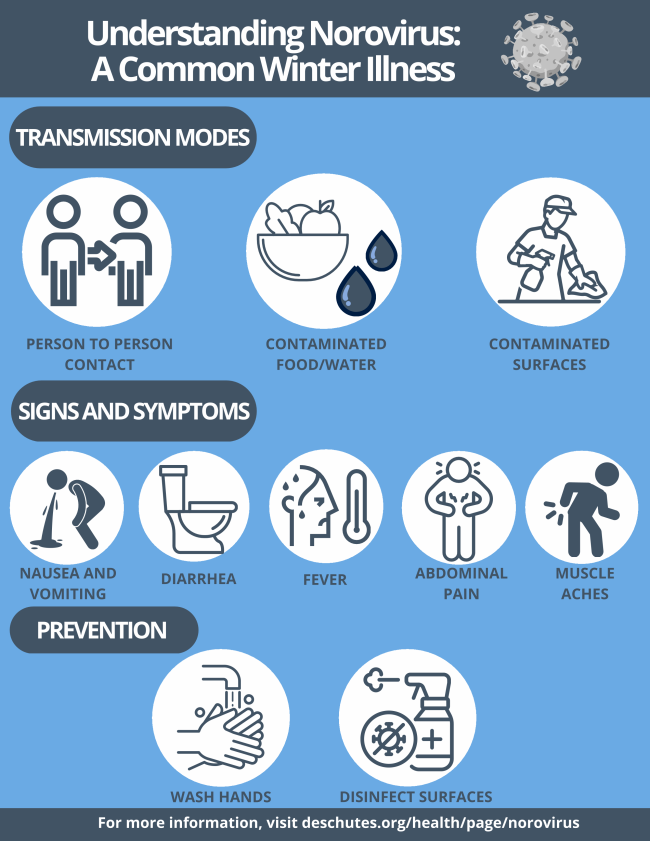
| Norovirus: ‘The Winter Vomiting Bug’ | Norovirus, which is notoriously known for vomiting and diarrhea, is a common winter illness that is often referred to as the ‘stomach flu’, or ‘winter vomiting bug.’ Norovirus is not influenza, but a highly contagious virus that can be transmitted from contamination (e.g. food/water) and infected people. Symptoms usually come on rapidly, between 12 – 48 hours after exposure and can last 1 – 3 days, with the ability to infect others for up to two weeks after symptoms improve. Long-term care facilities (LTCFs), schools, and cruise ships are areas where norovirus can spread particularly quickly given the crowded, enclosed nature of these spaces. Check out the infographic below for more information on transmission, signs, symptoms, and prevention strategies. | |
Managing Spread:
It is important to know that norovirus can be more difficult to kill than other viruses and can survive on surfaces for a long time after being contaminated (Note: only a tiny amount of the virus is needed to make someone sick). Alcohol-based hand sanitizers may not be as effective, so handwashing with soap and water frequently is essential. When disinfecting surfaces, using a bleach solution of 1:1 bleach to water is effective in killing norovirus. If someone in your family gets sick with norovirus, you should follow the tips above, also wash laundry in hot water, and wear a mask, gloves and eye protection if you are cleaning any vomit. Check out more cleaning and disinfection tips here. In addition to these strategies, proper food handling such as properly washed, cooked and stored food can reduce risk. Lastly, it’s important to stay home for at least 48 hours after symptoms have stopped to help prevent outbreaks of norovirus!
Norovirus Surveillance in Central Oregon:
Central Oregon Health Departments regularly analyze trends and outbreak patterns. Every month, Deschutes County Health Services shares a monthly report of norovirus cases across Crook, Deschutes and Jefferson Counties. Stay alert for norovirus trends in Central Oregon by checking out monthly reports here.
| Program Highlight: Family Support Services in Central Oregon | |
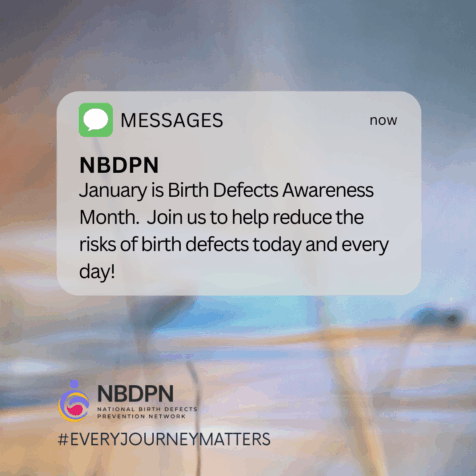
January marks National Birth Defects Awareness Month, with the goal to promoting awareness and prevention strategies for birth defects. This month serves as an important reminder of the critical steps we can take to ensure healthier pregnancies and babies. With integration of nutrition, healthcare access and behavioral health support, Crook, Deschutes and Jefferson counties work diligently to support healthy pregnancies, positive birth outcomes and education to reduce birth defects. This commitment is highlighted by collaboration between health programs, healthcare providers and supportive services.
Below are several resources offered by Crook, Deschutes and Jefferson Counties that support maternal and child health:
-
CAreCOOrdinatioN (CaCoon): CaCoon is a statewide, nurse home visiting program in partnership with Oregon Health & Science University (OHSU). CaCoon nurses help families with navigating the healthcare system and coordinating care for children and youth with special health needs. This program supports children and youth from birth to age 21.
- Crook County CaCoon Program
-
Deschutes County CaCoon Program
-
Jefferson County CaCoon Program
-
Women, Infant and Children (WIC): WIC programs and WIC staff are able to provide nutrition education and tailored food packages to help participants meet recommended daily intakes of essential nutrients, including folic acid. Folic acid is crucial during the early stages of pregnancy for reducing the risk of neural tube defects and should be consumed through fortified foods during pregnancy. WIC programs also offer other information and resources, including breastfeeding, education about dangers of substance use, and referrals to other healthcare services.
-
Crook County WIC Program
-
Deschutes County WIC
-
Jefferson County WIC Program
-
Perinatal Care Coordination (PCC): The PCC program supports families by increasing access to perinatal resources during prenatal and postpartum periods. There are no income or insurance requirements to meet with PCC staff and learn about the program. PCC staff are actively embedded in Central Oregon OBGYN clinics to provide onsite support as well as at local health departments, and can provide information and enrollment in WIC and Oregon Health Plan, and provide referrals for nutrition, medical/dental care, counseling, lactation services, childbirth classes, and arrange medical transport, among other resources. Between July 2024 and June 2025, the Deschutes County PCC team conducted 1,174 visits with pregnant individuals, which supported healthy pregnancies and promoted positive birth outcomes.
-
Crook County PCC Program
-
Deschutes County PCC Program
-
Jefferson County PCC Program
-
Family Connects Central Oregon: Family Connects is an evidence-based nurse home visiting program for families with newborns, at no cost to participants. This program supports families with one to three post-partum visits, maternal and newborn assessments, lactation support, postpartum and newborn education, and links to a wide range of community resources.
-
Crook County Family Connects Program
-
Deschutes County Family Connects Program
-
Jefferson County Family Connects Program
-
Babies First! Home Visiting Program: The Babies First! Program provides nurse home visits to pregnant individuals and families with babies and young children up to age 5, and makes sure families have the support and information they need during the first several years of life. These nurse visits can provide maternal and infant/child health assessments, including developmental screenings, breastfeeding support, case management, family coaching, and links to community resources. Between July 2024 and June 2025, Deschutes County provided 709 visits to offer support with prenatal visits, access to healthy foods and discussing any tobacco, alcohol or drug use concerns. The Babies First! Program is vital in improving birth outcomes, promoting on time births, and achieving healthy birth weights.
-
Crook County Babies First! Program
-
Deschutes County Babies First! Program
-
Jefferson County Babies First! Program
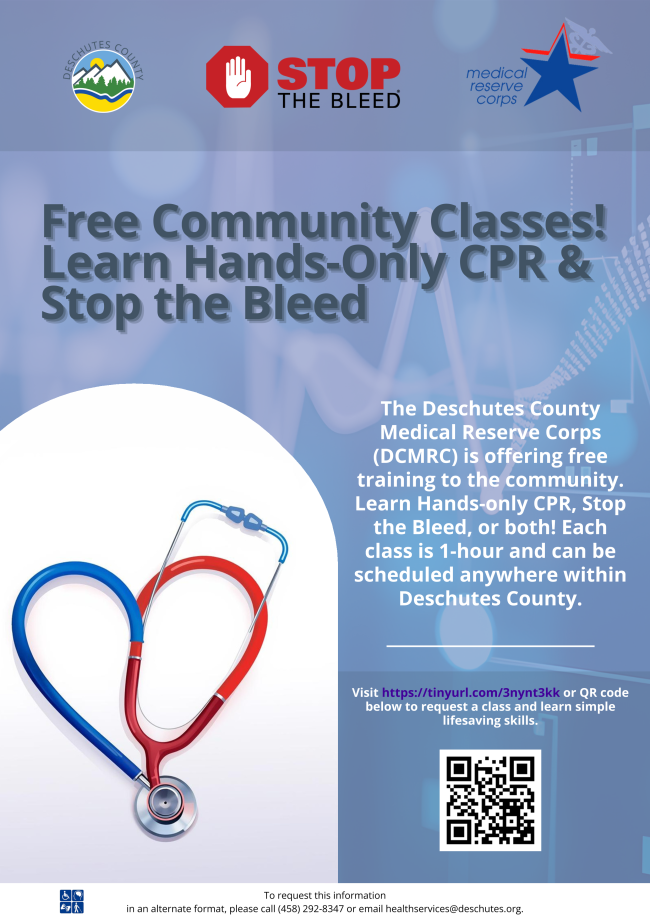
| Get free, local, Hands-only CPR and Stop the Bleed Training! | | |
The Deschutes County Medical Reserve Corps (DCMRC) is offering free classes to the community. Learn Hands-Only CPR, Stop the Bleed, or both! Each class is 1-hour, can be scheduled anywhere within Deschutes County, and can be taught in either English or Spanish. Click here to request a class.
-
Hands-only CPR (1-hour total): Hands-only CPR is different than certified CPR in that there is no mouth-to-mouth resuscitation and it is only focused on chest compressions. While participants won’t be considered “CPR certified”, the skills they receive from hands-only CPR are indeed lifesaving and can help reduce the number of cardiac deaths.
-
Stop the Bleed (1-hour total): Stop the Bleed is different than traditional first aid as it focuses only on how to stop the bleeding of a wound and pack it until help arrives. This specific skill is simple to learn and can make all the difference during an emergency.
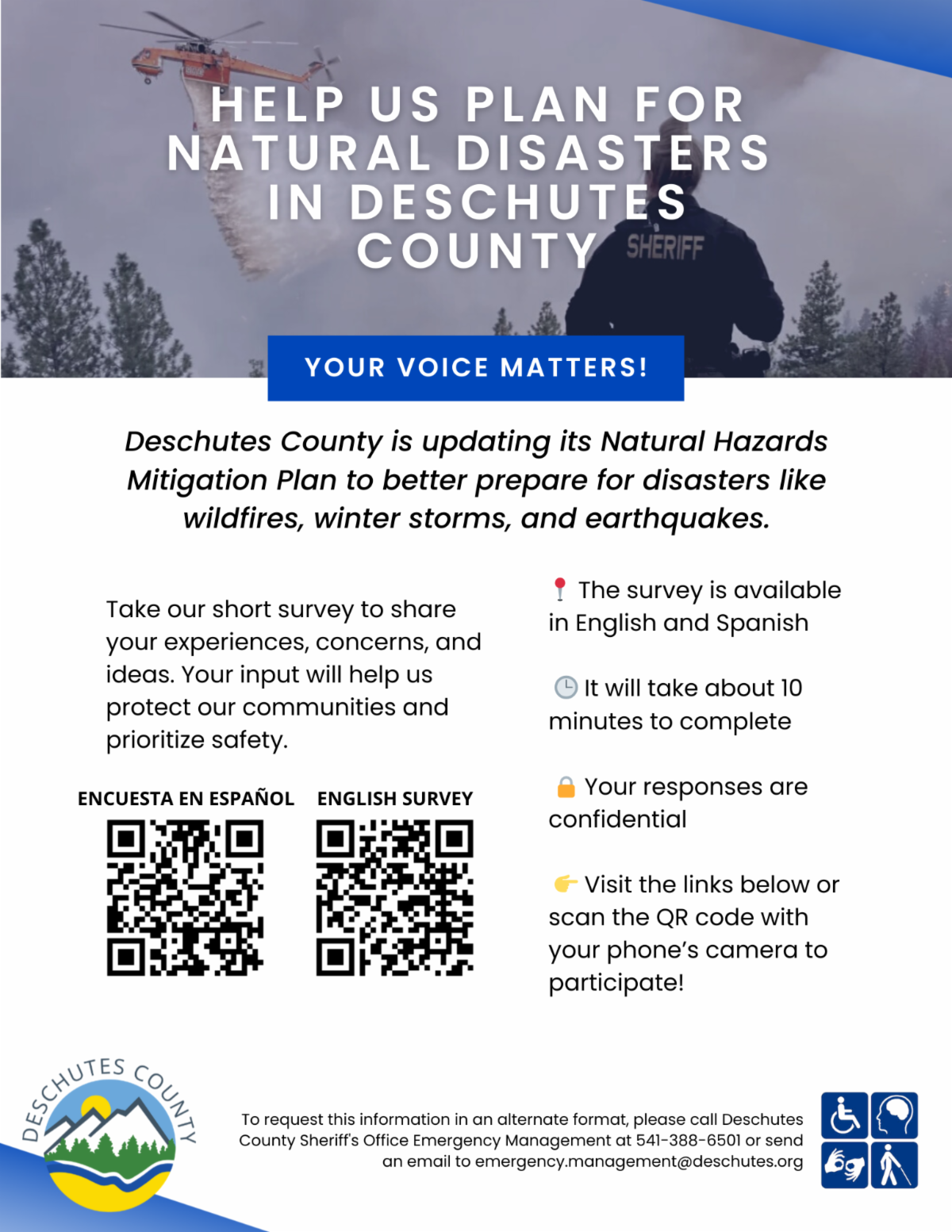
| | Provide Your Thoughts and Concerns to Help Plan for Natural Disasters in Deschutes County! | | Scan the QR above or click the link here to complete the survey by Monday, January 5th, 2026! | | Do you have feedback for us? Is there a public health topic you haven't seen covered but would like to see in an upcoming newsletter? Or a topic you'd like to see more of? Please take a moment to complete our quick reader feedback survey. We're always looking to improve our newsletter and your input can help highlight future topics! | | |
Health Services hosts numerous classes and special events each month!
For details about these events and any updates please visit our
Health Services Calendar.
| | |
Responses to this email address are not monitored.
To request this information in an alternate format, please call (541) 322-7444
or send an email to info@deschutes.org.
If you received this report but you would not like to continue receiving it,
you can unsubscribe at any time using the link below.
| | | | |