Old Growth Forests
Learn something new!

Around 8 billion trees cover Pennsylvania’s 16 million acres, yet just over one half of one percent of this area contains trees predating the 20th century. Most of our trees are just nearing their hundredth birthday, which is not nearly as old as the trees standing there before them. These younger, first or early second-generation growth trees have a long way to go before they will resemble the old growth forests of yore.

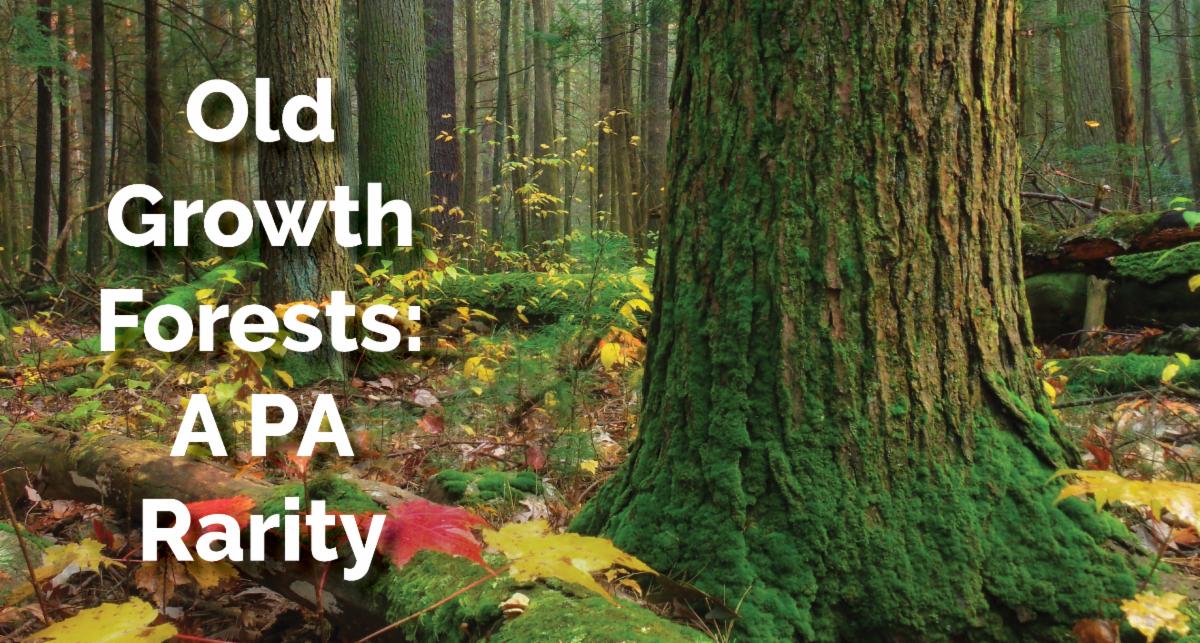
A visitor to early 16th century central Pennsylvania would find a diverse forest structure awaiting them. Covering most of the valleys, and especially near streams, would be the primary forests consisting of coniferous trees and shrubs. The trees would prevent the sun from coming throughout the entire day and cast the forest floor in near-constant twilight. Only slow-growing plants that kept their leaves throughout the year would be able to compete with the large trees acting as sun umbrellas and survive. When an area of ancient trees perished, new growth of hardwood species filled in differing layers of the canopy and ultimately yielded to conifers over the course of thousands of years. A forest with trees at a variety of life stages ensures that the trees will not die simultaneously at the while also providing a stable, if constantly changing, environment for forest species.

By the 1800’s expanding industrial requirements for the rapidly booming iron industry put a much heavier toll on the forest landscape. By the end of the century over 70% of the forests had been clear-cut to provide charcoal or other timber products and all that remained were dusty scrublands checked with agriculture and crossed by railroads. Simply put, Pennsylvania was not a great place for a tree. Not every square inch had be decimated, though, and some original forests remained.

A growing movement in the late 1800’s and early 1900’s to prevent continued forest destruction eventually formed the backbone of the modern forestry movement. Our first forester, Joseph Rothrock, and the first head of the United States Forest Service, Gilford Pinchot, were both borne out of this movement. In a strange irony, the lack of forests in Pennsylvania helped strengthen our resolve to protect them everywhere else.
Choose your own adventure!

For those looking to find the remnants of these prehistoric woods or areas that would most closely resemble them, visitors can explore the Alan Seeger Natural Area and Black Moshannon State Park.

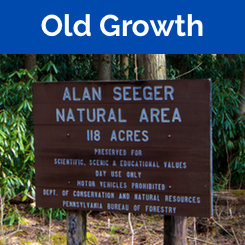
Alan Seeger Natural Area in Rothrock State Forest is the only virgin forest for nearly 80 miles in any direction. It is the result of a claim inconsistency for competing logging operations having contracts to Standing Stone Creek in the valley. As visitors will note there is a large island where the stream splits. Not wanting to timber the other company’s claim, the island and small portion of the surrounding area was left uncleared. The result is a 390-acre area full of hemlock, white pine, and assorted hardwoods. While the oldest tree in the area fell a few years ago there still stand several trees that well over 200-years-old. If you choose to visit Alan Seeger, plan ahead by writing your directions to the site before leaving home as cell service is limited and the area is tucked fairly deep into the forest. Also, be sure to pack out everything you might take in with you, including food wrappers or other litter and make every effort to leave only footprints and take only pictures when visiting.

While Black Moshannon State Park does not contain any true old growth forests, visitors can observe prominent collections of second generation hemlock and mixed hardwood forests here. State parks areas like this were some of the first in Centre County to be reseeded after logging as the companies left and the land was granted back to the state. 

What to bring on your adventures:

Trails throughout the Scotia Barrens are located in state game lands, so it is important to be mindful of hunting seasons when planning a trip and to wear bright fluorescent clothing in November through December especially. Also, if you are unfamiliar with the trails in the area, review a map prior to your hike and bring a map with you as well. A flashlight, water, proper hiking or walking shoes and tick protection are also important for preparation. The area is accessed for hiking, biking, horseback riding and hunting, so visitors can expect to see a good bit of activity while exploring.

  • Flashlight
  • Map
  • Bright-colored clothing during hunting season
  • A refillable water bottle 
  • Sturdy and water-resistant footwear
  • Long pants and socks are recommended in areas where ticks are prevalent
  • Hat, sunscreen and sunglasses
  • Child carrier/backpack or is recommended for very young children 
  • A light snack or picnic lunch
  • Cell phone for taking pictures or in case you need assistance
Remember: 
  • Many people are new to exploring our region's natural areas as the COVID-19 pandemic has led to increase in individuals' outdoor activity. Please set the best possible example for new explorers by demonstrating ways to respect the beauty of nature. The image to the right illustrates unfortunate misuse of a public picnic area in the Alan Seeger Natural Area this summer.
  • Review all safety recommendations related to PA's stay-at-home order
  • Pack out whatever you bring in
  • Follow local rules and guidance
  • Be considerate of others 
  • Stay local
  • If parking lot is full, consider entering the site from a different location
At-home adventure: Leaf Printing

Click the image below for directions for how to make your own leaf prints and access even more creative, nature-inspired activities on the Centred Outdoors website!
ClearWater Conservancy | 814-237-0400 | contactus@clearwaterconservancy.org