|
This is an official message from BHECN using a third-party service.
If you're seeing a warning above, it is the result of enhanced IT security within the University of Nebraska.
| | Chadron High School student directs charitable funds toward F.A.R.M. C.A.M.P. | | |
A 17-year-old senior at Chadron High School has shown her gratitude for a BHECN-sponsored career awareness program by directing a $400 donation from the Snow-Redfern Foundation toward the program.
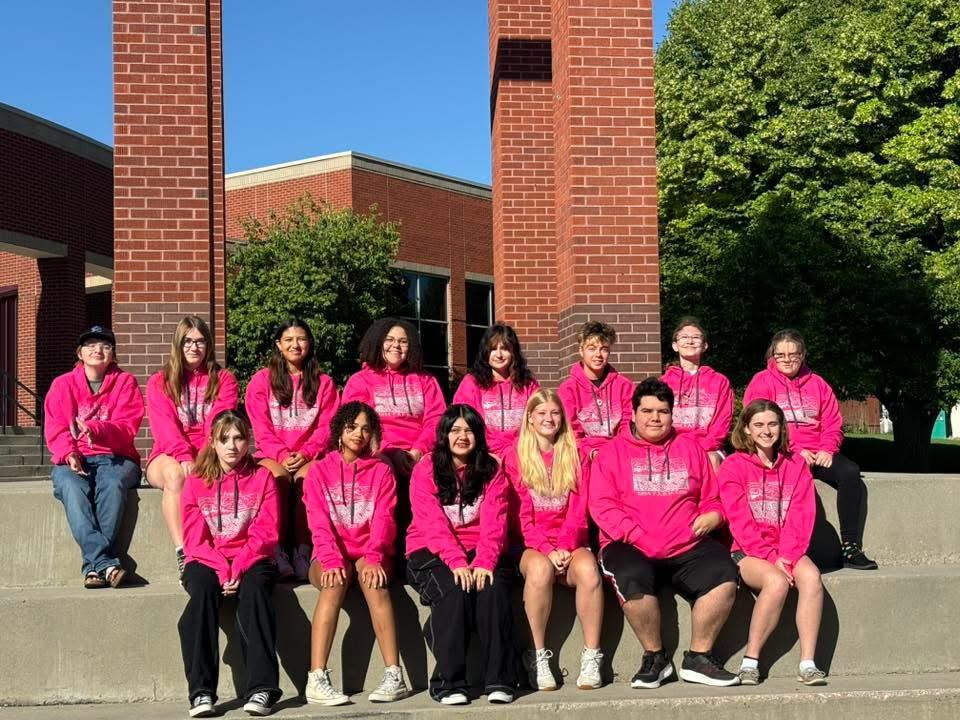
Jezrelle “Jezzy” Munyiri is a two-time participant in the Frontier Area Rural Mental Health Camp and Mentorship Program—also known as F.A.R.M. C.A.M.P.—a project developed by Western Nebraska Behavioral Health and funded in part by BHECN. (Munyiri is pictured above, first row, second from the left.)
The program seeks to identify and mentor rural students who are interested in future careers in behavioral health. Munyiri was able to direct the funding to BHECN and F.A.R.M. C.A.M.P. through her participation in the foundation’s Changemakers Program, which allows Panhandle youth to select impactful organizations to receive grant support.
“Jezzy is exactly the type of student our camp was designed for,” said Cate Jones-Hazledine, PhD, co-director of BHECN Panhandle and owner of Western Nebraska Behavioral Health. “When she reached out to ask about donating these funds to F.A.R.M. C.A.M.P., it was so meaningful—a validation of the relationships we build and what camp means to the students who attend.”
Munyiri said her own experiences with depression and anxiety in high school helped guide her toward F.A.R.M. C.A.M.P.
While at the camp, she connected with other students who shared her experiences and interests, as well as with professionals working in behavioral health. Her time at F.A.R.M. C.A.M.P. helped her realize she would like to pursue a career in the field. She plans to major in psychology in college.
Her high school guidance counselor later encouraged her to apply for the Snow-Redfern program, and once selected, she was offered the opportunity to direct foundation funds toward a program she felt would benefit her community.
She chose BHECN and F.A.R.M. C.A.M.P. because she wants others to have the same opportunities she had and because she hopes to help raise awareness about behavioral health issues and treatments in her area.
“My hope is that people in our area will take mental health issues more seriously,” Munyiri said.
The intent of the Changemakers Awards is to give participants—including youth—real resources to steward and award, said Sara Wilcox, executive director of the Snow-Redfern Foundation.
“At the Snow-Redfern Foundation, participatory grantmaking means shifting decision-making power to those closest to the issues—including young people themselves,” she said. “Jezzy used her voice, experience, and values to lift up work she believed in, and we were proud to support her decision.”
Support from the foundation helps F.A.R.M. C.A.M.P. in its goal of making the camp free for all who attend, Dr. Jones-Hazledine said.
“We are so grateful for Jezzy’s support,” she said.
That gratitude extends to the entire BHECN team, said Marley Doyle, MD, director of BHECN.
“Our staff was floored by Jezzy’s generosity and we were thrilled to hear she had such a powerful experience at F.A.R.M. C.A.M.P.,” Dr. Doyle said. “Stories like this are quite literally the reason we do the work we do at BHECN.”
| | Hotel rooms available for B-Con attendees, registration waitlist now open | | |
We are pleased to share that hotel rooms are available for B‑Con 2026 attendees at the Embassy Suites Downtown Omaha, the site of this year’s conference on Friday, April 24.
Please reserve your room soon to ensure availability.
Although registration for B‑Con 2026 has reached capacity, individuals may join a waiting list and will be notified if additional spots become available.
Please contact Valeta Creason‑Wahl at vcreason@unmc.edu to join the mailing list.
B‑Con 2026—BHECN’s second annual conference—will bring together members of Nebraska’s behavioral health workforce for a full day of continuing education, skill‑building sessions, and statewide collaboration.
This year’s keynote speaker, Leanna Fortunato, Ph.D., licensed clinical psychologist and Director of Quality and Health Care Innovation at the American Psychological Association, will examine the evolving role of artificial intelligence (AI) in behavioral health care.
Additional breakout sessions will cover suicide prevention, crisis intervention for youth, supporting individuals with mental illness as they reenter the community after involvement in the corrections system, and more.
See more details about the conference here.
| | Talking BHECN Sites with Alyssa Spartz | | |
With the opening of its Southeast site in 2025, BHECN now has a presence in each of Nebraska’s six behavioral health regions.
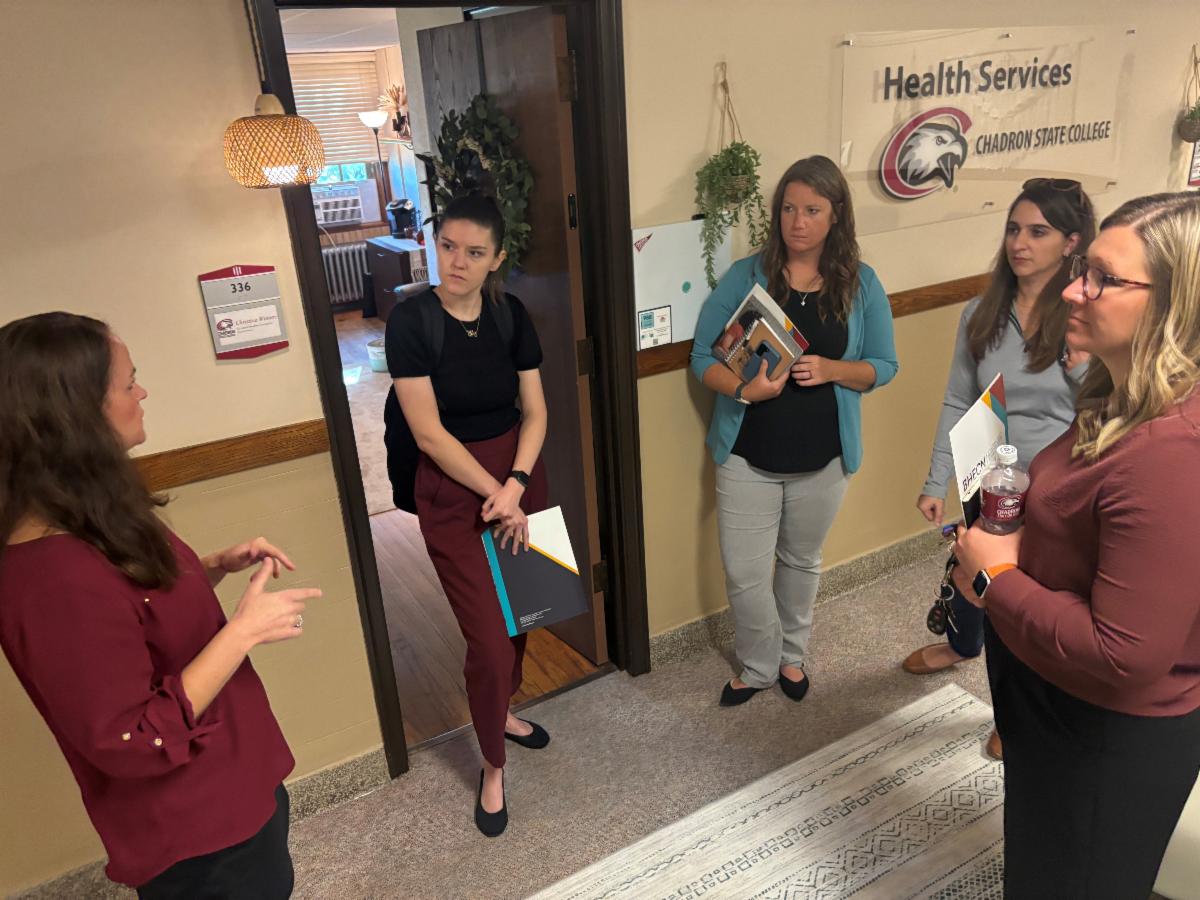
As all six sites became fully operational, BHECN promoted Alyssa Spartz (pictured above, second from left) to Workforce Expansion Manager. In this role, she provides overall coordination, support, and management for the sites.
She also helps lead BHECN’s efforts to expand each site’s profile and reach within its respective region.
Below, we talk with Alyssa about BHECN’s sites, the role she sees them playing, and what the sites aim to accomplish in the coming months.
How do our sites help advance BHECN’s mission of developing Nebraska’s behavioral health workforce?
The six sites advance BHECN’s mission by offering localized education, training, networking, and other supportive events and activities tailored to the unique needs of each community. Student-focused activities aim to recruit individuals into behavioral health careers and support their career preparation, while provider-focused events aim to enhance education and strengthen provider retention throughout the regions.
Why is it important to have a site in each of Nebraska’s behavioral health regions?
As a statewide organization, it's essential for BHECN to recognize how behavioral health workforce needs vary across Nebraska’s regions. By expanding beyond a central location, BHECN can tailor its workforce development strategies to reflect regional perspectives, ensuring that recruitment, training, and retention efforts are both effective and community-focused.
What is your favorite part about managing the BHECN sites?
My favorite part about managing the BHECN sites is being able to work with such a passionate and talented team of site directors. They are constantly working hard on exploring ways to expand their reach to make new connections and are always eager to develop new opportunities to enhance their regional impact. Events and activities hosted by the BHECN sites would not be possible without their dedication and valuable local insights.
What are some initiatives our sites are working on that people should be on the lookout for in the next couple of months?
Over the next couple of months, the six sites will be hosting or participating in over 30 different student and provider initiatives, ranging from provider networking socials (see below) to tabling at multiple career fairs. The sites are also collaborating with each other to offer provider retention workshops in the Panhandle and central parts of the state. There will be plenty of opportunities coming up for folks to connect with each other and with BHECN!
If people want to learn more about these initiatives, how would you recommend they do that?
Individuals can sign up here to join the mailing list for the sites, where they will receive event invitations, program fliers, and other information about BHECN. Students, providers, and other interested community partners are welcome to sign up.
| | Site networking socials in North Platte and Kearney set for this month | | |
BHECN is excited to announce two upcoming Provider Networking Socials designed to build connections among behavioral health professionals across Nebraska. These events, one of which is tomorrow night in Kearney, offer a relaxed, collaborative environment for providers to meet colleagues, share ideas, and strengthen partnerships within their regions.
Central Nebraska Networking Social
Tuesday, March 3, 2026 | 5:30–7:00 PM (CT)
South Central Behavioral Health Services
3810 Central Avenue, Kearney, NE
There is no need to RSVP.
Providers in the Central region are invited to gather in Kearney for an evening of conversation and community-building. This social provides an excellent opportunity to connect with peers and learn more about behavioral health initiatives in the area.
Southwest Nebraska Networking Social
Friday, March 20, 2026 | 11:30 AM–1:00 PM (CT)
Pals Brewing Company
4520 S Buffalo Bill Ave, North Platte, NE
RSVP here.
Those serving the Southwest region are welcome to join BHECN for a midday networking event in North Platte. Attendees can engage with fellow providers, foster new collaborations, and strengthen the behavioral health network across western Nebraska.
| | Registration remains open for the Brains, Bots, and Boundaries webinar series | | |
There's still time to register for the Brains, Bots, and Boundaries: Youth Mental Health in a Digital World, webinar series.
The free, four-part series examines how rapidly evolving digital technologies are shaping the mental health, identity development, and help‑seeking behaviors of adolescents and young adults.
Across four interactive sessions, presenters will explore the psychological impact of digital environments—including social media platforms and artificial intelligence tools—on youth and young adult mental health. Continuing education credits will be available.
Sessions will be held on March 20, March 27, April 3, and April 10 (all Fridays), from noon to 1 p.m. Central Time. Learn more about the series and register for the webinars here!
This webinar series is supported by the Nebraska Department of Health and Human Services through the School-Based Mental Health Training Grant.
| | Dr. Omrani Sabbaghi named Lasting Hope Resident of the Year | | |
Mahsa Omrani Sabbaghi, MD, a first-year psychiatry resident at Creighton University, has been named the 2025 CHI Health Lasting Hope Recovery Center (LHRC) Resident of the Year.
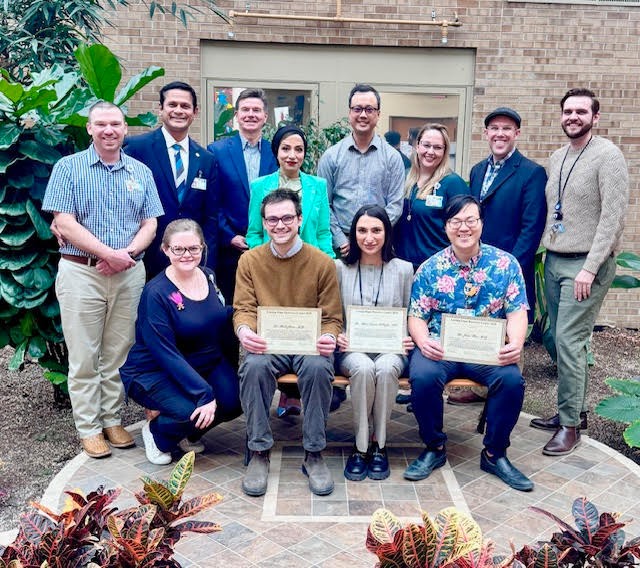
A native of Isfahan, Iran, Dr. Omrani Sabbaghi (pictured bottom row, second from the right) said the most rewarding part of her LHRC residency has been earning the trust of patients.
“Being trusted in that way feels sacred,” she said. “It’s a responsibility I don’t take lightly, and it’s what makes this field so meaningful to me.”
She shared that her residency strengthened her listening skills and expanded her ability to approach the people she interacts with humility.
“Going forward, I hope to build a career that keeps that depth—whether through patient care, teaching, or exploring subspecialties,” she said. “I want to continue learning and to practice in a way that always centers compassion and curiosity.”
Honorable mentions were awarded to Creighton psychiatry resident Jesse Woo, MD (bottom row, right), and UNMC psychiatry resident Brett Jesse, MD (bottom row, second from the left).
| | BHECN Scholars Spotlight -- Steven Dalmeida | | |
Our BHECN Scholars Spotlight highlights one of the exceptional students participating in the BHECN Scholars program—a statewide initiative designed to build Nebraska’s behavioral health workforce by supporting undergraduates who plan to pursue graduate-level training in behavioral health. Through mentorship, tuition support, and a strong cohort model, these Scholars are preparing to make a meaningful impact across Nebraska’s communities.
This month, we are happy to feature Steven Dalmeida, an Omaha native who currently attends Nebraska Wesleyan University. Below, we learn more about Steven in his own words.
What area of behavioral health are you interested in, and what excites you about it?
I am most interested in counseling and direct clinical work. I value the role behavioral health professionals play in building genuine human connection—helping people better understand themselves and develop tools to move forward. Everyone needs support in different ways, and I am excited to be able to provide that support one day.
What inspired you to pursue a career in behavioral health?
I’ve always been drawn to understanding how people think, feel, and navigate challenges, and that interest grew out of my own journey of self‑understanding. Through that process, I gained a deeper appreciation for the value of learning, perspective, and growth. It inspired me to help others navigate their own experiences and feel supported along the way.
How has being part of the BHECN Scholars program helped you so far?
Being a BHECN Scholar has helped me see my goals more clearly and tangibly. Through workshops, peer and faculty support, financial assistance, and other opportunities, I’ve been able to envision a realistic path toward my future. Because this field can be difficult to navigate, BHECN has served as a compass—guiding me as I continue to grow and plan my career.
What do you like to do for fun when you’re not busy with school or activities?
Being a student‑athlete takes up most of my free time. When I am not busy with school or activities, I enjoy lifting or doing anything that helps me prepare for a strong final season.
Learn more about the BHECN Scholars program.
| | GTSP application cycle opens March 10 | | |
The next application cycle for the Graduate Trainee Support Program (GTSP) will run March 10-April 10.
GTSP applications will be accepted for experiences starting in the Summer. The program financially supports master’s-level students in behavioral health graduate programs across Nebraska during their advanced practicum or internship experiences that serve rural, public-sector, or justice-involved communities.
Students accepted into this program are eligible to receive up to $20,000 over the length of their experience. Payments will be divided equally based on the number of months the experience lasts.
Supervisors of students may receive up to $5,000 per student upon the completion of the student's experience.
Learn more about the program and how to apply here.
| | Student Advisory Board webinar series continues Wednesday | | |
The BHECN Student Advisory Board hosts the next session in its free virtual Lunch & Learn offerings on Wednesday for students exploring behavioral health careers.
This one‑hour event starts at noon Central time and provides clear guidance on academic pathways, training requirements, and licensure options for future behavioral health professionals.
Students at any stage—from high school through graduate training—are welcome to attend and learn more about the many routes into the behavioral health workforce.
Register here!
| | Nursing conference to explore hope and harm in behavioral health | | |
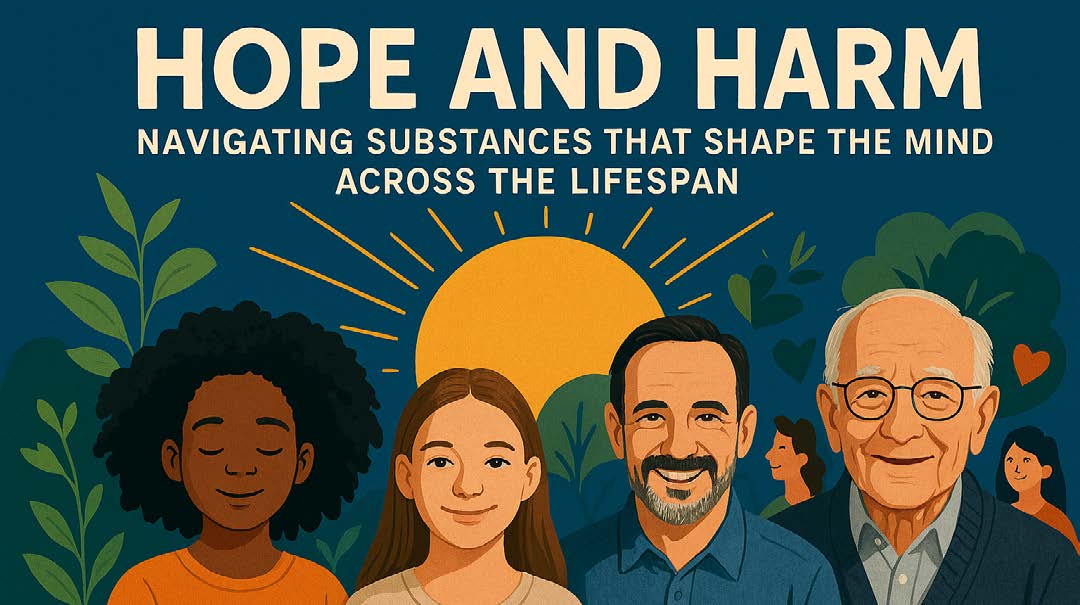
The UNMC College of Nursing Continuing interProfessional Development and Innovation will present the upcoming conference “Hope and Harm: Navigating Substances that Shape the Mind Across the Lifespan.”
This accredited continuing education event will be Friday, May 15, from 8 a.m. to 4 p.m., with in-person sessions hosted at both the University of Nebraska-Lincoln Nebraska Innovation Conference Center and University of Nebraska at Kearney Health Science Education Complex, as well as a premium livestream package offering 60-day on-demand access.
Designed for advanced practice providers and nurses, this regional conference addresses the relationship between healing and harm in the use of psychotropic and controlled substances from pregnancy through older adulthood. Attendees will explore the latest evidence-based practices in prescribing, deprescribing and supporting individuals affected by psychiatric and substance-related conditions.
Learn more and register here.
| | New summer course strengthens counseling for Spanish-speaking communities | | |
This summer, the University of Nebraska Omaha is launching COUN 8006: Culturally Responsive Approach to Counseling with Spanish Populations, a new online Zoom‑based course running May 26–July 31. Designed for both graduate counseling students and licensed behavioral health providers, the course focuses on culturally sustaining practices that support Spanish‑speaking individuals and families.
Participants will explore how the meaningful use of Spanish—both linguistically and culturally—can enhance assessment, intervention, and therapeutic communication. The course also examines ways traditional Western counseling models can be adapted to better serve Spanish‑speaking clients through community‑centered and relational approaches.
The class is open to graduate students and licensed professionals with intermediate or native Spanish proficiency. Students can earn 3 CMHC credits, while licensed providers may receive 45 CEUs. Professionals seeking CEUs must enroll as Non‑Degree Seeking before registering.
Contact Dr. Christine Chasek at christinechasek@unomaha.edu for more information.
| | The Behavioral Health Education Center of Nebraska (BHECN), pronounced “beacon,” was established in 2009 by a legislative bill to address the shortage of behavioral health professionals in rural Nebraska and communities that lack access to care. It is a unique partnership among the state legislature, academic institutions, and community partners to create a statewide workforce solution to increase the number of licensed behavioral health professionals. | | |
A publication of the Behavioral Health Education Center of Nebraska (BHECN) | | | | |