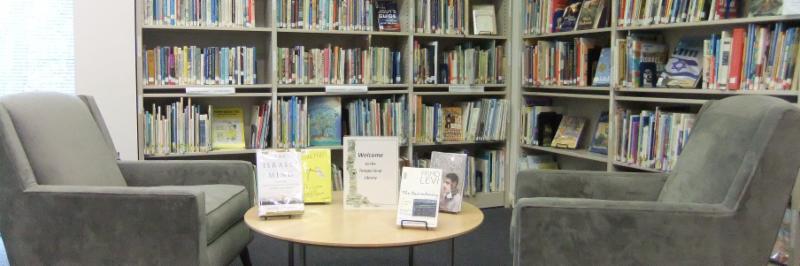
Check It Out!
at the Temple Sinai Library
| |
| |
|
When We Flew Away, Alice Hoffman
In an act of both literary imagination and extensive research Hoffman weaves a story of Anne Frank before she and her family went into hiding. Beginning with the Nazi occupation of the Netherlands, Anne’s life becomes more and more circumscribed as daily life is filled with terror and violence. A tour de force novel, it leaves us with the same feeling of heart break and loss as does the Diary.
| | |
|
Sandwich: A Novel, Catherine Newman
At 54 and in the throes of menopause, Rocky, her husband, two kids in their twenties and her aging parents go off on their annual one week vacation on Cape Cod. It’s a pivotal time for Rocky as she faces the change in her own life, the reality of her parents growing older and frailer, and feeling nostalgic for the time when her children were younger. Told within the structure of everyday events, the novel is moving, hilarious and a mirror in which we can see our own reflection.
| | |
|
Kissing Girls on Shabbat: A Memoir, Dr. Sara Glass
As a young, single woman Glass realized she had sexual feelings for women. However, living in a Hasidic community required her to repress such feelings, conform to the sect’s suffocating moral codes, marry and have two children. But her need for self-fulfillment led her to leave her community, divorce her husband and set out on a course of self-discovery which eventually led her to earning a Ph.D. This is a story of courage and the determination to live one’s life openly and as one sees fit.
| | |
|
Feh: A Memoir, Shalom Auslander
Auslander, a successful writer- including Foreskin’s Lament (in the Library’s collection), novels, short stories and a TV series – nevertheless suffered from a condition of despair and disgust summed up in the Yiddish expression Feh. Brought up in an extremely Orthodox community he is imbued with the idea that he is fallen, broken, shameful, and worthless, a sense of himself which leads to many forms of self-destructive behavior. Feh is his story of overcoming his self-deprecating image in a recounting that is funny, sad, poignant, and ultimately uplifting.
| | |
|
The Gates of Gaza: A Story of Betrayal, Survival, and Hope in Israel’s Borderlands, Amir Tibon
This personal story of grandparents who on October 7th raced from Tel Aviv to heroically save the lives of their family hiding in a safe room in their home just a mile from the Gaza border is told against the backdrop of larger events which led to the tragedy of that day. Tibon gives a broader view of that black day as he interviews over thirty residents of his kibbutz, Nahal Oz, as well as the Israeli soldiers who overcame Hamas. He continues as he tells of the history of the community and the policies which put the kibbutzniks in harm’s way to begin with. Further, Tibon, an international correspondent, discusses the wider Palestinian-Israeli conflict and the implications of the failed peace process. Taken as a whole, The Gates of Gaza tells the story of personal heroism and the trauma suffered by one family and an entire nation.
| | |
|
Lithuania: Selected Poems, Over the Rooftops of Time, & From the Backyard of the Diaspora, by Myra Sklarew
Poet, scientist, and educator Myra Sklarew (1934-2024) was born in Baltimore, MD and authored thirteen books including Lithuania: Selected Poems (1995), and Over the Rooftops of Time (2002). Professor Sklarew was recipient of the American University Scholar/Teacher Award, the PEN Syndicated Fiction Award and the National Jewish Book Council Award in Poetry. Her poetry collection Lithuania is based upon firsthand accounts of Lithuanian Jews, letters written on the eve of World War II, and secretly kept diaries. The volume has been described as a living testimonial to those who perished in the Kovno Ghetto. Her poetry collection From the Backyard of the Diaspora investigates the limits of speech and language to maintain spiritual vitality. Her poem “it is evening in jerusalem” explores the struggle to find meaning and beauty amidst loss: “the lost names scattered over / the mount of olives are returning / the judean hills lean nearer the sound / of the wind that sings in the chalil / a child crosses the border of sleep to pick flowers / a soldier carries her gently back”.
| | |
|
Trajectory, Cambria Gordon
Set in 1942, this historical novel depicts the story of Eleanor, a 17-year-old Jewish girl, who turns out to be a math whiz. When her skill is recognized, she gets recruited by the U.S. Army and is instrumental in the development of the Norden bombsight which increased the accuracy of daytime bombing. The book also touches on such topics as segregation in military and civilian life, the Japanese American internment, sexism, and the Holocaust.
| | |
|
Not Nothing, Gayle Forman
Twelve-year-old Alex is an angry boy who lives with his aunt and uncle who do not want him. His anger boils over and he commits a violent act which leads his social worker to arrange community service at a retirement home. Here he meets 107-year-old Josey, a Holocaust survivor who silently awaits his death. Josey and Alex take to each other and Josey opens up to Alex about his experiences during the Holocaust. The story is life-changing for Alex who reveals the nature of his violent crime. In the end, Alex realizes that he is “not nothing”.
| | |
|
Hidden Truths, Elly Swartz
Danielle (Dani) and Eric are middle schoolers who have been best friends since second grade. But after an accident, which severely damages Dani and which Eric fears he may have caused, they drift apart. Told from the point of view of each, we learn what is motivating both protagonists, their secrets, and how they eventually mend their relationship.
| | |
|
Violin of Hope, Ella Schwartz, Juliana Oakley (Illus.)
Many years after a violin was seized by the Nazis from a Jewish family, it is discovered and finds its way into the hands of a young Jewish boy who goes on to become a concert violinist. A violin, an instrument which can convey both sadness and joy, reminds us that no matter how bleak the present day the future often is filled with wonderful surprises.
Ages 6-11
| | |
|
We Celebrate the Light, Jane Yolen, Heidi Stemple, Jieting Chen (Illus.)
There are many ways different people celebrate the winter holidays but in We Celebrate the Light we learn that all of them - Diwali, Solstice, Christmas, Chanukah, Kwanzaa, Bodhi Day, and Lunar New Year – have many things in common. As we each experience our love of light, food and family in separate ways we come to realize and appreciate that these traditions bind us all. Embodying the true spirit of the holiday season, this book is both informative and entertaining.
Ages 3-6
| | |
|
Little Dreidel Learns to Spin, Rebecca Gardyn Livington, Taryn Johnson (Illus.)
As a youngster I was always frustrated by my inability to get a dreidel to spin as fast and as long as other kids. Now I know why: My dreidel was just learning how to spin! Told in rhyme this story should delight little ones while delivering a subtle message about perseverance.
Ages 4-8
| |
Don't want to receive emails from the Temple Sinai Library? Please email us at templesinainews@templesinaidc.org to be removed from the TSL email list. Clicking "Unsubscribe" at the bottom of this email will remove you from all email lists associated with Temple Sinai. | | | | | |