AUGUST 2026

WATER PAGES eNEWSLETTER

We Need to Do Better at

Maintaining Pervious Pavement

One of our engineers has decided to do a research project on pervious pavement for their master’s thesis. They identified seven porous asphalt areas in a single municipality and conducted infiltration tests of these porous pavement installations. Six of the seven sites failed the infiltration test. Porous asphalt must have an infiltration rate greater than 20 inches per hour for a system designed for quantity control or greater than 6.4 inches per hour for a system designed for water quality control only. Six areas tested were not even close to satisfying these requirements. 


It is obvious that only one of the porous asphalt areas was being maintained. It was installed in 2019. The oldest system tested was built in 2013, and the newest area tested was built in 2020. According to NJDEP’s Stormwater Best Management Practice Manual, “the surface course of a pervious paving system must be vacuum swept, not power swept, at least four times per year. Vacuum sweeping must be followed by either air blowing or high-pressure power washing performed in accordance with the specifications recommended for the particular type of system. All dislodged material must be promptly removed. The first annual maintenance must be performed in the spring. Maintenance must additionally be performed in the autumn, after the fallen leaves are collected and removed.”


It is our belief that many people are simply power sweeping their porous asphalt areas, which pushes the fine materials into the void space of the porous asphalt, ultimately resulting in clogging.


I asked my engineer if they were able to identify companies that can be hired to maintain pervious paving systems. They were only able to find one in New Jersey. Porous Pro LLC is a two-year-old company that uses the top-of-the-line regenerative vacuum truck. We reached out to the owner, Tom Eosso, and he invited us to the site he was currently maintaining about a mile from campus. We jumped at the opportunity. Tom showed us his maintenance process. He measures infiltration rates before he vacuums the site and then measures it afterwards. He will repeatedly vacuum the lot until he deems the infiltration rate acceptable at greater than 60 inches per hour. He admits that sometimes the lots are simply too clogged, and the infiltration rate cannot be restored. This requires the porous asphalt layer to be replaced, a very costly operation that can be avoided if regular maintenance is performed from the time the porous pavement is installed. A lot of people wait several years before they start doing the maintenance. Tom’s experience indicates that it only takes two to four years of no maintenance to completely clog the system, thereby requiring replacement.


Rutgers cannot endorse or recommend any company. We are simply sharing what we have learned over the last few weeks. The real issue is that pervious paving systems are not being maintained in New Jersey. If these systems are not functioning as designed, the required stormwater management is not occurring, resulting in more polluted waterways, more flooding, and loss of groundwater recharge. We need to do a better job of making sure these systems are maintained and functioning properly.


~ Christopher C. Obropta, Ph.D., P.E., Extension Specialist in Water Resources 

How Do Detention Basins Impact Flooding?

This summer, the RCE Water Resources Program began examining detention basins in Hillsborough to quantify how well these systems work to reduce downstream flooding.  Detention basins were introduced as a method of reducing increased stormwater flowrate resulting from new development and increased impervious surfaces.  The basins fill during a storm and slowly discharge over time, which reduces the stress placed on local streams.  However, this management practice is outdated.  Even if the peak flow rate is reduced, the new development introduces a larger volume of runoff compared to pre-development.  It has been hypothesized that 75-85% of the post-development runoff volumes exit the basin before the 24-hour storm ends, which is far too short of a period.


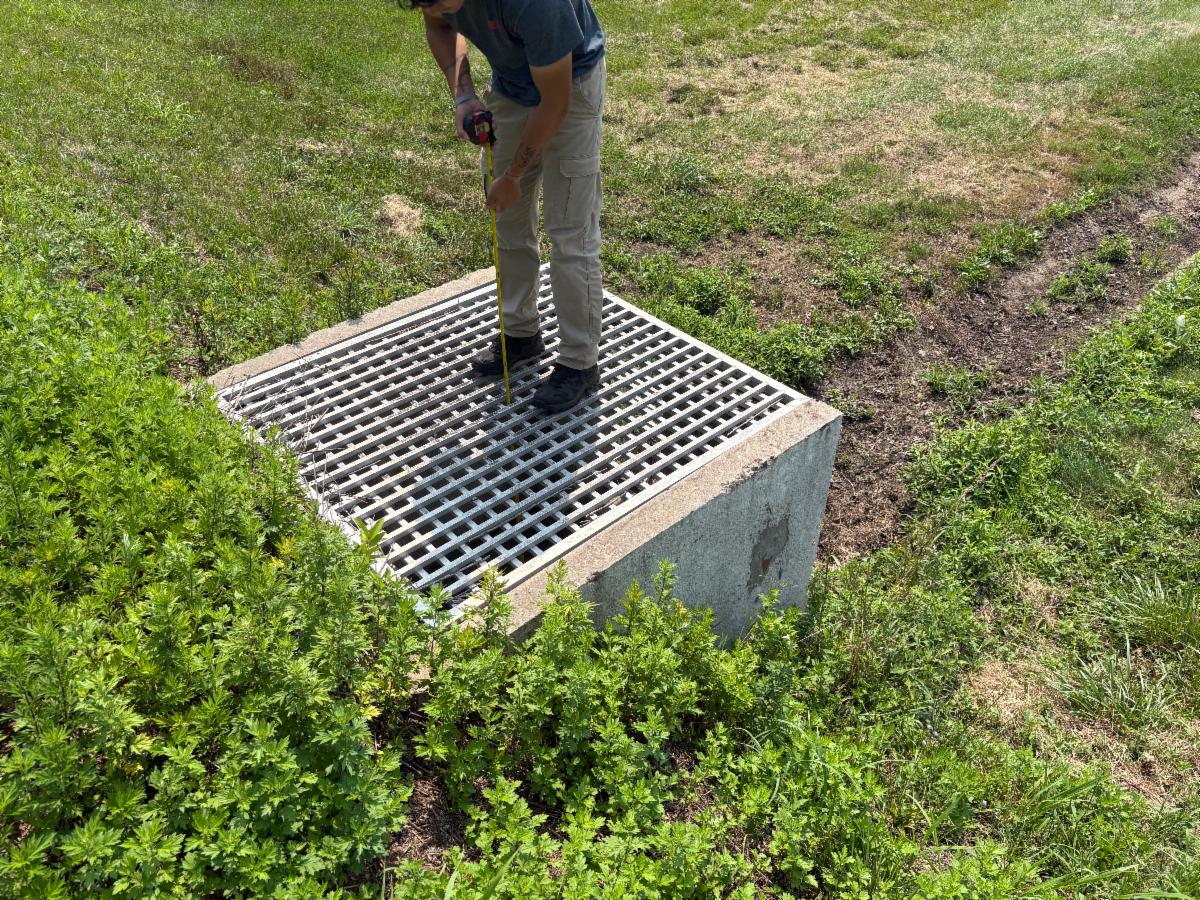
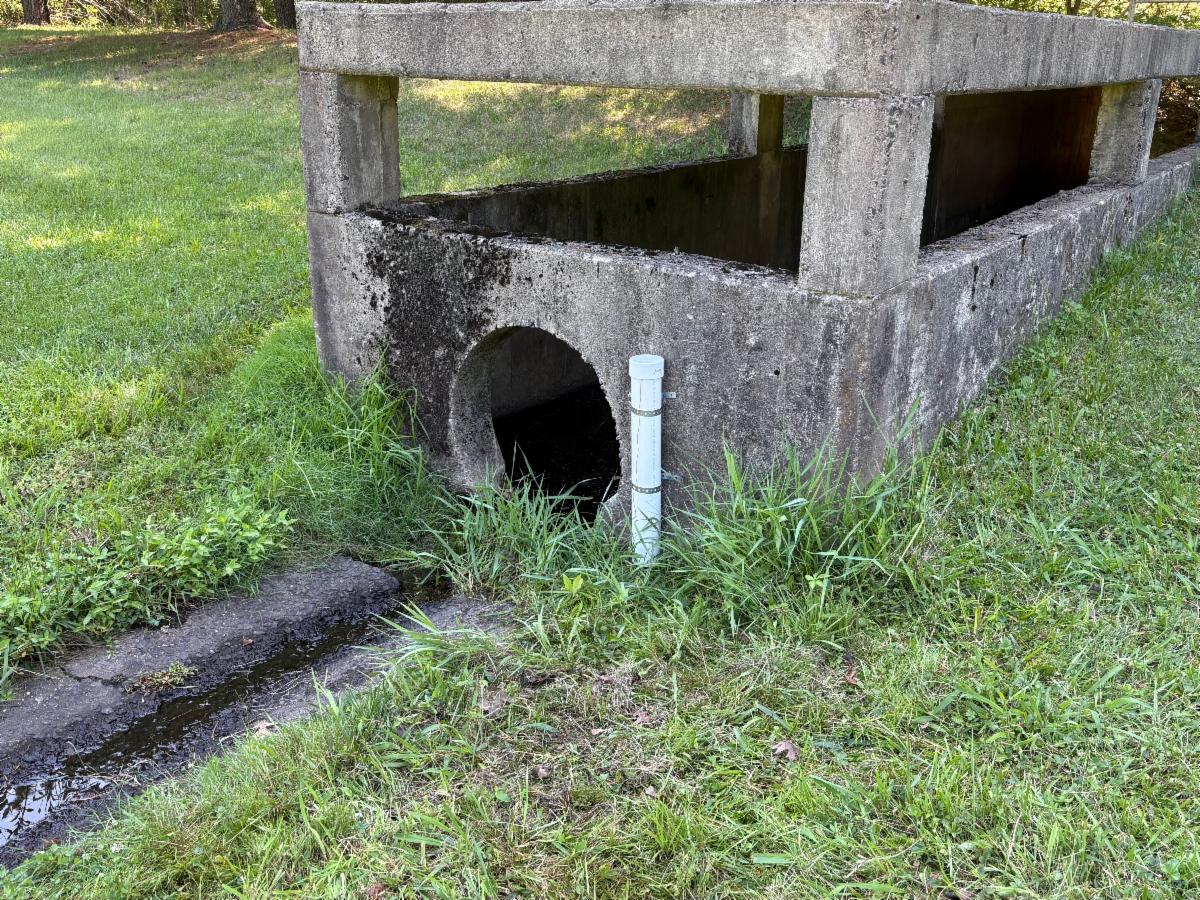
Five detention basins in Hillsborough were selected for this study, along with three downstream locations.  Water level sensors and data loggers were placed on the outlet structure of the basin and in the bottom of the streams.  Student interns Holly Monroe, Gavin Beyers, and Logan Pouliot assisted with basin surveying, sensor installation, and data collection.  We hope to compare the intensity and timing of the flowrate of water leaving the basin to the timing and intensity of stream level rise. Ultimately, we want to answer the question:  Do we need to bolster detention basins with retrofit strategies (like upstream green infrastructure)? Stay tuned as our study continues into the fall!


Surveying an outlet structure

Water level sensor attached

to an outlet structure

[Photo credit: Benny Roe, RCE Water Resources Program]


Public School (P.S.) 5 in Paterson Depaves and Adds a Rain Garden

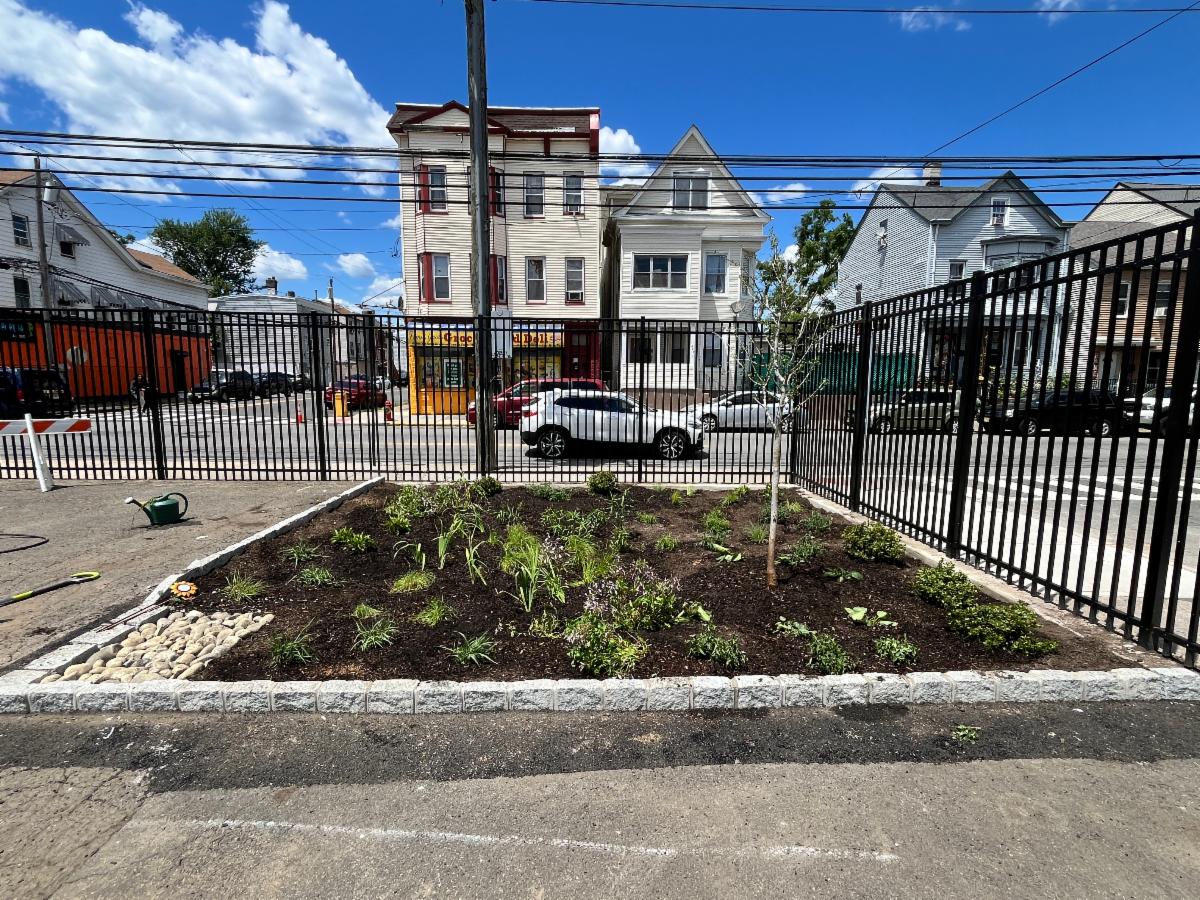
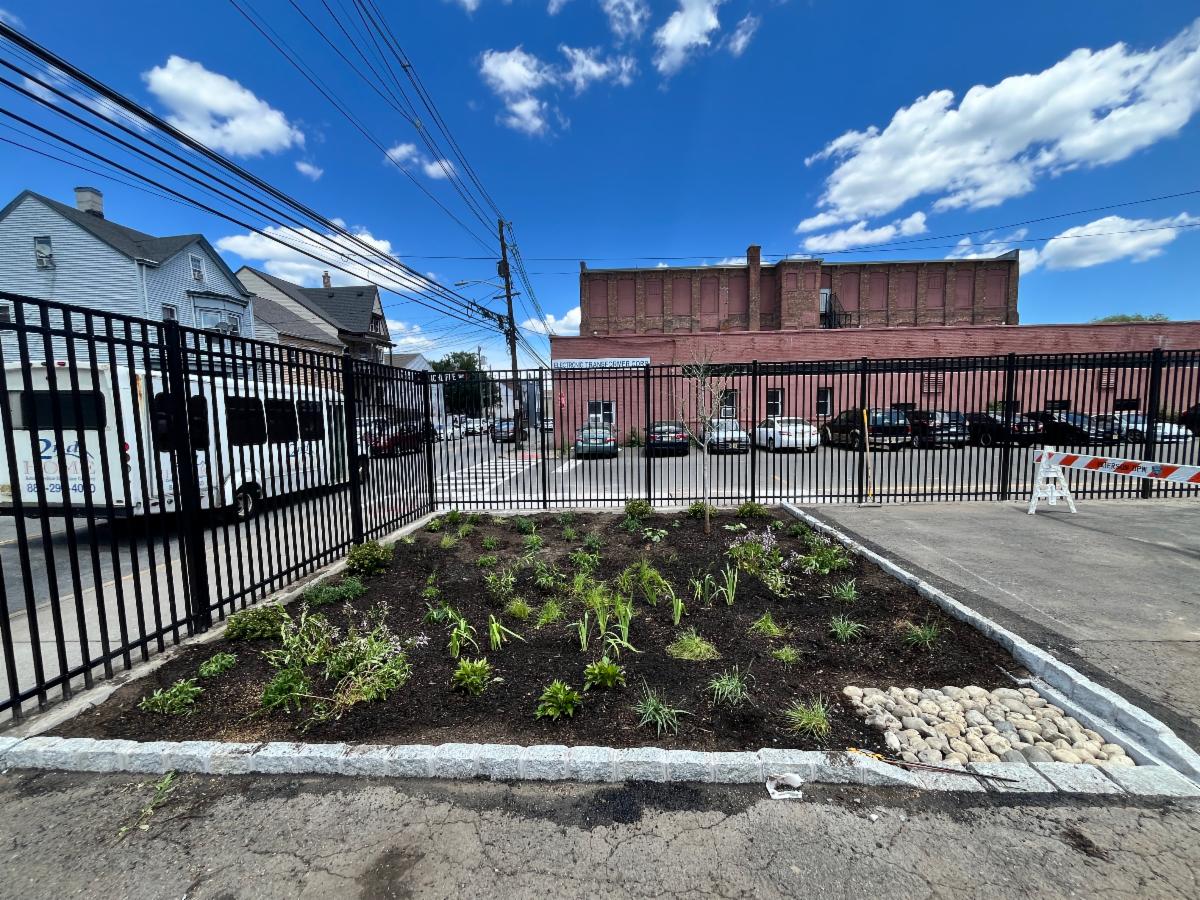
Public School (P.S.) 5, located in Paterson, New Jersey, overlooks the Passaic River, Paterson Great Falls National Park, and restored Hinchcliffe Stadium and now can boast about a scenic rain garden to boot. It’s one of the latest schools in New Jersey to install a rain garden, an effective way to manage stormwater runoff, combat flooding, and reduce the urban heat island effect. The P.S. 5 rain garden is 270 square feet and was installed in the school yard, replacing a previously paved area. This project manages the stormwater runoff from 1,525 square feet of existing pavement and has the potential to manage 44,107 gallons of runoff annually. 


Construction was completed by a local landscape contractor. The RCE Water Resources Program provided design and technical support with planting and construction oversight. Several classes of P.S. 5 students and teachers planted 89 native perennials and shrubs, creating pollinator habitat. This project was funded by a New Jersey Department of Education (NJDOE) grant and initiated by the Paterson School District with assistance from the Great Swamp Watershed Association.


Newly planted rain garden at P.S.5 in Paterson, NJ


[Photo credit: Chris Perez, RCE Water Resources Program]

New Bioretention System Installed at Swedesboro Water Department

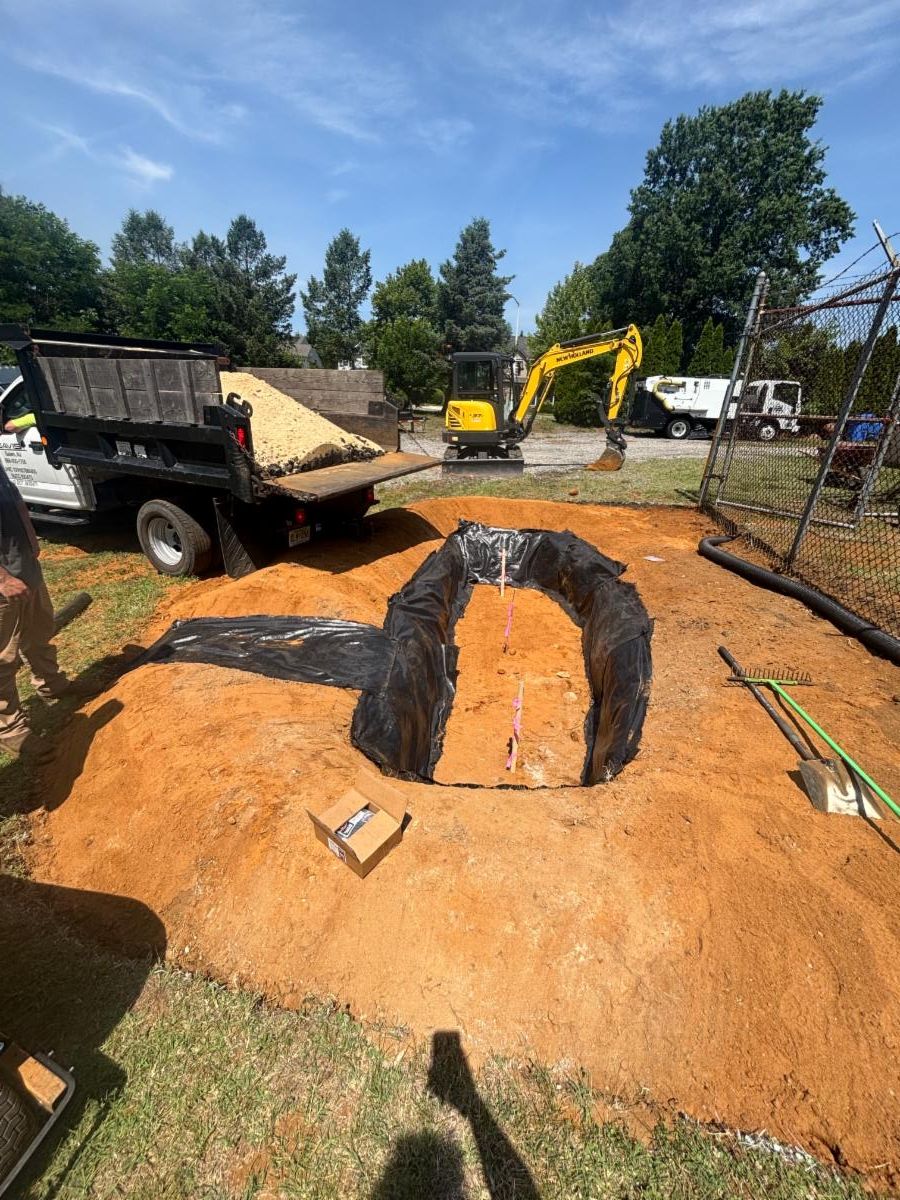
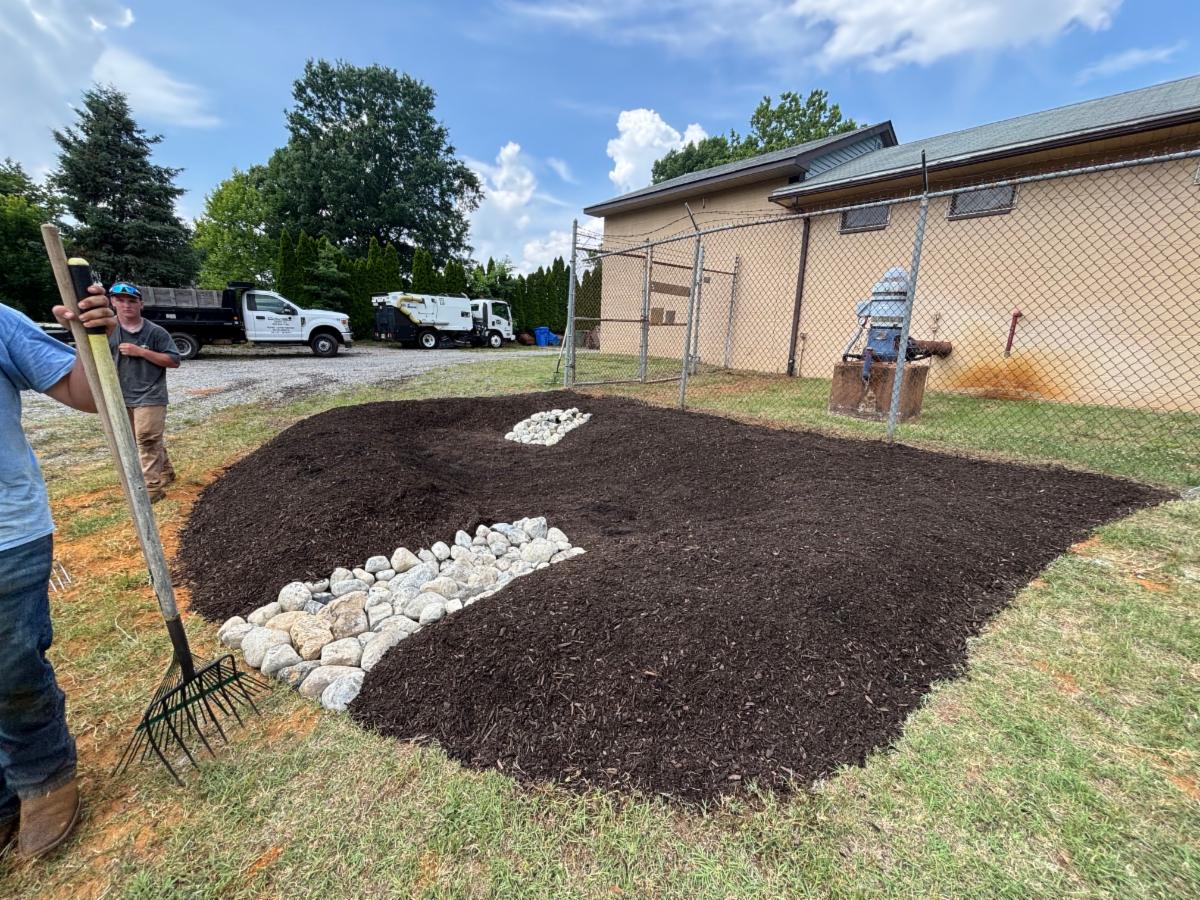
A new green infrastructure project has been completed at the Water Department in Swedesboro, Gloucester County. The project transformed a portion of the existing turfgrass area behind the department into a bioretention system that helps manage stormwater runoff from the building.


The 155-square-foot bioretention system captures runoff from approximately 335 square feet of roof area.  During rain events, roof runoff is directed into the system, where the soil and vegetation help slow and filter the water before allowing it to infiltrate into the ground.  This process reduces the amount of stormwater leaving the property and helps prevent pollutants from being carried into nearby waterways.


In addition to improving stormwater management at the site, the completed project demonstrates how relatively small, landscaped areas can be used as green infrastructure.  As the vegetation becomes established, the bioretention system will continue to provide water quality benefits while creating a more attractive and environmentally beneficial landscape at the Water Department.

Bioretention system during construction, showing the

excavated area and placement of filter fabric

[Photo credit: Brendon Opilac, RCE Water Resources Program]

Fully mulched system with stone inlet and outlet structures

[Photo credit: Brendon Opilac, RCE Water Resources Program]

Borough of Bernardsville Adds a Rain Garden

to Trailhead

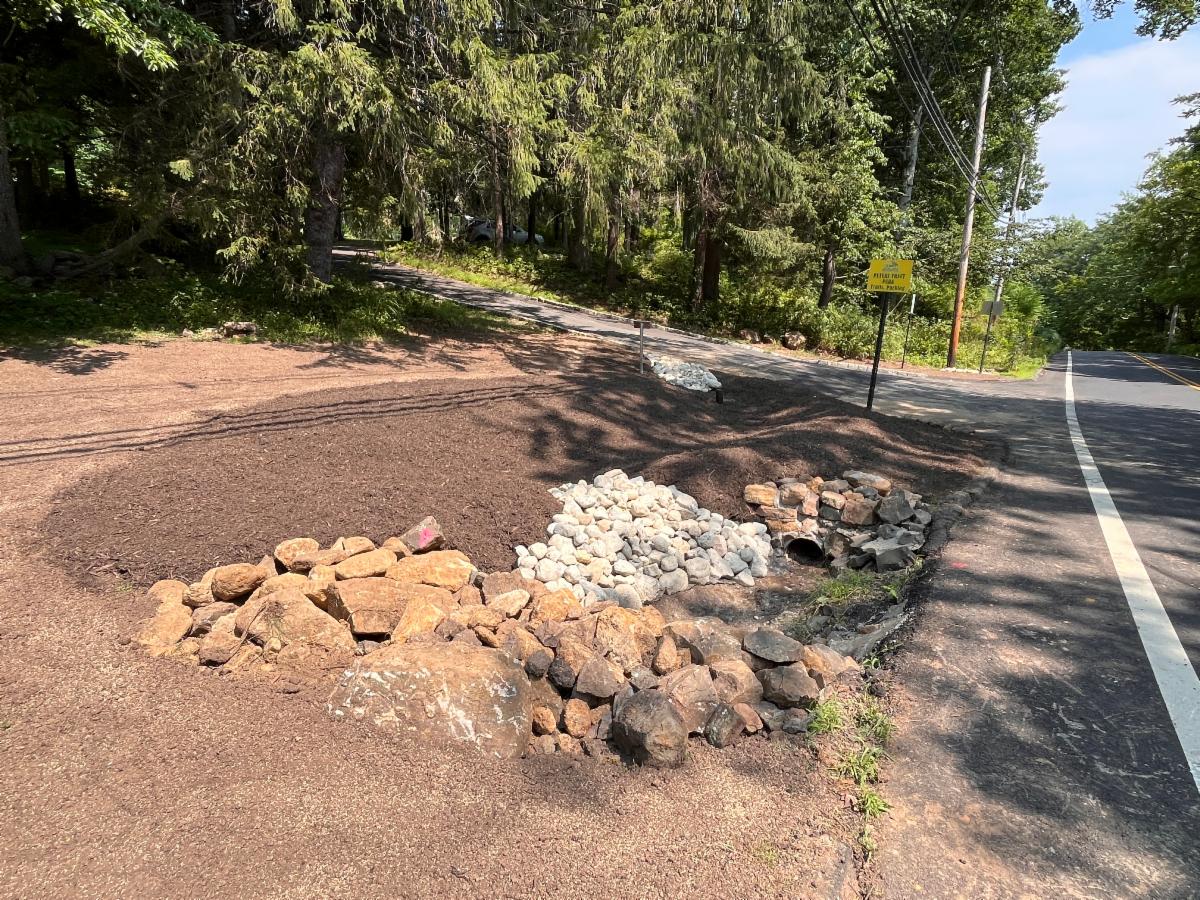
An effort is underway in Bernardsville Borough to add amenities to a newly created trailhead and to use green stormwater infrastructure to improve stormwater management at the site. The Bernardsville Department of Public Works and the RCE Water Resources Program identified locations at a Claremont Road trailhead which could be retrofitted with rain gardens and permeable pavement to address issues with stormwater runoff that would also benefit the local watershed.


The 175-square-foot rain garden along Claremont Road was constructed in July by a local contractor and will be fully planted in the fall. This project manages the stormwater runoff from 1,770 square feet of existing pavement and has the potential to manage 41,401 gallons of runoff annually. The RCE Water Resources Program provided design and technical support with planting and construction oversight. This project was funded through a grant from the New Jersey Department of Environmental Protection.

Constructed rain garden along Claremont Road, Bernardsville, NJ


[Photo credit: Chris Perez, RCE Water Resources Program]

SAVE the DATE:

ANJEC 2026 Environmental Congress

Friday, September 25, 2026

New Brunswick Theological Seminary

35 Seminary Place, New Brunswick, NJ

Rutgers Cooperative Extension Water Resources Program

water@envsci.rutgers.edu

www.water.rutgers.edu

Connect with us
Facebook  Instagram