|
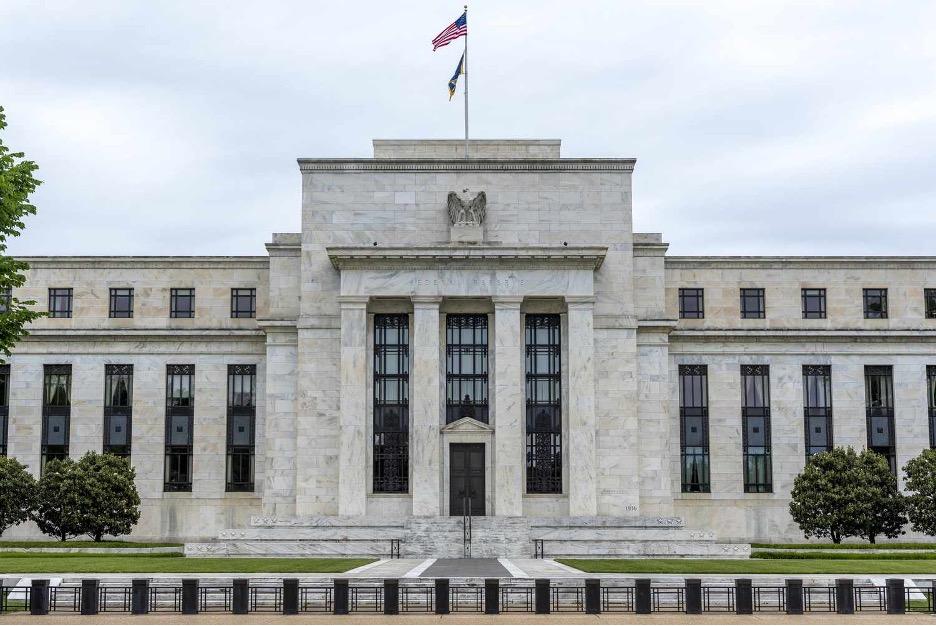
Source: Richard Shamrock/Getty Images.
During the American Revolution, the Continental Congress's attempt to issue printed money proved disastrous, leading to a reluctance to print money for nearly a century, except for a brief period during the War of 1812. Instead, Congress turned to the establishment of national banks, albeit with varying degrees of success.
Between 1816 and 1836, the American economy faced a shortage of coins, prompting reliance on substitute forms of currency, primarily paper money issued by state and private banks. However, this system proved inadequate for funding major infrastructure projects, highlighting the need for a more robust monetary and banking system.
Alexander Hamilton's U.S. Bank, despite the absence of a national currency, served as a precursor to the modern banking system, laying the foundation for future developments. Abraham Lincoln, a proponent of a nationalized money supply, advocated for the establishment of a national bank to spur economic development.
During the 1837-1844 depression, Congressman Abraham Lincoln championed the institutionalization of a national circulatory currency to stimulate economic growth, particularly within the context of the Transportation Revolution. Lincoln's support for railroad development reflected his belief in the importance of infrastructure investment for economic progress.
Lincoln's economic policies, rooted in Whig-Republican beliefs, emphasized the significance of economic independence and productivity growth. He believed that protectionism and federal banking were critical for enhancing long-term worker productivity and maintaining freedom and democracy. Of all the Whigs, Lincoln, next to Senator Henry Clay himself, was the most feared champion of a nationalized money supply. In a prescient speech on banking policy delivered on December 26, 1839, in Springfield, Illinois, Abraham Lincoln attacked Andrew Jackson and defended the constitutionality of a national bank.
The Lincoln, who had demanded from Congress a centralized and coordinated American system of internal improvements in the 1840s and 1860s, was making demands upon his generals for centralization of authority and coordination of plans. This emanated from his Whig-Republican beliefs that resulted in the most original and probably most significant of his military contributions, which was his insistence that the true objective of the Union forces should be the destruction of armies and not the conquest of territories. “Destroy the rebel army, if possible,” became the Chief Executive’s refrain to General McClellan and later to his successors. “I think Lee’s Army, and not Richmond, is your true objective,” he telegraphed point blank to “Fighting Joe” Hooker (McPherson 2008). The President’s idea appears to have stemmed from two related elements. The first was his Whig reluctance to value territorial acquisition for its own sake; the second was the contrasting importance he assigned to internal economic strength, for which, in his eyes, population was the most meaningful index. Men, not miles, were the measure of National might. In the good old days of peace, he had already warned the South:
You will never make much of a hand at whipping us. If we were fewer in numbers than you, I think that you could whip us; if we were equal it would likely be a drawn battle; but being inferior in numbers, you will make nothing by attempting to master us. (Basler et al. 1953)
It is clear from this that Lincoln believed that some nations have had more potential than presently being utilized, and this fact will not appear on private-sector balance sheets.
The key to realizing this potential has been, and still is, national policy to evoke The People into the most beneficent production. The protectionism of Lincoln grasped the analysis of technology, in this case railroads, along Nation-state lines since his objective was to maximize productivity growth over time, not merely to maximize consumption at a given moment of time by purchasing goods in the cheapest market. There are stages of economic and social development; the more elevated ones involve greater output and, consequently, greater national power. Hence, economic development means industrialization, which necessitates long-term funding from the nation reinvested in national projects with higher productivity.
The establishment of the National Banking System during the Civil War period was aimed at addressing the instability of the banking system. However, this system did not constitute a central banking system, leaving unresolved questions about the nation's financial infrastructure.
|