Perspectives

from the Lincoln University School of Business

Issue 11: March 14, 2025

Welcome to the LU School of Business’s Perspectives newsletter, bringing contemporary, evidence-based business perspectives from our faculty.

A Brief Introduction to Tariffs and their Impact on the Economy

A tariff is like a tax added to products imported from other countries. Imagine wanting to buy a television made in China. The additional 45% tariff on Chinese goods recently introduced will raise the sticker price by 45% more. While the goal is to make foreign goods more expensive, thus encouraging U.S. consumers to buy cheaper American-made alternatives, protect domestic industries and create jobs, tariffs can also lead to higher prices, trade disputes and economic downsides. 


Tariffs can sometimes act like a hidden tax, potentially increasing the cost of living. Even American-made goods could rise in price if they rely on taxed foreign materials, such as steel in cars or machinery and microchips in computers. 

While tariffs might protect some industries, such as steel factories, studies show job gains in protected sectors are often offset by losses in others, like agriculture, where China has imposed a $110 billion tariff on American products, most of which target American farmers.

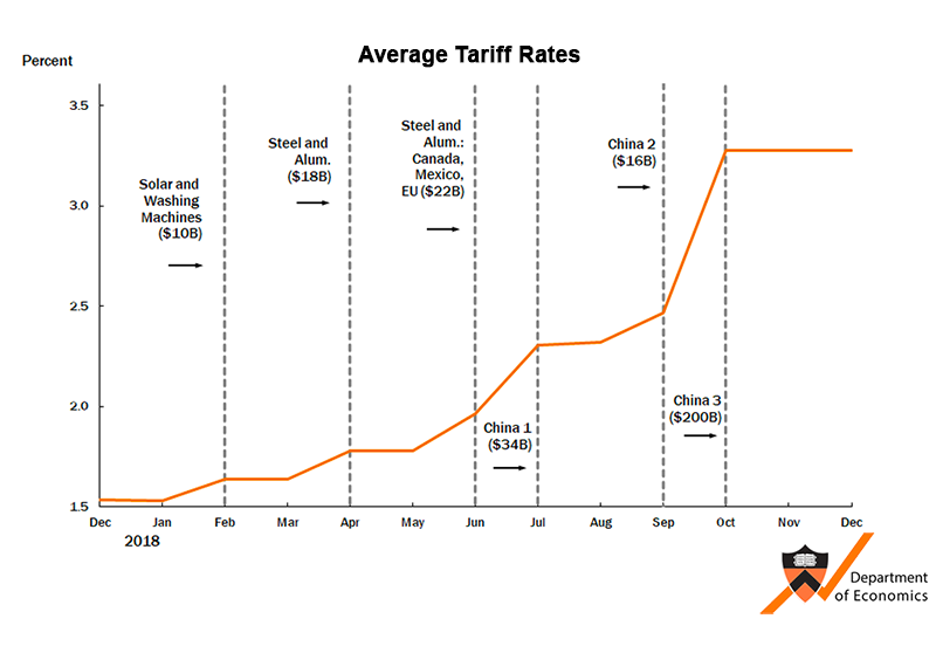
Graph titled Average Tariff Rates showing tariff increases in 2018 vertical axis ranges from 1.5 to 3.5 percent horizontal axis spans December 2017 to December 2018 orange line rises with major tariff events labeled including Solar and Washing Machines Steel and Aluminum China tariffs and others sharp increase in October Department of Economics logo in bottom right

Source: Department of Economics, Princeton University

Tariffs Have Mixed Results  

While tariffs generate revenue for the government, consumers bear most of the cost as importers and retailers pass the cost on to the end user. For example, Trump’s 2018-2019 tariffs raised $80 billion in revenue but cost consumers $230 billion in higher prices. On the upside, tariffs can protect specific American industries and pressure trading partners to reform unfair practices, such as intellectual property theft and subsidy policies.


In short, while tariffs aim to protect local industries, their immediate effect on consumers is often higher costs for everyday items, with uneven long-term benefits.

About the Author: Dr. Abdul Ajia is an associate professor of business administration, lead faculty of the marketing program and MBA program coordinator at the Lincoln University School of Business. Reach him at ajiaa@lincolnu.edu.


Disclaimer: The views expressed in this newsletter are solely those of the author and do not represent nor reflect the views of the School of Business or that of the University. 

Facebook  X  Instagram  Linkedin  Youtube  Email  Web

Lincoln University of Missouri, a historically Black, 1890 land-grant, public, comprehensive institution, provides a diverse population access to excellent educational opportunities through teaching, research, and extension services within a nurturing, student-centered environment.