|
FUHN doubled screening of health-related needs from 2023 to 2025
A dedicated FUHN workgroup staffed by Mark Sonneborn, FUHN's Data Analytics Consultant, meets every other month to consider the best way to approach health-related needs across member clinics and the network. To make screening routine across different clinics that vary by size, location, patient populations, and more, the Health-related Needs Workgroup focused on three things: sharing best practices among members, adopting minimum standards for how often patients are screened, and streamlining screening to four core areas—housing, food, transportation, and finances—that most directly affect patients' health and ability to access care. The results followed. The share of patients screened for health-related needs across FUHN clinics increased from 14 percent in 2023 to 29 percent in 2024, and to more than 33 percent in 2025.
For this work, FUHN looks to leaders like Native American Community Clinic Clinical Manager Chris Singer, DNP, RN, CPHQ, whose health-related needs screening work anchored her doctoral work, a 2022 peer-reviewed article, and the most recent FUHN blog, Strengthening the Foundation for Health-Related Needs Screening to Better Support Patients.
|
| | Strategic Priority Spotlight | | |
NETWORK DATA STRATEGY: Behind every data point in a community health center is a person. Each screening completed, each blood pressure brought under control, each diabetes check represents a patient getting the care they need and deserve. FUHN's network data strategy starts there. Quality is more than hitting targets: it’s about making sure our patients—many of whom face the steepest barriers to care—get what they need. Our clinics do this work every day. Too often, however, data have been scattered across reports, systems, and spreadsheets.
That’s why FUHN’s data strategy—led by Mark Sonneborn, FUHN's Data Analytics Consultant—centers on a scaled, network-wide rollout of Azara, a population health platform. Azara will improve several focus areas of FUHN’s data strategy, including Electronic Health Records use, data reporting and analysis, best-practice implementation, and more to increase quality and reduce costs. At the clinic level, providers will see open care gaps as patients arrive and close them during the visit. At the network level, questions that once required every clinic to run its own report will take a couple of clicks.
Another core of FUHN’s data strategy is a partnership with the University of Minnesota's Best Practices Integrated Informatics Core, which houses FUHN data in a secure, HIPAA-compliant environment offering a clearer, network-wide view of how we are serving patients and supporting advanced analytics.
FUHN's data strategy also reaches statewide. MNSHINE, Minnesota's emerging health data utility, is poised to become how the state measures health care quality. Today, the patients FUHN serves are largely missing from that picture; claims-based reporting often undercounts the care our clinics deliver. FUHN's participation helps make sure they are seen and that our clinics' work is fully recognized.
| | | Clinical Integration in Action | | |
Quality Committee's Small Group Deep Dives Advancing Progress
In 2026, FUHN Leadership shared a new approach for the Quality Committee to get further, faster: creating three small, cross-clinic collaborative groups to explore specific areas for improvement. Together, the group members examine best practices and recommend standardized practices across clinics to boost quality results. They include:
Group 1: Led by Riverland's Sarah Torres, Group 1 is focusing on patient access to care. The team created a list of access measures for the clinics to examine and track. They include the speed to answer calls (within 30 seconds), abandoned call rates (% of the total number of calls), panel size (patients per 0.1 FTE clinical time), no-show rate, third next available appointment, patient-to-primary care provider continuity, and patients seen per hour.
Group 2: The team first reviewed current guidelines and best-practice models for diabetes and hypertension, building them into proposed quality measures. Now, the group, led by Dr. Robin Bresette, is focusing on increasing well-child visits and childhood vaccinations.
Group 3: Led by Southside's Alyssa Palmer, Group 3 dug into Depression Screening and Follow-Up, examining proven processes for clinics with high levels of depression screenings and EMR-specific documentation procedures to ensure accurate reporting.
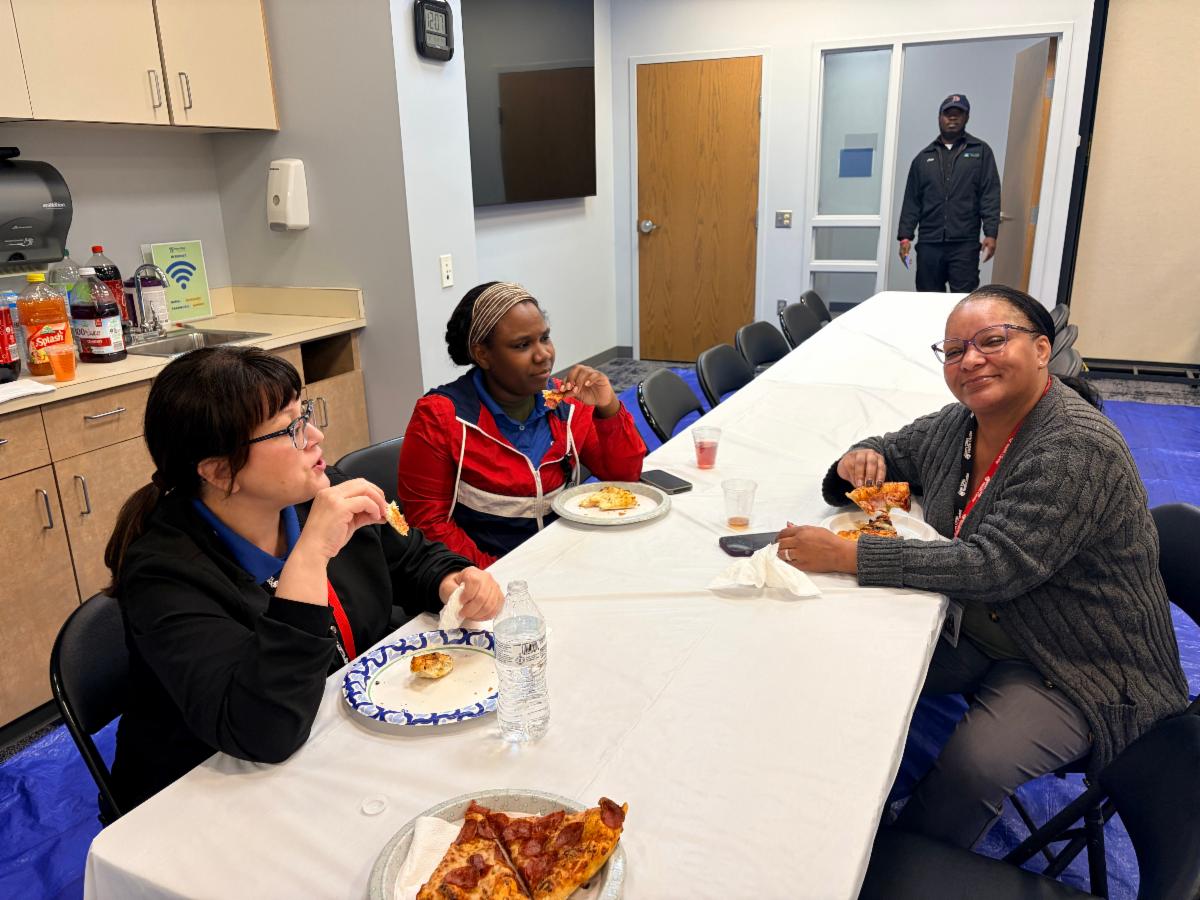
Group 3 created a well-received, fun challenge to see which clinic could improve their depression screening relative rate by the highest percentage from June to July. The reward was a FUHN-sponsored pizza party. The Open Cities Health Center team (see above) won the challenge by improving their screening rates by 5.192%. Six other clinics also improved their rates. Given the response, FUHN will be implementing more friendly competitions.
| | |
Native American Community Clinic Moves Into New Building
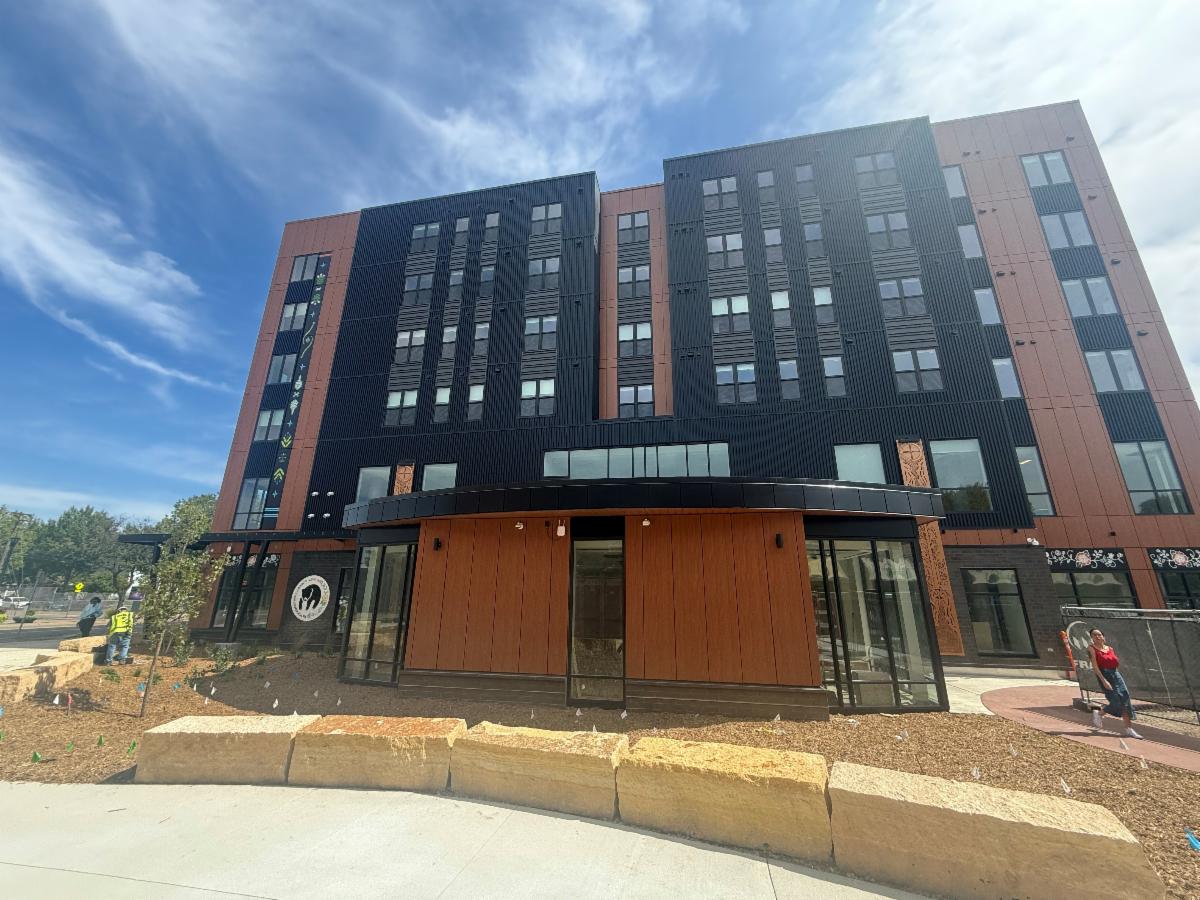
The NACC team moved into its new facility in September, celebrating the opening of its new clinic and welcoming patients to its beautiful new space. The $55 million project brings together medical care, behavioral health, dental services, addiction treatment, and traditional healing, with four additional floors dedicated to affordable housing (the 83-unit Wihinaphe Apartments, which means “New Beginnings”). To learn more about the project, watch the Fox 9 story, Native American clinic and housing project set to open in Mpls, or the Minnesota Native News story, The Native American Community Clinic Moves into a New Building, and Native Running Clubs Are Growing Fast, to hear from NACC President and CEO Antony Stately.
| | | | |
Better serving patients together
FUHN launched two clinical service lines in 2025 with administrative and clinical dyad leaders. FUHN is launching an Age-Friendly Clinical Service Line this fall, with People's Center CEO Ann Rogers serving as the administrative dyad and Christine Arenson, MD, as the physician dyad. Dr. Arenson is a physician with the UMN GWEP Grant through which FUHN is a subaward partner, and brings passion for Age-Friendly care. Together, our members are strengthening the clinical brand promise for patients and payers by standardizing clinical and business practices.
Maternal Health: The team did a deeper dive into doula services with Flourish Care. Doulas work alongside the clinical team, which makes them a natural fit for the team-based care model at community health centers. The evidence is strong: doula support is linked to fewer preterm births, cesarean deliveries, and postpartum complications. Minnesota has been a national leader, covering doula care through Medicaid since 2014. It now has one of the highest reimbursement rates nationally. That growing investment means more support for FUHN families, many of whom face the greatest barriers to a healthy pregnancy.
| | | | | Dental: Consultant Kim Freeman, MPH, BSDH, RDH launched the Learning Network sessions in September, a collaborative space to connect with peers and navigate the FQHC dental landscape together. Part of the focus is to increase capacity to serve patients in-network. | | | |
Data analysis is a critical piece of FUHN's work—and Hunter Doyle is playing an important role in making it happen
Hunter Doyle, MPH, is part of Dr. Joel Farley's team at the University of Minnesota College of Pharmacy, which provides the data and analysis behind FUHN's value-based care work. With a bachelor's degree in health education and a Master of Public Health, Hunter began his career in quality improvement analytics and has spent the past year and a half turning claims and lab data into information clinics can act on—work that sits at the center of FUHN's Network Data Strategy and value-based care efforts.
As part of his role with FUHN, Hunter produces recurring reports that give each clinic a clear picture of its patient population, including attribution trends, chronic condition prevalence, substance use disorder, homelessness, and high-frequency emergency department use. He also draws on Quest lab data to help clinics find tests patients completed elsewhere, closing gaps in quality measures such as diabetes control. Hunter is also key in FUHN's efforts to connect patients who are seen in an Emergency Department back to their primary care clinic, if they have one, or to a clinic if they don't, given the importance of reducing non-emergency ED visits to control health care costs and improve patient care.
| | | |
This monthly newsletter is supported by the Health Resources and Services Administration (HRSA) of the U.S. Department of Health and Human Services (HHS) as part of an award totalling $705,000, with 50% financed with non-governmental sources. The contents are those of the author(s) and do not necessarily represent the official views of, nor an endorsement by, HRSA, HHS, or the U.S. Government. For more information, please visit HRSA.gov. |
| | | |