Issue 672 - June 19, 2026

IN THIS ISSUE


  • NEWS: Safeguarding the Public by Checking Unlimited Gubernatorial Power
  • NEWS: Bill Seeking to Reduce the Scourge of Diabetes Clears the House
  • OPINION VIDEO: Here's the Thing...About Practicing What You Preach
  • NEWS: New Law Expands Hunting Opportunities
  • NEWS: Bill Balances Needs of Ailing Delawareans with Police Concerns

NEWS

Safeguarding the Public by Checking Unlimited Gubernatorial Power


A measure that seeks to create a legislative check on a governor's unfettered authority to declare and maintain a State of Emergency has passed the House of Representatives unanimously.


At present, a governor can declare a State of Emergency in response to an emergency or disaster, or when such an occurrence is imminent. A State of Emergency can be maintained for up to 30 days and then renewed for an additional 30 days, an unlimited number of times.


After declaring a State of Emergency in March 2020 due to the COVID-19 pandemic, Governor John Carney maintained it for two years, issuing hundreds of edicts in numerous orders. These orders carried the weight of law and impacted the daily lives of every Delawarean in countless ways.


While avoiding any criticism of former Gov. Carney, State Rep. Rich Collins (R-Millsboro), the prime sponsor of House Substitute 1 for House Bill 329 (as amended), said the situation revealed a need for reform.


"What we did not know was that when a long-term [State of Emergency] order is put in place, which we only had happen once in our history, the General Assembly, and even the court system, had almost no role," Rep. Collins told the House Chamber before the vote on the bill.


Under the proposal, the governor would continue to be able to declare and maintain a State of Emergency for up to 6 consecutive months (180 days). He or she could issue a second order to extend this period if it's still needed. However, any subsequent renewal order could be amended or terminated by the General Assembly.  


The legislature would have the option of meeting virtually to consider State of Emergency actions if it could not meet in person.


The bill included an amendment that specifies the new protocol would not be initiated until the current governor, Matt Mayer, leaves office.


Rep. Collins said he hopes his bill would never need to be used. Still, he characterized the measure as a necessary safeguard that would allow the legislature to intervene in the unlikely event that a future governor acts improperly.


The bipartisan bill cleared the House, 39-0. It is now awaiting consideration by the Senate Corrections & Public Safety Committee.


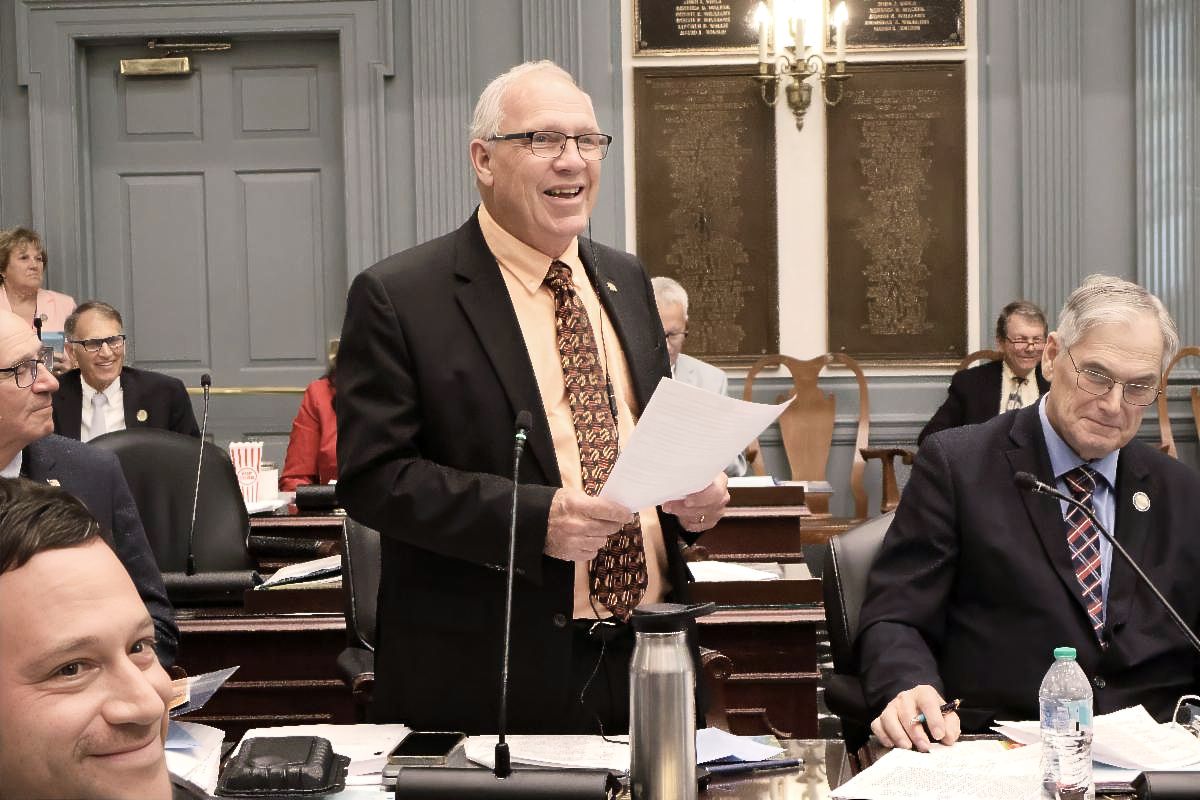
IN PHOTO: State Rep. Rich Collins discusses his bill on the House floor on Thursday.

NEWS

Bill Seeking to Reduce the Scourge of Diabetes Clears the House


A bipartisan bill that promises to improve public health and reduce healthcare costs in Delaware was approved by the House this week, 39-0.


Sponsored by retired medical professional State Rep. Jeff Hilovsky (R-Long Neck, Oak Orchard), House Bill 305 provides a framework for a three-year observational study to reduce the incidence of Type 2 diabetes.


People with this condition do not respond properly to insulin, making it harder for glucose in the bloodstream to enter cells and provide energy. This impaired process causes high blood sugar levels that can, over time, damage the heart, kidneys, eyes, nerves, and other organs.


The chronic disease is a massive drain on resources. According to one recent study, treating people diagnosed with diabetes accounts for 1 in 4 healthcare dollars spent in the U.S. People with the disease have medical expenditures 2.6 times higher than what would be expected without it.


Before the vote on the bill, Rep. Hilovsky told his colleagues on the House floor that he witnessed this problem explode from uncommon to rampant over less than four decades. "When I first started practicing in 1983, I routinely examined about five diabetic patients a month," he said. "By the time I retired in 2021, I was averaging 10 diabetic patients a day."


After seeing the degradations and complications of diabetes firsthand, Rep. Hilovsky said he was committed to finding a way to reduce its incidence in Delaware.


The study proposed by the bill will follow a representative group of diabetic patients as they undergo a new, intensive approach to reverse the progression of the disease. The program will incorporate technology, regular testing, professional management, and incentives to improve outcomes.


Federally funded through the Federal Rural Health Transformation Program, the initiative will carry no direct cost to Delaware taxpayers.


According to Rep. Hilovsky, the cost of diabetes care in Delaware exceeds $1.1 billion annually. He said if the new protocol reduces this impact by just 5%, it would save taxpayers more than $50 million per year.


The bill is now pending action in the Senate Health & Social Services Committee.


IN PHOTO: Rep. Jeff Hilovsky accepts the congratulations of other House members following the unanimous passage of HB 305 on Tuesday night.

OPINION VIDEO

Here's the Thing...About Practicing

What You Preach


Joseph Fulgham, Director of Policy and Communications,

Delaware House of Representatives Republican Caucus


Earlier this week, the House passed legislation requiring electric utilities to establish separate, higher rates for commercial facilities that use large amounts of energy.


While this bill addresses the potential for data centers and other large electricity consumers to impact residential ratepayers, this video is not about the convoluted legislation that is House Substitute 1 for House Bill 233, as amended by House Amendment 1, House Amendment 1 to House Amendment 1, and House Amendment 3.


Rather, this is the latest example of how our state legislative process often runs off the rails due entirely to partisan considerations unrelated to the issues under debate.


Click here to watch the two-minute video.

NEWS

New Law Expands Hunting Opportunities


-- The Statute Also Broadens Ammunition Allowed for Deer Hunting --


A bill recently signed into law by Gov. Matt Meyer expands hunting in the First State by removing restrictions that had limited the activity on Sundays.


The new law, which takes effect immediately, permits sportsmen and women to pursue all game animals and game birds during designated hunting seasons. However, private landowners and public agencies retain discretion over whether to allow Sunday hunting on properties under their control.


The proposal was championed by the Delaware Sportsmen’s Caucus (DSC), an informal, bipartisan group of lawmakers focused on hunting and fishing issues. The DSC’s four co-chairs jointly sponsored the bill: State Reps. Jeff Spiegelman & Bill Carson, and State Sens. Brian Pettyjohn & Nicole Poore. The measure received broad, bipartisan support, winning approval in the Senate 19-0 and in the House 38-1.


“For most Delawareans, hunting is a weekend activity,” Rep. Spiegelman said. “Speaking on behalf of the Sportsmen’s Caucus, we all felt that removing the antiquated ban would give more working Delawareans greater access to recreational opportunities and more opportunities to enjoy these experiences with their children.”  


Delaware and other states in the Northeast were among the last to allow Sunday hunting. The region has historically observed so-called “blue laws” that restrict certain practices on Sundays. While other blue laws, such as bans on retail sales and alcohol consumption, were repealed decades ago, Sunday hunting prohibitions stubbornly persisted well into the 21st Century in many states.


Throughout most of the 1900s, Delaware prohibited Sunday hunting. That changed in 2016 when a law was enacted allowing deer hunting on five specific Sundays in limited circumstances. The restrictions were further loosened in 2024, when Sunday hunting was expanded to include game-bird species (i.e., turkey, waterfowl, doves, and upland birds).


At present, 48 states allow some form of Sunday hunting. In 39 states, there are no restrictions, while the remaining states (including Delaware) authorize the practice with some limitations. Maine and Massachusetts continue to enforce a complete year-round ban.


House Bill 278 also amends and simplifies the law governing the use of certain types of ammunition for deer hunting. Delaware allows the use of rifles for taking deer, but only those chambered for straight-wall handgun ammunition. These rounds are more accurate than shotgun slugs and more efficient for harvesting deer quickly but lose energy rapidly—a safety advantage in a flat, populated state like Delaware.”


“We heard from a lot of hunters who wanted to use rounds like the .400 Legend,” Rep. Spiegelman said. “This law expands the allowable caliber size to include this and other popular deer hunting rounds.”


Lastly, the new law fixes an inadvertent glitch in state law that had barred sportsmen from Sunday hunting during the January deer handgun season. 

NEWS

NEWS:

Bill Balances Needs of Ailing Delawareans with Police Concerns


The level of tinting that can be legally applied to vehicle windows is not just a consumer preference but an issue with serious consequences for police, motorists, and Delawareans struggling with health issues.


At present, Delaware has one of the most restrictive window-tinting standards in the nation. Only six other states reportedly have a tinting threshold that matches or exceeds the First State's.


To exceed the window tint standard, you must have a diagnosed medical condition (e.g., lupus, albinism, skin cancer, or severe eye/retinal issues) that requires the car owner or a family member to avoid sun exposure. A licensed Delaware physician, osteopath, or optometrist must sign an official waiver.


However, window tinting can pose significant hazards to motorists and police making traffic stops by restricting the ability to see a vehicle's driver and occupants.


A bill sponsored by State Sen. Eric Buckson (R-Dover) and State Rep. Lyndon Yearick (R-Camden, Woodside) seeks to reduce the demand for waivers by raising the allowable tinting threshold and aligning it with moderate standards observed in many other jurisdictions.


The lawmakers worked with police and healthcare professionals to reach a consensus for the new threshold.


The Delaware Association of Chiefs of Police, the Delaware State Troopers Association, and the Delaware Optometric Association all support the measure.


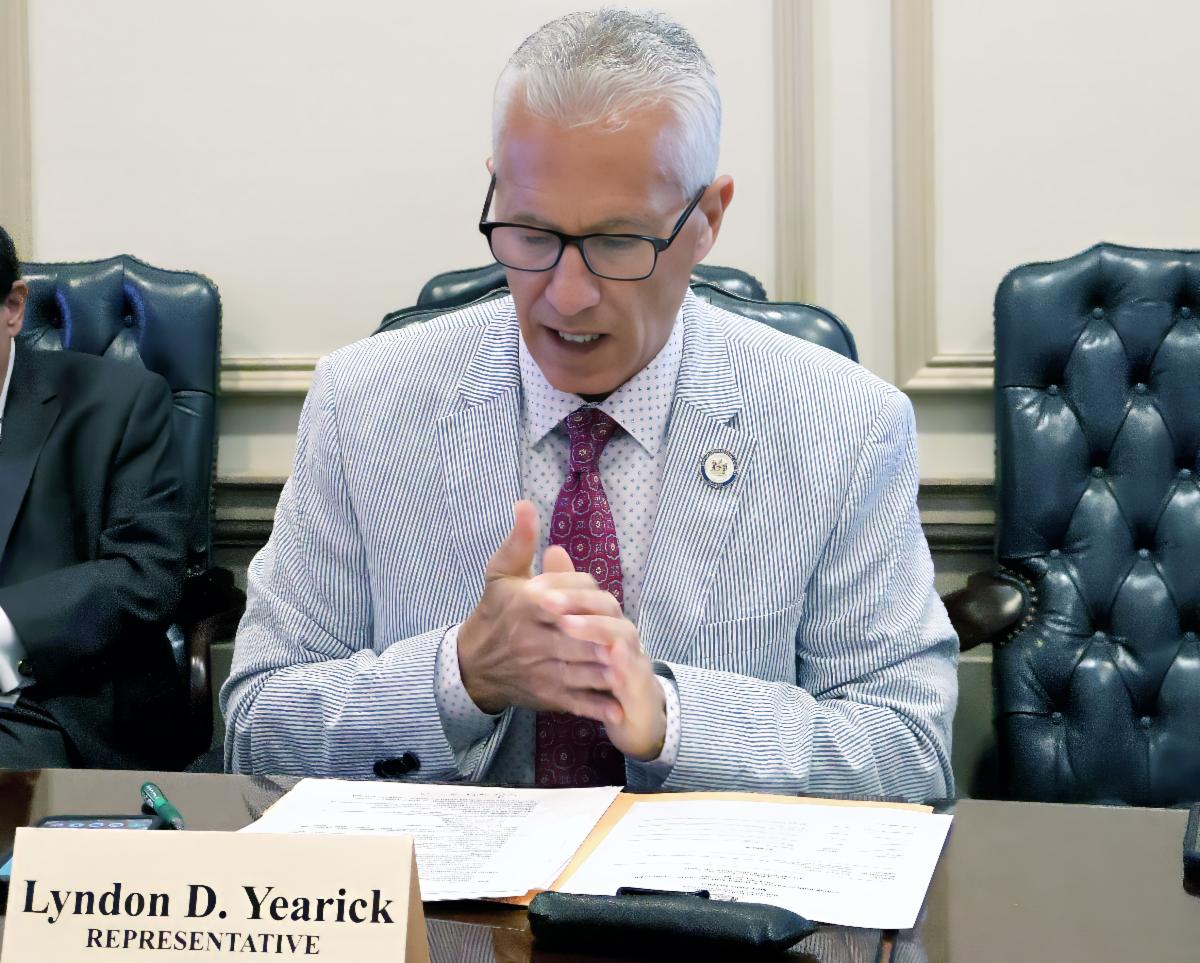
Senate Substitute 1 for Senate Bill 255 passed the Senate 20-0. Earlier this week, the bill was released from the House Public Safety & Homeland Security Committee after Rep. Yearick testified before the group (in photo).


The legislation is now on the House Ready List and eligible for consideration by the chamber.