|
Click here for a printable pdf version of this article
_____________________________________________________________
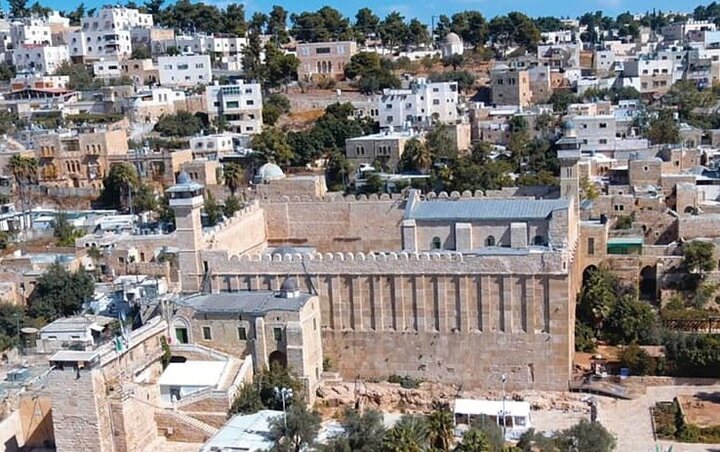
The Torah portion of Chayei Sarah begins with the passing of our matriarch Sarah, the purchase of her burial plot (the Me’arat Hamachpeila), and her burial,[1] all of which took place in the holy city of Chevron (Hebron). This article will discuss the spiritual and historical significance of this unique city.
Adam’s Burial Place
According to the Zohar,[2] when G-d expelled Adam from Gan Eden, He had mercy on him and proclaimed that he would be allowed to be buried near Gan Eden. Later, Adam saw a light coming from Gan Eden entering into the Cave of Machpeila. Knowing it was close to Gan Eden, Adam would seclude himself there together with Chava. He asked to be buried there, close to the entrance to Gan Eden.
The Zohar Chadash[3] gives a slightly different version of the events. It says, “Me'arat HaMachpelah is near the entrance to Gan Eden. When Chava died, Adam came to bury her there. He smelled the fragrance of Gan Eden which was present in that place. He wanted to dig further into the cave, but a voice from Heaven (Bat Kol) emerged and said, ‘Enough!’ At that moment, he stopped digging, and there he was (later) buried…. No one knew about Adam's burial place until Avraham Avinu, of blessed memory, came and entered the cave. He saw Adam, smelled the fragrance of the spices of Gan Eden, and heard the voices of the ministering angels saying: ‘Adam HaRishon is buried here, and Avraham, Yitzchak, and Yaakov are destined to be buried in this place.’ He saw a candle burning and left. Immediately, he developed a strong desire for this place. Rav Huna said, ‘Before Avraham came, many people sought to be buried there. The ministering angels guarded the place, and people would see a fire burning there, so they were unable to enter.’ This continued until Avraham came, entered the cave, and purchased the place.”
Chevron – the Main City of Avraham
Avraham, our patriarch, spent many years in Chevron. It was the first place he camped and built an altar when he came back to the land of Canaan after his brief time in Egypt.[4] This is where Avraham did a bris on himself and his entire family and was subsequently visited by the angels and told that he and Sarah would bear Yitzchak.[5] After Sodom and Amorah were destroyed, Avraham moved to the land of the Philistines and lived there for 26 years after which time he moved back to Chevron and dwelled there for 12 years until the time of the Akeidah.[6] After the Akeidah he went to Be’er Sheva to give thanks to G-d that Isaac had been spared.[7] He then returned to Chevron to bury Sarah and (it seems) lived there for the rest of his life. (Some say that Avraham and Sarah were still living in Be’er Sheva at the time of the Akeidah and that Sarah went to Chevron in search of Yitzchak[8] where she passed away.[9] This was the Divine plan so that she would be buried in the Me’arat Hamachpeilah[10] within the holy land of Israel.[11]) As such, it seems that Avraham lived in Chevron for a total of 75 years (25 before his bris, 12 before the Akeidah, and 38 afterwards).
Four Names
According to our sages this ancient city has four names mentioned in Tanach.[12]
1) Chevron
Chevron comes from the word chibur – connection[13] which refers to the soul’s connection to the body and (lehavdil) to the Almighty[14] and, more broadly, to the connection between the Jewish people and G-d Almighty.
2) Elonei Mamrei[15]
These are the plains of Mamrei,[16] Avraham’s friend and confidante.[17]
3) Eshkol[18]
This name is based on the fact that the spies took a grape cluster from there when spying out the land. (Eshkol means cluster).
4) Kiryat Arba[19]
Arba was the name of a giant who lived and ruled at one point.[20]
The Midrash[21] adds several other reasons for the name Kiryat Arba
a. Four Tzadikim Lived and were Circumcised There
They were Avraham, Aner, Eshkol, and Mamre.[22]
b. Four Pairs
Four righteous couples are buried there: Adam and Chava, Avraham and Sarah, Yitzchak and Rivkah, and Ya’akov and Leah.
c. Four Tzadikim and Four Matriarchs
Four righteous men are buried there as well as four matriarchs of the world (see above).
d. Avraham – the Conqueror of Four Kings
This was the city of Avraham who had conquered four kings.
e. Four Owners
There were four masters of the city (at the time the Jewish people spied[23] and then conquered it[24]). These were Achiman, Sheishai, Talmai, and their father Anak.
f. Allotted to Four Parties
Chevron was first assigned to the tribe of Judah,[25] then given specifically to Calev,[26] the righteous spy who had prayed there,[27] then to the Levites,[28] and finally to the Kohanim.[29] It was also one of the main cities of refuge which Yehoshua designated in the land of Israel.[30] The Talmud clarifies[31] that, although the city was given by Calev to the Levites and it would be used as a city of refuge, the suburbs and the surrounding fields remained in the possession of Calev.[32] The Lubavitcher Rebbe also explains[33] how the fact that it was owned by the abovementioned four parties strengthened the level of ownership that the Jewish people have over this city until today.
g. One of Four Lowest Quality Areas
Chevron was one of the four lowest quality areas (in terms of agriculture) in the land of Israel which is why it was used as a cemetery. (Timnat Serach, was another one of these and the final two were either Dor and the Dor district[34] or Dana and Kiryat Sana.[35]) Despite this, it was so valuable that it was given four names (as listed above) indicating that many people wanted to have “their name” on it.[36] In addition, despite its low quality, it produced huge grape clusters as evidenced by the fact that the cluster taken from there by the spies had to by carried by eight of those spies.[37] In fact, its quality was seven times better than the best part of Egypt.[38]
Yitzchak and Ya’akov Lived There
The verse indicates[39] that both Yitzchak and Ya’akov lived in Chevron. The Radak explains that they did so because it’s proper for a person to live where his parents are buried out of respect for them.
The Spies Visited There
As mentioned above, the spies visited Chevron and Calev prayed there in the Me’arat HaMachpeilah,[40] which is why later he received it as an inheritance.
King David Began his Reign There
King David first ruled in Chevron (over the tribe of Yehudah) for seven and half years before moving the seat of his kingdom to Yerushalayim at the behest of the elders of Israel.[41]
The second Lubavitcher Rebbe explained[42] that King David did so in order to connect to the attributes of the patriarchs (who are buried in Chevron) before beginning his reign over all of the Jewish people.
Avshalom Began his Rebellion There
Avshalom began his rebellion against his father (King David), in Chevron.[43]
Souls and Our Prayers Go Through Chevron
According to various Kabbalistic sources,[44] our prayers go through Chevron before ascending to Jerusalem and finally up to heaven. This is because the first of seven entrances to Gan Eden is in Chevron. As such, when a person passes away, their neshamah goes to Chevron before ascending to Gan Eden.
Buried in Chevron
In addition to the tzadikim mentioned above, the following notable people are buried in Chevron:
· The head of Eisav[45] (the rest of his body was buried in the land of Se’ir)
· Avner ben Ner[46]
· The head of Ish Boshet son of King Saul.[47] (Presumably his body was buried where he reigned, in the tribe of Binyamin [Givon?]).
· There is a site in old Chevron which is known as the burial site of Ruth and her grandson Yishai (father of King David).
· Rebbetzin Menucha Rachel, daughter of the Mitteler Rebbe (the second Lubavitcher Rebbe), who made aliyah and moved to Chevron with her husband and a group of Chassidim in 1845.
May We Merit to be Connected to our Holy Ancestors who are Buried in the Holy City of Chevron!
[1] Gen. 23.
[2] Parshat Bereishit, 57b.
[3] On the Book of Ruth.
[4] Gen. 13:18. See Likutei Sichot, vol. 30 pg 36 and on, that according to Rashi, the purpose of Avraham’s sacrificing in Chevron was simply out of his love for G-d (chibur - connection) and not for any specific reason.
[5] See ibid. 18:1 and Rashi.
[6] Rashi on Gen. 21:33.
[7] Tur Ha’aruch.
[8] The Chizkuni says that Avraham sent Sarah to Chevron when she was sick to convalesce in Chevron as the air is “sweet” there. When she passed away, he had to purchase a burial plot there since he wasn’t a current resident. (It seems that, at that time, local residents could bury their dead in a city at no cost.)
[9] Ramban, Tur Ha’Aruch and here.
[10] Ha’amek Davar.
[11] Rabeinu Bachaye.
[12] The Kli Yakar explains that these four names correspond to four reason people pass away. 1) Their own sins (Mamrei – rebellion). 2) The sins of others (Eshkol – bereavement) 3) The nature of the world that people must pass away (Kiryat Arba – returning to the four elements) and 4) For their soul to cleave to G-d (Chevron – connection to the Divine). Only the last two are mentioned regarding Sarah as her passing wasn’t due to sin.
[13] Zohar (Midrash HaNe’elam) vol. 1, pg. 122b.
[14] See Ohr Hachaim and Kli Yakar on Gen. 23:2.
[15] Gen. 13;18. See there 35:27 where it is called simply “Mamrei.”
[16] Rashi.
[17] See Gen. 14:24,
[18] Numbers 13:24.
[19] Gen. 23:2.
[20] Ibn Ezra on ibid based on Joshua 14:15.
[21] Bereishit Rabbah 58:4.
[22] See Gen. 14:13 that Aner, Eshkol, and Mamrei were בַּעֲלֵי בְרִית אַבְרֽם which can be understood to mean that they had entered into the covenant of Avraham – the brit milah (Etz Yosef). It’s noteworthy that, originally Aner and Eshkol advised Avraham against having a brit milah at his advanced age while onl Mamre encouraged him to do so. Nevertheless, after he survived the ordeal all three went ahead and themselves circumcised.
[23] Numbers 13:22.
[24] Joshua 15:13-14 and Judges 1:10.
[25] Joshua 15:54.
[26] Judges 1:20.
[27] Deut. 1:36. See Rashi on Numbers 13:22.
[28] I Chronicles 6:40.
[29] Ibid, verse 42.
[30] Ibid. and Joshua 20:7. See I Samuel 28:7 regarding the necromancer of Ein Dor. (According to Radal Ein Dor was the same as Dor.)
[31] Makot 10a and Bava Batra 122b.
[32] See Joshua 21:1, “They gave the fields and the villages of the town to Calev, son of Yefuneh, as his inheritance.”
[33] Likutei Sichot vol. 25 page 91 and on.
[34] Joshuah 12:23 and 17:11.
[35] See Joshuah 15:49.
[36] Radal and Otzar Derushim Nivcharim (Eisenstein) Eikev 10.
[37] See Rashi on Numbers 13:23.
[38] Ibid, verse 33 with Rashi.
[39] Gen. 35:27.
[40] Numbers 13:22.
[41] II Samuel 2:11 and 5:1 – 5.
[42] Igrot Kodesh- Admur Ha’Emtza’i, letter 39.
[43] II Samuel, 15:7 and on.
[44] See Yalkut Reuveni on Gen. 23:9 based on Megaleh Amukot, ofan 222 and 249 (in a gloss by the author’s son). See other sources quoted in Likutei Sichot, vol. 25 page 98.
[45] Pirkei DeRabi Eliezer 39:14.
[46] II Samuel 3:32.
[47] Ibid. 4:12.
Wishing you a Shabbat Shalom UMevorach and a Chodesh Tov!
|