The Coast
We cover coastal Carolina from the Grand Strand to Beaufort
News and views from people you can trust
- Featured stories -
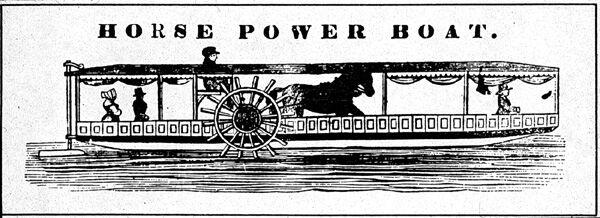
History/Culture: Horses, mules pulled early ferries.
In his own words: Brack: Former governor fights world hunger.
Sports: Mount Pleasant to get upgraded running circle.
Politics: Black police chief in North Charleston works to bring races together.
Business: South Carolina commerce has eventful year.
Leisure: Patrons feast on farmer's market opening.
|
|
|
In Diverse North Charleston, Where Most Police are White, a Black Chief Tries to Bridge the Divide
|
|
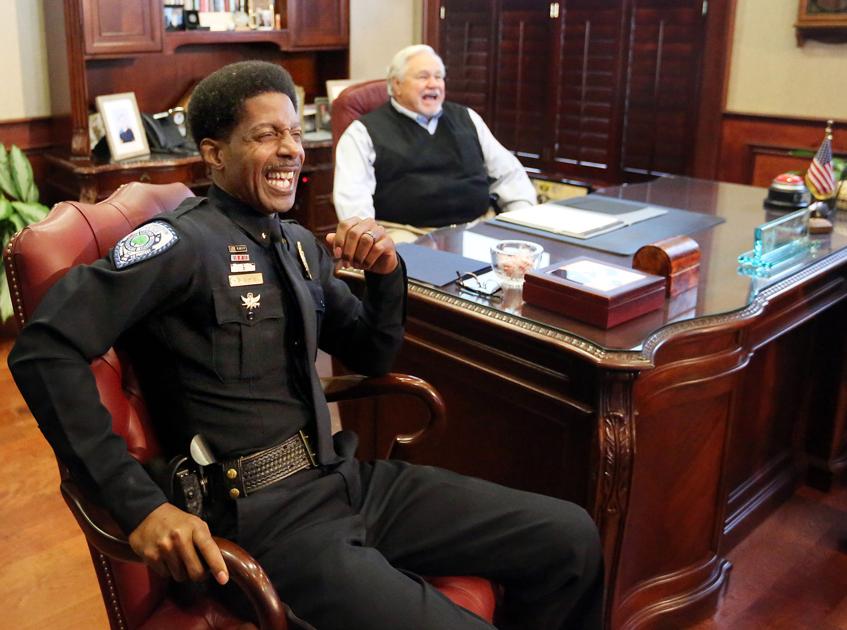
“I’ve been Black all my life … I understand why people sometimes assume the worst,” said Chief Burgess, who has a lean, athletic build and speaks in a booming baritone voice. |
Wall Street Journal
NORTH CHARLESTON—Police Chief Reggie Burgess was in church one Sunday in February when his phone started buzzing. A young Black man had died after a standoff with several white officers. Rumors were flying that police had shot him, and upset community members wanted answers.
It was a tense moment, particularly in a city with a population that is 46% Black and a police force that is nearly 75% white. Relations between the department and the Black community have long been fraught, and reached a low point when an unarmed Black man, Walter Scott, was shot in the back by a white officer five years ago, an incident caught on video that sparked a national uproar. The officer was fired, pleaded guilty to civil-rights violations, and was sentenced to 20 years in prison.
How should police departments be reformed to address racial tensions? Join the conversation below.
Chief Burgess, the first African-American to lead the North Charleston police, stayed on his phone as he left church, asking one activist he had known for years to hold off issuing any statements criticizing the department until he got more information. At the scene, the chief examined security camera footage that showed the distraught man shooting himself in the head.
Having experienced racism himself while growing up in this southern city, he knew the burden was on him to show his officers had done nothing wrong. After praying with the deceased man’s father, he told the activist that he could watch the video after the family.
“I’ve been Black all my life … I understand why people sometimes assume the worst,” said Chief Burgess, who has a lean, athletic build and speaks in a booming baritone voice.
Like others in his position across the country, Chief Burgess has sought to diversify his department so it better reflects his city. Images of largely white police forces facing off with Black Lives Matter protesters in cities like Ferguson, Mo., six years ago drew nationwide calls for change, and the recent wave of protests spurred by the police killing of George Floyd has intensified that pressure.
Attracting young Black people to join the ranks isn’t easy, Chief Burgess said, when policing often isn’t a profession family and friends encourage them to pursue. He has searched for potential recruits at historically Black colleges, technical colleges and in the military, as well as in the North Charleston neighborhoods from which he hails. Of the 109 officers he has hired in the past two years, 38 are Black men and women.
Why Policy Split, Politics Hinder Police Reform Bill
“I can go to all the Black churches in this city, cookouts, family gatherings. But I’ll never be able to get 360 people that are African-American to work here,” Chief Burgess said, referring to his department’s total size. “So what I’m trying to get is the right person. The person who believes that when I go to that house, those folks are calling me for a reason.”
Among North Charleston’s latest class of recruits is Bre’Onna Searles, a 23-year-old Black cadet who said she wanted to bridge the mistrust her community has for police. The recent protests against police made her want to finish her training sooner, she said.
“I don’t want people to feel like they have to be afraid of us. I’m an African-American woman and I wear a badge, and I’m not a bad cop. I just want to be able to show that,” she said.
Criminal justice specialists say diversifying departments doesn’t necessarily bring change. According to a 2017 Indiana University study, adding small numbers of Black officers had no effect on the number of police shootings of Black citizens.
Rashawn Ray, a University of Maryland sociology professor, said that an officer’s connection to the community can be the most pivotal factor in shifting a department’s culture.
“It’s not simply about being Black. It’s also about being from a particular neighborhood, which might happen to be predominantly Black,” he said.
A forthcoming study by Stephen Wu, a professor of economics at Hamilton College, found that the per capita rate of fatal shootings by police was about 65% higher in cities with white chiefs than in cities with Black chiefs. The study used data from the 60 largest U.S. cities between 2015 and 2020.
Chief Burgess, 55 years old, a former college All-American wide receiver whose dreams of going pro fizzled, joined the force in 1989 and served as a school resource officer, detective and SWAT commander before being named to his current post in 2018. At the time, North Charleston, a city of 115,000, was in trouble.
Many were still angry over the shooting of Mr. Scott and years of aggressive policing in the Black community. In 2017, the NAACP Legal Defense and Educational Fund released a report that found Black residents filed a disproportionate share of complaints against North Charleston police compared with white residents, but were less likely to have theirs found credible. The Justice Department, under the Obama administration, launched an assessment of the department’s policies, but the review was abandoned by the Trump administration.
“You had people that wanted to explode,” said Chief Burgess.
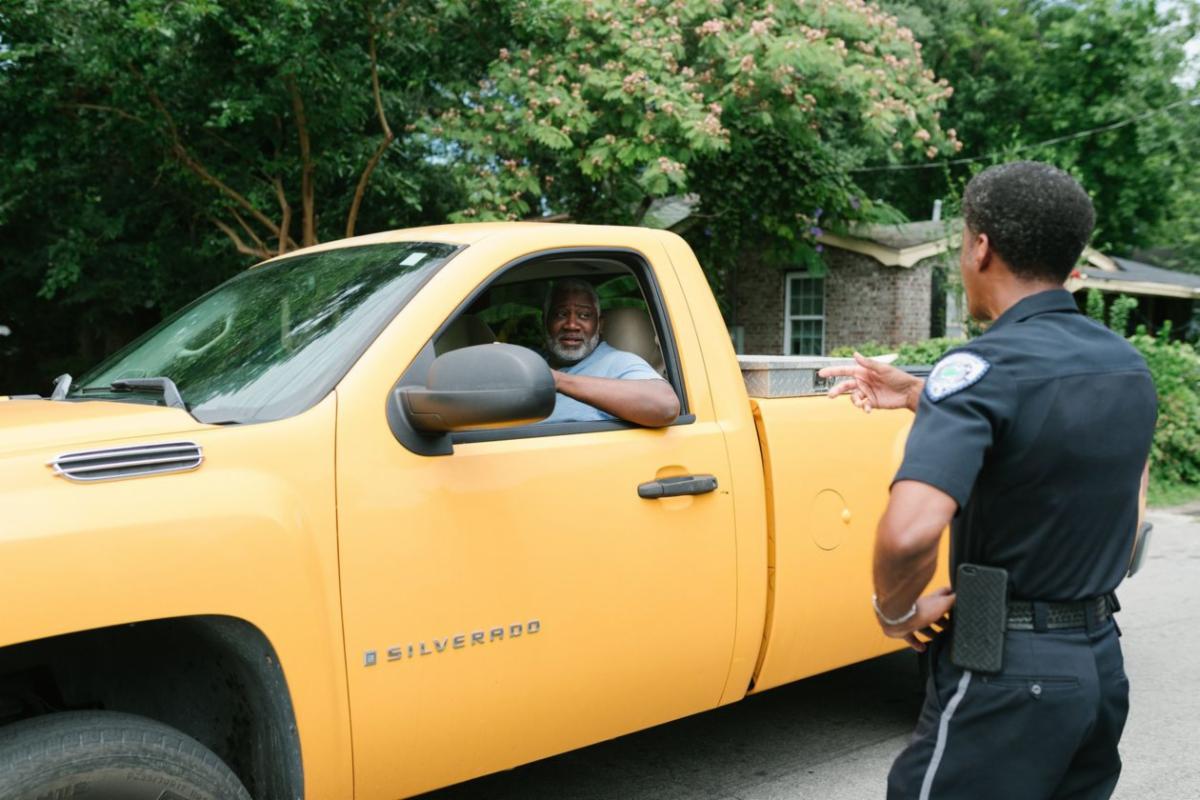
He told his officers he wanted to replace sweeps of Black neighborhoods searching for criminals with more targeted operations. He had officers trained at the YWCA’s Racial Equality Institute and sent them to civic club meetings, urging them to build personal relationships with Black residents. He recalled that, as a patrol officer, he would stop to lift weights or converse with young men in front yards, wanting to show them they could coexist with police peacefully.
“It cannot be us against them,” he said. “The ‘them’ is the people we’re serving.”
Still, Chief Burgess has vowed his department wouldn’t pull back on enforcement, stating emphatically that the majority of the city’s homicide victims are Black and the perpetrators are too often “my people.”
Every time a community member is murdered, the chief, whose nephew was gunned down in North Charleston several years ago, walks the neighborhood holding a “Stop the Violence” sign.
Homicides dropped to 25 during his first year as chief compared with 36 in 2017. There were 26 murders last year, and so far there have been 13 in 2020.
“What has changed is having a Black chief who came up in the community,” said James Johnson, a longtime North Charleston activist. “The community is still skeptical of the police department, the wounds are still there. But they believe Reggie is truthful and honest.”
In May, community activists accused the department of racial profiling and excessive force in multiple encounters with a 21-year-old Black man who is the grandson of a former Charleston city councilman. Video footage showed him being slammed into a wall after being detained by several North Charleston police officers.
Chief Burgess said that his officers weren’t racial profiling and detailed each encounter publicly, noting that a shotgun was found in the man’s car. Several officers are being disciplined for their conduct in the incident, he said.
Community members have also criticized police and city officials for being slow to agree to a racial-bias audit of the department, which the NAACP and a citizen advisory committee requested several years ago. Chief Burgess said he had initially favored waiting until he evaluated his department’s policies. But he has since gotten behind the audit, and the city council recently voted to move forward with the review.
“I told him: You have a chance to serve as chief long enough to see the audit through,” said Rev. Nelson Rivers III, a prominent North Charleston pastor. “Otherwise, things will not have changed appreciably, and your legacy will be you were just a Black chief.”
On a recent day, the chief drove through the same North Charleston neighborhoods where he grew up, not far from where Mr. Scott was killed in a leafy park off one of the city’s main drags. Chief Burgess said he thinks often about the potential for a similar incident. He hopes the work he and others are doing will help get North Charleston through it should that day come.
“You can’t expect to overcome a crisis and … get relationships when that crisis is going on,” Chief Burgess said. “You have to develop those relationships before the crisis comes.”
|
|
Remembering the Woman Who Shaped Education in Mount Pleasant
By Anne Shuler Toole
Mount Pleasant Magazine
Though small in stature, Lucy Garrett Beckham was larger than life. The impact she had on Mount Pleasant high schoolers over her tenure as Wando’s principal – and the resulting ripple effect on the town itself – is immeasurable. After all, people flock to areas known for good schools, and it’s evident that having her as a leader changed this town in many ways. This December marks five years since her unexpected passing, as Lucy Garrett Beckham High School closes out the first semester of its first year open. So, who was the namesake of Mount Pleasant’s newest high school? In short, she was a visionary, whose goal was to prepare her students for life.
Beckham was born in Fountain Inn, South Carolina, the daughter of a math teacher and a state legislator. She was educated in Greenville County’s public schools, before moving on to Presbyterian College and graduating from College of Charleston with a bachelor’s in mathematics. Later, she also earned master’s and specialist’s degrees from The Citadel. After 17 years teaching high school math, she moved into administration and leadership, where she spent the next 22 years.
Beckham maintained high expectations but was easy-going and candid – traits that won the hearts of many. Awards over her lengthy service as an educator run the gamut from Stratford High School’s Teacher of the Year to 2010 MetLife / NASSP National High School Principal of the Year to the South Carolina Order of the Palmetto and Mount Pleasant’s Order of the Gavel.
The majority of her administrative years were spent at Wando High School. “When I arrived on June 30, 1998, the school administrative leadership had all retired on July 1. Not because of me – they didn’t know I was coming,” Beckham grinned during her speech at Wando High School’s 2002 graduation ceremony. “The bookkeeper, Ms. Burlingham, started the same day I did. She had never kept school books before. The school had switched from a traditional schedule to a four-by-four that summer before I arrived. We had a new cafeteria manager who never worked in high schools and a new custodian.”
It didn’t take Beckham long, working with her fresh team, to begin exponentially improving Wando. “She proved that a large, public, nonmagnet high school serving a diverse student body could produce outstanding results and earn numerous state and national awards,” said Anna Dassing, current principal of Lucy Garrett Beckham High School and a mentee of Beckham’s. “She was always looking for a way to create more opportunities for her students and wanted to be sure they had a path and a vision for the future, whether it was college, a career in the military or going straight to work after graduation. Her greatest fear was that a student would fall through the cracks, drop out of school or not have a plan for after high school. She wanted to prepare them for life.”
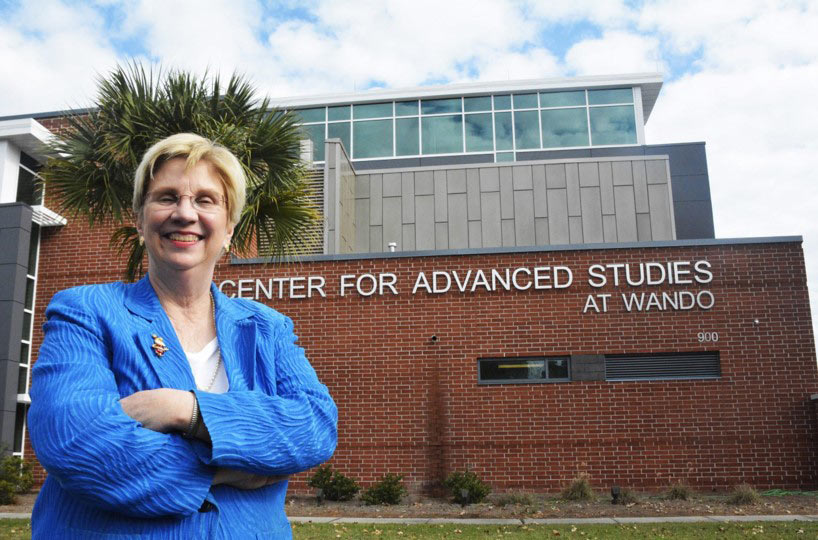
With these priorities driving her, Beckham spearheaded a variety of academic opportunities — including what is now the East Cooper Center for Advanced Studies, which provides technical skills and training beyond high school level to any East Cooper high school student.
She had been helping conceptualize a new high school since 2012 – not as a rival but as a complement to Wando – and was named Executive Principal of East Cooper Schools just months before her 2015 death.
Beckham was a beloved daughter, sister, mother, grandmother and friend, and an inspiration to tens of thousands over her years in education. Today, faculty and staff at Beckham High School honor their namesake in many ways. The high school’s first Lucy’s Leadership Award was presented to math teacher Kristin Manna – recognized not only with a certificate, but with the loan of Beckham’s podium, worn down over many years and complete with an indentation where she rested her foot while teaching. It will be passed on to each new recipient.
“Kristin exemplifies Lucy’s ‘students-first’ attitude and leadership amongst her peers by working tirelessly to help them learn, implement CANVAS and tackle teaching virtually and in-person at the same time,” Dassing explained. “She is solution-oriented and willing to creatively problem-solve issues and never gives up, just like Lucy.”
Science teacher Callie Dollahon spent the summer of 2020 rooting dozens of cuttings from a plant that sat in Beckham’s office for years and gifted every teacher and staff member with one, tied with a note featuring Beckham’s favorite motto: “Do what is best for kids,” along with inspiration: “This small plant, cut from Lucy’s very own, symbolizes the legacy that LBHS is built around. Her vision for schools challenges educators to grow kids. As the plant grows, remember that you are part of that legacy, and grow with them!”
Beckham’s legacy will continue to live on for generations, at both Wando High School and Lucy Garrett Beckham High School, and it will be carried with students wherever they continue to grow.
“Lucy Beckham loved her students, her schools and her community. She lived every day to the fullest and, in many ways, was always building Beckham,” concluded Dassing.
|
|
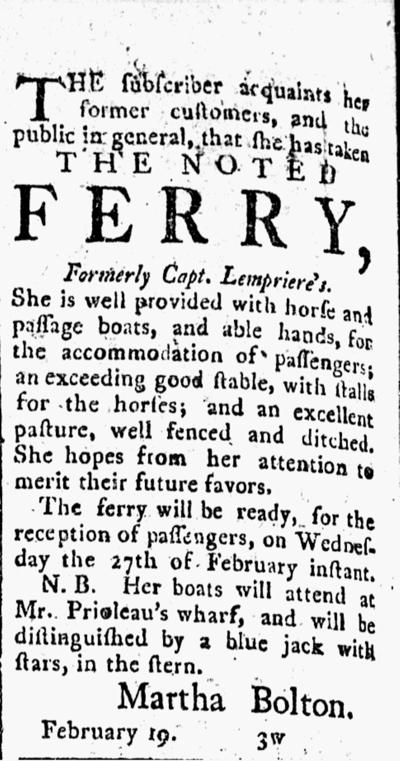
Suzannah Smith Miles: Early ferries were often flatboats using horse and mule power prior to steam engine's invention |
|
|
|
This stretch along the Wando River was prime real estate in the days of sailing ships, ideal for building and repairing ships. Deep water joined land heavily forested with oak and pine for vessel construction. Numerous sweet water springs enabled the vessels to sail away fully loaded with fresh water. The land was arable, good for raising provision crops like corn and beans and for grazing cattle. |
|
Throughout history, Remley’s Point has been the place of many names. The last plantation owner was Paul Remley, thus its present name. At the outset of colonization, Native Americans called it Hobcaw Point (roughly translating to “between two rivers”) and for most of the 1700s and early 1800s it was called Lempriere’s Point and Prince’s Point.
This stretch along the Wando River was prime real estate in the days of sailing ships, ideal for building and repairing ships. Deep water joined land heavily forested with oak and pine for vessel construction. Numerous sweet water springs enabled the vessels to sail away fully loaded with fresh water. The land was arable, good for raising provision crops like corn and beans and for grazing cattle.
Another profitable asset was the ferry.
After Anthony Mathewes, William Watson and Joseph Severance, the Hobcaw Ferry next came under the ownership of Captain Clement Lempriere. One of our country’s first naval heroes, Lempriere’s name is somewhat overlooked in South Carolina history.
Lempriere was a sea dog of the first order, a gene-driven talent that came from heritage. Born on the island of Jersey, the Lemprieres had been mariners in the Channel Islands since the 11th century. His name first shows up in the Carolinas in the 1740s when he and his fellow officer, Captain Richard I’On, sailing as legal privateers for the Crown, were registering the vessels they captured with Charles Town authorities.
Why Lempriere and I’On both decided to settle in the Hobcaw area isn’t known but it likely had to do with the land’s suitability for the seafaring sort. Both also married the proverbial “girl next door.” I’On married Elizabeth Bond, daughter of Jacob and Susannah Maybank Bond of Hobcaw Plantation, eventually bringing him ownership of the residential area named for him — today’s I’On.
Lempriere married three times. His first wife, Elizabeth Varnor, died only a year into their marriage. He next married Ann Wilks, daughter of Joshua and Joan Wilks of Long Point (today’s Belleview). From this marriage came a daughter, Ann, who was Lempriere’s only child. After her death in 1767 he married Sarah Bond, Elizabeth Bond I’On’s youngest sister.
While Richard I’On ultimately settled into the role of gentleman farmer, Lempriere remained connected to the sea and his occupation is listed as “pilot” on some documents. He became a man of note in Christ Church Parish and represented the parish in the Royal Assembly from 1766-1768 and the Second Provisional Congress at the outset of the Revolutionary War.
He was also a shipbuilder and expanded his landholdings with the purchase of David Linn’s former shipyard on Long Point. In May 1769, an article in the newspaper announced that “a fine new Ship, for the London Trade, was launched at Captain Lempriere’s at Hobcaw … esteemed as compleat [sic] a Vessel as has been built in this Province; she is called the Betsy and Elsy, and to be commanded by Capt. John Harrison.”
Lempriere’s Ferry apparently made the run to and from Charles Town on a fairly regular basis until about 1770. Lempriere, himself, was not the ferry operator; he had a hired (or slave) crew who performed that task. In fact, throughout the history of all the ferries, African-American water-men made up the majority of the ferry crews.
Lempriere made American naval history in the spring of 1776. War was imminent and the fledgling American army was faced with a frighteningly low amount of gunpowder. Lempriere was asked by the Council of Safety to use his expertise as a privateer, go to sea, and commandeer British-held powder. This he did twice, first sailing to New Providence in the Bahamas where he took control of that government’s powder magazine (that powder ended up with George Washington troops in the north), and next by taking a British ship at St. Augustine laden with thousands of pounds of powder. This latter was brought to Charles Town just in time to arm the new fort on Sullivan’s Island right before the famous “Battle of Fort Sullivan.” That the patriots under William Moultrie were able to successfully rout the invading British fleet is in large part because they were armed with the powder Lempriere had brought into the colony.
Following Lempriere’s death in 1778, it took his daughter some 20 years to settle her father’s estate, stark testimony to the difficult economic times which followed the Revolutionary War. Although she tried numerous times to sell her father’s properties, no sale of the Hobcaw Point (now known as Lempriere’s Point) ever materialized. In 1788, the ferry was leased to Martha Bolton, yet this business involvement lasted less than two years.
Ultimately, Ann Lempriere’s marriage to Charles Prince ushered in a new dynasty, and the property would eventually go to their son, Clement Lempriere Prince, and the name Prince’s Point would emerge — with the ferry becoming known as Prince’s Ferry.
|
|
|
|
Mount Pleasant Farmers Market draws huge crowd
|
|
|
|
Wando High School
orchestra
|
|
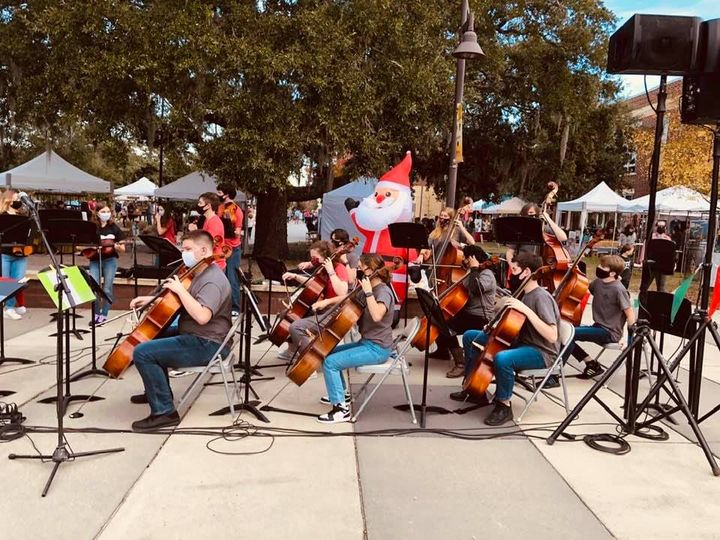
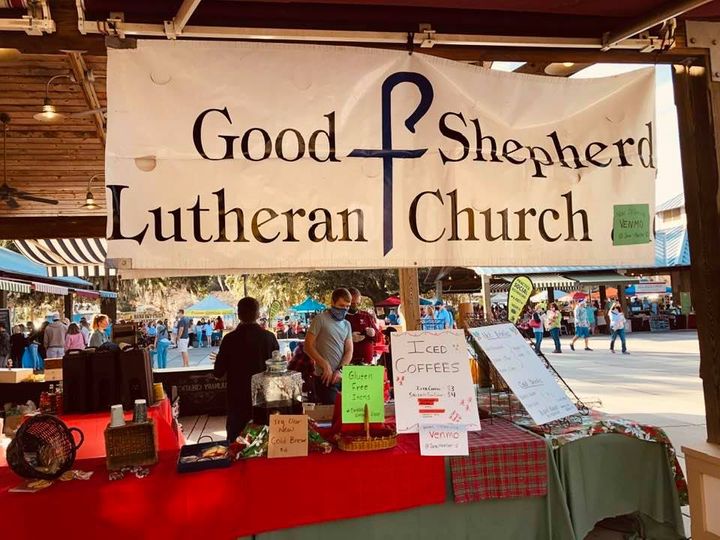
The Wando High School orchestra performed (top) and Good Shepherd Lutheran Church was also there
It was a picture-perfect Saturday for a holiday market.
A good excuse to get out of the house, having been stuck at home because of the seemingly endless pandemic.
And boy, did they get out -- at least for an hour or two.
Thousands fled their digs in near-record numbers to go to Mount Pleasant’s 21st Holiday Market and Craft Show, a welcome relief for farmers, artists and crafters who have been hammered by the coronavirus pandemic.
Farmers have been one of the hardest hit industries.
That's why Saturday was so important.
The market provides an outlet for them to sell their just-picked vegetables and fruits and baked goods.
There were also food trucks, gifts created by local artisans and holiday activities for children.
Because of the big crowd, there were so many people that at times there was bumper-to-bumper traffic on Coleman Boulevard.
In addition to the goods being sold at the market, which is in the front of Moultrie Middle School, there was music courtesy of the Wando High School Orchestra which performed for the first time since the pandemic.
Tracy Richter, special events coordinator, said the spacious market was the town' s gift to the community.
"The Town of Mount Pleasant was happy to offer the community an open air market. We feel it is important to support local when possible. "
Farmers markets have grown like weeds in the last few years because of the demand for fresh vegetables.
According to the latest data from the U.S. Department of Agriculture, the number of farmers markets in the United States has grown by 76 percent since 2008. There are now 8,268 markets listed in the USDA’s National Farmers Market Directory — that’s one market for every 38,000 people.
Charles dev. Williams is a retired newspaperman who served as business editor, state editor, metropolitan editor and city edior for The Post and Courier.
|
|
Mount Pleasant and College of Charleston partner to bring a new track around the field at Town Hall |
|
Staff reports
MOUNT PLEASANT - Sophisticated improvements are coming to the track at Mount Pleasant Town Hall.
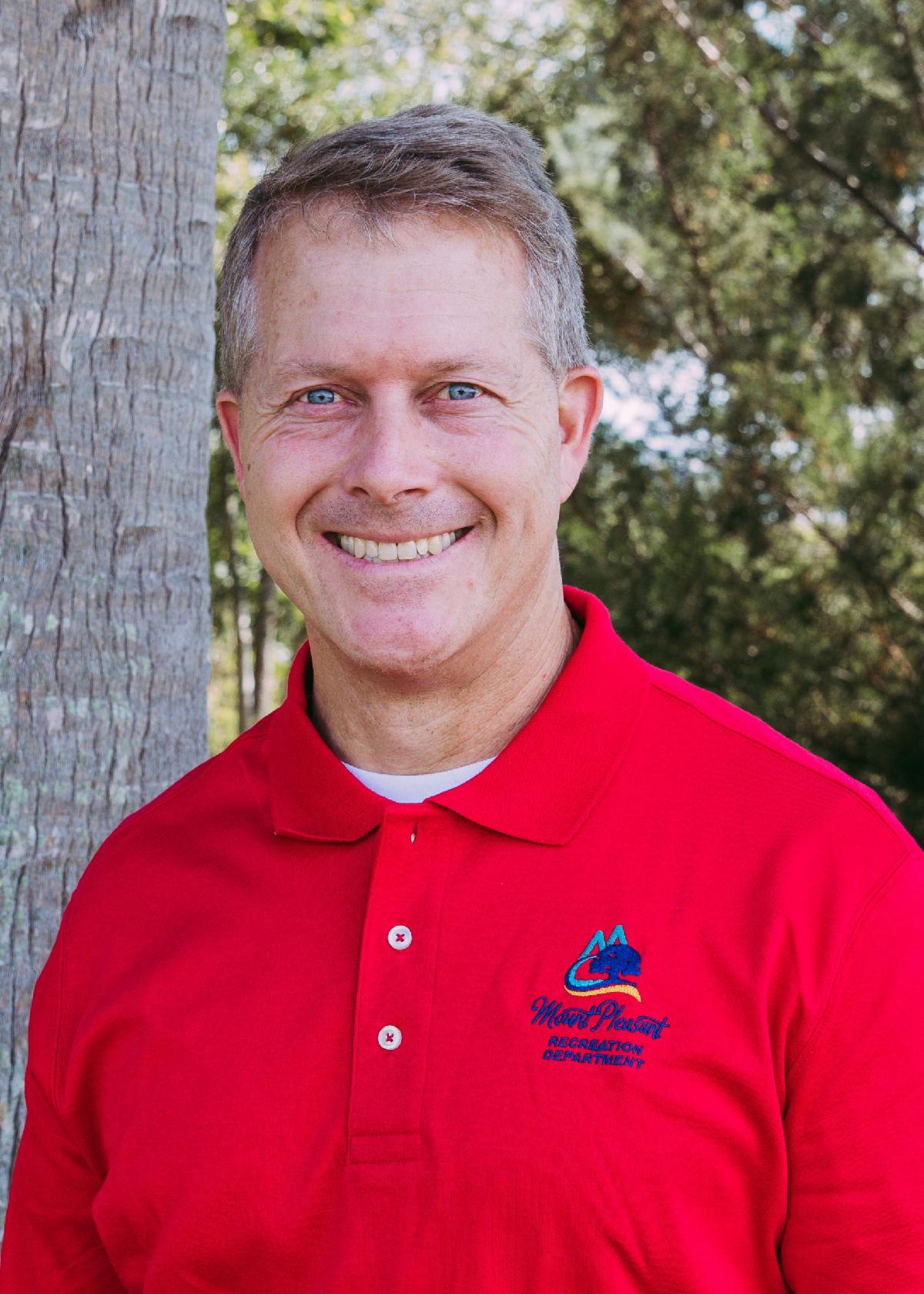
The Town of Mount Pleasant Recreation Director Steve Gergick says the town has partnered with the College of Charleston to bring a new track around the field at Town Hall.
Gergick says this will allow the College of Charleston Track Team to hold daily practices. When the team isn’t using it, he says the track will be free and open to the public for exercise and general recreational use.
College of Charleston Head Track Coach Amy Seago says the college has never had a home track and field facility. She says they’ve had to use local high schools and Charleston Southern facilities.
“We’ve waited years and years to have something that is more convenient for us and we’re extremely excited and to have it be so close to Patriots Point which is where the rest of our home of the athletic department is, is certainly an added bonus,” Seago said. “And this will help make our daily life much easier, that’s for sure.”
Seago says the team is planning to have daily practices at the Mount Pleasant Town Hall track. She says plans are for the new track to have a polyurethane surface.
There’s an asphalt track around the field behind the Town Hall Gym, but Seago says they wanted the track surface to be best for athletes. Instead of asphalt, she says the school offered to cover the upgraded surface funds.
While the team is excited about the new facility, Seago says the track still won’t be big enough to host meets. For now, she says the college plans to put in a pole vaulting pit but will still have to use another facility for official home meets. Seago wanted to reiterate that the new track helps with the team’s daily needs tremendously.
Gergick says this improvement project also includes new ADA accessible bleachers for spectators to sit and a new fence around the track and field. Plans also include a small shelter area with picnic tables for gatherings and a new scoreboard at the field.
There will also be low level lighting around the track that Gergick says provides visibility for walkers and runners without lighting the whole complex or disturbing nearby residences.
Mount Pleasant’s Design Review Board is still reviewing final designs for the new track. That will be up for final reading in January.
If approved, project leaders say they hope to start construction this April and have it done in time for the Spring 2022 track season.
|
|
New North Charleston social services hub breaking ground across from former Navy Hospital slated to ramp up development |
|
“That spinoff that’s going to come off it is going to be something that’s going to really bring vitality back to this area so we can have better product and better service for the citizens that still live here.” -- Mayor Keith Summey.
By Teri Errico Griffis/Charleston Business Journal
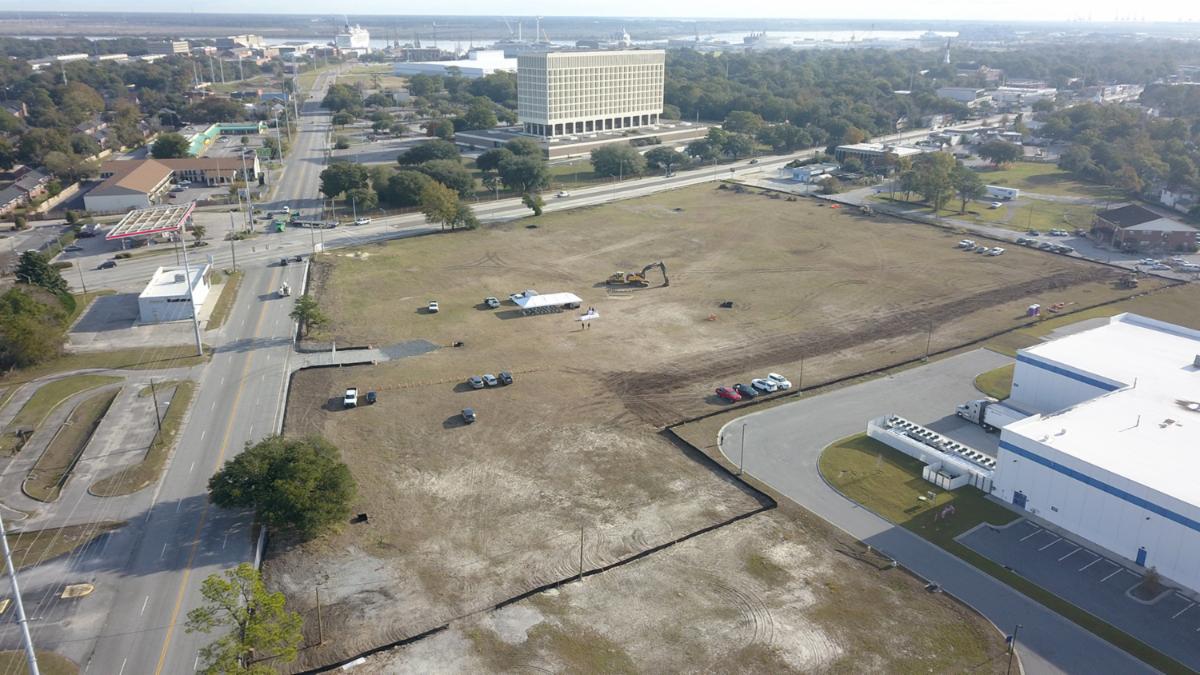
North Charleston hopes the construction of a new social services hub across from the former Naval Hospital will spark growth in an underserved area of the city and possibly lead to a much-needed grocery store.
The 175,000 square foot, three-story health care and office facility will consolidate local and state operations into one location, North Charleston Councilman Teddie E. Pryor said at the groundbreaking on Dec. 4. The Rivers Avenue facility will be more centralized to residents in need of services.
Plans include a CARTA hub, North Charleston police substation, a 50-bed inpatient facility, a library and more, including parking.
Construction is expected to be completed by 2022.
“This new hub will be a great opportunity to provide much needed services in a convenient centralized location for our most vulnerable citizens,” Charleston County Council Chairman Elliott Summey said. “This project has been in the works for a long time, and once complete, this campus will bring a sense of place and energy the south end of North Charleston needs.”
Additional services for the hub, located between McMillan Avenue and Pine Avenue, will include:
- Charleston County’s Department of Alcohol and other Drug Abuse Services
- S.C. Department of Health clinics, administrative offices and vital records
- S.C. Department of Social Services
- S.C. Department of Health and Human Services
Pryor said the hub has been a long time coming, and its construction could prove to be a catalyst for that grocery store after all.
“I’m so elated because I think this is a comeback for the area. This is a start. Everyone was trying to get a grocery store in here but the numbers didn’t match,” he said. “But I think now is a good time to relook at those numbers once this is done. People will need places to eat, daycare, places to shop. This is the beginning of the revitalization of the south area.”
North Charleston Mayor Keith Summey understands the need and said the city will continue to work on bringing a grocery store back and hopes the hub spurs growth and activity in the area.
“This is going to be an opportunity as I see it to renourish the ground that we’re standing on and sitting on today,” he said. “That spinoff that’s going to come off it is going to be something that’s going to really bring vitality back to this area so we can have better product and better service for the citizens that still live here.”
Reach Teri Errico Griffis at 843-849-3144.
|
|
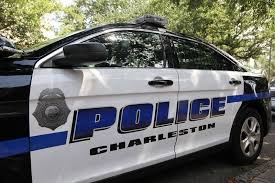
Proposed partnership involving Charleston Police geared to reduce hate crimes
|
|
WCSC web staff
CHARLESTON - Charleston Police officers may be getting some extra ride-a-longs if city leaders approve a new agreement.
Charleston City Council will consider working with a researcher with the Policing Hate Crime Project as part of a project to fight hate crimes in the city. The partnership would provide access to data and surveys as well as actual ride-a-longs with police officers.
The city would receive training designed to improve investigative procedures.
The debate comes as the number of hate crimes reported nationwide reached the highest level in more than a decade. There were 7,300 hate crimes reported in the nation last year, according to the FBI.
The city of Charleston reported five hate crimes in 2019 and has reported five so far this year. Three of this year’s reported hate crimes targeted black victims, another targeted a person of Arabic ancestry and the other targeted a member of the LGBTQ community.
In February, Charleston Police became the first in the state to implement the “Safe Place” Program, which gives businesses stickers they can place on their entrance to designate their location as a secure refuge for LGBTQ crime victims to receive support and contact law enforcement.
The City of Charleston enacted a hate crime ordinance two years ago, which would tack on an extra criminal charge if the offense were considered a hate crime.
|
|
|
Myrtle Beach City Council approves plans to lease historical buildings
By Katherine Phillips/WMBF
MYRTLE BEACH - City Manager John Pedersen can accept bids for the revitalization of a stretch of downtown, Myrtle Beach City Council voted.
“The contractor gave us essentially an extension until Monday to make a determination on if we could accept the bids or not,” said Pedersen.
The downtown strip consists of 505, 507 and 509 9th Avenue North, all historic buildings. While the city owns them, they’re not eligible for tax credits for renovations. But if owned by someone else, nearly $800,000 could be earned and put towards the revitalization project.
In total, the city said the construction costs are estimated to be $1,872,000 and will be paid through a bank loan.
“City council has complete control over the lease points on these properties. They can set them at the point to basically guarantee that there will be some activity in that area, and good activity draws out bad activity. That’s what the city is trying to accomplish with this transaction,” said Pedersen.
After five years, the city can decide what they want to happen to the historical buildings. They can decide to sell them back to the private sector or continue to lease them out. During the same five-year period, the nonhistorical buildings on 9th Avenue North involved in the deal can be sold at Council’s discretion.
The sales from the deal in combination with the tax credits are what the city hopes to use to fund the overall renovations.
And while the City of Myrtle Beach isn’t sure what will come to 9th Avenue just yet, Jack Thompson, who owns the building on 503 9th Avenue North, already knows what he wants to fill the facades.
“Ninth Avenue was ‘Artist’s Row.’ It’s been a little slow coming waiting for the city to renovate all these buildings,” he said.
A longtime Myrtle Beach photographer, Thompson said he’s excited about the anticipated foot traffic from a new brewery next door. He also said he hopes to share the street with small businesses and artists like he originally hoped would happen when he moved in. Thompson added that he fears corporate companies would ruin the charm.
“A lot of it is just wait-and-see, just what the future holds for Myrtle Beach,” he said.
|
|
Ridgeland Christmas light display offers fun and a chance to help community
By Andrew Davis/WSAV
RIDGELAND – Holiday light displays are usually just for fun, but one show in the Lowcountry has a special meaning behind it.
“We started just for our kids to enjoy the Christmas season and the holiday lights. And it’s just grown since then,” said Chelsea Brendlen.
That fun for kids which Chelsea and Barry Brendlen started 24 years ago at their Driggers Lane home in Ridgeland, has now grown into a winter wonderland with more than 100,000 lights.
“It is the community,” said Chelsea. “Every year they start asking what we are doing different, what we are adding. People tell us how much joy it brings to them. It’s just enough to keep you doing it every year.”
Since hundreds of people drive thru their annual celebration each year, Buddy and Chelsea spend weeks getting ready to light up the night.
“It is just fun when you hear the kids get excited,” smiles Chelsea.
There are elves on planes, trains and automobiles. All allowing you to travel back in time.
“I’ve had adults tell me they’ll drive 5-10 minutes out of their way at night just to drive through our display.”
And this year, the light will shine a little brighter ... as they try to help out a friend in need.
“She’s my age, has young children. Her name is Julie. She has cancer,” explains Chelsea. “It’s stage 4, she’s had it for four years. She’s had some complications recently. So anything we can do to help is always nice.”
This couple will always be on Santa’s “nice” list. Not just because they make “his” holiday sparkle, but they work to bring a little bit of joy to everyone’s season.
“Who doesn’t like Christmas?” says Chelsea. “It is a good time, everyone’s in a good mood right now. It brings happiness, joy to their night, their day. This year I think everybody needs a little more of that.”
And what everyone needs is more Santa Claus. This is why Saturday jolly ole Saint Nick himself is stopping by.
“Saturday Santa and Mrs. Claus will be here. There is cookie decorating, ornament decorating, face painting and we will have desserts and hot chocolate."
Santa and Mrs. Claus will give out 100 or more toys, dozens of candy canes and loads of fun.
“We don’t expect anything when you go through. The only thing we want you to take away from this is enjoying it and sharing it with other people.”
The display is up every night until Christmas but Santa will only be there Saturday.
Everyone is welcome to come to the home on Driggers Lane in Ridgeland from 6 until 8 in the evening.
While donations are welcome, the entire event is free.
|
|
Town's wastewater treatment plant almost finished
By Shellie Murdaugh/
Jasper County Sun Times
Ridgeland is on its way to having a new wastewater treatment facility completed, according to town administrator Dennis Averkin.
“The wastewater treatment facility is about 85 percent complete,” Averkin said last week. “We estimate it will be in full operation in late February. This is certainly good news for the town as it doubles our treatment capacity from 800,000 gallons per day to 1.6 million gallons per day.”
Averkin has said the project has been in the works for several years. He said the town considered moving forward with a facility in 2016 that had several major differences. That project would have cost $15.4 million, Averkin said, and the debt service would have been paid over 40 years, at an estimated cost of $13.7 million.
Town Council eventually asked Averkin to find cost-saving alternatives that would still meet the planned capacity of 1.6 million gallons per day with the same or better discharge quality.
“After three years of hard work, we were able to design a new system with the same treatment capacity as the one presented in 2016, but (costing) substantially less,” Averkin said last year. “The total project cost comes to $9.9 million. Of that, over $4 million will be paid by state and federal grants. So the net cost to the town’s users is a little under $5.8 million. We were able to save the taxpayers a huge amount of money.”
Averkin has said the water quality is expected to be better than it would have been with the earlier plan. He said the town will have direct discharge capability and no longer have to pay to spray effluent onto turf farms.
The town’s existing treatment facility was constructed in 1990 and is able to treat 800,000 gallons per day. The town currently treats more than 730,000 gallons per day. During times of heavy rain, Averkin said, the town routinely exceeds its permitted capacity.
Averkin said last week the town will need every bit of that new capacity as it anticipates a major wave of growth.
“It’s also important to note, the town was able to obtain over $4.1 million in grants to help cover the cost of the new treatment plant, which is roughly $9 million,” he said.
Averkin said the facility only covers sewage treatment, so there will be no impact on the town’s drinking water system. He said there also will be no change in water pressure.
|
|
Viewpoint: Beasley sets great S.C. example for world to see |
|
Charleston City Paper
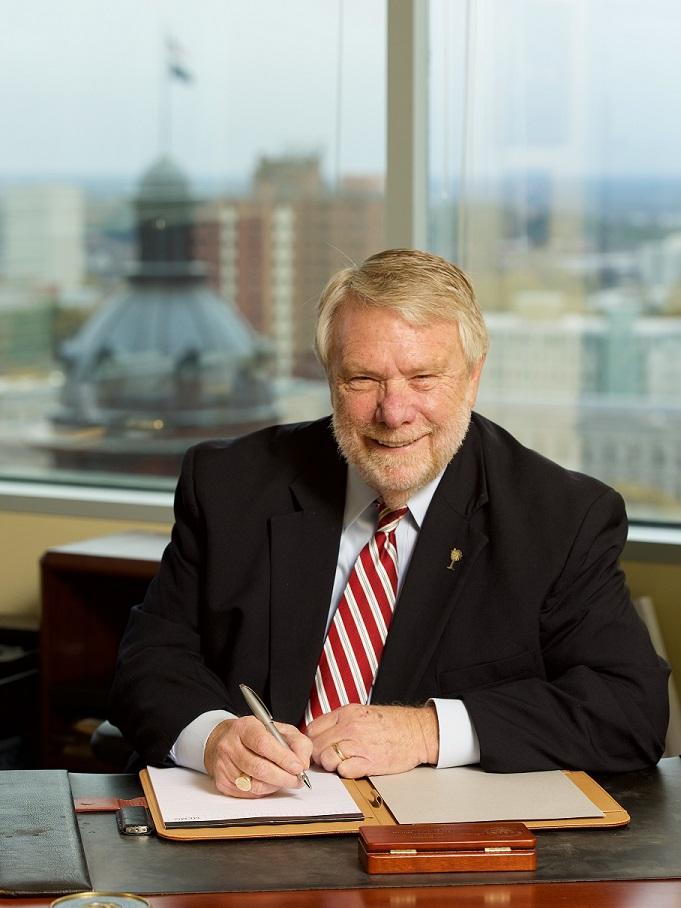
All South Carolinians should be proud of the display of leadership and the example set by former Gov. David Beasley when he accepted the Nobel Peace Prize on behalf of the United Nations World Food Programme.
“Waking up in this wealthy, modern, technologically advanced world, it’s hard to imagine us going through a famine like that,” Beasley said during a Thursday ceremony in Rome. “But my tragic duty today is to tell you: Famine is at humanity’s doorstep. For millions and millions of people on earth. Failure to prevent famine in our day will destroy so many lives and cause the fall of much we hold dear.”
Beasley, 63, served as South Carolina’s governor from 1995 to 1999. Eighteen years later, after a business career mixed with missionary work, he became the executive director of the WFP, the world’s largest humanitarian agency. It helps 100 million people in 88 countries to battle hunger every year.
In the past, we’ve described Beasley as the Palmetto State’s version of Jimmy Carter for serving as a leader making a larger difference on the world stage after years in public office.
“All of the darkness of the world can’t put out the smile on a face,” Beasley told us in 2017 just months after taking the job that jets him from hunger-sapped country to European capitals in search of funding to help more people. “This job brings humanity down to the core level. When you see a hungry person, you don’t see a Democrat or a Republican, a Black or white. You see a brother or sister who is struggling to survive. That transcends politics. All you want to do is help them.”
On Thursday, Beasley reinforced the WFP’s humanitarian mission by representing 19,000 people who work to alleviate hunger across the world.
“Thank you for acknowledging our work of using food to combat hunger, to mitigate against destabilization of nations, to prevent mass migration, to end conflict and … to create stability and peace,” he said in Rome. “We believe food is the pathway to peace.”
Unfortunately, there’s much more work in the business he and his colleagues are in. Some 600 million people go to bed hungry every night, he said. Of those, 270 million are “marching toward starvation” and 30 million — more than everyone who lives in Texas — depend on the U.N. program for 100 percent of their survival.
In his acceptance speech, Beasley recalled the words of Dr. Martin Luther King Jr., who won the Nobel Peace Prize in 1964.
“Like Dr. King, from a very young age, I learned this teaching from Jesus of Nazareth, as he taught from the Torah: ‘Love your neighbor as yourself,’” Beasley said. “I have come to understand that a better translation of what Jesus actually said was ‘Love your neighbor as your equal. Think for a moment what that really means.
“Imagine every woman, man, girl and boy we share this planet with is our equal and if we would just love them as such. Imagine what that would do to war, to conflict, to racism, to division, and to discrimination of every kind.”
He said he is heartened because his agency helped “100 million of my equals — my neighbors” stay alive and avert famine.
“What tears me up inside is this: this coming year, millions and millions and millions of my equals — my neighbours, your neighbours – are marching to the brink of starvation.”
Pathways to avert hunger are fueled by money from wealth, which continued to grow by trillions of dollars as the world reeled from the coronavirus pandemic. He said another $5 billion would save 30 million people from famine.
“’I don’t go to bed at night thinking about the children we saved. I go to bed weeping over the children we could not save. And, when we don’t have enough money, nor the access we need, we have to decide which children eat and which children do not eat, which children live, which children die ...
“In the spirit of Alfred Nobel, as inscribed on this medal — ‘peace and brotherhood’ – let’s feed them all.”
Thank you, governor, for reminding us about the fragility of humanity around the world during this season of giving. Keep up the great work.
Andy Brack is publisher of Charleston City Paper. Have a comment? Send to: feedback@charlestoncitypaper.com
|
|
Bobby Hitt: 2020 -- A year unlike any other
As we near the end of 2020, a year unlike any other, it's important to reflect on these past 12 extraordinary months. In a year that ushered in a new decade, we were faced with a global health and economic crisis like nothing before in our lifetimes.
The coronavirus upended the way we work, conduct business and interact. Our state's business community, in general, demonstrated adaptability and adjusted to the challenges imposed by the pandemic. However, some sectors of industry are still experiencing difficulties that are likely to continue in the near term.
South Carolina is a resilient state. Understanding that business is always evolving, the coronavirus pandemic has challenged us to be more flexible, more creative and more innovative than ever.
At a time when we reflect on the year that was, it's important to look ahead. And, I can assure you that all of Team South Carolina is committed to fostering a business climate that supports economic growth and a bright future for South Carolinians.
Bobby Hitt is a Charleston native, a graduate of Charleston High School and the University of South Carolina and is
Secretary of Commerce.
|
|
A Christmas Story....of sorts. |
|
|
I came across a photo I actually did not remember taking back when I was moving to Jefferson City, Missouri.
In the late seventies, I had just been named the Director of Tourism for the state of Missouri and needed to move my family to the Capital.
With me would be my wife Sandy, our daughter Heather and our big, white, mixed-breed dog named CCASH*.
(*His name was the first initials of our family: Chuck, my son Chris, my older daughter Amy, Sandy and Heather).
My new job came with a substantial raise in pay and I realized prices were better there than in Kansas City, so four potential homes for the Boyds were examined by me.
I planned to fly Sandy in for -- hopefully -- her selection and approval.
I made sure the 2-story I liked best was first on the list for showing by my real estate rep and he alerted the owner -- an elderly lady -- when we would come by and she went to stay with her son during our morning visit.
The realtor had baked some cookies in the oven so the house had a nice, pleasing aroma. I placed a vodka tonic in the fridge to have something familiar in the house and had selected tapes of music I knew Sandy liked to be playing in the background as we toured.
We pulled up at the curb, Sandy got out and said: "I love it, we'll take it!"
Pleasantly surprised by her quick acceptance, we then went inside for the actual tour.
Well, that was easy.
We had lunch with the happy realtor and I found it was not quite a done deal yet. One more step was needed before I flew Sandy back home to KC.
The realtor said the owner wanted to meet me to make sure her house would be in good hands.
I took Heather along that afternoon to meet the lady who had lived in that house for nearly 60 years.
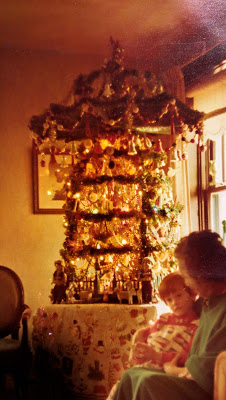
It was near the holidays and she proudly showed off a wooden Christmas tree from Germany that was older than she.
The rising heat from candles turned a paddle wheel at the top and the tree slowly revolved after she asked me to light the candles.
Heather charmed her of course so she agreed that we were a family she wanted in "her" house.
We bought some of her furniture at a good price including a huge mahogany china cabinet, a long dining room table with 8 chairs, several beds with carved headboards and several ornate dressers.
She kept the beautiful grand piano that was in the living room and it was hauled away a few days after we closed on the deal. I saw deep ruts across the lawn and knew it was gone. Well, it DID take up a lot of space.
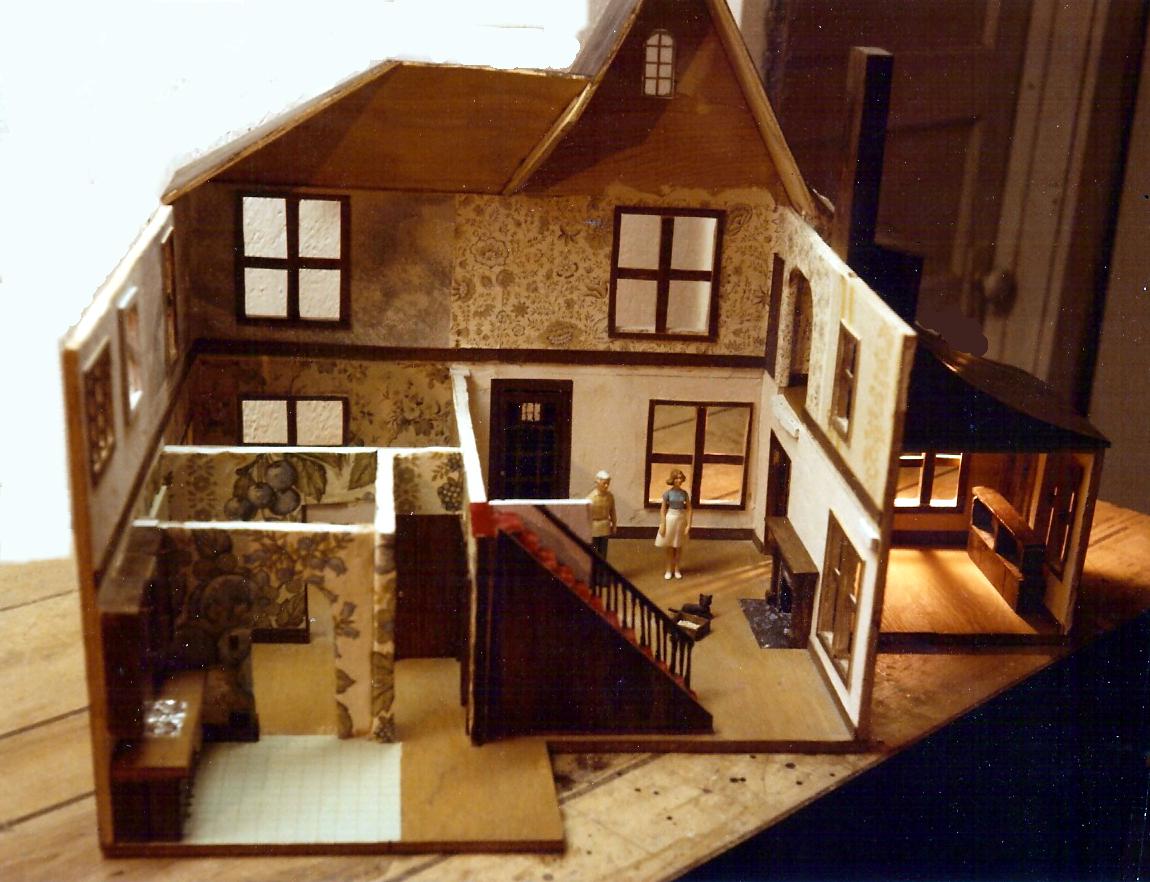
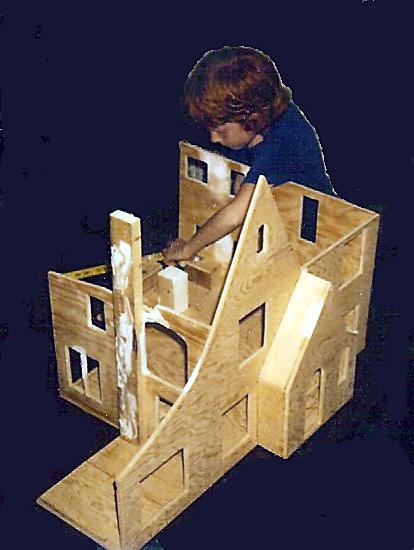
I may have posted photos of the stately house before. And even some shots of the replica dollhouse I built for Heather when she was 9 years old.
But the photo of the Christmas tree I just found.
I am so glad I had taken a view of it with the owner and my younger daughter.
I went online and could not find one even close to it.
The large, unique "tree" left with the owner. And, I guess that was a good move.
So many moving, lighted candles in that beautiful WOODEN house would have made me nervous.
I know it's a little early for Christmas stories.
But, I wonder how many people have seen one of these rotating holiday gems?
As I said, I Googled online but did not find any this tall and this grand.
And, as potentially dangerous with lighted candles!
I really loved that striking home in the middle of Missouri.
And, so did my cat.
Especially lounging around in the dollhouse copy that I had built. Total acceptance!
--
Chuck Boyd is a retired newspaperman, a former Marine and served as an executive in the hospitality and tourism fields before returning home to his native Charleston where he served as InfoLine director for The Post and Courier.
|
|
Climate on the Carolina coast
|
A high of around 54 and low of 38.
The Coast is published once a week.
Publisher: Charles deV. Williams.
Ass't publisher: Jim Parker.
Office: 264 Molasses Lane, Mount Pleasant.
|
|
|
Places to eat on Daniel Island
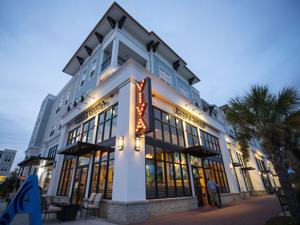
Viva Tacos & Tequila is now open on Daniel Island.
Viva Tacos is at 864 Island Park Dr., Suite 105. Its menu features classic Mexican dishes and a range of tequilas.
|
|
|
|
|
|
|