The Chino Basin Program is an innovative water program that moves beyond traditional water management practices to achieve advanced levels of water security, flexibility, and affordability.


This quarterly Program Bulletin is your source to learn more about an exciting partnership designed to increase local water supply reliability and regional resiliency.

Chino Basin Program Receives an Additional $53.9 Million from the California Water Commission

The California Water Commission (CWC/Commission) convened on Wednesday, August 20, 2025, and approved a funding recommendation that provides a critical Cost-of-Living Adjustment (COLA) increase for several Water Storage Investment Program (WSIP) projects, including the Chino Basin Program (CBP).


“Having served as Chair of regional CBP Ad Hoc Committee since this project began, I am enthusiastic about the progress we have made with the State and our local partners to continue developing this Program that provides both local and statewide benefits,” stated IEUA Board Member Steve Elie. “IEUA’s Board and our local partners, including the Cucamonga Valley Water District (CVWD), Fontana Water Company (FWC), and the Metropolitan Water District of Southern California, remain committed to continuing to advance the CBP. While there is more work to be done, with this additional funding, the CBP and its component parts can become a reality in the near future. We thank the Commission for their continued investment and support of visionary projects like CBP.”


The CWC staff recommended the COLA increase as part of a broader effort to reallocate more than $453 million in WSIP funds which became available following the withdrawal of the Los Vaqueros Reservoir Expansion Project as well as the passage of Proposition 4 in 2024. Of the newly available funds, the CBP will be receiving an additional $53.9 million. 


“The facilities built through the CBP will reduce our dependence on imported water from northern California while giving our agency more operational flexibility and reliability during droughts and emergencies,” stated CVWD Board President Randall Reed. “This project exemplifies the type of innovative, multi-benefit infrastructure that California needs, and I greatly appreciate the collaboration from the Commission in advancing this program.”


FWC Vice President Marty Zvirbulis shared, “The CBP represents many years of dedicated planning and development, with countless hours invested by our teams and partners to bring this critical infrastructure project to fruition. This long-term commitment demonstrates the strategic importance of this program for California's water future.”


The Chino Basin Program (CBP) is a series of innovative infrastructure enhancements designed to improve regional water reliability by capturing, treating, storing, and delivering high-quality water back into the Chino Basin, enhancing water supply reliability and local control. With the construction of an Advanced Water Purification Facility, aquifer replenishing wells, conveyance, supplemental water supplies, and extraction facilities, 15,000 Acre Feet per Year of new, highly treated water supplies will be developed and stored for local use. The financial commitment from the Commission will allow the CBP partners, CVWD and FWC, to leverage the increase in local supplies in lieu of imported water which ultimately will assist in supporting healthy ecosystems in the Delta.

IEUA Awards Contracts to Advance Key Components of the CBP


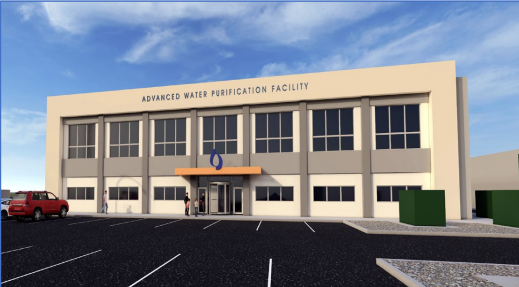
Advanced Water Purification Facility (AWPF) at RP-4


IEUA has awarded a Progressive Design-Build contract to J.F. Shea-Tetra Tech for design and construction services for the new Advanced Water Purification Facility (AWPF). This milestone initiates the planning and design of a state-of-the-art AWPF to be located at Regional Plant No. 4 in Rancho Cucamonga.


The AWPF will be designed to produce up to 15,000 AFY of purified water. This purified water will be stored in the Chino Basin aquifer, supporting long-term groundwater sustainability.


The new AWPF at RP-4 will provide advanced treatment and includes:


  • Membrane Filtration
  • Reverse Osmosis (RO)
  • Ultraviolet Advanced Oxidation Process (UV-AOP)


These technologies will ensure compliance with current direct groundwater injection regulatory requirements, reinforcing IEUA’s proactive approach to wastewater permit management. Through this contract, J.F. Shea will also construct the Advanced Water Purification Demonstration Facility that will will showcase cutting-edge treatment technologies that transform recycled water into a reliable, high-quality supply for future use. It will serve as an educational hub, demonstrating the feasibility of advanced purification while building community trust in sustainable water solutions.


Rialto Recycled Water Interconnection Project


In parallel, IEUA awarded a second Progressive Design Build contract to Steve P. Rados-Stantec for the Rialto Recycled Water Supplemental Supply Early Engineering and Interconnection Project.


This project will deliver 3,500 Acre Feet per Year from the city of Rialto’s

Wastewater Treatment Plant to the AWPF at RP-4, traversing the cities of Rialto, Bloomington, Fontana, and Rancho Cucamonga. The interconnection to the city of Rialto will significantly increase the resiliency and reliability of local water resources across IEUA’s service area and will be critical in meeting local demands during peak summer months.


These two progress-design build projects are part of IEUA’s strategic vision to:


  • Diversify water sources
  • Meet regulatory requirements
  • Enhance regional water reliability
  • Support groundwater replenishment
  • Promote local control of water resources


Planning and design are underway to develop Guaranteed Maximum Prices (GMPs) for both projects to provide cost clarity. IEUA will continue to engage with stakeholders and the public throughout the development process to ensure transparency and collaboration.


Myth: Using the Progressive Design-Build method for the new AWPF and Rialto Recycled Water Interconnection will result in higher project costs.


Fact: In reality, the Progressive Design-Build approach strengthens oversight and collaboration by bringing the owner, designers, and builders together as one team from the earliest stages of the project. This structure fosters a true partnership that emphasizes transparency, shared accountability, and problem-solving. Because the design is developed collaboratively, the team can explore and incorporate innovative construction solutions while ensuring the project remains flexible and responsive to community needs and technical challenges.


Beyond collaboration, this delivery method offers significant cost-saving benefits. By eliminating redundancies and streamlining communication, progressive design-build reduces administrative changes, minimizes delays, and ensures resources are used more efficiently. For the AWPF and Rialto Recycled Water Interconnection, this means a higher-quality project delivered on schedule and within budget, ultimately providing long-term value and reliable water solutions for the region.


 Myth Busted!


Connect With Us

For additional program information, project updates, and opportunities to connect with our staff directly, visit our website at chinobasinprogram.org and follow us on social media.


Facebook  Instagram

@chinobasinprogram