|
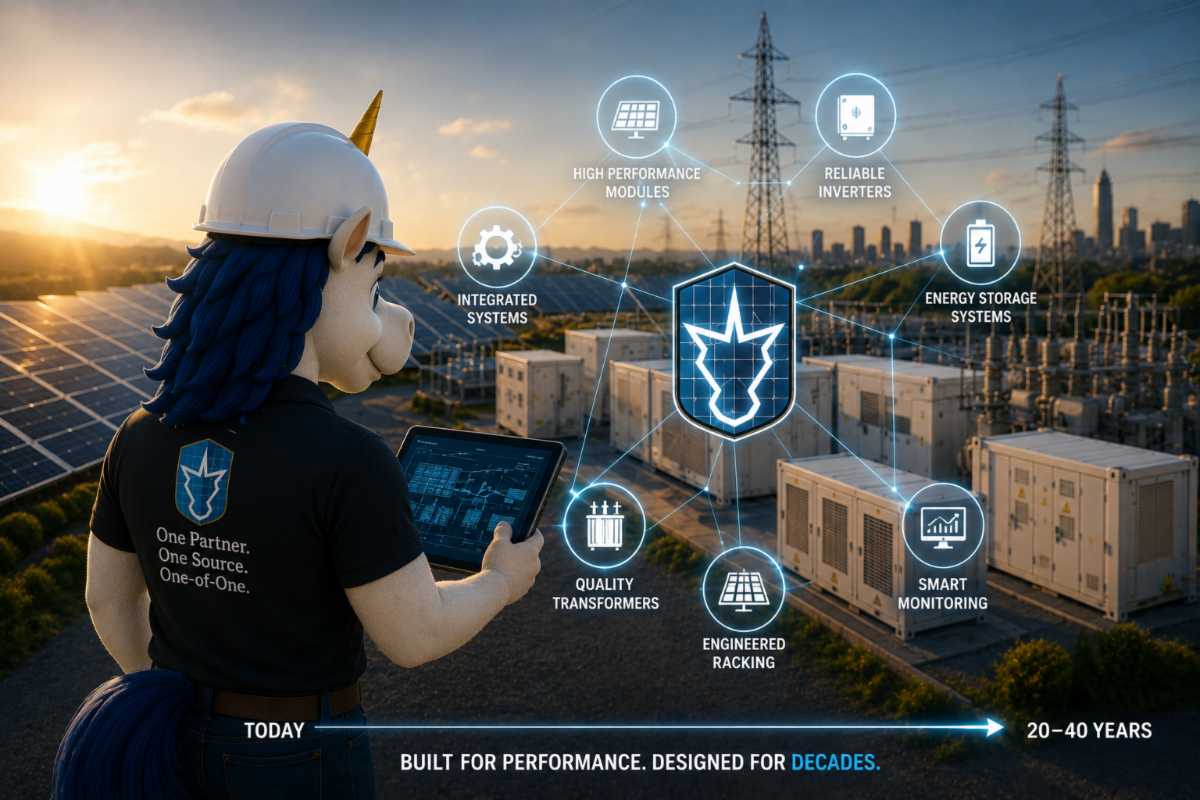
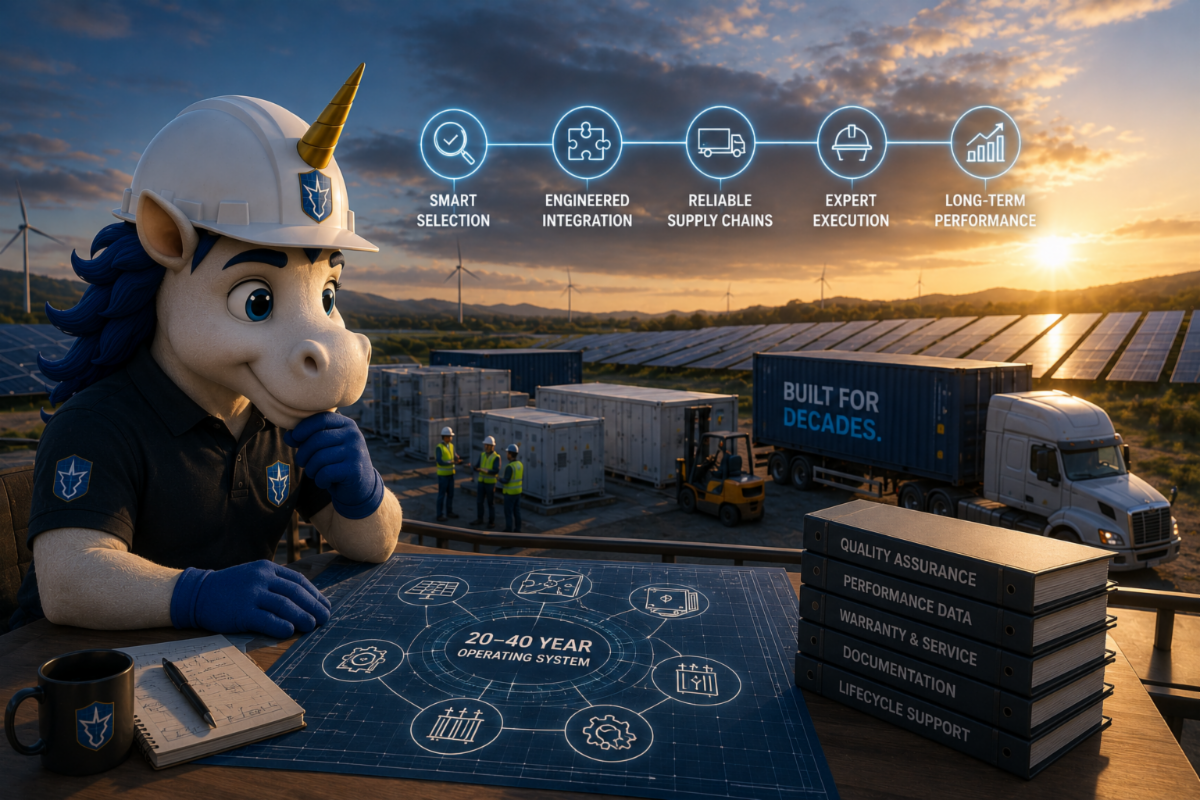
Commercial and utility buyers should treat energy equipment as a 20–40-year operating system—not a collection of low-bid components.
The central question is:
Which equipment combination delivers the lowest risk-adjusted cost of energy or capacity after accounting for performance, integration, downtime, replacement, financing, compliance, and end-of-life costs? At Unicorn Solar, we ensure the lowest risk option by auditing the factories before and during the manufacturing process. By reviewing the materials, you ensure the baseline of production is started correctly. Then confirm the quality of the manufacturing process and whether the production equipment receives regular maintenance and the employees are attentive, to mention a few of the important parts of the process.
1. Start with project requirements
Before requesting prices, define:
- Duty cycle, expected annual production, capacity factor, and design life
- Site conditions: temperature, humidity, wind, snow, hail, flooding, corrosion, altitude, seismic exposure, and soil
- Utility interconnection requirements and applicable grid codes
- Required availability, redundancy, black-start, ride-through, and islanding capability
- Cybersecurity and remote-control requirements
- Planned future expansion, repowering, storage, EV charging, or microgrid integration
-
Tax-credit, domestic-content, prevailing-wage, and sourcing strategy
- Acceptable technology, supplier, country-of-origin, and warranty risks
For U.S. projects placed in service after 2024, the Section 48E Clean Electricity
Investment Credit can reach 30% when labor requirements are satisfied, with potential
domestic-content and energy-community adders. Equipment selection and documentation should therefore be coordinated with tax counsel before purchase orders
are signed. IRS: Clean Electricity Investment Credit
2. Evaluate total lifecycle economics
Do not compare equipment solely by dollars per watt, kilowatt, or kilowatt-hour. Model:
Include:
- Delivered equipment price, duties, tariffs, freight, insurance, and storage
- Installation labor, commissioning, and balance-of-system effects
- Electrical and conversion losses
- Degradation and performance uncertainty
- Preventive and corrective maintenance
- Spare parts and field-service availability
- Expected failures, downtime, and lost revenue
- Augmentation, repowering, and replacement costs
- Warranty recovery probability—not merely the written warranty
- Insurance, permitting, cybersecurity, and compliance costs
- Decommissioning, recycling, and disposal
- Residual value and technology-obsolescence risk
Run sensitivities for energy prices, interest rates, curtailment, degradation, equipment
failure, construction delay, and changes in utilization.
3. Equipment-specific diligence
PV modules
Independently verified bill of materials; technology and manufacturer bankability; degradation and temperature coefficients; bifacial performance; hail, wind, snow, humidity, salt-mist, ammonia, and PID resistance; glass and frame construction; flash-
test tolerances; serial-level traceability; factory audits; extended reliability testing; labor-inclusive warranty remedies; spare-module strategy; supply-chain and forced-labor compliance. Model energy yield rather than buying solely on nameplate watts.
Inverters
Efficiency across the actual load and temperature range; clipping strategy; DC/AC ratio; voltage window; grid-forming versus grid-following capability; reactive power, voltage and frequency ride-through; harmonics; nighttime VAR support; overload capability; cooling design; replacement lead time; firmware control; cybersecurity; communications protocols; utility-model validation; availability guarantees and liquidated damages.
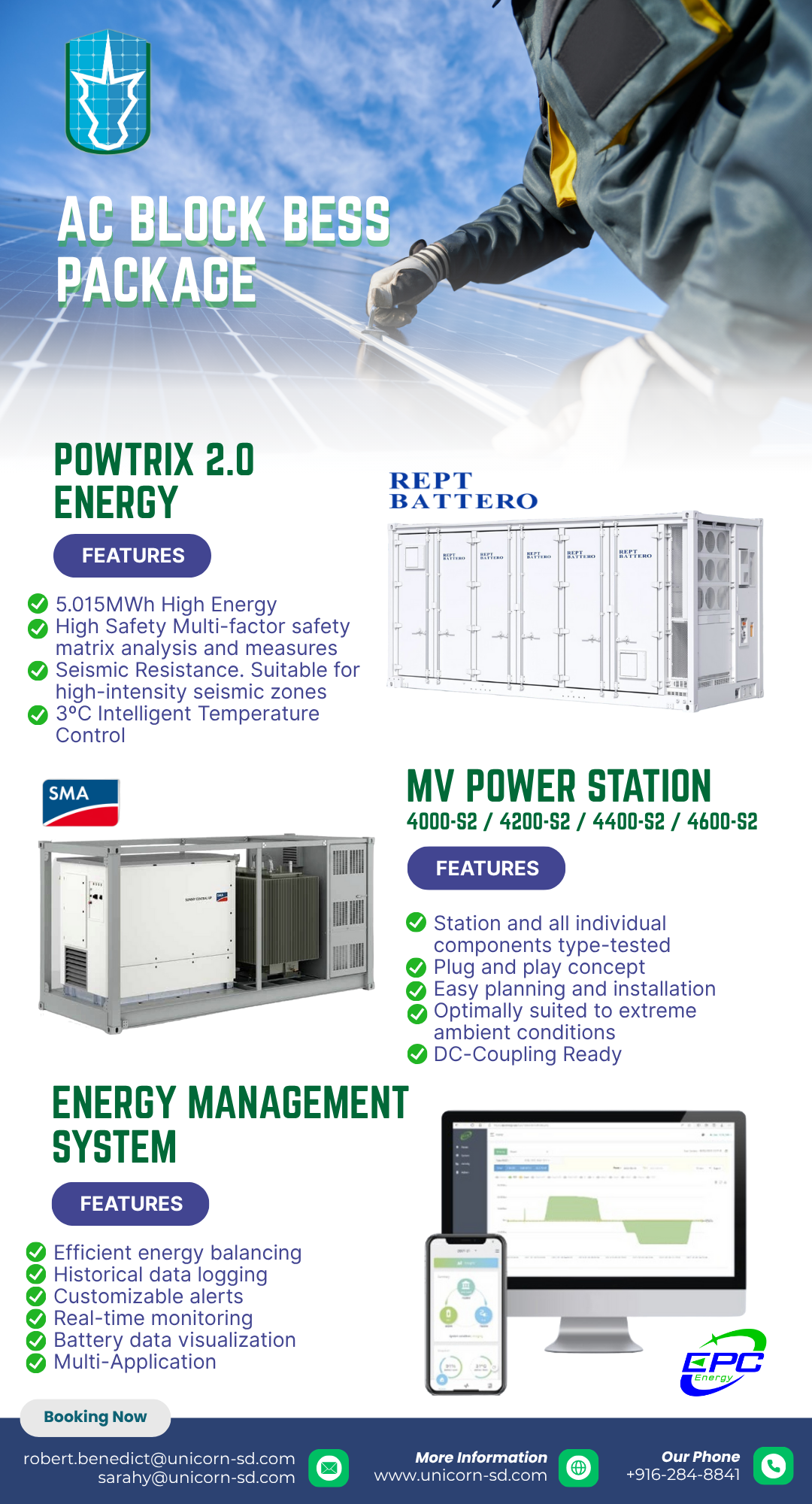
Batteries/BESS
Usable energy—not gross nameplate energy; power and duration at beginning and end of life; cycle and calendar degradation; operating temperature; round-trip efficiency; warranted throughput; augmentation plan; cell and integrator bankability; state-of-charge
limitations; auxiliary loads; EMS integration; thermal-runaway propagation results; gas detection, ventilation, fire protection, emergency response, and insurance acceptance. DOE identifies NFPA 70/855, UL 9540, and UL 9540A as central BESS safety references. DOE battery fire-safety guidance
Racking and trackers
Site-specific structural design; wind-tunnel basis; dynamic wind and torsional-galloping analysis; snow-shedding assumptions; hail-stow strategy; corrosion protection; pile and foundation risk; terrain tolerance; module compatibility; motor and controller redundancy;
stow power during grid outages; vegetation and drainage access; installation productivity; spare drives and controls.
Transformers
Actual load profile, overload and ambient-temperature capability; efficiency at expected loading; impedance and fault-duty coordination; harmonics; insulation system; cooling; sound; fire-protection requirements; tap changer type; dissolved-gas monitoring; seismic design; transport dimensions and weight; energization/inrush studies; testing requirements; repairability, strategic spares, and exceptionally long replacement lead times. Confirm compliance with applicable DOE efficiency requirements. DOE distribution-transformer standards
Switchboards and switchgear
Voltage class, continuous current, short-circuit and interrupting ratings; arc-resistant construction and arc-flash reduction; protection and coordination studies; breaker duty cycles; bus materials and plating; environmental enclosure rating; compartmentalization; remote racking and operation; metering accuracy; communications; spare breaker availability; expansion sections; factory acceptance testing; utility-approved relays and
settings.
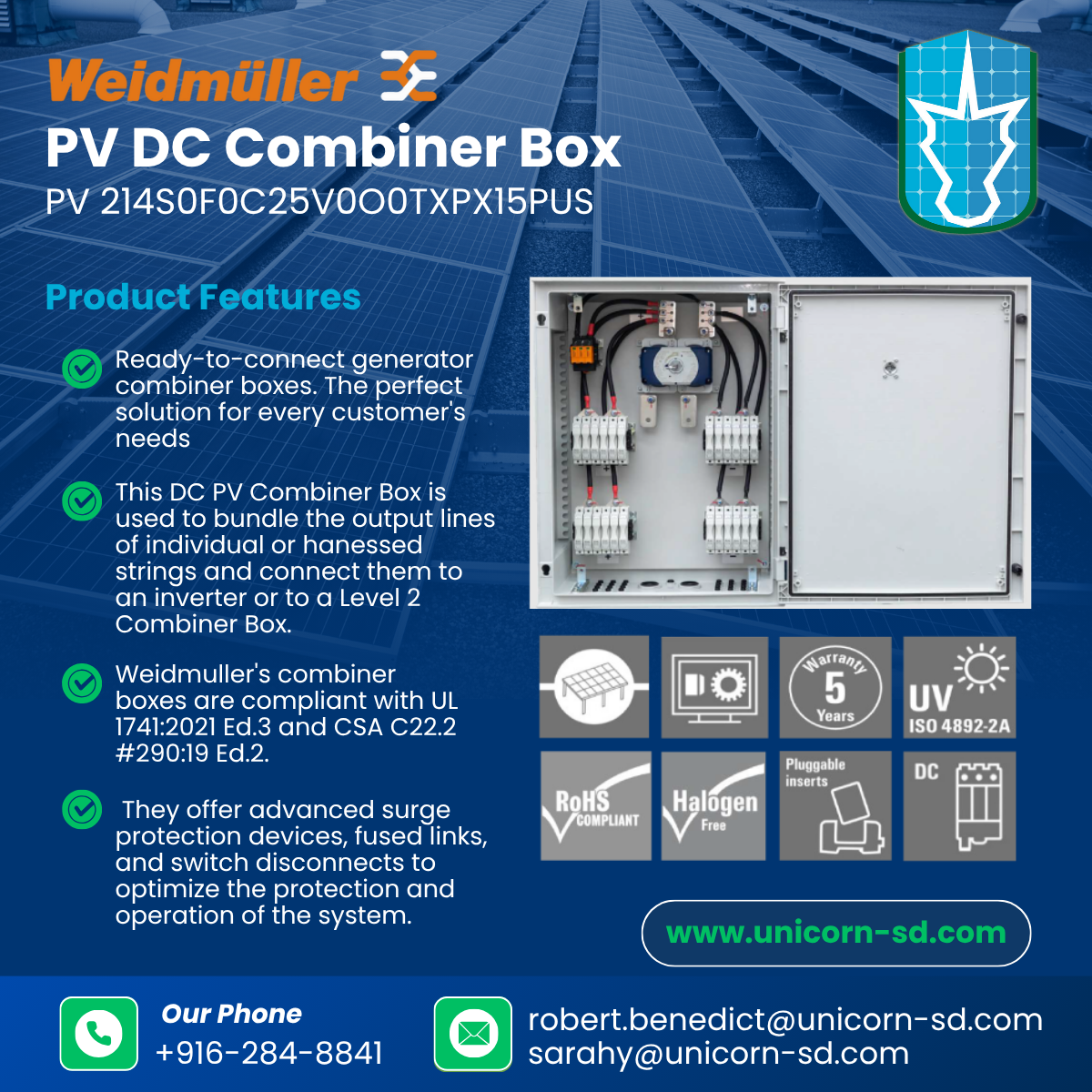
DC combiners
Maximum system voltage and current; conductor and fuse coordination; bi-directional current where storage is involved; disconnect ratings; enclosure and corrosion resistance;
temperature derating; string-level monitoring; surge protection; connector compatibility; accessible maintenance layout; arc-fault and ground-fault strategy; ingress and condensation control. Require validated thermal design rather than relying only on
enclosure nameplate ratings.
In part 2, we will discuss EV Charging Stations and Gas Turbines. Also, we will investigate integration risks, make contracts measurable, and score bids on risk-
adjusted value.
Unicorn Solar understands that the strongest buyers standardize this process into an
approved-vendor list, technical specification, interface matrix, bid-comparison model,
factory-audit protocol, and lifecycle risk register. That makes purchasing repeatable and
prevents a low initial price from becoming an expensive operating problem.
.…by Robert Benedict
Unicorn Solar is watching, studying, and working with companies innovating within the solar and decarbonization space. Please reach out to us, and we can work together to build a more efficient energy world.
If you have any questions or would like to work with a team of professionals who can help you achieve your success, please don't hesitate to contact Robert, Karlita, Sebastian, or Jayde for more information. Also, if you have supply-related questions, please contact Sarahy. For BESS, inverter, and transformer questions, please reach out to George or Sebastian.
|