THE CHRYSALIS 
Vermont Butterfly Atlas Newsletter


Hello from CHRYSALIS, an irregular email newsletter especially for volunteers for the Second Vermont Butterfly Atlas, where we report on the progress of the atlas and offer advice to participants.


Thanks for joining the atlas!


Kent McFarland, Conservation Biologist

Dana Williams, Community Science Coordinator

Summer 2025 Edition 

  • Late Summer Update 2025
  • Special August Skippers
  • Spotlight on Tiger Swallowtails
  • Take a Road Trip: A guide to block busting
  • Quick Tip: Photographing butterflies
  • Ask, Discuss, Learn: Test your butterfly knowledge

Late Summer Update for Year Three


We've passed the halfway point for the atlas, and volunteers like you have been hard at work this year with a total of 4,561 observations spanning 94 species in 1,205 checklists! Nearly 100 observers have contributed to the project through e-Butterfly including 27 new observers who have adopted blocks in 2025. If you've got a competitive streak, you can check your 2025 ranking compared to other Vermont butterfly watchers. Over on iNaturalist, there have been 4,710 observations of 90 species from 665 observers.


Where are the butterflies?

The State of the Butterflies in the United States report released earlier this year reports a terrifying 33% decline in butterfly populations in the northeastern U.S. over the past 20 years. And this year, there has been some concern about a drop in butterfly numbers noted by many observers. Why are the butterflies apparently missing this year? We don't know for sure, but likely it's the weather. A very rainy spring followed by a very hot summer has left butterflies without ideal foraging and egg laying conditions and a weaker population showing than usual. But there's always exceptions, and this year there is an incredible flight of Midsummer Tiger Swallowtails in many regions.


Zeros are data too!

Don't forget that we want to know where and why you find no butterflies too! To submit a zero checklist, add a checklist to e-Butterfly, select Butterfly in the species box and add a 0 to the count box. Answer yes to "I am submitting a complete checklist..." and submit.


Submit your hours for our state wildlife grant

Your efforts with the Second Vermont Butterfly Atlas count as an in-kind match to receive federal funding! Help unlock conservation dollars for Vermont by logging into the online portal and entering your survey hours and mileage.

How?

  • Visit your e-Butterfly.org account and collect all the dates and hours you were surveying
  • Add your best estimate of time spent traveling to a site, entering data, or even helping to identify other user's observations.
  • Sign in to the reporting portal and add your information by date.
  • You'll have to sign off on your hours and then we'll approve them.


Need more help? Find the step-by-step instructions here!


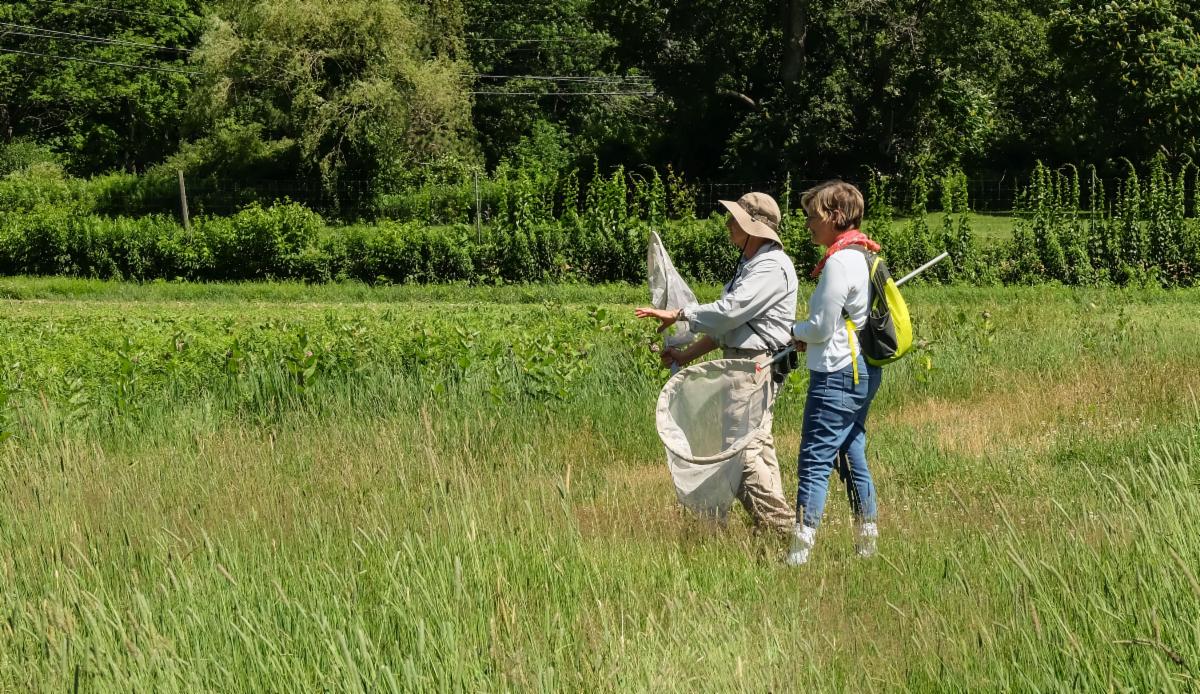
Atlas Trainings and Field Trips Raise Excitement From Brattleboro to Burke, the VBA staff has been out training and encouraging new and returning butterfly volunteers. There have been six trainings across the state this summer, targeting places where we are in need of priority block coverage, like the Northeast Kingdom.


It is never too late to join the fun! On Saturday, August 9, join us at VINS for walk through the meadow and pollinator gardens (register).

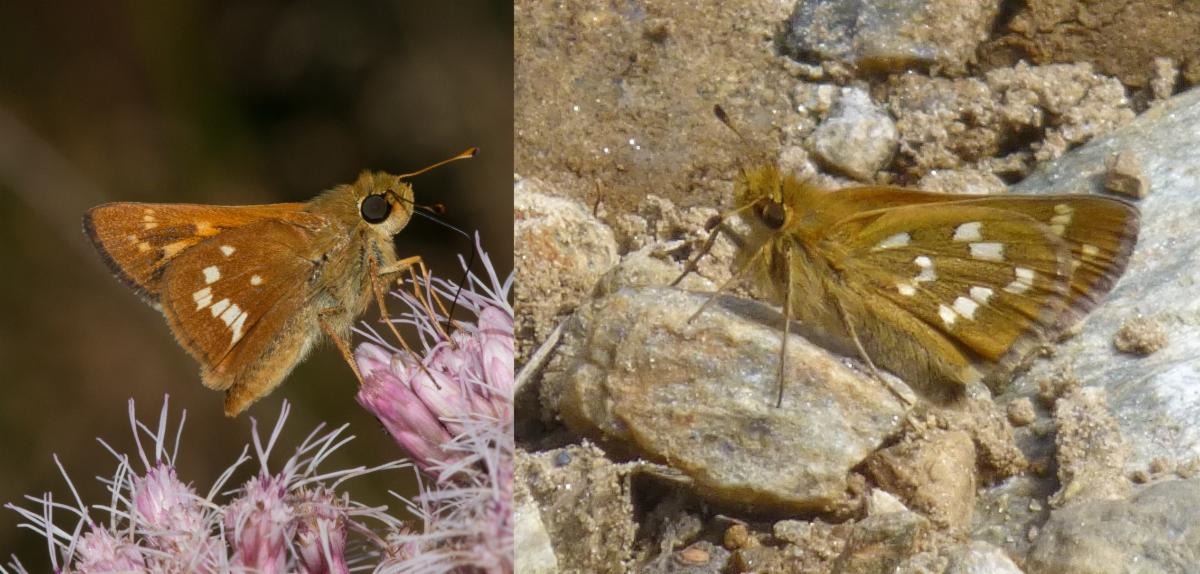
Left: Leonard's Skipper in Morristown photographed by Joshua Lincoln. Right: Laurentian Skipper on Killington Mountain photographed by tapaculo99.

Special August Skippers


The dog day's of summer signal the flight of two amazing skippers: Leonard's Skipper and Laurentian Skipper (aka Common Branded Skipper). Your mission is to find and report them to the atlas!


These skippers are closely related (both in the genus Hesperia) and may be a bit difficult to distinguish from each other at first glance. Leonard's Skipper has a more reddish-brown underside with distinct white spots on the hindwing, while the Laurentian Skipper tends to have a lighter, orange coloration on the underside. Leonard's has a single white inner spot on the underside of the hindwing, while Laurentian has irregularly shaped marks.


Common Branded Skipper is a highly variable species with several different subspecies across its range. The Vermont subspecies, the Laurentian Skipper (Hesperia colorado laurentina), is only known from the Northeast region and mountains in Vermont where it can be found in natural and disturbed open spaces in uplands. To await receptive females, males perch near a hostplant or hilltop, usually with their wings closed. It is best to scan the tops of plants with your binoculars to first spot this species—they are fast fliers and incredibly difficult to approach, often disappearing completely after being roused from their perch.


Leonard's Skipper has been found throughout much of Vermont except the far Northeast. It prefers dry fields, barrens, and brushy areas, especially if near nectar sources in nearby wet area. In the northeastern U.S. it has declined by nearly 80% over the last two decades.


There are plenty of other interesting skippers to discover besides these two breeding species. Late summer and fall is a time for vagrants to show up just about anywhere, like Fiery Skipper. So keep your eyes open and your camera ready!

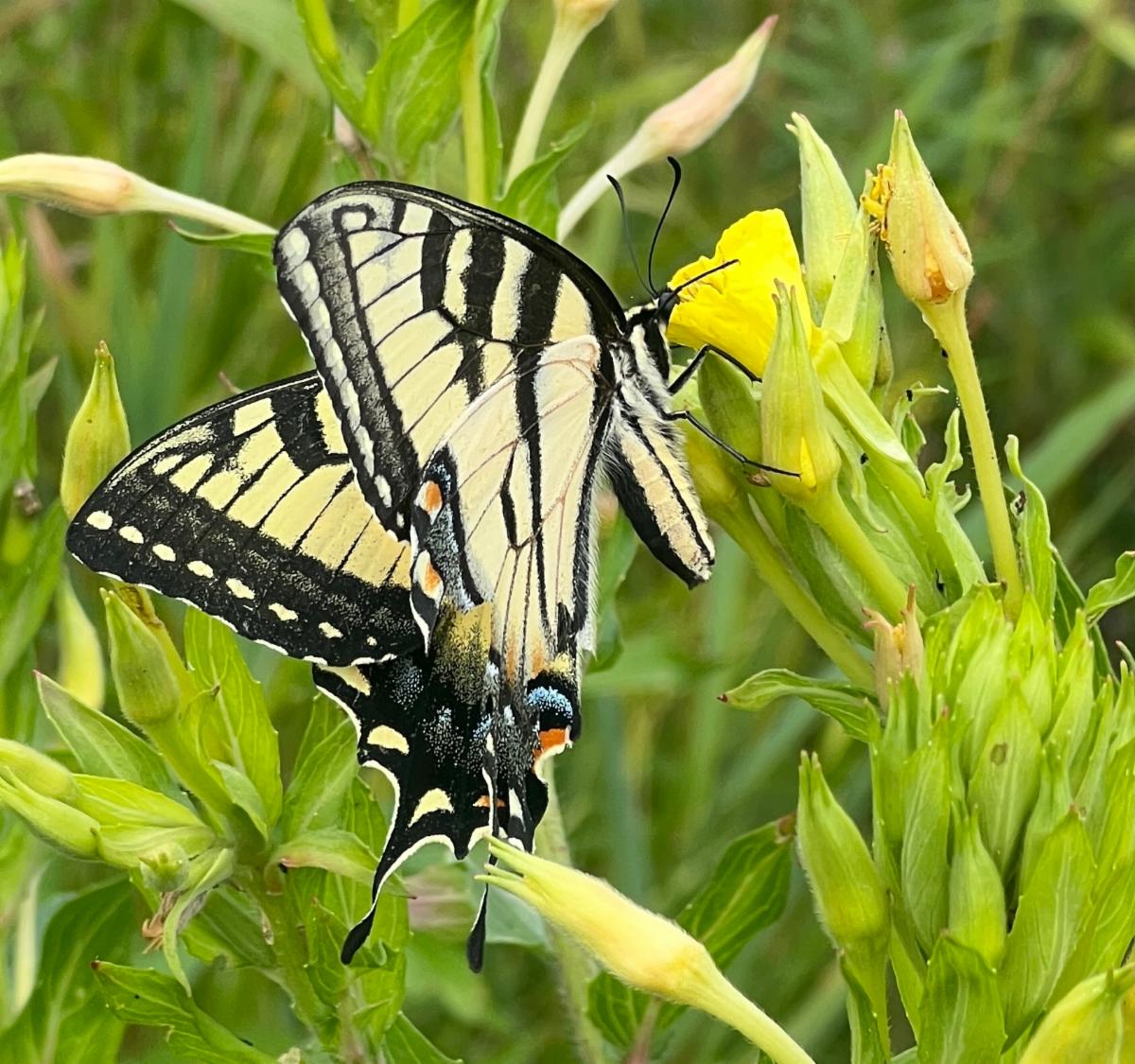
Midsummer Tiger Swallowtail photographed by Kent McFarland in Woodstock, Vermont.

Spotlight on Tigers: Identifying Our Latest Species Conundrum


Vermont lies at the axis of overlap in the species ranges for three Tiger Swallowtails: the Eastern Tiger Swallowtail (rare, vagrant), the Canadian Tiger Swallowtail (common in spring), and the newly described Midsummer Tiger Swallowtail (common in July).


Since the first atlas over 20 years ago, we've suspected that we had an undescribed tiger swallowtail gliding across Vermont. This year a research team put all the information together formally describing and naming it. In their study, published in the journal ZooKeys, they found strong evidence that the putative hybrid butterflies were actually a unique species.


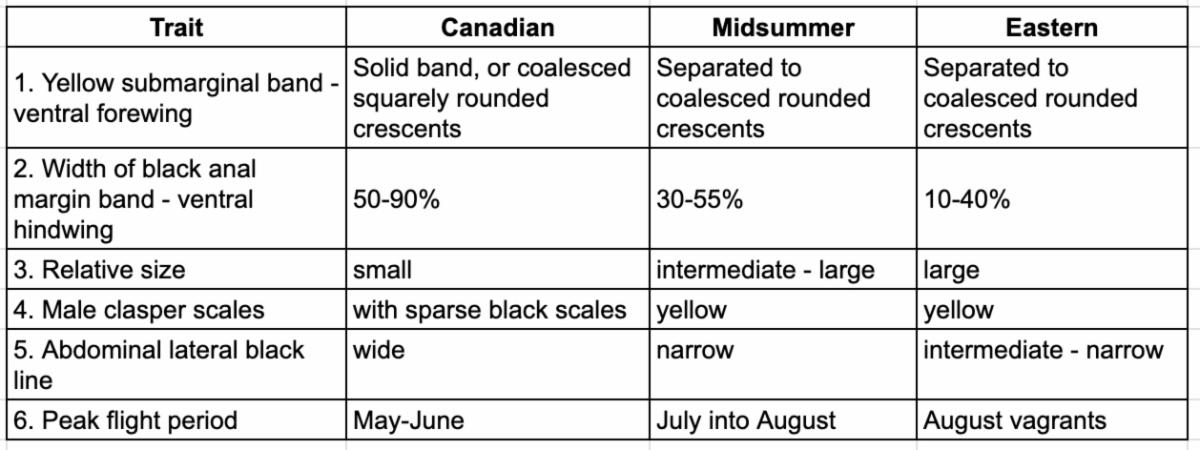
Despite diverging during the Pleistocene some 600,000 years ago, this complex has maintained very similar coloration and markings making them difficult to tell apart in the field. To tell the difference, make sure to focus on their underside (wings closed) and capture a photograph. Here's a table below that summarizes the differences between the three tiger swallowtail species.

Luckily, besides field marks, there are a few other life history features to help you separate these species. The Canadian Tiger Swallowtail has an earlier flight, taking to wing in early May. The Eastern Swallowtail also has two generations—the end of May/early June and again in August. Fortunately, we rarely (never?) find them in Vermont during the first flight. We only see them rarely as vagrants in August. As the Canadian Tiger Swallowtails disappear at the end of June, in July fresh appearing Midsummer Tiger Swallowtails begin their flight, lasting most of the month and into early August.


Read up more about these and other ID features and the Tiger Swallowtail debate from Ontario Insects and Bryan Pfeiffer.

Take a Road Trip: A Guide to Block Busting Butterflies


You've adopted a block, butterflied your favorite hiking trail a million times and maybe have almost reached your goal of 40 species. But you're ready for a break from the same old butterflies. What to do next? Try out a block busting road trip!


Plan a visit to a new hiking trail, park, brewery or visit some old friends and use the VBA block mapper tool to find unadopted priority blocks that fall along your route. Use the Vermont parcel viewer, trail finder or google maps to find a public space in that block to butterfly, then go!


Where are we looking for the most help?


Quick Tips: Photographing Butterflies


What we love about quick flying, darting beautiful butterflies, also proves to be the biggest bane: trying to get a picture.

  • Take a photo before trying to get closer (even if it's hard to see the butterfly!). Even really bad photographs can work for documenting and verifying butterfly identifications.
  • Move low and slow - butterflies are sensitive to changes in light. Try to approach from behind them.
  • Try to get photos of both the underside and upperside of the wings.
  • For manual control cameras, use the smallest aperture and the fastest shutter speed. For automatic cameras, make sure you have macro (often a little flower symbol) turned on.


Get more tips from Bryan Pfeiffer and Maxim Larrivée.

Ask, Discuss, Learn: Test Your Butterfly Knowledge


Refresh your butterfly knowledge or review how to use eButterfly with our recorded webinars. Get some hands on experience in the field with VCE's butterfly team at an upcoming workshop. Visit the e-Butterfly VBA forums to ask questions, share fun butterfly stories and test your butterfly knowledge with the weekly quiz.


Test out your butterfly ID skills:

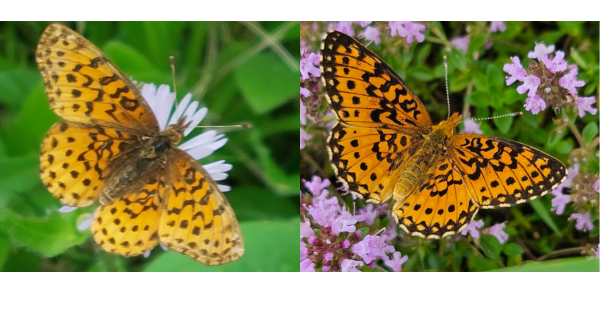
Which of the following butterflies is the less common Meadow Fritillary?

Click here to answer!