|
In this edition:
- Major bipartisan housing package nears finish line in Congress
- Michigan state LIHTC proposal gains traction
- Federal funding process underway
- State policy updates
- Cinnaire advocacy in action
| | 21st Century ROAD to Housing Act Passes Senate with House Passage Likely | |
Last night, the U.S. Senate passed an updated version of the 21st Century ROAD to Housing Act with a large bipartisan vote of 85-5. The House is expected to take up and pass the legislation quickly and send it to the President to be signed into law this week.
This House and Senate last week reached an agreement for the first time following a long back and forth between the two chambers. Until then, the House and Senate each had competing versions of the bill, and it was not clear that an agreement would be reached. The ultimate product represents the most significant housing legislation to pass Congress in many years.
For affordable housing and community development, the legislation contains several provisions that would be positive:
-
Lifts the Public Welfare Investment (PWI) cap from 15 to 20 percent, which the Affordable Housing Tax Credit Coalition (AHTCC) found would meaningfully increase investment in affordable housing.
-
Reauthorizes the HOME program on a bipartisan basis.
- Streamlines environmental reviews for small and infill projects.
- Includes Rural Housing Service (RHS) reform, including decoupling of rental assistance for maturing USDA mortgages.
- Lifts the Rental Assistance Demonstration (RAD) cap with a new limit of 100,000 units.
- Directs HUD to evaluate Build America, Buy America (BABA) requirements for projects funded by the HOME program.
The final bill also removes controversial language in a previous version of the Senate's institutional investor ban that would have broadly limited build-to-rent housing and negatively affected Housing Credit investments.
| | Michigan Legislature Advances State LIHTC | | |
As our readers know, the need for safe, decent, and affordable housing has reached a crisis throughout the communities we serve. In Michigan, the National Low-Income Housing Coalition estimates Michigan has a shortage of 195,000 rental homes that are affordable and available for low-income households. Unlike Michigan’s neighboring states and over half the states in the nation, Michigan does not have a state tax incentive to drive investment in affordable housing production.
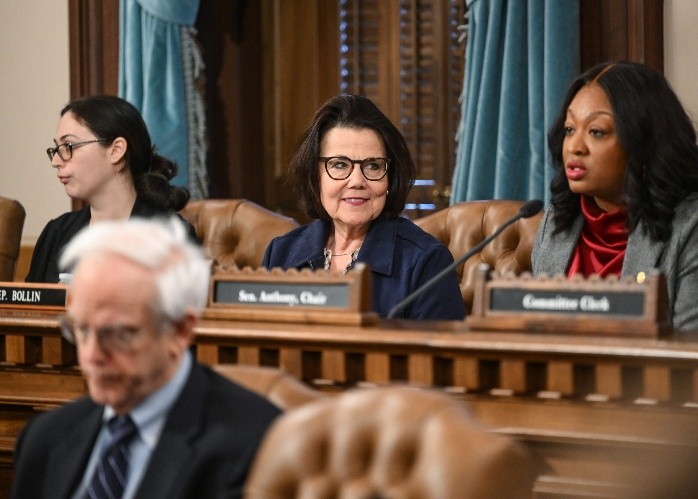
Since last fall, Cinnaire and our partners in the Michigan Housing Council have been advocating for the creation of a state companion tax credit to pair with the 4% LIHTC program. The proposal has the potential to create an additional 2,500 affordable homes each year and better utilize federal bond volume. In April, a group of bipartisan legislators introduced a package of bills to create a $42 million program with a 6-year credit period. Since then, Senator Jeff Irwin (D) introduced separate legislation in the Senate. Both sets of bills have advanced out of their respective committees. The Senate passed the legislation last week with bipartisan support and the House version awaits further action.
The legislation is supported by Governor Whitmer, who voiced her support for the proposal during her final State of the State address earlier this year. She has continued to highlight the need for a state LIHTC program at the Building Michigan Communities Conference and her keynote during the Mackinac Policy Conference. Officials from MSHDA have also been engaged in the process and have voiced their support for the program during committee hearings. The next steps for the bills will be reconciling the differences between the House and Senate legislation and additional votes.
| | Federal Appropriations Process Underway | | |
While Congressional Republicans have been focused on passing their $70 billion “reconciliation 2.0” bill that was recently signed into law to fund ICE and CBP, work has also begun on Fiscal Year 27 appropriations. House Republicans have been passing their own partisan versions of FY27 spending bills. The Senate Appropriations Committee has been stymied by disagreements over topline spending levels between the two parties, but they may begin holding Committee markups soon.
We may see a stopgap spending bill when federal funding expires on September 30, pushing further decisions past the midterms this fall. However, the work being done now helps lay the groundwork for those funding decisions down the line. In general, House Republicans’ appropriations bills tend to be lower than the Senate’s, which need bipartisan support to pass.
| |
HUD Funding
The House’s Transportation-HUD (THUD) bill, which passed out of the Appropriations Committee, proposed a cut to HUD funding but rejected more significant cuts proposed by the Trump Administration. Notably, Project Based Rental Assistance (PBRA) would see a modest increase. Although the House would cut HOME funding from $1.25 billion to $500 million, this represents an increase from the House’s proposed level for HOME in its funding bill last year, which would have zeroed out HOME. For more information on the House’s proposed funding levels, see NCSHA’s summary here.
| |
USDA Funding
The full House of Representatives passed a USDA funding bill earlier this month. Like the THUD bill, the House’s funding levels are lower than FY26 but higher than the amounts proposed by the Trump Administration. For more details on what’s included, check out the Housing Assistance Council’s summary here.
| |
CDFI Fund
Finally, the House Appropriations Committee also advanced its Financial Services and General Government (FSGG) funding bill, which provides appropriations for the U.S. Treasury, including the CDFI Fund. Like last year, House Republicans proposed $276.6 million for the CDFI Fund, which is lower than last year’s $324 million enacted level. Notably, however, this level is $157.1 million higher than the amount proposed by the President’s budget request.
The House also included language aimed at providing a firm timeline for the Administration to release funding provided by Congress. It remains to be seen whether the Senate will include similar language since the Senate has not released its funding bill yet. Last year, the Senate proposed level funding for the CDFI Fund, which was ultimately enacted.
For more information on what’s in the bill and next steps, see OFN’s summary here.
| |
Advocacy for the Release of CDFI Fund Resources
Advocacy continues to encourage the Trump Administration to release stalled funding from the CDFI Fund. OMB Director Russell Vought approved the apportionment of $289 million in FY25 funding for the CDFI Fund, although that funding has not been obligated. There are also other funding rounds that are delayed, including the Capital Magnet Fund. The Capital Magnet Fund Coalition and the National Association of Affordable Housing Lenders (NAAHL) recently sent a letter to the Administration calling for the release of $500 million in CMF funding to help address the shortage of affordable housing.
| | | | |
Reforms to Build America, Buy American Requirements Gaining Traction
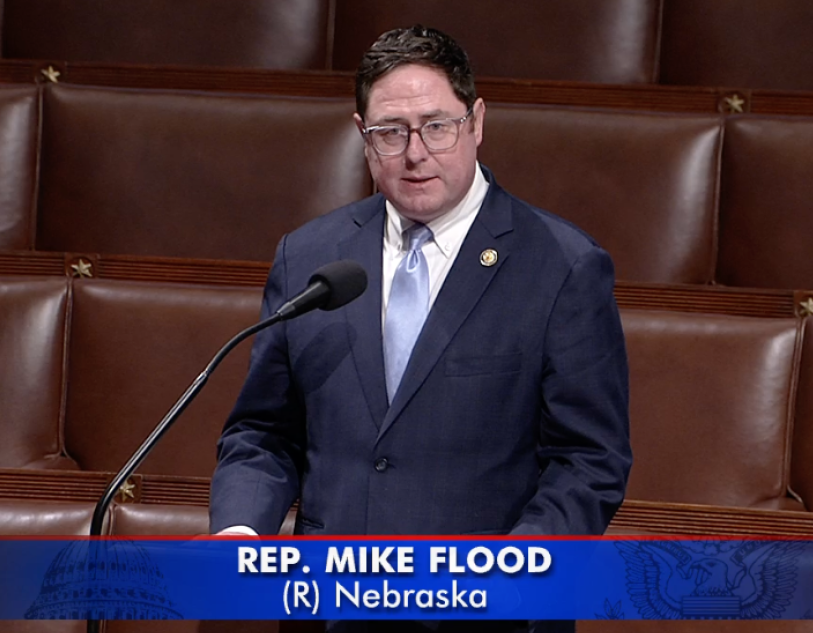
As the impact of Build America, Buy America (BABA) requirements on affordable housing grows, advocates have been able to gain traction in Congress for relief. In addition to the provision in the 21st Century Housing bill noted above requiring a review of BABA for the HOME program, the THUD appropriations bill included similar language and an exemption for several HUD programs. In addition, last week, U.S. Congressman Mike Flood (R-NE), Chairman of the Housing and Insurance Subcommittee, and U.S. Congresswoman Maggie Goodlander (D-NH) introduced H.R. 9311, the bipartisan “Build Housing Affordably Act.” The Build Housing Affordably Act would temporarily suspend BABA requirements for HUD affordable housing programs while HUD conducts a report. It would also require HUD to review BABA waiver applications within 90 days.
| | |
Michigan Budget Process
Appropriation legislation is starting to move in the legislature. While the legislature is trying to cut $1.3 billion to address federal policy changes and changes from the state road funding plan, they are still trying to invest state resources in housing and community development initiatives. The Senate LEO/MEDC Appropriation Bill would provide an additional $10 million to the Housing and Community Development Fund to total $60 million. It also proposes a $60 million business attraction, community revitalization and entrepreneurial ecosystem fund that would direct some funding to CDFIs. The House Appropriation Bill also includes funding for Small Business Support that would provide grant capital to CDFIs. The Budget process is ongoing and will likely wrap up later this summer.
In line with our advocacy with the Michigan and Detroit CDFI Coalitions, the Senate LEO & MEDC Appropriation Bill would provide $10 million to seed a Community Impact revolving loan fund for CDFIs. If included in the final budget, the Michigan Strategic Fund under MEDC would award a grant to establish the fund. The MI CDFI Coalition or Detroit CDFI Coalition would be eligible to apply to the state Request for Proposals (RFP). The intent is for one of the coalitions to own the fund and for the Kresge Foundation to manage it for the Coalition. The Coalition believes they could secure $30 million from banks and $10 million from foundations.
| |
Illinois Extends Housing Tax Credit and Prioritizes Missing Middle Funding
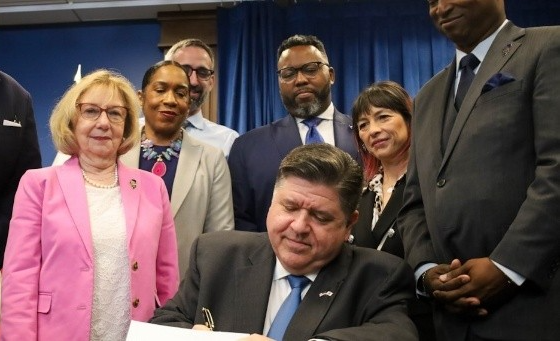
The Illinois Affordable Housing Tax Credit which provides .50 cent state income tax credit for every $1 donated to affordable housing projects was set to expire at the end of the year. In the final budget negotiations, lawmakers agreed to extend the tax credit for 10 years. The legislature also approved an increase to the amount of credits that can be claimed annually. In FY 2027, $41.8 million of tax credits are available. This will increase 10% annually resulting in an additional $164 million in tax credits over the 10 year extension.
The budget also includes $250 million for new missing middle and affordable housing programs at IHDA and DCEO including $100 million for a new Missing Middle Housing Infrastructure Grant Program at DCEO to connect developers to capital needed to construct new, affordable homes. $100 million will also be provided to IHDA to support missing middle and affordable housing programs. An additional $50 million will be directed to IHDA for down payment assistance.
| |
Wisconsin Housing and Community Development Legislation
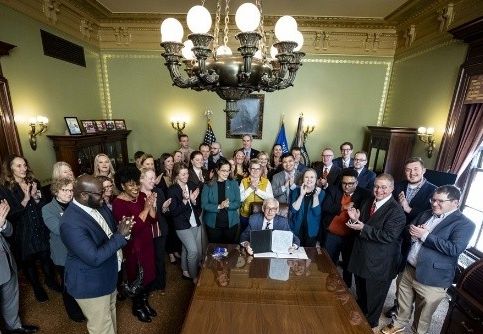
Governor Evers has signed a few bills into law to improve housing and community development programs. The first would direct WHEDA to allocate more of its state housing tax credit to rural areas, if possible. Other legislation to expand the size of the state’s tax credit did not make it to the Governor’s desk. The Governor also approved a bill to make changes to three housing loan programs and cap interest rates at 1% maximum. This may make the infrastructure access revolving loan fund more feasible for affordable housing developments. The Governor signed a new Community Development Tax Credit for insurers into law. The intent of the program is to supplement the federal New Markets Tax Credit program by allowing insurers to claim a tax credit for investments into community development entities.
| | Cinnaire Advocacy in Action | | | | |
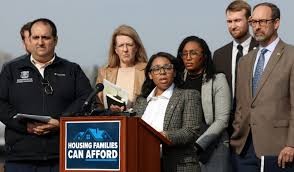
Michigan - Mike Witt and J.T. Mackey have met with lawmakers in Lansing to encourage their support of the Michigan Housing Opportunity Tax Credit.
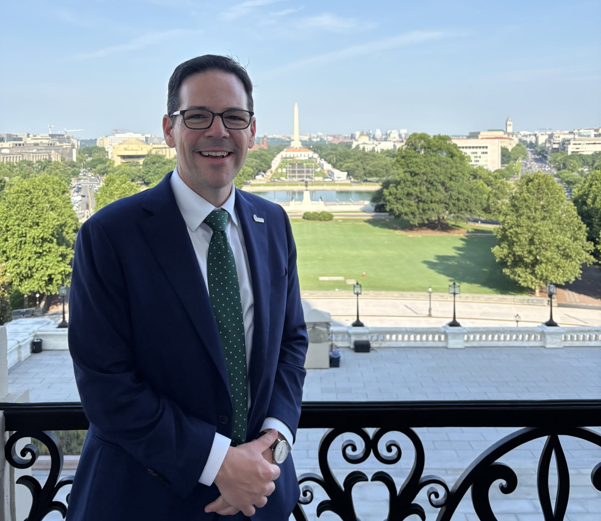
Jennifer Everhart, Yulonda Byrd, Bob Beck and J.T. Mackey (photo- top left) recently attended the Mackinac Policy Conference to connect with policymakers and learn more about policy solutions and proposals in the state.
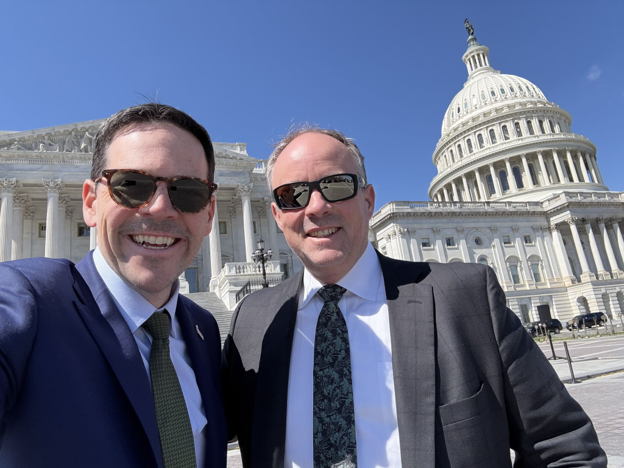
Illinois - Stephanie Socall and J.T. Mackey (photo- bottom left) visited Springfield to advocate for a state CDFI grant program to be funded by the state. Our partners in the Illinois CDFI Network have spent this spring educating lawmakers about the work of CDFIs and the importance of public investment to leverage private sources of capital.
| | |
Affordable Housing Tax Credit Coalition (AHTCC) and Housing Advisory Group (HAG) Symposium
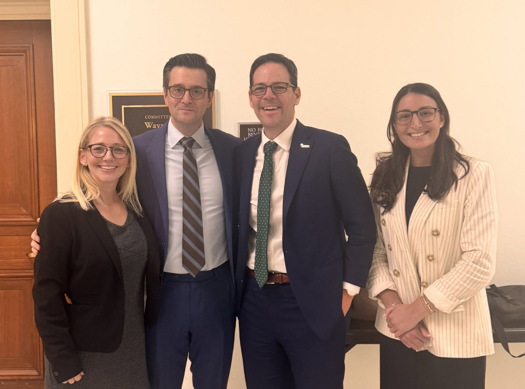
Chris Neary and Donsia Strong Hill participated in the annual AHTCC symposium in Washington that brings together advocates for the Housing Credit in Washington. Chris, who serves on the AHTCC Board of Directors, joined Emily Levine of 2Life Communities, Jacob Fisher of Ulysses Development, and Selia Koss of AHTCC (photo - top right) on Capitol Hill to advocate for the Housing Credit and bipartisan policies that will help maximize the impact of the program's recent historic expansion, including relevant items in the 21st Century ROAD to Housing Act.
The symposium provides an important opportunity to bring the perspective of housing practitioners directly to federal policymakers and advance solutions that expand housing opportunities nationwide.
| | | |
Housing Partnership Network
Earlier this quarter, Cinnaire's Chris Neary and Chris Jillings attended the Housing Partnership Network's (HPN) Policy Meeting in Washington, DC. They joined with HPN members from across the country advocating for policies that help our communities address the housing crisis. We are grateful to the members of the Wisconsin Congressional delegation who met with our team to learn about Cinnaire's work in Wisconsin, including rural communities and urban neighborhoods that desperately need housing solutions.
| | Want to Stay Up-To-Date? Subscribe Here | | |
Are you interested in regularly receiving policy updates? Click here to subscribe to stay up-to-date on the latest policy discussions in Washington and state legislature in Cinnaire's footprint.
Share Policy Pulse on social media
| | | | |