View as Webpage


SciStarter Newsletter − February 2026

Facebook  Instagram  X  YouTube

This Valentine’s Day, stargazing for science is a date that truly shines—advancing research about astronomy while protecting migrating birds and the dark skies they need to find their way home. Many of the featured projects below can be done inside as well, using only your computer or phone: no special gear or expertise required.


Below are six celestial projects you’re going to LOVE, on Valentine’s Day and beyond. 💘✨


XOXO,

The SciStarter Team

X Share
LinkedIn Share

TOMORROW! February 11 at 6:30 PM ET | Cosmic Pioneers: Discovering Galaxies Together


Tune into this Do NASA Science LIVE! event virtually on Zoom, or join in-person at a local livestream gathering.


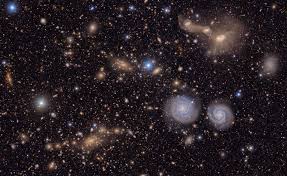
We’ll meet the scientist behind Dark Energy Explorers, a project designed to look deep into space for galaxies and black holes. You'll learn how to help (anytime, from anywhere) make the largest map of the universe! No prior experience is needed. Just your curiosity.


February 11 at 6:30 PM ET on Zoom


👉 Save your spot!

Globe at Night

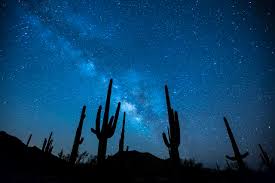
This Valentine’s Day, love the stars—and the birds! Learn how to count stars with Globe at Night’s "Love Your Stars" 20th-anniversary campaign to help track light pollution. A little birds-and-the-bees energy (ok, just birds): billions migrate at night, and bright lights can send them off course. Use free apps to see who’s flying overhead, record bird sounds, and help them reach their destination.


Location: Global

Space Cloud Watch

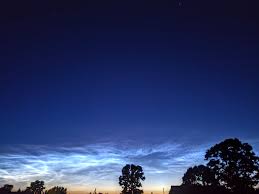
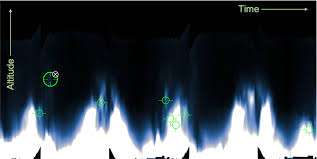
Observe and report noctilucent clouds—rare, glowing clouds that form at the edge of space during dawn and dusk. The project uses both sightings and non-sightings from around the world to map these clouds and better understand links between the upper atmosphere, satellite data, and climate change.


Location: Global

Lunar Melt

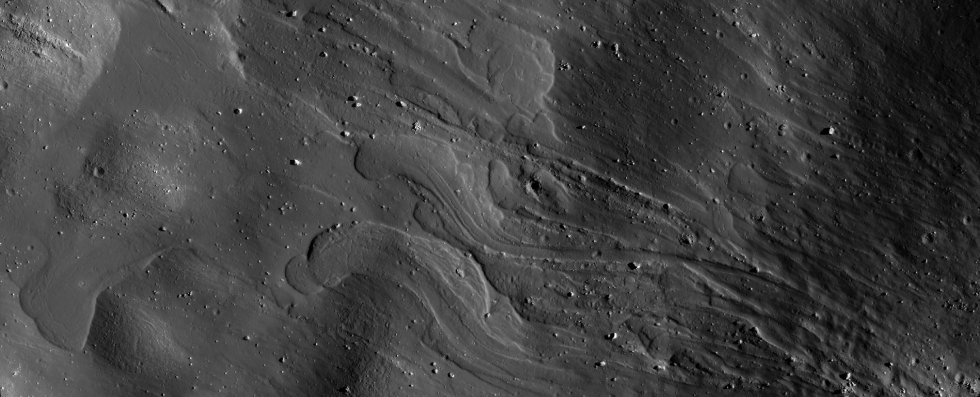
Use your computer or smartphone to view high-resolution Moon images from NASA and use simple online tools to click on and mark craters and boulders they see. After a short tutorial on the World Mappers Platform, participants map features directly onto the images, helping scientists study impact melts and the Moon’s surface history—no prior experience required.


Location: Global

The Daily Minor Planet

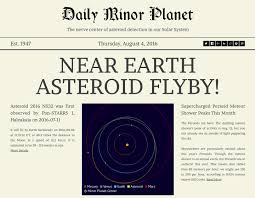
Review short sequences of telescope images and look for tiny points of light that move between frames, indicating a possible asteroid. Your mission (if you choose to accept it) is to decide whether each flagged detection is a real moving object or just an image artifact, helping scientists confirm new minor planets.


Location: Global

Cloudspotting on Mars

Examine real Mars Reconnaissance Orbiter images and look for thin, arch-shaped clouds high in Mars’s atmosphere. By marking where these clouds appear, you help scientists understand Martian weather, climate, and how exotic ice clouds form on the Red Planet.


Location: Global

Rubin Comet Catchers

Review survey images from the Rubin Observatory and decide whether a comet or asteroid shows a visible tail. This helps scientists discover new comets and active asteroids hiding in Rubin’s massive sky survey.


Location: Global

Prepare for Citizen Science Month (April!)


Join an Acts of Science: Connected event on Zoom online, or join in-person at a local livestream gathering.


Together, we’ll:

  • Travel to Mars on April 2
  • Preserve American history on April 10
  • Play games on April 16
  • Track animals on April 22
  • And even catch comets on April 29


Registration is free but required.


Save your spot!


Libraries, Museums, Schools and Community Organizations: time is running out to apply for a grant to host an Acts of Science: Connected event to livestream into your in-person gathering. Apply today!

SciStarter Classic: Valentine's Day!


We've always loved Valentine's Day here at SciStarter. Enjoy some of our favorite throwbacks: a webinar in 2023 about Valentine's Day stargazing, a 2024 podcast featuring the Romance of Citizen Science, and a blog post with some favorite Valentine's projects.

February is packed with events and programs!

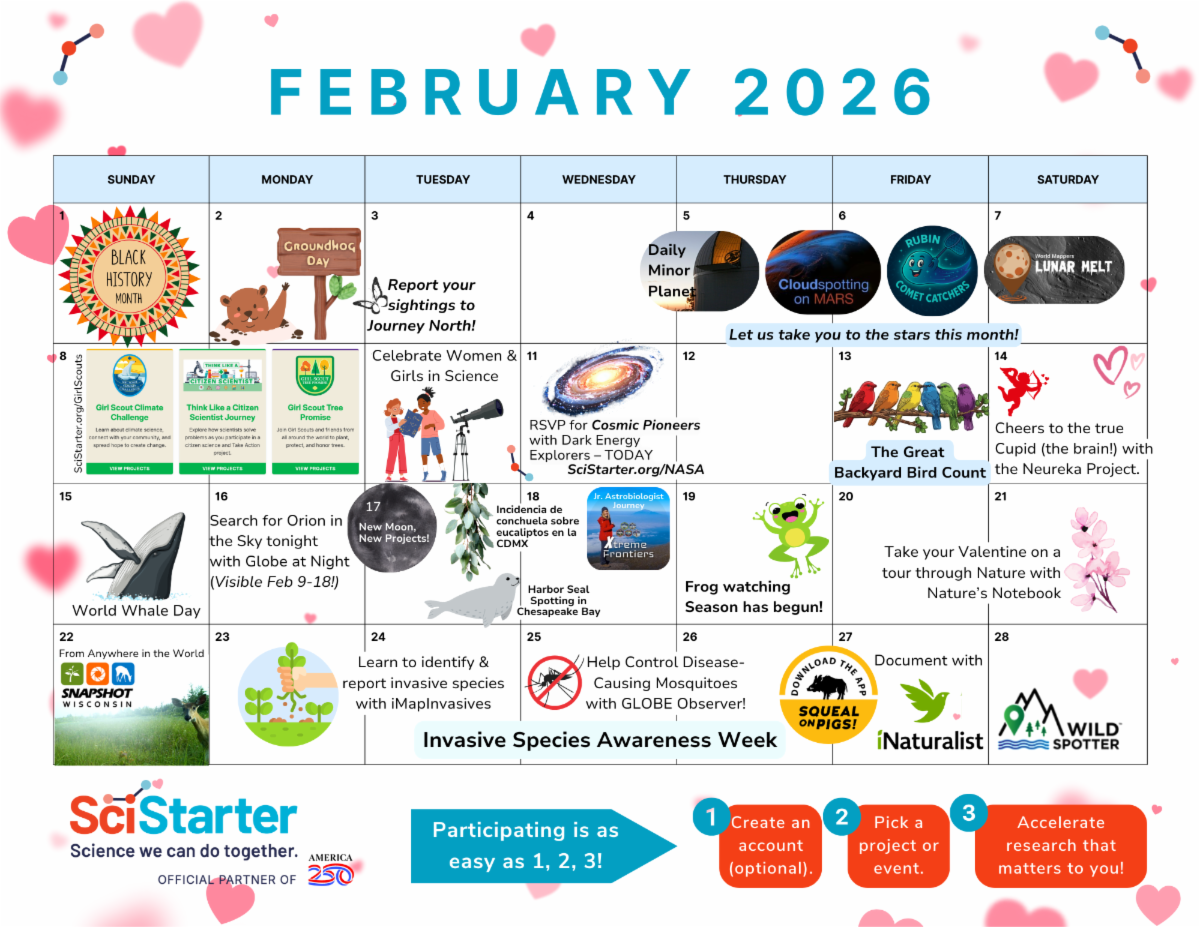
Click here to explore and print the calendar.

New projects & events featured on SciStarter