September 22, 2026


Engineering Resilience for Flooding and Runoff

Preserving the Old to Build the New

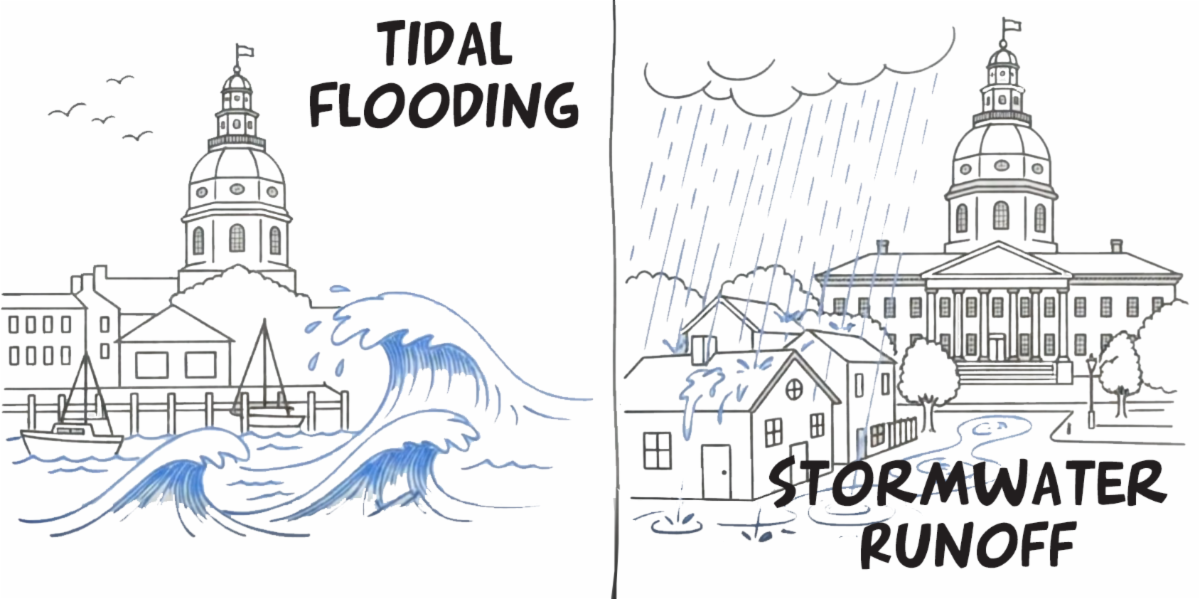
For centuries, City Dock has stood as the maritime gateway to Annapolis. As the City’s long-time working harbor, its location at the water’s edge leaves the land adjacent to Ego Alley and Spa Creek vulnerable to two types of flooding: tidal inundation as water pushes up through the Chesapeake Bay, and stormwater runoff that enters the estuary from stormwater that flows over streets and off buildings. 


Protecting City Dock and the surrounding community requires a solution that addresses both types of flooding. Upgrading the site while maintaining a good portion of the existing infrastructure has made the engineering challenges even greater. Instead of starting from scratch, the City Dock flood mitigation infrastructure is engineered to work in harmony with what already exists at the site, including the existing bulkhead system and some of the existing stormwater systems. 


Let’s look at the two different solutions separately: 


Tidal Flooding

During storms and extreme high tides, water pushes up through the Chesapeake Bay and into low-lying areas (like the top of Ego Alley) and stormwater outfalls (including the storm drains on Dock Street) creating flood conditions. 


To combat tidal flooding, the defenses have to be built higher. Because City Dock isn’t a vacant lot, we couldn’t do what engineers might do on a cleared site (install utilities and foundations below the elevation of the old parking lot). But even though deep excavation was out of the question, there was still a way to engineer a solution where the existing systems remain functional. 

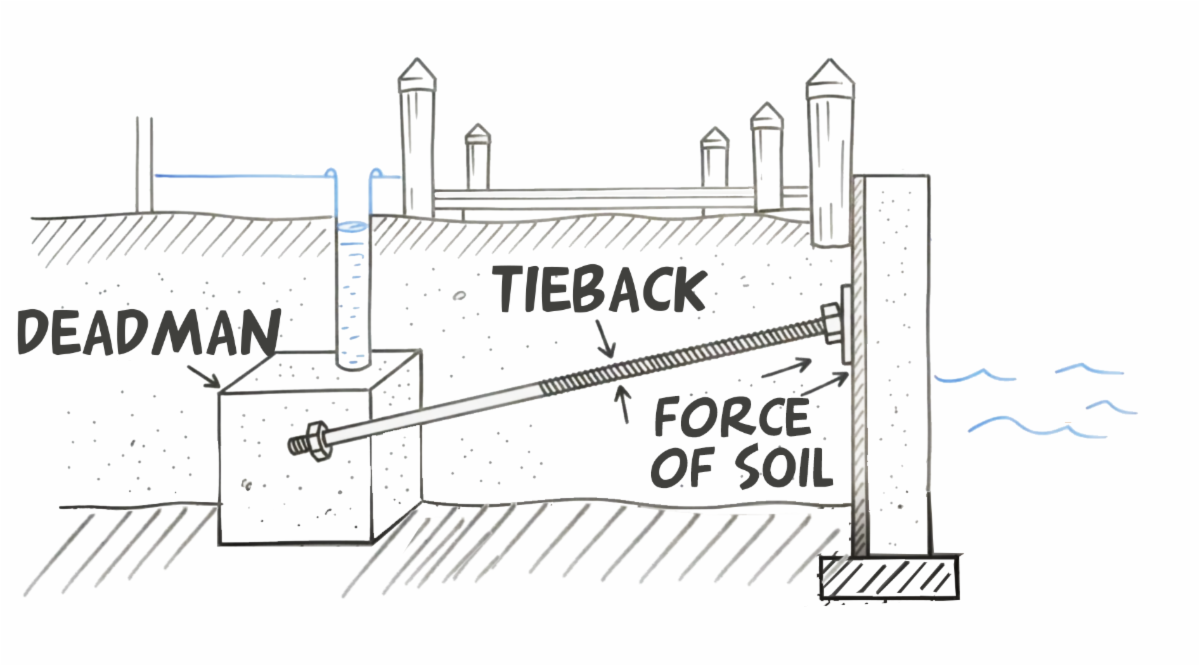
If you’ve seen videos of floodwaters taking out homes on the banks of a flood-ravaged river, you know that the force of water is tremendous. When the previous City Dock bulkhead along the wooden boardwalk was installed, engineers used a traditional anchored system (which are massive concrete blocks called “deadmen,” buried inland) that are connected to the wall via heavy steel tiebacks. Rather than removing or bypassing these anchors, the new terraced park design preserves the deadmen and tiebacks entirely, maintaining the structural integrity of the existing bulkhead. 


Since the floodwalls have been built higher than the old bulkhead, engineers designed cantilevered concrete floodwalls that sit behind the boardwalk and on top of the old deadman system. To resist the lateral forces, each flood wall has a wide base requiring substantial excavation. And at City Dock, all of that excavation required dewatering since the water level is very close to the surface. To make a usable space for residents and visitors, designers called for the area behind the flood walls to be turned into a beautiful public park.


This bit of engineering and landscape architecture turns functional flood-prevention infrastructure into usable green space for the public to enjoy. 

Stormwater Runoff

With the engineering solution for tidal flooding resolved, the next focus became managing stormwater runoff. Engineers did not want to replace every downtown pipe and stormwater catchment because installing an entirely new stormwater system was expensive and impractical. Instead, the design integrates directly with existing street-level catchments. 


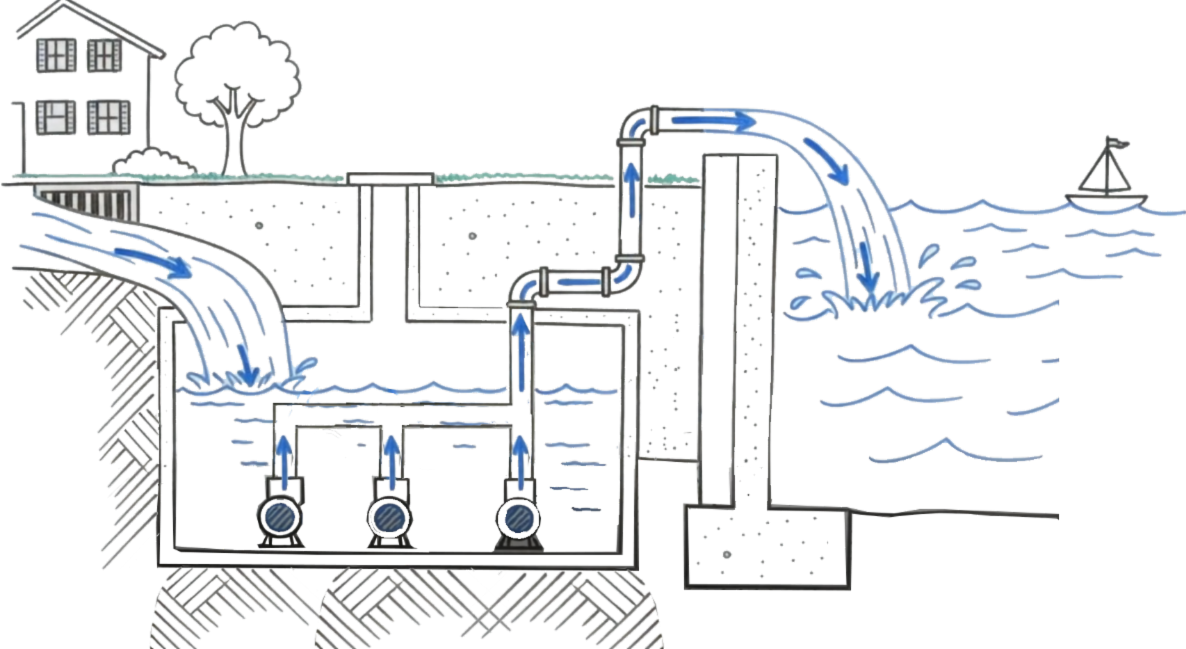
During a rainstorm, runoff flows down streets and off rooftops and gutters into stormwater systems. These systems used to exacerbate high-tide flooding events (tidal flooding), but because the catchments were a conduit to bring water from Ego Alley and Spa Creek up into the street, the stormwater outfalls connecting to the lowest catchments were capped. Those caps will remain in place, and all other inlets up to the flood protection height of 8 feet above sea level will have check valves installed. The check valves allow storm water to flow out, but not allow reverse flow from high tides.

In the new system, as rainwater flows via gravity through the historic outfall pipes under the road, the runoff will be intercepted and redirected into a massive underground wet well. Inside this wet well, there will be multiple heavy-duty, high-capacity pumps that operate on a built-in redundancy model: if one pump fails, other pumps remain fully operational to handle the volume. The pumps actively force stormwater up and over the barrier back into Ego Alley, preventing stormwater runoff from backing up into the streets. 


Because there is more than one way that City Dock floods, there needed to be more than one way to solve the problem(s) of flooding. This hybrid approach addresses the two main drivers of flooding. It might not prevent all puddles on a rainy day, but it will achieve the flood protection downtown deserves and stands as an example of modern engineering philosophy: preserve historic infrastructure where possible while safeguarding the City for generations to come. 

City of Annapolis | 160 Duke of Gloucester | Annapolis, MD 21401 US

Facebook  X  Instagram
 
Constant Contact